
Entertainment
7 Best Feel-Good Movies on Prime Video in April


What shall we watch tonight? Something light amidst everything going on? Sounds like an excellent call.
Fortunately, Prime Video has some solid selections available in that department. Some just hit the streamer this month, some have been there for a bit. But it can be a chore to keep up with the ever-changing catalogues, and an even bigger chore to dig through them for the gems. So, we’ve done that for you.
You can find seven of the best feel-good movies on Prime Video in April below.

Dr. Seuss’ The Lorax
Earth Day may have just passed but you know what, we speak for the trees every day, and the trees say you should revisit “Dr. Seuss’ The Lorax.” Especially because, for whatever reason, he’s suddenly a very popular costume in recent months.
Released back in 2012, the animated film tells the story of Ted, a young boy who sets out to find a real tree in order to impress his crush, Audrey. In a very 2012 casting move, they’re voiced by Zac Efron and Taylor Swift, respectively.
The two live in a town where all vegetation is artificial; even the oxygen is bottled and sold. It’s a surprisingly seething indictment of capitalism, albeit one that’s not quite as strong as the book. Is it the best Seuss adaptation? No. But it’s a pretty good one!
It also features Danny DeVito as the Lorax, plus a pretty banger soundtrack (“Thneedville” will always be MVP in my heart). It’s light fare, and a movie that’s a pretty decent way to properly start welcoming Spring.


Nacho Libre
Most of Jack Black’s films will generally make you feel good, but right now, “Nacho Libre” is the one to seek out on Prime Video. It stars Black as a Catholic friar who secretly works as a luchador at night to raise money for the orphanage he works at.
It may seem outlandish in concept, but in reality, it’s based on a true story, albeit loosely. “Nacho Libre” takes inspiration from Fray Tormenta (“Friar Storm”), a real-life Mexican Catholic priest who was a masked professional wrestler for more than two decades, in order to support the orphanage he directed.
“Nacho Libre” is one of the movies that served as a building block to Black’s career, and helped lead him to become the true movie star he is today (his lifetime total box office is up to more than $11 billion).


Penelope
“Penelope” may not be the shining jewel of Christina Ricci’s catalogue, but it is a sweet little film, and if you were the right age when it first released in 2006, it probably did a number on your interior decorating taste. We all wanted a swing in our room, right?
This movie centers on Penelope (Ricci), a girl who is born with a pig’s nose due to a family curse. The only way to break the curse is for her to find true love. Stop me if you’ve heard this one before. But even with a predictable plot — one that I still believe partially inspired the “Love Is Blind” reality show, though I have no evidence of that — it’s a fun time.
Alongside Ricci, it features the late, great Catherine O’Hara, Reese Witherspoon in her edgy character period, and James McAvoy as Penelope’s love interest. Toss in Peter Dinklage and Richard E. Grant, and it adds up to a cute little watch.


Vamps
“Vamps” wasn’t quite a direct-to-video release, as it had a limited theatrical run, but no one could fault you for thinking it was — or if you missed it altogether. But if that’s the case, you should check it out now. In short, it stars Krysten Ritter and Alicia Silverstone as vampires in New York City, fighting to keep their secret a secret.
In this humble writer’s opinion, “Vamps” should absolutely be in the pantheon of “Great Sigourney Weaver” performances. It may not be her best, considering, well, her whole career, but it’s a very funny turn from her. More importantly, it’s a very committed turn from Weaver. And she’s not even the main star of the movie.
That honor goes to Ritter and Silverstone, both of whom are equally committed to the bit — in fact, it feels like everyone in this vampire movie understood exactly how campy it needed to be in a post-Twilight era.
With Ritter back on our screens once more over on “Daredevil: Born Again,” we’d recommend this one if you want more of it (just, you know, in a very different kind of project).


Spaceballs
CinemaCon attendees got a first look at footage of the “Spaceballs” sequel — or rather, the “Non-Prequel Non-Reboot Sequel Part Two but With Reboot Elements Franchise Expansion Film” — this month, and according to our folks inside, fans of the original will be “over the moon” for it. But if you haven’t seen the original yet, now would be the time to rectify that. The good news is, it’s now streaming on Prime.
“Spaceballs” is primarily a parody of the “Star Wars” original trilogy, but it also lampoons other space films, including “Star Trek,” “Alien,” “2001: A Space Odyssey,” “Planet of the Apes” and “Transformers.” You can also toss in a sprinkle of “The Wizard of Oz,” though that’s obviously not a space movie.
It boasts a stacked cast, some of whom are returning for the new film, and comes from the legendary Mel Brooks, so you know you’re in for a fun time.


TiMER
“TiMER” is an arguably overlooked gem that’s been hanging out on Prime Video for awhile now, and if you haven’t seen it, you should! Particularly if you enjoyed “Agatha All Along” and/or “WandaVision.”
To be clear, this movie isn’t witchy at all, but it is written and directed by Jac Schaeffer, the woman behind those two Marvel series. This was her feature directorial debut, and is more similar to shows like “Upload” and “The Good Place” than anything else. It takes place in a society where people can get literal timers implanted in their wrists that count down to when they’ll meet their soulmate.
But what happens if you fall in love with someone who didn’t opt into getting timer? You just … love them without knowing for sure? Such is the dilemma of Oona O’Leary (Emma Caulfield). It’s a sweet story that ultimately doesn’t end the way you expect it might, which is always nice.


Thelma & Louise
Not that anyone ever forgot how much they love “Thelma & Louise,” but Sabrina Carpenter gave everybody a pretty great reminder of it during her Coachella sets, when she tapped both Susan Sarandon and Geena Davis to appear. Alas, they didn’t appear together, but we’re still counting it.
“Thelma & Louise” joined Prime Video’s catalogue this month, and stars the two actresses as best friends who head out on a road trip that does not go how they expect it to. It’s one of the top entries in the “Good For Her” cinematic canon, perhaps bolstered by the fact that it was actually written by a woman.
May we all find a literal ride-or-die like these ladies.

>
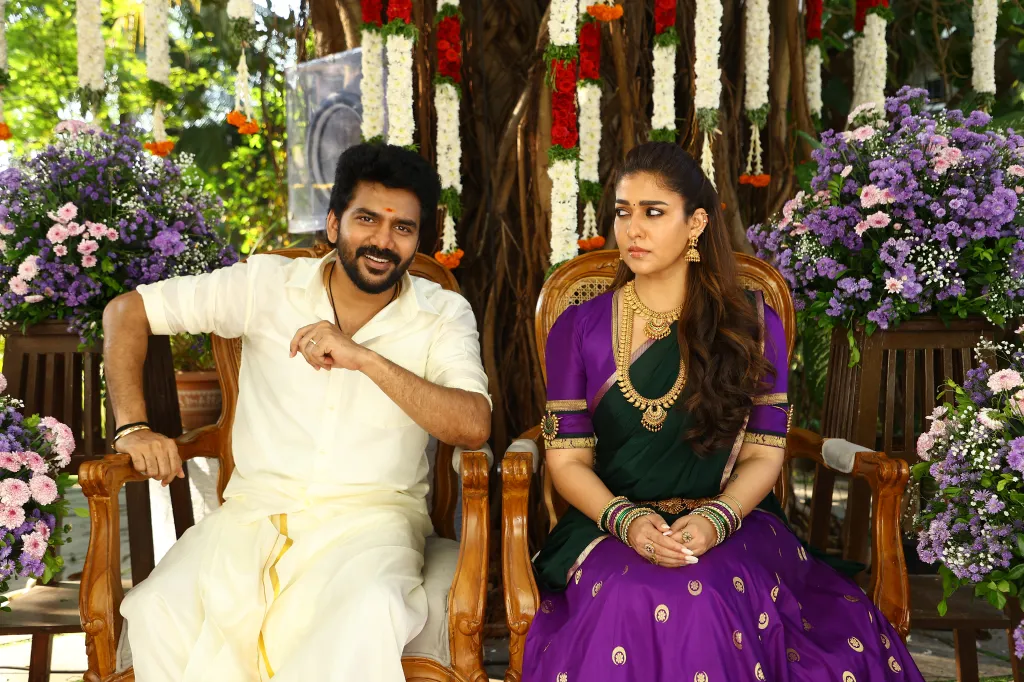
EXCLUSIVE: Zee 5 Global is today saying Hi to its latest movie premiere.
The Indian content-focused streamer will premiere the pic, which stars Nayanthara and Kavin, today. The pic is billed as “an unconventional yet heartwarming romance that offers a fresh perspective on modern relationships.”
Directed by Vishnu Edavan, the film follows a young man (Kavin), who refuses to give up on finding love despite heartbreak and rejection, and a young woman (Nayanthara) grappling with family challenges while trying to escape an unwanted marriage. When their paths cross, they embark on a heartfelt journey of love, acceptance, and self-discovery.
The film also stars Tamil cinema veterans Radhika Sarathkumar, Prabhu and K. Bhagyaraj, who passed away in June, making Hi his final performance on-screen.
Above you can watch the trailer for the film, which is from Zee Studios, Seven Screen Studio and Rowdy Pictures, the latter of which Nayanthara runs with filmmaker Vignesh Shivan.
The movie released in cinemas in late August and will now stream in all Zee 5 territories, including the U.S. and Canada.
Siju Prabhakaran, Chief Business Officer at Zee 5 Global, said: “At Zee 5 Global, we are committed to bringing audiences stories that are rooted in emotion and connect with viewers across markets. With Hi, we are delighted to present a refreshing take on love, relationships and the complexities that come with them.
“The film brings together Nayanthara and Kavin in a heartfelt story that balances romance, humour and emotion. We look forward to bringing this film to audiences across our global markets and hope it resonates with viewers worldwide.”
Nayanthara said of her role: “The character I play in Hi is someone who is independent, resilient, and deeply grounded in her convictions, yet she carries her own fears and emotional complexities.
“That balance of strength and vulnerability is what made the role so meaningful to me. She is protective of the people she loves, thoughtful in her choices, and someone who learns that opening her heart can be both challenging and beautiful.
Kavin added: “What I loved most about Hi was that it gives us a male protagonist who is unapologetically vulnerable, emotionally honest, and unafraid to wear his heart on his sleeve. In a world where men are often expected to hide their emotions, my character embraces them, making him incredibly real and relatable. He is a young man navigating love, rejection, self-doubt, and the fear of not being enough, all while holding on to the hope of finding a meaningful connection.”
>
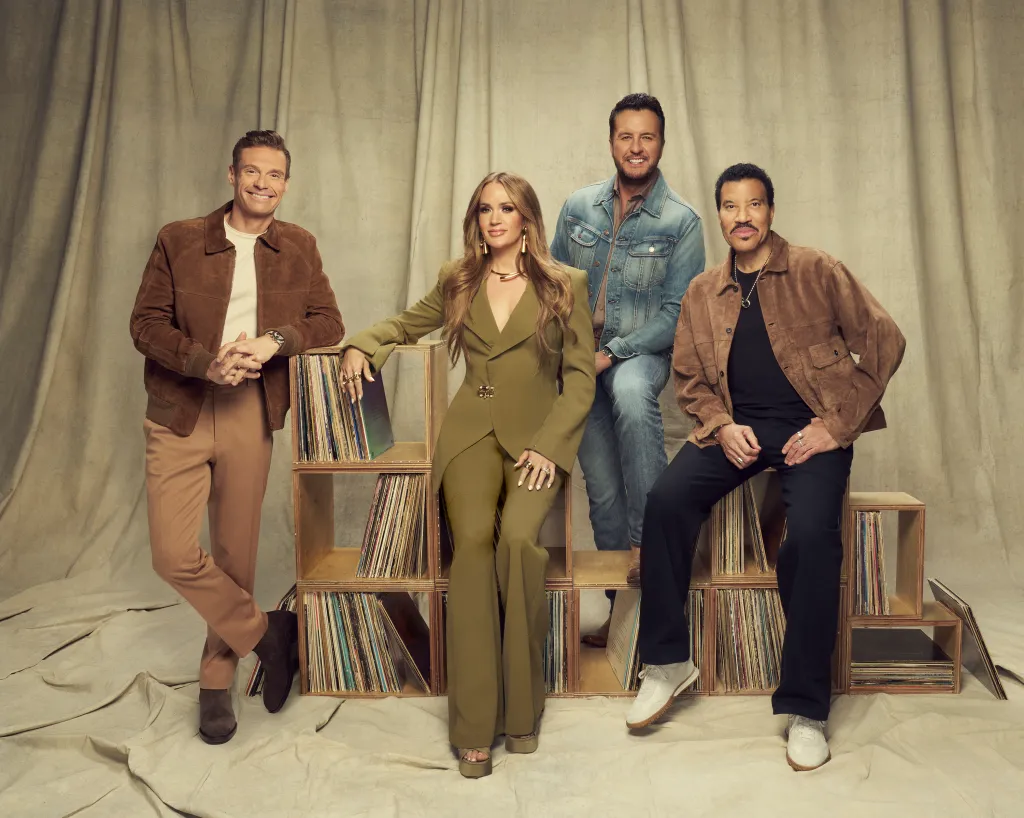
American Idol might be moving to a new location but it will have the same judges and host as before.
Luke Bryan, Lionel Richie and Carrie Underwood are returning as judges for Season 25 of the music competition show alongside host Ryan Seacrest.
Bryan announced the news on stage at a show in Nashville, Tennessee.
It marks the third year that the trio of Bryan, Richie and Underwood will judge the contestants together; Seacrest has hosted since the start and has been the sole host (he co-hosted with Brian Dunkleman in Season 1) since 2003.
Idol was renewed for Season 25 or Season 10 on ABC in July but the judges deals always take a couple of months after that.
Auditions kicked off last month with the traditional Idol Across America tour, a virtual search for singers taking place across the country.
However, the big news in Idol-land is the move to Georgia. Bryan and Underwood both live in Tennessee, so it’s closer for the pair of them but Richie lives in LA and Seacrest splits his time between LA and New York.
Richie recently underwent a heart procedure for atrial fibrillation and canceled some tour dates but is expected to begin a residency in Las Vegas next month.
The show is produced by Fremantle and Sony Pictures Television’s 19 Entertainment with Megan Michaels Wolflick as showrunner.
Idol introduced a number of changes last season including social voting for the first time, moving Hollywood Week to Nashville, Tennessee, premiering on a new night in Monday (rather than Sunday) and started streaming live on Disney+.
>

EXCLUSIVE: Here’s what’s cool about this weekend.
Without any wide entry opening to north of $30M, it’s going to be a fantastic late September frame at the box office. It wouldn’t be shocking if the marketplace sees the best late September weekend since 2018 when all films totaled $106.4M. From a pure box office standpoint –forget about budgets for a minute and marketing costs– we’ve got four wide openings aimed at various demos in Disney/Marvel Studio’s Avengers: Endgame: Encore (fanboys), A24’s Primetime (Gen-Z and Robert Pattinson fans), Paramount’s Brad Pitt dog movie Heart of the Beast (flyover states and men/women adults), and Universal/DreamWorks Animation’s Forgotten Island (families).
Heading into this weekend, it was believed that No. 1 could be a fight between Avengers: Endgame: Encore and the second weekend of Sony/Constantin’s Resident Evil, respectively at $25M-$30M and $21M-$24M.
But there are curveballs: It’s the year of Pattinson in The Drama and beggers getting out of here memes in The Odyssey, and though A24 is eyeing $12M-$16M for his latest movie Primetime about To Catch a Predator‘s Chris Hansen and his case gone wrong, the $15M net production has a shot at a $20M opening in North America at 2,814 theaters.
“It could be a three way fight for No. 1,” says one distribution source.
We’re hearing that previews tonight for the first feature narrative title from documentary filmmaker Lance Oppenheimer are chasing Avengers: Endgame: Encore‘s $3M+ previews with a figure between $2M-$3M. Previews for the R-rated Primetime began at 4PM today and Rotten Tomatoes reviews and critics are great at 86% certified fresh and 85%. Encore‘s showtimes began today at 2PM.
Those previews for Primetime are ahead of Pattinson pics The Drama ($1.7M, $14.3M opening), and possibly Mickey 17 ($2.5M, $19M opening), in addition to the Gen-Z summer horror surprise Obsession ($2.6M, $17.1M opening). The A24 financed-by-foreign sales-movie is bowing abroad this weekend in France, Germany, Austria, Taiwan, Iceland, India, Estonia, Latvia and Lithuania.
Meanwhile, Avengers: Endgame: Encore, boosted by four extra minutes of the Russo Brothers’ upcoming Avengers: Doomsday, has preview cash that could possibly surpass that of Star Wars: Revenge of the Sith‘s re-release last which was $3.4M, and turned into a $25.4M opening. We heard presales for Encore were ahead of Revenge of the Sith‘s re-release. The asterisk here is that sometimes these re-releases could be front-loaded, so we’ll see how Encore plays out. The Russo Brothers Encore is booked in around 3,000 theaters, boosted by Disney/Marvel Studio’s new certification on 1,300 premium large format screens, Infinity Vision, plus 390 Imax hubs. Encore will share Imax and PLFs with Resident Evil.
Overseas outlook for Encore is $25M in what’s bound to be a $50M WW weekend give or take. While James Cameron’s Avatar remains the No. 1 movie of all-time at $2.92B worldwide, Avengers Endgame is No. 2 with $2.799B WW (and Spider-Man Brand New Day No. 3 with $2.5B). There is a $124M WW box office gap between Avatar and Avengers Endgame. Disney is in wait-and-see mode to see if Endgame could reclaim the all-time spot before Doomsday‘s Dec. 18 opening. Unlike Revenge of the Sith‘s one week play, there’s no endgame for Encore at the fall box office.
Paramount’s Heart of the Beast leaves audiences moved and crying, including Deadline critic Pete Hammond. Film reviewers aren’t shrugging it at 89% certified fresh on RT. Tracking outlook is $17M-$20M at 3,400 theaters. Previews began today for the PG-13 David Ayer directed movie at 2PM and we hear from sources they’re around $1.8M (that includes Monday Mystery screenings). That figure is just north of what Pitt’s fall 2019 sci-fi drama Ad Astra did in previews at $1.5M ($19M). The movie cost a net $82M before global marketing. with dueling edits by Ayer and Pitt’s (Ayer’s won). Internationally, the film will open this week in 63 markets (or 95% footprint) including Australia, Brazil, France, Germany, Italy, Japan, Mexico, Spain, and the United Kingdom. Expectation abroad is $15M for what could be a $35M WW opening. The hope is that older men and women find the film. Like Primetime, this survival tale about a Special Forces officer and his combat dog who are stranded in the Alaskan wilderness, sells itself upon viewing.
Forgotten Island from Puss in Boots: Last Wish filmmakers Joel Crawford and Januel P. Mercado is looking at $13M-$15M at 3,500 sites. Typically, late September is home to a family animated movie, i.e. Abominable, Cloudy With a Chance With Meatballs, The Wild Robot, the list goes on. Blurb for Forgotten Island: Two best friends become stranded on the mystical world of Nakali, where their only escape might cost them their shared lifetime of memories. Previews today stateside began at 2PM and are between $800K-$1M, we hear. Pic has a staggered offshore rollout. Last weekend, $1.5M was made in Mexico, Australia and New Zealand. An additional 31 markets this weekend will bring Forgotten Island‘s count to 34 markets with an additional $10M in store.
Resident Evil‘s cume through Wednesday stands at $76.8M.
>

NFL: Green Bay Packers booed during ‘butt-whooping’ at home to Atlanta Falcons

Zee 5 Global Releases ‘Hi’, Romantic Pic Starring Nayanthara & Kavin

Chizuna Nakajima’s Where is the Elf Teacher’s Toilet? Manga Gets TV Anime – News
-

 movies4 months ago
Search For Canadian TV Actor Stewart McLean Now Homicide Investigation
-

 Fashion9 years ago
These ’90s fashion trends are making a comeback in 2017
-
Fashion9 years ago
According to Dior Couture, this taboo fashion accessory is back
-
Fashion9 years ago
Model Jocelyn Chew’s Instagram is the best vacation you’ve ever had
-
Fashion9 years ago
Emily Ratajkowski channels back-to-school style
-
Fashion9 years ago
9 Celebrities who have spoken out about being photoshopped
-

 Anime4 months ago
Rurouni Kenshin: Hokkaido Arc Manga Takes 1-Issue Break – News
-

 Anime3 months ago
HIDIVE to Stream English Dubs for The World Is Dancing, The Forsaken Saintess and Her Foodie Roadtrip in Another World, The Dangers in My Heart: The Movie Anime – News