
Entertainment
‘Kenrex’ Off Broadway Review: Jack Holden’s Real All-American Monster


Jack Holden and Ed Stambollouian present a very British look at a very American criminal in their play “Kenrex,” which opened Sunday at the Lucille Lortel Theatre after multiple runs in London.
Holden plays a couple dozen (maybe more) characters in this one-man show, with musical accompaniment performed on stage by John Patrick Elliott. Holden twangs more with his tongue than Elliott does with his guitar. There’s a whole lot of good ol’ country affectations in this “true crime thriller” about Ken Rex McElroy, who terrorized the small town of Skidmore, Missouri, before its residents banded together to shoot the hell out of him in 1981. The murder remains unsolved.
The story begins with the prosecutor from Kansas City who tried to put McElroy behind bars once and for all. This lawyer doesn’t speak with a twang because he’s from Kansas City. The citizens of Skidmore (population: 400) aren’t so lucky, McElroy in particular, and they all talk as if they’d taken speech lessons from Loretta Lynn, who grew up in Kentucky. The Brits probably find this middle-of-America way of talking quaint, if not downright charming. Being from the state of Iowa, I find it a little grating on the ears for two hours and fifteen minutes.

What does register as absolutely authentic is Holden’s portrait of a lawless America. The law didn’t protect people from McElroy, so the people of Skidmore became the law. What could be more Old West than that?
Back in the civilized world of New York City, “Kenrex” appears to be a throwback to “The Belle of Amherst” with Julie Harris and “Tru” with Robert Morse; that’s when one-person plays ran over two hours with an intermission. Nowadays, it’s 90 minutes and you’re out of the theater. Harris and Morse, of course, only played one character each, and they weren’t asked to move around the scenery. In addition to playing all those Skidmore citizens, Holden must move a doorway that changes colors, a stairway on wheels and a bunch of standing microphones (scenic design by Anisha Fields). It’s quite a show under Stambollouian’s flashy direction. Especially creepy are those truck headlines (lighting by Joshua Pharo) that illuminate a few scenes of violence through clouds of dry ice.
As for Holden’s performance, it’s amazing he doesn’t collapse from exhaustion before “Kenrex” ends. I felt the same about Andrew Scott in “Vanya” and Sarah Snook in “The Picture of Dorian Gray,” and if you found those one-person plays to be great theatrical experiences, “Kenrex” is the show for you. I found all three to be endurance contests for the actors, as well as a little gimmicky in the actors’ transitions from one character to the next.
The people who run the Olivier Awards in London would not agree, since they voted Holden best actor in 2026 over Bryan Cranston in “All My Sons” and Sean Hayes in “Good Night, Oscar,” among other nominees.
“Kenrex” ultimately delivers because Holden’s portrayal of the title character is a strong, frightening piece of work. Also, I had to look up Holden’s bio to find out that he’s British. You’d never know it from what he does on stage.

>
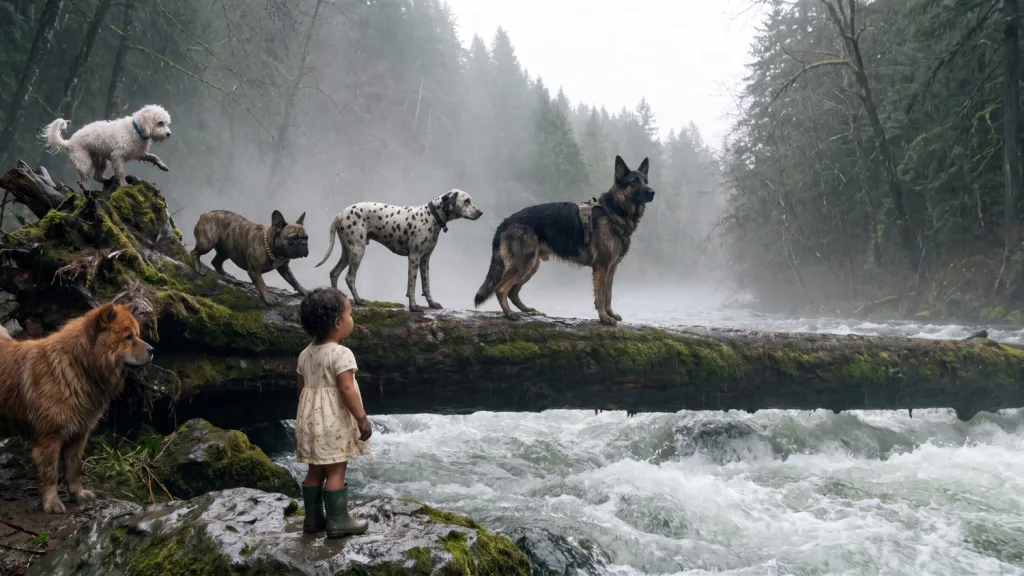
EXCLUSIVE: Rob Minkoff, co-director of Disney’s classic animated hit The Lion King, is in advanced discussions to develop and executive produce Storm Dogs, an upcoming family adventure title from Tilly Norwood creator Particle 6.
Minkoff, who also directed Stuart Little, will be the creative lead on the upcoming feature film and will work closely with Particle 6 CEO Eline van der Velden on developing the story, characters and screenplay ahead of production.
Based on an original idea from Van der Velden, the story is set in an English village during a devastating storm. When two-year-old Poppy is unexpectedly separated from the adult caring for her, five different dogs must overcome their instincts, and one another, to bring her safely home.
Set over the course of 24 hours, the film follows the unlikely pack as it carries Poppy across flooded fields, damaged bridges and a countryside transformed by the storm. What begins as a desperate journey gradually turns five mismatched dogs into a family and forces Poppy’s dog-fearing mother to see them in an entirely new light.
The film will combine live-action performances with photorealistic animated characters. Human roles will be filmed “conventionally”, according to a statement, while the dogs and Poppy will be created through an approach that brings together live-action performance, traditional filmmaking techniques and emerging AI tools. Production is slated for 2027.
The Particle 6 creative team says it is developing a “performance-driven process that translates an actor’s facial expressions, physicality, timing and emotional choices into the animated characters.” This, it says, will enable the actor shape and complete the performance.
“Rob has helped create some of cinema’s most enduring animal characters,” said Van der Velden. “His understanding of character, comedy and emotional storytelling makes him an extraordinary creative partner for Storm Dogs. This film presents a challenge that would be extraordinarily difficult to achieve through conventional production alone: a toddler and five dogs carrying much of the story through extreme weather and hazardous terrain. By bringing performers, filmmakers and emerging tools together, we can attempt something unusually ambitious while keeping every creative decision in human hands.”
Minkoff added: “I have spent much of my career looking for ways to create animal characters who are funny, emotionally truthful and completely alive. When I visited Particle 6 in London, I found a group of filmmakers who care deeply about story, character and performance. They are also serious about exploring how new production methods can expand how filmmakers’ imaginations are realised on screen. Storm Dogs is a wonderful opportunity to develop that approach together in the service of a story with real jeopardy, heart and humor.”
Van der Velden added: “I’m not interested in AI as a replacement for human creativity. But I believe it has extraordinary potential to transform the process of making motion pictures, to help filmmakers manifest what they imagine with greater freedom and fewer limitations. We are still in the pioneering phase of this transformation, and I’m thrilled to have the opportunity to help define how it can be used responsibly.”
Particle 6 made waves at the Zurich Film Festival last year when its AI actor Tilly Norwood was launched at the festival’s flagship industry event Zurich Summit, sparking a global debate about the use of AI in the entertainment space. Van der Velden is returning to speak to the Summit this year to reflect on the aftermath of that viral story. As previously announced, Tilly Norwood is set to star in her own feature Misaligned, which is being developed at Particle 6.
>
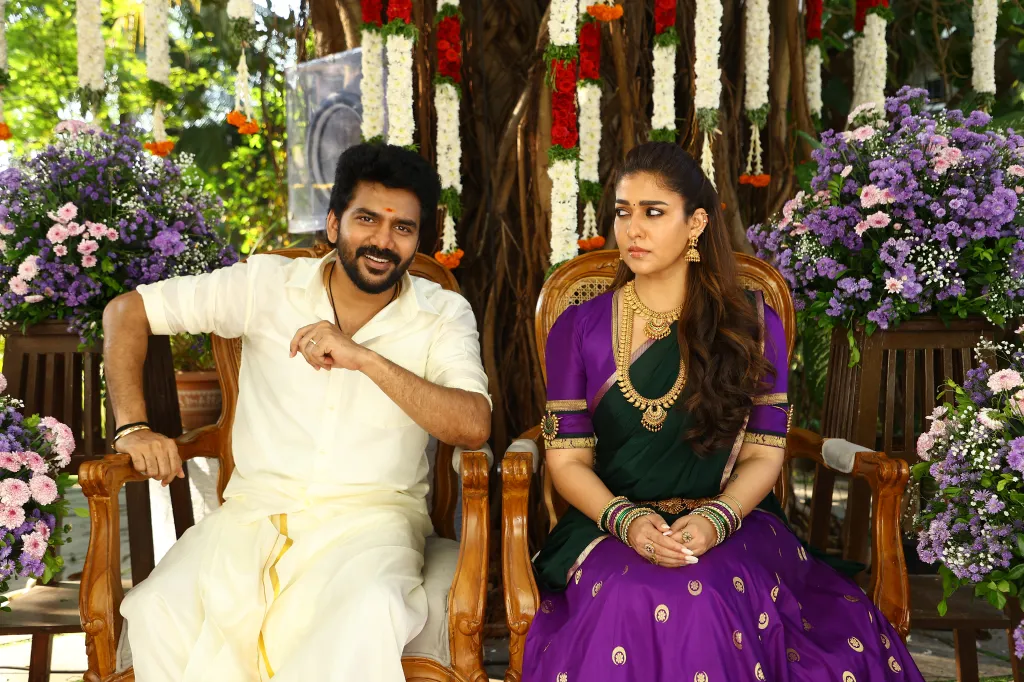
EXCLUSIVE: Zee 5 Global is today saying Hi to its latest movie premiere.
The Indian content-focused streamer will premiere the pic, which stars Nayanthara and Kavin, today. The pic is billed as “an unconventional yet heartwarming romance that offers a fresh perspective on modern relationships.”
Directed by Vishnu Edavan, the film follows a young man (Kavin), who refuses to give up on finding love despite heartbreak and rejection, and a young woman (Nayanthara) grappling with family challenges while trying to escape an unwanted marriage. When their paths cross, they embark on a heartfelt journey of love, acceptance, and self-discovery.
The film also stars Tamil cinema veterans Radhika Sarathkumar, Prabhu and K. Bhagyaraj, who passed away in June, making Hi his final performance on-screen.
Above you can watch the trailer for the film, which is from Zee Studios, Seven Screen Studio and Rowdy Pictures, the latter of which Nayanthara runs with filmmaker Vignesh Shivan.
The movie released in cinemas in late August and will now stream in all Zee 5 territories, including the U.S. and Canada.
Siju Prabhakaran, Chief Business Officer at Zee 5 Global, said: “At Zee 5 Global, we are committed to bringing audiences stories that are rooted in emotion and connect with viewers across markets. With Hi, we are delighted to present a refreshing take on love, relationships and the complexities that come with them.
“The film brings together Nayanthara and Kavin in a heartfelt story that balances romance, humour and emotion. We look forward to bringing this film to audiences across our global markets and hope it resonates with viewers worldwide.”
Nayanthara said of her role: “The character I play in Hi is someone who is independent, resilient, and deeply grounded in her convictions, yet she carries her own fears and emotional complexities.
“That balance of strength and vulnerability is what made the role so meaningful to me. She is protective of the people she loves, thoughtful in her choices, and someone who learns that opening her heart can be both challenging and beautiful.
Kavin added: “What I loved most about Hi was that it gives us a male protagonist who is unapologetically vulnerable, emotionally honest, and unafraid to wear his heart on his sleeve. In a world where men are often expected to hide their emotions, my character embraces them, making him incredibly real and relatable. He is a young man navigating love, rejection, self-doubt, and the fear of not being enough, all while holding on to the hope of finding a meaningful connection.”
>

American Idol might be moving to a new location but it will have the same judges and host as before.
Luke Bryan, Lionel Richie and Carrie Underwood are returning as judges for Season 25 of the music competition show alongside host Ryan Seacrest.
Bryan announced the news on stage at a show in Nashville, Tennessee.
It marks the third year that the trio of Bryan, Richie and Underwood will judge the contestants together; Seacrest has hosted since the start and has been the sole host (he co-hosted with Brian Dunkleman in Season 1) since 2003.
Idol was renewed for Season 25 or Season 10 on ABC in July but the judges deals always take a couple of months after that.
Auditions kicked off last month with the traditional Idol Across America tour, a virtual search for singers taking place across the country.
However, the big news in Idol-land is the move to Georgia. Bryan and Underwood both live in Tennessee, so it’s closer for the pair of them but Richie lives in LA and Seacrest splits his time between LA and New York.
Richie recently underwent a heart procedure for atrial fibrillation and canceled some tour dates but is expected to begin a residency in Las Vegas next month.
The show is produced by Fremantle and Sony Pictures Television’s 19 Entertainment with Megan Michaels Wolflick as showrunner.
Idol introduced a number of changes last season including social voting for the first time, moving Hollywood Week to Nashville, Tennessee, premiering on a new night in Monday (rather than Sunday) and started streaming live on Disney+.
>
Steve Sarkisian says Trump’s early exit affected coach headsets in Indiana-Miami title game

‘The Lion King’s Rob Minkhoff Boards ‘Storm Dogs’ For Particle 6
Road World Championships: Chladonova shocks Holmgren to become U23 champion, Noval adds junior road title
-

 movies4 months ago
Search For Canadian TV Actor Stewart McLean Now Homicide Investigation
-

 Fashion9 years ago
These ’90s fashion trends are making a comeback in 2017
-
Fashion9 years ago
According to Dior Couture, this taboo fashion accessory is back
-
Fashion9 years ago
Model Jocelyn Chew’s Instagram is the best vacation you’ve ever had
-
Fashion9 years ago
Emily Ratajkowski channels back-to-school style
-
Fashion9 years ago
9 Celebrities who have spoken out about being photoshopped
-

 Anime4 months ago
Rurouni Kenshin: Hokkaido Arc Manga Takes 1-Issue Break – News
-

 Anime3 months ago
HIDIVE to Stream English Dubs for The World Is Dancing, The Forsaken Saintess and Her Foodie Roadtrip in Another World, The Dangers in My Heart: The Movie Anime – News