
Katseye on ‘Saturday Night Live’


There cannot possibly be a more perfect setup for making a horror movie about a “tradwife” than whatever’s happening to women in the U.S. right now. Gender relations have reached a shocking new low, as Americans of all kinds struggle to navigate a new political reality defined, in part, by slang terms like “looksmaxxing” and “manosphere.” Shallow, misogynistic speech has seeped into the daily vocabularies of many, suggesting the toxic, anti-woman values that have long inspired such rhetoric are once again calcifying into a widespread and serious problem.
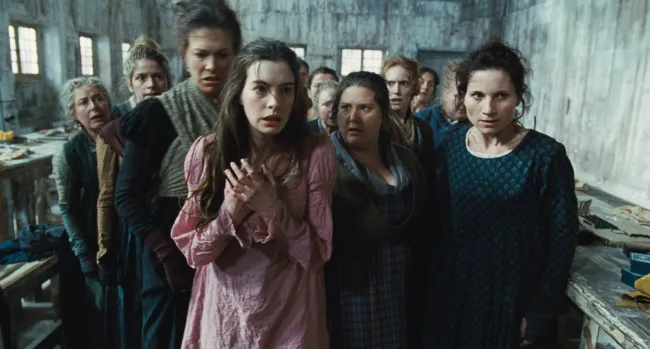
Simultaneously, actress Anne Hathaway is back in the spotlight during an especially busy time in her career (chaotically shared by both A24’s “Mother Mary” and Disney’s “The Devil Wears Prada 2”). She’s poised to eventually dominate Hollywood’s discussion around gender discourse with her upcoming adaptation of the controversial sci-fi, horror novel “Yesteryear.” Hathaway is attached to star in and produce the film through her Somewhere Pictures banner.


Reaching shelves just a few weeks ago, author Caro Claire Burke’s “Yesteryear” is a sometimes surreal piece of semi-historical fiction that imagines the ultimate tradwife fantasy curdling into a trap of wish fulfillment. Importantly, that trap is not some broad societal punishment so much as a deeply personal one for this character, a nightmare shaped by the very ideals she chose to promote.
When a misguided modern woman, Natalie, is transported back to the 19th-century American frontier, she’s forced to live within the historic period’s rigid domestic constraints, which she once pushed to her millions of followers as a more ideal way to live. That setting quickly transforms into a punishment the seemingly clueless time traveler may never escape. What initially reads like a generally cautionary tale reveals itself to be something far narrower as this specific woman is caught inside the logical result of her decisions.
Amazon MGM Studios acquired the provocative story’s rights in a competitive bidding war in July 2024, according to Deadline. Emmy-winning writer Hannah Friedman (“Obi-Wan,” “Willow”) was also confirmed to pen the script last year. No director for “Yesteryear” has been publicly announced, and the project is thought to still be in pre-production at this time.

The sense of mystery around both the “Yesteryear” novel and movie hasn’t stopped social media from speculating about its tantalizing premise. Even after the book’s wide rollout this spring, “Yesteryear” has continued to inspire increasingly loud, often ill-informed chatter online.
Across TikTok, Instagram, Threads, YouTube, Goodreads, and Reddit, reactions have focused less on the craft of fiction writing than on the spiritual subjugation of women that any media about this topic must, by nature, interrogate and include. That oversimplification is telling, and much of the current discourse treats Burke’s story like a sweeping indictment of conservative family values and motherhood, rather than engaging with how acutely “Yesteryear” centers on a single character’s self-made reality coming undone.
While some readers have described “Yesteryear” as a cathartic takedown of the patriarchy, others have bristled at its brutal twist ending and, from that, inferred a sort of nasty streak in Burke’s narrative approach. Plenty of others haven’t engaged with the book at all, instead using its premise — and ironically, Hathaway’s role as a female producer on the film — as fodder for the ever-raging American culture wars. In many cases, the loudest reactions seem to be responding to the idea of the book, not the arc it actually follows.
On one end of the spectrum, critics frame “Yesteryear” as an inevitable leftist attack on conservative women. On the other, you’ll find a swirl of posts that are more positive but still half-informed, widely reducing Burke’s novel into a flat meme that celebrates suffering. The result is a sideways PR cycle that feels less like an unusually strong reaction to the pre-production process, and more like an opportunistic projection of today’s politics that risks pushing the public to ignore the book Burke actually wrote.
Sure, plenty of movie studios would kill to have people fighting this frantically over any script they’re still planning to make. And yes, in 2026, rage coming from either side of the aisle is an incredibly powerful tool for marketing. But with such intense controversy already creeping into the “Yesteryear” discussion, and the film nowhere near theaters, are the folks making and debating it ready for the long road ahead?
The term “tradwife” is more slippery than it looks. In its most benign framing, the internet-born phrase refers to women who embrace a “traditional” (read: heterosexual, white, Christian) division of labor at home. That means these women are responsible for cooking, cleaning, child-rearing, and most other domestic duties, while their husbands are tasked with making money and major family decisions.
When that lifestyle is represented on social media, it is often deliberately done in a retro aesthetic that suggests this mindset can serve as a portal to the “good ol’ days,” which, for many women who actually lived before this century, never existed.
In contemporary reality, the “tradwife” is more of a cultural Rorschach test, embodying both the wholesome, lucrative promise of a lifestyle brand — and the viral political messaging that can optimize content for growth.

In a recent essay for The Guardian, “Yesteryear” author Burke discussed the harrowing real-world inspirations behind her book, and traced the term “tradwife” from its surprising origins in online incel spaces to the mainstream influencer culture that’s widening the ideology’s appeal today. She notes that the label operates as both an aspiration and a provocation, making it ideal fuel for internet friction.
“Tradwife content is fundamentally performative,” Burke wrote. “It’s about constructing an image of domesticity that can be consumed, shared, and aspired to, rather than reflecting the lived reality of most women.” As a novel, “Yesteryear” ultimately tapers its focus away from American society at large to instead spotlight what happens when one person can no longer separate her true identity from an assumed facade. And that duality is what makes the concept so tempting to explore more deeply — particularly through the interiority of a complex woman who will be literally trapped on the big screen.
“Yesteryear” follows Natalie, a wildly successful tradwife influencer whose meticulously curated image includes a handsome husband, a beautiful farmhouse, and six adorable children. But Natalie’s picturesque reality also involves an elaborate network of behind-the-scenes labor and wealth that’s invisible to her viewers and essential to her hollow, precarious performance of so-called “real” life.
One day, Natalie wakes up in a place where the mid-19th-century aesthetic she once chose for herself remains, but the illusion of women’s joy and freedom within that universe is gone. With no electricity, no staff, and no agency, Natalie is suddenly forced to become the kind of tradwife she always pretended to be in the worst conditions imaginable. That disorienting time shift, into the far harsher historical world of 1855, Idaho, is what gives Burke’s book not just its spine but its compelling narrative shape.

Natalie’s new life goes way beyond rural inconveniences — instead, punishing her with the kind of period-specific atrocities even the most “accurate” tradwives of today conveniently leave out. But jumping between that antiquated hellscape and the modern choices that brought Natalie there in the first place, “Yesteryear” doesn’t torture readers so much as force us into a hopeless descent. Crucially, that decline is framed less as a random act of supernatural misfortune than as the culmination of Natalie’s own carefully constructed latticework of mistakes.
That said, the plot is also propelled by a series of escalating shocks that would no doubt kill in theaters (even if Burke’s use of the word “mushy-penised” probably won’t).
Critically, the response to “Yesteryear” has been split but ferociously engaged. “Black Mirror” and “Don’t Worry Darling” are solid references if you’re looking for tonal touchstones in any medium. But Burke’s book is an especially good pick for readers of Margaret Atwood’s “The Handmaid’s Tale” and Christina Dalcher’s “Vox” (which imagines a world where women are only allowed to speak a few words per day). But unlike those wider speculative dystopias, “Yesteryear” resists building an entire alternate system or government of oppression, instead zeroing in on one nightmarish existence.
Commercially, too, “Yesteryear” seems to be doing well, with repeat appearances on national book club curations and various bestseller charts. Note: We won’t spoil the novel’s entire plot here, but you can find several “Yesteryear” summaries online that detail what happens to Natalie and how she gets seemingly forced back in time.
There is no official release date for “Yesteryear” yet, and given that Amazon MGM reportedly paid top dollar for the film rights, that uncertainty doesn’t tell us much about what’s actually happening with the film’s development or production right now.

That said, with no director and no official production timeline to date, the public perception of “Yesteryear” rests at Hathaway’s feet. That puts the movie in an interesting position relative to the actress’ broader professional trajectory. In recent years, Hathaway has moved fluidly between prestige projects and tentpole studio fare that spark complex conversations.
If “Yesteryear” moves forward soon, it will land in theaters within the next few years. But whether the goal is to create a high-concept adaptation anchored in a layered, award-worthy performance from Hathaway, or a ham-fisted genre movie with a built-in discourse machine, won’t be known for a while.
This far into horror history, “Yesteryear” fits into an eerily familiar category. In film, the genre market has spent years cycling through literary dystopias about extreme oppression, from “The Hunger Games” to “The Long Walk.” And thanks to Hulu’s hugely successful, Emmy-winning TV adaptation of “The Handmaid’s Tale,” gendered violence has never been more creatively permissible to depict on screen.
And yet, grouping Burke’s novel too neatly into that lineage risks missing its significance as a contained horror story reaching American audiences at a time when many people feel like they’re living a lie — or enduring some kind of simulation. Burke excels at articulating just how painfully Natalie’s mask hardens into a private hell that she’s subconsciously feared and created all her life.
But if anger draws attention to “Yesteryear,” it may also cut its emotion and nuance. The risk of the film being misunderstood looms for Hathaway, Amazon MGM, and anyone reading this who remembers the messy, outrage-driven release of “The Hunt” (2020). Will our taste for media that pisses us off make it until “Yesteryear” comes out?

Saturation in the dystopian film space risks fatigue among potential ticket holders, yes. But, this specific adaptation could be equally advantaged by presenting an imagined hell within our lesser, present one. The book’s main source of fear comes from collapsing the gap between fantasy and reality, and centuries of cautionary tales in both politics and art prove that kind of nightmare rarely goes out of style.
A project this gutsy could pay off or backfire, but “Yesteryear” shouldn’t become shorthand for a cultural argument before it even gets made. Of course, dealing with the obstacles this film faces from the very start might just boost Burke’s concept above the caricature it may always be to some.
>
At this weekend’s Zurich Summit a group of film financiers were asked by Deadline for their thoughts on the prospects of a U.S. federal film incentive.
Last week, a bipartisan group of lawmakers unveiled the bill for a 20% incentive, which with bonuses could bring the total rebate to 30%. The move has long been called-for by the U.S. industry concerned by the exodus of production overseas.
Alex Walton, former Co-Lead & Partner at WME Independent, told the Summit the move was “hugely positive”: “It’s wild to think there hasn’t been an efficient tax credit in America. It has helped many other countries. Spain is booming because of it now; and all over Europe. It’s going to take some time to be realized and for financial institutions to be able to cash flow it. But you’ve got to believe it will happen within the next three-four years, and then that will see all the foreign tax credits compete harder to maintain their positions.”
A start date is not yet set. The proposed text from last week stated that the credit would apply to qualifying film and TV productions beginning in taxable years after December 31, 2026 (effectively targeting projects starting in 2027). But bills can take years to pass.
Andrea Scarso, Managing Partner at prolific financier IPR.VC, whose credits include Marty Supreme and Materialists, agreed that a U.S. incentive would be “positive” but also cautioned against rising production costs: “It remains to be seen whether the prices and budgets are also going up by the same amount, which is something that happens in some foreign territories when they increase the amount of tax credit or soft money. It’s always a balance. But overall, I think it’s good news.”
Sarah Schweitzman, Co-Head CAA Media Finance, noted: “What’s important is that when you look at some of the international markets, you realize that we’re making movies there because of a tax incentive situation and I think if we’re able to federalize a tax incentive program in the U.S. it’s going to create many more jobs and invigorate crews, which is something we absolutely need in the U.S.”
A recent Motion Picture Association study claimed that a federal film tax credit could increase U.S. production spending by $125BN and add more than 143,000 jobs by 2035.
You can read more about the bill here.
>

Hot on the heels of his Golden Eye award ceremony on Saturday night, John Turturro entertained another crowd at a Zurich Film Festival masterclass on Sunday.
The Emmy-winning U.S. star has been recognized for his performance in Noah Segan’s The Only Living Pickpocket in New York, a project that is already garnering awards buzz. In the film, Turturro plays Harry, a seasoned pickpocket whose carefully controlled life is thrown into turmoil when a job goes wrong, setting off a tense chain of events that unfolds over the course of 36 hours.
In a career-spanning conversation with Deadline‘s Melanie Goodfellow — the actor’s shining Golden Eye trophy neatly nestled between them — Turturro discussed growing up in an immigrant household, his decades-long friendship with Spike Lee, and the transition from acting to filmmaking.
Turturro, who has steadily become one of the industry’s most formidable actors yet to put “Oscar nominee” on his resume, was asked about joining the best actor race this year with the Sundance success The Only Living Pickpocket in New York. “I never really have gone the whole hog with it,” he responded about the upcoming awards campaign. “But now I’m the lead in the film, so I’m going to support the film because I love the film.”
He explained that being pulled into awards conversations is “helpful to help you do the next thing.” Turturro continued: “Is it nice to be acknowledged? Great, but that’s not why you do it. […] Just because a film is really popular doesn’t mean it will have staying power, but it’s nice to be in the conversation. I don’t look upon myself as being a competitive person. I’m competitive with myself,” he added. “I want to get the most out of what I can do, but it’s not sports!”
However, he admitted to feeling surprised by the positive critic reaction out of Sundance. “Finally,” he thought, “I’m in something that people will see… My job is I like to try to improve, and I feel like being an actor is one of the few things you can improve in. You may not be able to run as fast as you did when you were younger, but I have a lot of life experience, and as you get older, you accumulate that, and you can distill things in a way that you couldn’t do when you were young, because you didn’t really experience all those things. And now I’ve experienced life, death, loss, being a parent, being married — what it is to really love someone versus falling in love. That’s a huge difference,” he giggled.
Turturro regaled attendees with stories about his impressive stage career. He naturally came on to two major TV performances of his in the last decade: HBO’s The Night Of and Apple’s Severance.
He coyly confirmed a return for his character, Irving Bailiff, in season three of the Emmy-winning Severance with Adam Scott. “Yeah,” he (eventually) told the room. “As long as they give me interesting things to do, then I’m interested.” He swiftly took the opportunity to gush over friend and colleague Christopher Walken, whose character, Burt Goodman, began a romance with Turturro’s Irving in season one. “‘Who’s going to be my love interest?’” Turturro asked before joining the show. “And they were like, ‘All these younger guys.’ I said, ‘Well no, I’ve worked with Chris Walken,’ and I said, ‘I want Chris, because I love Chris.’ And I don’t have to act that I love him because I love him.”
Though Walken “didn’t understand a lot of the show,” Turturro was able to guide him through their authentic, real-life friendship. “I said, ‘Don’t worry about it. You just look at me.’ We have so much fun because I directed him like three times, and we’ve acted, and we’ve worked together a lot. And he’s a wonderful theater actor, and people obviously think he plays only strange [characters] but he can do a lot of different things. He’s also very sensitive, but he has a childlike joy in his work, and when that happens, anything is possible.”
Turturro received a round of applause when discussing the HBO crime drama The Night Of, which ran for one season in 2016 and co-starred Riz Ahmed. It would later win five Emmys, and Turturro was nominated for his role as the eczema-stricken defense lawyer John Stone. “The Night Of is something I’m very proud of,” said Turturro on Sunday. “It was originally a BBC thing, which I actually never watched because I didn’t want to be influenced.”
He even confirmed that he actually wanted to do another season of it. “But they couldn’t agree on what the story would be,” revealed the actor. “But I loved doing it. It was one of those great experiences in my life.”
Turturro’s career spans four decades, having worked with acclaimed directors such as Spike Lee, the Coen brothers, Martin Scorsese, Robert Redford, Robert De Niro, Nanni Moretti and Pedro Almodóvar.
He first gained international recognition through his collaborations with Lee, appearing in Do the Right Thing and Jungle Fever. With Joel and Ethan Coen, he acted in Miller’s Crossing, Barton Fink, O Brother, Where Art Thou? and The Big Lebowksi, in which Turturro created the iconic Jesus Quintana. For his lead performance in Barton Fink, he won best actor at the 1991 Cannes Film Festival, an experience that Turturro reflected on at his Zurich masterclass. He even confessed to feeling like he lands “more normal” roles in Europe than across the Atlantic, and said he has turned down scripts “again and again” that involve his character being violent towards women.
At his Zurich Golden Eye ceremony Saturday night, Turturro collected the award and quoted Italian novelist Cesare Pavese. “[He] once said that the only great thing in life is to begin. I still consider myself a beginner in many ways,” said the star. “I’m very fortunate. I wanted to make a living doing something that interested me and to do interesting work — to share that with an audience, [and that] wouldn’t diminish their intelligence at the same time,” he laughed. “I consider this an encouragement to continue.”
Turturro joins 2026 Zurich honorees Julianne Moore and Tom Hiddleston. The 22nd edition runs Sept. 24-Oct. 4.
>
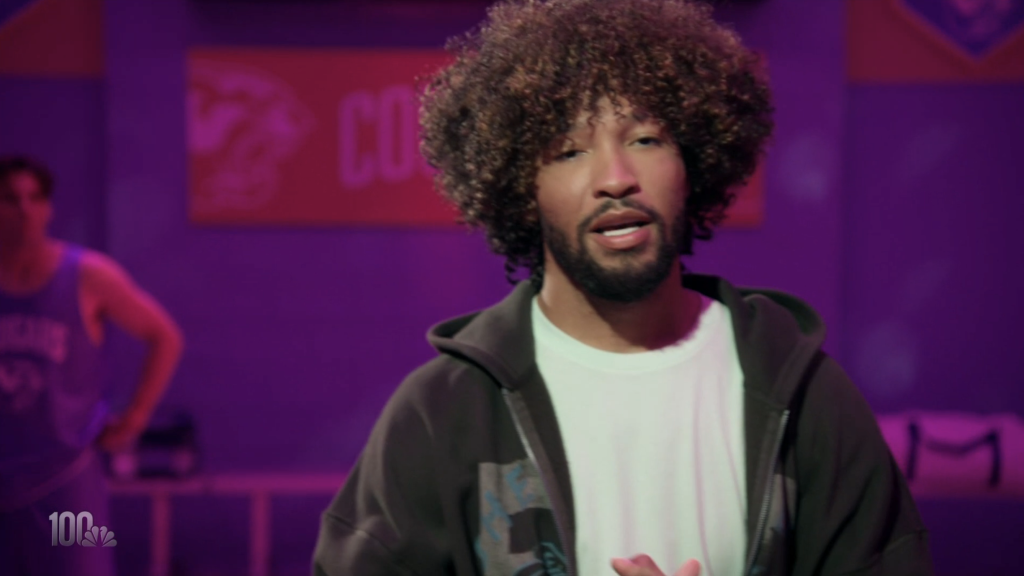
Following the Knicks’ big win at Madison Square Garden, Jalen Brunson took the stage at 30 Rockefeller Center for his Saturday Night Live hosting debut.
On Saturday’s Season 52 premiere, the NBA Finals 2026 MVP showed off some comedic chops in an otherwise business-as-usual episode of the NBC sketch comedy show, which featured Katseye as its musical guest.
Introducing new cast members Grace Reiter and Saidah Belo-Osagie, Katseye returned to a parody season of The Debut: Dream Academy to crown a new girl group. The quartet also performed in a mini music video with the awkward group of ladies, also featuring Jane Wickline and Veronika Slowikowska.
The next sketch was a support group featuring Brunson as one of several men whose spouses were grinded on at Usher and Chris Brown’s The R&B Tour.
“When I spent $1,200 on that meet-and-greet, I never expected her to actually greet his meat,” said Brunson as the other group members comforted him.
Katseye on ‘Saturday Night Live’
Jeremy Culhane and Jalen Brunson in ‘Saturday Night Live’
Jalen Brunson, Jeremy Culhane and Ben Marshall on ‘Saturday Night Live’
Brunson also starred in the parody sketch High School Musical: The New Generation as an athletically gifted new student who hilariously keeps dunking on the new Troy Bolton stand-in (Jeremy Culhane) and steals his girlfriend (Slowikowska).
As Shark Tank judge Daymond John, Brunson asked if the invention Respectacles, a pair of glasses that sounds an alarm when the wearer looks at breasts, “works for ass.” The inventors’ (Culhane and Ben Marshall) presentation keeps getting interrupted as they check out Lori Greiner.
Saturday Night Live kicked off its 52nd season this weekend on NBC with host Brunson and musical guest Katseye. The season continues with guest hosts Dakota Johnson, Shane Gillis and Inde Navarrette, along with musical guests Turnstile, Rosalía and Gracie Abrams.
>


Search For Canadian TV Actor Stewart McLean Now Homicide Investigation


These ’90s fashion trends are making a comeback in 2017
According to Dior Couture, this taboo fashion accessory is back
Model Jocelyn Chew’s Instagram is the best vacation you’ve ever had
Emily Ratajkowski channels back-to-school style
9 Celebrities who have spoken out about being photoshopped


Rurouni Kenshin: Hokkaido Arc Manga Takes 1-Issue Break – News


HIDIVE to Stream English Dubs for The World Is Dancing, The Forsaken Saintess and Her Foodie Roadtrip in Another World, The Dangers in My Heart: The Movie Anime – News