
Katseye on ‘Saturday Night Live’


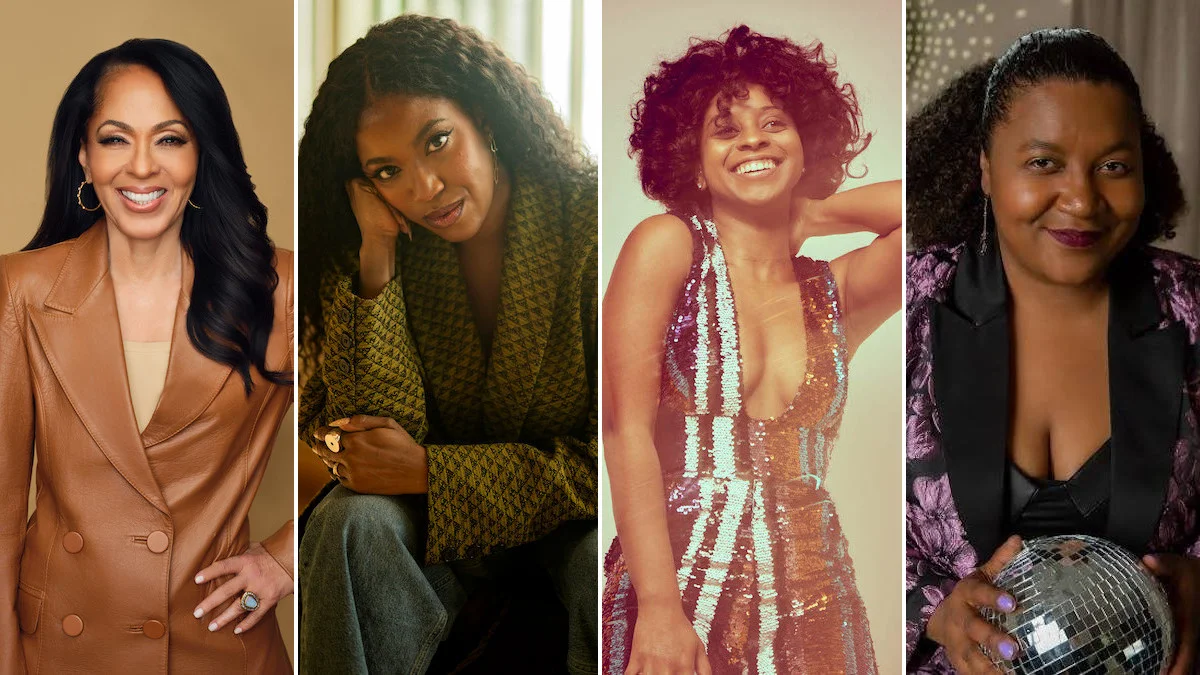
The Black Women on Broadway Awards set the 2026 honorees for its fifth annual ceremony on Tuesday: producer Debra Martin Chase, director Whitney White, performer Alana Raquel Bowers and casting director Destiny Lilly, TheWrap can reveal exclusively.
The ceremony is scheduled for June 1 at Current, the waterfront event venue at Chelsea Piers in New York City.
“This milestone year is a powerful reminder of why we started the Black Women on Broadway Awards,” co-founders Danielle Brooks, Amber Iman and Jocelyn Bioh said in a joint statement. “This moment is designed to uplift and celebrate the achievements of Black women in theater and enjoy an afternoon where this incredible community can really see and feel the impact that we have made both in the industry and for each other.”
Chase — whose recent credits include the 2025 Pulitzer Prize- and Tony Award-winning “Purpose,” “The Outsiders,” “Illinoise,” “Topdog/Underdog” and “A Strange Loop” — will receive the Audra McDonald Legacy Award, which recognizes significant theatrical achievements across a storied career.
White, the Obie Award-winning and Tony Award-nominated director of Bioh’s “Jaja’s African Hair Braiding,” “The Last Five Years” and “Liberation,” will receive the Kathy A. Perkins Behind the Curtain Award for backstage artistry.
Bowers, an actor, dancer and producer on-the-rise who made her Broadway debut in “Chicken and Biscuits” in 2021, will receive the Florence Mills Shining Star Award, recognizing early-career talent.
And Lilly will receive the Special Citation Trailblazer Award for casting work. The storied casting director is a three-time Emmy nominee for “Only Murders in the Building” and has a list of Broadway credits including “A Strange Loop,” “Purlie Victorious,” “Glengarry Glen Ross” and “Clyde’s.”
Black Women on Broadway (BWOB) was founded in 2019 by Brooks, Iman and Bioh. The organization maintains a list of every Black woman involved in Broadway and Off-Broadway productions each season, which for the 2025-26 season includes nearly 600 women, the highest since the org began tracking. The awards ceremony has grown from 75 attendees in 2022 to over 200 in 2025.
“We are proud to honor these four incredibly talented and hardworking women, Debra Martin Chase, Whitney White, Alana Raquel Bowers, and Destiny Lilly, for their outstanding accomplishments and lasting impact both on and off Broadway,” the founders concluded.
Their goal is to keep expanding the BWOB Awards in the hopes of one day hosting an event that includes every Black woman involved in every show each season.
The post Black Women on Broadway 2026 Awards to Honor Debra Martin Chase, Whitney White, Alana Raquel Bowers and Destiny Lilly | Exclusive appeared first on TheWrap.
>
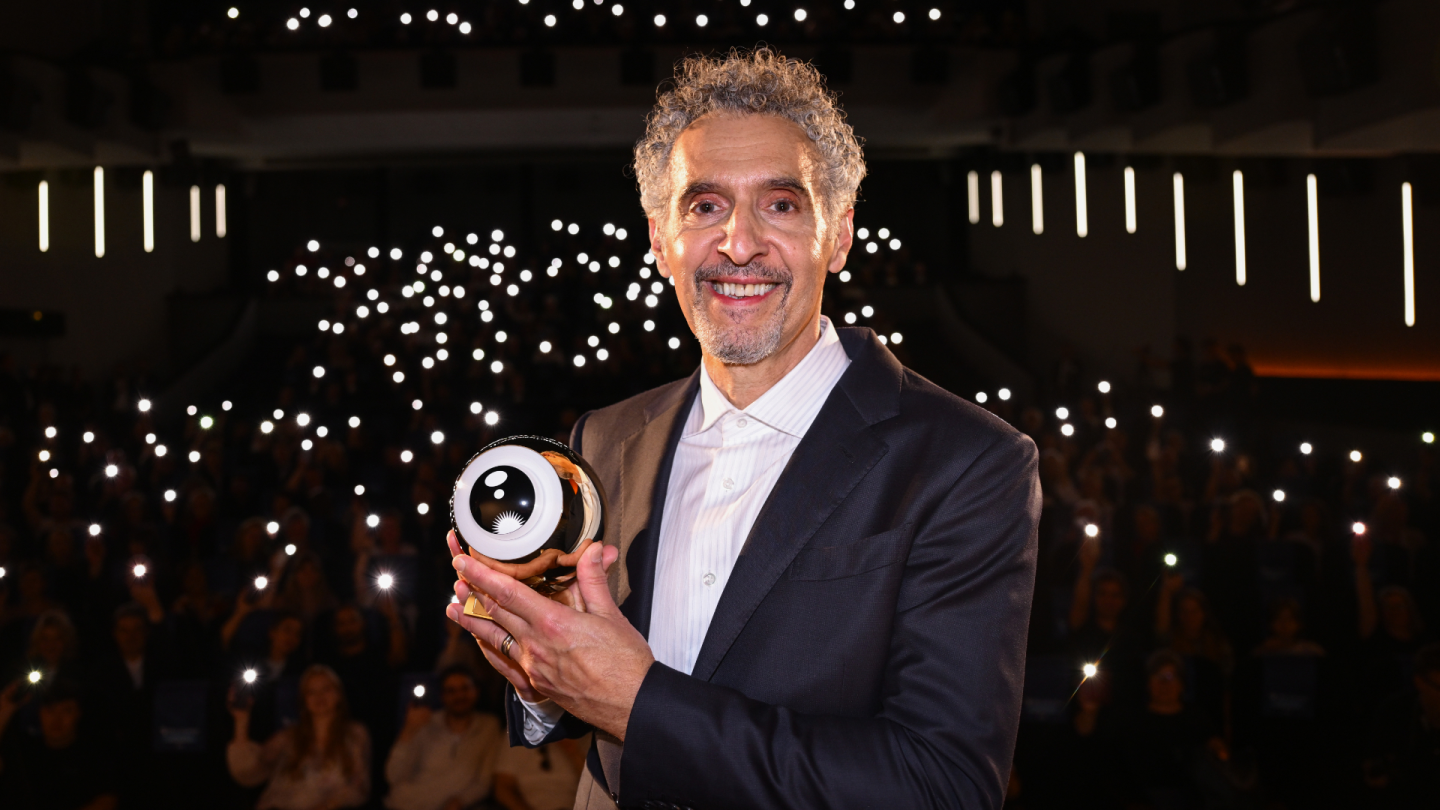
Hot on the heels of his Golden Eye award ceremony on Saturday night, John Turturro entertained another crowd at a Zurich Film Festival masterclass on Sunday.
The Emmy-winning U.S. star has been recognized for his performance in Noah Segan’s The Only Living Pickpocket in New York, a project that is already garnering awards buzz. In the film, Turturro plays Harry, a seasoned pickpocket whose carefully controlled life is thrown into turmoil when a job goes wrong, setting off a tense chain of events that unfolds over the course of 36 hours.
In a career-spanning conversation with Deadline‘s Melanie Goodfellow — the actor’s shining Golden Eye trophy neatly nestled between them — Turturro discussed growing up in an immigrant household, his decades-long friendship with Spike Lee, and the transition from acting to filmmaking.
Turturro, who has steadily become one of the industry’s most formidable actors yet to put “Oscar nominee” on his resume, was asked about joining the best actor race this year with the Sundance success The Only Living Pickpocket in New York. “I never really have gone the whole hog with it,” he responded about the upcoming awards campaign. “But now I’m the lead in the film, so I’m going to support the film because I love the film.”
He explained that being pulled into awards conversations is “helpful to help you do the next thing.” Turturro continued: “Is it nice to be acknowledged? Great, but that’s not why you do it. […] Just because a film is really popular doesn’t mean it will have staying power, but it’s nice to be in the conversation. I don’t look upon myself as being a competitive person. I’m competitive with myself,” he added. “I want to get the most out of what I can do, but it’s not sports!”
However, he admitted to feeling surprised by the positive critic reaction out of Sundance. “Finally,” he thought, “I’m in something that people will see… My job is I like to try to improve, and I feel like being an actor is one of the few things you can improve in. You may not be able to run as fast as you did when you were younger, but I have a lot of life experience, and as you get older, you accumulate that, and you can distill things in a way that you couldn’t do when you were young, because you didn’t really experience all those things. And now I’ve experienced life, death, loss, being a parent, being married — what it is to really love someone versus falling in love. That’s a huge difference,” he giggled.
Turturro regaled attendees with stories about his impressive stage career. He naturally came on to two major TV performances of his in the last decade: HBO’s The Night Of and Apple’s Severance.
He coyly confirmed a return for his character, Irving Bailiff, in season three of the Emmy-winning Severance with Adam Scott. “Yeah,” he (eventually) told the room. “As long as they give me interesting things to do, then I’m interested.” He swiftly took the opportunity to gush over friend and colleague Christopher Walken, whose character, Burt Goodman, began a romance with Turturro’s Irving in season one. “‘Who’s going to be my love interest?’” Turturro asked before joining the show. “And they were like, ‘All these younger guys.’ I said, ‘Well no, I’ve worked with Chris Walken,’ and I said, ‘I want Chris, because I love Chris.’ And I don’t have to act that I love him because I love him.”
Though Walken “didn’t understand a lot of the show,” Turturro was able to guide him through their authentic, real-life friendship. “I said, ‘Don’t worry about it. You just look at me.’ We have so much fun because I directed him like three times, and we’ve acted, and we’ve worked together a lot. And he’s a wonderful theater actor, and people obviously think he plays only strange [characters] but he can do a lot of different things. He’s also very sensitive, but he has a childlike joy in his work, and when that happens, anything is possible.”
Turturro received a round of applause when discussing the HBO crime drama The Night Of, which ran for one season in 2016 and co-starred Riz Ahmed. It would later win five Emmys, and Turturro was nominated for his role as the eczema-stricken defense lawyer John Stone. “The Night Of is something I’m very proud of,” said Turturro on Sunday. “It was originally a BBC thing, which I actually never watched because I didn’t want to be influenced.”
He even confirmed that he actually wanted to do another season of it. “But they couldn’t agree on what the story would be,” revealed the actor. “But I loved doing it. It was one of those great experiences in my life.”
Turturro’s career spans four decades, having worked with acclaimed directors such as Spike Lee, the Coen brothers, Martin Scorsese, Robert Redford, Robert De Niro, Nanni Moretti and Pedro Almodóvar.
He first gained international recognition through his collaborations with Lee, appearing in Do the Right Thing and Jungle Fever. With Joel and Ethan Coen, he acted in Miller’s Crossing, Barton Fink, O Brother, Where Art Thou? and The Big Lebowksi, in which Turturro created the iconic Jesus Quintana. For his lead performance in Barton Fink, he won best actor at the 1991 Cannes Film Festival, an experience that Turturro reflected on at his Zurich masterclass. He even confessed to feeling like he lands “more normal” roles in Europe than across the Atlantic, and said he has turned down scripts “again and again” that involve his character being violent towards women.
At his Zurich Golden Eye ceremony Saturday night, Turturro collected the award and quoted Italian novelist Cesare Pavese. “[He] once said that the only great thing in life is to begin. I still consider myself a beginner in many ways,” said the star. “I’m very fortunate. I wanted to make a living doing something that interested me and to do interesting work — to share that with an audience, [and that] wouldn’t diminish their intelligence at the same time,” he laughed. “I consider this an encouragement to continue.”
Turturro joins 2026 Zurich honorees Julianne Moore and Tom Hiddleston. The 22nd edition runs Sept. 24-Oct. 4.
>
Following the Knicks’ big win at Madison Square Garden, Jalen Brunson took the stage at 30 Rockefeller Center for his Saturday Night Live hosting debut.
On Saturday’s Season 52 premiere, the NBA Finals 2026 MVP showed off some comedic chops in an otherwise business-as-usual episode of the NBC sketch comedy show, which featured Katseye as its musical guest.
Introducing new cast members Grace Reiter and Saidah Belo-Osagie, Katseye returned to a parody season of The Debut: Dream Academy to crown a new girl group. The quartet also performed in a mini music video with the awkward group of ladies, also featuring Jane Wickline and Veronika Slowikowska.
The next sketch was a support group featuring Brunson as one of several men whose spouses were grinded on at Usher and Chris Brown’s The R&B Tour.
“When I spent $1,200 on that meet-and-greet, I never expected her to actually greet his meat,” said Brunson as the other group members comforted him.
Katseye on ‘Saturday Night Live’
Jeremy Culhane and Jalen Brunson in ‘Saturday Night Live’
Jalen Brunson, Jeremy Culhane and Ben Marshall on ‘Saturday Night Live’
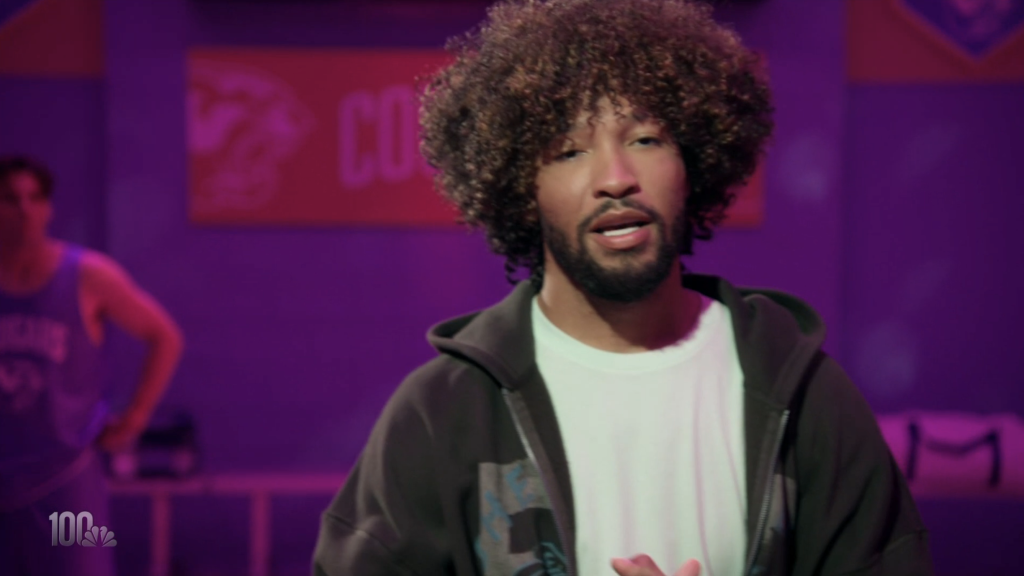
Brunson also starred in the parody sketch High School Musical: The New Generation as an athletically gifted new student who hilariously keeps dunking on the new Troy Bolton stand-in (Jeremy Culhane) and steals his girlfriend (Slowikowska).
As Shark Tank judge Daymond John, Brunson asked if the invention Respectacles, a pair of glasses that sounds an alarm when the wearer looks at breasts, “works for ass.” The inventors’ (Culhane and Ben Marshall) presentation keeps getting interrupted as they check out Lori Greiner.
Saturday Night Live kicked off its 52nd season this weekend on NBC with host Brunson and musical guest Katseye. The season continues with guest hosts Dakota Johnson, Shane Gillis and Inde Navarrette, along with musical guests Turnstile, Rosalía and Gracie Abrams.
>
For those wondering how SNL‘s new cast members factored into tonight’s season premiere, the answer is: not much.
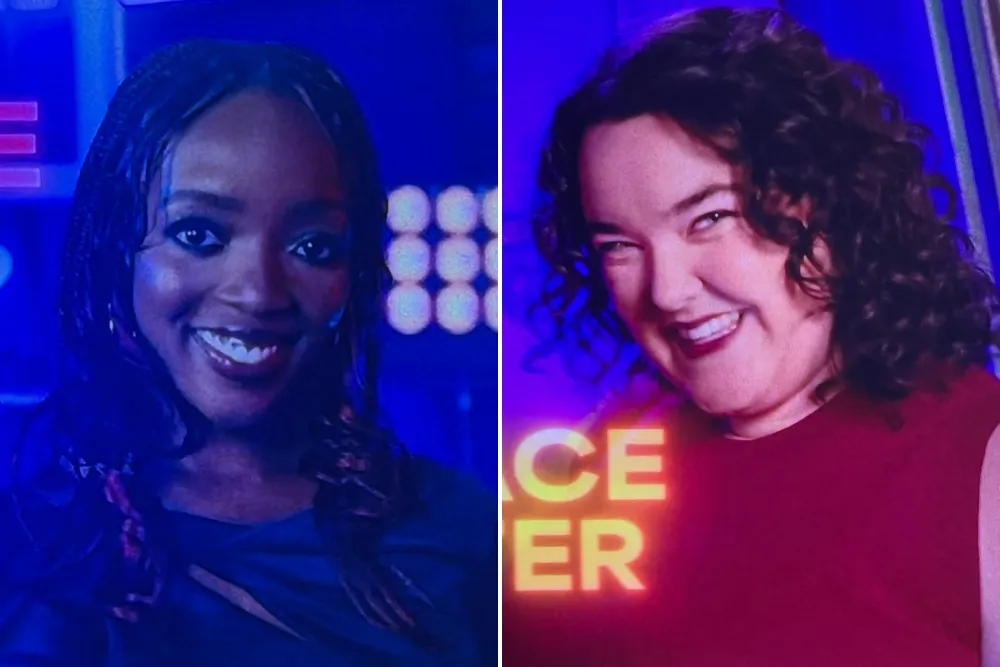
The two new featured players, Saidah Belo-Osagie and Grace Reiter, were introduced together, as part of an early sketch on the search for reality competition The Debut: Dream Academy‘s next breakout girl group.
Belo-Osagie played Neelsa Boyce, a 17-year-old entrant who sought to become a pop star after playing Young Nala in The Lion King on Broadway when she was a kid.
Reiter got more screen time as Margle, who “only wear [s] flip flops because I keep passing out when I try to tie my shoes.”
After she’s first introduced onscreen, Margle shows up fully nude to a dance choreography session. We later learn that she and another eccentric contestant on the series named Duff (Jane Wickline) were only invited to participate after witnessing an executive behind the show, played by Ashley Padilla, committing a hit and run.
Margle is surprised to learn what Dream Academy is actually about, as a show: She says she thought it was a “show where you learned to control dreams.”
Subsequently, she pitches “Moose Knuckle” as a band name and the line “Newton’s Cradle, come and get it” during a songwriting exercise.
The sketch culminates with a performance by the final girl group, featuring Margle, who performs the hot new single “Newton’s Cradle” alongside The Debut Season 1’s KATSEYE (who happened to be the SNL season premiere’s musical guest).
Reiter made one other appearance tonight in the night’s final sketch, which opens on host Jalen Brunson (of the recent NBA Finals-winning New York Knicks) in the locker room. He won’t be meeting with reporters after tonight’s game, he says — though he’s visited regardless by a grey-haired Kenan Thompson, who reveals himself to be the NBA star’s third-grade coach — you know, the one who had a “really bad drinking problem”?
Coach Dennis has come around seeking a “small loan” and in hopes of getting Brunson to read his porno screenplay. Thompson introduces Reiter as Tonya, an immigrant who came to the U.S. eight years ago with a dream, who he hopes to rope into his porn. Kam Patterson also features in the sketch, which culminates in his, Reiter and Thompson’s characters stealing jerseys from the empty locker room and running away.
That was all the night had in the cards for Belo-Osagie and Reiter. Often, SNL will use its Weekend Update segment to help break in its new talent, though special segments of tonight’s presentation were instead devoted to special panelists Dario Amodei (played by Wickline) and Tucker Carlson (played by Jeremy Culhane).
Before returning for the new season, SNL said goodbye to Chloe Fineman and writer-performer Martin Herlihy, who was first introduced on the show as part of the trio Please Don’t Destroy. Other returning cast includes Kenan Thompson, Michael Che, Colin Jost, Mikey Day, Sarah Sherman, Marcello Hernández, James Austin Johnson, Andrew Dismukes, Ben Marshall, Tommy Brennan, Kam Patterson and Veronika Slowikowska.
Jalen Brunson, point guard for the 2026 NBA Finals-winning New York Knicks, hosted the kickoff episode for Season 52. Upcoming episodes will pair Dakota Johnson & Turnstile (October 3), Shane Gillis & Rosalía (October 10) and Inde Navarette & Gracie Abrams (October 31).
>


Search For Canadian TV Actor Stewart McLean Now Homicide Investigation


These ’90s fashion trends are making a comeback in 2017
According to Dior Couture, this taboo fashion accessory is back
Model Jocelyn Chew’s Instagram is the best vacation you’ve ever had
Emily Ratajkowski channels back-to-school style
9 Celebrities who have spoken out about being photoshopped


Rurouni Kenshin: Hokkaido Arc Manga Takes 1-Issue Break – News


HIDIVE to Stream English Dubs for The World Is Dancing, The Forsaken Saintess and Her Foodie Roadtrip in Another World, The Dangers in My Heart: The Movie Anime – News