
(L-R): Ryan Cartwright, Brian Posehn, Kevin Sussman, Lauren Lapkus & John Ross Bowie in ‘Stuart Fails To Save The Universe’ S1 finale
HBO Max


Jimmy Kimmel is not having the President’s latest attacks.
The comedian opened his show on Monday joking that “sometimes you wake up in the morning and the First Lady puts out a statement demanding you be fired from your job. We’ve all been there, right?”
Last week, Kimmel made a joke about Melania Trump having the glow like an “expectant widow”.
“This was Thursday. There was no big reaction to it, until this morning, when I greeted the day facing yet another Twitter vomit storm and a call to fire me from our First Lady, Melania Trump, saying I should be fired because of a joke I made again five nights ago. It was a pretend roast,” he said. “It obviously was a joke about their age difference and the look of joy we see on her face every time they’re together. It was a very light roast joke about the fact that he’s almost 80 and she’s younger than I am. It was not, by any stretch of the definition, a call to assassination, and they know that. I’ve been very vocal for many years, speaking out against gun violence, but I understand that the First Lady had a stressful experience over the weekend, and probably every weekend is pretty stressful in that house.”
He agreed that hateful and violent rhetoric is something to reject. “I think a great place to start to dial that back would be to have a conversation with your husband about it,” he added.
Kimmel also pointed out the hypocrisy of the Trump administration given that Press Secretary Karoline Leavitt said on Fox News that there would be “some shots fired” during Trump’s speech at the White House Correspondents’ Dinner.
He also pointed out that it was “déjà vu” given that it’s not the first time that the President has called for him to be fired.
Trump took to Truth Social earlier on Monday, calling on Disney-owned ABC to “immediately fire” Kimmel.
“I appreciate that so many people are incensed by Kimmel’s despicable call to violence, and normally would not be responsive to anything that he said but, this is something far beyond the pale,” he added.
The first lady railed against Kimmel earlier on Monday, calling on the network to “take a stand” against him. ABC has not yet commented.
Kimmel’s skit on Thursday had him giving his own “alternative” monologue to the Correspondents’ Dinner, with archival clips of reaction shots from the first lady, Trump and others.
Kimmel said, “Our First Lady, Melania, is here. Look at Melania, so beautiful. Mrs. Trump, you have a glow like an expectant widow.”
This all comes just over six months after Disney’s last run in with the President over late-night.
On September 15, 2025, Kimmel discussed the death of Charlie Kirk in his monologue, noting that the “MAGA gang” was “desperately trying to characterize this kid who murdered Charlie Kirk as anything other than one of them”.
This led to outrage from the right and was followed by FCC Chairman Brendan Carr, who warned ABC over the comments and said “we can do this the easy way or the hard way” on a podcast.
This led to station groups Nexstar and Sinclair pulling Jimmy Kimmel Live!, prompting ABC to “indefinitely” pull the show from the air.
Kimmel was told of the decision by then Disney Entertainment Co-Chairman Dana Walden, who was subsequently promoted to President and Chief Creative Officer of The Walt Disney Company, after a discussion between Walden and then-CEO Bob Iger.
The decision was widely panned by many including Kimmel’s rival late-night hosts, Democratic politicians, and unions as well as, perhaps most surprisingly, Republican figures including Ted Cruz, who called it “dangerous”
On September 22, Disney made the decision to bring Jimmy Kimmel Live! back on air after “thoughtful conversations” with the comedian.
The next day, after Trump said that he couldn’t believe ABC gave Kimmel his job back, Kimmel was on air and said that “our government cannot be allowed to control what we do and do not say on television”.
That episode quickly became the second most-watched ever episode of JKL! and was followed by a group of Disney shareholders who queried whether the Disney board “breached their fiduciary duties of loyalty, care, and good faith by placing improper political or affiliate considerations above the best interests of the Company and its stockholders”.
A few months later, Kimmel signed a new deal with ABC to continue hosting the show through May 2027.
Deadline understands that this deal was intended to be Kimmel’s last but whether that is the case, remains to be seen, both from the political pressure that he faces, and the fact that he was vacillated wildly over the years when it comes to his contracts.
>
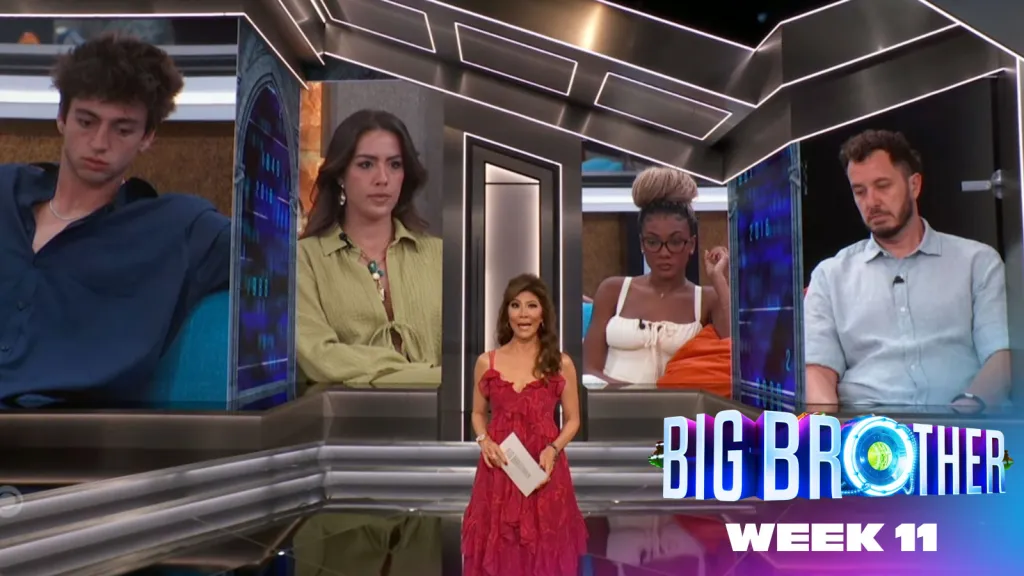
SPOILER ALERT: This post contains details on Big Brother Season 28, Episode 39, which aired on Thursday, September 24.
Big Brother Season 28 is down to its final four, and the night will reveal the final three houseguests who can still win the whole game.
Week 11 saw an Egyptian Eviction, which saw Melody Morris fall victim and leave the game, making her the fifth jury member.
Following the special eviction, Taylor Brown became Head of Household (HOH) and put Dee Valladares and Drew Campbell up for eviction. At the Power of Veto (POV) competition, Drew won and saved himself.
The final POV had tremendous power as the holder would determine who would be evicted and who would make it to Final 3.
RELATED: ‘Big Brother: The Group Chat’ Sets Kate Lawler & GK Barry As Hosts Of ITV2’s ‘BBUK’ Companion Show
How did the Big Brother Season 28 houseguests vote in Week 11?
Dee and Devens were the two housemates on the block, but one wouldn’t survive the night.
Votes to evict Dee: Drew
Votes to evict Devens: No votes
RELATED: ‘Big Brother’ Season 28 Debuts To Series’ Best Premiere Audience In 5 Years
Who was evicted from Big Brother Season 28 in Week 11?
By a vote of 1 to 0, Dee was the housemate evicted from Big Brother Season 28 in Week 11 and became the sixth member of the jury.
RELATED: CBS’ ‘Big Brother’ Continues To Lock Up Solid Ratings As ‘Unlocked’ Spinoff Scores Big
Who are the Final 3 houseguests in Big Brother Season 28?
The final three houseguests who could potentially win Big Brother Season 28 are Taylor Brown, Drew Campbell, and Rick Devens.
>
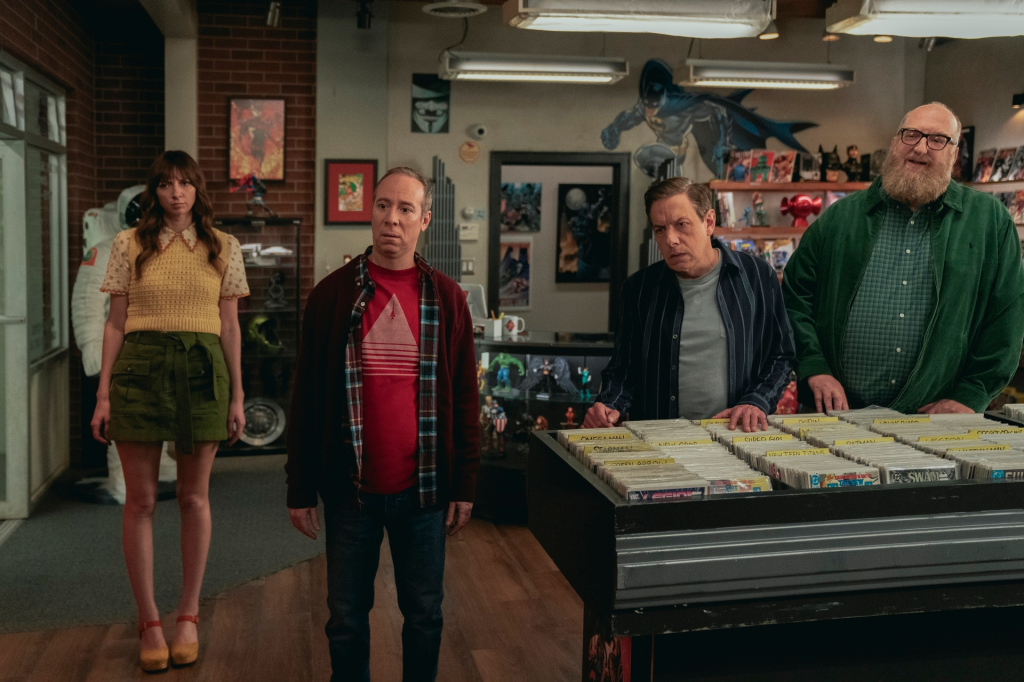
SPOILER ALERT: The story includes details about the Season 1 finale “Spoiler: Filmed In Front Of a Live Studio Audience” of HBO Max’s Stuart Fails To Save the Universe.
The Big Bang Theory single-camera spinoff Stuart Fails To Save the Universe went full-circle in the Season 1 finale by turning multi-camera and returning to the stage where the original series was filmed.
After getting trapped in a comic book in the penultimate episode, the multiverse-hopping quartet of Stuart (Kevin Sussman), Bert (Brian Posehn), Denise (Lauren Lapkus) and Kripke (John Ross Bowie) found themself in a multi-camera sitcom in the finale, complete with a laugh track.
And, in the trippiest moment in a season chockfull of meta references, in the finale, Stuart, Denise, Bert and Kripke witnessed a curtain call for a taping of the Stuart Fails To Save the Universe sitcom where they see identical versions of themselves played by the real-life stars of the HBO Max series: Sussman, Posehn, Lapkus and Bowie.
Still shocked, the four walked out of the Stuart Fails To Save the Universe soundstage, which is revealed to be Stage 25 on the Warner Bros. lot that housed Big Bang. (The stage is currently home to CBS spinoff Georgie & Mandy’s First Marriage, which co-creator Lorre and Prady executive produce.)
“So now what?,” Denise asked in the final seconds of the episode.
“I don’t know but I’ve got to believe that the answer is out there somewhere,” Stuart said in a X-Files-esque “The truth is out there” manner, prompting Bert to follow up with “In Burbank?” and Kevin to reply, “or Studio City?,” a reference to the city Warner Bros. is based in and the neighboring area.
The finale’s back-and-forth shift between single- and multi-camera involved Stuart Fails To Save the Universe building a multi-camera version of Stuart’s comic book like the one used in Big Bang on the Universal lot where the Warner Bros. TV-produced Big Bang spinoff films its interiors and some exteriors. (The final exterior scene was filmed outside of the real Stage 25 on the Warners lot.)
The episode paid homage to the mothership series in other ways too, including incorporating Big Bang‘s signature animated atom transition, complete with the whooshing sound, using its audience warm-up Mark Sweet, who had worked with Lorre since his 1997 ABC comedy Dharma & Greg, and having the characters sit around a coffee table eating takeouts.
In an interview with Deadline, the Stuart Fails creators/executive producers Zak Penn, who comes from genre background, and sitcom veterans Chuck Lorre and Bill Prady, break down how they pulled off the single-camera/multi-camera transitions, how it was filming outside Stage 25, the various Big Bang easter eggs and that ending (where exactly is the answer?).
They also address the several digs at CBS, broadcast television and multi-camera sitcoms, the black consciousness adversary introduced in the finale and its implied alliance with Kyle (Ryan Cartwright). The trio gives some clues about the recently picked up Season 2, which already is being written, including when it would premiere.
DEADLINE: Where did the idea to have our heroes be in a multi-camera sitcom come about? Did you want to pay homage to Big Bang?
PENN: Yeah, that was definitely part of it. These guys [Lorre and Prady] have a lot to say about it, so it was pretty fertile ground. I don’t think we said at the beginning of the season, we must comment on the sitcom, that wasn’t a goal.
LORRE: If our characters on their adventure, on their journey, could be trapped into a comic book, they could certainly be trapped into a sitcom. I mean, we’ve gone past any boundaries of rationale, and this is a spectacularly cool thing to do, let’s do it. Can we explain it? We’re gonna try, we’re certainly going to try.
DEADLINE: You used both single-camera and multi-camera versions of the comic book set in the episode. For the multi-cam one that you had to build, did you use any pieces of the original Big Bang set?
PRADY: We didn’t use the original sets, but you’re right, we had to build. The only way to do this, because a multi-cam set looks different than a single-cam set, is we had to build the set two times. We had our single-cam comic book store that we’ve been using all season with four walls and a ceiling, and on the next stage over at Universal, they built the multi-cam version of that set and the multi-cam version of the stockroom.
But they also had to build the interior of a multi-cam soundstage, they had to build audience risers, the sound booth and the lighting booth that sits behind the audience, the camera alley, all of those features of multi-cam stage, they had to build. Our amazing production team actually went over to Georgie and Mandy, which was in production at the time, so that they could copy it and and get it right. And it was also a change for the director of photography.
The camera moves in multi-cam are completely different, the cameras go onto dollies, you have dolly moves that don’t exist in single-cam, and all of that had to be duplicated. So it was a pretty, pretty complicated task.
DEADLINE: How many scenes did you have to film twice in both formats? There were scenes that switched between single- and multi-cam.
PENN: Probably one third, two thirds, maybe more single-cam. Every time you see that, we had to do it twice, we had to shoot it on both stages, but there wasn’t a live studio audience there for that part of it. The live studio audience was only there when we needed to see the live studio audience.
LORRE: For the curtain call.
PENN: Because it would have been so boring to watch these little snippets of scenes, it just wouldn’t have made sense to anyone.
DEADLINE: Bert makes a comment on the show that the laugh is fake. You just said that the live studio audience was not used for the actual taping of the scenes beyond the curtain call, so the spoiler in the episode’s title is not accurate.
PRADY: It’s pretty perverse. One of the things that we battled forever on Big Bang Theory was people saying that this was a laugh track when it was a live studio audience. So here, in fact, the laughter that you’re hearing during the scene, the laugh that Kripke is hearing, those are old laughs from a The Big Bang Theory audience eight or nine years ago. Yes, all of those ironies.
(L-R): Ryan Cartwright, Brian Posehn, Kevin Sussman, Lauren Lapkus & John Ross Bowie in ‘Stuart Fails To Save The Universe’ S1 finale
HBO Max
DEADLINE: Speaking of ironies, the Stuart Fails To Save the Universe sitcom within the series is promoted as “Coming to CBS this fall.” Is this just a line of dialogue, or is there some truth here? Can you license this show to CBS, home of Big Bang and all other spinoffs, for a linear run?
LORRE: That’s a question you’d have to ask HBO. I wouldn’t think so. It was just an opportunity to make a cheap joke about the end of network television.
DEADLINE: Yes, the punchline to that was Kyle asking “What is CBS?”, and Kripke explaining it as an “old TV thing,” a dig at broadcast and CBS. Did you write that, Chuck? They’re still employing you.
LORRE: I want to bite the hand that feeds me, Elvis Costello.
DEADLINE: There was another shot, about a meaningless void and sitcoms being the same thing. Is this how you all feel about multi-cam comedies these days?
LORRE: Not at all. No, it was a joke, Nellie. It was an opportunity to try and make the audience laugh.
PRADY: It’s certainly what Kripke thinks.
LORRE: It might be what Kripke thinks of situation comedies, but the history of this genre is just rich with genius, going back to Lucy and Norman Lear and Cheers and Friends and Frasier. It’s ridiculous to try and put down a genre that has done such great work over decades.
PRADY: We’re in awe of the genre.
LORRE: It’s much harder to do this than it is to shoot a little movie. It’s much harder to make 200 people laugh, even if they’re related to you.
DEADLINE: Chuck, any plans to do another multi-cam sitcom? I saw CBS Entertainment President Amy Reisenbach recently, and she said that the door is wide open for you.
LORRE: That’s very sweet of her. I love that woman. I’ve been doing this an awful long time, and Amy is just terrific. She’s been a really big supporter of Georgie and Mandy out of the gate, she’s been nothing but helpful and supportive of us trying to put on a show.
DEADLINE: But no current plans for you to do a new sitcom?
LORRE: No. My current plans are to take a nap right after we’re done talking.
DEADLINE: The level of meta play in the finale — I don’t know if mushrooms or something else was involved in coming up with the sitcom idea, but the idea to have…
LORRE: It’s not drugs, it is called imagination. It’s something that will go away shortly with the advent of AI sitcoms. But, for the time being, it’s making sh*t up is what’s happening.
DEADLINE: But the idea to have the characters looking at actors carrying their real names playing the same characters; talk about how this whole thing made sense.
PENN: This is a place that we hadn’t gone, and going there seemed kind of scary, like, how are we going to make this work? And then, how are we going to write our way out of it? I think that was the approach the whole season is what something we could do that would be funny, but also, let’s not just do oh, and now they go to a universe where everybody’s a bird or whatever, like trying to come up with something to top what we had done, and this seemed like the place to go.
DEADLINE: Did Brian pay extra because everyone got a straightforward intro when Mark Sweet brought out the cast, he’s the only one who got “hilariously funny”?
PRADY: So the cast is allowed to bribe us, and we have a whole set.
PENN: Yeah, Brian paid us, you’re right. Brian gave us $1,500, and the rest of the cast gave us like 100 bucks, or someone gave us wine. We couldn’t split it. That was Mark Sweet, right? Whatever he chose to say.
PRADY: We were writing the kinds of things Mark Sweet said, which, when we sat down to write it, Chuck and I had heard it so many times, we channeled Mark Sweet, who’s playing himself as the audience warm-up guy, without even thinking about it.
LORRE: It was really easy. We’ve been listening to Mark since 1996, since Dharma & Greg. Thirty years, he’s been doing the same act.
PRADY: He’s got turns of phrase like, “you know him, you love him.” There’s a whole bunch of stuff that we just know. It’s years of listening to Mark and literally writing what we’ve heard him say.
DEADLINE: You filmed the final scene outside of WB’s Stage 25, where Big Bang was shot. How was that?
LORRE: That was a fun night.
DEADLINE: Was it really rainy, or did you make everything wet?
PENN: No, that’s a classic wet-town.
LORRE: I loved how we ended it. It’s a really delicate thing to bring a season to an end, or a series to an end, which we’ve certainly been through. It’s a real lot of hoping and wishing and praying that you get it right. I thought we brought the 10 episodes to a wonderful — hopefully, a reason to anticipate Season 2 as well as pleasurable to watch.
PENN: There was a bit of magic that night, watching the actors walk out through that door and onto the lot. It definitely felt there was something in the air.
LORRE: Yeah, something special happened that night.
PRADY: What was really strange that night, because we were shot at Stage 25, which was obviously the Big Bang stage, and walking in and using that stage, like using that as a place to stand and as a place to use the restroom and stuff. I found it very surreal, personally, to walk onto stage 25 with all that muscle memory of the years of Big Bang. 12 years there.
DEADLINE: Speaking of the ending, the final line “I’ve got to believe that the answer is out there.” Was that an X-Files reference?
LORRE: It does echo a little bit of The X-Files, doesn’t it? “The answer is out there, in Burbank, or maybe Studio City.” Yeah, it is something of a variation on that, I suppose, I hadn’t really thought about it.
PRADY: Not on purpose.
LORRE: Just a chance to say Burbank, because whenever you get a chance to say Burbank, you should.
DEADLINE: So where is the answer? Is it in Burbank, in Studio City or somewhere else?
LORRE: The answer is in Episode 1 of Season 2.
DEADLINE: The adversary, that whole swirly consciousness thing we saw at the end, do we know what it is? Don’t tell me the answer is going to be in 201.
PENN: The answer will be in 201.
DEADLINE: Is Ryan’s character working for the adversary? Because the thing said to him “I gave you one job.” Is Kyle a bad guy?
PENN: That version of those two characters work for the adversary.
PRADY: But not all versions.
PENN: But not the other ones you’ve seen that season. And then there’s another group led by, as far as you know, led by Stuart Prime. That’s the Stuart who shows up periodically to give them clues or hints to try to help them on their way.
DEADLINE: Would that be a major point in Season 2, who’s behind this?
PENN: Unquestionably, it’s going to be dealt with. We didn’t want to spend the whole season doing a bunch of mythology shows where we break down every single thing about what’s going on. We just wanted to set some stuff up.
LORRE: The truth is out there.
DEADLINE: The final shot includes banners for Two and a Half Women and Young Leonard. Chuck, were there spoofs of any of your other sitcoms’ titles that you considered and discarded?
LORRE: I don’t think so. I think, just the idea that we’re not quite in the universe where we started this series is the implication of those posters.
PRADY: It’s not quite our world.
LORRE: It’s close.
PRADY: But also in this world, Stuart is a multi-cam as opposed to in our world where it’s a single-cam. So we wanted to show that we were two or three degrees off of our universe.
DEADLINE: Two and a Half Women and Young Leonard are not bad ideas. Have Warner Bros. TV executive reached out about possibly doing them as shows?
LORRE: No, they haven’t come to us with anything like that, nor should they.
(L-R): Kevin Sussman & Lauren Lapkus in ‘Stuart Fails To Save the Universe’ S1 finale
HBO Max
DEADLINE: You are in the writers’ room, right? Have you already mapped out Season 2?
LORRE: We started working last week on fleshing out Season 2, which hopefully, I think production begins in January or February. Like Season 1, we’re hoping to write all the episodes before we start, giving all the departments a lot of lead time to do the remarkable stuff they did in Season 1, which was truly benefited also by us being allowed to stay in Los Angeles and do this here with the best crews in the world.
PRADY: Yeah, it’s worth saying in every episode that we had the most amazing production team: sets, costumes, props, art direction, photography, lighting, sound. Every person on that stage was a gift, and everyone’s coming back.
LORRE: Yeah, everybody’s coming back. One of the little miracles that happened was we got a tax break from the state of California, which allowed us to stay here, stay in Los Angeles, which allowed us to have the best crews.
DEADLINE: Can you do the show on yearly cadence? There are a lot of special effects but can Season 2 premiere next summer or next fall? When will it be ready?
LORRE: We’re hoping certainly by next fall. We’re shooting to also participate in Comic-Con again next year. We did it this year, and it was great, it was a great way to launch the first season. When the show actually will debut on HBO, we don’t know. But hopefully, we’ll at least have an episode or two finished
to do Comic Con.
PENN: It’s not going to be like two years between seasons. It’s going to come out next year.
LORRE: Next year, yeah.
DEADLINE: Will Season 2 be similar in structure, the gang going to a new universe each episode or will you revisit some of the more popular worlds from the first season?
LORRE: We’ll try and put together 10 great episodes, and that’s the goal, to not run dry.
PRADY: You don’t have to follow a strict rule.
LORRE: You can return to a universe, there’s no rule against that. We’re not bound to say we couldn’t go back to some place they’ve already been if there was a great reason to do so.
PRADY: Right. We don’t sit here and say okay, well we have to do fan service, so more centaurs. But if more centaurs is really funny and has a story that can be told, then there’ll be more centaurs. But we make fun of our own mythology as we’re going, so I think there’s no real rules about what we’re going to do. We just try to do something that’s interesting.
DEADLINE: Will you also keep the idea of original Big Bang stars coming back? And I assume that the characters of Leonard, Howard, and Sheldon will stay off limits because if one of them shows up, he will fix the machine, and its show will be over.
LORRE: We’re hopeful that we can have some guest starring opportunities again in Season 2, but we haven’t figured that out quite yet. It was a lot of fun working with Mayim [Bialik] and Melissa [Rauch], Kunal [Nayyar], Kaley [Cuoco]. Having them do something that they never did on The Big Bang Theory, giving them an opportunity to stretch a little bit, that’s been built into this from the beginning, and I hope we can keep it going.
DEADLINE: Is there any chance of seeing different versions of Jim Parsons’ Sheldon, Johnny Galecki’s Leonard or Simon Helberg’s Howard?
PRADY: Tune in next season.
LORRE: There’s always a chance. We’re not going to limit ourselves as to cameos. If it’s possible and it can be done, great. That was a lot of fun for us, and I think it was a lot of fun for the folks who came and played with us for a couple of days.
DEADLINE: What’s the verdict on the custom opening credits? Have fans liked it, skipped it, didn’t care? Will you keep that in Season 2?
LORRE: I haven’t talked to fans recently but we enjoyed it, we thought it was funny.
PRADY: Our families liked it.
LORRE: We thought it was adding value to the show to have different credits, different opening titles every week and break some rules with what we’re used to seeing on all television.
PRADY: Maybe we’ll mix it up and, if we can come up with something even crazier, maybe we’ll do that. But don’t quote me on that.
DEADLINE: Length-wise, will you keep the episodes brisk and short again next season? [Half of the Season 1 episodes, including the finale, were 15-18 min each]
LORRE: As long as they need to be. And I’m keeping my fingers crossed that some of these shorter episodes we can get on Quibi.
PRADY: That has been the goal from the beginning.
LORRE: Because kids want to watch these shows on their phones while they’re at the supermarket. That was pitched to me.
DEADLINE: Quibi was ahead of its time, let’s just say that.
LORRE (sarcastically): Sure.
DEADLINE: What did you learn from the first season? Anything that you want to do differently in Season 2?
PENN: I learned a lot about sitcoms personally.
LORRE: Special effects take a long time.
PRADY: Be patient with special effects.
LORRE: Be very patient. I had panic attacks all through Season 1 that some of the special effects that we were asking for were not going to work. They all did but it took time. It’s an arduous process to build stuff that doesn’t exist.
PENN: That was the part I was comfortable with.
LORRE: He is very comfortable with it; Zak said, It’ll be fine, it’ll be fine. Just let them, It’s not finished yet. It was the thing you hear over and over and over again but it was really gratifying when that stuff works.
PENN: There wasn’t a lot that didn’t work, honestly. People might like some episodes more than others.
LORRE: That’s inevitable.
PENN: But normally, in doing a sci-fi show, you would find like, oh, we couldn’t pull this off, but that never happened to us. I mean, everything got pulled off. The crew, we say it over and over again, but they nailed it. There was never an episode where we walked in and said, Okay, the departments couldn’t really make this work. Let’s write around it. Never happened.
LORRE: It took quite a bit for us to figure out how to do the falling through the void sequence, but we got there. There was some trial and error because we didn’t know. It’s one thing to write on a laptop, the character Bert and and Kripke are falling through an endless void, it’s easy to write down. It’s much more difficult to make it a reality, and I think ultimately we got there.
DEADLINE: Uh-huh. Ask your actors, they told me they were traumatized filming that scene.
PRADY: Well, that was another benefit.
LORRE: Traumatized is part of show business.
PRADY: I do know that the actors, in all their interviews, kept saying there was a lot more running, they found a lot more running than they thought. Maybe more walking in Season 2.
>
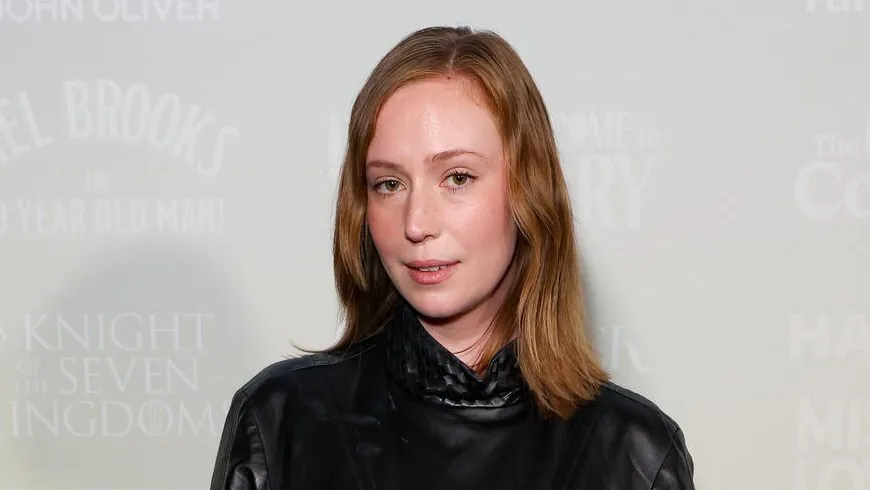
Following her arrest at a demonstration outside the United Nations General Assembly, Hannah Einbinder doesn’t want her message to get lost in the headlines.
On Thursday, the 4x Golden Globe nominee urged the United States government to “bring an end” to Israel’s attacks on Gaza after she was detained for protesting Prime Minister Benjamin Netanyahu‘s arrival at the U.N. building.
“If the pictures of my friends and me getting arrested in protest of Netanyahu’s shameful visit to New York draw attention to anything, let it be to the devastating genocidal war Israel is waging against the people of Palestine and Southern Lebanon-to the settler attacks, the home demolitions, the bombing of people as they sleep; to the crimes that happen every SINGLE day but garner almost no international press coverage,” she began in a statement on her Instagram Story.
“The US government has the power to bring an end to all of this killing, pillaging, and land theft, yet instead it chooses to welcome the butcher of Gaza with open arms. The fact that the orchestrator of all this bloodshed is roaming freely in our cities is an indictment of BOTH REPUBLICANS AND DEMOCRATS who enable and protect architects of genocide like Netanyahu,” Einbinder continued. “Let us not mistake the spectacle for the story: genocide is the headline, and it is time for it to end.”
Einbinder and Susan Sarandon were among as many as 100 anti-war protesters who were detained while blocking Bibi’s entrance to the U.N. building, where he spoke with global leaders at the U.N. General Assembly.
Also present at the demonstration were Cynthia Nixon, Elliot Page, Chelsea Manning, Sarah Sherman, Mary Beth Barone, Indya Moore and Caleb Hearon, protesting Netanyahu and the ongoing strikes on Gaza in the Israel-Hamas conflict.
“Free, free Palestine! Stop the genocide!” protesters chanted at the demonstration organized by the Jewish Voice for Peace, as well as, “Netanyahu, you can’t hide! We charge you with genocide!”
>


Search For Canadian TV Actor Stewart McLean Now Homicide Investigation


These ’90s fashion trends are making a comeback in 2017
According to Dior Couture, this taboo fashion accessory is back
Model Jocelyn Chew’s Instagram is the best vacation you’ve ever had
Emily Ratajkowski channels back-to-school style
9 Celebrities who have spoken out about being photoshopped


Rurouni Kenshin: Hokkaido Arc Manga Takes 1-Issue Break – News


HIDIVE to Stream English Dubs for The World Is Dancing, The Forsaken Saintess and Her Foodie Roadtrip in Another World, The Dangers in My Heart: The Movie Anime – News