
Entertainment
CW Partners With ESPN Streaming Service

The CW is majorly changing its streaming strategy thanks to two new deals the broadcast network announced on Wednesday. Starting in the summer, all of The CW’s sporting events will be available to stream live on the ESPN app for viewers with the ESPN Unlimited subscription. As for the network’s scripted and unscripted content, new episodes will be available to stream on Roku the day after their premiere starting in the fall.
The ESPN deal means that more that 800 hours of live sports content will be available on the sports app. That includes live coverage of college football and men’s and women’s basketball from the ACC, Pac-12 and Mountain West conferences as well as the NASCAR O’Reilly Auto Parts Series, WWE NXT, PBA Bowling, PBR Bull Riding, AVP volleyball and the 2026 Arizona Bowl. The deal further cements The CW’s commitment to live sports. Just as CBS can stream its sports offerings on Paramount+ and NBC can stream on Peacock, fans can watch The CW’s events on ESPN.
“We were hunting for a streaming solution, and the thing that we knew was that the world doesn’t need another direct-to-consumer product,” Brad Schwartz, president of The CW, told TheWrap. “We decided our strategy was not going to be adding to that challenge for people and that we were going to partner with somebody to do it. If you’re going to find a partner for sports, the worldwide leader in sports is a pretty good one to go with.”
The news comes during this year’s upfront season. Now advertisers interested in partnering with The CW will be able to extend their reach to new audiences on digital platforms. The CW will be completely responsible for all sales of CW-broadcast events that will air on the ESPN app.

“It’ll be linear pass through year one for this upcoming season. Then we’ll quickly work with ESPN, get the technology in place and move to the AI so we can sell dynamic ad insertion for the marketplace,” Dan Lanzano, president of national advertising sales at Nexstar, told TheWrap. “The marketplace is shifting budgets in a big way to sports and streaming. What do we just do? We grew our portfolio to 800 hours of live sports, and now we have a streaming partner to extend our reach for our consumers as well as for our advertising partners. So it’s an amazing one-two punch that aligns with what the marketplace is looking for this upfront season.”
Though ESPN has previously partnered with sports organizations like the NFL, this is the first time the streaming service has partnered with a non-Disney-owned network in a major way. “As we continue to evolve ESPN’s direct-to-consumer experience, collaborations like this allow us to better serve fans by making more of the sports they love available in one place,” Rosalyn Durant, executive vice president of ESPN programming and acquisitions, said.
The network hasn’t just revitalized its streaming strategy for sports. Starting this fall, all of The CW’s entertainment programming will be available on The Roku Channel for next-day streaming. That includes the network’s upcoming “Private Eyes West Coast” starring Jason Priestly as well as unscripted shows like “Police 24/7” and game shows like “Scrabble” and “Trivial Pursuit.” New installments of WWE NXT will also be available to stream on The Roku Channel every Wednesday following their live Tuesday night broadcast on The CW.

As part of this new partnership, The CW hub on Roku will also feature over 800 hours of library content, including episodes of “Wild Cards,” “Penn & Teller: Fool Us,” “Children Ruin Everything” and “Good Cop / Bad Cop.” The CW and Roku previously collaborated together on the latter two series.
Schwartz likened the strategy of partnering with Roku to FX on Hulu, the cable network’s partnership with the streamer. There is now a designated hub for FX content on Hulu.
“We thought ‘How do we combine the best of broadcast with the best of streaming so that we can bring fans and advertiser of all of our content into both areas?’” Schwartz said. “You need a streaming partner for that. Of course, we have our CW app, which has been downloaded 110 million times and is still a great little product. But how can we make that front door bigger?”
After talking with several partners, Roku emerged as the best fit. “It’s access, reach, accessibility and the ability to further engage with our content within a platform that already has a built-in large-scale audience,” Lanzano said.
“This partnership is all about connecting great storytelling with the millions of viewers who are looking for it,” Lisa Holme, head of content at Roku Media, said.

>


On Friday nights, IndieWire After Dark honors fringe cinema in the streaming age with midnight movies from any moment in film history.
First, the BAIT: a weird genre pick, and why we’re exploring its specific niche right now. Then, the BITE: a spoiler-filled answer to the all-important question, “Is this old cult film actually worth recommending?”
The Bait: At Least Adult Swim Gave Me My Backstroke
I spend a lot of time hunched over my laptop. In fact, in the indie film world, my posture problem is so common it’s sometimes affectionately called a “programmer’s hunch.”
That’s the catchall term for the shape your spine gradually assumes when your every waking moment revolves around random screening links and unanswered emails. Of course, way before I was old enough to give myself such a genuinely stupid workplace injury, I developed a different back issue — equally rooted in my love for discovering strange media.


As an underage Adult Swim fan, I spent much of my 2000s childhood sneaking downstairs to watch the late-night Cartoon Network programming block hours after I’d been sent to bed. To avoid waking my parents and older sister, I kept the volume low and got as close to the TV set as possible.
Belly-down on the carpet with my back arched like “The Little Mermaid,” I was totally engrossed in what I was watching and physically incapable of relaxing for fear of being caught. Instead, adopting a kind of stress position that produced the s-curve that still impacts my structural integrity today, I felt every second of my most formative Adult Swim memories.
Naturally, being a sick freak, I totally loved it: finding joy and even identity in witnessing stuff I wasn’t “supposed” to see. The discomfort was part of the fun and, in its own way, made the risk worth it.
Earlier this month, my colleague Christian Zilko brought that feeling flooding back for me with his oral history of the cult platform. For Adult Swim’s 25th anniversary, IndieWire traced the scrappy and subversive sensibility that turned a ballsy experiment into one of TV’s most influential brands and, for folks like me, a meaningful ritual. It’s a rollicking good read and one of the rare times Hollywood execs sound sincerely cool. But the lineup’s iconic “Infomercials” do warrant a special After Dark side quest.
Kicked off in 2009, when I was then a teenager and actually allowed to enjoy myself after midnight, the “Infomercials” premise was extraordinarily simple. At 4 a.m., network viewers who were already accustomed to seeing lengthy advertisements for so-called miracle products and questionable self-help programs on TV were greeted with “paid” Adult Swim presentations that felt real but weren’t.
Innovative filmmakers, like Alan Resnick and Casper Kelly, used the bait-and-switch exhibition premise as an excuse to explore their arthouse ambitions and get very, very weird on broadcast.
You probably know “Too Many Cooks,” which begins as an innocuous sitcom opening but keeps adding credits, characters, and eventually a murderer. But here’s also “Unedited Footage of a Bear,” which sees a pharmaceutical ad curdle into a nightmare. And my personal favorite is still, “This House Has People in It,” which turns security footage into a sprawling suburban horror mystery.
Despite my newfound adolescent freedom in the early 2010s, I still remember watching these bizarre segments the same way I did as a child — laying down on the carpet, close enough to the TV to hear every nonsensical word. Thank God most of the “Informercials” shorts only run about 10 to 12 minutes.
There’s actually a wonderfully mundane reason for that breezy length. Adult Swim’s “Infomercials” were designed to fit just a quarter-hour television slot with room left over for commercials. Contextually, that’s just enough time to establish what you think you’re watching and then make you regret settling in.
Some “Infomercials” are funnier than others, and plenty show little interest in being funny at all. What they share, however, is the uncanny ability to make the machinery of TV feel existentially unstable. So, in honor of Adult Swim turning 25, I’m recommending you end Cartoon Network’s month-long celebration with an “Infomercials” marathon, sure to be both nostalgic and upsetting!
Watch a few you’ve never heard of (on YouTube or the official Adult Swim site), and resist the urge to read the descriptions first. If your back can take it, get close to the screen, too. I’ll do the same. Probably. —Alison Foreman
The Bite: May the Kids Never Get Back in the Pool
I’ve spent a lot of September thinking about Adult Swim. It’s the 25th anniversary of an entertainment brand that means more to me than almost any other and, as Ali was gracious enough to plug, I wrote a few articles trying to capture what it’s all meant to the people who made it.
There’s so much to discuss — the unique shows, the talent it platformed, the fanbase that it cultivated — but to me it all comes down to a simple question: what is Adult Swim? And there’s no better way to answer it than by watching some Infomercials.
Adult Swim isn’t just a programming block, even if it’s been a great one that eventually surpassed that children’s programming it was designed to supplement. It isn’t just a tight-knit group of people, even if many of them continue to closely collaborate after 25 years of making cartoons in Atlanta together.
It’s not just a style of comedy, even if terms like “Adult Swim humor” are universally recognized pieces of our pop culture vocabulary, even when they’re used to describe shows made by other companies. And it feels like a cop out to say that Adult Swim is a vibe, even if that feels like the fairest answer I could give.
More than anything, Adult Swim is a celebration of the element of surprise. It shocked viewers who kept the Cartoon Network on too late and were ushered into maturity by the “Family Guy” reruns they saw at too young of an age. It shocked older animation enthusiasts who never thought they’d see Shaggy and Scooby on trial for marijuana possession or Space Ghost hosting his own talk show. And it shocked many of us who spent countless hour watching cable in the middle of the night, never being quite sure what weirdness would air next.
That’s the beauty of the Infomercials, and it’s why Adult Swim was the perfect platform for geniuses like Alan Resnick and Casper Kelly. Watching a cheesy sitcom opening turn into a bloody field day for a time-traveling serial killer or unedited footage of a bear turn into a pharmaceutical nightmare is the ultimate expression of that unapologetic commitment to keeping us on our toes.
For such a small programming block, Adult Swim had a massive, outsized influence on creating the shared language that we’ve come to recognize as “internet humor.” The surrealism, pastiches of existing media, and willingness to put dark spins on familiar pieces of nostalgia are immediately recognizable to anyone chronically online, even if you never watched “Aqua Teen Hunger Force” late at night. It’s also why I wonder if Adult Swim inadvertently helped create a future that it won’t have much of a part in.
So much of its brilliance was the advantage that it had over the viewer, being able to show you anything it wanted while you sat there captive. I’m not sure that it’s possible to recreate that feeling in this age of endless content. Maybe that’s not even a bad thing — maybe we need a few less surprises while we catch our breath — but it’s absolutely cause to take an evening to celebrate the incredible artistic accomplishment that the first quarter century of Adult Swim represents. And no matter what the next iteration looks like, I’ll be watching. —Christian Zilko
Read more installments of After Dark, IndieWire’s midnight movie club:
>
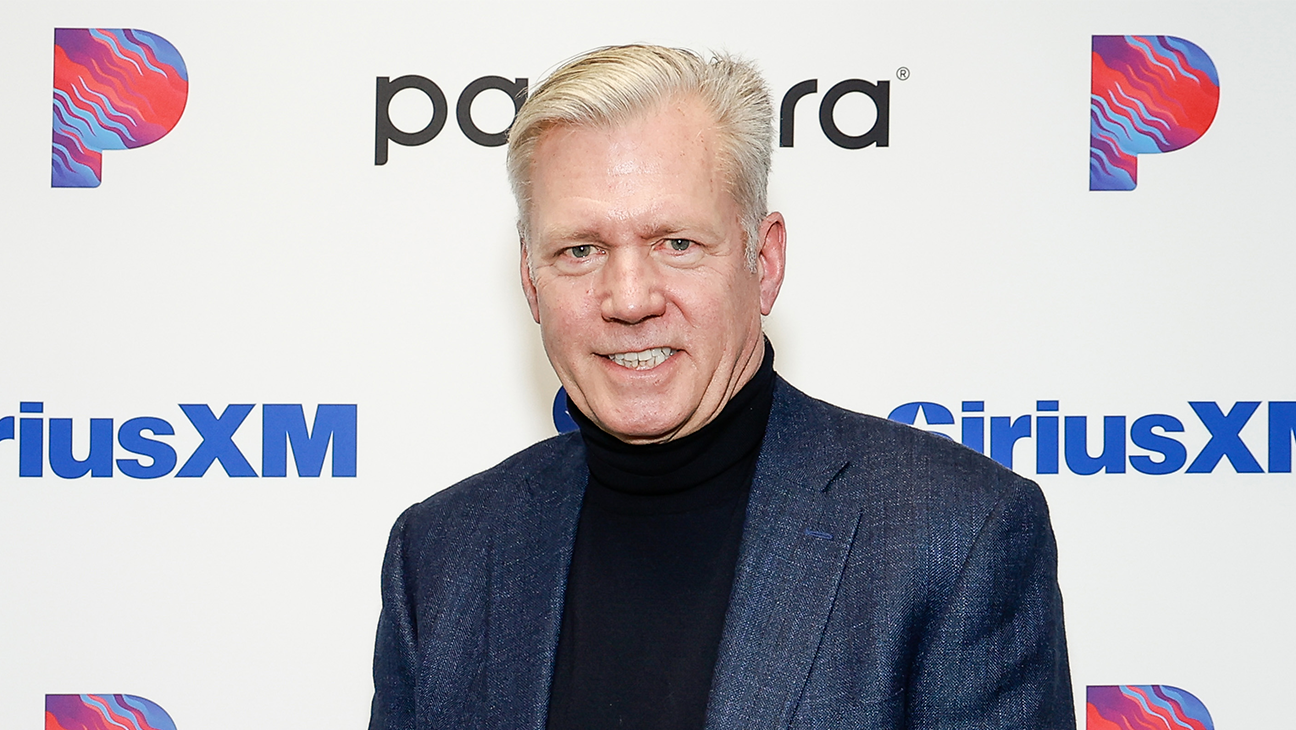
Former To Catch a Predator host Chris Hansen was interviewed on his podcast Friday to give his unfiltered reaction to A24‘s unauthorized, dramatized film about parts of his life, Primetime, which he called overly dramatic, detached from reality, and a “fever dream” — while giving Robert Pattinson‘s performance a “D” grade.
Primetime, which opens Friday in the U.S., is set in 2006 and follows Pattinson’s fictionalized version of Hansen as the popular To Catch a Predator segment on NBC’s Dateline grows into its own primetime block on the network. On the show, Hansen blurred journalistic lines by working with law enforcement and the watchdog group Perverted Justice to intercept adult men as they arrived, unbeknownst to them, at a sting house to meet a minor they’d met online for sex. The men were typically arrested as a result. The series drew mixed reactions, with concerns about potential entrapment-law violations at the forefront of the criticism.
In a brief segment produced for his video podcast, Have a Seat with Chris Hansen, the former NBC News journalist is seen exiting a Times Square AMC after viewing the film for the first time at a Thursday night screening — his first look at the indie drama since its theatrical release. He’s then asked for his first reaction to the Lance Oppenheim-directed film.
“It’s hard for me to — obviously, I’m not a judge, because the character is based on me,” he said. “I think because the character is so detached from reality, from anything I’ve ever experienced then or now doing the investigations — I’m not sure what the point of it was.”
The rest of the podcast episode has Hansen discussing the film, its director and Pattinson’s portrayal of him with Fox News’ Jesse Watters. Hansen railed against the movie throughout.
Oppenheim has said he conceived Primetime after receiving a personalized Cameo video from the To Catch a Predator host. Hansen said on his podcast that he spoke to a mutual friend before seeing the film, and that Oppenheim told the friend it was “something to the effect of, ‘a love letter to Chris Hansen, and it gets a little weird in the storytelling.’”
Hansen also flagged inaccuracies in the fictionalized version of his life — including scenes involving Jeff Zucker and Stone Phillips that he insists never happened — and said absolutely nothing in the film was close to reality. He assured viewers he’s not the ratings-obsessed figure the script conjures. His biggest gripe, he said, is that the film portrays him as an aloof parent, which he says is far from how he relates to his kids. As for Pattinson’s take on Hansen circa 2006, Hansen had few kind words.
“He’s got work to do. I’m kind of the only guy that counts for this, right?” he said.
Days before seeing the movie, Hansen spoke with The Hollywood Reporter‘s Seth Abramovich about what he knew of the film. A24 hadn’t reached out to him or the production to explain the premise or ask for his input, he said.
“Based upon what I’ve seen in the trailer and my understanding of what’s been written about the film, they wanted to create something much darker and way more dramatic,” he said. “I think it’s an insult to the thousands of men and women who work hard every day to protect children from predators. They’ve turned something that is very positive, very challenging and not without risk into what is essentially a horror film.”
On Friday, after viewing Primetime, he doubled down with a direct swipe at Oppenheim.
“You have to question the motives of not coming forward and talking to me or anybody I’ve worked closely with over the years,” he said. “They didn’t want to hear that Chris Hansen is a good guy. They didn’t want to hear that this work is important. This director had a dark image of what he wanted to do. He wanted to create a horror-like film with interesting photography, and didn’t want to hear anything else.”
Hansen continues identifying and capturing potential child predators on Takedown with Chris Hansen. Earlier on Friday, Hansen’s TruBlu streaming network dropped the trailer for I’m Chris Hansen, a documentary centered around the host.
>

The White House has blocked CNN from flying on Air Force One as the TV pool network traveling with Donald Trump on his trip to Tennessee on Saturday.
A CNN spokesperson confirmed reports that the network was pulled from its scheduled rotation providing coverage of the president.
Trump banned CNN, Politico and MS NOW from the White House grounds last week, but a federal judge ordered credentials reinstated on Thursday, concluding that it was a violation of due process rights.
The judge did not rule on another action by the White House: After Trump issued the ban, on Sunday the White House pulled CNN from the TV pool rotation. The other four networks in the rotation — CBS, NBC, ABC and Fox — declined to replace CNN, suspending coverage for most of the week. That meant a dearth of video images from the White House. The TV pool resumed earlier on Friday when CNN was reinstated.
Now it is being blocked again, per the network.
>
Manchester City found guilty: What do we know? How big is this? And what comes next?
How the war in Iran is creating chaos and uncertainty in sport
Connections: Sports Edition today: Hints and answers for Sept. 26, 2026, puzzle No. 733
-

 movies4 months ago
Search For Canadian TV Actor Stewart McLean Now Homicide Investigation
-

 Fashion9 years ago
These ’90s fashion trends are making a comeback in 2017
-
Fashion9 years ago
According to Dior Couture, this taboo fashion accessory is back
-
Fashion9 years ago
Model Jocelyn Chew’s Instagram is the best vacation you’ve ever had
-
Fashion9 years ago
Emily Ratajkowski channels back-to-school style
-
Fashion9 years ago
9 Celebrities who have spoken out about being photoshopped
-

 Anime4 months ago
Rurouni Kenshin: Hokkaido Arc Manga Takes 1-Issue Break – News
-

 Anime3 months ago
HIDIVE to Stream English Dubs for The World Is Dancing, The Forsaken Saintess and Her Foodie Roadtrip in Another World, The Dangers in My Heart: The Movie Anime – News