
Entertainment
Deep Water 2026 Movie Review: Renny Harlin Back in Shark-Infested Seas


Like all great films, Renny Harlin’s solidly enjoyable “Deep Water” is about an airplane that crashes right into a big pile of sharks. And let me tell you, those sharks are fucking hungry.
You’d think the sound of a 747 (or whatever) splitting open above their favorite dinner spot might scare these makos away, but these credible-enough CGI predators quite literally smell blood in the water, and the wreckage is still flaming when they start chomping on the survivors like god’s perfect jump-scares. Even the tiger sharks that ate so many of Quint’s compatriots from the USS Indianapolis in “Jaws” had the courtesy to wait 30 minutes; in this economy, I guess no one can pass up the chance for a free meal, especially when the food is a little richer than usual.


Perhaps that explains why Harlin was lured back into the water after all these years. He’s largely been slumming it since last venturing into the ocean with 1999’s “Deep Blue Sea” (which continues to rival “Jaws” for cinema’s most indelible shark-related deaths, and tragically remains the only movie ever made to end with LL Cool J rapping about how his hat is like a shark’s fin). It certainly explains why Harlin’s “Deep Water” — which is not to be confused with “Deep Water” where Ben Affleck fixates on his snail collection while Ana de Armas cucks him to oblivion — feels so much closer to a real movie than any of the Redbox junk and “The Strangers” sequels that Harlin has been churning out this century. In a word: money. In three more confusing words: Gene Simmons’ money.
Indeed, the Kiss frontman — aka Chaim Witz, aka “The Demon” — has invested in a well-funded production company along with Arclight Films chairman Gary Hamilton, and their first order of business was to resurrect the “Bait 3D” sequel that was originally set to shoot in 2014 before it was scrapped because of its “uncomfortable similarities” to the disappearance of Malaysia Airlines Flight 370. Good news: The only “uncomfortable similarities” that remain in “Deep Water” are the ones it shares with the B-pictures of yesteryear (e.g., patience, emotionality, people dying from horniness), which strike a nerve because they’re so rare to find in the age of straight-to-streaming disaster slop like “Thrash.”
Most of the film’s other resemblances, of which there are many, prove less distressing. For example: The ensemble script, credited to Shayne Armstrong, Pete Bridges, S.P. Krause, and Damien Power, feels less indebted to “The Towering Inferno” than it does to the human simulacra of Garry Marshall’s overstuffed holiday trilogy, but I have to admit I found some charm in how ruthlessly “Deep Water” deploys its archetypes.
That starts with Aaron Eckhart’s Ben, who’s the closest thing this movie has to a protagonist. A hard-jawed first officer who grimaces even when he’s trying to reassure a frazzled child before takeoff, Ben signs up for a flight to China just because it will keep him away from his wife and kids; the guy is so obviously haunted by something that you half expect him to start radioing the flight control tower about his ghosts. That makes him a perfect foil for the fun-loving captain Rich (Ben Kingsley, loose but still imperious), an errant father and repeat divorcé whose itinerant lifestyle suits his preference for singing bad karaoke to a gaggle of flight attendants over staying in one place with a single woman.
The other characters make these guys seem complicated by comparison. Three cheers for “Mad Max: Fury Road” actor Angus Sampson, who scores above-the-billing credit for his performance as Dan, the single worst person ever born onto this earth. A rumpled and sweaty human stinkrag, Dan’s entire job in life is to be so utterly loathsome that otherwise good people might shrug their shoulders when he’s devoured by a shark right in front of their faces, and business is a-booming. He moves through “Deep Water” with all the grace of a turd floating through a community swimming pool, harassing Northeastern Airlines employees for a cocktail even after the plane has plunged into the ocean.
Naturally, it’s only because Dan lies about having a lithium bag in his suitcase that the plane goes down in the first place, a catastrophe that Harlin stretches into a strong, phobia-triggering setpiece that’s even scarier for its step-by-step clarity than for all of the bodily harm it visits upon the passengers. Yes, people still get ripped out of a hole in the fuselage like always, but not until after they’ve been obliterated by flying snack carts and diced apart by shards of broken glass.
While the crash might lack the dark comic glee that Sam Raimi brought to a similar accident in the recent “Send Help,” Harlin is very selective about his approach to “fun” in this film — while “Deep Water” is always dumb as hell, it’s also heavy with the sort of unleaded sentiment that’s seldom found in pre-summer popcorn fare. Braindead but heartfelt, this is hardly the only disaster movie that wants you to delight in some deaths and get choked up over others, but even the “deserved” kills in this one are tinged with tragedy (spoiler alert: Dan has three kids!), while the tragic ones are sad enough to suggest that “Deep Water” takes itself more seriously than most audiences will.
That approach can be hard to square with a movie whose characters all seem a few AI tokens short of passing the Turing test. Kelly Gale and Ryan Bown play a pair of comically hot newlyweds who — in a move equal parts insane and understandable — decide to join the mile-high club even though they’re flying with their two young children from previous marriages (both of whom become integral to the story in their own ways). Meanwhile, there’s Kate Fitzpatrick as a sassy and spiteful version of the old woman who wants to show you pictures of their grandkids the whole flight; Li Wenhan and Zhao Simei as star-crossed gamers on the same e-sports team; and Lakota Johnson as a comically aggro American meathead who still wants to pick fights with his fellow passengers on a piece of sinking fuselage surrounded by dorsal fins. There’s also a handful of beautiful flight attendants who all kind of bleed together and/or out.
It’s impossible to care about any of these people in the traditional sense, or to even think of them as people in the traditional sense, but Harlin invests in them with a conviction that proves endearing, if not quite contagious. Plotted like modern schlock but paced almost like a classic ’70s disaster movie, “Deep Water” mines real investment from its thrills by focusing on the little things that movies this stupid usually forget: The respectful friction between Ben and Rich as they figure out how to ditch the plane, the geography between the various pieces of the cabin after it shatters, the way the sharks circle around their victims the way they used to in old cartoons.
It all feels very purposeful, which makes it that much worse that the kills are telegraphed the same way anytime (I’d expect more from the man who gave us Samuel L. Jackson’s most iconic screen death), and that the movie kinda just bobs in the ocean as it builds to its not-so-grand finale. Admirable as it is that “Deep Water” tries to play things straight, Harlin’s film would have benefited enormously from a neurologically enhanced super Jaws in the third act. Ben Kingsley could have rapped for us at the very least. But if this isn’t quite the best shark movie since “Deep Blue Sea” (that honor still belongs to “The Shallows,” or maybe “The Life Aquatic with Steve Zissou” if you stretch the rules a little), it’s a lot higher up the food chain than it should be.
Grade: C+
Magenta Light Studios will release “Deep Water” in theaters on Friday, May 1.
Want to stay up to date on IndieWire’s film reviews and critical thoughts? Subscribe here to our newly launched newsletter, In Review by David Ehrlich, in which our Chief Film Critic and Head Reviews Editor rounds up the best new reviews and streaming picks along with some exclusive musings — all only available to subscribers.
>

What can’t Julianne Moore do?
The U.S. actress accepted Zurich Film Festival‘s lifetime achievement honor, the Golden Icon Award, in perfect German on Friday night.
She was joined at the ceremony by Jesse Eisenberg, who directs her in his latest feature The Debut, a musical-comedy co-starring Paul Giamatti, which is screening at the 22nd edition in Switzerland this week.
Moore called upon her own childhood growing up in Europe while making her acceptance speech. “Thank you for this wonderful honor,” said a translated version of her words. “I know that I am in Switzerland right now, but as a teenager, I lived in Germany. And my teacher there told me that I could become an actress. Had I not moved to Europe with my parents, I would not have had this wonderful life. And I wouldn’t be here with you tonight to speak my bad German to you.”
On the carpet ahead of the presentation, the Oscar-winning actress beamed and said she was feeling “pretty good” about the prospect of receiving the prestigious Golden Icon. “And it’s really wonderful to be here with Jesse Eisenberg, who’s such a tremendous talent and has been an unbelievably wonderful creative partner,” she added. “He’s such a genius, so I’m just happy to be sharing this experience with him, and to be here with our movie. Every day was phenomenal. It really was. There’s actually a shot of me that Jesse said was so, so funny because I was making so many dumb faces. But I said, ‘That was just my dumb face!’ I was enjoying it so much.”
Eisenberg’s third directorial feature follows Mona Friedman (Moore), who is cast in a bit part at a small community theater and transforms from a shy, unassuming housewife into a zealous method actor willing to do anything to protect the artistic integrity of her marginal role — even if it means waging war against the show’s domineering director (Giamatti).
The filmmaker-actor-writer told reporters on the Zurich carpet on Friday: “Mona is me. When I was seven years old in New Jersey in 1990, I was a sad little kid, and then I joined a community theater and I found a home.” On the brilliance of Moore, who starred in Eisenberg’s directorial debut When You Finish Saving the World (2022), he said: “When I started writing it, it was only her, and if she did not want to do it, the movie would have not been made. There’s no one else on the planet, alive or dead or yet to be born, who could play [the role] as good as she [does].”
Among Moore’s best-known performances are Still Alice, for which she won the Academy Award, as well as The Hours and The Kids Are All Right. Recent credits include Apple TV’s Echo Valley, Pedro Almodóvar’s The Room Next Door and Netflix limited series Sirens. Next year, she will return to the stage to star in the title role of the Off-Broadway play Faydra.
Also on Friday night in Zurich, In Bruges and The Banshees of Inisherin filmmaker Martin McDonagh was given the fest’s A Tribute To… Award. The honor was in celebration of his most recent film, Wild Horse Nine, which is currently making its way around the festival circuit and already generating Oscar buzz, particularly for lead actor John Malkovich.
Set shortly before the 1973 military coup in Chile, Wild Horse Nine stars Malkovich and Sam Rockwell as Chris and Lee, longtime CIA partners stationed in Santiago who are dispatched to Easter Island by their bureau chief, MJ (Buscemi) to assist in the U.S.’s covert campaign to undermine the democratically elected Chilean government. Against the surreal backdrop of the island’s monumental Moai statues, the pair begin reckoning with their murky shared past.
“I love coming to Zurich, and it’s a tremendous honor,” said the British-Irish creative on the carpet ahead of his ceremony. “I’m excited. I know it’s a great, very cine-literate audience, so I hope they’ll like [Wild Horse Nine] as much as the other ones.”
He said about travelling to Easter Island: “I visited maybe 15 years ago, and was just struck by the beauty of the place, [and] also the mystery of the Moai heads, and I thought it could be almost a character in a film, and it’s turned out to be that way. I’d worked with Sam Rockwell obviously a bunch of times before, so that’s always a joy. But John Malkovich was new to me, and he’s just perfect for the part. He’s funny and he’s dangerous. And Steve Buscemi and Parker Posey were fantastic too.”
These aren’t the only awards Zurich is dishing out. Tom Hiddleston received the Golden Eye on Thursday night as the fest opened with his Everest drama, Tenzing, and John Turturro will also be given the same honor for his starring role in this year’s The Only Living Pickpocket in New York.
The 22nd Zurich Film Festival runs Sept. 24-Oct. 4.
>


On Friday nights, IndieWire After Dark honors fringe cinema in the streaming age with midnight movies from any moment in film history.
First, the BAIT: a weird genre pick, and why we’re exploring its specific niche right now. Then, the BITE: a spoiler-filled answer to the all-important question, “Is this old cult film actually worth recommending?”
The Bait: At Least Adult Swim Gave Me My Backstroke
I spend a lot of time hunched over my laptop. In fact, in the indie film world, my posture problem is so common it’s sometimes affectionately called a “programmer’s hunch.”
That’s the catchall term for the shape your spine gradually assumes when your every waking moment revolves around random screening links and unanswered emails. Of course, way before I was old enough to give myself such a genuinely stupid workplace injury, I developed a different back issue — equally rooted in my love for discovering strange media.


As an underage Adult Swim fan, I spent much of my 2000s childhood sneaking downstairs to watch the late-night Cartoon Network programming block hours after I’d been sent to bed. To avoid waking my parents and older sister, I kept the volume low and got as close to the TV set as possible.
Belly-down on the carpet with my back arched like “The Little Mermaid,” I was totally engrossed in what I was watching and physically incapable of relaxing for fear of being caught. Instead, adopting a kind of stress position that produced the s-curve that still impacts my structural integrity today, I felt every second of my most formative Adult Swim memories.
Naturally, being a sick freak, I totally loved it: finding joy and even identity in witnessing stuff I wasn’t “supposed” to see. The discomfort was part of the fun and, in its own way, made the risk worth it.
Earlier this month, my colleague Christian Zilko brought that feeling flooding back for me with his oral history of the cult platform. For Adult Swim’s 25th anniversary, IndieWire traced the scrappy and subversive sensibility that turned a ballsy experiment into one of TV’s most influential brands and, for folks like me, a meaningful ritual. It’s a rollicking good read and one of the rare times Hollywood execs sound sincerely cool. But the lineup’s iconic “Infomercials” do warrant a special After Dark side quest.
Kicked off in 2009, when I was then a teenager and actually allowed to enjoy myself after midnight, the “Infomercials” premise was extraordinarily simple. At 4 a.m., network viewers who were already accustomed to seeing lengthy advertisements for so-called miracle products and questionable self-help programs on TV were greeted with “paid” Adult Swim presentations that felt real but weren’t.
Innovative filmmakers, like Alan Resnick and Casper Kelly, used the bait-and-switch exhibition premise as an excuse to explore their arthouse ambitions and get very, very weird on broadcast.
You probably know “Too Many Cooks,” which begins as an innocuous sitcom opening but keeps adding credits, characters, and eventually a murderer. But here’s also “Unedited Footage of a Bear,” which sees a pharmaceutical ad curdle into a nightmare. And my personal favorite is still, “This House Has People in It,” which turns security footage into a sprawling suburban horror mystery.
Despite my newfound adolescent freedom in the early 2010s, I still remember watching these bizarre segments the same way I did as a child — laying down on the carpet, close enough to the TV to hear every nonsensical word. Thank God most of the “Informercials” shorts only run about 10 to 12 minutes.
There’s actually a wonderfully mundane reason for that breezy length. Adult Swim’s “Infomercials” were designed to fit just a quarter-hour television slot with room left over for commercials. Contextually, that’s just enough time to establish what you think you’re watching and then make you regret settling in.
Some “Infomercials” are funnier than others, and plenty show little interest in being funny at all. What they share, however, is the uncanny ability to make the machinery of TV feel existentially unstable. So, in honor of Adult Swim turning 25, I’m recommending you end Cartoon Network’s month-long celebration with an “Infomercials” marathon, sure to be both nostalgic and upsetting!
Watch a few you’ve never heard of (on YouTube or the official Adult Swim site), and resist the urge to read the descriptions first. If your back can take it, get close to the screen, too. I’ll do the same. Probably. —Alison Foreman
The Bite: May the Kids Never Get Back in the Pool
I’ve spent a lot of September thinking about Adult Swim. It’s the 25th anniversary of an entertainment brand that means more to me than almost any other and, as Ali was gracious enough to plug, I wrote a few articles trying to capture what it’s all meant to the people who made it.
There’s so much to discuss — the unique shows, the talent it platformed, the fanbase that it cultivated — but to me it all comes down to a simple question: what is Adult Swim? And there’s no better way to answer it than by watching some Infomercials.
Adult Swim isn’t just a programming block, even if it’s been a great one that eventually surpassed that children’s programming it was designed to supplement. It isn’t just a tight-knit group of people, even if many of them continue to closely collaborate after 25 years of making cartoons in Atlanta together.
It’s not just a style of comedy, even if terms like “Adult Swim humor” are universally recognized pieces of our pop culture vocabulary, even when they’re used to describe shows made by other companies. And it feels like a cop out to say that Adult Swim is a vibe, even if that feels like the fairest answer I could give.
More than anything, Adult Swim is a celebration of the element of surprise. It shocked viewers who kept the Cartoon Network on too late and were ushered into maturity by the “Family Guy” reruns they saw at too young of an age. It shocked older animation enthusiasts who never thought they’d see Shaggy and Scooby on trial for marijuana possession or Space Ghost hosting his own talk show. And it shocked many of us who spent countless hour watching cable in the middle of the night, never being quite sure what weirdness would air next.
That’s the beauty of the Infomercials, and it’s why Adult Swim was the perfect platform for geniuses like Alan Resnick and Casper Kelly. Watching a cheesy sitcom opening turn into a bloody field day for a time-traveling serial killer or unedited footage of a bear turn into a pharmaceutical nightmare is the ultimate expression of that unapologetic commitment to keeping us on our toes.
For such a small programming block, Adult Swim had a massive, outsized influence on creating the shared language that we’ve come to recognize as “internet humor.” The surrealism, pastiches of existing media, and willingness to put dark spins on familiar pieces of nostalgia are immediately recognizable to anyone chronically online, even if you never watched “Aqua Teen Hunger Force” late at night. It’s also why I wonder if Adult Swim inadvertently helped create a future that it won’t have much of a part in.
So much of its brilliance was the advantage that it had over the viewer, being able to show you anything it wanted while you sat there captive. I’m not sure that it’s possible to recreate that feeling in this age of endless content. Maybe that’s not even a bad thing — maybe we need a few less surprises while we catch our breath — but it’s absolutely cause to take an evening to celebrate the incredible artistic accomplishment that the first quarter century of Adult Swim represents. And no matter what the next iteration looks like, I’ll be watching. —Christian Zilko
Read more installments of After Dark, IndieWire’s midnight movie club:
>
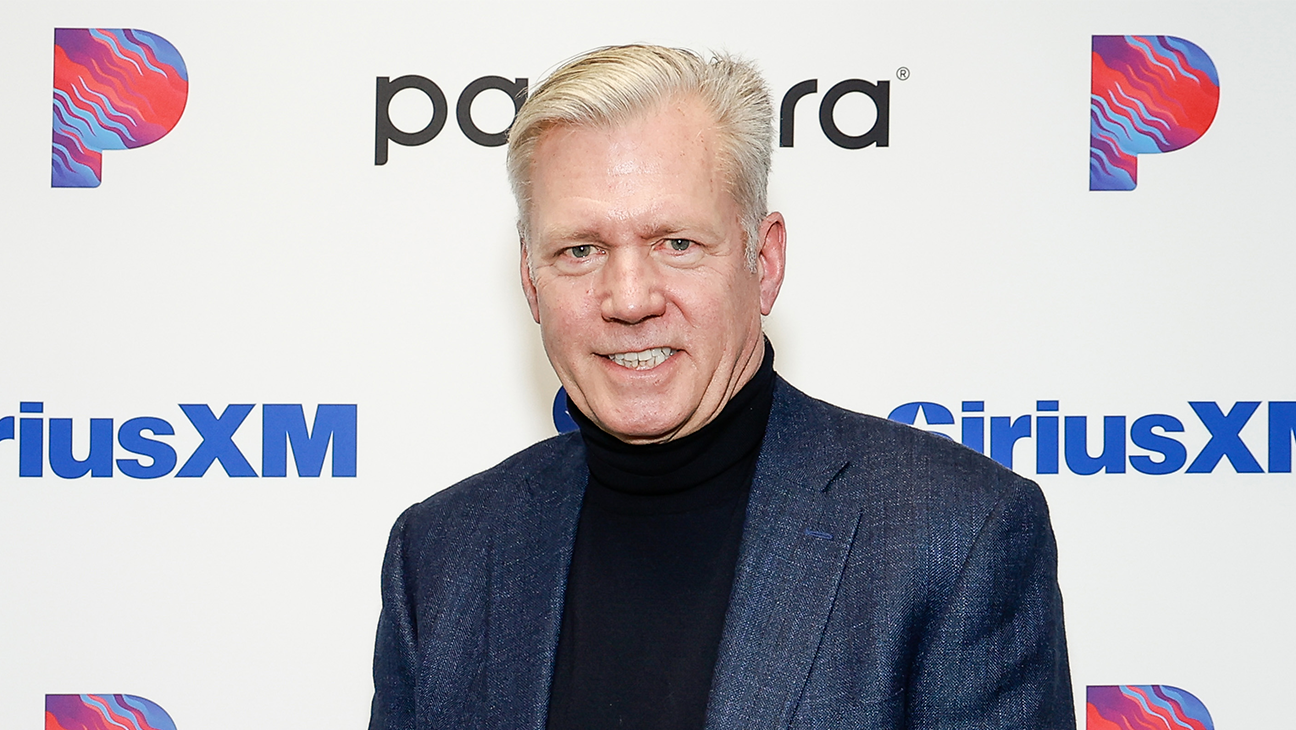
Former To Catch a Predator host Chris Hansen was interviewed on his podcast Friday to give his unfiltered reaction to A24‘s unauthorized, dramatized film about parts of his life, Primetime, which he called overly dramatic, detached from reality, and a “fever dream” — while giving Robert Pattinson‘s performance a “D” grade.
Primetime, which opens Friday in the U.S., is set in 2006 and follows Pattinson’s fictionalized version of Hansen as the popular To Catch a Predator segment on NBC’s Dateline grows into its own primetime block on the network. On the show, Hansen blurred journalistic lines by working with law enforcement and the watchdog group Perverted Justice to intercept adult men as they arrived, unbeknownst to them, at a sting house to meet a minor they’d met online for sex. The men were typically arrested as a result. The series drew mixed reactions, with concerns about potential entrapment-law violations at the forefront of the criticism.
In a brief segment produced for his video podcast, Have a Seat with Chris Hansen, the former NBC News journalist is seen exiting a Times Square AMC after viewing the film for the first time at a Thursday night screening — his first look at the indie drama since its theatrical release. He’s then asked for his first reaction to the Lance Oppenheim-directed film.
“It’s hard for me to — obviously, I’m not a judge, because the character is based on me,” he said. “I think because the character is so detached from reality, from anything I’ve ever experienced then or now doing the investigations — I’m not sure what the point of it was.”
The rest of the podcast episode has Hansen discussing the film, its director and Pattinson’s portrayal of him with Fox News’ Jesse Watters. Hansen railed against the movie throughout.
Oppenheim has said he conceived Primetime after receiving a personalized Cameo video from the To Catch a Predator host. Hansen said on his podcast that he spoke to a mutual friend before seeing the film, and that Oppenheim told the friend it was “something to the effect of, ‘a love letter to Chris Hansen, and it gets a little weird in the storytelling.’”
Hansen also flagged inaccuracies in the fictionalized version of his life — including scenes involving Jeff Zucker and Stone Phillips that he insists never happened — and said absolutely nothing in the film was close to reality. He assured viewers he’s not the ratings-obsessed figure the script conjures. His biggest gripe, he said, is that the film portrays him as an aloof parent, which he says is far from how he relates to his kids. As for Pattinson’s take on Hansen circa 2006, Hansen had few kind words.
“He’s got work to do. I’m kind of the only guy that counts for this, right?” he said.
Days before seeing the movie, Hansen spoke with The Hollywood Reporter‘s Seth Abramovich about what he knew of the film. A24 hadn’t reached out to him or the production to explain the premise or ask for his input, he said.
“Based upon what I’ve seen in the trailer and my understanding of what’s been written about the film, they wanted to create something much darker and way more dramatic,” he said. “I think it’s an insult to the thousands of men and women who work hard every day to protect children from predators. They’ve turned something that is very positive, very challenging and not without risk into what is essentially a horror film.”
On Friday, after viewing Primetime, he doubled down with a direct swipe at Oppenheim.
“You have to question the motives of not coming forward and talking to me or anybody I’ve worked closely with over the years,” he said. “They didn’t want to hear that Chris Hansen is a good guy. They didn’t want to hear that this work is important. This director had a dark image of what he wanted to do. He wanted to create a horror-like film with interesting photography, and didn’t want to hear anything else.”
Hansen continues identifying and capturing potential child predators on Takedown with Chris Hansen. Earlier on Friday, Hansen’s TruBlu streaming network dropped the trailer for I’m Chris Hansen, a documentary centered around the host.
>

England: Do Three Lions have a problem against top-10 teams?

Julianne Moore Accepts Zurich’s Golden Icon Award — in German

Nations League: ‘Brilliant’ Charles brothers lead Northern Ireland to landmark win over Georgia
-

 movies4 months ago
Search For Canadian TV Actor Stewart McLean Now Homicide Investigation
-

 Fashion9 years ago
These ’90s fashion trends are making a comeback in 2017
-
Fashion9 years ago
According to Dior Couture, this taboo fashion accessory is back
-
Fashion9 years ago
Model Jocelyn Chew’s Instagram is the best vacation you’ve ever had
-
Fashion9 years ago
Emily Ratajkowski channels back-to-school style
-
Fashion9 years ago
9 Celebrities who have spoken out about being photoshopped
-

 Anime4 months ago
Rurouni Kenshin: Hokkaido Arc Manga Takes 1-Issue Break – News
-

 Anime3 months ago
HIDIVE to Stream English Dubs for The World Is Dancing, The Forsaken Saintess and Her Foodie Roadtrip in Another World, The Dangers in My Heart: The Movie Anime – News