
Sports
FIFA increases World Cup prize money by over $100 million for participating teams


VANCOUVER, British Columbia — FIFA will award an additional $112 million to the 48 teams competing at the 2026 World Cup following concerns about the high costs associated with participating in the tournament.
Soccer’s global governing body announced Tuesday that it will give an additional $2 million to each team — $1 million in “preparation money” and $1 million as a baseline reward for qualifying for the World Cup.
Additionally, it said it would distribute “subsidies for team delegation costs and increased team ticketing allocations totaling over $16 million,” taking the total increase to more than $100 million.
The overall financial distribution to teams will now be $871 million, FIFA said, up from around $755 million when it was previously set in December.
The FIFA Council, effectively the governing body’s board, confirmed the increase at a meeting here at the Fairmont Pacific Rim hotel ahead of Thursday’s annual FIFA Congress.
In a news release, FIFA said the decision was made “given the commercial success of FIFA’s flagship men’s tournament, the World Cup.” FIFA expects to make a record $11 billion from the 2026 edition, which will be held in the United States, Canada and Mexico. (It will also feature 48 teams and 104 games for the first time, up from 32 and 64 previously.)
The decision, though, also comes after some participating soccer federations, including several in Europe, complained about the substantial costs associated with this World Cup — costs that will eat into their ability to make a profit themselves. The Athletic and other outlets reported that those costs left some in danger of losing money on the tournament.
Some European federations had asked their confederation, UEFA, to lobby FIFA for more prize money. But FIFA sources, speaking on the condition of anonymity earlier this month as the increased prize money came into focus, insisted that it was not a reaction to UEFA’s lobbying nor to pressure from elsewhere.
And on Tuesday, the Council confirmed that the increase will be spread evenly across the 48 teams, rather than based on how far they progress in the tournament or based on where they will play their games.
Their costs do vary by location, especially in the U.S., where tax rates differ significantly from state to state. That and the overall cost of operating in the U.S., one of the world’s richest and most expensive countries to visit, were among the reasons for their concerns.
But FIFA will compensate all of them equally. Each federation will now get a baseline $12.5 million, rather than the previously announced $10.5 million. Round-by-round prize money will remain the same as announced in December.
There was some uncertainty around the total amount, given that FIFA previously announced a $727 million total distribution. (A $112 million increase would have taken it to under $850 million.) But the previous announcement did not include the “subsidies for team delegation costs and ticketing allocations,” which at the time totaled $28 million, a FIFA spokesman told The Athletic.
Tuesday’s increases, therefore, would take the total distribution to more than $867 million. But some of the subsidies also change based on teams’ progression through and experience at the tournament — hence the additional $4 million — the spokesman said.
FIFA covers some day-to-day costs associated with World Cup participation, according to its World Cup handbook. The handbook outlines a contribution toward board and lodging for up to 50 people from each participating federation, starting five nights before each team’s opening match and up to one night following the date of elimination from the tournament.
FIFA also puts money toward the cost of business-class flights for the 50-person delegation between venues and base camps, the rental fees for training sites and other items.
But the teams must pay for everyone beyond the 50-person limit, as well as for things like insurance. Many wealthy federations will bring well over 50 people. Rosters include 26 players, and some staffs will be nearly double the size of playing squads.
Some nations have also selected training sites from outside FIFA’s base camp brochure, meaning they often must go beyond the rental rates that FIFA has negotiated.
FIFA, meanwhile, will benefit from the American market in that it will make record sums from tickets and hospitality sales. It has budgeted for over $3 billion in revenue from those sources, compared to less than $1 billion in 2022.
In its news release, FIFA said that beyond the money paid to federations, “the balance of revenues will continue to be redistributed back into global football for the benefit of and through all of FIFA’s 211 member associations.”
>
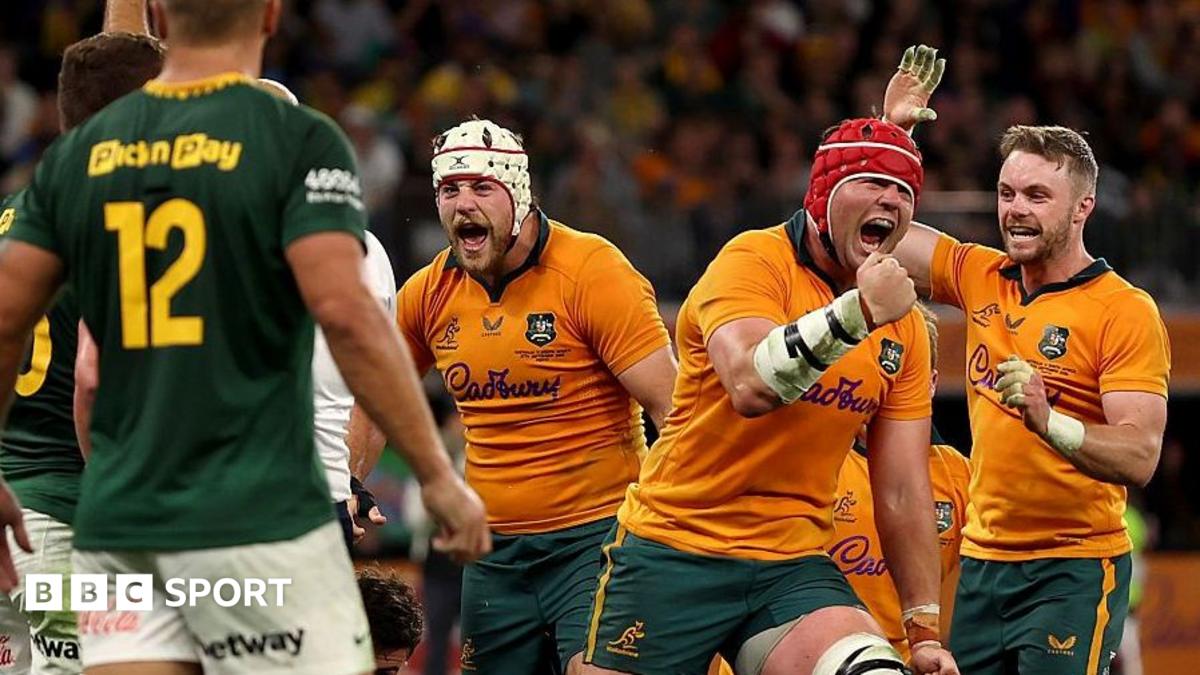
International Test match
Australia (24) 42
Tries: Ikitau 2, Donaldson, Wilson, Jorgensen Cons: Lonergan 4 Pens: Lonergan 3
South Africa (17) 38
Tries: Grobbelaar, van der Merwe, penalty try, van den Berg, Nche Cons: Pollard 2, Mngomezulu 2 Pens: Pollard
Australia were reduced to 11 men but dug in for an extraordinary win against a much-changed South Africa side as they beat the world champions 42-38 in Perth.
The Wallabies excelled with some vibrant attacking rugby, scoring five tries against the back-to-back World Cup winners to lead by 25 points with 16 minutes left.
But then a manic spell of four yellow cards in nine minutes left the hosts overrun, with South Africa mounting a comeback that ultimately fell just short.
The visitors made 13 changes after beating New Zealand in Baltimore but still fielded a strong starting XV, which boasted 240 caps in the second row alone.
But a year out from hosting the World Cup, and a year on from being soundly beaten on home soil by the Lions, it was the home side who impressed before their bizarre late collapse.
The teams traded early penalties before Springboks hooker Johan Grobbelaar drove over for the first try of the match after a powerful maul.
Australia responded well with a wave of pressure which was rewarded when centre Len Ikitau drove over from a metre out.
Ikitau then flew over for his second after the Boks made a mess of a high ball kicked through, but the lead lasted just three minutes.
South Africa played the ball quickly and flung it out wide with Edwill van der Merwe on the end of a stunning break to score in the corner.
The high level continued as the hosts took the lead again before the break. After 14 patient but quick phases, the Wallabies whipped the ball from right to left to find fly-half Ben Donaldson free to score in the corner.
The Springboks had strength in depth to call on, and coach Rassie Erasmus made all eight changes early in the second half with his side down by 10 points.
But it was Australia who continued to dominate. Captain Harry Wilson was denied a try as his foot was in touch but just seconds later he did burrow over the line close to the posts.
Wing Max Jorgensen then sprinted the length of the pitch to score a stunning solo score after South Africa fumbled the ball to make it 42-17.
Wilson was then sin-binned and South Africa finally got their first score of the second half with a penalty try, with Ryan Lonergan yellow carded as well.
The Wallabies were down to 13 and a crossfield kick found Van der Merwe in the corner but the wing dropped the ball before he could ground it.
Australia wing Joseph-Aukuso Sua’ali’i was then sin-binned as well to leave Australia three men down and replacement scrum-half Morne van den Berg scrambled in to cut the lead to 11 points.
Remarkably Australia then appeared to have scored again as Tom Wright intercepted a pass to run in – only for the try to be ruled out and Hunter Paisami shown a fourth yellow card for a dangerous tackle in the build-up.
South Africa had so much space and scored again through Ox Nche to cut the lead to four but time ran out.
Australia: Wright, Jorgensen, Ikitau, Paisami, Sua’ali’i, Donaldson, Lonergan; Bell, Paenga-Amosa, Alaalatoa, Salakaia-Loto, Williams, Valetini, McReight, Wilson
Replacements: Pollard, Ross, Tupou, Shaw, Hooper, Tizzano, McDermott, Potter
Yellow cards: Wilson 68, Lonergan 71, Sua’ali’i 73, Paisami 77
South Africa: Fassi, Van der Merwe, Moodie, Esterhuizen, Hooker, Pollard, Jantjies; Wessels, Grobbelaar, Porthen, Etzebeth, Mostert, De Villiers, Louw, Van Staden
Replacements: Marx, Nche, Louw, De Jager, Wiese, Van den Berg, Feinberg-Mngomezulu, Horn
Referee: Andrea Piardi (Italy)
>
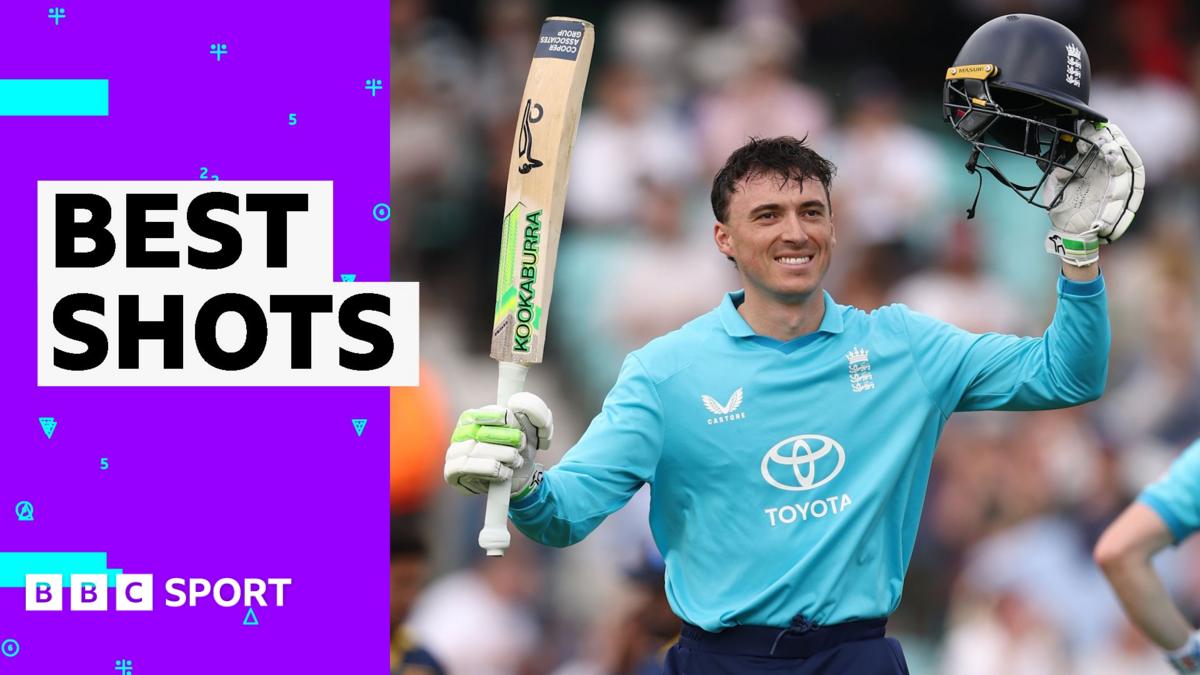
Tom Banton scores a “brilliant” century, his first in an ODI for England, in the third and deciding game of the series against Sri Lanka at The Oval.
>
Riley believed a window opened up for USC this season. But the Trojans let another opportunity for a breakthrough slip right through.
>

Australia beat South Africa while down to 11 men in thrilling Test

One Peace Books Adds ‘My Life Turned Around: After I Was Betrayed and Framed, I Won the Heart of the Most Beautiful Girl at School’ Manga – News

'Brilliant' Banton scores maiden ODI century for England
-

 movies4 months ago
Search For Canadian TV Actor Stewart McLean Now Homicide Investigation
-

 Fashion9 years ago
These ’90s fashion trends are making a comeback in 2017
-
Fashion9 years ago
According to Dior Couture, this taboo fashion accessory is back
-
Fashion9 years ago
Model Jocelyn Chew’s Instagram is the best vacation you’ve ever had
-
Fashion9 years ago
Emily Ratajkowski channels back-to-school style
-
Fashion9 years ago
9 Celebrities who have spoken out about being photoshopped
-

 Anime4 months ago
Rurouni Kenshin: Hokkaido Arc Manga Takes 1-Issue Break – News
-

 Anime3 months ago
HIDIVE to Stream English Dubs for The World Is Dancing, The Forsaken Saintess and Her Foodie Roadtrip in Another World, The Dangers in My Heart: The Movie Anime – News