
Tech
New Apple Rumor: iOS 27 Could Add AI Editing Tools to Photos

Apple reportedly plans new AI editing tools for Photos in iOS 27, including image expansion, spatial photo reframing, and smarter enhancements.
The post New Apple Rumor: iOS 27 Could Add AI Editing Tools to Photos appeared first on TechRepublic.
>
World Labs, one of the leading developers of deep learning models intended to understand physical reality, has been acquired in a $8.2 billion deal, the two companies said today.
World Labs justified the deal in a statement saying that AI development required “close collaboration across model reseach, systems and compute.” AMD, in turn, says that understanding frontier workloads like those created at World Labs will shape its chip-making roadmap.
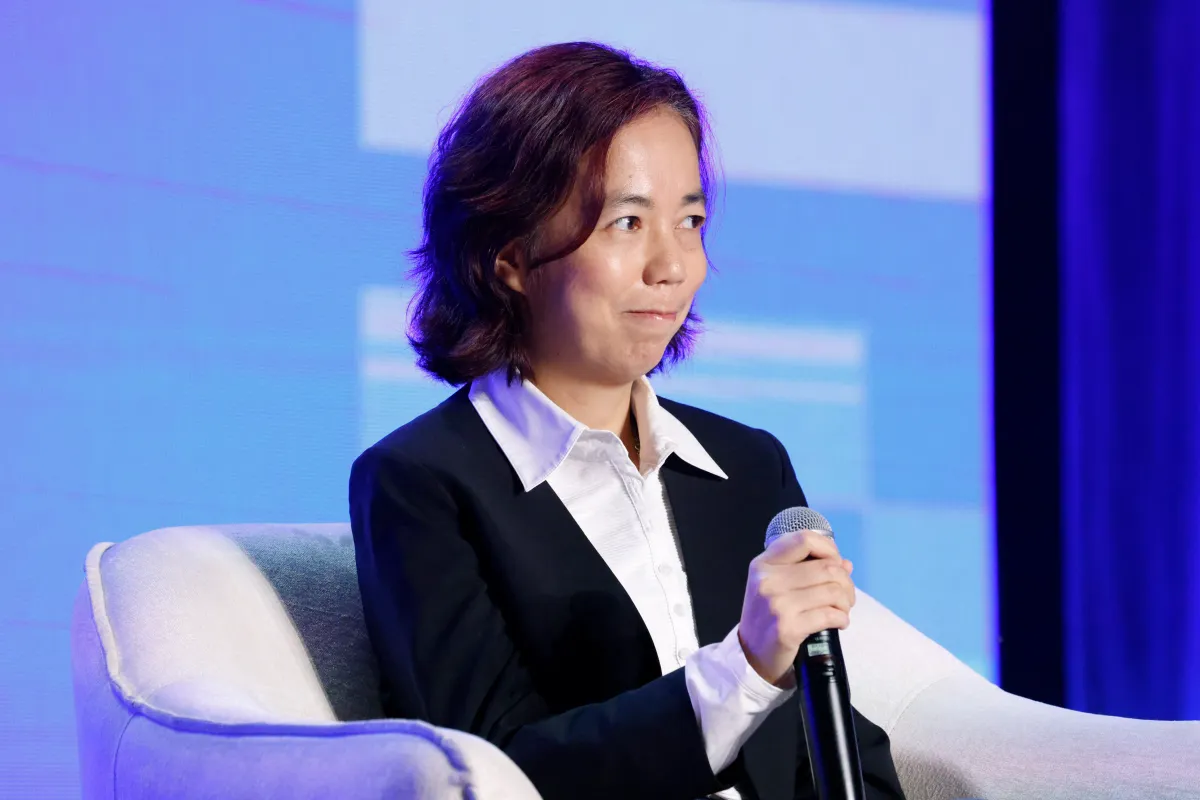
The acquisition will see World Labs founder Fei-Fei Li join AMD as executive vice president and chief scientist. The two companies formed an inference optimization and training partnership last year, and ties have remained close. Notably, Li was a guest at AMD’s CES presentation earlier this year.
Li, a Stanford computer science professor, is considered a pioneer of AI, particularly computer vision, for her role pioneering the ImageNet database and subsequent challenges. In 2024, Li founded World Labs to develop deep learning models with a more robust understanding of reality, arguing that true general intelligence required a grounding in physics and the ability to understand and reason about data beyond text.
In a post announcing the deal, Li described the partnership as the result of a desire to scale World Labs’ technical breakthroughs beyond the lab. “Now that we have tangible proof of the possibilities, we want to do everything we can to accelerate the future,” Li wrote in the post. “To do this requires scaling our efforts, widening our reach, and getting closer to the hardware.”
“World model” remains a loose term, encompassing everything from language models trained to understand visual inputs, to models capable of generating and sustaining a high-fidelity simulation of reality. World Labs’ first product, Marble, is pitched for creating entertainment experiences, but also for the ability to create simulated environments for robot training.
The acquisition is likely to help AMD compete with long-standing rival Nvidia in creating an ecosystem for AI-specific chips. While Nvidia already has a suite of open-weight world models like Cosmos, AMD has only offered text- and video-based models to the public.
World models are seen as vital in efforts to deploy generative AI models on robotic platforms, from autonomous vehicles to industrial robots and general-purpose humanoids. In particular, the dearth of useful data to train general purpose robots means that synthetic data from world models will be key to realizing the vision put forward by companies like Tesla and Figure.
The acqusition is expected to close before the end of the year, subject to regulatory approval.
When you purchase through links in our articles, we may earn a small commission. This doesn’t affect our editorial independence.
>
Nvidia adds a Sentry hardware monitoring design to its AI agent safety platform. See what OpenShell offers now and what IT teams still need to verify.
The post Nvidia Adds Hardware Monitoring Design to AI Agent Safety Platform appeared first on TechRepublic.
>

While some retailers, like Amazon (and Adidas, apparently!), are blocking AI agents from making purchases on users’ behalf on their respective platforms, e-commerce platform Shopify has moved in the other direction.
On Monday, the company announced that browser-based AI agents can now complete purchases on Shopify merchants’ sites, extending their capabilities beyond just searching for products and adding items to carts.
Shopify previously supported WebMCP for its storefronts and carts, allowing browser-based AI agents to comb through a Shopify retailer’s inventory, search for products, and add them to a cart. The addition of WebMCP support for checkout, including Shop Pay, means these agents can now read the checkout screen, update it, and submit the transaction with the buyer’s authorization, without relying on screenshots or scraping webpages, the company said.

This update introduces three new tools — get_checkout, update_checkout, and complete_checkout — that allow agents to inspect a checkout, change things like the customer’s address or delivery option, and then place an order after the buyer authorizes it.
The feature is rolling out to all eligible Shopify merchants, said Gil Greenberg, a staff product manager who works on agentic commerce at Shopify, in a post on X.
Shopify already offers a hosted Model Context Protocol (MCP) server, which allows agents to work server-to-server. The proposed standard WebMCP, meanwhile, is designed for agents that work inside the buyer’s browser. Both leverage Shopify’s Universal Commerce Protocol (UCP), which provides a common way to search for and discover products, build carts, and check out.
Top AI agents like Muse and Instinct already have direct partnerships with Shopify for agentic commerce. The Instinct partnership was announced today.
“If your agent is operating in the buyer’s browser, use WebMCP tools provided on storefront and checkout to efficiently complete order placement, instead of navigating HTML built for humans,” Greenberg wrote on X. “These WebMCP tools provide structured and efficient APIs, purposely designed — via UCP — to ensure accurate commerce facts, required disclosures, and handoff requirements.”
When you purchase through links in our articles, we may earn a small commission. This doesn’t affect our editorial independence.
>
Penguins' Kyle Dubas blunt in addressing Evgeni Malkin's future
Bronny James begins new Lakers chapter without LeBron: 'Feels like he's not here'

Smile Up President Noriyuki Higashiyama Steps Down – News
-

 movies4 months ago
Search For Canadian TV Actor Stewart McLean Now Homicide Investigation
-

 Fashion9 years ago
These ’90s fashion trends are making a comeback in 2017
-
Fashion9 years ago
According to Dior Couture, this taboo fashion accessory is back
-
Fashion9 years ago
Model Jocelyn Chew’s Instagram is the best vacation you’ve ever had
-
Fashion9 years ago
Emily Ratajkowski channels back-to-school style
-
Fashion9 years ago
9 Celebrities who have spoken out about being photoshopped
-

 Anime4 months ago
Rurouni Kenshin: Hokkaido Arc Manga Takes 1-Issue Break – News
-

 Anime3 months ago
HIDIVE to Stream English Dubs for The World Is Dancing, The Forsaken Saintess and Her Foodie Roadtrip in Another World, The Dangers in My Heart: The Movie Anime – News