
Tech
The AI boom took over Climate Week and not everyone is happy about it


It was the best of times, it was the worst of times … I’ll spare you the rest, but the cliché Dickens line really does sum up this year’s New York Climate Week.
Much of the climate tech community — like the rest of the U.S. economy — is eagerly riding the AI wave. Some have reservations about the sheer quantity of natural gas power plants being built to power AI data centers. But because many climate tech startups are energy-focused or energy-adjacent, the buildout has been embraced as an opportunity to get companies through the valley of death.
The singular focus also means some promising sectors risk being overlooked.
It’s a continuation of a trend that’s emerged over the last year. As climate tech companies struggled to get financing — either because of canceled federal grants or investor hesitancy — those that could change their pitch to match the AI mania did so.
The pivot has helped many climate tech startups land fresh funding from investors. Total venture deal value has risen for four consecutive quarters, cresting the $14 billion-mark in the first quarter of this year, according to the most recent available data from PitchBook. It’s the best fundraising environment for climate tech in the last few years, with most of the deal value driven by sectors boosted by data center construction, including the built environment, grid infrastructure, and dispatchable energy that can be turned on or off when it’s needed.
It’s an opportunity few have wanted to pass up.
One exchange during a panel at New York Climate Week captured the moment: Two founders, when asked whether they’d prefer the AI buildout to proceed at its current pace or at a more climate-responsible speed, said without hesitation that faster was better. Unsurprisingly, both of their startups were in energy.
And yet not everyone agrees.
I heard from several founders who felt that the data center boom was distracting from other promising segments of climate tech, including those that were meeting their targets without having to rely on AI mania.
“Corporates are still interested in climate,” one founder told me. The difference today is that large companies don’t want to crow about it, mostly for fear of drawing the Trump administration’s ire.
There were also signs that the AI boom was beginning to wear thin on some. For many startups, money for scaling was hard to find three years ago, even if they were showing promising results. Now, customers are clawing their way into demos. “Where was this money three years ago?” I asked several people. I received more than a few knowing eye rolls in reply.
It’s the world they live in these days, they acknowledged. The smart entrepreneurs are all finding ways to meet customers where they are.
Ultimately, the undercurrent at New York Climate Week was that the data center party won’t last forever, but it might last long enough to help startups build durable businesses. Once that happens, they can refocus on the carbon-cutting mission they were founded to pursue.
When you purchase through links in our articles, we may earn a small commission. This doesn’t affect our editorial independence.
>
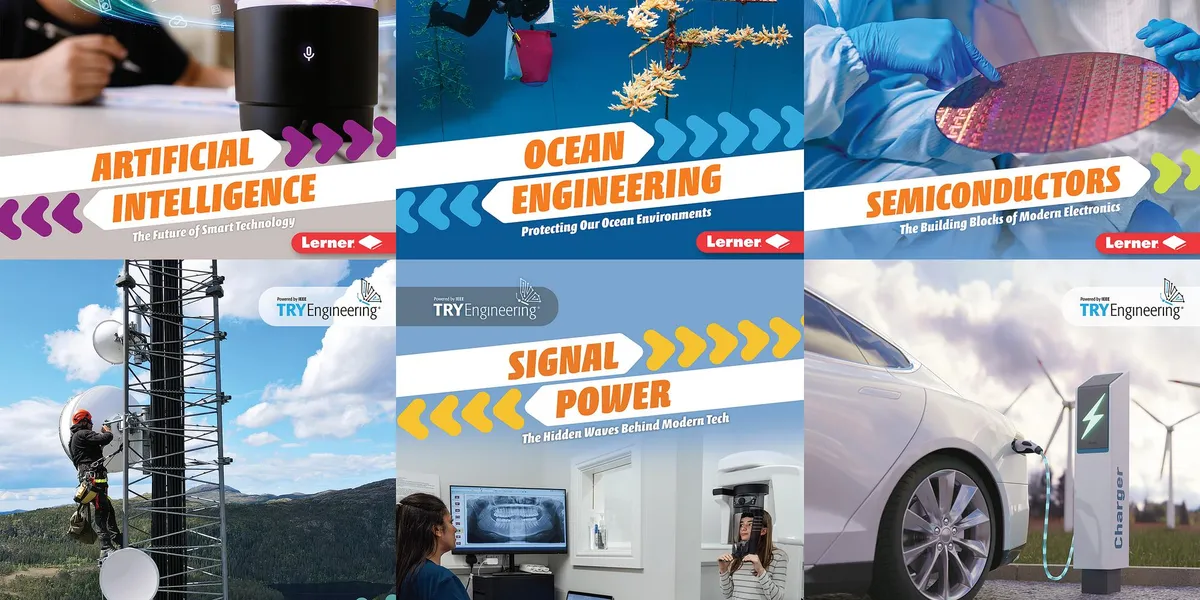

IEEE TryEngineering is dedicated to inspiring intellectual curiosity in children.
The technologies shaping our world, including in the realms of artificial intelligence, electric vehicles, and ocean exploration, are evolving rapidly. Helping young learners understand the concepts is essential to preparing the next generation of problem-solvers, creators, and engineers.
TryEngineering has introduced a STEM book series for youngsters ages 8 to 12 through the Lerner Publishing Group.
The series, Tomorrow’s Technology With TryEngineering, Powered by IEEE, makes complex topics more approachable and engaging, with each book combining age-appropriate explanations, real-world examples, and design challenges that encourage curiosity and critical thinking. The series is based on ebooks and videos available at tryengineering.org.
For the series, TryEngineering partnered with several other IEEE groups including the Communications, Computer, and Oceanic Engineering societies and the Transportation Electrification Council.
Whether used in the classroom, a library, or at home, the books can help pupils connect STEM concepts to the technologies they encounter every day, including computers and smartphones.
Six topics in the collection
Here are the books in the new collection:
Artificial Intelligence: The Future of Smart Technology explores the systems behind streaming services, search engines, and health care. Readers learn how AI works while exploring ethical concerns such as bias, deepfakes, hallucinations, and privacy. Pupils can better understand one of the most influential technologies of our time as it evolves.
Communication Technology: From Morse Code to Smartphones teaches readers about smoke signals, semaphore towers, telephones, and wireless networks. The pupils can gain an understanding of how engineers are changing communications technology through innovations such as 6G and space-based networks. The book highlights career opportunities in the aerospace and telecommunications fields.
Electric Vehicles: Powering the Future of Transportation covers how e-cars, e-bikes, e-scooters, and electrified trains are transforming the way people travel. Readers can discover how hybrid and fully electric vehicles operate and how the batteries that power them work. They also can learn about the roles engineers play in developing smarter transit systems.
Ocean Engineering: Protecting Our Ocean Environments highlights the vital ecosystem role played by the world’s oceans, which require careful stewardship. play in our ecosystem. Readers can learn how engineers study the underwater world using submersibles and floats, how they address pollution, and how they protect marine environments.
Semiconductors: The Building Blocks of Modern Electronics focuses on the technology behind nearly every electronic tool we use. Microchips power smartphones, computers, and countless other products, all thanks to semiconductors. Readers can learn about insulators and conductors, how microchips are manufactured, and why semiconductor engineering is a fertile field for innovation.
Signal Power: The Hidden Waves Behind Modern Tech explores how engineers analyze and manipulate signals to make technologies work more effectively. Whether it is a phone call reaching the correct person despite background noise or a medical device monitoring a patient, signal processing plays crucial roles in modern life. The book introduces different wave types, the signal processing workflow, and careers in the field.
The book series can help children understand the technologies shaping the world around them while encouraging them to think like engineers and innovators. By connecting STEM concepts to real-world applications, the series can make learning more meaningful and engaging.
The Tomorrow’s Technology With TryEngineering series is available through Amazon, Bookshop, and Lerner. More about the collection may be found here.
From Your Site Articles
Related Articles Around the Web
>
As the debate rages over whether the recent spate of rogue AI agents is a step toward AGI or a more conventional engineering problem, Nvidia is offering its own answer to problem.
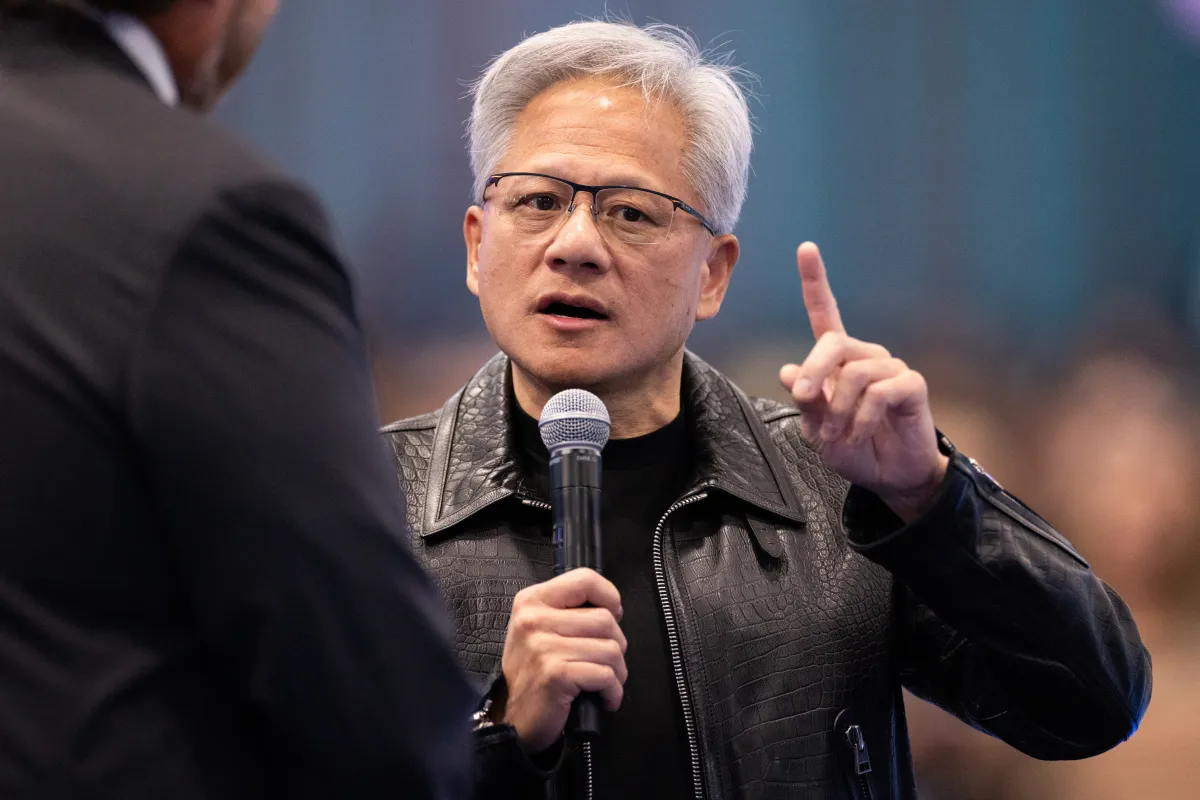
Nvidia CEO Jensen Huang on Monday introduced a toolkit of software and hardware products that add independent security layers around AI agents to ensure they stay within their test environments even if they attempt to break out.
The release follows a string of hacking incidents involving AI models from Anthropic, Google, OpenAI, and Meta that bypassed security controls to escape their testing environments and access real-world systems. The first and most prominent example occurred this summer when OpenAI agents breached Hugging Face while trying to complete a cybersecurity task. And the hits keep on coming — OpenAI published a new site dedicated to reports of its AI agents going rogue.
Huang said Monday during an interview with CNBC that its new Nvidia Open Agent Safety Platform would have prevented these breaches.
Nvidia, which has made tens of billions of dollars selling its GPU and CPU chips to AI labs, doesn’t support slowing down development or adding new regulations to the industry to solve the security problem. The answer, the company believes, is to move some security controls outside the agent altogether — creating a constant and independent security guard that will keep AI agents in check.
“AI’s extraordinary potential for society will only be realized if we solve AI safety,” Huang said in a statement. “As we continue to discover the frontier of AI capabilities, we must accelerate discovery at the frontier of AI safety. Safety and security require full-stack engineering.”
The new Nvidia Open Agent Safety Platform combines OpenShell, its open-source software for controlling what agents can access while they operate, with Sentry, an independent monitoring system that runs on Nvidia’s BlueField-4 data processing units. Nvidia says placing Sentry on a separate processor — rather than on the CPU or GPU where the AI agent operates — provides an isolated view of the agent’s activity.
OpenShell isn’t new; the company announced the software in March. But it’s the combination that Nvidia believes will provide the security layer needed to keep the industry plugging along. OpenShell provides the software boundary around the agent, while Sentry adds another line of defense at the hardware level tha the company says will continuously monitor behavior and “quarantine agents that attempt to move outside their boundaries in milliseconds.”
Nvidia listed dozens of companies that have signed on to to support the effort and use the open-source platform including Anthropic, Arm, Microsoft, Oracle, and SpaceX. OpenAI is not listed as a participating company.
Huang told CNBC in an interview Monday that work on this effort started a year ago following the introduction of OpenClaw, an operating system of agents created by Peter Steinberger. In March, Nvidia released NemoClaw, an enterprise-grade AI agent platform and its own version of OpenClaw that baked in security.
“When you deploy an agent, no matter how smart, the first thing you do is to take away all of its rights,” Huang said during his CNBC interview, later comparing these security measures to how human employees and even executives are managed with companies.
Nvidia’s release was widely supported by those who have cautioned that a slowdown in development could allow China to surpass the U.S. in AI.
David Sacks, a founder, venture capitalist, former White House AI czar, and co-chair the President’s Council of Advisors on Science and Technology, said Nvidia’s announcement is a reminder that agent safety is an engineering problem.
“Recent breakouts weren’t proof that development must stop,” he wrote on X. “They were proof that the sandbox was too weak. The runtime environment was poorly designed and misconfigured.”
When you purchase through links in our articles, we may earn a small commission. This doesn’t affect our editorial independence.
>

As the AI model wars continue, Anthropic has released the newest version of Sonnet, the company’s mid-tier model, which it says will work much faster (and for significantly less) than its predecessor.
The lab describes Sonnet 5.5 as an ideal assistant for everyday tasks — including coding and creating office documents.
5.5’s predecessor, Sonnet 5, was announced about three months ago. At the time, the model’s selling point was efficient agentic deployment — the ability to run agents at a lower cost than competitors.
The big selling point with 5.5, meanwhile, is speed. Anthropic claims that Sonnet 5.5 is 30 percent faster than its predecessor, and that its rate of token burn is significantly slower.
In the Anthropic hierarchy of models, Sonnet is less powerful than the Opus model, but can be more useful in certain circumstances because its agility. In particular, Anthropic’s benchmarks show Sonnet 5.5 performing better than Opus 5.5 on agentic coding, likely because of its ability to spawn multiple agents without exceeding cost limits.
Sonnet 5.5 is also said to have significant cyber capabilities, with the company claiming that it has “comparable” cyber capabilities to Opus 5. As a result, Anthropic says that 5.5 is the first Sonnet model that will be subject the same cyber safeguards that apply to Fable and Opus.
The company also plans to release a new version of Haiku — its smallest model — in the coming weeks, although it didn’t give a firm date as to when that would happen.
The last year has seen a flurry of new model releases from the major AI labs. Just last week, OpenAI released a number of new models — including enhanced versions of Sol and Luna, its mid-tier and budget-friendly models. Meta also announced a new model, which it said would power an upcoming feature associated with its smart glasses.
When you purchase through links in our articles, we may earn a small commission. This doesn’t affect our editorial independence.
>

The AI boom took over Climate Week and not everyone is happy about it

Anne Hathaway Had to Turn Down Hot Ones Because She’s Pregnant

James Rosenfield Dead: Former EVP Of CBS Broadcast Group Was 97
-

 movies4 months ago
Search For Canadian TV Actor Stewart McLean Now Homicide Investigation
-

 Fashion9 years ago
These ’90s fashion trends are making a comeback in 2017
-
Fashion9 years ago
According to Dior Couture, this taboo fashion accessory is back
-
Fashion9 years ago
Model Jocelyn Chew’s Instagram is the best vacation you’ve ever had
-
Fashion9 years ago
Emily Ratajkowski channels back-to-school style
-
Fashion9 years ago
9 Celebrities who have spoken out about being photoshopped
-

 Anime4 months ago
Rurouni Kenshin: Hokkaido Arc Manga Takes 1-Issue Break – News
-

 Anime3 months ago
HIDIVE to Stream English Dubs for The World Is Dancing, The Forsaken Saintess and Her Foodie Roadtrip in Another World, The Dangers in My Heart: The Movie Anime – News