
movies
The Devil Wears Prada 2: What Critics Are Saying Reviews Roundup

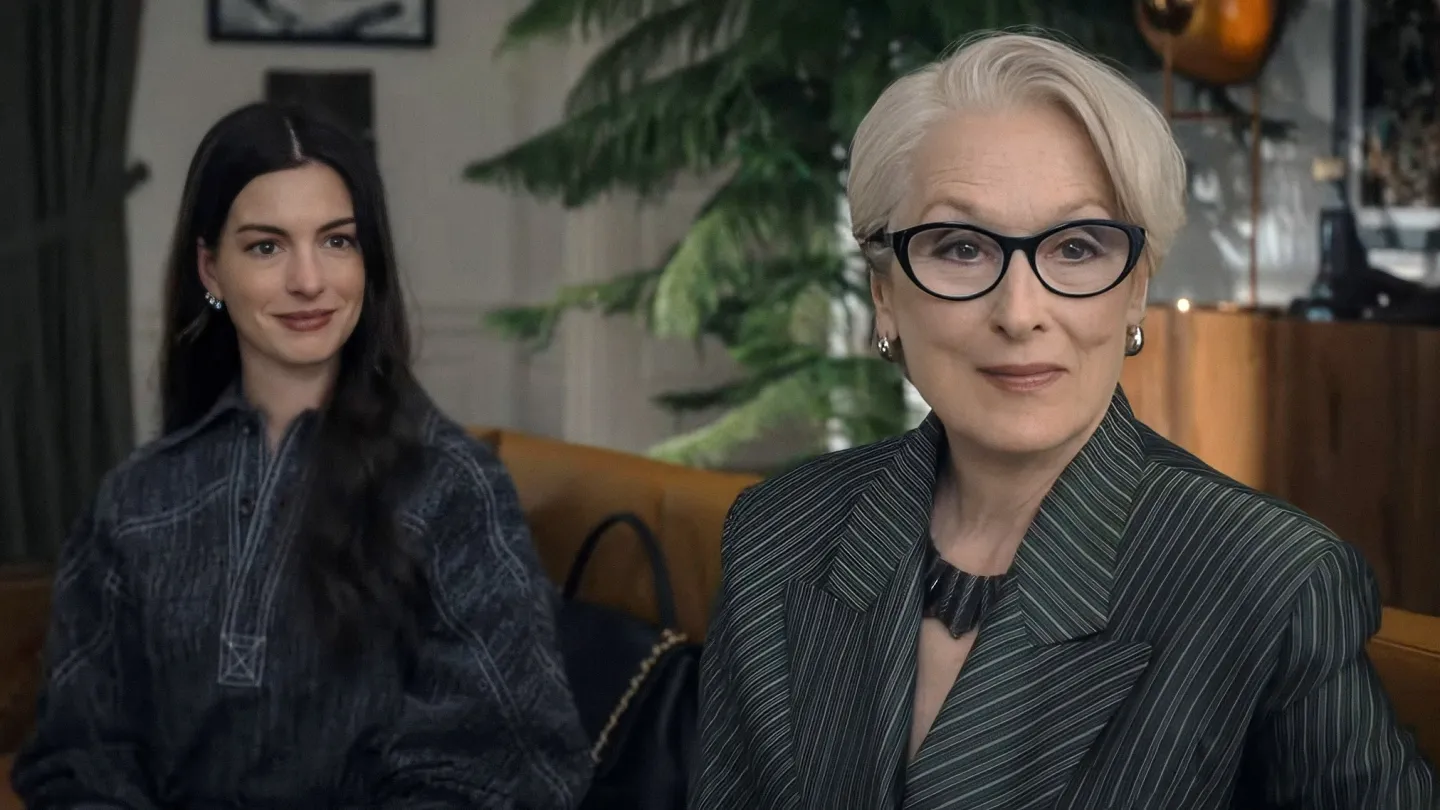
The long-awaited sequel to The Devil Wears Prada is strutting into theaters Friday — and reviews are already pouring in.
Coming 20 years after the 2006 dramedy, the new film follows the original, which was adapted from Lauren Weisberger’s 2003 novel of the same name. Weisberger famously drew inspiration from her time working as former Vogue editor-in-chief Anna Wintour’s assistant. The first movie starred Anne Hathaway as aspiring journalist Andy Sachs, who lands a job assisting Miranda Priestly (Meryl Streep), the formidable editor-in-chief of top fashion magazine Runway. As Andy struggles to survive Miranda’s demands, she also tries to balance her personal life. The film grossed $327 million worldwide and became a lasting pop culture phenomenon.
Hathaway and Streep return for the sequel, alongside Emily Blunt as Miranda’s other assistant Emily Charlton and Stanley Tucci as Nigel, Runway’s art director. Adrian Grenier, who played Andy’s boyfriend Nate, notably does not return. New cast additions include Justin Theroux, Kenneth Branagh, Simone Ashley, Lucy Liu, Patrick Brammall, Caleb Hearon, Helen J. Shen, Pauline Chalamet, B.J. Novak, Conrad Ricamora, Rachel Bloom and a wave of surprise cameos.
The 2026 follow-up centers on Miranda and Andy as they attempt to restore Runway’s relevance in the digital media era while confronting the decline of print publishing. They turn to Emily — now an executive at a luxury fashion house — for help. Original director David Frankel and screenwriter Aline Brosh McKenna also return.
The Devil Wears Prada 2 currently holds a 74 percent rating on Rotten Tomatoes as of Wednesday. Below, see what critics are saying about the film.
“Hathaway is effortlessly charming in the role,” The Hollywood Reporter’s chief film critic David Rooney wrote in his review. “All four leads step back into their characters’ shoes with ease and swan around in fabulous looks. But would Miranda really wear that bonkers Dries Van Noten tassel jacket? I’m not convinced. In the end, the movie is less a workplace comedy than a clothes horse, elevated by a classy cast.”
He added of early backlash the film is receiving: “A promo clip stirred backlash from some East Asians offended by the perceived stereotype of Andy’s assistant Jin Chao — academic over-achiever, tech-savvy, socially awkward, nerdy fashion sense. Whether that will hurt the film in some markets is hard to say. In any case, it’s no fault of appealing Broadway recruit Helen J. Shen in the role. In truth, it’s difficult to imagine anyone being terribly upset by anything in The Devil Wears Prada 2. It’s pretty and polished and as featherweight as a fawning magazine puff piece; it will doubtless make a fortune.”
Rolling Stone’s David Fear addressed the changes in media. “For journalists, this is a horror movie, no matter how stylish and dazzling you dress it up. Every victory is given the full Prada treatment and is still explicitly stated as being Pyrrhic. No combination of stilettos and old-fashioned shoe-leather can temper the fact that integrity, talent, hard work, and a dedication to treating everything from fashion to the moving pictures with seriousness is in perpetual danger of extinction.”
The Guardian’s Peter Bradshaw wrote, “The movie takes us through new versions of the beats from the first film: Andy dishing with Nigel in the cafeteria; Nigel picking out something for the ungrateful Andy to wear, this time for a trip to Miranda’s place in the Hamptons; Andy going to a fashion mecca (Milan); Andy frantically engaging in backstairs shenanigans to protect Miranda from some wicked corporate coup. And for the DWP connoisseurs, there’s even an outing for Andy’s awful blue polyblend sweater that Nigel found to be such a windup back in the day. This is good-natured, buoyant entertainment. It’s wearing well.”
USA Today’s Brian Truitt noted a few things that he viewed didn’t work in the sequel: “What this Devil doesn’t need, though, is to run back so many plot points and so much narrative direction from the first film. It’s enjoyable seeing Streep and Hathaway vamp off each other, but Andy having to work this hard to win Miranda over again just feels repetitive. And the third act of the film feels way too close to the OG as well,” Truitt wrote in his review. “While Hathaway and Tucci have a warm chemistry that they’re able to rekindle, the real throwback that works best is Andy and Emily’s relationship. There’s bonding, butting heads and everything in between as the movie works to develop Blunt’s character a little more, and it makes up for the stuff that doesn’t work. Like a forced relationship angle with Andy and nice-guy Australian contractor Peter (Brammall). He’s a forgettable addition whereas Theroux is a standout as Blunt’s hilariously awkward, AI-loving tech bro love interest.”
Empire’s Beth Webb praised the main cast’s performances. “Hathaway maintains plucky affability despite her character becoming more world-weary, while Blunt’s comedic timing and flashes of vulnerability save the film from feeling too serious. Tucci as Miranda’s stalwart right-hand man Nigel returns as the pocket-square-adorned shoulder to cry on, though does get a few welcome moments to shine. Around them, the film’s world remains a taffeta-draped playground through which the characters showcase traffic-stopping designer ensembles, reminding us why they risk it all for Runway. And at its epicentre, Streep lets us a little deeper into Miranda’s psyche without losing that magnetic elusiveness. Her power survives intact, even if she’s not given a worthy adversary to unleash it upon.
The New Yorker’s Justin Chang wrote, “The Devil Wears Prada 2 is selling a truckload of preposterous goods, but it sells them awfully well, with unfeigned assurance, conviction, and the appropriate ratio of cynicism to hope. As industries and their titans are brought low, this film suggests, the best we can ask for is the satisfaction of doing good work and the lasting friendships we may forge along the way. That’s all.”
>

Nearly a decade after his death, Hugh Hefner‘s widow is expressing her disapproval of a coming-of-age story inspired by her late husband.
Crystal Hefner, who was married to the Playboy founder from 2012 until his death at age 91 in 2017, shared a screenshot of an Instagram DM she sent to Jessica Biel asking her to “please reconsider” starring as Hugh’s fictional wife in Lorraine Nicholson’s Searchlight pic Playmates.
“Please reconsider playing Hugh Hefner’s ‘wife’ if this film intends to romanticize him or the Playboy world,” wrote Crystal in the message. “I was actually his wife, and I experienced sexual, emotional, financial and physical abuse in that relationship. Many other women have come forward with allegations of rape, coercion, drugging and exploitation as well. There are also deeply troubling concerns involving minors. I hope everyone involved in this film takes the time to listen to the women who lived it before helping Hollywood turn it back into nostalgia.”
Written and directed by Nicholson, and inspired by her childhood friendship with Hugh Hefner’s kids, Playmates is described as an LA-set coming-of-age story following 13-year-old know-it-all Elle (played by Indiana Elle), who considers the Playboy Mansion her second home. During her time at the Mansion, Elle meets Anna (Lily-Rose Depp), one of seven hopefuls vying to be Playmate of the Month. The two form an unlikely friendship and try to help each other get what the other wants most, a magazine cover and a boy.
Crystal added in a post, “Regarding the film, I hope it’s not something that will glorify Hugh Hefner. With women in the leading roles, my hope is that the film ultimately delivers a message of empowerment: that women can find fulfillment, independence, and a sense of self beyond Playboy.”
With Bill Pullman playing Hugh Hefner, we’re told Biel’s character is a fictional role not inspired by any of his three wives.
Since Hugh Hefner’s death in 2017, Crystal has opened up about the toxic environment of the Playboy Mansion and the abuse she said she endured during her time there, with other Playboy models sharing similar experiences in recent years.
>
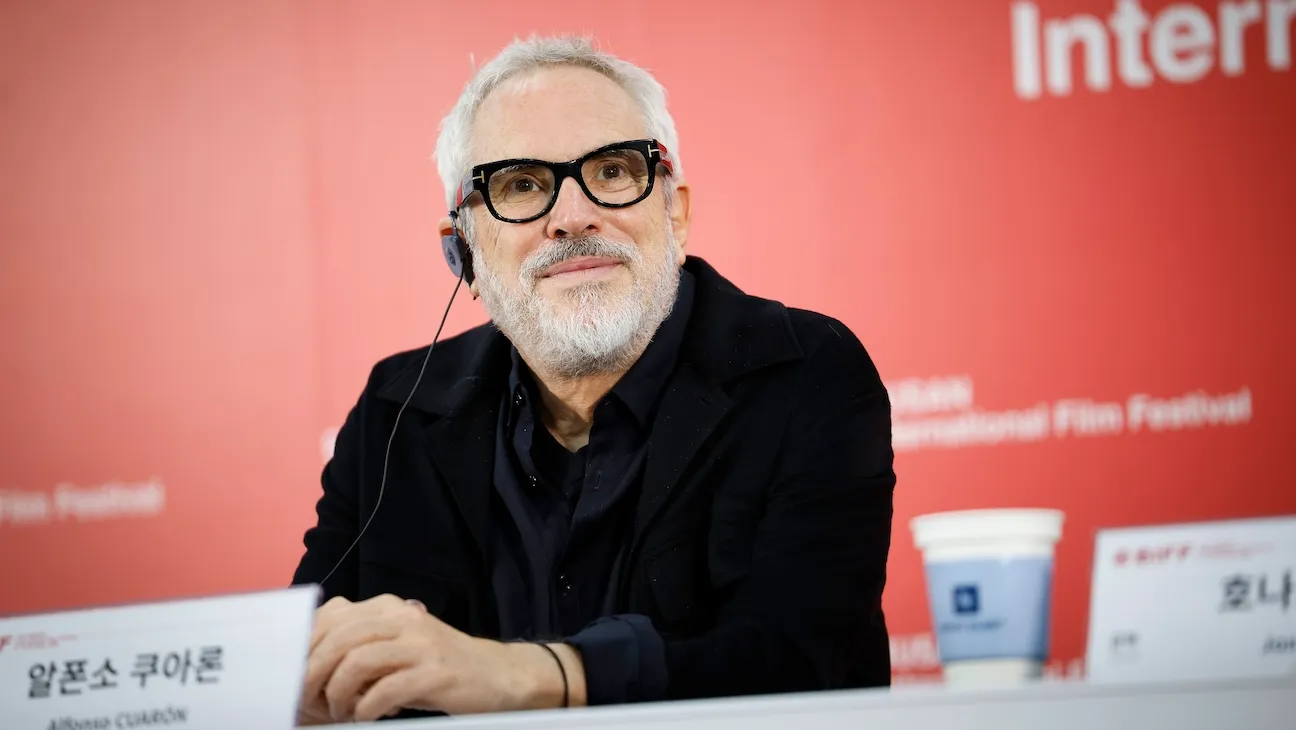
In the impeccable filmography of Alfonso Cuarón, Harry Potter and the Prisoner of Azkaban undoubtedly stands out a little. The film is beloved by fans as one of the strongest installments of the Harry Potter franchise, but it’s also one of the few projects that the multi-Oscar-winning director of Gravity and Roma didn’t develop and write himself.
Cuarón admits he was “a little reluctant to do it” when the opportunity to take on the world of Harry Potter first came his way, but he says making the film was nonetheless one of the most rewarding experiences of his career.
Speaking at the Busan International Film Festival in South Korea on Thursday, Cuarón said, “In many ways, Harry Potter gave me many things — one thing is two of the most beautiful years of my life.”
“I learned so much,” he continued. “I had no idea about visual effects before, but then after Harry Potter it was like second nature. And the whole collaborative work with people who were at the very top of their games — the best production designer, the best cinematographer, like amazing people working together.”
Cuarón also suggested that the industry cachet he gained from the franchise film’s success allowed him to pursue the passion project that has become one of his most acclaimed works among film buffs.
“I had written Children of Men before, and nobody wanted to do it,” he explained. “Then I did Harry Potter, and after, I was able to make Children of Men. So, I have nothing but gratitude towards Harry Potter,” he said.
Cuarón made his first trip to South Korea this week to attend the Busan festival, Asia’s leading cinema event, alongside his filmmaker son Jonás Cuarón, who is presenting his latest feature, Campeón Gabacho, at the event. After attending an Imax screening of his contemporary sci-fi classic Gravity, the elder Cuarón sat down for a master class discussion moderated by Korean director Yeon Sang-ho, best known internationally for his zombie movie sensation Train to Busan. The two directors became acquaintances after that film’s success, with Cuarón later executive producing Yeon’s 2025 mystery thriller Revelations.
The conversation caught Cuarón in a reflective mood, with his observations offering as much life wisdom as insight into filmmaking craft.
“Your films often feel extraordinarily precise and meticulously constructed, yet there is always a sense of life within the frame, as though something unexpected could happen at any moment,” Yeon told Cuarón, adding that he felt this quality particularly strongly in Children of Men. “For a director, do you think control and the unexpected are opposites to each other, or is it only through rigorous control that you can create the conditions to truly embrace the unexpected?” he asked.
“I tend to prepare a lot, and I tend to think and imagine the way that I want the film to be in my head — but then reality starts to shape it,” Cuarón replied. “But isn’t life like that? In many ways, in our lives, we have ideas and expectations. But something I have learned is that if we want to hold onto our expectations against the reality that is presented, we create unhappiness, and also we create a disconnection with the process of life.”
Cuarón said that age and experience have taught him “to prepare and to be ready for things, but at the same time to accept what life brings.”
“That’s when life takes you to incredible places that you would not have expected,” he said, adding, “In that sense, I think the filmmaking process is very connected to the process of life.”
Cuarón said his penchant for long takes — with Children of Men, again, boasting several of recent cinema’s most famous examples — derives from his interest in creating opportunities for instinct and “cinematic miracles” within a process of obsessive technical preparation.
“You prepare and you control in order for the unexpected to happen and to allow it to come to life,” he said.
“I like to shoot very long, continuous takes, because there’s only so much you can control,” he explained. “There’s one thing that you can never control inside those shots, and that is time. Time is flowing completely differently from take to take. The positions, the relationship between actors and camera, and how the light is changing. That’s also the reason I like to shoot natural light as much as possible, because of the accidents of light, the accidents of weather.”
He added: “You have a clarity of what you’re looking for, and then life is just going to not give you that — it’s going to give you something even better, something that you couldn’t have thought of.”
Cuarón said he’s also learned over the course of his career to recalibrate how he measures the success of his creative output, too.
“The rule is that every time I finish a film, I try to dissect what I learned on that film — because I really believe that the only reason to make a film is for what you learn for the next one. Success has nothing to do with the results at the box office, or with critics or awards. It’s about what you learned and how you grow as a filmmaker.”
In comments evocative of his recent social media posts in support of his friend Alejandro González Iñárritu’s frostily received new feature Digger, Cuarón argued that a film’s ultimate value takes time to be perceived.
“I have to say that the film on which I learned the most is probably the film that was least successful on every single front,” he explained. “Children of Men, when it was released, was a film that had very mediocre reviews. It was a box office flop. Nevertheless, nowadays it’s the one that probably people talk about the most. So in that sense, [on] success, only time will tell.”
Yeon later told Cuarón that when he began making films as a younger man, he did so “in an attempt to understand the world.”
“But at a certain point,” he added, “filmmaking made me realize just how little I understand about life. After making films for so many years, has your way of seeing the world become clearer, or has it become more ambiguous?”
“More ambiguous, thank god,” Cuarón replied. “When I was younger, film was everything, and life was only part of film. I guess, now, I embrace life more. Life is just incredible. Film, for me, remains a very important part, but it’s just a part. It doesn’t make the whole of life anymore.”
>
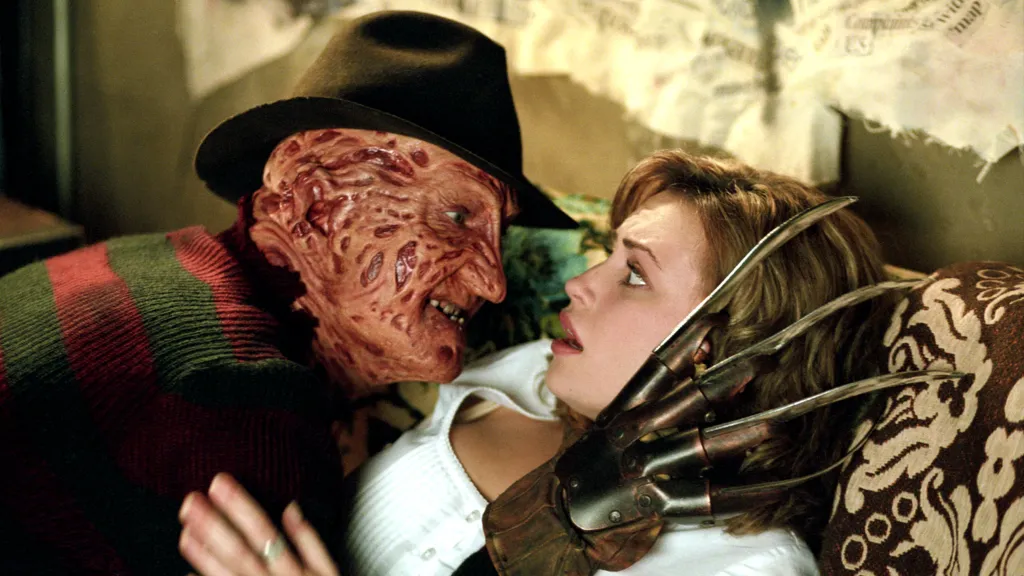
After 23 years, Monica Keena is reliving her “final girl” moment in the ultimate horror crossover.
The Freddy vs. Jason actress recalled why it was “really cathartic” killing off Robert Englund‘s Freddy Krueger in the 2003 Ronny Yu-helmed slasher after his performance in A Nightmare On Elm Street (1984) did a number on her as a kid.
“The first horror movie that I ever saw as a kid was Nightmare on Elm Street, and it really did traumatize me,” she told Nerd Reactor. “I mean, it ruined my childhood. This was in second grade. It was horrible. I had to go to the pediatrician, my mom didn’t know what was wrong with me. I was losing all this weight. Teachers at school thought I was being abused at home.”
Keena continued, “Finally, she takes me to the pediatrician, and he’s like, ‘What’s going on?’ I said, ‘You’re not gonna understand. You’re not gonna believe me because he doesn’t show himself to grown-ups.’ Then he was really concerned. I said, ‘There’s this guy, and his name is Freddy Krueger.’ He explains stuff to me. My mom went to the Brooklyn Public Library, she got a clipping of Robert Englund from a newspaper article … and she showed me, ‘He’s a real guy in real life, he’s not Freddy Krueger. That’s just a character.’ And I had it taped up by my little childhood bed. I had it on my wall for years.”
In Freddy vs. Jason, Keena starred as Springwood teen Lori Campbell, who ultimately decapitates Freddy Krueger after learning he murdered her mother, sending him to a watery grave with Jason Voorhees at Camp Crystal Lake.
“And I always said, ‘When I grow up, I’m gonna become an actress and I’m never gonna make movies that scare little kids.’ And then, here I am,” quipped Keena. “But the whole point is, then it was really cathartic because I got to kill him. I finally got to kill him.”
In her latest horror outing Last Chance Motel, Keena stars alongside Heather Langenkamp, who played Krueger’s original “final girl” Nancy Thompson in the first Nightmare on Elm Street film and multiple sequels.
>
How do other clubs think Man City should be punished? We asked owners and executives
Jayden Bogle interview: England hopes and that Newcastle goal – 'Don't tell Dom, whatever you do'
The Turf pub played a key role in Wrexham's past – but remains integral to the club's future
-

 movies5 months ago
Search For Canadian TV Actor Stewart McLean Now Homicide Investigation
-

 Fashion9 years ago
These ’90s fashion trends are making a comeback in 2017
-
Fashion9 years ago
According to Dior Couture, this taboo fashion accessory is back
-
Fashion9 years ago
Model Jocelyn Chew’s Instagram is the best vacation you’ve ever had
-
Fashion9 years ago
Emily Ratajkowski channels back-to-school style
-
Fashion9 years ago
9 Celebrities who have spoken out about being photoshopped
-

 Anime4 months ago
Rurouni Kenshin: Hokkaido Arc Manga Takes 1-Issue Break – News
-

 Anime3 months ago
HIDIVE to Stream English Dubs for The World Is Dancing, The Forsaken Saintess and Her Foodie Roadtrip in Another World, The Dangers in My Heart: The Movie Anime – News