
Politics
Politics Home | Kemi Badenoch Pledges To Cut Inheritance Tax If Tories Win Next Election



4 min read
Kemi Badenoch pledged to scrap inheritance tax on family homes in a conference speech that sought to present the Conservatives as the party of the economy.
Speaking in Birmingham on Wednesday, Badenoch said the Conservatives “are and always have been the party of home ownership”.
“The next Conservative government will legislate so nobody will ever pay inheritance tax on their family home,” she said.
“On top of that, couples will be able to leave an additional £1m tax-free, and these changes mean every inheritance tax bill will be cut, and the number of families paying inheritance tax will fall by more than half.”
Addressing reports that she was considering abolishing inheritance tax altogether, Badenoch said she intends to make this pledge “as soon as we can afford it”.
“We could do it, but not if we want to keep our country safe with a Britannia shield,” she added, referring to her party’s pledge of £10bn for a UK air defence system similar to Israel’s Iron Dome.
“Not if we also want to keep people safe with 50,000 new prison places, not if we want to cut the deficit, threatening to bankrupt our country and burdening our children.”
Badenoch repeatedly framed the Conservatives as the party of economic responsibility, and said that “spending money we don’t have on things we cannot afford is not kind; it is reckless”. The Tory leader said the party has already identified potential savings worth more than £70bn.
Badenoch said that there is a “battle for the soul of this nation” and positioned the Conservatives as “a renewed Conservative Party fighting again for the belief that what people earn belongs to them, not government”.
She said the Labour government led by Prime Minister Andy Burnham “wants to wind back the clock to the failed ideas of the past” and accused Labour of wanting to increase taxes and make it “harder and harder to make ends meet”.
The Conservatives have also proposed cuts to employer National Insurance contributions for those aged 21 to 24.
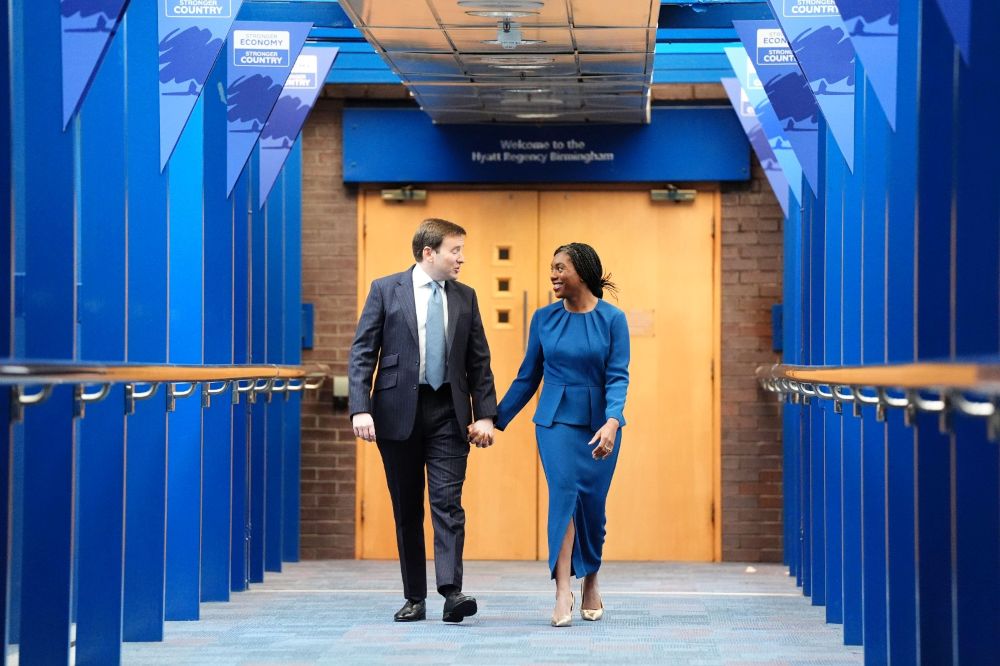
One of the most significant elements of Badenoch’s speech was about Reform UK.
The Tory leader launched a scathing attack on Nigel Farage’s party, in comments that seemingly put to rest the idea that the Conservatives could work with Reform at the next general election.
Badenoch said Reform politicians were “openly questioning people’s identity” based on their race, like black England football players.
“I am black, I am British, I am proud of my country,” Badenoch said.
“I’m proud of our history, all that we have done, and all that we will do in the world. Our best days are not behind us, and we will not let this country go backwards.
“I don’t want to live in a country run by people who threaten journalists, who call veterans traitors, and debate whether my mixed-race children are English. I don’t want to explain to my son when we’re watching our brilliant England team play football, that some people don’t think our black players are English.”
She said the country “must not let these people take us backwards” and said that Reform are “not like us”.
“We are different, we are the Conservative Party.”
She said that one of the challenges facing the Tories was winning back voters who had left them for Reform, describing them as “our people”.
“We let them down, and we want them to come back home. They deserve better than Reform politicians,” the Tory leader said.
Badenoch said her party was on the way back after its heavy defeat at the 2024 general election.
“People were writing us off. Let me tell you, I’m not someone who gets written off, and neither is the Conservative Party.”
She described the Conservatives as the “no drama party”, with infighting a thing of the past, referring to MPs who have left the party for Reform since the last election, which include former cabinet minister Robert Jenrick, as “an export boom of drama queens”.
However, she also acknowledged that the party has work to do to win the next general election.
“There is still a lot of work to do. A lot of work. People are looking through the shop window. They like what they see, but let’s be honest: not enough of them are buying yet. We need to fix that.”
She added: “I want us to win in three years’ time. To be honest, I want us to win next week. We are ready for an election, whenever it’s called, because we are the only party that understands what has gone wrong in Britain and knows how to put it right.”
While Badenoch’s personal ratings are relatively positive, the Conservative Party continues to poll poorly.
The latest YouGov poll puts the Tories on 20 per cent compared to Labour on 27 per cent and Reform on 22 per cent.
>
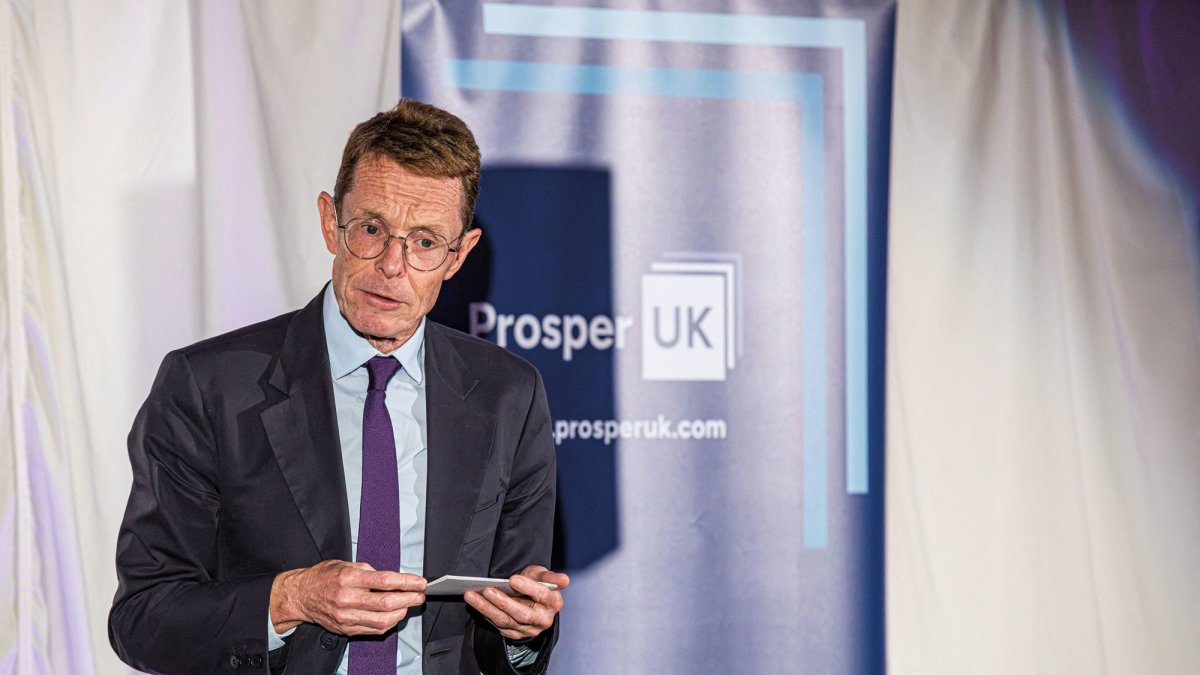
Andy Street speaks at a Prosper UK event in September 2026 (John Rose/Alamy)

10 min read
Prosper UK is on a mission to pull politics – and the Conservative Party – in a centre-right direction. Will it succeed? Noah Vickers reports
In a hotel bar in Newbury, confusion reigns. Seven men have gathered in the bar’s function room to talk about how they can play their part in a new political movement. The trouble is, several of those attending aren’t entirely sure what this movement is, or what its actual objectives are. It’s called Prosper UK and it has so far attracted almost 30,000 supporters across the country.
Co-chaired by former West Midlands mayor Sir Andy Street and the ex-leader of the Scottish Conservatives Baroness (Ruth) Davidson, Prosper styles itself as a “modern, forward-looking centre-right movement with the ideas, energy and reach to shape the country’s next chapter”.
Its mission statement is that “the UK deserves better than a choice between Andy Burnham and Nigel Farage at the next election”, and it is explicit in wanting “the Conservative Party to provide that alternative”.
However, the group argues, the party can only do so “by appealing to the centre ground and reaching beyond its traditional base, to voters who have backed other mainstream parties and to voters who have drifted away from politics altogether”.
Prosper’s top team includes Amber Rudd, Sir David Gauke, Lord Barwell, Margot James and Sir David Lidington – the former home secretary, justice secretary, Downing Street chief of staff, digital minister and de facto deputy PM to Theresa May respectively. It’s an impressive roster, but one that some believe is also indicative of Prosper’s limitations.
The group “looks a bit like a network of ex-MPs wanting to go back to the ‘golden years’ of Cameron”, says one current Conservative MP, which “doesn’t really resonate because a) they weren’t that golden, b) the political landscape is unrecognisable, and c) the party of 2026 is unrecognisable”.
Notably, all of these senior figures were opposed to Brexit during the 2016 referendum – an event that dramatically ruptured the Tories’ voter coalition and later forced several of the party’s leading lights into the political wilderness. Gauke and James, for example, were both stripped of the Conservative whip by Boris Johnson after they rebelliously attempted to prevent a no-deal Brexit, while Rudd voluntarily surrendered the whip over the same issue.
Though Prosper does not yet have a formal policy on Britain’s relationship with Europe, it is currently consulting with its supporters on it, asking for their “practical views on where co-operation with the EU should be strengthened and where the UK should remain independent”.
Prosper’s launch, back in January this year, was partly drowned out by Tory MP Suella Braverman deciding to defect to Reform UK on the very same day – but the planning had been in place for many months.
“Andy was the person who did the ring-round and really set the ball rolling… sort of late summer last year, getting people together in August and September,” says Davidson.
“Part of the frustration had been that we saw Labour come in, they were talking about growth, but actually doing policies that were the antithesis of that.”
She adds, carefully: “The Conservative Party was picking itself back up off the ground and was talking a lot in the culture kind of space, rather than the economic space at the time.
“We all coalesced around a simple truth, which was we felt there was a gap in British politics and that millions of voters, even coming out of the back of an election where they’d all had their say, still felt politically homeless.
“We wanted to bring those people together and take that conversation out of the Westminster bubble – take it into the West Midlands for Andy, Scotland for me, out into communities across the UK and start listening to why people felt they were so disenfranchised.”
Sir Andy, drawing on his decades in senior roles at John Lewis, says he would not have launched Prosper if he were not certain there was an “addressable market” of people ready to back them.
He is also clear that Prosper is not a think tank or a pressure group – it is a ‘movement’, which is gathering support not just from disaffected Conservative voters and members but also from people who voted for and currently support other parties, like Labour and the Lib Dems.
As well as publishing policy reports, Prosper is holding regional events across the country, and it is hoped that this will eventually give rise to a nationwide structure of local Prosper branches – starting, naturally, with the places where they are accruing most members.
Hence, Newbury – a Tory/Lib Dem swing seat which swung decisively away from the Conservatives in 2024.
Of the seven men gathered in the hotel bar – most of whom look over the age of 50 – four are Conservative members or supporters, one is a former Conservative who has moved to the Lib Dems, and two say they are non-aligned centrist voters.
At least a couple of the group say they first heard about Prosper thanks to Rory Stewart mentioning it on The Rest of Politics, but they are less sure about how exactly it intends to fight for the centre-ground perspective they hold dear.
The assembled supporters are given a brief overview of ‘Rethink the Rates’, a campaign Prosper is running to reform Britain’s “outdated, unfair and broken” system of business rates. But no sooner have they been asked whether anyone would be willing to assist in that campaign, the questions begin.
“What I would like to know is, is this a cross-party group?” asks one attendee. “My recollection is that when I first heard about Prosper UK, it was intended to be cross-party, but I’ve only heard the word ‘Conservative’ so far in this room.”
Another chimes in: “Is it another party? We don’t want a further dissolution of the parties under first-past-the-post.”
“I haven’t got this straight in my own head,” says a third attendee, a little later on. “Some of this messaging is quite confused, regarding where Prosper is and where it’s going.
“Is it politically aligned? Isn’t it politically aligned? Is it speaking for business? Is it speaking for centre/centre-right politics? What is the driver and how do I sell this to people?”
“I think that’s a real challenge,” a fourth supporter admits. “I’ve been to the higher-ups, saying, ‘You need clearer messaging, people’.”
Structurally, it could be argued that Prosper is not all that different to the Jeremy Corbyn-supporting Momentum movement, in that it has its own membership and is trying to steer a particular political party in a particular political direction.
“It looks a bit like a network of ex-MPs wanting to go back to the ‘golden years’ of Cameron”
Sir Andy points to a key difference: “Momentum was within the Labour Party, fighting for a particular version of what they believed in, but the whole point about Prosper is that it has to be additive to the Conservative Party…
“The minority of people who come to our events are existing Conservative supporters, so this is trying to extend the remit of the Conservative Party.”
Has Tory leader Kemi Badenoch welcomed any of what Prosper is doing?
“We wanted to make absolutely sure we spoke to Kemi before we launched,” Sir Andy replies.
“We wanted to explain what we were trying to do.
“Critically, on the day we launched, Ruth answered a very direct question from Laura Kuenssberg, ‘Do you want Kemi Badenoch to be prime minister?’ Answer: ‘Yes’, so let’s not try to disguise that…
“We explained to Kemi we were trying to be additive, trying to attract these people who perhaps the party wasn’t yet winning back – people who voted Lib Dem, people who lent their vote to Labour, and of course people who sat it out.
“So, this point about trying to broaden the church, bring them back so that we can have a Conservative government again, was there.”
But Sir Andy admits that Badenoch’s reaction to Prosper’s launch was somewhat on the “cool” side.
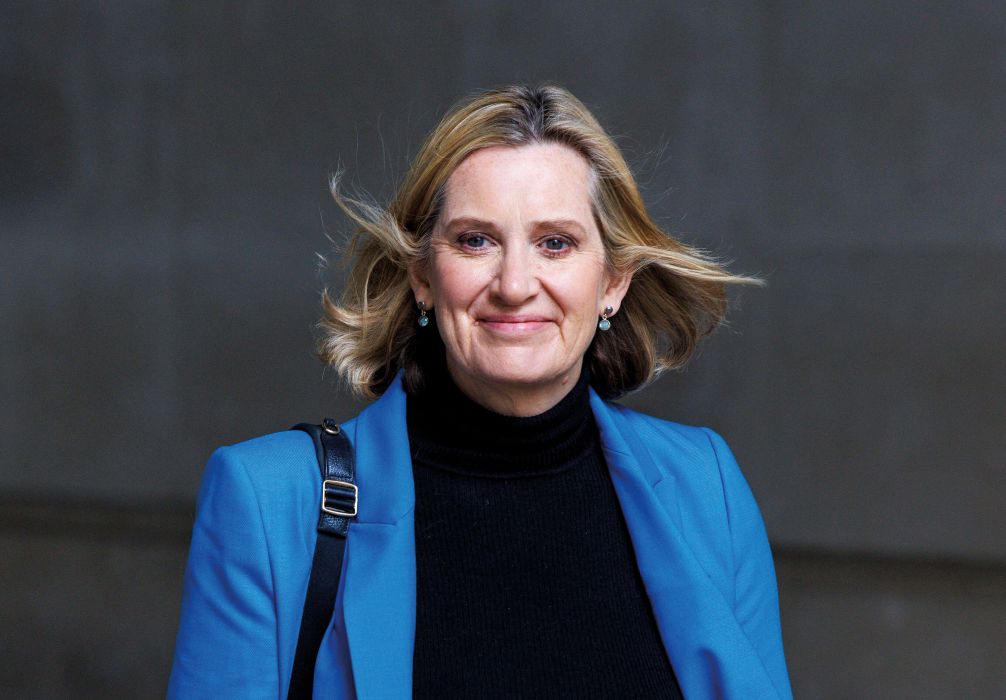
“I’m the leader of the Conservative Party, not anyone else,” she said when asked about Prosper in the week of its launch. “And it is what I think needs to happen that they need to support, because that is what Conservative Party members have voted for.
“Anybody who is trying to push an agenda that is not the platform I stood on is not being helpful.”
Sir Andy says he understands, however, the position his party leader is in: “She’s trying to do two things at once. She’s trying to reinforce the boundary with Reform and at the same time win back those people, so she’s got to be careful about too openly shifting to our view of the world.”
He adds: “Lots of her lieutenants in the leadership of the party have openly engaged and welcomed ideas coming forward.”
Prosper has produced policy papers on welfare, devolution, immigration and, more recently, a report on how young people should be helped in navigating a labour market reshaped by AI. It is also calling for reforms to make student loans fairer and for the triple lock on state pensions to be replaced.
How is all of this research being funded?
“If only there was one crypto-billionaire, it would be easy,” Sir Andy laughs. “It’s just coming from a relatively large number of – by political standards, currently – small donations from business people or individuals… We’re not in hock to anybody.”
Davidson adds that some of its signed-up supporters have donated either on a one-off or regular basis.
Under electoral law, Prosper is a members’ association, and is required to report to the Electoral Commission all permissible donations it receives from a single source which exceed £11,180 in a calendar year. As no single donor has yet reached that threshold, no declarations have been made so far, according to Prosper’s chief executive Simon Saunders.
In the meantime, a general election may still potentially be almost three years away. What else will Prosper do until then?
The answer may have slipped out at a recent Prosper event at Arundells, the former Salisbury home of Sir Edward Heath.
Asked by the former Conservative MP Ben Howlett whether Prosper’s growing supporter base could ultimately be used to influence Tory candidate selections, Sir Andy is said by Howlett to have rejected any suggestion of “entryism” but confirmed that Prosper does want to “help select council candidates and, over time, support people with similar views to come forward” as parliamentary candidates.
“Andy was describing something we are happy to be open about,” says Saunders, when asked about this by The House.
“Over time, we want people who share our outlook to join the Conservative Party, get involved with their local associations, support local candidates and, if they want to, put themselves forward as council or parliamentary candidates through the party’s normal selection processes.”
At the Conservative conference in Birmingham, Prosper is holding several events and receptions both inside and outside the secure zone, in an effort to reach not only conference-attending Tory members but also people interested in Prosper who happen to live in the West Midlands.
Despite its tens of thousands of politically homeless supporters, Prosper has ruled out ever becoming a political party of its own.
“We’re not here to be a shadow Tory Party. We’re not. That’s not what we were set up to do and it’s not what we wish to do,” says Davidson.
“We have a kind of plan up to the election. We will make sure that we have a plan for beyond the election as we get closer to it.
“But everything that we know, all of the research we’ve done, all of the amassed experience we have on our board – which is pretty substantial – indicates that if the Conservatives don’t fight in this economic space, they won’t have a huge amount of success at an election.”
>
Politics
Politics Home | London Tories Call For “Conversation” On Ending Sadiq Khan’s Free School Meal Scheme


The Mayor of London introduced the capital’s free school meal programme in 2023 (Jordan Pettitt/PA Images/Alamy)
5 min read
Senior London Conservatives have called for a “conversation” about scrapping Sadiq Khan’s free school meal programme if the party wins the mayoral election in 2028.
Under the mayor’s programme, launched in 2023, all state primary school children in London receive free school meals on a universal basis. In the rest of England, meals are provided to every child up to the end of Year Two, after which point they become means-tested.
Speaking at a Tory conference fringe event in Birmingham, Emma Best, deputy leader of City Hall Conservatives, said the party needs to have “a big conversation” about the scheme’s future because of its cost.
“I don’t think it’s a commitment that we need to say we’re stopping it right now, but I don’t think the public understand what is happening,” she said.
“Half a billion pounds is being spent on free school meals. Nothing’s free – those are taxpayer-funded meals…
“I’ve got three kids. They’re all getting free school meals. It’s a single parent on a council estate somewhere who is struggling every day, who is paying for my kids to have free meals.”
The mayor allocated £130m to the scheme in its first year, rising to £140m in 2024/25 and £148m in 2025/26. After the government expanded eligibility for free school meals nationally, a further £99m was allocated to the scheme for 2026/27. He has promised to keep the scheme in place for as long as he is mayor.
“This year, the Met [Police] is £200m short in their budget,” said Best. “That is a conversation we need to have. That is a point Londoners have to understand, first and foremost. Once Londoners understand the trade-offs, we can talk about what we’ll do about it.”
The Conservatives’ shadow minister for London, Gareth Bacon, told PoliticsHome he agreed with Best, particularly given that schools policy is not part of the mayor’s statutory remit.
“The truth is that education is not part of the mayor’s devolved powers. The mayor chose to try to invade that territory a year before the last mayoral election, and frankly it looked like an electoral gambit,” he said.
“At a time when he can’t police the streets properly, that seems like the wrong priority to me… If everything else was going very smoothly, that would be fine. It isn’t.
He continued: “He’s nearly doubled the council tax precept in the ten years that he has been mayor. The police haven’t got enough money to police the streets effectively, and he’s spending taxpayers’ money on things that aren’t any of his business. That’s not right.”
The next Conservative mayor, he added, should “make it clear to people, these are the choices – are you happy with this? Are you happy that the policing budget is lower than it should be at the same time that the mayor is spending taxpayers’ money on things that are not within his power?
The last Conservative mayoral candidate, Susan Hall, promised to keep the free school meal programme in place “for as long as the cost of living situation requires it”, though she later questioned whether the scheme should be “targeted” at poorer families – prompting criticism from Khan.
“The mayor wanted that kind of argument, that’s why he did it [introduced the policy] before the election,” said Bacon. “Had there been a crying need for it, I’m sure he would have done it ten years ago.
“He thought he was going to be under some pressure at the election, so I think he was reaching for things he thought might be popular, that he could do very quickly, and he came up with that.”
While Khan has not yet confirmed whether he will run for a fourth term in 2028, four Conservative members are running to be nominated as their party’s mayoral candidate.
The most well-known among them, the former home and foreign secretary James Cleverly, has avoided making detailed policy commitments, and his team declined to comment on whether he would scrap the free school meals scheme when approached by PoliticsHome.
One of his rivals, Westminster councillor Festus Akinbusoye, similarly declined to comment.
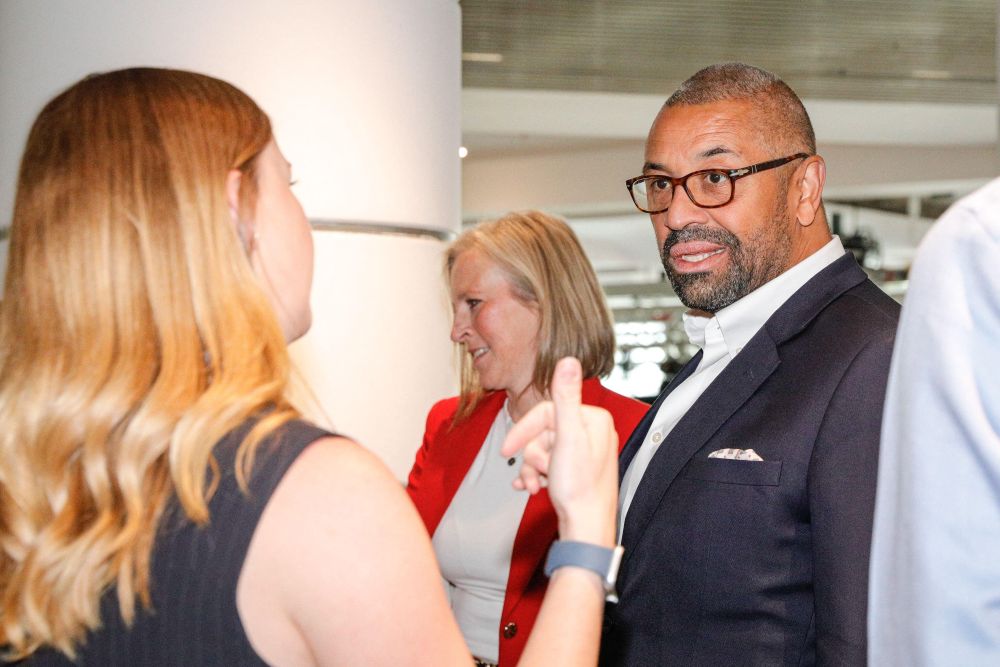
But London Assembly member Andrew Boff, who is on his seventh attempt since 2000 at securing the London mayoral candidacy, told PoliticsHome he would look at whether the scheme should be more limited.
“Free school meals should absolutely be there for children who need them. But Khan chose to make the scheme universal, including for families perfectly able to pay,” he said.
“With more than £500m allocated or approved over four years, we have to ask whether that is the best use of scarce mayoral resources. I would protect support for families who need it, while reviewing whether better-off households should continue to be subsidised.”
Alex Challoner, a party activist also seeking the nomination, went further by saying he would remove the scheme in its entirety.
“Sadiq Khan has spent almost half a billion pounds playing education secretary while the basics of running London go undone. Every pound of that is a pound not spent on the problems only City Hall can fix,” he said.
“The best way to put money in Londoners’ pockets is a good job with rising pay. As mayor, I will make London the easiest city in the world to invest in, so businesses build here, grow here and hire here.
“Parents deserve a mayor focused on the economy their children will work in, not one chasing headlines.”
>

8 min read
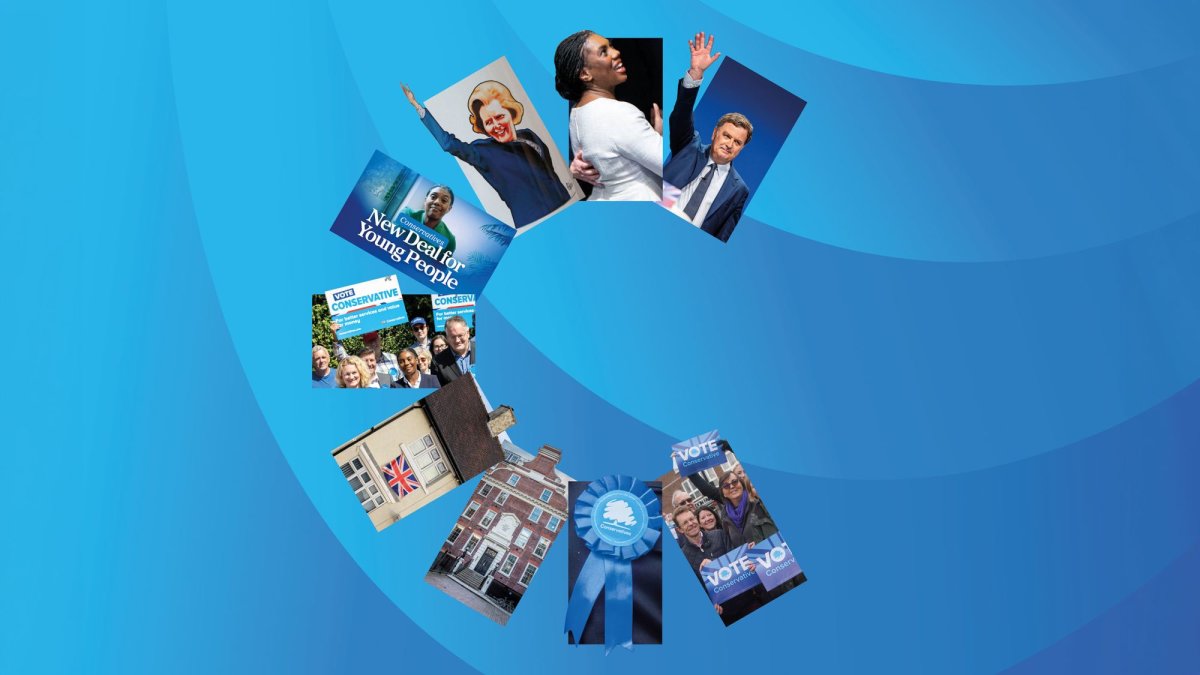
The Tories will need to win back younger voters if they are ever going to govern again. Zoe Crowther finds the party is staking it all on being seen as the best chance they have to get a good job and home
At the last general election, the median age of a Conservative voter had risen to 63. Of those under 30 who cast a vote in 2024, barely eight per cent did so for the Tories.
Campaigning for the Tory leadership in the wake of that crushing defeat, Mel Stride described the age profile of the party’s voters as “completely untenable”. Only “deep, hard work over a sustained period of time” could turn it around, he said.
More than two years later, Stride is out of his job as shadow chancellor and those close to leader Kemi Badenoch are resisting pressure for headline-grabbing policies designed to appeal specifically to younger voters.
The Conservatives have not given up on younger voters completely. In February, the party launched its ‘New Deal for Young People’, which included scrapping real interest rates on Plan 2 student loans, creating 100,000 more apprenticeships for 18- to 21-year-olds, and introducing a £5,000 First Job Bonus, which would allow young people to keep the first £5,000 of National Insurance they would have paid.
The party has also promised to abolish Stamp Duty Land Tax on primary residences for UK residents, a policy that would help younger voters get on and move up the property ladder.
But asked whether there is a further policy push for the younger generation, insiders say the priority is to restore the party’s reputation for economic competence more generally.
The party is said to be keen to move away from a politics-by-focus-group approach, where every policy is broken down according to how it might appeal to a particular demographic.
Tory sources say there is no specific person or team working on youth policy in the
Conservative Campaign Headquarters (CCHQ), or for any other demographic group. Instead, they argue the party should return to fundamental Conservative principles: lowering the tax burden, reforming welfare so that work pays, promoting aspirational conservatism and pursuing deregulation, including in housing. The thinking is that these policies will naturally appeal to working professionals under 45, a revealingly broad definition of what the party now considers its potential ‘young’ electorate.
There will, in any case, only be handful of key policies unveiled at this year’s conference – compared to dozens at last year’s. At least one of these is expected to centre on ‘aspirational conservatism’.
Conservative MP for Windsor Jack Rankin, who also serves as Badenoch’s parliamentary private secretary, says: “One thing that is quite nice about the party at the minute is we are not overly focused on cynical retail politics that comes out of focus groups to attract a particular crowd.
“We’ve had time to think about where we went wrong and what we want to do, and the broad consensus is that where we went wrong in government is where we weren’t true to our authentic principles, so we’re trying to be a serious party.
“We can’t out-populist Reform. We’re not going to outspend Labour. But with priorities like fiscal discipline and defence, that’s exactly what the country needs right now. There’s a USP for us; it’s what we bloody believe, and it’s authentically ours and unites us.”
Rankin, who is 34, says that to win back working-age voters they will “have to look like a new party”.
“Kemi’s doing quite a good job on that, that’s part of why you’ve seen some new faces being promoted, but clearly that is a process over a period of months and years.”
The economic unit in CCHQ has been tasked with making the Conservatives the party the public trusts most on the economy. With the party currently on around 20 per cent in the polls, some hope it can rise to 25 within the next year through sustained messaging on fiscal responsibility.
The new shadow chancellor, Andrew Griffith, is widely seen as more bullish on business deregulation, arguing that removing red tape and lowering taxes on businesses could make it easier to employ young people, creating more opportunities as they enter and progress through the labour market.
James Cowling, founder of the Next Gen Tories grassroots group, believes the key question for the party now is whether it pursues fiscal policies that fuel further growth or prioritises policies likely to be more popular with its traditional, older base, such as scrapping inheritance tax.
“I think they’ll land somewhere between the two,” he tells The House.
He hopes the party is having conversations about relative marginal rates of tax for high earners, including the taper of the personal allowance: “It’s two bites of the cherry. It is very growth-driving, and it is aimed at people in their 30s, 40s, or maybe 50s who earn reasonable amounts of money, so could be target voters.”
Rankin agrees that more could be done to reduce marginal rates of tax, which would “make sense to a younger crowd”. He adds that there will be “a real push” in the Conservative Party about being tough on in-work welfare, including housing benefit and social homes.
Housing and planning could be another major part of the Conservatives’ attempt to broaden their appeal. The House understands the party is set to announce further policies on planning regulations, designed in part to appeal to people struggling to get on the housing ladder.
Rankin says of the current planning regulation landscape: “It’s individually justifiable, but collectively intolerable.
“We’re not going to outcompete Polanski and Farage on TikTok”
“We’re going to have to have a bit of a bonfire of that kind of stuff, and there will be contentious elements to that… Social, affordable housing just makes everything unviable in central London at the minute. If you want stuff to be built in central London, you’re going to have to waive a degree of that. And we have to think about the fire safety regulations after Grenfell.”
Some in the party believe it failed to apply a more ‘conservative’ approach while in government, to pursue urban densification by building more homes while ensuring they are attractive and well-designed.
Party insiders suggest new shadow housing, communities and local government secretary Katie Lam is motivated to take this agenda forward, with announcements on planning expected at the party conference.
“It’s so well-known how you would do sensible Tory housing policy, but they’ve just never had the courage to do it,” Cowling says.
For some advocating for a more young person-orientated approach, abolishing the pensions triple lock would be another courageous step for the party to take. However, while CCHQ insiders acknowledge that the triple lock is unsustainable, the party lost no time in issuing an attack ad following Andy Burnham’s announcement last week that it would be modified in the future. Economists may disapprove but the politics are unarguable given its supporters’ age profile.
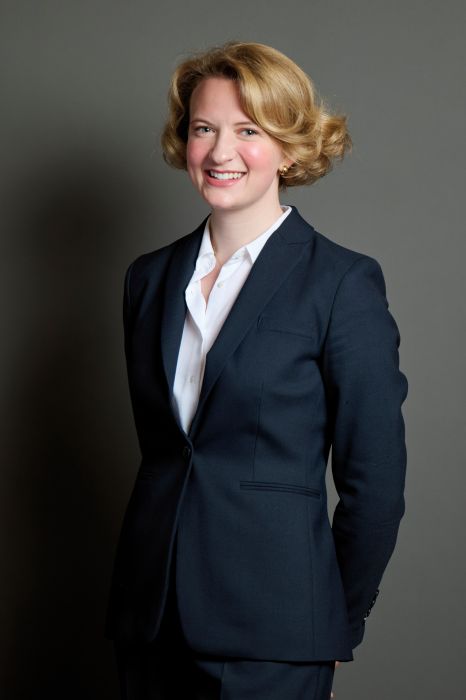
The Tories are, however, making some effort to rebuild their grassroots youth operation. Fred Lynam, the Conservative Party’s youth engagement co-ordinator, says Badenoch takes the Young Conservatives group more seriously than previous leaderships did. He has been working to professionalise the organisation over the past year.
“It was quite despairing to look round and see a youth wing that’s 120 years old, that was lacking structure, was lacking organisation.”
This year’s conference will see a 50 per cent increase in Young Conservatives attending, and the group is also due to hold its first election for a chair in 30 years.
“I’m under no illusion that building up the YCs is going to change the 18 to 25 vote share overnight,” Lynam says, but adds that after visiting Sweden and seeing the organisation of the Conservative sister party’s youth wing there, he is encouraged by what might be possible.
“We got a large proportion of the youth vote in the Cameron years,” he says. “The opportunity is there, and I think we’re probably very well-placed to do it with Kemi.”
Meanwhile, Rankin and a handful of other Tory MPs are determined to keep attending university campus Conservative events whenever invited, rather than “cede the ground” to political opponents.
Even where a university Conservative association has only a dozen young members, Rankin argues, those people could become the activists and organisers of the future. “We need that pipeline to come through.”
There are also discussions within Badenoch’s team about launching a TikTok account for her, as she currently lags behind other party leaders in using the platform.
But Rankin cautions that focusing too much on the social media airwaves could prove to be a “futile waste of our time”, adding: “We’re not going to outcompete Polanski and Farage on TikTok.”
The Conservatives are not attempting to find a ‘silver bullet’ policy or comms approach that will boost the party’s popularity with the youth. For now, they believe that the route back to younger voters is not through a youth strategy at all, but about rebuilding the proposition that once carried voters from youth into middle age.
>
How to watch the 2026 Baycurrent Classic: Streaming options for Round 1

New Skydance Sets Leadership Across Games, Products, HR

Scotland: What questions face Pocognoli after Slovenia defeat?
-

 movies5 months ago
Search For Canadian TV Actor Stewart McLean Now Homicide Investigation
-

 Fashion9 years ago
These ’90s fashion trends are making a comeback in 2017
-
Fashion9 years ago
According to Dior Couture, this taboo fashion accessory is back
-
Fashion9 years ago
Model Jocelyn Chew’s Instagram is the best vacation you’ve ever had
-
Fashion9 years ago
Emily Ratajkowski channels back-to-school style
-
Fashion9 years ago
9 Celebrities who have spoken out about being photoshopped
-

 Anime4 months ago
Rurouni Kenshin: Hokkaido Arc Manga Takes 1-Issue Break – News
-

 Anime3 months ago
HIDIVE to Stream English Dubs for The World Is Dancing, The Forsaken Saintess and Her Foodie Roadtrip in Another World, The Dangers in My Heart: The Movie Anime – News