
Akira
Toronto Film Festival


Three years after the Oct. 7 attacks in southern Israel, one of the clearest shifts in the way news organizations cover Gaza has happened largely behind the scenes: Reporters and editors have had to become increasingly explicit about not only what they know, but how they know it.
The conflict created a striking contradiction for newsrooms. Images and video from Gaza could travel around the world within minutes, giving journalists an enormous amount of potential evidence to examine. At the same time, Israel’s restrictions on independent foreign press access meant many international reporters could not use one of the oldest tools for verifying a story: seeing it for themselves.
That tension has made verification, attribution and open-source reporting more central to daily newsgathering. Techniques including geolocation, satellite imagery and video analysis existed long before Oct. 7, 2023, but Gaza has stress-tested them on an unusual scale, forcing newsrooms to verify material from a place most foreign reporters still cannot independently enter.
The shift has changed more than what tools reporters use. It has also changed how stories are written and presented, with news organizations putting more emphasis on what they can independently confirm, where information came from and what remains uncertain. In an information environment where false or manipulated material can spread before reporters have time to verify it, those distinctions can shape how accurately audiences understand events unfolding on the ground.
That pressure has pushed newsrooms to lean more heavily on technology and verification techniques. For example, CNN’s process for authenticating third-party material includes geolocation, reverse-image searches and chrono-location, along with checks for AI manipulation and analysis of satellite and aerial imagery.
Caroline Paterson, CNN’s vice president of international newsgathering, said Gaza has made those techniques especially important because of the lack of access.
“The lack of access to Gaza has certainly meant that those techniques took on a greater significance on that story,” Paterson told TheWrap.

She added that the broader shift reflects “the changing nature of modern conflict,” where access is often difficult and material that is unverified, recirculated or manipulated can spread quickly.
Paterson said those techniques were already being developed and used at CNN, drawing on lessons from Ukraine, Sudan and Yemen.
CNN also uses experts to analyze images and video, including identifying objects such as munition fragments when determining responsibility for a strike.
One of the earliest demonstrations of the challenge came just 10 days after the Hamas attack.
After an explosion at Gaza City’s Al-Ahli Arab Hospital on Oct. 17, 2023, Palestinian officials blamed an Israeli airstrike, while Israel denied responsibility and blamed a failed Palestinian rocket launch. The confused early coverage quickly became a case study in the risks of reporting claims that could not yet be independently established.
The New York Times later acknowledged that early versions of its coverage had relied too heavily on claims by Hamas and had not adequately conveyed that those claims could not immediately be verified, according to an editor’s note examining the early coverage.
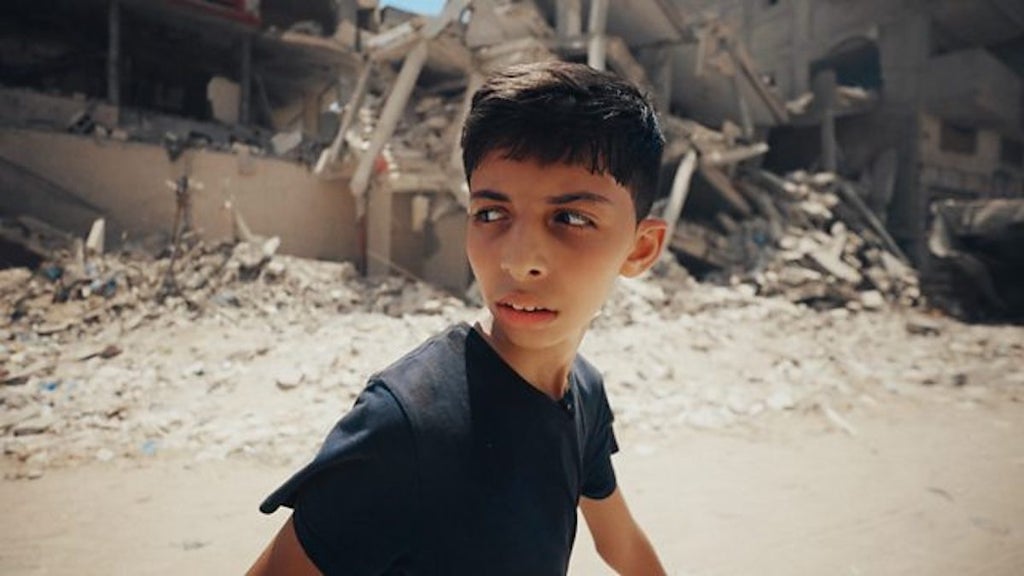
CNN reviewed social-media and broadcast footage, video from a freelance journalist inside Gaza and satellite imagery while consulting military and explosives experts. Its analysis found that the most likely explanation was a rocket launched from Gaza that broke apart in the air, though CNN said a definitive conclusion was impossible without physical evidence from the site.
The BBC had already been building similar capabilities. BBC Verify, launched months before Oct. 7, brought together journalists specializing in open-source intelligence, data analysis, fact-checking and visual verification.
Verification of user-generated content has been part of BBC journalism for more than two decades, according to background information provided to TheWrap. But the rise of AI-generated and manipulated content has added a new layer: BBC Verify journalists now routinely assess material for signs of AI before using it.
That assessment sits alongside more traditional verification methods, including comparing footage from different sources and angles, geolocating images and video and using satellite imagery and flight or ship tracking.
Those techniques become especially important when journalists cannot freely reach the places they are covering. In Gaza, newsrooms may have to scrutinize material emerging through social media while relying on journalists and other sources inside the territory.
The BBC said it is committed to reporting the Israel-Gaza conflict “impartially, and to the highest standards of journalism,” adding that part of its role is to counter misinformation and disinformation.
Israel has restricted independent access for foreign journalists since the start of the conflict, while allowing some reporters into Gaza on tightly controlled visits with the Israeli military. Israeli authorities have cited security concerns, including the risk that reporters could expose troop positions, while news organizations have argued that escorted visits cannot replace independent reporting.

In April, leaders from more than two dozen major news organizations — including CNN, BBC News, Reuters, the Associated Press, The New York Times and The Washington Post — called on Israel to allow foreign reporters independent access, arguing that journalists need to be able to question official accounts, speak directly with civilians and witness conditions firsthand.
The restrictions leave international news organizations unusually dependent on Palestinian journalists inside Gaza, footage from witnesses, aid organizations, government claims and material circulating online — making clear sourcing and attribution even more important. The BBC said it has relied on freelance journalists and firsthand testimony from people in the territory.
Reporters increasingly have to tell audiences not just what is being claimed, but what has actually been established: Who is making the claim? Can the location be confirmed? Is the footage current? Does another image or satellite view back it up? And when those questions cannot be answered, how prominently should that uncertainty be disclosed?
The same applies to responsibility for attacks, casualty figures and battlefield developments. News organizations have repeatedly had to distinguish between what Israeli or Palestinian officials say happened and what their own reporters have independently established.
In a fast-moving conflict, that distinction can be the difference between reporting a claim and inadvertently presenting one account as fact.
None of these techniques began with Gaza. Wars in Syria and Ukraine had already forced newsrooms to become more sophisticated about verifying material produced beyond the reach of their own reporters. But Gaza has brought those challenges together: a major international story, an enormous volume of imagery and claims circulating online, and severe restrictions on foreign journalists’ ability to independently see what was happening on the ground.
Three years later, that may be one of the conflict’s clearest legacies for newsrooms. In an era when audiences can see an event before reporters can verify it, the job increasingly isn’t only to tell them what happened. It’s to show them why they should believe it.

>
>
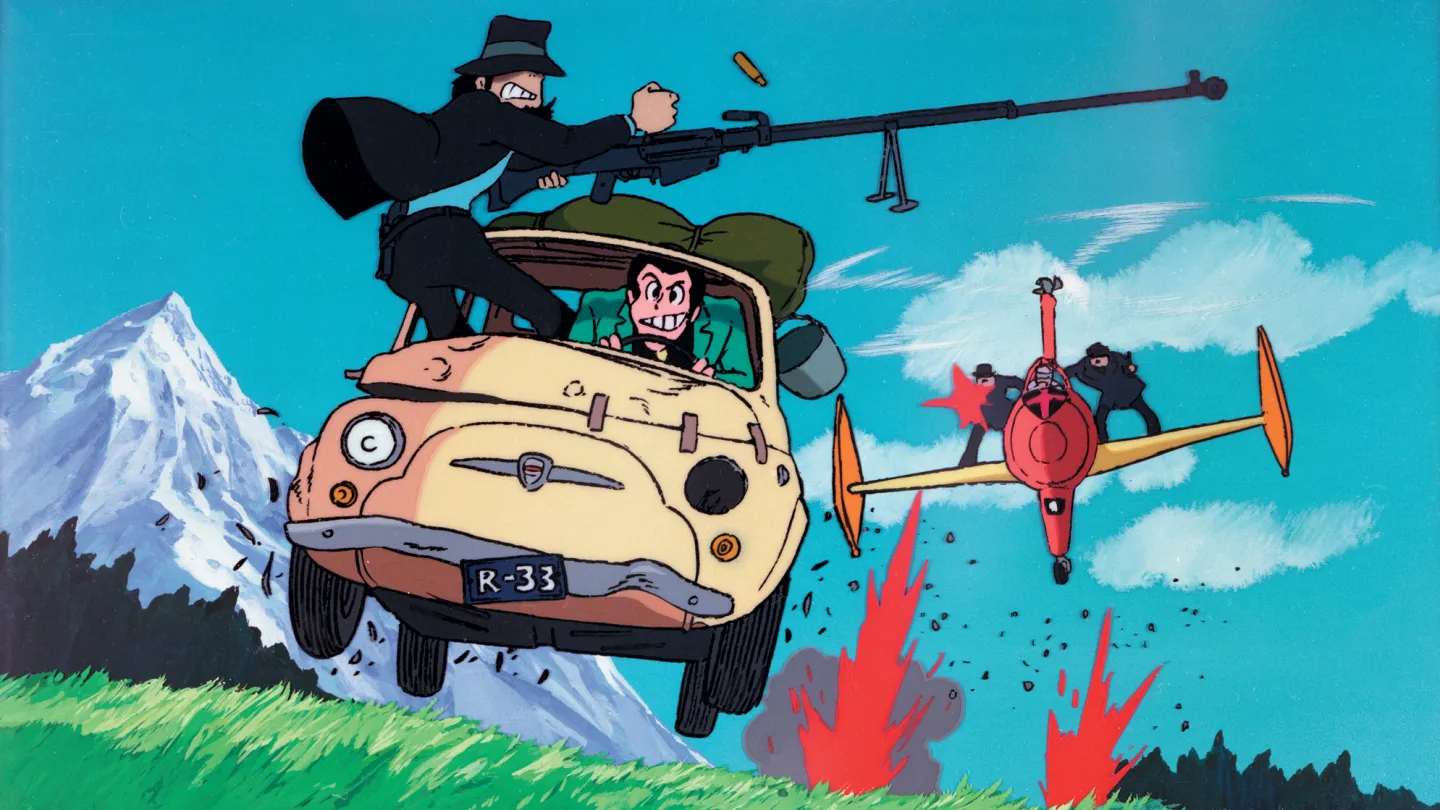
The Toronto Film Festival is set to showcase classic films selected by Japanese anime director Masaaki Yuasa that influenced his celebrated animation.
Yuasa is known for surreal storytelling and a distinct anime visual style for films like Night is Short, Walk on Girl, Ride Your Wave, his directorial debut Mind Game and Lu Over the Wall, an Annecy award winner. He also directed an episode of Adventure Time and worked on Netflix’s DEVILMAN Crybaby.
In all, 17 features and four shorts selected by Yuasa, including movies by Katsuhiro Otomo, Hayao Miyazaki, Sylvain Chomet and Rene Laloux, will feature as part of the Drawn Universes: Visions in Animation program. The series, to run Nov. 19 to Dec. 29 at TIFF Lightbox, will include conversations with Yuasa and the Japanese director introducing screenings of Richard Williams’ The Thief and the Cobbler: A Moment in Time and Isao Takahata’s Anne of Green Gables: Road to Green Gables.
Drawn Universes: Visions in Animation will launch with Paul Grimault’s The King and the Mockingbird on Nov. 19.
Akira
Toronto Film Festival
Yuasa said in a director’s statement released by TIFF: “In curating this series, I wanted to look back at films that sparked my own imagination and influenced both my predecessors and the generations that followed. The diverse lineup includes foundational achievements like Pinocchio and Lupin III: Castle of Cagliostro; visionary masterpieces such as AKIRA, Fantastic Planet and Toy Story 3; and contemporary classics including The Girl Who Leapt Through Time and Liz and the Blue Bird. Taken together, these films demonstrate boundless imagination, extraordinary technical skill, and world-building at the highest level, revealing the limitless potential of animated storytelling.”
Yuasa in 2013 co-founded Science SARU with Eunyoung Choi, left in 2020 and in 2025 he established ame pippin Inc.
The King and the Mockingbird
Toronto Film Festival
>
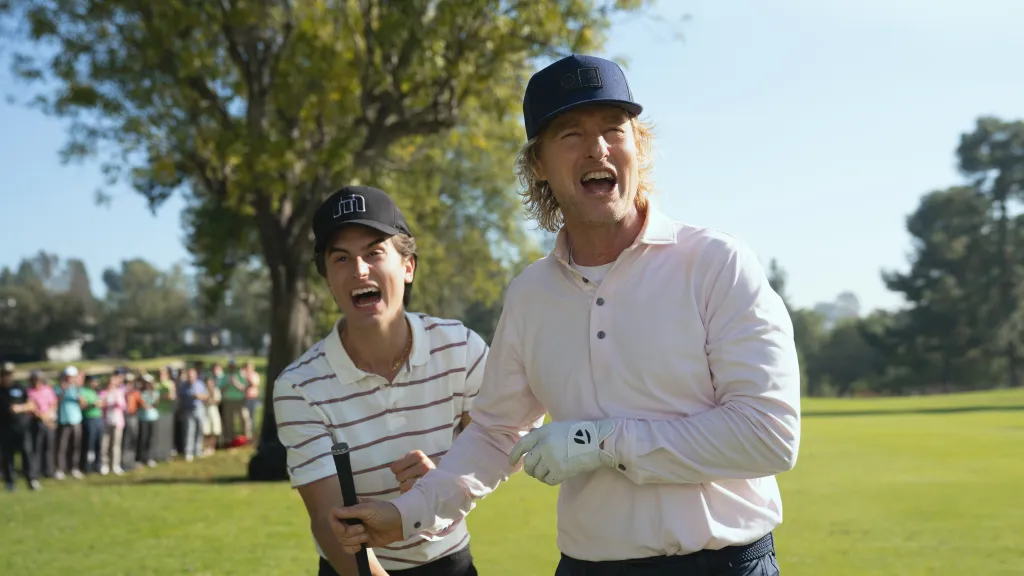
Those mourning the end of Ted Lasso Season 4 have some reprieve coming in the approach of Apple TV’s Stick Season 2.
The golf comedy series returns Wednesday, November 4 with two episodes, followed by one every week until December 30, 2026. The cast led by Owen Wilson, Peter Dager, Marc Maron, Mariana Treviño, Lilli Kay, Judy Greer and Timothy Olyphant will reunite, and Emmy and Golden Globe winner Rhea Seehorn (Pluribus) joins Season 2 in a supporting role.
SNL alum John Higgins, Billy Zane, Rex Linn, Sasha Alexander and Missi Pyle are also new to the ensemble for the sophomore season. The show also features return guest appearances from legendary broadcasters Jim Nantz and Trevor Immelman, and golf enthusiasts Matt Scharff and Dan Rapaport.
In Stick Season 2, Pryce’s golf prodigy Santi (Dager) takes the next step in his pursuit of professional golf, but his talent thus far becomes baseline expectation, which changes the game for him. As Santi chases his dream, Pryce Cahill finds himself wondering what might still be possible for him.
Urged on by his former rival Clark Ross (Timothy Olyphant), Pryce decides to bet on himself, launching an improbable comeback in hopes of becoming the oldest golfer ever to win the U.S. Open. After the tempting offer, Pryce knocks on Clark’s door to see the ambitious former player wearing under-eye masks, agreeing to his proposition.
Seehorn will portray Coach Amanda, aka “the swing doctor” according to Clark, recruited to help Pryce get back on track to success. With trusted caddie Mitts (Marc Maron) in his corner, Pryce sets out to prove — to the golf world and, more importantly, to himself — that maybe he really was as good as everyone always said he was. Amanda snort laughs at first, thinking they are kidding when they visit her for her wisdom and expertise.
“We have to play to our strengths,” Amanda says as she whips Pryce into shape. “However few they are.”

L-R: Rhea Seehorn and Owen Wilson in ‘Stick’ Season 2
Apple TV
He tells her to relax as he pulls on some white golf gloves. Noah Kahan’s “Northern Attitude” plays towards the end of the clip.
The heartfelt, feel-good comedy about a found family and their relationships set within the world of golf debuted in June 2025. Wilson stars as Pryce Cahill, an over-the-hill, ex-pro golfer whose career was derailed prematurely 20 years ago. Now he wants to see if he really was as good as everyone said and thought he was before his flame out. After the collapse of his marriage to Amber Lynn (Greer) and getting fired from his job at an Indiana sporting goods store, Pryce hedges his bets, and future, entirely on a troubled 17-year-old golf phenom named Santi.
Hailing from Apple Studios, Stick is showrun by Jason Keller, who also serves as executive producer alongside Wilson, Ben Silverman for Propagate Content and Entertainment 360’s Guymon Casady. The series is also executive produced by Christopher Moynihan, Rodney Ferrell, Howard T. Owens, Drew Buckley, Lee Eisenberg, and Bill Callahan.
>


Search For Canadian TV Actor Stewart McLean Now Homicide Investigation


These ’90s fashion trends are making a comeback in 2017
According to Dior Couture, this taboo fashion accessory is back
Model Jocelyn Chew’s Instagram is the best vacation you’ve ever had
Emily Ratajkowski channels back-to-school style
9 Celebrities who have spoken out about being photoshopped


Rurouni Kenshin: Hokkaido Arc Manga Takes 1-Issue Break – News


HIDIVE to Stream English Dubs for The World Is Dancing, The Forsaken Saintess and Her Foodie Roadtrip in Another World, The Dangers in My Heart: The Movie Anime – News