
Tech
Natura’s $99 smart ring puts AI agents on your finger


Meet Interface, a new $99 smart ring from AI and hardware startup Natura that’s designed for the era of AI agents. With a press of your finger, you can ask an AI agent to complete a task, capture thoughts, and get things done without reaching for your phone. And while AI is at the heart of Interface, the ring also doubles as a health tracker, as it monitors metrics like heart rate, HRV, sleep, and activity.
The startup was founded by Carlo Edoardo Ferraris, who previously founded tech accessories company Rolling Square. After years of building consumer hardware, he became convinced that rapidly advancing AI needed a new kind of interface that lets people ask for what they want the way they’d ask a person.
The idea behind Interface is to help people look up from their phones while getting everyday tasks done more quickly and naturally. At launch, the ring will connect with a range of AI agents and apps, including Meta’s Muse, Instinct, Grokbot, Claude, ChatGPT, and more.
Pre-orders are expected to open next month, with shipping slated for December or January.

The smart ring was not the company’s first product. Those were HumanPods, a pair of AI-enabled earbuds designed to let users interact with AI agents. But Natura believed it needed a new form factor built for the latest advances in voice technology.
“Over time, we evolved to an understanding where you really want to have access to your agents 24/7,” Ferraris told TechCrunch in an interview. “You don’t want to have even one hour of your day where you cannot access them. And the form factor of the ring is perfect for this because it’s basically an extension of you. You can go shower with it; you can sleep with it. You never take it off.”
The company says the use cases are endless. If you’re out for a run, you could ask the ring to start tracking your workout. When you wake up, you could ask what’s on your schedule for the day. If you’re in the shower and realize you’re out of shampoo, you could ask the ring to reorder it. If you’re falling asleep while watching TV, you could tell it to turn off the TV and set an alarm for the morning. After using it to record a meeting, you could ask it to send your notes from the discussion to a coworker.
Responses from agents can be delivered through connected headphones, an iPhone Live Activity, or the NatureOS app.
Plus, users who rely on multiple AI agents and apps can specify which one they want to handle a particular task. For example, they could ask Claude to write code, Instinct to book a reservation, and Grokbot to take care of something else.

In addition to controlling AI agents, users can control their devices, including their computers. Ferraris says he believes that, ultimately, most of the things people do on their computers will be handled through AI agents. He sees the ring eventually replacing many tasks that currently require screens, from filling out forms and messaging in apps to finding files and drafting presentations, with simple voice requests to an AI agent.
“Ultimately, the main interface between users and technology is going to be the ring,” Ferraris said. “So it’s not going to be immediate because even today, not everybody has a personal agent, but I think everybody is bound to have one. So in this first phase, we expect it’s going to be for the people that already have a personal agent, which is mostly people in tech. But eventually, I think within a year, more or less, most people will have a personal agent.”
Although the ring will launch at $99, Natura plans to eventually raise the price. For now, the company wants to get the device into people’s hands, build usage, and create demand before doing so. After an initial three- to six-month free period, Natura plans to charge a $9 monthly subscription fee.
The company says the ring’s manufacturing costs are comparable to those of products like the Oura Ring and Samsung Galaxy Ring because they use many of the same components. However, Natura plans to price its ring lower initially to reduce the barrier to entry and drive adoption.

As for health tracking, the ring tracks heart rate, resting heart rate, heart rate variability, different sleep stages, daily movement and step count, and skin temperature over time.
The company says the ring can last 6 to 12 days on a full charge, depending on usage, and takes 100 minutes to fully recharge.
While the smart ring market is filled with health-focused offerings from companies like Oura, Ultrahuman, and RingConn, as well as AI-focused ones from companies like Pebble and Vocci, Ferraris believes Interface stands out by combining both worlds.
“This ring that we’re about to launch is significantly different compared to any other ring out there today because we were able to combine not only the highest quality health tracking with the rest of the components that allow for agent communication and meeting recordings and external memory, but we were also able to do that with an incredibly long battery life, which is vital for a product like this, and in a size that is very, very small. The product itself is, from a hardware perspective, very different from anything else that’s out there.”
When you purchase through links in our articles, we may earn a small commission. This doesn’t affect our editorial independence.
>
Singapore’s new AI guidelines require banks to oversee third-party AI risks, with phased compliance deadlines beginning in October 2027.
The post Singapore’s New AI Guidelines Hold Banks Accountable for Third-Party Tools appeared first on TechRepublic.
>
Healthleap raises $38 million to expand AI that analyzes hospital records for overlooked health risks, as questions remain about clinical accuracy and patient care.
The post Healthleap Raises $38M for AI That Spots Hidden Health Risks in Hospitals appeared first on TechRepublic.
>
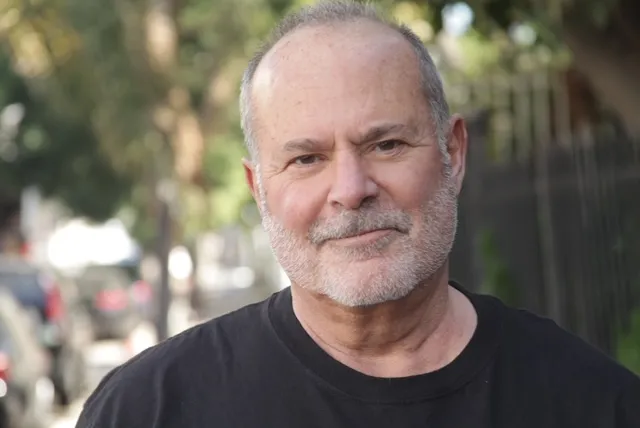
Richard Bronson, an entrepreneur who recently launched a startup called Commissary Club, has an unusual background for a founder: in a previous life, he spent time in prison.
In the 1980s, Bronson worked for the notorious Stratton Oakmont — the corruption-riddled brokerage firm that was run by Jordan Belfort, the so-called “Wolf of Wall Street” whose story became a 2013 film. The firm collapsed in the mid-1990s under the weight of misconduct accusations.
Bronson was a partner at Stratton, but left after a year to start his own firm in South Florida. He was quite successful in that venture, until he wasn’t.
“I built a $100 million business taking these small cap companies public,” Bronson told TechCrunch. “Some of the success, however, came through breaking the law — securities laws — and ultimately, as I knew inevitably would happen, I had to pay the price. I lost everything, and most significantly, my freedom. And I was sent to federal prison for a couple of years.”
Bronson has been out of prison for a long time now, but he has never forgotten the struggles he had when he initially emerged from prison.
“Nobody would hire me, despite all of my education and work experience and everything else. I was like completely radioactive,” he said.
Bronson’s experience after prison helped inform his current startup, an employment-focused social media platform called Commissary Club, which takes its name from the store inside a prison where inmates buy snacks and toiletries. The site is specifically marketed to ex-cons, and uses AI to help them navigate the often confusing process of finding employment and housing after they reenter the world.
“I could not help but notice how little assistance was available to people coming out of prison,” said Bronson. “If it was this bad for me, what about the guys I was in prison with who had very little education and very little job experience? What were their chances?”
Commissary Club also has a social component, which Bronson said he added because he knows how isolating the post-prison experience can be. “It’s almost like Facebook,” he said, “where people can not only find job, and get the help with the jobs and the housing and access to benefits, but they find the other missing ingredient that’s existentially important to them that isn’t satisfied elsewhere. They find community.” Judging by the site, Commissary Club also appears primed to become a referral network, and it offers a way for users to find dates.
For now, Bronson’s startup is a team of two — just him and his co-founder, Roman Kissin, who Bronson called the technical mind (or “the brains”) behind the project. Kissin previously worked for eBay and IBM and, between 2022 and 2025, served as the CTO of LexisNexis, according to his LinkedIn profile.
The site is free at first, then switches to paid. Users get “the first 10 applications for free, and then we bundle the next at $149 for 10 applications, or $14.99 each,” Bronson told TechCrunch. Some may balk at that for-profit model, and for people just out of prison, it may be a tough sell.
Yet Bronson sees it as a win-win — a business that can help a community that few others are trying to help.
“People immediately assume, ‘Oh, is this a nonprofit?’ And the answer is no,” said Bronson. There’s a strong mission component, certainly,” he continued,” and I have devoted my life, when I came out of prison, to helping my brothers and sisters with records. Part of it is because I just felt so remorseful for the shit that I had done. I still wake up every day regretting choices I made.
“But we’re going after a huge, huge market that nobody — I mean nobody — does anything about,” said Bronson. “People talk about AI taking away employment and people losing jobs. I look at it differently. We’re building AI that creates employment for people that society left behind.”
Bronson’s Commissary Club was selected for this year’s TechCrunch Startup Battlefield 200, as part of TechCrunch’s storied Battlefield Competition; come join us next week in San Francisco to see the competition live.
When you purchase through links in our articles, we may earn a small commission. This doesn’t affect our editorial independence.
>
Singapore’s New AI Guidelines Hold Banks Accountable for Third-Party Tools

Brian Robbins’ Big Shot Lands Film Rights for ‘CookieRun’ Game

Tonda Eckert: Southampton coach on Spygate experience
-

 movies5 months ago
Search For Canadian TV Actor Stewart McLean Now Homicide Investigation
-

 Fashion9 years ago
These ’90s fashion trends are making a comeback in 2017
-
Fashion9 years ago
According to Dior Couture, this taboo fashion accessory is back
-
Fashion9 years ago
Model Jocelyn Chew’s Instagram is the best vacation you’ve ever had
-
Fashion9 years ago
Emily Ratajkowski channels back-to-school style
-
Fashion9 years ago
9 Celebrities who have spoken out about being photoshopped
-

 Anime4 months ago
Rurouni Kenshin: Hokkaido Arc Manga Takes 1-Issue Break – News
-

 Anime3 months ago
HIDIVE to Stream English Dubs for The World Is Dancing, The Forsaken Saintess and Her Foodie Roadtrip in Another World, The Dangers in My Heart: The Movie Anime – News