

movies
New Skydance Sets Leadership Across Games, Products, HR

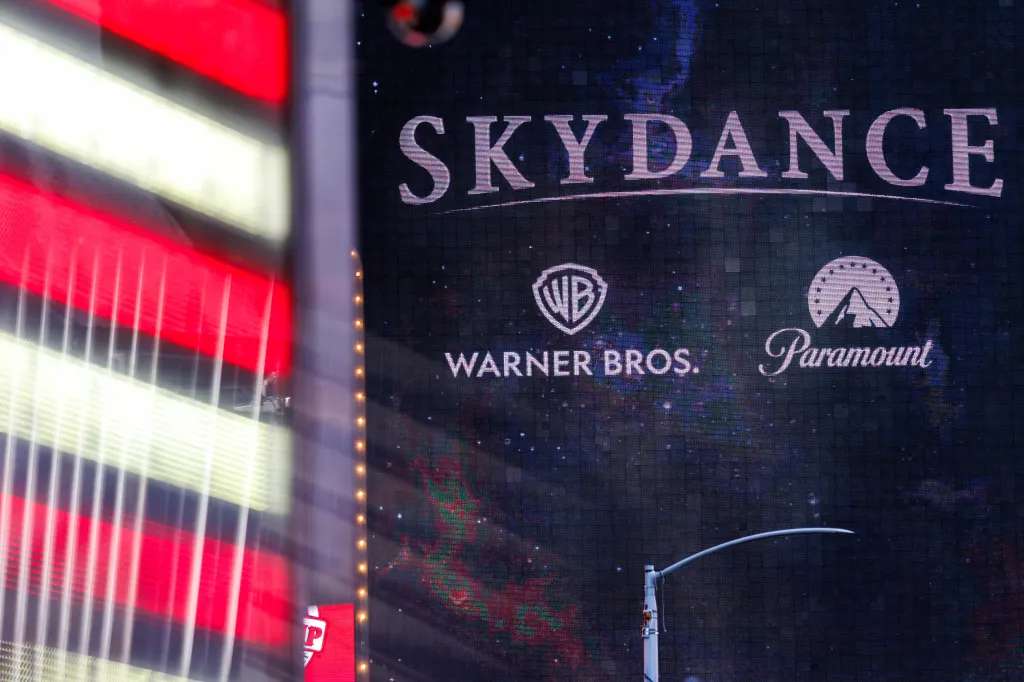
Skydance President Andy Gordon unveiled a new round of division heads as the company formed by the combination of Paramount and Warner Bros. Discovery continues to take shape.
In an internal memo viewed by Deadline, Gordon outlined heads of games, consumer products, HR and global operations. It follows an initial list of key appointments under co-CEOs David Ellison and Ynon Kreiz on Monday. The mega-merger officially closed Tuesday.
The memo said Tony Driscoll (President, Games & Experiences) will lead global Games and Experiences portfolio in addition to Corporate Strategy and Development.
Josh Silverman (President, Global Products & Publishing) will lead Consumer Products and Publishing.
Jim Sterner (Chief People Officer) will continue to lead People and Culture.
Jose Turkienicz (President, Global Operations) will continue to lead our global business services function, real estate, procurement, and studio operations, with a focus on simplifying processes and improving service to our businesses so teams can bring ideas to market faster.
Jeff Silberman (EVP, Corporate Strategy) will serve as Gordon’s Chief of Staff while continuing to lead Corporate Strategy, as well as the Integration Management Office. He will also lead select projects on Gordon’s behalf as we integrate the company and invest in future growth.
“We’re investing in our future growth engines alongside our core ambitions in TV, Film and direct-to-consumer: Games, Experiences, Consumer Products, and Publishing. These are core pillars of our strategy to build engagement and fandom in both the physical and digital worlds. We want to meet consumers wherever they watch, play, and engage. At the same time, we see opportunities to build on DC Comics’ storytelling and expand our e-commerce offerings to connect fans with the brands they love,” Gordon said.
“Our teams will be central to delivering on this ambition: setting our strategic direction, driving operational excellence, and helping our people thrive.”
>
Continue Reading
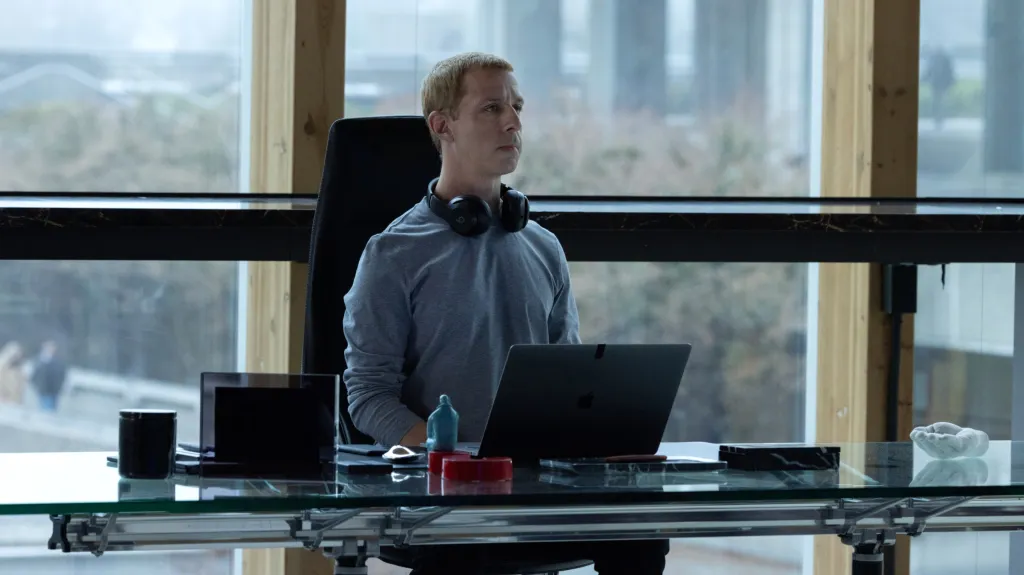
Smart grown up dramas are an increasingly rare bird in major studio big screen cinema these days. Occasionally around this time of year a studio will throw one out as Oscar bait, but a form that was once a big part of the movie diet now seems headed for extinction. But thanks to filmmakers like Aaron Sorkin it is still possible to find intelligent dialogue, compelling story, important issues, and roles that actors can dive into. In the case of his latest, The Social Reckoning, it ironically took the fact it was a sequel to his and David Fincher’s Oscar winning 2010 classic, The Social Network, to get Sony to bite. I am glad they did because the other irony is this doesn’t feel like a sequel at all, but rather a journalistic thriller more in the style of All The President’s Men as applied to a new era of dwindling newspaper relevance vs social media.
The connection to the original film is certainly there, and his name is Mark Zuckerberg played in 2010 by Jesse Eisenberg, and now 15 years later by Jeremy Strong. In Social Network Zuckerberg was a kid who backstabbed his way into billionaire status with the discovery of Facebook. A young man obsessed by code, that film was about invention, the creation of a game changing platform that would take the world by storm and collect, at the time, 500 million members. Sorkin, whose way with words knows few peers, won a well-deserved Oscar for his screenplay and the film should have taken Best Picture too. But was there a sequel in its future? As it turns out, yes, and a very good one that got Sorkin intrigued reading the books, The Power Of One by Facebook employee and whistleblower Frances Haugen; and Broken Code by intrepid Wall St Journal investigative reporter Jeff Horwitz who collaborated secretly with Haugen who provided the stolen documents that served as the basis of 17 different reports blasting the irresponsible practices of Facebook which changed its name to Meta just mere weeks after their findings went very public and Haugen would testify in front of Congress.
The Social Reckoning is really focusing on the investigation to what is now a behemoth company, thinking of itself as more powerful than any country in terms of its reach, now 2.9 billion and a place that is the only news outlet for half to two thirds of all Americans, and that “news” is part of the problem as Facebook is a haven for misinformation, an algorithm ripe for teen mental health, angry messages, human trafficking, foreign influence – you name it, and that is exactly what Horwitz (Jeremy Allen White) is looking at in his new gig as the tech reporter at the Wall St. Journal. Unfortunately he doesn’t know much about tech at all, but his investigative credentials are impeccable so editor-in-chief Christina (Betty Gilpin) gives it a go.
An anonymous tipster offers him a good start and he begins a tentative relationship with a would-be whistleblower named Frances (Mikey Madison), a true devotee of the original facebook mission who is concerned about the wrong direction it is headed and just wants to see a small story break in order to help bring attention and fix it without anyone finding out she is involved. This all becomes a bit of a cat and mouse game between the two as the reluctant snitch can get him actual internal files (the case became known as the Facebook Files) that spell out the secret and devious practices going on. Over time she provides more information, each time saying he will then be on his own. She loves her job and just wants it to go back to the way things were.
As Horwitz starts building his story, one that eventually will comprise many parts, we see Zuckerberg (Jeremy Strong) being rehearsed carefully by crisis PR exec Raya Akinola for a congressional hearing. He sits alone atop a bullet proof couch, behind glass, isolated, as out in the “audience” are employees helping to coach him. Zuckerberg, humorless, deadly serious, still clearly on the spectrum but far removed from his younger self. He has now become an insanely wealthy tech giant who refuses to acknowledge there is anything wrong with his philosophy of keeping facebook a “town square”, a destination where people can say whatever they want. Giving him tough love out there in the dark is a voice asking the hard questions. That would be a former partner and friend, Charlie Garrigan (a great fast talking and blunt Bill Burr) who turned on him with a nasty op ed that pissed Zuckerberg off. Nevertheless he is there not to sugarcoat the situation and say ‘yes’, but rather to be realistic about the firing squad Zuck is likely to face in Congress.
At one point Facebook created MSI or Meaningful Social Interactions which favor shares over likes, a process that intensifies engagement, but what it also does inadvertedly is amplify the angriest voices out there and serve as an entry way to extremist groups up to no good. That is what Horwitz, with Haugen’s tips, is zeroing in on. Facebook PR expert Teddy Marks (a perfectly slimy Billy Magnussen) is given a heads up that the story is going to break in WSJ and tells Zuckerberg it may be big trouble. How far can this go, how many tentacles does this expose have, and what damage can it do? This is all played out as the January 6th Capitol riots are taking place, as well as other events that will bring this all to a crescendo. In non-linear fashion Sorkin’s scenario darts back and forth between 2018, 19, 20, and 21, offering a puzzle that eventually will come all together.
What Sorkin is interested in here, among other things, is the last outpost of responsible journalism, much the same way Woodward and Bernstein strove to save democracy during Watergate, Horwitz (who won a Pulitizer Prize for his investigation) is doing the same on an even bigger stage of social media careening out of control. Coming after Monday night’s NYFF debut of Artificial, it has been a one-two punch this week at the heart of the digital beast transforming our society in dangerous ways. As an origin story though of OpenAI, Artificial feels more like a natural sequel to Social Network even than this one which feels more akin to what he did stirringly with The Trial Of The Chicago 7 , and even in the spirit of The West Wing. Zuckerberg’s participation is more a supporting one in this tale of the collaboration between dogged journalist and a whistleblower who finds her moral center in making a difference for humanity -or so she hopes.
In her first starring role since winning an Oscar for Anora, Madison continues to show impressive range and delivers a portrayal of a person who, against all odds, is proving we can all have a voice if we choose to use it. She is a trademark screen hero of whom Frank Capra would give a thumbs up. White again shows a strong screen presence creating a guy in over his head in the tech world, but proving the free press is still the most valuable thing we have going. It’s inspiring especially now to see how it can all still work for good. Strong eerily fills the role Jesse Eisenberg started (the actor refused Sorkin’s offer to return). Oddly playing this cold-hearted version of a man all-consumed by the success of his own creation works even better with this casting.
Alexandre Desplat’s big orchestral score punctuates the action in a thriller that has us rooting for the good guys in a world dominated by algorithms that threaten us all. The sad fact is that Facebook started as a remarkable entity designed to bring us all together, but now as its numbers climb and its addictiveness takes hold, it becomes a force for misinformation with devastating results. It is an age-old David vs Goliath story, one that reminds us this is still just the beginning, without restraints it can go either way, and where it ends is up to all of us.
Producers are Sorkin, Peter Rice, Todd Black, and Stuart Besser.
Title: The Social Reckoning
Distributor: Sony Pictures
Release Date: October 8, 2026
Director/Screenplay: Aaron Sorkin
Cast: Jeremy Allen White, Mikey Madison, Jeremy Strong, Wunmi Mosaku, Betty Gilpin, Billy Magnussen, Bill Burr, Gbenga Akinnagbe
Rating: R
Running Time: 1 hour and 52 minutes
>
Early in The Social Reckoning, a douchey finance bro on a joyless date with the protagonist makes the preposterous claim that chlorophyll is “an internal deodorant,” stating this as fact because he read it on Facebook. “You drink it and your sweat smells like flowers!” he enthuses. While the scene is played for low-key cringe comedy, it nails two key issues at the heart of Aaron Sorkin’s engrossing whistleblower thriller — one is the irresponsible spread of misinformation on the supposedly smiley-happy social media service, while the other is the public’s willingness to buy whatever gets fed to them.
When Jeremy Strong’s cartoonishly affectless but mordantly funny Mark Zuckerberg — whose founding of Facebook was chronicled with needling perspicacity in David Fincher’s 2010 drama The Social Network — describes himself as “a free-speech absolutist,” what he means is that his opposition to fact checking is company policy. That applies whether we’re talking organized hate groups, politicians slamming their opponents in negative campaigning, or teenage mean girls bullying and body-shaming their peers.
The Social Reckoning
The Bottom Line
The algorithm is the enemy.
Release date: Friday, Oct. 9
Cast: Mikey Madison, Jeremy Allen White, Jeremy Strong, Wunmi Mosaku, Betty Gilpin, Billy Magnussen, Bill Burr, Anna Lambe, Gbenga Akinnagbe
Director-screenwriter: Aaron Sorkin
Rated R,
1 hour 52 minutes
Sorkin won an Oscar with his adapted screenplay for The Social Network, and if his follow-up, coming 16 years later and seeing him step up to writer-director responsibilities, doesn’t measure up to its critically lauded predecessor, well, that’s an awfully high bar to clear. But this nominal sequel makes for sharp entertainment, even if it sticks you with the depressing takeaway of a cautionary tale addressing a blight that’s too late to fix.
Along with his signature rapid-fire, garrulous dialogue, Sorkin’s tendency for self-righteous indignation is very much in evidence. But the material provides him with plenty of legitimate reasons to be pissed, and the movie is never at risk of becoming a pedantic lecture.
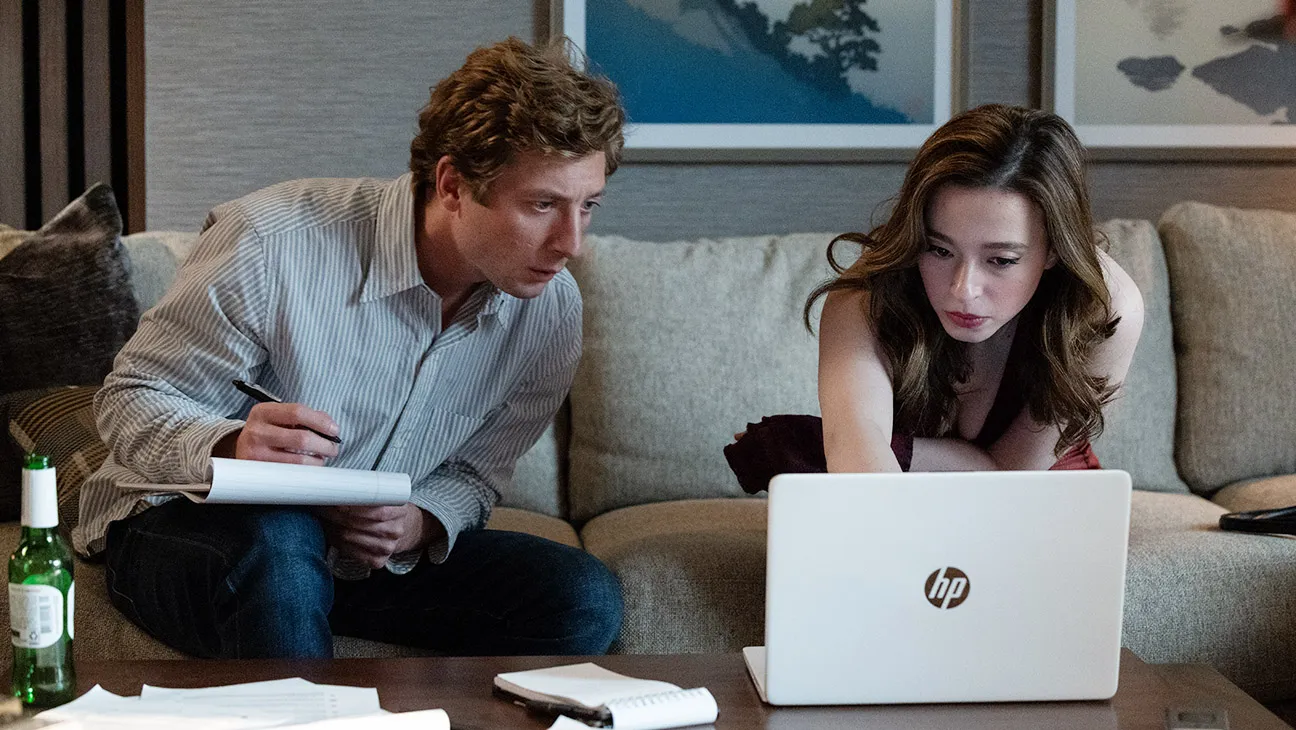
It’s also acted with galvanizing conviction. Mikey Madison plays Frances Haugen, the introverted Facebook data engineer who believes in the company’s mission to give everyone a voice — until she sees the profit-driven ways in which that freedom of expression is giving a mouthpiece to extremists. And Jeremy Allen White is Jeff Horwitz, the Wall Street Journal tech reporter with whom Haugen collaborates on an explosive series of articles informally titled The Facebook Files, exposing the toxic culture behind the company’s stratospheric reach.
There’s a fascinating synchronicity between the current real-world anxiety and the film industry’s sudden interest in dense studies of the tech world’s dark underbelly. A week after Sony releases The Social Reckoning, Bleecker Street will open Musk, Alex Gibney’s head-spinning documentary, running close to four hours, about the rise and rise of Tesla titan Elon Musk. On Christmas Day, Neon will weigh in with the best of the three, Luca Guadagnino’s Artificial, a humorous and ultimately horrifying account of 20 years of AI evolution and a scorching portrait of OpenAI founder Sam Altman. (There’s also Nathan Fielder and Lance Oppenheim’s Elizabeth Holmes documentary, You Can See Everything — a different beast entirely.)
What all three films have in common, aside from various intersections and overlaps in their stories, is their repositioning of tech billionaires as the new screen villains. Lawyers and finance traders must feel so relieved. Zuckerberg, Musk and Altman to some extent are all exceedingly skilled, ethically dubious con men, all of them able to sell their insatiable hunger for astronomical wealth as a service to humanity, while also selling themselves, not as technocrats so much as creative visionaries.
Sorkin opens with a tartly funny prologue whose title, “White Girl Wasted,” refers to a motorist (Portia Doubleday) who has pulled over to the side of the road, where she stands behind the vehicle scrolling through her phone. When two cops approach asking if she needs assistance, she is curtly dismissive but becomes hostile and racially abusive once they ask her — with good reason — to take a sobriety test.
A double-whammy monster of entitlement and victimhood, the drunk woman films the events leading to her arrest and later posts the video under the header “Voice of Reason,” including the screeching outburst: “This is what happens when you’re white in America, you get treated like a fucking immigrant!” It’s later revealed that Frances knew the woman in the viral video back when she was a mellow progressive, learning that she was radicalized by an alt-right group on Facebook.
Frances’ data research has already turned up a bunch of similar cases, including the alarming statistic that 64 percent of Facebook users who recently joined extremist groups were directed to those organizations’ sites by the algorithm.
Sorkin briskly paints a portrait of a company with an uncongenial working environment and little transparency. Frances’ attempt to raise her concerns at a team meeting where Zuckerberg addresses the assembled staff is cut off when there’s no time left for questions. And when she tries talking to colleagues, one smirks at her quaint use of index cards while another warns her against drawing negative attention.
At the same time, Jeff transfers from a political beat in Washington to become the new San Francisco tech reporter, getting a barbed reception from bureau chief Christina (Betty Gilpin) when he’s late for their first meeting because he couldn’t work the car’s GPS system. While brittle Christina rolls her eyes at being stuck with an analog guy to cover Big Tech, Jeff’s editor Andy (Gbenga Akinnagbe) is a far more chill ally. Jeff is assigned two social media-savvy interns and instructed to get up to speed on Facebook, where he has already noticed the improbably low number of negative comments about user satisfaction.
In another thread, Strong’s Zuckerberg twitches with irritation through mock congressional hearings, with a PR team headed by crisis management specialist Raya (Wunmi Mosaku), whose task is to make the Facebook CEO likeable. Given that he’s a warmth-free zone who can’t even settle on the right tie, that job is no walk in the park. Media relations exec Teddy Marks (Billy Magnussen) looks in from time to time, and Raya has also invited someone guaranteed to ruffle Mark’s feathers, his former colleague Charlie Garrigan (Bill Burr), who just published an unsparing op-ed piece in a major newspaper condemning Facebook’s lax safeguards.
Hoping to sniff out someone inside Facebook willing to talk, Jeff sends personal letters to almost every employee and given that Frances has hit a wall trying to bring what she believes are algorithmic glitches to anyone’s attention, she replies. When they meet in an isolated park location, she is nervous about breaking the terms of her contractual NDA. But she gives Jeff some basics about content violations on which to build a story.
As Jeff continues to dig, with further intel from the reluctant Frances, his findings gradually point to Zuckerberg and members of his executive team having full knowledge of the harmful side-effects of their business strategy — deprioritizing “likes” and instead pushing for reshares, with rage bait driving traffic in exponential numbers.
Important-sounding acronyms are batted about to suggest internal guardrails — like MSI (Meaningful Social Interactions), CIT (Civic Integrity Team) or SATF (Soft Action Task Force). But at the prospect of engagement dropping by even one percent, Zuckerberg rules out any serious measures against content violation, making Charlie furious by refusing to consider policing political ads for falsehoods. “We’re a corkboard,” says Zuckerberg with unwavering impassivity. “We don’t control what people pin on it.”
Without ever naming the sitting U.S. president, Sorkin hits hard by showing footage (which appears to be largely re-enacted) of the Capitol riots on Jan. 6, 2021. Staffers urge Zuckerberg to take down videos of the insurrection posted by POTUS, enduring an agonizing wait before he finally gives the order — deleting posts being the last-resort “hard action.”
There’s nothing terribly subtle about The Social Reckoning, though sometimes its blunt force can take your breath away, for instance when Teddy, with cold, smug efficiency, responds to the threat of congressional scrutiny by saying, “We’re not frightened by Congress. We are post-government around here.” With Facebook currently counting north of 3 billion monthly active users worldwide, and 43 percent of adults now getting their news from the platform, it’s grim knowing that even after the WSJ stories ran and Haugen testified before Congress nothing changed in terms of fact checking.
Sorkin gonna Sorkin, so the hectoring superiority creeps in at times, even if he keeps the speechifying to a minimum. But he presents a persuasive case for this monolithic “community forum” as a 21st-century plague that stokes division, harms children and weakens democracies.
The movie looks terrific, with DP Jeff Cronenweth returning to provide visual consistency with The Social Network and Alexandre Desplat’s elegant score feeding the tension without working too hard at it.
Strong’s decidedly peculiar performance is likely to be divisive, maybe leaving some to wonder whether he’s intentionally trying to be funny at times. But he gets the emotionless reptilian aspect of a man who can look the other way while his money-making machine is being instrumentalized by drug cartels and human traffickers or used as a tool to influence elections or causing a significant spike in teen mental health issues.
Others in the cast doing incisive work include Mosaku, Burr, Magnussen and Gilpin, though the heart of the movie is White and especially Madison. White’s everyman quality sits well with a character for whom journalistic integrity is non-negotiable. “My bias is not because tech is taking journalists’ jobs,” he tells Frances early in their association. “It’s because you’re doing them so badly.” Madison has made a smart choice for her biggest role since bagging an Oscar for Anora; her character’s trajectory from Facebook believer through disillusioned outlier to courageous whistleblower is stirringly rendered.
>

The buzz around Elizabeth Holmes documentary You Can See Everything continues to grow, as evidenced by a packed, star-studded screening of the film in L.A. on Tuesday night.
The project, from co-directors Nathan Fielder and Lance Oppenheim, first premiered in a surprise screening at Telluride before hitting the New York Film Festival last week and now onto the Academy Museum in Los Angeles, where Zach Cregger, Steven Yeun, Elizabeth Olsen, Hannah Einbinder, Meg Stalter, Patrick Ball, Aziz Ansari, Hasan Piker and Boygenius’ Lucy Dacus and Julien Baker were among those spotted in the crowd.
The film follows tainted tech CEO Holmes in the month before she’s sent to prison, as she invites the film crew to follow the every move of herself, her husband Billy Evans and their kids, in what becomes a wild three-year story. The L.A. screening was followed by a Q&A with Fielder and Oppenheim, moderated by Bill Hader, who began by asking incredulously, “So they asked you to do this?”
Holmes had indeed approached A24 to make a documentary about her, and after a series of meetings Fielder and Oppenheim — who have been friends since 2021 — found themselves on board. Holmes and Evans seemed to have little knowledge of either of their past work, though, as Oppenheim recalled how Evans watched the first few minutes of his 2020 film Some Kind of Heaven and told him, “It’s not a very compelling opening.” Holmes had seen a YouTube clip from Nathan from You and that seemed to be the extent of her familiarity with Fielder’s comedy.
Fielder emphasized, “There was never a great explanation as to like why —”
“Why this is the guy to tell our story?” Hader cut in, as Fielder continued, “Or why you would want to spend your last month of freedom in a decade with this guy. Like, why? Even with no cameras — I like to see myself as like a nice person overall, but still, I wouldn’t choose me.”
Asked about where they stand with the couple now, Oppenheim revealed that “Neither of them have seen the the film. Elizabeth is still incarcerated; Billy hasn’t seen it,” because of now a strained relationship with the crew.
Fielder explained that as they were trying to finish the movie, Evans “started trying to exert a level of control over the process that made it very hard to engage with him, and it was uncomfortable for us and also A24 and everyone. And I think we sort of had to stop — I think communication broke down basically, and we’ve been in that like state for a little bit. So it’s been challenging in that way.”
The Q&A also revealed that Fielder was not originally intending to be on camera for the film, but Oppenheim said Holmes and Evans “kept kind of pulling him in until it felt suddenly like oh, the only way to actually make this is to have someone kind of confront their delusions in certain aspects.” And as the team moved into the couple’s guest house on their San Diego rental property, the filmmakers feared that the home was bugged and ordered a device to try to de-bug it, without success.
“We were in a conspiracy thriller of our own, we all were paranoid,” Oppenheim said of living in Holmes’ world. On that note, Fielder told the crowd, “I still am not sure to this day like what I experienced, and it’s one of the reasons I’m excited for it to come out and more people see it. It was just a small group for so long, and I actually think maybe it being out there, everyone can help me understand what I went through a little bit — or what we all went through.”
You Can See Everything hits theaters Oct. 16.
>
Sports1 minute ago
Michael King didn't just save the game. He saved the Padres' season
Sports6 minutes ago
How to watch Guardians vs. White Sox: ALDS Game 3 TV channel and streaming options for October 7
Sports12 minutes ago
How to watch the 2026 Baycurrent Classic: Streaming options for Round 1
-

 movies5 months ago
Search For Canadian TV Actor Stewart McLean Now Homicide Investigation
-

 Fashion9 years ago
These ’90s fashion trends are making a comeback in 2017
-
Fashion9 years ago
According to Dior Couture, this taboo fashion accessory is back
-
Fashion9 years ago
Model Jocelyn Chew’s Instagram is the best vacation you’ve ever had
-
Fashion9 years ago
Emily Ratajkowski channels back-to-school style
-
Fashion9 years ago
9 Celebrities who have spoken out about being photoshopped
-

 Anime4 months ago
Rurouni Kenshin: Hokkaido Arc Manga Takes 1-Issue Break – News
-

 Anime3 months ago
HIDIVE to Stream English Dubs for The World Is Dancing, The Forsaken Saintess and Her Foodie Roadtrip in Another World, The Dangers in My Heart: The Movie Anime – News