
Tech
Spotify expands audiobooks to over 180 markets

Spotify announced on Wednesday that it’s expanding audiobook access to over 180 markets worldwide, including regions across Europe, the Americas, the Caribbean, the Middle East, Africa, and Asia. The rollout is starting today and will continue over the coming months. With this move, more than 750 million users will be able to access audiobooks, allowing Spotify to better compete with both music streaming providers and audiobook apps like Audible.
Before this, audiobooks were available primarily in English-speaking markets like the U.S., U.K., Ireland, Australia, and New Zealand, as well as in Germany.
The audio platform said it has more than 350,000 titles for its new markets and has increased its collection to include over 120 languages. With its launch in Spain, users in the country will have access to over 45,000 titles in Spanish.
Spotify is working with more than 300 publishers worldwide, including Planeta and Mondadori, to increase the number of titles available in different markets.
With a Premium subscription, users can listen to 12 hours of audiobooks in eligible countries such as Brazil, Mexico, Colombia, Poland, Chile, Norway, and Peru. People across the world can also purchase an Audiobook+ standalone subscription to get access to titles with a 15-hour allowance. Alternatively, users can buy individual titles directly.
Spotify is also adding an Audiobook+ add-on for student plans in select regions in November. The company said that since its launch last year, Audiobook+ has gained over 1 million subscribers and has fetched over 100 million in annual recurring revenue for the platform.
In February, the company launched a “Page Match” feature, which lets users scan a page of a physical book and find the corresponding point in the audiobook to listen to. Since the launch, 1 million people have been using the feature monthly, the company noted.
Spotify said that over the last year, monthly listeners of audiobooks grew by 40% and listening hours increased by 30%.
This year, the company introduced Audiobook Charts to let people discover popular titles. It also launched an AI-powered tool for authors to turn their books into audiobooks using models from ElevenLabs. Plus, Spotify started experimenting with physical sales of books through its audiobook platform in select markets like the U.S. and the U.K.
When you purchase through links in our articles, we may earn a small commission. This doesn’t affect our editorial independence.
>
TikTok unveils Buy Direct and an AI Shopping Assistant. Learn how checkout works, who can test the tools, and what brands and shoppers should know.
The post TikTok Unveils One-Click Checkout and AI Shopping Assistant appeared first on TechRepublic.
>
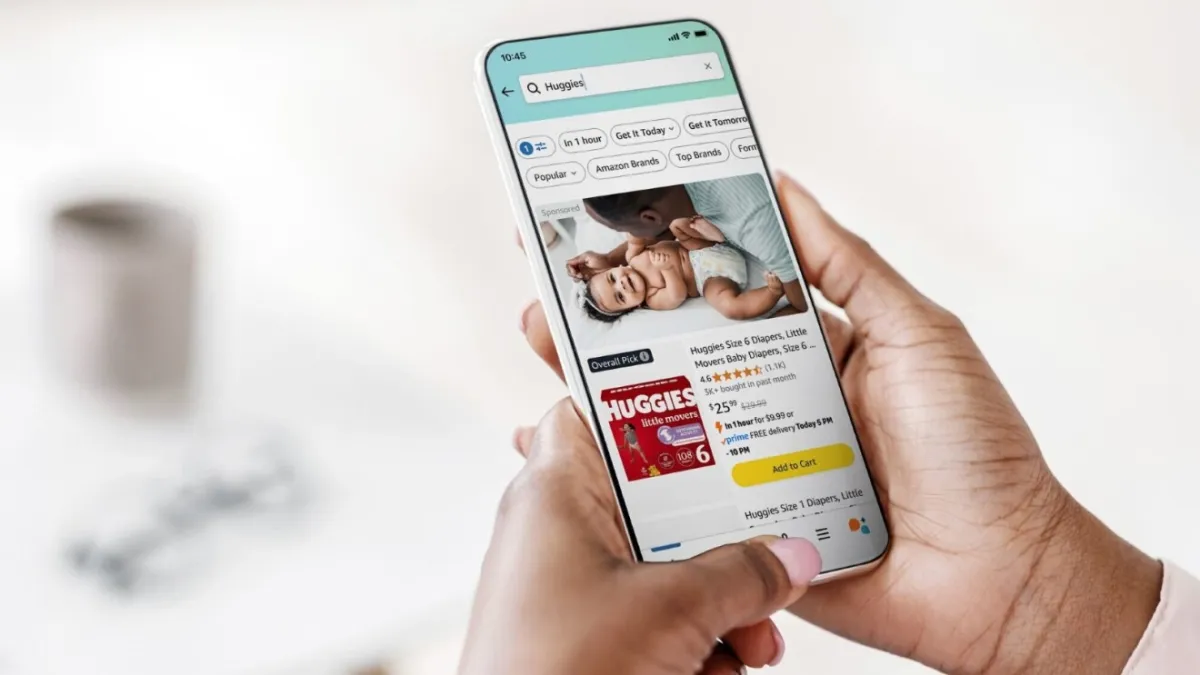
It shouldn’t come as a surprise that Amazon collects data about you based on what you buy. If you buy a lot of cat litter, Amazon will probably infer that you have cats, or if you buy a lot of anti-acne skin products, then Amazon might guess you’re prone to breakouts. Even if we know that Amazon customizes our shopping experiences based on our purchase history, it still comes as a surprise to see all of these personal details laid out in a convenient list. Especially when those details get uncomfortably intimate.
One Threads user came across this section of her Amazon settings, where you can see who the shopping giant thinks you are, and alongside more benign assumptions like “Shops from women’s departments” and “Probably owns a Shark robot vacuum,” she found that Amazon assumes she “has flat buttocks.”
“I stumbled upon a page of assumptions that Amazon has made about me based on my purchases and I’m literally speechless,” an Amazon customer, @fangirlinmegan, wrote on Threads. “I mean it ain’t wrong but damn did you have to call me out like that?”
In less than a day, the post garnered over a million views, including many from users who were curious what their own Amazon profiles might reveal. Here’s how you find out.
On desktop, you can find this page by hovering over where Amazon says “Hello, [your name]” in the upper right corner. Then click “Account” under the “Your Account” section. Under the “Ordering and shopping preferences” section, click “Your Shopping preferences.” From here, you can add in information of your own, like your shoe size, interests, and dietary preferences. But we’re not here to tell Amazon that it should stop selling you beef jerky since you’re a vegetarian. We’re here to see if Amazon thinks you have “flat buttocks.” When you scroll to the bottom of the page, you’ll see a blue hyperlinked option that says “Manage your information.” Once you click that, you’ll see what dirt Amazon has on you.
On the mobile app, you can get here by clicking the hamburger icon from the bottom menu bar, then navigating to “Account” > “Shopping preferences” > “About you.”
For me, Amazon has gleaned that I am someone who “practices photography,” “plays collectible card games,” and is “invested in the Apple ecosystem.” This is all true. Amazon has even flattered me by noting that I “read diverse non-fiction,” to which I say — why yes, I am indeed an open-minded intellectual with a thirst for knowledge. Thank you for noticing.
Other colleagues of mine found that Amazon correctly noted their interests in vinyl records and ceramics, as well as a penchant for “natural materials” in home decor and clothing that “prioritizes comfort.” None of us had anything as affronting as “has flat buttocks,” but the Threads user noted that this was likely because she had purchased “butt scrunch leggings.”
Tech companies know too much about us, and it’s jarring to realize just how closely they’re paying attention to how we use their platforms. We live in a world of alarming surveillance, but at least I know that Amazon doesn’t think my butt is flat.
When you purchase through links in our articles, we may earn a small commission. This doesn’t affect our editorial independence.
>

Apple is working on a new ecosystem of smart home devices via a partnership with LG, Bloomberg has reported.
The new devices — which include a smart lock, a thermostat, and a doorbell — are designed to integrate with the company’s smart home hub, another upcoming product that will reportedly launch on Oct. 13th. That hub is expected to include a 6-inch square display that can be placed on a countertop or mounted on a wall.
The two companies are also working on a slate of security cameras, including models for indoor, outdoor and a floodlight. The LG devices are expected to be announced, if not formally released, next week, too. TechCrunch reached out to Apple for more information.
Interestingly, the devices will reportedly carry the LG brand — despite being developed by both companies.
The new products could aptly be read as a swipe at Amazon’s smart home offerings, which currently offers a variety of similar products, including its Ring home security cameras.
Apple has sought to push into new territory with its recent hardware releases. One of those new territories is an expanded smart home presence.
>

Michael McArdle: What drives the Northern Ireland manager in his career?

‘Doctor Who’ Bids Revealed: Producers Pitch To Regenerate Sci-Fi Show
Jurgen Klopp's Liverpool achievements deserve even greater praise in wake of the Man City judgment
-

 movies5 months ago
Search For Canadian TV Actor Stewart McLean Now Homicide Investigation
-

 Fashion9 years ago
These ’90s fashion trends are making a comeback in 2017
-
Fashion9 years ago
According to Dior Couture, this taboo fashion accessory is back
-
Fashion9 years ago
Model Jocelyn Chew’s Instagram is the best vacation you’ve ever had
-
Fashion9 years ago
Emily Ratajkowski channels back-to-school style
-
Fashion9 years ago
9 Celebrities who have spoken out about being photoshopped
-

 Anime4 months ago
Rurouni Kenshin: Hokkaido Arc Manga Takes 1-Issue Break – News
-

 Anime3 months ago
HIDIVE to Stream English Dubs for The World Is Dancing, The Forsaken Saintess and Her Foodie Roadtrip in Another World, The Dangers in My Heart: The Movie Anime – News