
Politics
The House | Former Prison Governor Ian Acheson: The Public Is Right To Be Outraged By Early Release Schemes



11 min read
In a searing critique, former prison governor Ian Acheson says the public is right to be outraged by early release schemes and overcrowding is being used to cover up entrenched administrative and political failure
Prison overcrowding is a major issue because it hampers movement, reduces the time offenders can spend outside their cells, interferes with work and education, complicates resource allocation, and makes control much harder to enforce. At the same time, it has turned into a generic excuse used by the Ministry of Justice (MoJ) to explain almost every failure. Whether it is soaring violence, rife drug use, staff shortages, inadequate intelligence, bad management systems or managerial decline, overcrowding is rolled out as the culprit. It has become a convenient substitute for examining whether prisons are being properly managed and run.
That’s a harder truth. A cultural decay exists within the boss class of HM Prison and Probation Service (HMPPS), the last true hermit kingdom in public administration. It shows in their helpless response to a downward slide, and in their readiness to regard basic failure as inevitable, whether a prison is overcrowded or not. The most dangerous failures among our jails are not caused by a lack of cell space. Often, the system rewards the apparatchik who fails upwards because he or she has become skilled in progressive abstractions, rather than the kind of leader who prioritises order, safety, high standards and a purposeful regime.
The public debate has become distorted since ministers have spoken of a capacity crisis.
Reference is made to the tainted Tory legacy, and the only solution proposed is to grant earlier release. The more realistic option – building, staffing, and managing a prison establishment to handle the number of prisoners imposed by the courts’ penalties – has been continually postponed. The most recent official figure available indicates that there were 87,111 people in prison in England and Wales on 14 September 2026. The operational capacity is 88,986, which means the national headroom is 1,875 places.
The global figure by itself does not give the full picture. Prison places are not all the same.
Remand prisoners must be kept within a reasonable distance of the court. High-risk prisoners need high-security jails. Sex offenders must be protected against exploitation and violence. Women, young adults, people with serious mental illness, people with disabilities, prisoners who are subject to gang separation, and terrorists who need confinement all require special types of accommodation. Governors deal with these restrictions every day, but they are not visible when looking at the total number of prisoners.
The most recent population forecasts from the MoJ give the central figure as 100,600 prisoners by March 2030, the range being between 98,000 and 103,600. The department recognises that there is a great deal of uncertainty involved, since its figures are based on assumptions regarding police activity, charging rates, court throughput, sentencing patterns, recalls, policy changes and the speed at which cases progress through the justice system.
Forecasts are needed for the purpose of planning and should not be regarded as definitive proof of a fundamental change in the meaning of sentences.
Even though we are certainly running short of space, the MoJ’s 2024 forecasts predicted 89,100 prisoners by September 2025. The actual total was 87,465. The later central estimate for September 2026 was about 2,100 fewer than the similar forecast that had been made a year before. The ministry explained a large part of this change as being due to policy adjustments, including the greater use of the Home Detention Curfew and the reforms regarding fixed-term recall for some people who are serving shorter sentences.
Those changes make a point that ministers would prefer to avoid. Population projections can change sharply because policy changes sharply. They are models, not destiny. A state that has underbuilt its way out of a capacity problem for more than a decade should not use an uncertain future number as a reason to beg ministers to normalise the early release of thousands of risky prisoners.
That building failure is well-documented. The National Audit Office (NAO) stated that the government’s commitment in 2021 to provide 20,000 extra prison places was unrealistic and had not been given sufficient priority. By September 2024, the HMPPS had delivered 6,518 of these places. The NAO believed that the full number of 20,000 would not be achieved until 2031, which is about five years later than planned.
This is the major failure in public policy. Successive governments have increased policing, introduced tougher sentencing laws, allowed court delays to become longer, and accepted a large number of recall cases – yet they have not built the physical infrastructure needed to accommodate the inevitable increase in prison numbers.
Labour has promised to provide 14,000 new places by 2031 and says it has committed up to £7bn over 2024-25 to 2029-30. This commitment is essential and must be implemented swiftly, with progress to be assessed by the number of prison gates that open to reveal safe, staffed and fully functioning establishments inside. Let’s have no more nonsense spouted by the Justice Secretary Alex Norris on converting laundries. Fatuous press releases, planning applications or artistic impressions can’t securely hold prisoners.
Building cell space is often dismissed as a simplistic law-and-order response. It is an acceptance of responsibility. A state that investigates crime, prosecutes people and asks courts to impose custodial sentences must provide sufficient capacity to enforce the outcome.
Custody should be proportionate. It should be reserved for cases where it is necessary. It cannot be turned into a provisional arrangement whose duration depends on the MoJ’s construction record.
The government’s other option is now becoming more and more chaotic. Emergency release was launched in 2024. The Sentencing Act has altered the automatic release dates for a large number of prisoners who are serving standard determinate sentences. According to the new legislation, individuals who were previously due to be released after 40 or 50 per cent of their sentence can now be released after one third; similarly, those who would have had to serve two thirds can now be released at halfway. The aim of the scheme had been to free up space, but it instead caused a public outcry.
Families, victims’ representatives, and former police colleagues raised alarm when it emerged that two men convicted of the manslaughter of PC Andrew Harper could become eligible for earlier release. Harper was killed in 2019 while investigating the theft of a quad bike. The campaign surrounding his case brought home a simple political fact: the public does not experience early release as a neutral technical adjustment. It sees people convicted in serious and notorious cases leaving prison earlier because the state has not built enough places. One million people signed a petition to show their anger at justice by logistics, not just deserts.
The response was a familiar Whitehall exercise in retrospective exemption. The policy was paused. Ministers reviewed it. They excluded those convicted of unlawful killing, including manslaughter. They added exclusions for death by dangerous driving, indecent assault, historic child-sex offences and causing or allowing a child’s death.
A cultural decay exists within the boss class of HM Prison and Probation Service, the last true hermit kingdom in public administration
The eligibility group reduced from an estimated 6,000 to around 5,000 prisoners. The start date was delayed. Further supervision and protections for victims were promised. Sci-fi magic bracelets for geo-fencing would save us all.
Each individual exclusion here may be defensible. The cumulative result is policy made in public, case by case, only after the consequences become visible and politically embarrassing.
It is a salami-sliced attempt to retain the capacity savings while avoiding the politically intolerable cases. The government is discovering that there is no clean line between the prisoner it is comfortable releasing early and the prisoner whose earlier release will rightly trouble the public.
This matters because the public is at odds with the administrative state on this question. Most people understand that not every offender belongs in prison. Most accept that individual release decisions must be based on risk, progress and law. They understand the value of credible rehabilitation. They also understand that a sentence imposed in open court should carry meaning.
The public sees the contradiction. Ministers promise action on crime, victims are promised confidence in justice, police are expected to make more arrests and courts are urged to deal with cases more quickly. The same state then says that sentences must be cut short because the accommodation has not been built. It is impossible to spin that as an enlightened penal settlement. It looks like a failure to plan and two fingers to victims.
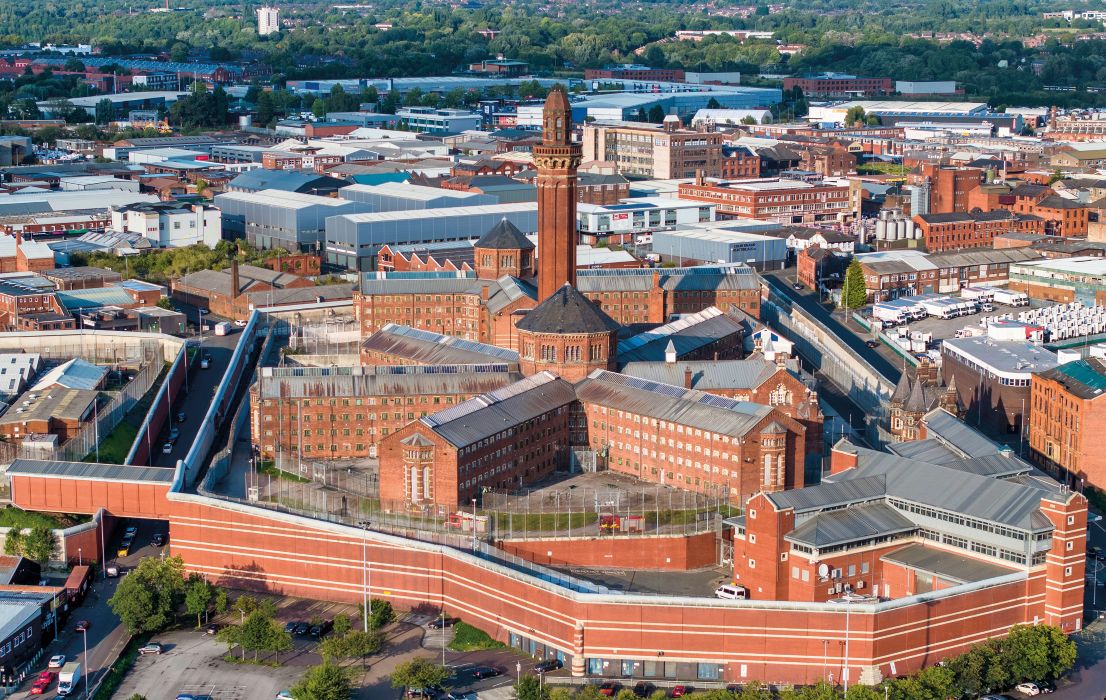
Early release also transfers pressure into a knackered probation service still damaged by years of ideological vandalism, excessive workloads, staff turnover and lethal public protection failures. An offender released earlier than a judge has said they should be locked up needs a credible licence plan, stable accommodation, access to treatment and medication, help into work, and a probation practitioner with sufficient time to assess and manage risk. None of this is remotely in place now, let alone in the coming months as dangerous offenders flood the streets. The police have been crystal clear – managing this additional risk will denude everyday cover, which is hardly flush with capacity as it is.
Recall to custody has become a major driver of population pressure because it shows a system that’s unable to manage instability outside prison: licence breaches, genuine risk, homelessness, addiction, fractured supervision and deficient support.
There are responsible ways to reduce the number of people in prison. Short sentences which involve detention must be used with care. The practice of remand should be subjected to stricter discipline. Non-violent acquisitive offenders in prison because of a drug addiction are a medical problem, not a criminal justice one. The courts need other options than custody which they can rely on. But these reforms need investment, urgency, imagination and competent delivery. And they need public confidence, which is tanking. But they do not make prison capacity optional.
The condition of the estate explains why building and leadership must be addressed together.
In 2024-25, 24.8 per cent of prisoners were held in crowded accommodation. The methodology has changed, so historic comparisons require care. The current figure still means roughly one prisoner in four shares accommodation designed for fewer offenders.
Large parts of the existing estate lie empty because of a failure to recruit and retain staff.
Here’s why: In 2025-26, prisoner-on-prisoner assaults stood at 244 per 1,000 prisoners.
Assaults on staff stood at 113 per 1,000. There were 812 self-harm incidents per 1,000 prisoners and 67 self-inflicted deaths. Drugs, debt, intimidation and violence are harder to control in a crowded system. But they also flourish where leadership is weak, staff are traumatised, and prisoners have nothing to do except wait for the next drone drug delivery.
The workforce situation tells the tale. In March 2026, 21,984 prison staff were employed at Band 3 to 5 levels, down from 22,716 the previous year and fewer than the 23,590 recorded in March 2024. Average sickness absence for front line staff reached an unsustainable 13 working days in the 2025-26 period. The service cannot get to stability just by speeding up the process of shovelling offenders through the gates early.
In 2025-26, 14 prisons were assessed by the MoJ as being ‘of serious concern’ and 25 as being of ‘concern.’ That’s 39 out of 120 establishments requiring great improvement. Many of those jails hold some of the scariest people in Britain. There are good prisons and outstanding staff. There are also too many establishments where the basics of safety, decency, control and purposeful activity are unreliable or completely defunct.
The answer is clear to me. Britain needs a national capacity crisis taskforce led by genuine experts, not retread mandarins and clueless ministers. It needs a genuine operational buffer.
It needs officers recruited, retained and confident to restore order which is foundational to everything hopeful. It needs senior leaders judged openly on safety, order, staff confidence, regime delivery and rehabilitation outcomes. It needs a rebuilt probation service before large-scale early release becomes a normal practice.
Early release may occasionally be necessary. It can’t become a substitute for building a system capable of carrying out the sentences that courts impose. The public is entitled to expect more than an omnicircus of duff projections, panicked exemptions and emergency sticking plasters. It is entitled to a prison system that is properly led, adequately built and worthy of public trust.
>



8 min read
The Tories will need to win back younger voters if they are ever going to govern again. Zoe Crowther finds the party is staking it all on being seen as the best chance they have to get a good job and home
At the last general election, the median age of a Conservative voter had risen to 63. Of those under 30 who cast a vote in 2024, barely eight per cent did so for the Tories.
Campaigning for the Tory leadership in the wake of that crushing defeat, Mel Stride described the age profile of the party’s voters as “completely untenable”. Only “deep, hard work over a sustained period of time” could turn it around, he said.
More than two years later, Stride is out of his job as shadow chancellor and those close to leader Kemi Badenoch are resisting pressure for headline-grabbing policies designed to appeal specifically to younger voters.
The Conservatives have not given up on younger voters completely. In February, the party launched its ‘New Deal for Young People’, which included scrapping real interest rates on Plan 2 student loans, creating 100,000 more apprenticeships for 18- to 21-year-olds, and introducing a £5,000 First Job Bonus, which would allow young people to keep the first £5,000 of National Insurance they would have paid.
The party has also promised to abolish Stamp Duty Land Tax on primary residences for UK residents, a policy that would help younger voters get on and move up the property ladder.
But asked whether there is a further policy push for the younger generation, insiders say the priority is to restore the party’s reputation for economic competence more generally.
The party is said to be keen to move away from a politics-by-focus-group approach, where every policy is broken down according to how it might appeal to a particular demographic.
Tory sources say there is no specific person or team working on youth policy in the
Conservative Campaign Headquarters (CCHQ), or for any other demographic group. Instead, they argue the party should return to fundamental Conservative principles: lowering the tax burden, reforming welfare so that work pays, promoting aspirational conservatism and pursuing deregulation, including in housing. The thinking is that these policies will naturally appeal to working professionals under 45, a revealingly broad definition of what the party now considers its potential ‘young’ electorate.
There will, in any case, only be handful of key policies unveiled at this year’s conference – compared to dozens at last year’s. At least one of these is expected to centre on ‘aspirational conservatism’.
Conservative MP for Windsor Jack Rankin, who also serves as Badenoch’s parliamentary private secretary, says: “One thing that is quite nice about the party at the minute is we are not overly focused on cynical retail politics that comes out of focus groups to attract a particular crowd.
“We’ve had time to think about where we went wrong and what we want to do, and the broad consensus is that where we went wrong in government is where we weren’t true to our authentic principles, so we’re trying to be a serious party.
“We can’t out-populist Reform. We’re not going to outspend Labour. But with priorities like fiscal discipline and defence, that’s exactly what the country needs right now. There’s a USP for us; it’s what we bloody believe, and it’s authentically ours and unites us.”
Rankin, who is 34, says that to win back working-age voters they will “have to look like a new party”.
“Kemi’s doing quite a good job on that, that’s part of why you’ve seen some new faces being promoted, but clearly that is a process over a period of months and years.”
The economic unit in CCHQ has been tasked with making the Conservatives the party the public trusts most on the economy. With the party currently on around 20 per cent in the polls, some hope it can rise to 25 within the next year through sustained messaging on fiscal responsibility.
The new shadow chancellor, Andrew Griffith, is widely seen as more bullish on business deregulation, arguing that removing red tape and lowering taxes on businesses could make it easier to employ young people, creating more opportunities as they enter and progress through the labour market.
James Cowling, founder of the Next Gen Tories grassroots group, believes the key question for the party now is whether it pursues fiscal policies that fuel further growth or prioritises policies likely to be more popular with its traditional, older base, such as scrapping inheritance tax.
“I think they’ll land somewhere between the two,” he tells The House.
He hopes the party is having conversations about relative marginal rates of tax for high earners, including the taper of the personal allowance: “It’s two bites of the cherry. It is very growth-driving, and it is aimed at people in their 30s, 40s, or maybe 50s who earn reasonable amounts of money, so could be target voters.”
Rankin agrees that more could be done to reduce marginal rates of tax, which would “make sense to a younger crowd”. He adds that there will be “a real push” in the Conservative Party about being tough on in-work welfare, including housing benefit and social homes.
Housing and planning could be another major part of the Conservatives’ attempt to broaden their appeal. The House understands the party is set to announce further policies on planning regulations, designed in part to appeal to people struggling to get on the housing ladder.
Rankin says of the current planning regulation landscape: “It’s individually justifiable, but collectively intolerable.
“We’re not going to outcompete Polanski and Farage on TikTok”
“We’re going to have to have a bit of a bonfire of that kind of stuff, and there will be contentious elements to that… Social, affordable housing just makes everything unviable in central London at the minute. If you want stuff to be built in central London, you’re going to have to waive a degree of that. And we have to think about the fire safety regulations after Grenfell.”
Some in the party believe it failed to apply a more ‘conservative’ approach while in government, to pursue urban densification by building more homes while ensuring they are attractive and well-designed.
Party insiders suggest new shadow housing, communities and local government secretary Katie Lam is motivated to take this agenda forward, with announcements on planning expected at the party conference.
“It’s so well-known how you would do sensible Tory housing policy, but they’ve just never had the courage to do it,” Cowling says.
For some advocating for a more young person-orientated approach, abolishing the pensions triple lock would be another courageous step for the party to take. However, while CCHQ insiders acknowledge that the triple lock is unsustainable, the party lost no time in issuing an attack ad following Andy Burnham’s announcement last week that it would be modified in the future. Economists may disapprove but the politics are unarguable given its supporters’ age profile.

The Tories are, however, making some effort to rebuild their grassroots youth operation. Fred Lynam, the Conservative Party’s youth engagement co-ordinator, says Badenoch takes the Young Conservatives group more seriously than previous leaderships did. He has been working to professionalise the organisation over the past year.
“It was quite despairing to look round and see a youth wing that’s 120 years old, that was lacking structure, was lacking organisation.”
This year’s conference will see a 50 per cent increase in Young Conservatives attending, and the group is also due to hold its first election for a chair in 30 years.
“I’m under no illusion that building up the YCs is going to change the 18 to 25 vote share overnight,” Lynam says, but adds that after visiting Sweden and seeing the organisation of the Conservative sister party’s youth wing there, he is encouraged by what might be possible.
“We got a large proportion of the youth vote in the Cameron years,” he says. “The opportunity is there, and I think we’re probably very well-placed to do it with Kemi.”
Meanwhile, Rankin and a handful of other Tory MPs are determined to keep attending university campus Conservative events whenever invited, rather than “cede the ground” to political opponents.
Even where a university Conservative association has only a dozen young members, Rankin argues, those people could become the activists and organisers of the future. “We need that pipeline to come through.”
There are also discussions within Badenoch’s team about launching a TikTok account for her, as she currently lags behind other party leaders in using the platform.
But Rankin cautions that focusing too much on the social media airwaves could prove to be a “futile waste of our time”, adding: “We’re not going to outcompete Polanski and Farage on TikTok.”
The Conservatives are not attempting to find a ‘silver bullet’ policy or comms approach that will boost the party’s popularity with the youth. For now, they believe that the route back to younger voters is not through a youth strategy at all, but about rebuilding the proposition that once carried voters from youth into middle age.
>


9 min read
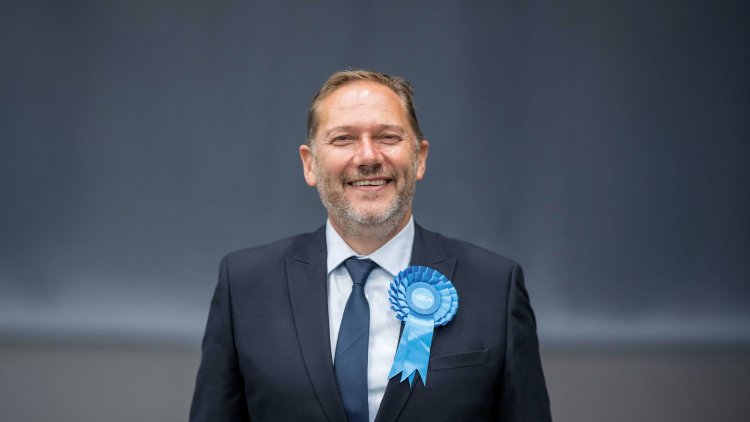
Parliament’s newest Conservative MP, Douglas Lumsden, talks to Noah Vickers about winning an overlooked by-election and his fight for Scotland’s oil and gas industry
Douglas Lumsden’s victory over the SNP in June’s Aberdeen South by-election represented a rare glimmer of hope for a Conservative Party still struggling to win new ground two years on from a historic defeat.
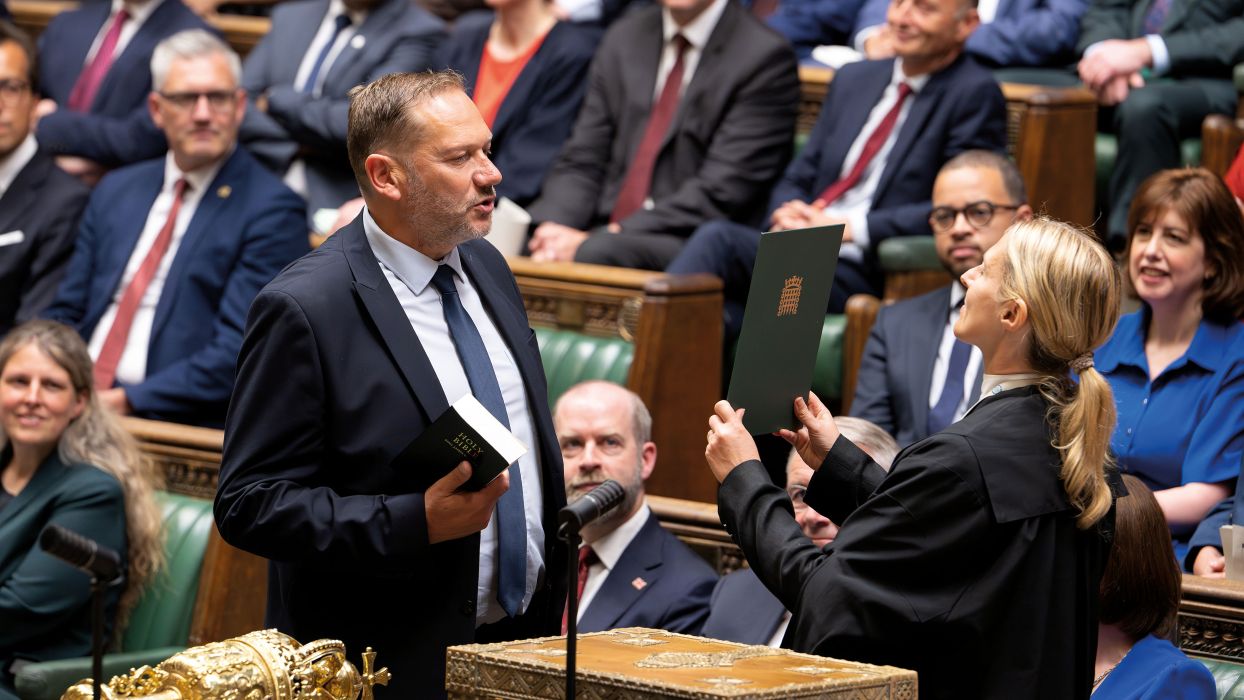
The result marked the first Scottish Tory by-election win in more than half a century and, according to Lumsden, was a huge morale booster for his new colleagues in Westminster.
“Until I got down here, I didn’t realise how big an impact the by-election win would have on the party as a whole,” the 55-year-old MP tells The House in his sparsely decorated new office in Westminster Palace.
“I’d been stuck out campaigning full time for the last six weeks, banging on doors, talking to people. It was only when we won [and I] got down here that I realised how big a thing it was for the party… I think it gave everyone a boost down here.”
Both Lumsden’s campaign and a separate by-election in Arbroath and Broughty Ferry – won by the SNP – were overshadowed by a third contest on the same day in Makerfield.
Waiting in Central Lobby to be sworn in with his fellow victors, Lumsden says he congratulated Andy Burnham, but didn’t at first get any congratulations back from him beyond a simple “thank you”. The soon-to-be Prime Minister may simply have assumed, at first, that Lumsden was just one among hundreds of MPs he’d never met before.
It was only as they began lining up to enter the Commons Chamber together, he says, that Burnham realised his faux pas, and swiftly gave an embarrassed apology.
For Lumsden, the fact that much of the media’s attention was on Makerfield throughout the by-election left him freer to focus on his campaign, with Aberdeen’s struggling oil and gas industry at its heart.
“That was the best thing – all eyes were on Makerfield,” says Lumsden, recalling the words of his party leader, Kemi Badenoch: “Kemi kept saying, ‘Makerfield’s about one person’s job. This by-election in Aberdeen is about thousands of people’s jobs’ – and that was completely right…
“We said we were going to make it referendum on the future of the oil and gas industry, and that resonated with so many people across Aberdeen.”
Lumsden, who before politics worked in IT for oil and gas firms, is a self-described “accidental politician”. Scotland’s 2014 independence referendum – and the SNP “not respecting” the result – was the trigger for him wanting to stand for office.
“I always say that I was inspired by two women to get involved in politics – one good, one bad. One of them was Nicola Sturgeon, who wouldn’t respect the result of the referendum, and the other was Ruth Davidson, who I’m friends with now.
“You could see what she was doing – it was a total rebirth of the Scottish Conservatives under Ruth, and I liked her style, her brand of conservatism.”
Elected to Aberdeen city council in 2017, Lumsden quickly became the authority’s co-leader in a unionist coalition with Labour: “What I thought would just be a dabble into politics was then a full-time role.”
Just four years later, he was representing his region as an MSP in Holyrood, where he briefly made headlines last year after submitting almost 1,000 written questions in January alone – more than half of the total asked by all 129 MSPs that month.
Questions included how many sauce and salt and pepper sachets had been procured for Holyrood’s canteen, the average loss or profit per jar of honey sold in the Scottish parliament’s gift shop, and a query about the height of Holyrood’s flagpoles.
Lumsden was accused of using AI to write the questions – which he denied – and of wasting £100,000 of taxpayers’ money in the process, as the average cost of answering a written question was in 2008 estimated at almost £100.
“We were just trying to shine a light on how much money the Scottish parliament is costing, for one – some of the hypocrisy that the Scottish parliament is saying, especially around net-zero and wastage,” says Lumsden.
“It was also trying to really put some of the government ministers under a bit more pressure and real scrutiny, because there was such a frustration that when you would ask written questions to ministers, they would come back not answering the question.”
For that reason, he explains that many of the questions submitted were essentially duplicated queries with the wording slightly changed, in an attempt to prevent ministers from dodging the information being sought.
Was that the point, then, of asking about salt and pepper sachets – to demonstrate wastefulness?
“Yeah, if they really cared about the environment, why don’t they just get salt and pepper pots? It was all those sorts of things.”
And there was really no AI used?
“Yeah, absolutely. How would AI come up with a question like that?”
The MP says he will not shy away from using written questions in Westminster for a similar purpose, but his key focus will be on energy policy, having already asked about what costs might be incurred if permission is not granted for oil and gas drilling at Rosebank.
While the government wrestles with whether to approve Rosebank and Jackdaw, Lumsden believes the answer is perfectly simple.
“We’re going to need oil and gas for the next 20 to 30 years, so we either use our own domestic production that protects jobs, is better for our energy security, [and] more importantly puts a lot of money into the exchequer – we can either do that, or we can import it from places like Qatar or the US.”
Yet Lumsden goes further. Approving Rosebank and Jackdaw, as far as he is concerned, would not go anywhere near far enough to save jobs in his constituency.
He points to a new report by industry body Offshore Energies UK, which identifies 111 further oil and gas projects capable of being “unlocked” with “a more competitive and predictable investment environment, including reform of the fiscal regime” from 2027.
“Ninety per cent of the oil and gas reserves have been taken out – but why leave that 10 per cent behind?”
“I would like to see that, because when you think of Rosebank and Jackdaw – especially Jackdaw – most of the work by the engineering companies has been done. It’s almost ready to be switched on, at this point,” the MP says.
“The investment’s been made, the platform’s been made, all the pipelines are in place. We need a pipeline of projects – pardon the pun – coming forward, to protect most of the supply chain jobs that are so important within Aberdeen and the North East.”
In his maiden speech, Lumsden told Parliament he had been sent to Westminster on a mission to “save” the North Sea oil and gas industry. But given that more than 90 per cent of the UK’s North Sea’s reserves have already been extracted, is it even an industry which can be saved? What would “saving” it look like?
“It’s really giving it some breathing space, to enable it to transition to other things,” says Lumsden. “OK, 90 per cent of the oil and gas reserves have been taken out – but why leave that 10 per cent behind?
“Nobody would go to the bar, for example, [and say] ‘I’ve bought a pint of beer, I’m two-thirds of the way through it. I’ll tell you what – I won’t take any more, I’ll buy another one from over there instead.’ You would surely use the resource you’ve got while you can…
“Geology should set the pace for the decline of the North Sea oil and gas basin. Once it’s gone, it’s gone. That’s fine.”
Since 2022, oil and gas companies have been required to pay the Energy Profits Levy, a windfall tax originally meant to end in 2025. Following repeated extensions, it is now due to be replaced in 2030 by a different mechanism called the Oil and Gas Revenue Levy (OGRL) – which would only be triggered when prices spike.
Industry leaders have urged ministers to bring the OGRL’s implementation forward to 2027, but Lumsden argues that all oil and gas profit levies should be abolished altogether.
“I know the industry say they can accept it [the OGRL], but why are energy companies being taxed in a different way from pharmaceutical companies, for example? There’s not an excessive profits levy on those companies,” he says.
“I think they should be treated like any other company. Yes, they’ll pay their corporation tax; yes, they’ll generate jobs that will pay income tax – all of that feeding into the exchequer. Why would we have a different set of taxes for an energy company? That is my personal view.”
The MP still wants to see a transition to renewables – and believes this can be a key point of difference for voters choosing between his party and Reform UK.
“We don’t go across all the time saying ‘net -stupid-zero’, because I think it would be a good thing if we did get to net-zero. It’s just how we get there. We’ll have to make sure we don’t trash the economy and make lives difficult for everyone on the journey there,” he says.
“If you carry out Reform’s policies to the letter – yes, they would, like us, probably maximise North Sea oil and gas production, but that is going to end at some point. And then what?
“They would have nothing at all. We’re saying yes, we should transition into renewables, but it may take longer than people first thought…
“Oil and gas jobs have been stopped, and there’s not the renewable jobs for people to go to, so what we want is more of a managed transition.”
Lumsden is not naïve to the fact that by-election results do not always mean very much once the next general election comes round. Single-issue campaigns are much harder to fight amid the noise of national politics.
For this reason, he shies away when asked about his future ambitions in Westminster, preferring instead to focus on his constituency.
“My ambition, really, is to try and do as much as I can for Aberdeen and the North East. I don’t care about shadow cabinet positions, cabinet positions, any of that. I just want to serve the North East,” he says.
“I don’t want to be elected down here and then lose the seat at the next general election. My focus is: I got almost 50 per cent of the vote last time, I want to make sure that we cement that and make sure we get re-elected.”
>
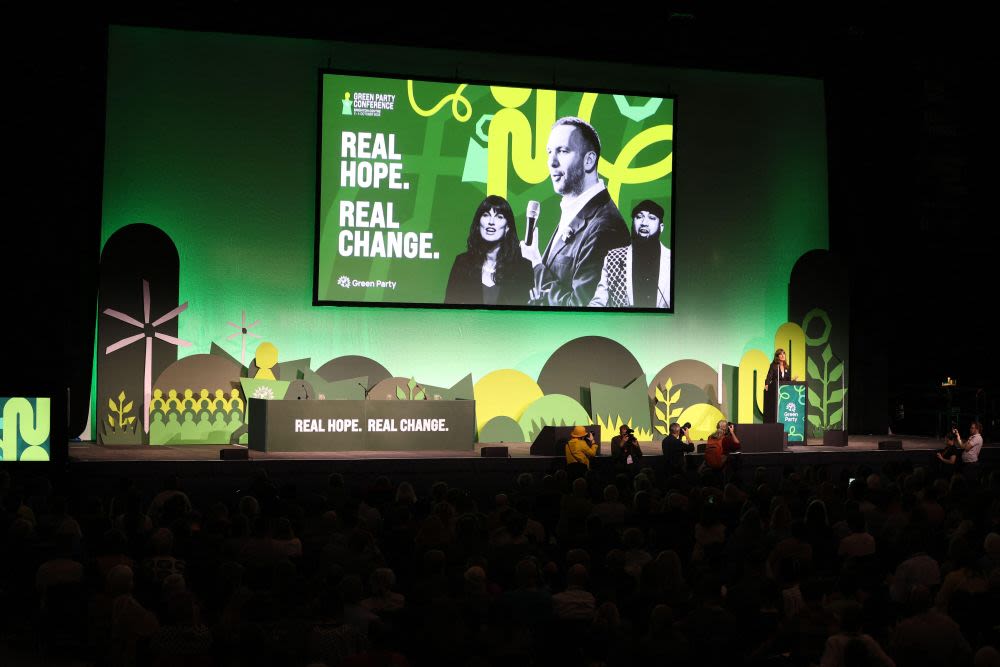
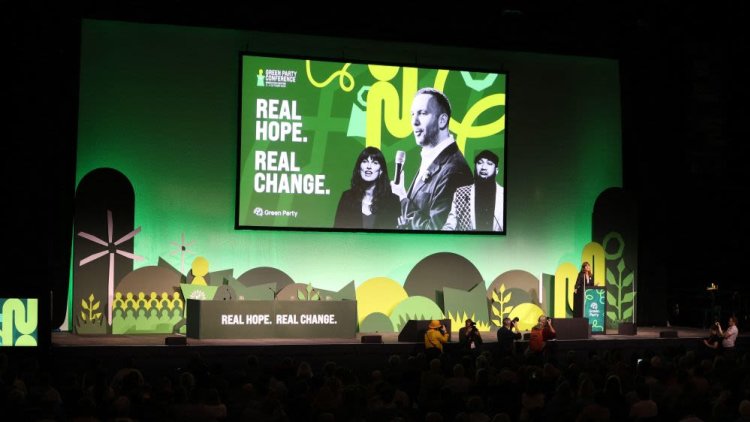
The Green Party conference took place in Brighton this weekend (Alamy)
5 min read
Green Party figures are wrestling with a question: how can they demonstrate economic credibility while maintaining their radical edge?
It was a talking point at their conference in Brighton over the weekend.
Harriet Lamb, Green Party CEO, told a fringe event hosted by More in Common that looking “competent on the economy” would be important to the party’s next steps as it tries to build on the growth it has achieved since Zack Polanski took over as leader.
At the same event, the think tank’s executive director, Luke Tryl, presented data showing that the public views a Green Party focus on the economy almost just as favourably as a focus on the environment. Among a section of avid Green supporters, which More in Common calls Progressive Activists, a focus on the economy is significantly more popular.
Senior Green figures who PoliticsHome spoke to in Brighton said the party must prepare for intense media scrutiny of its economic policies in the months ahead – particularly if there is talk of the role the party could play in a coalition government.
To that end, the Greens are planning to expand their team of economic spokespeople, with councillors elected in May in the pool of people being considered, PoliticsHome understands.
The Secretary of the Greens’ Economy Policy Working Group, Nadine Storey, admitted there is some nervousness within the party about presenting a different economic approach to the Westminster orthodoxy as “you need spokespeople who can defend the policy”.
Speaking to PoliticsHome in Brighton, she said: “Zack has been very good at that.
“He’s been much bolder, braver at being prepared to take on the journalists, but he has been caught out once or twice because he didn’t know the nitty-gritty.”
On Sunday, Green conference voted in favour of a motion setting out what Storey described as “underpinnings” to the party’s radical economic policy.
It includes dropping interest rates as the main means of controlling inflation; no longer using Gross Domestic Product as a measure of economic policy success; and abolishing the Office for Budget Responsibility. Party rules mean that the motion is now official policy.
There’s still this perception that the Green Party are going to protect Britain with healing herbs and herbal tea
James Meadway, economist and co-director of the left-wing think tank Verdant, which hosted an event in Brighton to coincide with the conference, said the debate about Green economic policy is not just about orthodox versus radical.
“There’s another dimension to this, which is radical and workable, and radical and unworkable,” he told PoliticsHome.
Meadway said the Greens are getting closer to the former, radical and workable, as the question of “what would you actually do in government” has become a bigger part of their thinking. He agreed that the Greens also needed to appoint strong spokespeople to publicly defend and explain their economic approach.
Neal Lawson, director of pressure group Compass and co-founder of new Labour group Mainstream, said that the Greens had to keep pushing the boundaries of economic debate: “Clearly, it’s a difficult position for the Greens to be somewhere between Utopia and Narnia, but they need to be out in that place and articulating a new kind of economy.”
He said the Greens had an important role to play in “shifting” the debate.
“If that gets them in some trouble with mainstream economists saying they’re away with the fairies or whatever else, then they should take a bit of that in order to shift the Overton window into new areas,” he told PoliticsHome.
In his conference speech on Friday, Polanski said voting for the Greens was the best way to force the Labour government into more left-wing positions. “Vote Green and watch Labour move,” the London Assembly Member said.
Former Labour mayor turned Green councillor Jamie Driscoll has written his own economic paper he hopes will be party policy by this time next year. Proposals include 100,000 new council homes a year, integrated public transport and retrofitting every home in the country.
Driscoll told PoliticsHome that a key test of whether the public can be persuaded that the Greens should be listened to on the economy is having a good number of economic spokesperson roles and the party needs to “start training a wave of people up”.
“We have to look like a party of government,” he said.
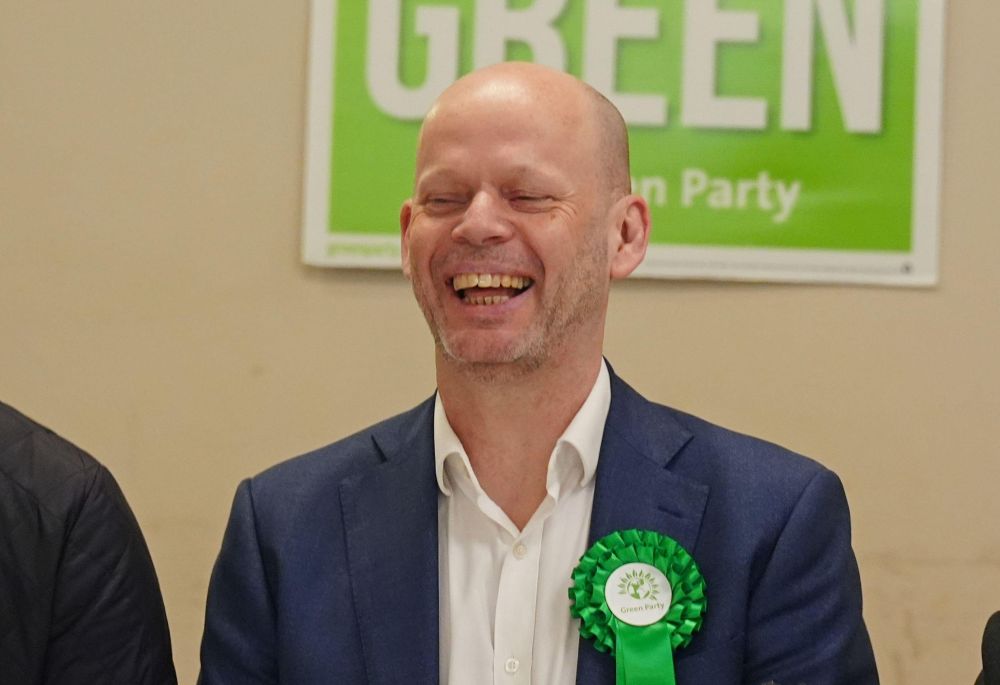
He added that this principle of credibility must apply across the board, from fishing to foreign policy, and not just on the economy, saying “there’s still this perception that the Green Party are going to protect Britain with healing herbs and herbal tea.”
Green figures who stress the importance of building credibility argue Polanski’s party must be even more careful in how they present radical economic ideas after the Liz Truss mini-budget and its impact on public opinion. “It perhaps does make it harder to put more radical ideas across,” acknowledged Storey.
One Green activist involved in policy discussions summarised the challenge as having policies “rooted in economic realities” but “do not take away from our views as progressive”.
The same activist said there was some nervousness within the party about whether the CO5 motion would be taken as a serious economic offer outside the conference hall. However, they stressed that the party must be prepared to make the argument.
Additional reporting by Adam Payne
>
Alex Ovechkin retirement: Everything to know about NHL star's final season

Mistral’s new 1T model aims to leapfrog closed and open rivals

Steven Spielberg And Michael Bay Back For Next ‘Transformers’ Movie
-

 movies5 months ago
Search For Canadian TV Actor Stewart McLean Now Homicide Investigation
-

 Fashion9 years ago
These ’90s fashion trends are making a comeback in 2017
-
Fashion9 years ago
According to Dior Couture, this taboo fashion accessory is back
-
Fashion9 years ago
Model Jocelyn Chew’s Instagram is the best vacation you’ve ever had
-
Fashion9 years ago
Emily Ratajkowski channels back-to-school style
-
Fashion9 years ago
9 Celebrities who have spoken out about being photoshopped
-

 Anime4 months ago
Rurouni Kenshin: Hokkaido Arc Manga Takes 1-Issue Break – News
-

 Anime3 months ago
HIDIVE to Stream English Dubs for The World Is Dancing, The Forsaken Saintess and Her Foodie Roadtrip in Another World, The Dangers in My Heart: The Movie Anime – News