
Tech
DAIMON Robotics Wants to Give Robot Hands a Sense of Touch


This article is brought to you by DAIMON Robotics.
This April, Hong Kong-based DAIMON Robotics has released Daimon-Infinity, which it describes as the largest omni-modal robotic dataset for physical AI, featuring high resolution tactile sensing and spanning a wide range of tasks from folding laundry at home to manufacturing on factory assembly lines. The project is supported by collaborative efforts of partners across China and the globe, including Google DeepMind, Northwestern University, and the National University of Singapore.
The move signals a key strategic initiative for DAIMON, a two-and-a-half-year-old company known for its advanced tactile sensor hardware, most notably a monochromatic, vision-based tactile sensor that packs over 110,000 effective sensing units into a fingertip-sized module. Drawing on its high-resolution tactile sensing technology and a distributed out-of-lab collection network capable of generating millions of hours of data annually, DAIMON is building large-scale robot manipulation datasets that include vast amounts of tactile sensing data. To accelerate the real-world deployment of embodied AI, the company has also open-sourced 10,000 hours of its data.
 Prof. Michael Yu Wang, co-founder and chief scientist at DAIMON Robotics, has pioneered Vision-Tactile-Language-Action (VTLA) architecture, elevating the tactile to a modality on par with vision.DAIMON Robotics
Behind the strategy is Prof. Michael Yu Wang, DAIMON’s co-founder and chief scientist. Prof. Wang earned his PhD at Carnegie Mellon — studying manipulation under Matt Mason — and went on to found the Robotics Institute at the Hong Kong University of Science and Technology. An IEEE Fellow and former Editor-in-Chief of IEEE Transactions on Automation Science and Engineering, he has spent roughly four decades in the field. His objective is to address the missing “insensitivity” of robot manipulation, which practically relies on the dominant Vision-Language-Action (VLA) model. He and his team have pioneered Vision-Tactile-Language-Action (VTLA) architecture, elevating the tactile to a modality on par with vision.
We spoke with Prof. Wang about how tactile feedback aims to change dexterous manipulation, how the dataset initiative is foreseen to improve our understanding of robotic hands in natural environments, and where — from hotels to convenience stores in China — he sees touch-enabled robots making their first real-world inroads.
Daimon-Infinity is the world’s largest omni-modal dataset for Physical AI, featuring million-hour scale multimodal data, ultra-high-res tactile feedback, data from 80+ real scenarios and 2,000+ human skills, and more.DAIMON Robotics
The Dataset Initiative
This month, DAIMON Robotics released the largest and most comprehensive robotic manipulation dataset with multiple leading academic institutions and enterprises. Why releasing the dataset now, rather than continuing to focus on product development? What impact will this have on the embodied intelligence industry?
DAIMON Robotics has been around for almost two and a half years. We have been committed to developing high-resolution, multimodal tactile sensing devices to perceive the interaction between a robot’s hand (particularly its fingertips) and objects. Our devices have become quite robust. They are now accepted and used by a large segment of users, including academic and research institutes as well as leading humanoid robotics companies.
As embodied AI continues to advance, the critical role of data has been clearer. Data scarcity remains a primary bottleneck in robot learning, particularly the lack of physical interaction data, which is essential for robots to operate effectively in the real world. Consequently, data quality, reliability, and cost have become major concerns in both research and commercial development.
This is exactly where DAIMON excels. Our vision-based tactile technology captures high-quality, multimodal tactile data. Beyond basic contact forces, it records deformation, slip and friction, material properties and surface textures — enabling a comprehensive reconstruction of physical interactions. Building on our expertise in multimodal fusion, we have developed a robust data processing pipeline that seamlessly integrates tactile feedback with vision, motion trajectories, and natural language, transforming raw inputs into training-ready dataset for machine learning models.
Recognizing the industry-wide data gap, we view large-scale data collection not only as our unique competitive advantage, but as a responsibility to the broader community.
By building and open-sourcing the dataset, we aim to provide the high-quality “fuel” needed to power embodied AI, ultimately accelerating the real-world deployment of general-purpose robotic foundation models.
The robotics industry is highly competitive, and many teams have chosen to focus on data. DAIMON is releasing a large and highly comprehensive cross-embodiment, vision-based tactile multimodal robotic manipulation dataset. How were you able to achieve this?
We have a dedicated in-house team focused on expanding our capabilities, including building hardware devices and developing our own large-scale model. Although we are a relatively small company, our core tactile sensing technology and innovative data collection paradigm enable us to build large-scale dataset.
Our approach is to broaden our offering. We have built the world’s largest distributed out-of-lab data collection network. Rather than relying on centralized data factories, this lightweight and scalable system allows data to be gathered across diverse real-world environments, enabling us to generate millions of hours of data per year.
“To drive the advancement of the entire embodied AI field, we have open-sourced 10,000 hours of the dataset for the broader community.” —Prof. Michael Yu Wang, DAIMON Robotics
This dataset is being jointly developed with several institutions worldwide. What roles did they play in its development, and how will the dataset benefit their research and products?
Besides China based teams, our partners include leading research groups from universities, such as Northwestern University and the National University of Singapore, as well as top global enterprises like Google DeepMind and China Mobile. Their decision to partner with DAIMON is a strong testament to the value of our tactile-rich dataset.
Among the companies involved there are some that have already built their own models but are now incorporating tactile information. By deploying our data collection devices across research, manufacturing and other real-world scenarios, they help us to gather highly practical, application-driven data. In turn, our partners leverage the data to train models tailored to their specific use cases. Furthermore, to drive the advancement of the entire embodied AI field, we have open-sourced 10,000 hours of the dataset for the broader community.
 Equipped with Daimon’s visuotactile sensor, the gripper delicately senses contact and precisely controls force to pick up a fragile eggshell.Daimon Robotics
From VLA to VTLA: Why Tactile Sensing Changes the Equation
The mainstream paradigm in robotics is currently the Vision-Language-Action (VLA) model, but your team has proposed a Vision-Tactile-Language-Action (VTLA) model. Why is it necessary to incorporate tactile sensing? What does it enable robots to achieve, and which tasks are likely to fail without tactile feedback?
Over these years of working to make generalist robots capable of performing manipulation tasks, especially dexterous manipulation — not just power grasping or holding an object, but manipulating objects and using tools to impart forces and motion onto parts — we see these robots being used in household as well as industrial assembly settings.
It is well established that tactile information is essential for providing feedback about contact states so that robots can guide their hands and fingers to perform reliable manipulation. Without tactile sensing, robots are severely limited. They struggle to locate objects in dark environments, and without slip detection, they can easily drop fragile items like glass. Furthermore, the inability to precisely control force often leads to failed manipulation tasks or, in severe cases, physical damage. Naturally, the VLA approach needs to be enhanced to incorporate tactile information. We expanded the VLA framework to incorporate tactile data, creating the VTLA model.
An additional benefit of our tactile sensor is that it is vision-based: We capture visual images of the deformation on the fingertip surface. We capture multiple images in a time sequence that encodes contact information, from which we can infer forces and other contact states. This aligns well with the visual framework that VLA is based upon. Having tactile information in a visual image format makes it naturally suitable for integration into the VLA framework, transforming it into a VTLA system. That is the key advantage: Vision-based tactile sensors provide very high resolution at the pixel level, and this data can be incorporated into the framework, whether it is an end-to-end model or another type of architecture.
 DAIMON has been known for its vision-based tactile sensors that can pack over 110,000 effective sensing units.DAIMON Robotics
The Technology: Monochromatic Vision-based Tactile Sensing
You and your team have spent many years deeply engaged in vision-based tactile sensing and have developed the world’s first monochromatic vision-based tactile sensing technology. Why did you choose this technical path?
Once we started investigating tactile sensors, we understood our needs. We wanted sensors that closely mimic what we have under our fingertip skin. Physiological studies have well documented the capabilities humans have at their fingertips — knowing what we touch, what kind of material it is, how forces are distributed, and whether it is moving into the right position as our brain controls our hands. We knew that replicating these capabilities on a robot hand’s fingertips would help considerably.
When we surveyed existing technologies, we found many types, including vision-based tactile sensors with tri-color optics and other simpler designs. We decided to integrate the best of these into an engineering-robust solution that works well without being overly complicated, keeping cost, reliability, and sensitivity within a satisfactory range, thus ultimately developing a monochromatic vision-based tactile sensing technique. This is fundamentally an engineering approach rather than a purely scientific one, since a great deal of foundational research already existed. With the growing realization of the necessity of tactile data, all of this will advance hand in hand.
 DAIMON vision-based tactile sensor captures high-quality, multimodal tactile data.DAIMON Robotics
Last year, DAIMON launched a multi-dimensional, high-resolution, high-frequency vision-based tactile sensor. Compared with traditional tactile sensors, where does its core advantage lie? Which industries could it potentially transform?
The key features of our sensors are the density of distributed force measurement and the deformation we can capture over the area of a fingertip. I believe we have the highest density in terms of sensing units. That is one very important metric. The other is dynamics: the frequency and bandwidth — how quickly we can detect force changes, transmit signals, and process them in real time. Other important aspects are largely engineering-related, such as reliability, drift, durability of the soft surface, and resistance to interference from magnetic, optical, or environmental factors.
A growing number of researchers and companies are recognizing the importance of tactile sensing and adopting our technology. I believe the advances in tactile sensing will elevate the entire community and industry to a higher level. One of our potential customers is deploying humanoid robots in a small convenience store, with densely packed shelves where shelf space is at a premium. The robot needs to reach into very tight spaces — tighter than books on a shelf — to pick out an object. Current two-jaw parallel grippers cannot fit into most of these spaces. Observing how humans pick up objects, you clearly need at least three slim fingers to touch and roll the object toward you and secure it. Thus, we are starting to see very specific needs where tactile sensing capabilities are essential.
From Academia to Startup
After 40 years in academia — founding the HKUST Robotics Institute, earning prestigious honors including IEEE Fellow, and serving as Editor-in-Chief of IEEE TASE — what motivated you to found DAIMON Robotics?
I have come a long way. I started learning robotics during my PhD at Carnegie Mellon, where there were truly remarkable groups working on locomotion under Marc Raibert, who founded Boston Dynamics, and on manipulation under my advisor, Matt Mason, a leader in the field. We have been working on dexterous manipulation, not only at Carnegie Mellon, but globally for many years.
However, progress has been limited for a long time, especially in building dexterous hands and making them work. Only recently have locomotion robots truly taken off, and only in the last few years have we begun to see major advancements in robot hands. There is clearly room for advancing manipulation capabilities, which would enable robots to do work like humans. While at Hong Kong University of Science and Technology, I saw increasingly greater people entering this area in the form of students and postdoctoral researchers. We wanted to jumpstart our effort by leveraging the available capital and talent resources.
Fortunately, one of my postdocs, Dr. Duan Jianghua, has a strong sense for commercial opportunities. Recognizing the rapid growth of robotics market and the unique value that our vision-based tactile sensing technology could bring, together we started DAIMON Robotics, and it has progressed well. The community has grown tremendously in China, Japan, Korea, the U.S., and Europe.
 Robots equipped with DAIMON technology have been deployed in factory settings. The company aims to enable robots to achieve “embodied intelligence” and close the gap between what they can see and what they can feel.DAIMON Robotics
Business Model and Commercial Strategy
What is DAIMON’s current business model and strategic focus? What role does the dataset release play in your commercial strategy?
We started as a device company focused on making highly capable tactile sensors, especially for robot hands. But as technology and business developed, everyone realized it is not just about one component, rather the entire technology chain: devices, data of adequate quality and quantity, and finally the right framework to build, train, and deploy models on robots in real application environments.
Our business strategy is best described as “3D”: Devices, Data, and Deployment. We build devices for data collection, our own ecosystem, and for deploying them in our partners’ potential application domains. This enables the collection of real-world tactile-rich data and complete closed-loop validation. This will become an integral part of the 3D business model. Most startups in this space are following a similar path until eventually some may become more specialized or more tightly integrated with other companies. For now, it is mostly vertical integration.
Embodied Skills and the Convergence Moment
You’ve introduced the concept of “embodied skills” as essential for humanoid robots to move beyond having just an advanced AI “brain.” What prompted this insight? What new capabilities could embodied skills enable? After the rapid evolution of models and hardware over the past two years, has your definition or roadmap for embodied skills evolved?
We have come a long way now see a convergence point where electrical, electronic, and mechatronic hardware technologies have advanced tremendously in last two decades. Robots are now fully electric, do not require hydraulics, because hardware has evolved rapidly. Modern electronics provide tremendous bandwidth with high torques. If we can build intelligence into these systems, we can create truly humanoid robots with the ability to operate in unstructured environments, make decisions, and take actions autonomously.
“Our vision is for robots to achieve robust manipulation capabilities and evolve into reliable partners for humans.” —Prof. Michael Yu Wang, DAIMON Robotics
AI has arrived at exactly the right time. Enormous resources have been invested in AI development, especially large language models, which are now being generalized into world models that enable physical AI capabilities. We would like to see these manifested in real-world systems.
While both AI and core hardware technologies continue to evolve, the focus is much clearer now. For example, human-sized robots are preferred in a home environment. This is an exciting domain with a promise of great societal benefit if we can eventually achieve safe, reliable, and cost-effective robots.
The Road to Real-World Deployment
Today, many robots can deliver impressive demos, yet there remains a gap before they truly enter real-world applications. What could be a potential trigger for real-world deployment? Which scenarios are most likely to achieve large-scale deployment first?
I think the road toward large-scale deployment of generalist robots is still long, but we are starting to see signs of feasibility within specific domains. It is very similar to autonomous vehicles, where we are yet to see full deployment of robo-taxis, while we have already started to find mobile robots and smaller vehicles widely deployed in the hospitality industry. Virtually every major hotel in China now has a delivery robot — no arms, just a vehicle that picks up items from the hotel lobby (e.g., food deliveries). The delivery person just loads the food and selects the room number. It is up to the robot thereafter to navigate and reach the guest’s room, which includes using the elevator, to deliver the food. This is already nearly 100 percent deployed in major Chinese hotels.
Hotel and restaurant robots are viewed as a model for deploying humanoid robots in specific domains like overnight drugstores and convenience stores. I expect complete deployment in such settings within a short timeframe, followed by other applications. Overall, we can expect autonomous robots, including humanoids, to progressively penetrate specific sectors, delivering value in each and expanding into others.
Ultimately, our vision is for robots to achieve robust manipulation capabilities and evolve into reliable partners for humans. By seamlessly integrating into our homes and daily lives, they will genuinely benefit and serve humanity.
This interview has been edited for length and clarity.
>

After more than a decade building a caller ID business serving over 500 million users, Truecaller is now taking the scam intelligence it gathered along the way to the open web, with no app or sign-in required.
The Swedish company on Sunday launched Scam Checker, a new web and Android service that lets users paste in a suspicious phone number, link, or message to find out if it’s fraudulent. To work, the service surfaces related reports from Truecaller’s community, ScamFeed. However, more detailed information about a phone number, including the name associated with it, remains available only through Truecaller’s existing service, which requires a sign-in.
The free-to-access tool will initially be available in India and is set to expand to Latin America, the Middle East and Africa, and Southeast Asia, the company said.
In addition to serving as lead generation for its app, the community reports can give Truecaller a better view of the scams circulating at a given time. This could also help the company with its fraud and risk products sold to enterprises through Truecaller for Business, although Jhunjhunwala said Scam Checker itself is aimed at consumers.
To work, Truecaller’s Scam Checker checks the link the user submits, expanding shortened URLs and following redirects to the final destination. It then checks these against its proprietary risk database and other fraud signals. Users can also paste a suspicious message, allowing the service to pick out a phone number or link and surface related reports from the Truecaller community.

The launch comes as scams have grown well beyond phone calls to text messages, messaging apps, and web links. In a 2025 GSMA survey of Indian adults (PDF), 46% of those who reported being scammed said they were approached through messaging apps, while 37% via SMS and 32% through voice calls.
Truecaller estimates that people make about 14 million web searches a month to check suspicious links and phone numbers, based on its analysis of search volumes and traffic to existing verification services. That behavior helped shape Scam Checker, CEO Rishit Jhunjhunwala told TechCrunch.
“When you need it, you’re usually somewhere else. The link shows up on WhatsApp. Your mum gets a message about a traffic fine. A friend forwards you a screenshot and asks, ‘Is this real?’” Jhunjhunwala said. “What people do in that moment is search.”
Truecaller’s community is becoming a crucial piece of its scam-detection effort. The company told TechCrunch that about 20,000 scam reports are live on ScamFeed, its crowdsourced feed where users can post and discuss scams, in India, with around 1,300 new reports added each week. Between September 14 and 20, the company also said it evaluated 12.9 billion messages globally and flagged 20.3 million as fraudulent.
In the near future, Truecaller says it plans to broaden the types of scams Scam Checker can detect and add screenshot uploads for further analysis.
The company’s push beyond caller ID comes as its core business faces new pressures in India, its largest market with more than 350 million users. Telecom operators are rolling out the federal government-backed Calling Name Presentation service, while Apple and Google have added their own caller identification and spam-protection features. Last week, India’s telecom regulator also ordered caller-ID apps to share user-submitted spam reports with telecom operators, a move Truecaller criticized as a “one-way exchange.”
As a result, Truecaller’s focus is evolving beyond caller ID.
“Caller ID was the first problem we solved, and it’s still how most people find us,” he said. “But scams moved to a more multi-channel approach with links and messages, and increasingly to voice and video. Our protection has to follow the scammer.”
When you purchase through links in our articles, we may earn a small commission. This doesn’t affect our editorial independence.
>

Anthropic CEO Dario Amodei seems to be everywhere this weekend: He was lampooned on the season premiere of Saturday Night Live, and tonight, he’s set to have dinner with President Donald Trump at the White House.
Axios first broke the news of Amodei’s dinner plans, which were subsequently confirmed by other publications.
This will be the first one-on-one meeting between the two men, who recently found themselves on opposite sides of the AI safety debate. Amodei released a plan to slow AI development (or at least proceed with more caution), while Trump has insisted, without evidence, that the AI backlash is a Democratic hoax; he also wants to rebrand the technology as “super intelligence.”
Even before the current back-and-forth, Amodei and Anthropic have to had a fraught relationship with Trump’s administration. Earlier this year, the Pentagon designated Anthropic a supply-chain risk in response to the company’s attempt to put guardrails around the use of its technology (Anthropic has been fighting the designation in court), although other administration officials have been friendlier.
>
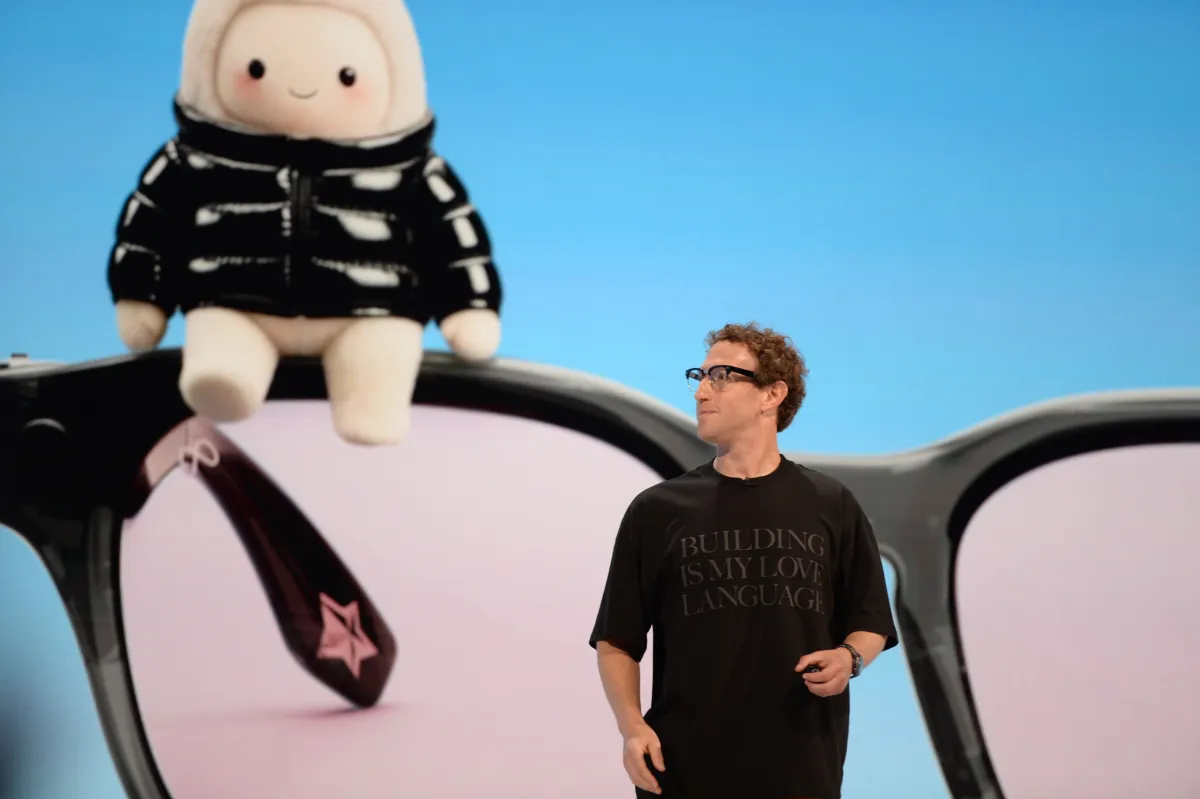
Meta’s new AI agent Muse took the spotlight at the company’s annual Connect event, where CEO Mark Zuckerberg made it clear that Facebook’s parent company plans to push AI features everywhere.
On the latest episode of TechCrunch’s Equity podcast, Kirsten Korosec, Sean O’Kane, and I discussed Meta’s AI announcements seemed to steal the spotlight during a week of new model launches from OpenAI and Anthropic.
With other big AI companies focused on coding and enterprise tools, it was a little surprising to see Meta move in the opposite direction, with a consumer focus and a cute, Tamagotchi-style AI device that Meta insists is for adults only. But as Kirsten noted, this could be playing to Meta’s strengths.
Sean tried Muse for himself, and while he was pleased that the agent actually found him some unclaimed money, he described the feature as more “a party-trick type thing,” rather than something that will drive ongoing usage. Plus, there’s the question of whether users can trust Meta’s AI with sensitive information.
“Meta’s business is to sell you ads,” Sean said. “And yes, they’ll make the argument that the more they know about you, the more accurate and interesting the ads will be — wake me up when we get to that fever dream.”
Keep reading for a preview of our full conversation, edited for length and clarity.
Kirsten Korosec: So how do you put Muse, which is this new personal AI agent that’s just been released by Meta and [is] clearly a bet on consumer — how does that fit into what you just described, at least with other frontier AI model companies seeing opportunity and business within enterprise? Because Meta Connect, which is their big annual event, just happened, and they are all-in on Muse, that is very clear.
Anthony Ha: That was definitely very head spinning for me, because it certainly feels like what we’ve been talking about has been this shift towards enterprise — not exclusively, but certainly that’s where the money, the attention is going.
Maybe some of that is because of the relative position of these different companies — OpenAI and Anthropic are in the lead in a lot of ways, but also, they’re planning to go public either this year, or next year in the case of OpenAI. And so there’s this feeling of, “I think we’ve got to actually make money now.” Not to say that they’re not making money [already], but because the costs are so high and the valuations are so high, they have to make money on this scale that’s essentially unprecedented. And I think they’re seeing enterprise as the way to do that.
And I wonder if Meta, for a variety of reasons, sees a different opportunity. There’s a part of me that’s like, “Wait, did they not get the memo?” But I think more charitably, you could say, “Well, if that’s where OpenAI and Anthropic are going, then maybe there is more of an opportunity for Meta to make the more consumer-friendly [version and] continue advancing AI on the consumer side.”
Kirsten: I mean, we can complain about or criticize or critique Meta all day long, but they’re very good and have [an] established track record of embedding themselves in everyday people’s lives. I mean, there’s a reason why Facebook has so many users — Instagram, WhatsApp. And I’ve never really thought of them as an enterprise product anyway. So I think it’s smart for them to continue to push on the consumer piece.
Sean, you’ve already tried Muse, which has already been out for a couple weeks. And I’m wondering if you see what your impression is, and if you see it being successful in the bid to become part of every part of your life.
Sean O’Kane: I mean, not really. I understand why some people think that is going to be the case. I’m sure a lot of people understand this, but this is roughly Meta’s kind ground-up version of an on-your iPhone, or on your Android, app of OpenClaw, which we talked about a couple months ago, which Meta went out and basically bought and integrated those folks’ work. It was the first big explosion of like, “Holy smokes, these agents can do all this stuff for me while I’m out and about, and I can just text with it and let it control my whole computer.” There’s a lot of the same elements of that at play. And having it in your hand, on an app that works like a relatively good chatbot as the interface, it does seem pretty powerful.
One of the first things that I did with it was — because it makes a bunch of suggestions for you, as to things that it can do, and one of them was, “I’ll scan to see if you have any unclaimed funds,” this thing that I think no one ever really thinks about and often is going to completely miss, because there’s just not a lot of unclaimed property funds out there in your name. Surprise, surprise, there were some for me.
It helped me make some money on my first day, and that was pretty cool. I wouldn’t have done that if I hadn’t been prompted by this thing to do it. And there’s a check on its way to me in the mail. Fantastic. [But] that ends pretty quickly, right? That was a one-time shot, but it’s not a thing that’s repeatable. That’s more like a party trick-type thing.
Kirsten: I mean, you just killed your own argument. I don’t see how that wouldn’t become wildly popular.
Sean: The more sustainable version of that, and the thing that Meta’s talked up a lot over the last couple of days, is taking that idea and applying it to your real, true everyday financials, like giving it your information for your credit card, your Gmail account, all this other stuff, do things that we’ve seen other companies do, like Rocket Money or whatever, where it’ll go cancel subscriptions that you’re not using or identify double charges, things that frankly the credit card company should be doing already.
And at that point you just run into that trust wall with Meta. I think one of the reasons that I was willing to explore this and was curious to stick with it a little bit — even through to today — is that somewhat shockingly, when I downloaded it, I just assumed that it would like really instantly prompt me and like plug me right into Threads, Instagram, Facebook, which I don’t really use ever, and pull up that context immediately.
But it didn’t. And it was working with me like I was a stranger at first, which made me more willing to use it, because I didn’t feel like Meta had everything on me already. But you can see, as you start to use it, it really tries to grab you and pull those things into the system, so that it can learn all this stuff about you.
I don’t know that I will ever trust Meta the same way. I think it’s an interesting timing for me, having just upgraded my iPhone and getting onto the new iOS with the new Siri that actually works and can do some controls on your phone in a way that is surprising and helpful, that it’s never been able to do. [I’ve been] thinking about how much I’ve been using that over the last week and how much more how much more willing I would be to have the Siri version of Muse take that information, because I just trust Apple more with that really sensitive information and not only trust it with the information from a cybersecurity perspective, but from the fact that its business is not to sell me a bunch of crappy ads.
Meta’s business is to sell you ads. And yes, they’ll make the argument that the more they know about you, the more accurate and interesting the ads will be — wake me up when we get to that fever dream.
And beyond the one-time money lever that I got, which was great, I don’t feel like I’ve found anything else that’s really all that useful — other than the fact that it is, to Anthony’s point, really tailored at keeping it sort of consumer-y in your interactions with it, with which I do think helps it and is why people are talking about it so much.
When you purchase through links in our articles, we may earn a small commission. This doesn’t affect our editorial independence.
>

England cricket: Brendon McCullum proposes 50-over warm-ups – how are side shaping up for World Cup?
Aesthetically-pleasing things in football: 'Proper' bicycle kicks, perfect trophy lifts and boot-sock cohesion
Wake up. This is not a drill. Joao Felix looks really good again
-

 movies4 months ago
Search For Canadian TV Actor Stewart McLean Now Homicide Investigation
-

 Fashion9 years ago
These ’90s fashion trends are making a comeback in 2017
-
Fashion9 years ago
According to Dior Couture, this taboo fashion accessory is back
-
Fashion9 years ago
Model Jocelyn Chew’s Instagram is the best vacation you’ve ever had
-
Fashion9 years ago
Emily Ratajkowski channels back-to-school style
-
Fashion9 years ago
9 Celebrities who have spoken out about being photoshopped
-

 Anime4 months ago
Rurouni Kenshin: Hokkaido Arc Manga Takes 1-Issue Break – News
-

 Anime3 months ago
HIDIVE to Stream English Dubs for The World Is Dancing, The Forsaken Saintess and Her Foodie Roadtrip in Another World, The Dangers in My Heart: The Movie Anime – News