
Entertainment
Microbudget Filmmaking Explained by Those Who Did It

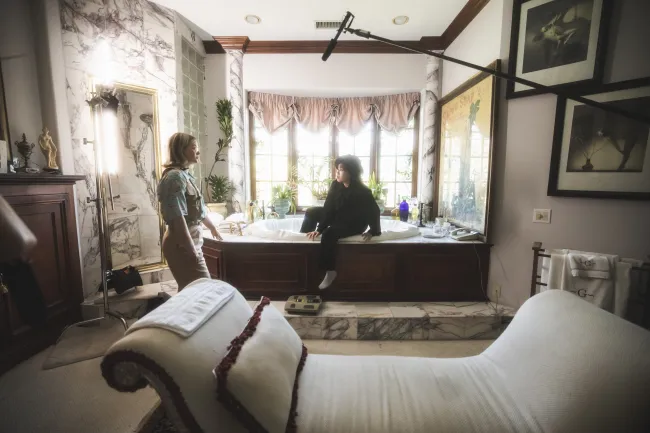
The time of the Orc has come. Or at least, the time of the Ellisons.
A bunch of us at IndieWire have been thinking about the increasing barriers around film financing, the breakdown of the festival routes for discovery and exhibition, the perils of manufacturing marketing hype, and other hurdles in filmmakers’ way.
But perhaps you have the idea for a microbudget feature — something that feels appropriately ambitious, contained to a single location, perhaps; or with a small, collaborative cast and a roving camera; or an idea where it’s possible to take an extended period of time to get it right. What are the pros and cons of the ways filmmakers can take their destiny into their own hands? By “destiny,” of course, we mean low six-figures’ worth of spending money, and by “hands,” we mean the tight-knit group of supportive collaborators required to make a film succeed.


We decided to reach out to folks who have experience acquiring just enough of a microbudget to make things without permission, and ask: Where did the money come from, and what do you do with it? There are many options out there; these are several of them.
Option #1: Crowdfund the Shit Out of It
I don’t have $100,000 to make a fun original comedy film. Producer Laser Webber, a fixture of the LA theater and comedy scene and one-half of indie duo band The Doubleclicks, doesn’t have $100,000 to make a fun original comedy film. But Webber, a veteran of over 70 successful crowdfunding campaigns across music, theater, film, web series, and comedy, can raise a lot of money for projects that might never get a hearing.
They’re currently steering the Seed & Spark for “The Greatest Treasure in the World,” an improvised comedy by Dropout regulars Siobhan Thompson and Izzy Roland, and have recently run campaigns for projects like “Vidhya’s Guide to the Afterlife” and “Good Time on the Clocktower.” As of this writing, Webber and “The Greatest Treasure in the World” team have built enough of a community interested in the story they’re telling that they are a little over $10,000 away from becoming the top project in Seed & Spark history.
The one cool trick to breaking through and generating momentum via crowdfunding is that there is absolutely no cool trick. Crowdfunding requires a mountain of hard work to craft the graphics, videos, copywriting, marketing, and audience outreach that constitute a creative project. Even when the attached creatives have a large online following, crowdfunding requires them to do more than pass the donation tin around (“The Greatest Treasure in the World” is mid-campaign and just hit a stretch goal, wherein director Alex Fernie will develop a one-page RPG free to all backers).

But Webber told IndieWire that a well-crafted crowdfunding project has to speak to a passionate base and should offer stories with missions in mind. Projects that are proud of their taste and a little bit of an underdog have a great chance of succeeding to a level where really interesting independent filmmaking becomes possible.
“I think an audience, and a reason to exist, is what makes crowdfunds work. One of the questions I make all my partners answer is, ‘How will you be different after this is over? And how will the world be different?’ It doesn’t have to be huge, but how do you change the life of somebody who’s seen your film? If you can’t answer that, then go sell something boring to a network,” Webber said.
The other thing that’s important in crowdfunds, both large and small, is cultivating a sense of audience participation and an underdog story about bringing a project to life that wouldn’t get a fair hearing. “Give them enough information slowly enough that this becomes a story that they’re not just hearing, but they’re also telling, and they’re instrumental in being part of. That’s what I love about crowdfunding. This is not art for a top-down situation,” Webber said. “We all did this together, and we are all telling this story about what’s possible together.”
Option #2: Grants, Loans, and Credit Card Debt
Crowdfunding, for all its utility, is often neither the beginning nor the end for a film project. Director Caroline Golum wrote “The Revelations of Divine Love,” an inventive adaptation of the writings of medieval English mystic Julian of Norwich, and immediately knew it would have to look a certain way and would take a long time to make. Longer than backers generally wait for their sticker packets and livestream Q&As.
But luckily, she cultivated an incredible community of collaborators who were down to work through different iterations of the project from script to short concept to its feature ambitions, all the way to shooting an expressionistic take on the Peasant’s Revolt and The Black Death from inside a warehouse in Queens. “The Revelations of Divine Love” has played in New York, LA, and Seattle, and will soon play select dates in Chicago, Oakland, and Los Angeles courtesy indie distributor Several Futures.
“ I’m not interested in making films about myself or by myself because I would go insane,” Golum told IndieWire. “ I like to say that the only thing I can take credit for is that I had the idea. And then from the outset, other people were involved. Like, you do not make a film like this on your own in a vacuum. There were five of us that were the core group of this movie — me, Kate [Stahl], our producer, Gabe [Elder], our DP, Grant [Stoops], our art director, and Sydney [Buchan], our AD, who has a production design background. And between the five of us, we made one competent production designer.”

There was a lot that needed to be designed, too. Golum brings a wide range of influences — everything from “Black Narcissus” and “The Cabinet of Dr. Caligari” to the films of Andy Milligan and Guy Maddin — into a film that splits its look into the Heavenly and the Earthly. There’s a naturalistic style in the sequences of Julian’s (Tessa Strain) visions, where she sees things that express themselves as truths of God and the Universe; then there’s a very consciously artificial, model-and-matte-painting aesthetic for Julian’s life in Norwich. But it extended to the full-court press, “let’s all pull together and save the rec center” effort that it took to gather the resources for “The Revelations of Divine Love.”
The film also had a crowdfunding campaign on Fractured Atlas, an arts service organization that isn’t strictly just a crowdfunder like Kickstarter, GoFundMe, or Seed & Spark. It has that platform, but it’s more like a nonprofit that helps provide resources to artists and sponsors them so that their fundraising counts as nonprofit donations. Golum and her team raised just under $50,000, but that wasn’t where it started or ended.
“We made a proof of concept for this film in 2021, and then I got a grant from NYSCA [New York State Council on the Arts] at the end of that year for $10,000, and that became the tool that I could use to crowdfund. So then 2022 was spent getting the money together, all of 2022,” Golum said. “It got a fair amount of attention on social media, partially because my dear friend, [‘Blue Heron’ director] Sophy Romvari, who’s an amazing filmmaker in her own right, shared the campaign, and we got some bigger donors as a result. If you’ve got the mouthpiece to tout other people, that’s important. I hope to be in a position to do that for someone else.”
In addition to crowdfunding, however, Golum also applied for four grants and took out a loan from her credit union. It was a patchwork of luck, community, and debt that made it possible for Golum to see the film the way she wanted to make it. “That’s how you fund a $100,000 movie,” Golum said.
Option #3: Nobody Is Telling You To Steal $10,000. But If You Have $10,000, You Can Make a Movie Like It’s a 2006 YouTube Video.
If no one is giving you money, or loaning you money, or granting you money, well, the options for where a microbudget feature’s money comes from are very few. Self-funding is a tricky business, from Francis Ford Coppola to Tommy Wissau. But if there is a sane path for setting one’s own money on fire in the name of cinema, it might be the one that rising indie director Pete Ohs prefers.
Ohs made one independent film the “traditional” independent film way — getting a script into a workshop into a successful fundraise into a low-budget shoot into a festival slot — and he hated it so much that he never wants to do it again. While Ohs latest film “Erupcja” is a little shinier, what with its European setting and acting turns by Charlie xcx and Jeremy O. Harris, he’s still working in the same way he did on his films “Jethica,” “Love and Work,” and “The True Beauty of Being Bitten By a Tick,” all made for five-figures and “Jethica” for only about $10,000.

This is, in large part, possible because of the way that Ohs likes to work: A very small cast of mostly his friends, all collaborating on the storytelling as they go, shooting with his 2012 Canon, adapting the Airbnbs, doing a mountain of unpaid work himself, and trying to keep the filmmaking process as close as possible to a reflection of his 15-year-old self making videos.
“Everyone’s wearing a bunch of hats. There isn’t really a crew. We had three or four Polish helpers [on ‘Erupcja’], which is essential because I’m in a city where I don’t speak the language, and they were amazing. They were also wearing multiple hats. But the actors are also writers. They’re also kind of set decorators. They’re kind of crafty. They’re wearing all these hats. And what I love about that is the removal of any hierarchy, which starts with me,” Ohs said. “I am the director, but I’m so open to the ideas of everyone.”
Needless to say, “everyone” needs to be down to wear many hats for little pay; some stories you just can’t tell that way. But for Ohs, at least, less is more.
“Smaller is better. Let that be what influences all your choices, and it will allow a lightness to the process, which will mean it will be more enjoyable, which will mean that your collaborators will have a better experience, which will hopefully be communicated through the film that you eventually make. But also, when you watch that movie again, you don’t have to relive your own trauma,” Ohs said. “You get to remember the good time you had, and it’s the gift that keeps on giving.”
>

EXCLUSIVE: Orange County Choppers Originals is headed out of the garage and travelling to Europe.
Hearst Networks has bought UK rights to the ‘reborn’ ob doc series from Off The Fence, which has boarded the show after striking an agreement to represent it worldwide (excluding the U.S.).
The new series – which aired in the U.S. on Discovery Channel, Discovery Turbo TV, Discovery+, and Discovery GO after launching in February – is the latest chapter in the motorbikes franchise that began in 2002 with American Chopper and is bases around the Orange County Choppers custom bikes business. A second season has been ordered, with the number of eps doubling to 12.
Prior to Orange County Choppers Originals‘ launch, there had been no new American Chopper episodes since 2020’s finale, American Chopper: The Last Ride. At one point, there had been a six-year gap due to legal problems between Paul Teutul Sr. and his son, Paul Teutul Jr., the father and son at the center of the series, but they were ultimately settled and the pair reunited on-screen.
The Hearst agreement, brokered by OTF’s SVP North America and Global Networks, Sam Thompson and Hearst Networks’ Acquisitions Manager, Hannah Gray, marks a first international deal for the revival.
Orange County Choppers Originals is based around Teutul Sr., founder and CEO of Orange County Choppers, who has spent over 30 years crafting custom motorcycles for major corporations and sports teams. The series shifts the focus to his workshop in Florida, where he reunites with some of the original team while introducing fresh talent. It also delves into his personal life, highlighting his charity work and passion for animal welfare and rescue on his hobby farm.
Hearst’s Gray said: “Orange County Choppers has everything we look for in great factual entertainment: big builds, strong characters and plenty of heart. With Paul Sr. back at the centre of the story, we’re excited to bring this new chapter to UK audiences.”
Orange County Choppers Original sees Teutul Sr.’s team design and build one-of-a-kind motorcycles for charitable causes, with each episode following them through engineering challenges, tight deadlines, and unexpected setbacks, culminating in auctions or raffles to raise funds and awareness.
Joan Kay, co-CEO of OCC said: “Everyone loves a comeback story and this one comes with the rebirth of an iconic brand and frankly, Paul Sr. is kicking ass. We’re very excited to partner with OTF on the global revival of the show as the company shares our values of working with entertainment with purpose and has an enviable reach and network of partners around the world across all platforms.
“This show isn’t just television, it has proved itself as a cultural phenomenon with the power to ignite fans and enthusiasts and turbocharge bike culture – we can’t wait for you all to see it.”
OTF’s Thompson said: “We’ve seized this opportunity wholeheartedly because the facts speak for themselves. There’s an existing fanbase hungry for more, with proven ratings, engagement, sponsorship and merchandising potential. We’re especially excited to have Hearst Networks on board as a quality broadcast partner and look forward to sharing the rollout of this rare gem.”
The American Chopper franchise has previously broadcasted in 160 territories in 35 languages worldwide, and OTF’s acquisition offers a new opportunity for buyers at MIPCOM in just under two weeks’ time in Cannes, France.
>
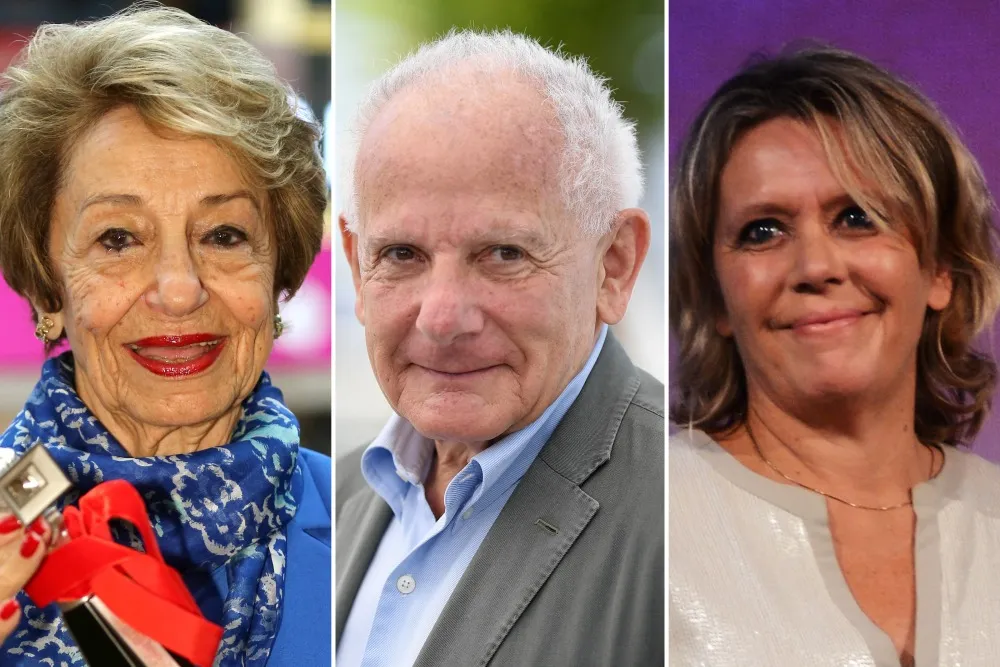
The European Film Academy has named Beki Probst, Marin Karmitz and Sandra den Hamer as the first recipients of its new Community Award for an Outstanding Contribution to European Film Culture.
The award, paying tribute to “a decisive and continuous contribution over many years to the development and expansion of European film culture”, will be presented during the European Film Awards weekend in Athens in January 2027.
The trio will be presented with the award on January 15, on the eve of the main ceremony at the traditional Welcome Night gala dinner, taking place this edition at the Acropolis Museum housing some 4,000 artefacts dating as far back as 1,200 BCE.
Probst is best known internationally as the founder of the Berlinale’s European Film Market, having entered the cinema world as the founder with her Swiss husband of the Queenie Cinemas in Berne in the 1960s, which grew into a successful chain of arthouse cinemas still existing today.
Born into a Sephardic Jewish family in Istanbul, Probst studied Law and Journalism and worked briefly as a film journalist.
From 1981 to 1988, she was the Berlinale delegate for Turkey and Greece and after initiating Locarno’s industry program, she was asked by Berlinale Director Moritz de Hadeln to start the European Film Market in 1988 in its current form.
Under her management, which continued into 2014, the EFM became one of the largest and most important international film market in Europe.
She has previously been feted with the Berlinale Camera, the Prix du cinéma Suisse, the French Chevalier des Arts et des Lettres and the Order of Merit of the Federal Republic of Germany.
Karmitz is known as the founder of France’s independent exhibitor, producer, film financier and sales agent mk2 film. Born in Romania in 1938, Karmitz arrived in France as a refugee with his family in 1947.
After studies at the IDHEC film school in Paris, he worked as assistant director to the filmmakers Jean-Luc Godard, Agnès Varda, Jacques Rozier, Yannick Bellon and Pierre Kast. before directing his first short film, Nuit Noir, Calcutta, based on a screenplay by Marguerite Duras, in 1964.
In 1965, he worked with Samuel Beckett on the adaptation of Comédie. In the same year, the feature was selected to open the Venice International Film Festival and shocked audiences with its avant-garde material.
He launched mk2 Productions in 1967 and made his feature-length directorial debut with Seven Days Somewhere Else (1968), followed by Comrades (1970) and Blow for Blow (1972), which were screened at international festivals.
He opened his first cinema in Paris in 1974 in response to Blow for Blow, about a group of textiles workers who take their factory boss hostage in protest at the work conditions, being shut out of mainstream circuits.
In 40 years, he would produce 108 films and distribute over 350 in theatres, among them Krzysztof Kieslowski’s Three Colours trilogy, for which he received a nomination for the European Film Awards 1994, twelve films by Claude Chabrol, Alain Resnais, Louis Malle, the Taviani brothers, Theo Angelopoulos, Lucian Pintilié, Gus Van Sant, Ken Loach, Abbas Kiarostami, Hong Sang-Soo, Michael Haneke, Walter Salles and Xavier Dolan.
Den Hamer has an extensive track record in the Dutch film industry.
From 2007 to 2023, she was the director of the Netherlands Filmmuseum in Amsterdam. Under her leadership, the re-named Eye Filmmuseum opened a brand-new museum building and a new collection centre in Amsterdam.
Its eclectic programming includes large retrospectives, international conferences and as well as exhibitions, exploring the work and careers of filmmakers such as Bela Tarr, Apichatpong Weerasethakul and Alex van Warmerdam among many others.
Before that, Sandra den Hamer worked for 23 years at the International Film Festival Rotterdam, including roles as co-ordinator of CineMart and the Hubert Bals Fund. From 1996 to 2007, she directed the festival.
She also served as President of the Board of the Association of European Cinematheques (A.C.E.). From 2023 to 2026. she was appointed interim executive director at the Netherlands Film Fund. Today she chairs the Board of the IDFA Institute and the Gerrit Rietveld Academy in Amsterdam.
Gathering 5,700 members from more than 50 countries across Europe, the European Film Academy oversees the annual European Film Awards, which alternates taking place in its home city of Berlin and another European city, which is Athens this year.
The 39th ceremony marks the second time it is unfolding in its new January slot, after the academy decided to shift it from a long-running December slot to integrate the awards more fully into the wider awards season.
>
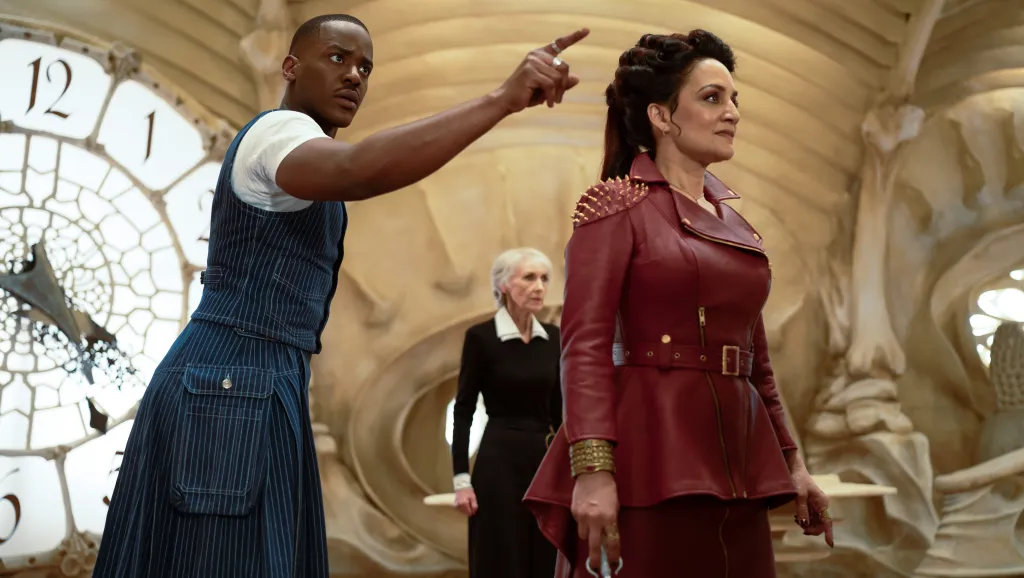
EXCLUSIVE: At least one BBC Studios indie will be throwing its hat in the ring to become the next producer of Doctor Who, with scripted boss Jamie Hall telling Deadline he “firmly believes” the entire BBC group should “reap the rewards” of the iconic sci-fi series.
Hall said “we’ve probably got one, potentially two companies” going for the multi-million pound tender, which if successful would bring the show back in house following two seasons made by Sony-owned Bad Wolf, starring Ncuti Gatwa. His comments followed BBC Studios CEO Tom Fussell recently saying BBC Studios would be applying “with gusto.”
Hall wouldn’t reveal the names of the indies but said he would “100%” be happy for more than one to enter the race.
BBC Studios runs an in-house drama label, which made Doctor Who before Bad Wolf, while it also owns several scripted indies outright including Baby Reindeer maker Clerkenwell Films, Happy Valley producer Lookout Point and Sherwood indie House Productions.
While he hasn’t seen his labels’ proposals, Hall said he has been “very open” and honest with those keen to go for the tender because the process is “quite an onerous undertaking and costs quite a bit of money.” “I have to make sure that it doesn’t become a distraction from the day job,” he added.
If two BBC Studios labels enter, they will likely join Line of Duty producer World Productions, whose boss Simon Heath has previously indicated his ITV Studios-owned outfit is interested. More thoughts from producers can be found in our future Doctor Who analysis from over the summer.
Published a fortnight ago, the tender calls for a “relevant, surprising, brave and inspiring” new vision for the show that should premiere in 2028-29. Notably, it said it is happy for indies to pitch a series using “episodic writers” rather than a “showrunner model,” which would do away with how Doctor Who has been made in recent years.
After several years with Bad Wolf and after the termination of the just-ended Disney+ co-pro deal, Hall was adamant that Doctor Who “should sit within the BBC and the whole group should reap the rewards of it.”
Questioned on what he would want to see from a revamped Doctor Who, Hall harked back to the days when Matt Smith and David Tennant were playing the Doctor.
“It feels to me that there is an opportunity to get back to what the core offering was in that time,” he added. “It will be off screen for two or three years and that gives the audience a great chance to have a break then rediscover, while also bringing a new audience.”
>
Will Napheesa Collier be back with the Lynx? Minnesota enters a murky offseason
Flyers hope last year's late success runs into new season: 'We're not satisfied'

Esteban Ocon to leave Haas putting F1 future in doubt
-

 movies4 months ago
Search For Canadian TV Actor Stewart McLean Now Homicide Investigation
-

 Fashion9 years ago
These ’90s fashion trends are making a comeback in 2017
-
Fashion9 years ago
According to Dior Couture, this taboo fashion accessory is back
-
Fashion9 years ago
Model Jocelyn Chew’s Instagram is the best vacation you’ve ever had
-
Fashion9 years ago
Emily Ratajkowski channels back-to-school style
-
Fashion9 years ago
9 Celebrities who have spoken out about being photoshopped
-

 Anime4 months ago
Rurouni Kenshin: Hokkaido Arc Manga Takes 1-Issue Break – News
-

 Anime3 months ago
HIDIVE to Stream English Dubs for The World Is Dancing, The Forsaken Saintess and Her Foodie Roadtrip in Another World, The Dangers in My Heart: The Movie Anime – News