
Kara Young with Jin Ha, Ayo Edebiri and Don Cheadle on opening night for ‘Proof.’


Kara Young is not feeling scared, exactly — in fact, she doesn’t know the words for this moment at all. “I have all the feelings, but I don’t know how to even describe them,” she says, mere hours out from going back on stage for a performance of her current Broadway play, Proof. “This is something that’s completely new for me — it’s a new world for me.”
She’s not, of course, referring to her current Broadway run: That’s old hat at this point for the New York native, who has won two consecutive Tony Awards — she’s the only Black actress in history to have done so — and been nominated for four years running. But at the same time as she’s starring in Proof — where she may well keep those Tony streak up, based on the reviews — she’s also hitting a milestone: Leading her first studio movie, Is God Is, about to be released in theaters across North America on May 15.
The progression feels natural for Young, who’s been making her name with critically acclaimed stage turns over the past decade, imbuing a wide range of characters with fierce conviction and dry wit. “She’s a wonderful scene partner — passionate, deeply interrogative and endlessly curious,” says Ayo Edebiri, Young’s Proof co-star. “She feels so very deeply and fully; it’s pretty astounding to be in contact with. When she brings that into her work, it never feels untethered or ostentatious.”
Young came into Proof as a tried-and-true pro: The production needed to find a replacement for Samira Wiley, who withdrew for health reasons, right before previews started. One actor fit the bill.
“I had five days in the [rehearsal] room and then I went straight to tech, so I didn’t have much time to prepare,” Young says. “When you do something like this — I call it quick and dirty — you have to trust your instincts. It is a lesson in that you have to trust your instrument and know that if it’s wrong, you can adjust.” She says it was an easy yes, but also one that reflects her current philosophy as her profile has risen over the last few years: “Either you wait to get something on television or film, or you work and work on your instrument and keep your sword sharpened.”
Kara Young with Jin Ha, Ayo Edebiri and Don Cheadle on opening night for ‘Proof.’
All of which is to say, Young’s rapid rise as one of the Great White Way’s most decorated stars has not dramatically changed things in terms of offers from Hollywood. “People say, like, ‘Oh my God, all these things have happened,’ but I feel like I’m still hustling,” Young says. “I don’t think that’s a bad thing, but people are always under the assumption that the thing has gotten perhaps easier. But I haven’t really seen a change.”
She’s had smaller roles in Boots Riley projects I’m a Virgo and the forthcoming I Love Boosters, and recurred in hit series like The Punisher and The Staircase. Is God Is feels different, though — and she knows it. Based on her volcanic performance in the film, that “change” people keep telling her about might start to feel real, too — her work is about to be exposed to far more people than can fill a Broadway theater for a few months.
“It is my honor to platform Kara, who many of us in the theater already know is a rare gift, a once-in a lifetime talent,” says writer-director Aleshea Harris. “I hope the beauty of her performance opens even more doors for her both onstage and onscreen. No one is more deserving.”
Making her directorial and screenwriting debut, Harris adapted Is God Is from her own Pulitzer Prize-finalist play about twin sisters on a bloody revenge quest (“Step aside, Quentin Tarantino and Martin McDonagh,” The New York Times’ review of the original 2018 Soho Rep production began). Young knew Harris from the theater world, but more importantly, she admired her work deeply. “It blew my mind,” Young says of the 2018 Is God Is production. “And the power of seeing it — I mean, this is a cult play. People are like, ‘That’s my favorite play ever.’”
Young was asked to audition for the movie and secured the part. “She doesn’t waste the opportunity to insist that this marginalized young woman is a person of great depth who should and must be perceived with empathy,” Harris says of how Young approached the role.
Is God Is opens with sisters Racine (Young) and Anaia (Mallori Johnson) being summoned to meet Ruby (Vivica A. Fox), the mother they’d assumed was dead or worse. Like her daughters, Ruby is severely disfigured by burn scars — and she reveals to them that their injuries came from childhood at the hands of their father and her ex-husband (Sterling K. Brown). Ruby’s mission for them is simple: Find him and kill him. Racine, the more outspoken and impulsive of the pair, pushes them to follow through on the quest.
Young with Mallori Johnson as Anaia in ‘Is God Is’
Patti Perret
The film’s neatest trick is its balance of emotional intimacy and hyperstylized action. We get to know Racine and Anaia deeply — so deeply that we see their wordless communication, whether brushing their teeth or hiding from danger, typed out on the screen — and feel the intensity of their connection. Young and Johnson worked with a choreographer in prep less for mimicry, and more to find symbiotic “twin energy.” They also have to delve into their family’s ugly past, confront a range of colorful characters — the supporting cast includes hilarious turns from Erika Alexander, Janelle Monáe and more — and, eventually, commit some murders. Well, quite a few. There is blood and stuntwork and weapon-handling aplenty.
“I fully immersed myself in Aleshea’s world,” Young says. “Anything that she wanted said or needed from me, I was always ready, willing and able.” What does she make of Tarantino comparisons that may rear their head again? “I don’t blame them for thinking that way, yet Aleshea Harris is in her own lane,” she says. “It’s quite easy for other people to relate it to that because that is just how we are taught in this world, to make a relation to very popular pop culture references. But I don’t think that it can be in comparison to anything because it’s unlike anything.”
Young’s all-out, sometimes unhinged commitment to the material shows — as does Young’s more profound relationship with the material. “I know that we don’t have this in our canon,” she says. “I’m thinking all the words I could possibly think of: our joys, our resilience, our survival, our wanting to know our histories, our interrogation of our own lives. I mean, there’s just so much. There’s so much, and it’s never one thing with this movie.”
The film feels like a very different kind of release for Amazon MGM Studios compared to their last theatrical play, the blockbuster hit Project Hail Mary. But in its significant, months-long promotional campaign ahead of release, Young finds herself front and center as a first-time movie star. After Proof performances, Young interacts with fans at the stage door, where Is God Is gets brought up often. The trailer, meanwhile, has been viewed more than 13.5 million times on YouTube alone — a massive number for an original story without any marquee screen stars in the lead parts.
Young feels the energy — it’s why she’s feeling a little off balance about it all. “There is a very overwhelming excitement from the people in this film, and I don’t know where the excitement comes from.” She thinks a bit more deeply before settling on where she sees the roots of it: “It’s never been done, and so that is the reason why people want to see it. We keep on producing the same stories, and this is not that…. I know the power of the story and that is where I am centered.”
>

At this weekend’s Zurich Summit a group of film financiers were asked by Deadline for their thoughts on the prospects of a U.S. federal film incentive.
Last week, a bipartisan group of lawmakers unveiled the bill for a 20% incentive, which with bonuses could bring the total rebate to 30%. The move has long been called-for by the U.S. industry concerned by the exodus of production overseas.
Alex Walton, former Co-Lead & Partner at WME Independent, told the Summit the move was “hugely positive”: “It’s wild to think there hasn’t been an efficient tax credit in America. It has helped many other countries. Spain is booming because of it now; and all over Europe. It’s going to take some time to be realized and for financial institutions to be able to cash flow it. But you’ve got to believe it will happen within the next three-four years, and then that will see all the foreign tax credits compete harder to maintain their positions.”
A start date is not yet set. The proposed text from last week stated that the credit would apply to qualifying film and TV productions beginning in taxable years after December 31, 2026 (effectively targeting projects starting in 2027). But bills can take years to pass.
Andrea Scarso, Managing Partner at prolific financier IPR.VC, whose credits include Marty Supreme and Materialists, agreed that a U.S. incentive would be “positive” but also cautioned against rising production costs: “It remains to be seen whether the prices and budgets are also going up by the same amount, which is something that happens in some foreign territories when they increase the amount of tax credit or soft money. It’s always a balance. But overall, I think it’s good news.”
Sarah Schweitzman, Co-Head CAA Media Finance, noted: “What’s important is that when you look at some of the international markets, you realize that we’re making movies there because of a tax incentive situation and I think if we’re able to federalize a tax incentive program in the U.S. it’s going to create many more jobs and invigorate crews, which is something we absolutely need in the U.S.”
A recent Motion Picture Association study claimed that a federal film tax credit could increase U.S. production spending by $125BN and add more than 143,000 jobs by 2035.
You can read more about the bill here.
>
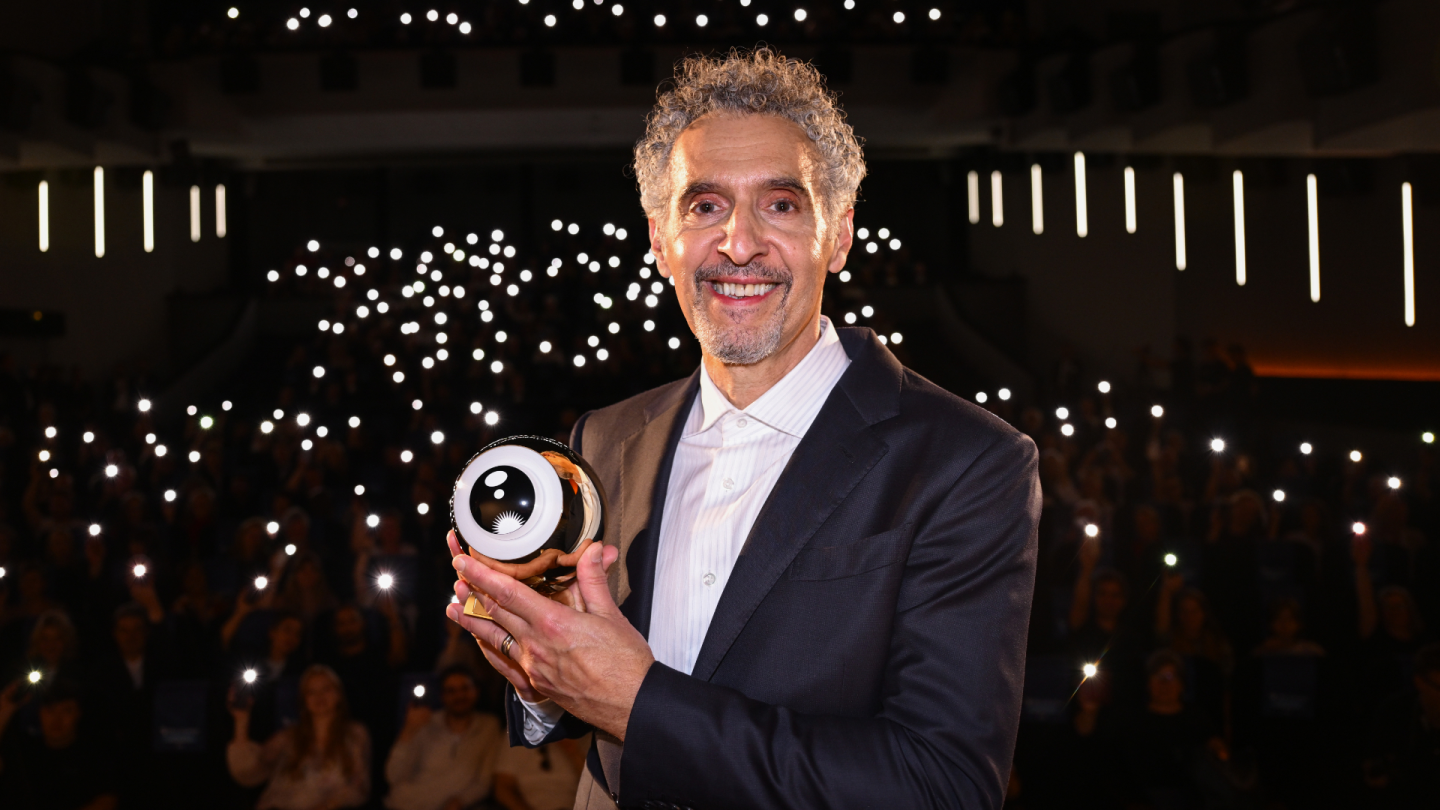
Hot on the heels of his Golden Eye award ceremony on Saturday night, John Turturro entertained another crowd at a Zurich Film Festival masterclass on Sunday.
The Emmy-winning U.S. star has been recognized for his performance in Noah Segan’s The Only Living Pickpocket in New York, a project that is already garnering awards buzz. In the film, Turturro plays Harry, a seasoned pickpocket whose carefully controlled life is thrown into turmoil when a job goes wrong, setting off a tense chain of events that unfolds over the course of 36 hours.
In a career-spanning conversation with Deadline‘s Melanie Goodfellow — the actor’s shining Golden Eye trophy neatly nestled between them — Turturro discussed growing up in an immigrant household, his decades-long friendship with Spike Lee, and the transition from acting to filmmaking.
Turturro, who has steadily become one of the industry’s most formidable actors yet to put “Oscar nominee” on his resume, was asked about joining the best actor race this year with the Sundance success The Only Living Pickpocket in New York. “I never really have gone the whole hog with it,” he responded about the upcoming awards campaign. “But now I’m the lead in the film, so I’m going to support the film because I love the film.”
He explained that being pulled into awards conversations is “helpful to help you do the next thing.” Turturro continued: “Is it nice to be acknowledged? Great, but that’s not why you do it. […] Just because a film is really popular doesn’t mean it will have staying power, but it’s nice to be in the conversation. I don’t look upon myself as being a competitive person. I’m competitive with myself,” he added. “I want to get the most out of what I can do, but it’s not sports!”
However, he admitted to feeling surprised by the positive critic reaction out of Sundance. “Finally,” he thought, “I’m in something that people will see… My job is I like to try to improve, and I feel like being an actor is one of the few things you can improve in. You may not be able to run as fast as you did when you were younger, but I have a lot of life experience, and as you get older, you accumulate that, and you can distill things in a way that you couldn’t do when you were young, because you didn’t really experience all those things. And now I’ve experienced life, death, loss, being a parent, being married — what it is to really love someone versus falling in love. That’s a huge difference,” he giggled.
Turturro regaled attendees with stories about his impressive stage career. He naturally came on to two major TV performances of his in the last decade: HBO’s The Night Of and Apple’s Severance.
He coyly confirmed a return for his character, Irving Bailiff, in season three of the Emmy-winning Severance with Adam Scott. “Yeah,” he (eventually) told the room. “As long as they give me interesting things to do, then I’m interested.” He swiftly took the opportunity to gush over friend and colleague Christopher Walken, whose character, Burt Goodman, began a romance with Turturro’s Irving in season one. “‘Who’s going to be my love interest?’” Turturro asked before joining the show. “And they were like, ‘All these younger guys.’ I said, ‘Well no, I’ve worked with Chris Walken,’ and I said, ‘I want Chris, because I love Chris.’ And I don’t have to act that I love him because I love him.”
Though Walken “didn’t understand a lot of the show,” Turturro was able to guide him through their authentic, real-life friendship. “I said, ‘Don’t worry about it. You just look at me.’ We have so much fun because I directed him like three times, and we’ve acted, and we’ve worked together a lot. And he’s a wonderful theater actor, and people obviously think he plays only strange [characters] but he can do a lot of different things. He’s also very sensitive, but he has a childlike joy in his work, and when that happens, anything is possible.”
Turturro received a round of applause when discussing the HBO crime drama The Night Of, which ran for one season in 2016 and co-starred Riz Ahmed. It would later win five Emmys, and Turturro was nominated for his role as the eczema-stricken defense lawyer John Stone. “The Night Of is something I’m very proud of,” said Turturro on Sunday. “It was originally a BBC thing, which I actually never watched because I didn’t want to be influenced.”
He even confirmed that he actually wanted to do another season of it. “But they couldn’t agree on what the story would be,” revealed the actor. “But I loved doing it. It was one of those great experiences in my life.”
Turturro’s career spans four decades, having worked with acclaimed directors such as Spike Lee, the Coen brothers, Martin Scorsese, Robert Redford, Robert De Niro, Nanni Moretti and Pedro Almodóvar.
He first gained international recognition through his collaborations with Lee, appearing in Do the Right Thing and Jungle Fever. With Joel and Ethan Coen, he acted in Miller’s Crossing, Barton Fink, O Brother, Where Art Thou? and The Big Lebowksi, in which Turturro created the iconic Jesus Quintana. For his lead performance in Barton Fink, he won best actor at the 1991 Cannes Film Festival, an experience that Turturro reflected on at his Zurich masterclass. He even confessed to feeling like he lands “more normal” roles in Europe than across the Atlantic, and said he has turned down scripts “again and again” that involve his character being violent towards women.
At his Zurich Golden Eye ceremony Saturday night, Turturro collected the award and quoted Italian novelist Cesare Pavese. “[He] once said that the only great thing in life is to begin. I still consider myself a beginner in many ways,” said the star. “I’m very fortunate. I wanted to make a living doing something that interested me and to do interesting work — to share that with an audience, [and that] wouldn’t diminish their intelligence at the same time,” he laughed. “I consider this an encouragement to continue.”
Turturro joins 2026 Zurich honorees Julianne Moore and Tom Hiddleston. The 22nd edition runs Sept. 24-Oct. 4.
>
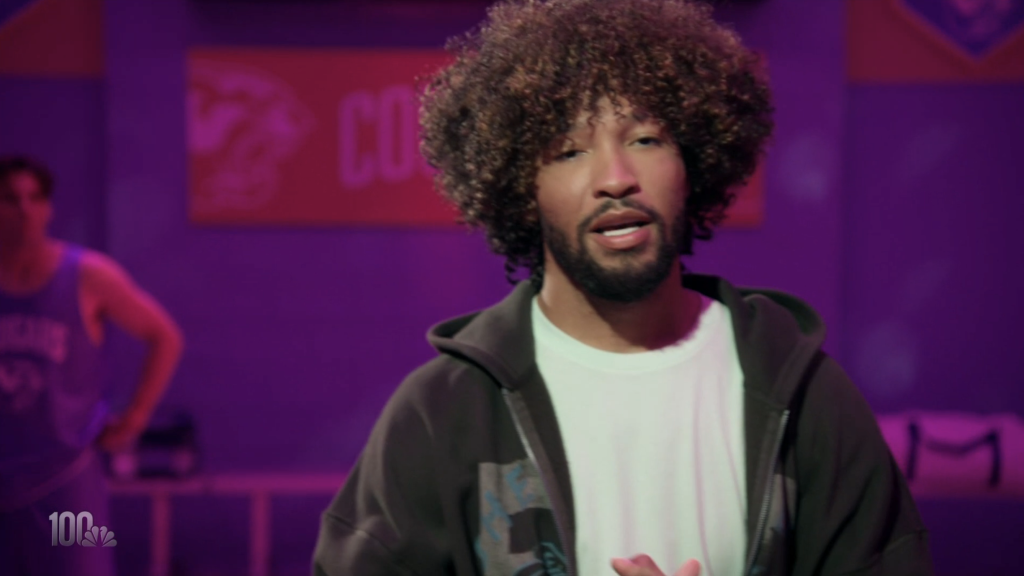
Following the Knicks’ big win at Madison Square Garden, Jalen Brunson took the stage at 30 Rockefeller Center for his Saturday Night Live hosting debut.
On Saturday’s Season 52 premiere, the NBA Finals 2026 MVP showed off some comedic chops in an otherwise business-as-usual episode of the NBC sketch comedy show, which featured Katseye as its musical guest.
Introducing new cast members Grace Reiter and Saidah Belo-Osagie, Katseye returned to a parody season of The Debut: Dream Academy to crown a new girl group. The quartet also performed in a mini music video with the awkward group of ladies, also featuring Jane Wickline and Veronika Slowikowska.
The next sketch was a support group featuring Brunson as one of several men whose spouses were grinded on at Usher and Chris Brown’s The R&B Tour.
“When I spent $1,200 on that meet-and-greet, I never expected her to actually greet his meat,” said Brunson as the other group members comforted him.

Katseye on ‘Saturday Night Live’
Jeremy Culhane and Jalen Brunson in ‘Saturday Night Live’
Jalen Brunson, Jeremy Culhane and Ben Marshall on ‘Saturday Night Live’
Brunson also starred in the parody sketch High School Musical: The New Generation as an athletically gifted new student who hilariously keeps dunking on the new Troy Bolton stand-in (Jeremy Culhane) and steals his girlfriend (Slowikowska).
As Shark Tank judge Daymond John, Brunson asked if the invention Respectacles, a pair of glasses that sounds an alarm when the wearer looks at breasts, “works for ass.” The inventors’ (Culhane and Ben Marshall) presentation keeps getting interrupted as they check out Lori Greiner.
Saturday Night Live kicked off its 52nd season this weekend on NBC with host Brunson and musical guest Katseye. The season continues with guest hosts Dakota Johnson, Shane Gillis and Inde Navarrette, along with musical guests Turnstile, Rosalía and Gracie Abrams.
>


Search For Canadian TV Actor Stewart McLean Now Homicide Investigation


These ’90s fashion trends are making a comeback in 2017
According to Dior Couture, this taboo fashion accessory is back
Model Jocelyn Chew’s Instagram is the best vacation you’ve ever had
Emily Ratajkowski channels back-to-school style
9 Celebrities who have spoken out about being photoshopped


Rurouni Kenshin: Hokkaido Arc Manga Takes 1-Issue Break – News


HIDIVE to Stream English Dubs for The World Is Dancing, The Forsaken Saintess and Her Foodie Roadtrip in Another World, The Dangers in My Heart: The Movie Anime – News