

movies
SXSW London 2026: What To Expect From Year Two


SXSW set up camp in London’s East End last year with its first-ever edition in the UK. Deadline has been covering the announcements and news for this year’s lineup. We also managed to pull the Director of Programming, Katy Arnander, away from the rigors of getting this year’s festival in shape for a deeper dive on what to expect and how the team plans to put SXSW London on the map.
DEADLINE: You’re headed into your second year, what did you learn the first time out that has informed this year’s edition?
KATY ARNANDER: A chunk is the programming and audience learnings, and then there are the operational learnings, which have been great because you just don’t know how things are going to work until people are there and you can see how they interact across the music, screen and conference elements.
We got great feedback and great data because we had over 25,000 people last year. It gave us a chance to understand the types of audiences who come and get the most of a festival like this, which is all about what’s new, what’s next and what the future brings, but is also about checking in with established and well-known creatives, artists, business leaders, and visionaries within their respective fields.
DEADLINE: What hit the spot last time?
ARNANDER: Big-hitter names who have useful and important things to contribute resonated, like Björn Ulvaeus from ABBA, who came and spoke about the role of AI and music. And there were so many others… there were political speakers, there was Tony Blair in conversation with [then UK Technology Minister] Peter Kyle talking about how AI will transform government. The King also visited, which was amazing.
Unexpected conversations with high-profile names are always bullseye moments. We had Ben Lamm in conversation with Sophie Turner, talking about his company Colossal Bioscience and discovering the DNA of extinct woolly mammoths. We call them unexpected pairings and non-obvious conversations.
DEADLINE: How has the conversation around AI moved on since last time?
ARNANDER: It has definitely become more nuanced. Speakers are coming and talking about how AI has shaped their businesses.
A year ago, everybody was talking about, what is it, what’s it going to do? Twelve months later, it’s incredible how AI is just here. Now, it’s what are the applications of it? How can you use AI to help R&D? Let’s have a look at AI and misinformation in the world of news and media. Let’s look at AI in terms of making music.
DEADLINE: How much do you seek to keep the DNA of SXSW in Austin?
ARNANDER: The plan is very much to build up the brand. We want to bring the DNA from Austin, which is bringing people together from tech and business and the creative industries. London has all those things, but particularly East London. What Austin is to Texas, Shoreditch is to London, a slightly alternative melting pot of creativity.
The bit that we added to it, which they don’t have so much in Austin, is the visual arts strand. We’ve had the YBA movement moving through Shoreditch and there’s the whole visual arts and street art side to it.
Many of the best, well-known festivals have been going for many years. They’ve built their brand and their base over many years, which is precisely what we intend to do, because we have a 10-year license, at the very least, here in London.
DEADLINE: London is hugely diverse and international, how does the your event reflect that?
ARNANDER: It’s a festival of the future and about what’s new, what’s next, and discovery. What’s really nice is that we have American companies wanting to talk about what they do in Europe. Six hours from London means not just continental Europe, but also North Africa and the Middle East. That’s our radius, so we’ve got a very large spread of different countries and nationalities and industries and businesses. We can cover that part of the world, and [SXSW in Austin] can cover America, Central America and South America.
DEADLINE: Whether we’re talking about music, film & TV, tech or the arts there’s a huge number of events. Where does SXSW London fit into a jam-packed calendar?
ARNANDER: It’s unique, which is the whole point. We’re not an industry-specific event. Our main focus is let’s put some heads together, let’s throw ideas around, let’s look to the future, and let’s actually not silo ourselves.
I think SXSW reflects the reality of the way that we all work today. Essentially, we are becoming multi-hyphenates and our festival represents that world and the way we live, work and play.
There is also this sense, more than ever, that people need to be together. If you have a group of people in a room who might be from the film industry or might be from a startup, someone might be a geneticist or from a tech company, and you get them talking together, then ideas spark. You can’t generate that outside of a real-life setting.
Those serendipitous moments are what SXSW is famous for. We’ve really invested a lot of time, effort and thought into how we improve networking opportunities. We also now have a very strong mentoring program with over 200 mentors coming to the festival. We’re convening roundtables where you might have 10 people together with a moderator, and then we have organized networking parties and meetups.
DEADLINE: Drilling down into the screen program and lineup, what are some highlights?
ARNANDER: We’re really excited about the partnership we have with AGBO. The Russo brothers are coming to speak with [AGBO CCO] Don Mustard, who is formerly of Epic Games, which is very cool. We have Russell T Davies and Sharon Horgan is also coming and I’m a great fan of hers. We’ve already announced a couple of our headliners at the Barbican, and Savage House is one of them.
DEADLINE: You mentioned you had 25,000 people last time; can you top that this year?
ARNANDER: In terms of how many we can fit into our spaces, there is a finite capacity, but this year, we’re doing more public activations and events. So, we’re doing some events in front of the Truman Brewery in Ely’s Yard, which is a public space. We’re doing some events potentially down in Montacute Yards. There are many more public activations this year, so we will get more footfall. And we’ve got a big activation with Waymo, the automated cars that are coming to London.
DEADLINE: Maybe the stars can arrive at their premieres in driverless cars?
They don’t have their license yet, so they’re in the testing phase, but next year they could turn up to the festival in a Waymo car.
>
Continue Reading
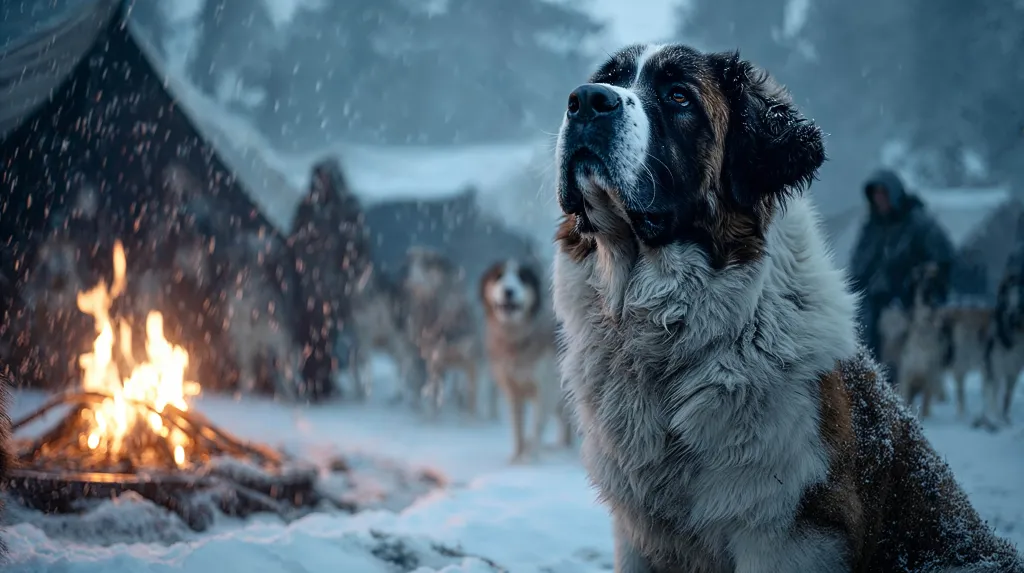
EXCLUSIVE: David Barron, the British film producer with credits on six Harry Potter films, is entering the generative artificial intelligence space.
Barron has agreed to produce an AI adaptation of Jack London’s 1903 novel The Call of the Wild, which is written and directed by Simon Rumley (Crushed, Red White & Blue).
The film will be generated at nmatic, with CGI and traditional VFX helping deliver more complex scenes. Filmmakers are billing it as the first faithful adaptation of London’s novel because it will be made from Buck’s subjective experience.
“London’s canvass is so epic, the Alaskan geography so gruelling, the dog and wolf fights so visceral that a faithful cinematic adaptation has hitherto been logistically and financially impossible,” said Barron. ”But technology has finally caught up with London’s vision, and we believe now is the time to do justice.”
The Call of the Wild tells the story of a pampered St. Bernard dog, who is torn from his life of privilege in California’s Santa Clara Valley and is sold into the brutal world of the 1890s Klondike Gold Rush, where he discovers the wild instinct that has always lurked within.
The film has been adapted for the screen several times, including a 2020 Michael Green film starring Harrison Ford.
David Barron, Mark Sandell (A Liar’s Autobiography) and Nick Price produce. Chris Catchpole, Carl Lyttle, and Toby White head up prompting and technical at nmatic.
>

EXCLUSIVE: Lightdox has acquired world sales rights to the documentary My Home of Wind and Sand ahead of its world premiere Tuesday at the Zurich Film Festival.
Filmmaker Patrick Wally spent over a decade on his film, a portrait of women’s rights, human rights and climate activist Najla Mohamed Lamin, who was born in a Sahrawi refugee camp in Algeria. Lamin has led a peaceful campaign supporting the right of Western Sahara to self-determination, a dream of Sahrawi refugees that has been frustrated for more than half a century.
Nobel Peace Prize nominee Greta Thunberg is expected to attend Tuesday’s world premiere and will participate in a conversation afterwards with Lamin. Thunberg visited the Sahrawi refugee camps last year, where she and Lamin conducted a workshop on climate change.
Director Patrick Wally
Courtesy of WyFilm
“Told through conversations with the filmmaker – who gradually becomes visible inside the story – the documentary refuses to reduce Najla to a symbol of a geopolitical conflict,” notes a synopsis. “Western Sahara is experienced through one person living its consequences in real time. Najla addresses international institutions, builds practical spaces for women and children, raises her family and continues to argue for peaceful resistance even as a generation born in exile grows older without a political resolution.”
The synopsis continues, “When armed conflict resumes after decades of ceasefire, the convictions that have shaped Najla’s public life are tested. The film follows her as she asks what pacifism, patience and agency can mean when history seems immovable – and whether one person can still create change inside circumstances that appear impossible.”
Najla Mohamed Lamin at the dunes near the Sahrawi refugee camp of Smara.
Courtesy of WyFIlm
Anna Berthollet, CEO of Lightdox, commented, “Najla has lived her entire life with an unresolved conflict. Yet Patrick’s film is not a geopolitical story; it is an intimate portrait of how she chooses to live, raise her children and build a future for her community. He spent eleven years following her journey and bringing her story and mission to the screen. At a time when Western Sahara is once again receiving international attention, we believe it is important that Najla’s perspective is part of that conversation. We feel very humbled to have been entrusted with bringing Patrick and Najla’s deeply personal story to audiences around the world.”
The border wall berm and Moroccan military base separating the Moroccan occupied territory from the
Polisario controlled territory of Western Sahara.
Courtesy of WyFilm
The unresolved status of Western Sahara has been largely ignored in the U.S. and much of the West, but it has kept the Sahrawi people in terrible limbo. Spain ruled the territory as its colonial possession for the better part of a hundred years, but after it ceded claims in the mid-1970s, hopes for the territory to determine its own future were dashed when Morocco took control of much of Western Sahara. The Polisario Front, representing the Indigenous Sahrawi people, seeks self-determination and is supported by Algeria (where the refugee camps are located). The United Nations officially designates Western Sahara as a “Non-Self-Governing Territory.”
In a director’s statement, Wally said, “When I met Najla ten years ago, I knew this film needed to be made. At the time I had never heard of the issue of Western Sahara. I thought of myself as reasonably informed about the struggles shaping the world, yet I knew nothing about more than 200,000 Sahrawis living for generations in refugee camps in the Algerian desert, established after the war and displacement of 1975. That absence in my own awareness shocked me.
“What struck me first, however, was not the conflict in the abstract but Najla herself. I was surprised by my own assumptions. Here was a woman raised in a refugee camp who was exceptionally articulate, politically precise and full of a vision for the future. She spoke about peaceful resistance, about a generation born in the camps, and about the endurance required to believe in a bright future when nobody outside seems able to see it.”
An aerial view of the Sahrawi refugee camp Smara, in the Algerian desert, near Tindouf.
Courtesy of WyFilm
Along with directing, Wally serves as the film’s cinematographer. The film is produced by Shirin Hooshmandi, Najla Mohamed Lamin, and Patrick Wally. Anna Kirst edited the film, with additional editing by Daniel Rutz. The music is by Ahmed Zain.
In addition to Tuesday’s world premiere at the Zurich Film Festival, My Home of Wind and Sand will hold public screenings on Wednesday, Thursday and Sunday.
>
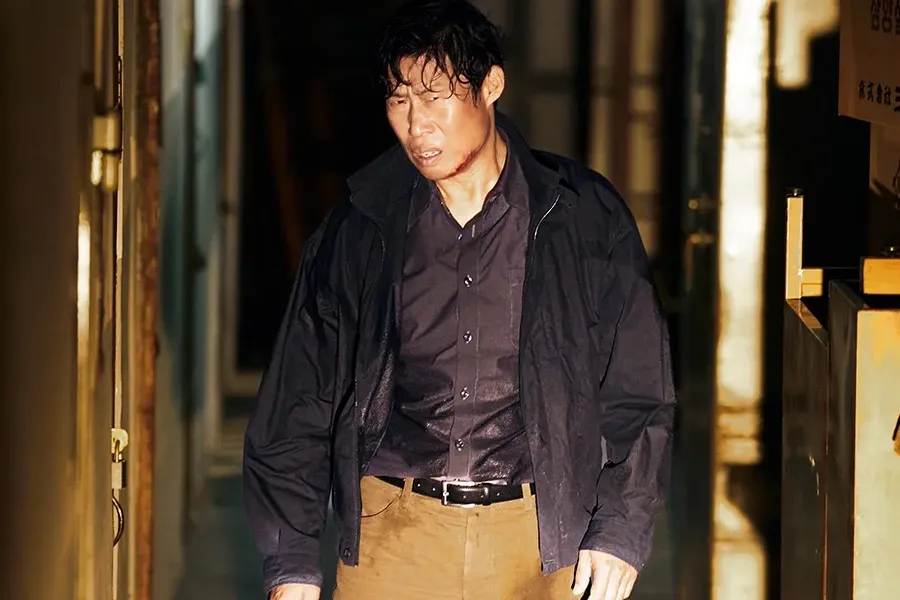
Hur Jin-ho’s historical thriller The Assassin(s) topped the Korean box office over the Chuseok holiday weekend pulling in more than 1.5 million admissions since its release on September 23.
Fresh from its world premiere at Toronto International Film Festival, the film has grossed $11.3M (KRW15.3BN) from 1,546,614 admissions over the first five days of release, according to data from the Korean Film Council (KOFIC). The Chuseok holiday officially ran for three days from Thursday, September 24 to Saturday, September 27.
Starring Lee Min-ho (Gangnam 1970), Park Hae-il (Decision To Leave), and Yoo Hai-jin (A Taxi Driver), The Assassin(s) revolves around the attempted assassination of South Korean President Park Chung-hee in 1974 that resulted in the death of the First Lady. A senior inspector (Yoo), veteran journalist (Park) and rookie reporter (Lee) set out to uncover exactly what happened and who was responsible, despite threats against their careers and their lives.
Coming in second over the holiday week (September 21-27) was Tazza: The Song of Beelzebub, a long-awaited sequel to a popular gambling franchise, which also opened on September 23 and took just over $6M from 813,842 admissions.
Christopher Nolan’s The Odyssey took third place in the weekly chart, adding another $5M to it record-breaking tally from 565,696 admissions. Released on August 5, the film has grossed just over $98M from 11.7 million admissions in the Korean market, making it the biggest import of the year so far.
Warner Bros Korea’s The Intern, a remake of the 2015 hit Hollywood comedy, came in fourth with an additional $2.6M for a cumulative total of $5.5M since its September 16 release. The film stars Choi Min-sik and Han So-hee in the roles originally played by Robert De Niro and Anne Hathaway in the original film.
Looking at figures for the entire week, The Intern was followed by US horror hit Obsession with $1.6M for a cume of $6.7M since its September 2 release. But looking solely at the weekend, Lee Chang-dong’s Venice winner Possible Love debuted in fifth position. Also opening on September 23, the Netflix-backed film, which is Korea’s official submission for Best International Feature at the Oscars, grossed around $1M in its first five days.
Historical drama The King’s Warden continues to hold Korea’s box office crown for the year to date, with box office of $120M from 16.9 million admissions; followed by The Odyssey, Spider-Man: Brand New Day ($69M from 9 million admissions), and two titles that debuted at this year’s Cannes film festival: Yeon Sang-ho’s Colony and Na Hong-jin’s Hope.
>
Sports4 minutes ago
What to expect at Knicks' NBA media day: Jalen Brunson's wrist update, KAT and an extension
Sports8 minutes ago
What to expect at Celtics' NBA media day: Jaylen Brown questions and Jayson Tatum answers

Sports16 minutes ago
England vs Sri Lanka: 3rd ODI highlights
-

 movies4 months ago
Search For Canadian TV Actor Stewart McLean Now Homicide Investigation
-

 Fashion9 years ago
These ’90s fashion trends are making a comeback in 2017
-
Fashion9 years ago
According to Dior Couture, this taboo fashion accessory is back
-
Fashion9 years ago
Model Jocelyn Chew’s Instagram is the best vacation you’ve ever had
-
Fashion9 years ago
Emily Ratajkowski channels back-to-school style
-
Fashion9 years ago
9 Celebrities who have spoken out about being photoshopped
-

 Anime4 months ago
Rurouni Kenshin: Hokkaido Arc Manga Takes 1-Issue Break – News
-

 Anime3 months ago
HIDIVE to Stream English Dubs for The World Is Dancing, The Forsaken Saintess and Her Foodie Roadtrip in Another World, The Dangers in My Heart: The Movie Anime – News