
Anime
Young Ladies Don’t Play Fighting Games Anime’s 2nd Teaser Reveals More Cast, Opening Song, July 7 Debut – News


The official website for the television anime of Eri Ejima‘s Young Ladies Don’t Play Fighting Games (Tai Ari Deshita: Ojō-sama wa Kakutō Game Nante Shinai) manga posted the second teaser promotional video for the anime on Friday. The teaser announces a new cast member and the July 7 premiere date for the anime, and also reveals that the rock band Hanabie. is performing the anime’s opening theme song “Inochi Mijikashi Tai Suru Otome yo!” (Life is Short, Fight Each Other, Maidens).
Real-life fighting game player, commentator, and event organizer Aru voices Flamberge (seen below), a well-known fighting game commentator within the anime’s story.

©2025 江島絵理/KADOKAWA/「対ありでした。」製作委員会
The anime will premiere on the AT-X, Tokyo MX, MBS, BS NTV, and Nagasaki Broadcasting Company channels on July 7.

©2025 江島絵理/KADOKAWA/「対ありでした。」製作委員会
Seven Seas is releasing the manga in English, and it describes the story:
Kuromi Girls’ Academy is a refined, elegant school that expects the very best in deportment from its young ladies. Aya got into this peerless rich-girls’ institution on a scholarship, and hopes to grow as lovely as her fellow student and idol Shirayuri. But Shirayuri hides a terrible secret: she’s a trash-talking, combo-chaining, newbie-stomping, ruthless hardcore gamer! Could a mutual indulgence in no-holds-barred video game combat grow into a deeper rapport between these two girls?
The anime will star:
Shōta Ihata (Domestic Girlfriend, Girlish Number, The Saint’s Magic Power is Omnipotent) is directing the anime at diomedéa. Wataru Watari (My Teen Romantic Comedy SNAFU novels, Girlish Number, The Saint’s Magic Power is Omnipotent) is in charge of the series scripts. Mayuko Matsumoto (Kan Colle, Parallel World Pharmacy, Chio’s School Road) is designing the characters. Kana Hashiguchi is composing the music.
Other staff members include Scott MacDonald as art director, Maho Takahashi for art setting, Yuki Hayashi as color key artist, Yasuyuki Itou as compositing director of photography, Toshihiko Kojima as editor, and Yayoi Tateishi as sound director. Kadokawa‘s professional gaming team FAV gaming, whose members compete in Street Fighter 6, is credited for collaborating on recording.
The anime was delayed from its 2025 debut. The manga’s anime adaptation was first announced in 2021.
Ejima launched the manga in Kadokawa‘s Monthly Comic Flapper magazine in January 2020. Kadokawa published the 10th compiled book volume on December 23. Seven Seas will release the ninth volume on April 28.
Source: Young Ladies Don’t Play Fighting Games anime’s website
Disclosure: Kadokawa World Entertainment (KWE), a wholly owned subsidiary of Kadokawa Corporation, is the majority owner of Anime News Network, LLC. One or more of the companies mentioned in this article are part of the Kadokawa Group of Companies.
>

© 理不尽な孫の手/MFブックス/「無職転生Ⅲ」製作委員会
At the end of last season, it truly felt like we had reached the end of the beginning. Rudeus had done all he set out to do—reunited his family, healed his emotional wounds, and found true love. But with this episode, after a cour of tying up loose ends, it feels like we’ve finally hit the beginning of the end.
After 62 episodes and an OVA, we finally understand what’s going on. The Man-God can see the future and knows that Rudeus’ descendants will eventually team up with Orsted and kill him. Numerous times, he’s tried to kill Rudeus and Roxy (and I assume Sylphie and Eris as well).
However, he’s faced two issues. One is that Rudeus is a wild card (probably due to his isekai nature) and can’t be controlled directly. The other is that those with strong fates important to the world are resistant to the Man-God’s meddling. So while he still tried to kill Rudeus and those who would become his family, it was always unlikely to succeed. But there is a loophole to this. When a woman is pregnant—when both her life and the life within her are connected—fate’s strength is greatly diminished.
This leads us into the unspoken threat of this episode. For the next 9 months (assuming that’s how long it takes for Demons), Roxy can be killed. And while he failed with the rat ploy, there’s nothing to stop the Man-God from using any of his agents to attack Rudeus again and again in different ways. The Man-God only needs to succeed once, and he’s won.
However, if the Man-God were to go all out and lose, it would almost certainly cause Rudeus to be his lifelong enemy—ensuring that those fated to kill him would be very much on board with that idea. This is why the Man-God suggests another possibility: have Rudeus kill Orsted. If Orsted is dead, then the threat to the Man-God is ended just as if Roxy or her child were dead. Moreover, no matter how the fight turns out, the Man-God wins. Either Orsted dies or Rudeus does.
Rudeus, of course, agrees to this. He doesn’t particularly like Orsted and would instantly choose the life of his family over the swordsman’s. But beyond that, agreeing to the Man-God’s plan grants Rudeus what he needs most: time. Every day he’s working on hunting down Orsted is another day that Roxy is safe—another day that they can all use to prepare in case things go pear-shaped. Rudeus is basically running out the clock even as he prepares for a likely suicide mission—which brings us to Eris.
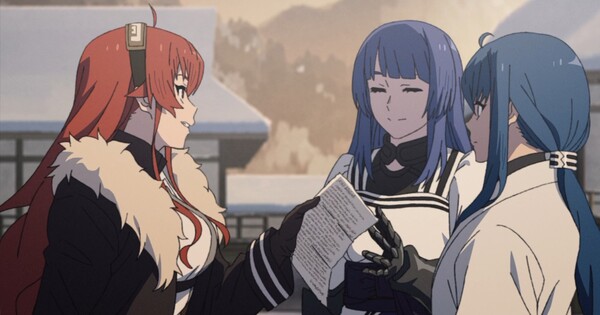
While Rudeus had planned on reaching out to Eris regardless—had even written the first page of his letter—he adds the second page to hedge his bets. Rudeus wants as much protection at home as possible—wants everyone possible to be there in case the Man-God tries at Roxy. However, he needs help in his fight against Orsted, and so he cajoles Eris into coming to help him—trusting in his future self’s interpretation of Eris and her desires.
And this scene is actually the best part of the episode. Through both the letter and her friend’s reactions to it, Eris can see three things: 1) that she messed up by leaving as she did; 2) that, while not the ideal she had hoped for, there is still a place for her in his life and in his heart; and 3) that he needs her.
This final part truly motivates her. He recognizes her hard work—that all the time she has spent training has been worth it. She has succeeded in what she set out to do—to be strong enough to stand by Rudeus’ side. And despite the friends and lovers Rudeus has gained in her absence, the person he has chosen to head into danger with is her. The fact that Orsted, the target of her martial obsession, is the man they’re going to fight is just the cherry on top of the whole sundae.
And with that, we end this first half of Mushoku Tensei III with Rudeus and Eris’ rematch with Orsted looming on the horizon. Of course, before we get there, we’ll no doubt have conversations with a loyalty-torn Nanahoshi, Eris meeting the other wives, and numerous unforeseen issues. But to be frank, this is the most excited I’ve ever been for Mushoku Tensei—and the next cour can’t come soon enough.
Rating:
Mushoku Tensei: Jobless Reincarnation III is currently streaming on
Crunchyroll.
The views and opinions expressed in this article are solely those of the author(s) and do not necessarily represent the views of Anime News Network, its employees, owners, or sponsors.
>


©CLAMP, ST/KODANSHA, TMS, TV-Asahi
Over 30 years since the original anime premiered in Japan, Magic Knight Rayearth is returning with an all-new adaptation to entice fans new and old this October. The new series, animated at Sung Hoo Park‘s E&H production and in collaboration with the original anime’s producer TMS Entertainment, is directed by Yui Miura, who hopes to tap into the charm that can only be found in classic anime series.
In this interview, we discuss the current trend of adapting older series featuring the isekai plot device (before the term was widely coined) and how older series focus on growth over wish fulfillment.
Magic Knight Rayearth is a beloved series in Japan, the United States, and abroad. What first attracted you to working on this project?
Yui Miura: As we were optimizing our production structure, the timing and all the necessary circumstances aligned almost miraculously. I was fortunate to be approached about this project at exactly the right moment, and we’re truly grateful for the opportunity to be part of it.
While “isekai” stories have become increasingly popular in the last decade, even in the ’90s, there were many stories where female protagonists get transported to a magical world. What do you think makes Magic Knight Rayearth different from modern isekai? What makes these female-led stories interesting for modern audiences?

MIURA: The biggest difference is that Magic Knight Rayearth is a story about growth and the sacrifices that come with it, rather than one about cheat abilities.
In many modern isekai series, protagonists either begin with—or quickly obtain— cheat abilities that allow them to effortlessly overwhelm their opponents. Much of the appeal lies in the wish-fulfillment of watching an unstoppable hero dominate every battle.
By contrast, Hikaru, Umi, and Fū are simply three ordinary junior high school girls who are suddenly summoned to the isekai (fantasy) world of Cefiro. They take up swords, suffer injuries, shed tears, and gradually awaken both their magical powers and inner strength as they overcome their fears and insecurities. This journey of personal growth is one of the defining charms of 1990s isekai fantasy.
Even today, many stories aimed at female audiences center on romance. In the first arc of Magic Knight Rayearth, however, what drives Hikaru, Umi, and Fū is not romantic feelings for boys, but the powerful bond they share and their promise to make it back to Tokyo together. Their genuine sisterhood—built on mutual respect and supporting one another through their weaknesses—is something I believe modern audiences who appreciate independent relationships can deeply relate to.
In the latter half of the story, they don’t simply carry out the mission they’ve been given. They begin questioning what principles should govern this world and ultimately make the choice that will determine its fate. Rather than waiting for someone else to save them, they take control of their own destiny. I believe this image of strong women choosing their own path embodies exactly the kind of empowerment that resonates with today’s anime fans.
Do you have any history with the original Magic Knight Rayearth anime or manga? Are there any CLAMP stories that are your favorite?
MIURA: It’s embarrassing to admit, but until I was approached about this project, I had never read any of CLAMP‘s works. Magic Knight Rayearth was my first introduction to their work.
When it came time to revisit the character designs with Satomi Watabe-san, what was the approach? Did you want to maintain a retro, shojo-feel, or update certain elements for this new version?
MIURA: Keeping faithful to the original manga as our top priority, I asked her to create strong visuals that would still resonate with modern audiences.
Is there a moment from the manga that you were most looking forward to adapting for the anime series?
MIURA: The ending of the first arc. I hope you’ll look forward to it!
When it came time to cast Hikaru, Umi, and Fuu, what kind of voice were you looking for in each character, and what made Sakura-san, Takahashi-san, and Okubo-san the right fit for their roles?
MIURA: When casting, we were careful to be as faithful as possible to the characters as they were portrayed in the original manga. Interestingly, the entire staff naturally found themselves saying, “This is the one!” for each role.
Can fans of the series expect the new anime to follow the previous anime’s story, the manga’s story, or something entirely different?
MIURA: We based the story on the original manga while incorporating additional episodes that further enrich the audience’s understanding of the original work.
Were you able to use any new technology techniques for this new series’ special effects animation (such as magic spells) and the Legendary Rune Gods?
MIURA: We’re using VFX techniques that simply weren’t possible back in the 1990s. At the same time, we’ve been careful to preserve the atmosphere of the original work.
What’s one message or feeling you hope viewers take away from this version of Magic Knight Rayearth?
MIURA: Many modern isekai stories are set in worlds that closely resemble RPGs, where game-like systems—such as status screens and guilds—provide the framework that keeps the story moving.
At first glance, Magic Knight Rayearth also seems to follow the classic RPG formula, with Clef telling the protagonists to become Magic Knights and save the world. However, at the heart of the story—particularly in the conclusion of the first arc—the audience is confronted with a profoundly bitter truth: the cruelty of fighting to preserve the very system that governs the world. I hope viewers will experience and appreciate the depth of this almost mythic drama.
>
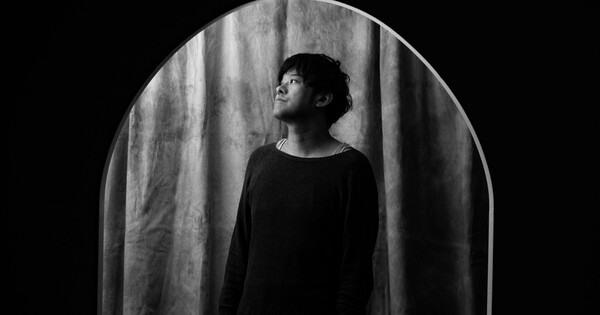
“Kazuso Oda & His NY Club Band” will perform at The Jazz Gallery in NY

Photo © Kazusou Oda / spiral-motion
Japanese musician Coda will perform as “Kazuso Oda & His NY Club Band” in New York City on November 8 at The Jazz Gallery, 1158 Broadway, 5th Floor, New York, NY 10001. Early bird tickets for the show are now on sale and general admission tickets will go on sale October 1.
The band includes Michael Massiah on guitar, Hiroyuki Sakaba on bass, and Shinya Miyamoto on drums. The concert will be the first time Coda is performing with a full band outside of Japan.
Coda, whose real name is Kazusou Oda, performed “Bloody Stream,” the opening theme song for the “Battle Tendency” arc of the JoJo’s Bizarre Adventure anime. He also performed the opening theme song for the JoJo’s Bizarre Adventure: Stardust Crusaders Egypt Arc anime as a member of the three-man group JO☆STARS. Coda performed the opening theme song “Fighting Gold” of the JoJo’s Bizarre Adventure: Golden Wind anime, and the theme song of the Thus Spoke Kishibe Rohan (Kishibe Rohan wa Ugokanai) original video anime (OVA) titled “FINDING THE TRUTH.”
Coda also was the vocalist and guitarist of the rock band No Regret Life, which performed the ninth ending theme song for the Naruto television anime.
The musician performed at Anime Boston 2026 for the event’s concert on April 4.
Source: Press release
>

Chelsea’s Lexi Potter: Could midfielder be England’s next star?

Peter Antoniou Tour Dates For 2027 Announced (EXCLUSIVE)
Canadiens' final cuts, second line, Kreider joins friendship circle: Weekly notebook
-

 movies4 months ago
Search For Canadian TV Actor Stewart McLean Now Homicide Investigation
-

 Fashion9 years ago
These ’90s fashion trends are making a comeback in 2017
-
Fashion9 years ago
According to Dior Couture, this taboo fashion accessory is back
-
Fashion9 years ago
Model Jocelyn Chew’s Instagram is the best vacation you’ve ever had
-
Fashion9 years ago
Emily Ratajkowski channels back-to-school style
-
Fashion9 years ago
9 Celebrities who have spoken out about being photoshopped
-

 Anime4 months ago
Rurouni Kenshin: Hokkaido Arc Manga Takes 1-Issue Break – News
-

 Anime3 months ago
HIDIVE to Stream English Dubs for The World Is Dancing, The Forsaken Saintess and Her Foodie Roadtrip in Another World, The Dangers in My Heart: The Movie Anime – News