
Anne Hathaway, Meryl Streep and Stanley Tucci in The Devil Wears Prada 2.
Macall Polay/Walt Disney Studios Motion Pictures/Courtesy Everett Collection


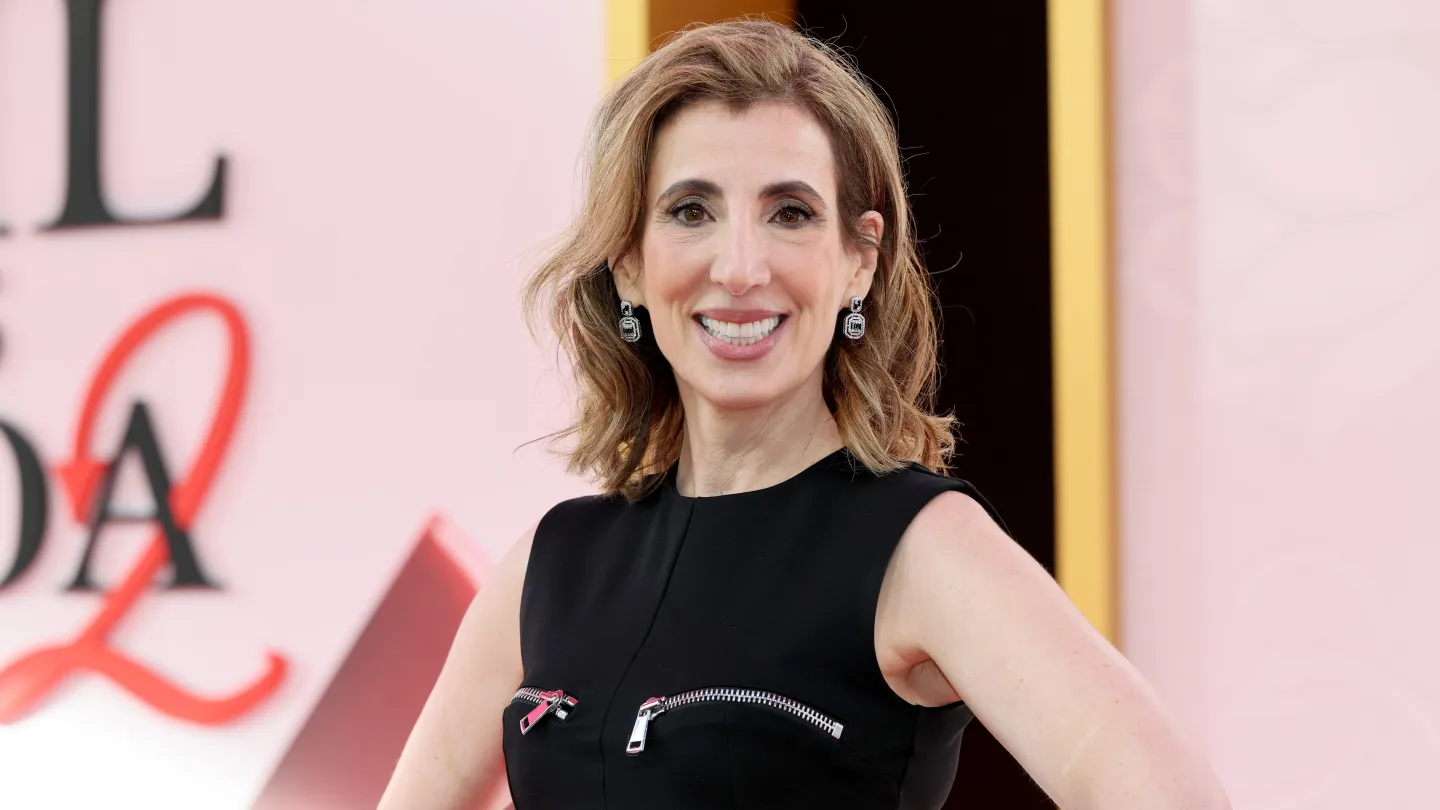
Aline Brosh McKenna always seemed aware that writing a sequel to The Devil Wears Prada would be a dangerously narrow runway to walk. That’s probably why, as recently as three years ago, she wasn’t particularly keen on the idea. But when Meryl Streep says she’s thinking about revisiting one of her most famous roles, what’s a screenwriter to do?
It took 20 years after they released one of the most impactful comedies of the 21st century to get the entire band back together. But, as McKenna says, once she met with Streep… things moved very quickly. “Meryl’s opinion is enormously important,” says McKenna, whose other credits include 27 Dresses, Morning Glory, We Bought a Zoo and Crazy Ex-Girlfriend. “And when she said she would be open to hearing some ideas, by that point, we had accumulated a lot of them.
During a recent episode of The Hollywood Reporter podcast I’m Having an Episode (Spotify, Amazon Music, Apple), McKenna talked about building the wildly different but similarly glamorous world of The Devil Wears Prada, riffed on how elements of the original have aged and why one “That’s all” was enough.
When we spoke in early 2023, Emily Blunt and Anne Hathaway were really pushing the idea of a sequel. I asked if you were interested and you said, “Not really.”
I know! That’s right around the time when I started thinking about it. I follow all three of those industries: journalism, fashion, publishing, all fields that I love and maybe, in another world, would have worked in. As those fields have gotten turned upside down, I’ve always wondered. “What are these four characters doing in a world where how we make money is different?” The social values of workplaces have changed. The world has just changed so much in 20 years. Then I started calling David Frankel and saying, “You know what? I have some thoughts.” But the key to it, always, was finding a spot where Meryl was excited about it.
So how do you get Meryl Streep excited?
I wanted to get her thoughts early. So, I was excited to go see her and talk to her about it. It just so happened that we went to see her on a night when Lin-Manuel [Miranda] was doing a screening of it at the theater in Washington Heights that he was raising money for. I hadn’t seen it in the theater in years. And we had just spent the day talking about where these characters would be. It felt like kismet.
We live in this culture where there’s an expectation that if people like something — a series, a movie, a book — they feel entitled to more of it. And this has led to some great work. It has also led to a lot of work that maybe wasn’t needed. Among your collective, what was your barometer for deciding that the movie needed to be made — that this was not us just feeding into reboot and sequel culture?
I’m a big fan of movies from the 30s and 40s. And if something worked, they kept doing it. Even if it was just the same actors, even if it was just Hepburn and Tracy, if it was something that an audience responded to, they would make multiples. The idea that you can take existing material and recombine it and update it, that doesn’t offend me. And, in this case, we weren’t asked. The impetus didn’t come from Disney. The impetus was Wendy [Finerman], who produced the original, bringing to our attention that Meryl would like to talk about it. So it felt like how you build any movie. It came from a story that we were excited to tell. There was nothing cynical or calculated going into it, except my own desire as a fan just to go and revisit this.
Anne Hathaway, Meryl Streep and Stanley Tucci in The Devil Wears Prada 2.
Macall Polay/Walt Disney Studios Motion Pictures/Courtesy Everett Collection
Which you’ve thought about a lot over the years, I’m guessing.
I’ve thought of Miranda Priestly many times over the last 20 years. Anytime you’re in a situation which is a little irritating… you get the wrong coffee order or somebody is sitting in your plane seat. It’s just always fun to imagine what Miranda would have to say.
There was always going to be a lot of expectations on this project, but were you prepared for the scrutiny during production? It felt like the paparazzi photos from the set last summer were such an event.
I didn’t anticipate that. I haven’t generally worked on stuff that was anticipated while we were making it. No one was standing around excited about 27 Dresses. It’s a completely different circumstance. But I was really surprised by the crowds. We were shooting over the summer. It was great weather. We were all over the city. Even if people hadn’t looked it up online, sometimes they would just walk by and see it. It felt so New York-y. We’re all craving a communal experience. That movie is a shared experience, a shared memory from a time when things were different. There was more of a monoculture. There’s a yearning for a feeling of solidarity and community and everyone talking about the same movie. That’s something to hold on to.
How does the novelty of such anticipation impact the writing process? How much are you considering the need to include fan service, but not getting carried away with it?
For me, I like it when something plays as fan service, but you don’t need to know [that’s what it is]. You don’t have to have seen the first movie to enjoy this movie. And if you get the reference and you remember what it’s from, great. In a way, that makes the references more fun. This is a friend. If you think of it as a friend you’ve had for 20 years, you have private jokes — an example being “That’s all,” which became a catch-all catchphrase. As a little Easter egg, I believe we only say “That’s all” once. We thought a lot about where to put that “That’s all.”
If memory serves, the original movie was at least at some point mislabeled as a rom-com. It very clearly is not. How do you think of it, in terms of genre?
I have definitely written traditional rom-coms. I think it’s the tone — the sort of optimism and the comedy which you associate with romantic comedy. So it’s always had a little tinge of that. But women in the workplace is just a real fascination for me. Always has been. I just read the biography of Claire McCardell, the designer. I’m reading Judy Bloom’s biography right now. Very simply, I think they were models for me. It’s those stories, those movies: Working Girl, Broadcast News, even ones that aren’t about female protagonists. Tootsie is an extremely important movie for me. And it’s a workplace comedy in many ways. It’s about somebody who needs a job. I always craved those stories as much as my Jane Austen, Edith Wharton and Charlotte Brontë. I just love the idea of the workplace as a theater for emotion and morality.
How brand-conscious are you when you’re writing the fashion part of this? The brands that show up in the film are a big part of it. Are you thinking about LVMH while you’re writing it?
No. Although in this movie, we are definitely using more real designers. We had to invent a designer in the first movie, sort of by necessity. The idea is always to look at it from an outsider’s perspective. That’s how I look at it. I’m a girl from New Jersey. One of my favorite New Yorker cartoons is a woman wearing a shirt that reads DKNJ. The caption says “Donna Karen’s nightmare.” I always felt very seen by that because I grew up trying to magpie together something fabulous for myself. This movie is not an ad. This is not endorsing any particular designer or design sensibility. While it’s very important to be authentic, it’s not a click-and-shop movie.
There’s been a real reframing of Adrian Grenier’s character in the first film as a sort of villain. What is your read on that?
I’ve been asked about that a lot. My experience of coming to New York was that there was a lot of sensitivity about selling out if you were in a creative community. That is less prevalent now. It’s probably more prevalent in Gen X than in millennials overall. But when I started out, I really wanted to write commercial comedies. That’s what I loved. And I remember feeling, in the early 90s, “My God, am I a sellout?” There were certainly people who told me that I was. And I really don’t think you can impugn [Nate’s] motivations. She’s becoming a different person with different values than the person she’s dating. He’s there to remind her that it’s a Faust story and that she’s slipping down the drain. That’s what he’s there to do. I wanted to create somebody who had that incredible ferocity of purity that you have in your 20s. Nate’s character is sort of the avatar of someone who understands that Andy is pushing her moral boundaries. That’s his role in the story. It is interesting to me that it’s taken on that light, but the idea of selling out has really changed. We’re in a world where the economic climate is such that it’s so hard to survive. We went from “Don’t sell out” to “Get your bag, girl.”
Anne Hathaway and Adrian Grenier in The Devil Wears Prada.
0th Century Fox Film Corp./Courtesy Everett Collection
The original movie had one of the more memorable makeover scenes in cinema. That was a mainstay of my moviegoing for years. We don’t see makeover montages anymore. What’s your take on that?
It’s an interesting makeover in Prada because it’s not “homely to sexy.” It’s “unfashionable to fashionable.” One of the things I love about fashion is that some of the things that a patriarchal society tells women — a big bosom, for instance — fashion rejects that. There are things which are stereotypically desirable that fashion will turn on its head. Like five years ago, everyone had fake eyelashes on, right? Now all the shows this season, no mascara. There’s a type of makeover where you take a woman and you transform her from a female gaze object to a male gaze object. That really wasn’t what the first movie was doing. It wasn’t making her sexier. It was giving her the keys to this locked room.
So much in fashion has changed, aesthetically, between the two movies.
I find it interesting and ultimately funny how these things change. Thick eyebrows, thin eyebrows, yes, eyelashes! No eyelashes! Dropped waist, high waist. It’s always moving, these little barometers of style all over the place. But, for fashion, it’s obviously somewhat about sex appeal, but it’s also not. It’s about understanding what a silhouette means. What does a drop waist in the 1920s mean? What does big shoulder pads in the 80s mean? The return of massive amounts of volume in the last couple of years that we’ve seen. What does that mean? Now things are slimming down again.
Don’t tell me that. I’ve really over-indexed on billowy pants.
Well, we’re doing it to men too! Men are very slow moving in terms of silhouettes.
Before I let you go… does The Devil Wears Prada 2 coming out on May 1 get you an invite to the Met Gala three days later?
I highly, highly doubt that. (Laughs.) I mean, that it’s a good example of what we did with the first movie. We had a version of the Met Ball, and I don’t think that everyone knew what that was at the time. Now that’s the Super Bowl or The Oscars for so many people. People sit down with their popcorn to watch arrivals. I’ll be watching.
>
At this weekend’s Zurich Summit a group of film financiers were asked by Deadline for their thoughts on the prospects of a U.S. federal film incentive.
Last week, a bipartisan group of lawmakers unveiled the bill for a 20% incentive, which with bonuses could bring the total rebate to 30%. The move has long been called-for by the U.S. industry concerned by the exodus of production overseas.
Alex Walton, former Co-Lead & Partner at WME Independent, told the Summit the move was “hugely positive”: “It’s wild to think there hasn’t been an efficient tax credit in America. It has helped many other countries. Spain is booming because of it now; and all over Europe. It’s going to take some time to be realized and for financial institutions to be able to cash flow it. But you’ve got to believe it will happen within the next three-four years, and then that will see all the foreign tax credits compete harder to maintain their positions.”
A start date is not yet set. The proposed text from last week stated that the credit would apply to qualifying film and TV productions beginning in taxable years after December 31, 2026 (effectively targeting projects starting in 2027). But bills can take years to pass.
Andrea Scarso, Managing Partner at prolific financier IPR.VC, whose credits include Marty Supreme and Materialists, agreed that a U.S. incentive would be “positive” but also cautioned against rising production costs: “It remains to be seen whether the prices and budgets are also going up by the same amount, which is something that happens in some foreign territories when they increase the amount of tax credit or soft money. It’s always a balance. But overall, I think it’s good news.”
Sarah Schweitzman, Co-Head CAA Media Finance, noted: “What’s important is that when you look at some of the international markets, you realize that we’re making movies there because of a tax incentive situation and I think if we’re able to federalize a tax incentive program in the U.S. it’s going to create many more jobs and invigorate crews, which is something we absolutely need in the U.S.”
A recent Motion Picture Association study claimed that a federal film tax credit could increase U.S. production spending by $125BN and add more than 143,000 jobs by 2035.
You can read more about the bill here.
>
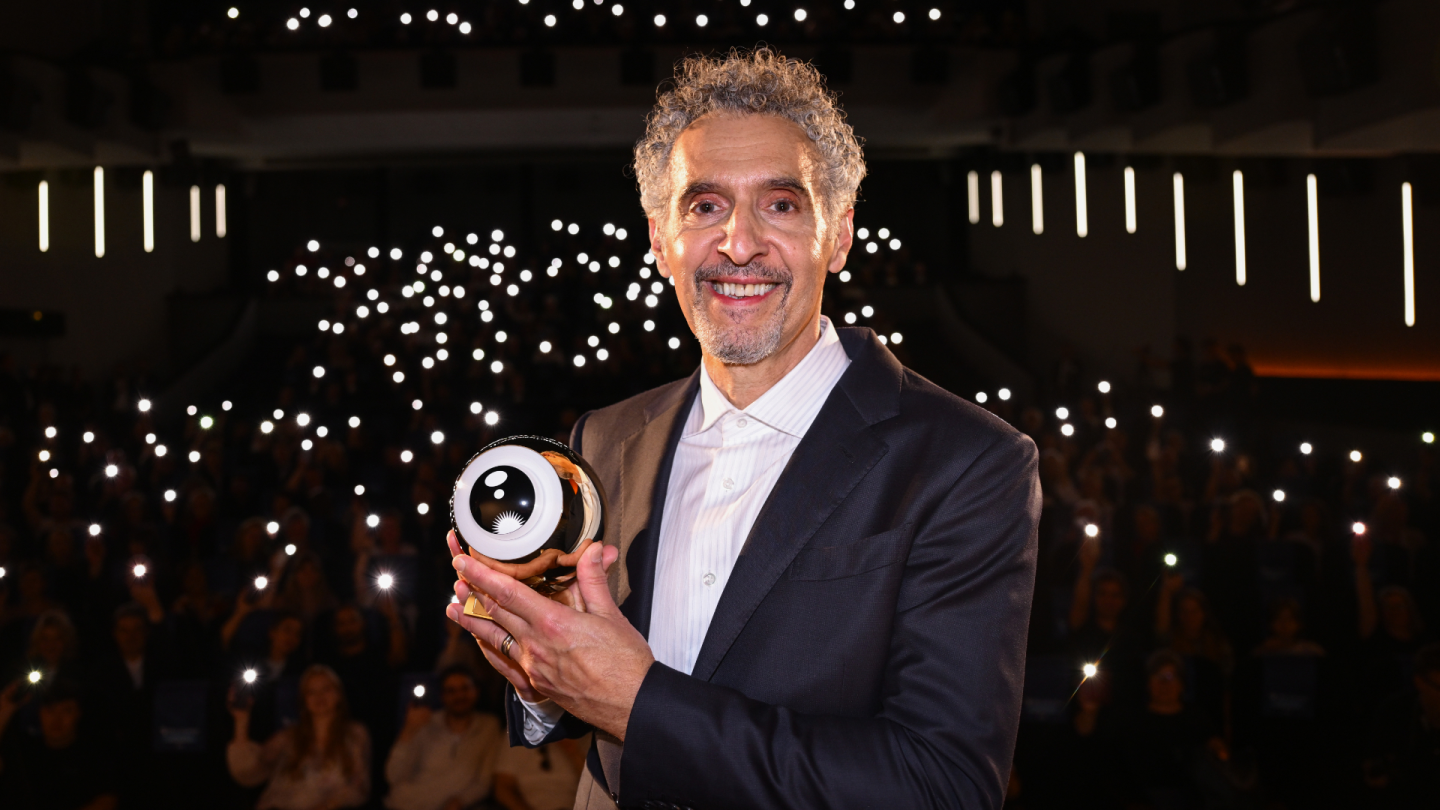
Hot on the heels of his Golden Eye award ceremony on Saturday night, John Turturro entertained another crowd at a Zurich Film Festival masterclass on Sunday.
The Emmy-winning U.S. star has been recognized for his performance in Noah Segan’s The Only Living Pickpocket in New York, a project that is already garnering awards buzz. In the film, Turturro plays Harry, a seasoned pickpocket whose carefully controlled life is thrown into turmoil when a job goes wrong, setting off a tense chain of events that unfolds over the course of 36 hours.
In a career-spanning conversation with Deadline‘s Melanie Goodfellow — the actor’s shining Golden Eye trophy neatly nestled between them — Turturro discussed growing up in an immigrant household, his decades-long friendship with Spike Lee, and the transition from acting to filmmaking.
Turturro, who has steadily become one of the industry’s most formidable actors yet to put “Oscar nominee” on his resume, was asked about joining the best actor race this year with the Sundance success The Only Living Pickpocket in New York. “I never really have gone the whole hog with it,” he responded about the upcoming awards campaign. “But now I’m the lead in the film, so I’m going to support the film because I love the film.”
He explained that being pulled into awards conversations is “helpful to help you do the next thing.” Turturro continued: “Is it nice to be acknowledged? Great, but that’s not why you do it. […] Just because a film is really popular doesn’t mean it will have staying power, but it’s nice to be in the conversation. I don’t look upon myself as being a competitive person. I’m competitive with myself,” he added. “I want to get the most out of what I can do, but it’s not sports!”
However, he admitted to feeling surprised by the positive critic reaction out of Sundance. “Finally,” he thought, “I’m in something that people will see… My job is I like to try to improve, and I feel like being an actor is one of the few things you can improve in. You may not be able to run as fast as you did when you were younger, but I have a lot of life experience, and as you get older, you accumulate that, and you can distill things in a way that you couldn’t do when you were young, because you didn’t really experience all those things. And now I’ve experienced life, death, loss, being a parent, being married — what it is to really love someone versus falling in love. That’s a huge difference,” he giggled.
Turturro regaled attendees with stories about his impressive stage career. He naturally came on to two major TV performances of his in the last decade: HBO’s The Night Of and Apple’s Severance.
He coyly confirmed a return for his character, Irving Bailiff, in season three of the Emmy-winning Severance with Adam Scott. “Yeah,” he (eventually) told the room. “As long as they give me interesting things to do, then I’m interested.” He swiftly took the opportunity to gush over friend and colleague Christopher Walken, whose character, Burt Goodman, began a romance with Turturro’s Irving in season one. “‘Who’s going to be my love interest?’” Turturro asked before joining the show. “And they were like, ‘All these younger guys.’ I said, ‘Well no, I’ve worked with Chris Walken,’ and I said, ‘I want Chris, because I love Chris.’ And I don’t have to act that I love him because I love him.”
Though Walken “didn’t understand a lot of the show,” Turturro was able to guide him through their authentic, real-life friendship. “I said, ‘Don’t worry about it. You just look at me.’ We have so much fun because I directed him like three times, and we’ve acted, and we’ve worked together a lot. And he’s a wonderful theater actor, and people obviously think he plays only strange [characters] but he can do a lot of different things. He’s also very sensitive, but he has a childlike joy in his work, and when that happens, anything is possible.”
Turturro received a round of applause when discussing the HBO crime drama The Night Of, which ran for one season in 2016 and co-starred Riz Ahmed. It would later win five Emmys, and Turturro was nominated for his role as the eczema-stricken defense lawyer John Stone. “The Night Of is something I’m very proud of,” said Turturro on Sunday. “It was originally a BBC thing, which I actually never watched because I didn’t want to be influenced.”
He even confirmed that he actually wanted to do another season of it. “But they couldn’t agree on what the story would be,” revealed the actor. “But I loved doing it. It was one of those great experiences in my life.”
Turturro’s career spans four decades, having worked with acclaimed directors such as Spike Lee, the Coen brothers, Martin Scorsese, Robert Redford, Robert De Niro, Nanni Moretti and Pedro Almodóvar.
He first gained international recognition through his collaborations with Lee, appearing in Do the Right Thing and Jungle Fever. With Joel and Ethan Coen, he acted in Miller’s Crossing, Barton Fink, O Brother, Where Art Thou? and The Big Lebowksi, in which Turturro created the iconic Jesus Quintana. For his lead performance in Barton Fink, he won best actor at the 1991 Cannes Film Festival, an experience that Turturro reflected on at his Zurich masterclass. He even confessed to feeling like he lands “more normal” roles in Europe than across the Atlantic, and said he has turned down scripts “again and again” that involve his character being violent towards women.
At his Zurich Golden Eye ceremony Saturday night, Turturro collected the award and quoted Italian novelist Cesare Pavese. “[He] once said that the only great thing in life is to begin. I still consider myself a beginner in many ways,” said the star. “I’m very fortunate. I wanted to make a living doing something that interested me and to do interesting work — to share that with an audience, [and that] wouldn’t diminish their intelligence at the same time,” he laughed. “I consider this an encouragement to continue.”
Turturro joins 2026 Zurich honorees Julianne Moore and Tom Hiddleston. The 22nd edition runs Sept. 24-Oct. 4.
>
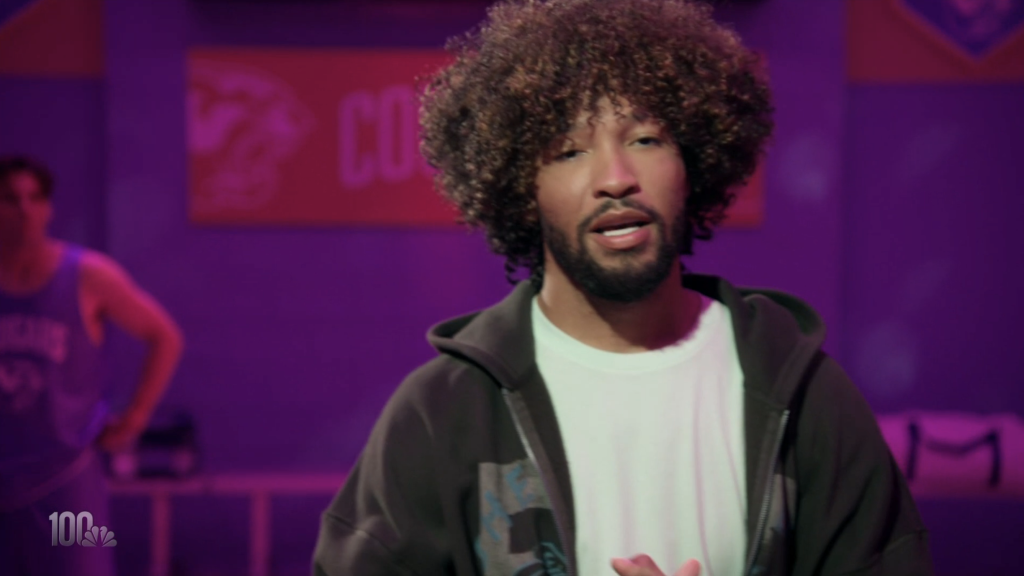
Following the Knicks’ big win at Madison Square Garden, Jalen Brunson took the stage at 30 Rockefeller Center for his Saturday Night Live hosting debut.
On Saturday’s Season 52 premiere, the NBA Finals 2026 MVP showed off some comedic chops in an otherwise business-as-usual episode of the NBC sketch comedy show, which featured Katseye as its musical guest.
Introducing new cast members Grace Reiter and Saidah Belo-Osagie, Katseye returned to a parody season of The Debut: Dream Academy to crown a new girl group. The quartet also performed in a mini music video with the awkward group of ladies, also featuring Jane Wickline and Veronika Slowikowska.
The next sketch was a support group featuring Brunson as one of several men whose spouses were grinded on at Usher and Chris Brown’s The R&B Tour.
“When I spent $1,200 on that meet-and-greet, I never expected her to actually greet his meat,” said Brunson as the other group members comforted him.

Katseye on ‘Saturday Night Live’
Jeremy Culhane and Jalen Brunson in ‘Saturday Night Live’
Jalen Brunson, Jeremy Culhane and Ben Marshall on ‘Saturday Night Live’
Brunson also starred in the parody sketch High School Musical: The New Generation as an athletically gifted new student who hilariously keeps dunking on the new Troy Bolton stand-in (Jeremy Culhane) and steals his girlfriend (Slowikowska).
As Shark Tank judge Daymond John, Brunson asked if the invention Respectacles, a pair of glasses that sounds an alarm when the wearer looks at breasts, “works for ass.” The inventors’ (Culhane and Ben Marshall) presentation keeps getting interrupted as they check out Lori Greiner.
Saturday Night Live kicked off its 52nd season this weekend on NBC with host Brunson and musical guest Katseye. The season continues with guest hosts Dakota Johnson, Shane Gillis and Inde Navarrette, along with musical guests Turnstile, Rosalía and Gracie Abrams.
>


Search For Canadian TV Actor Stewart McLean Now Homicide Investigation


These ’90s fashion trends are making a comeback in 2017
According to Dior Couture, this taboo fashion accessory is back
Model Jocelyn Chew’s Instagram is the best vacation you’ve ever had
Emily Ratajkowski channels back-to-school style
9 Celebrities who have spoken out about being photoshopped


Rurouni Kenshin: Hokkaido Arc Manga Takes 1-Issue Break – News


HIDIVE to Stream English Dubs for The World Is Dancing, The Forsaken Saintess and Her Foodie Roadtrip in Another World, The Dangers in My Heart: The Movie Anime – News