
Anime
Under Night In-Birth II Sys:Celes Fighting Game’s DLC Character Zohar The ‘Doppelganger’ Debuts in Summer 2026 – News


Arc System Works America announced on Friday it will release the new DLC character Zohar The “Doppelganger” for Under Night In-Birth II Sys:Celes, the newest installment in French Bread’s original Under Night In-Birth 2D fighting game series, in summer 2026. The company revealed images of the character.
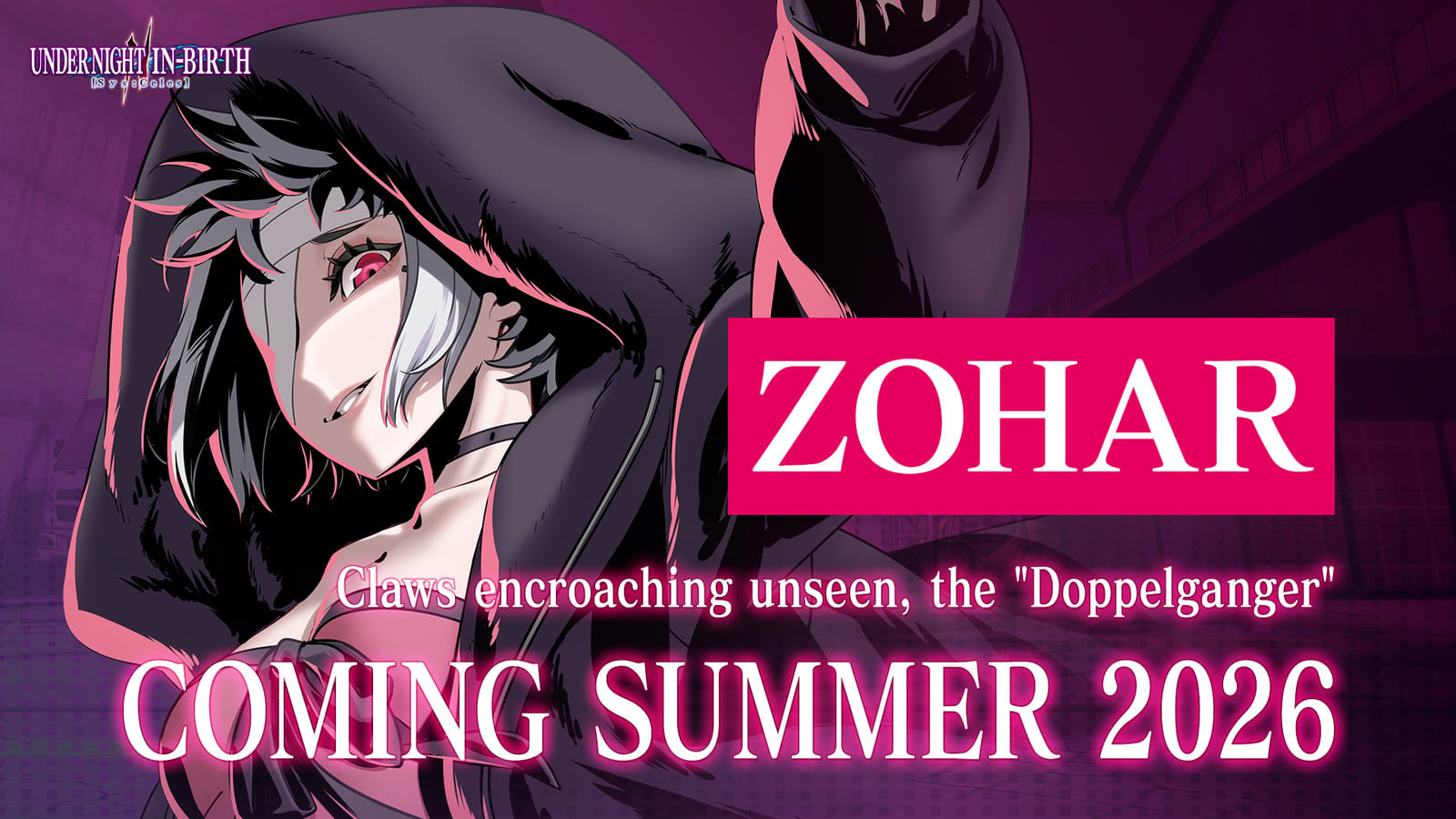
Image courtesy of Arc System Works America
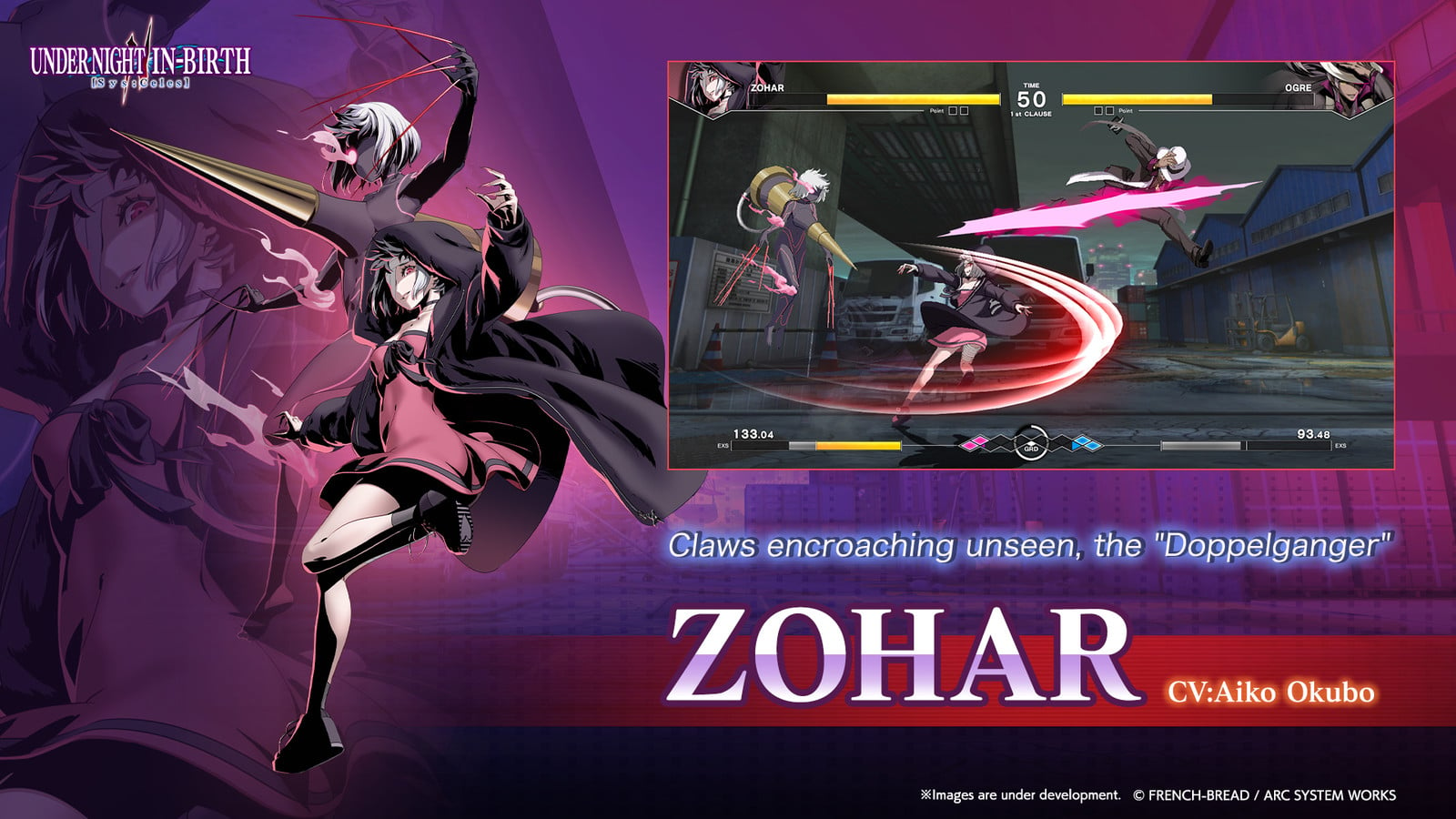
Image courtesy of Arc System Works America
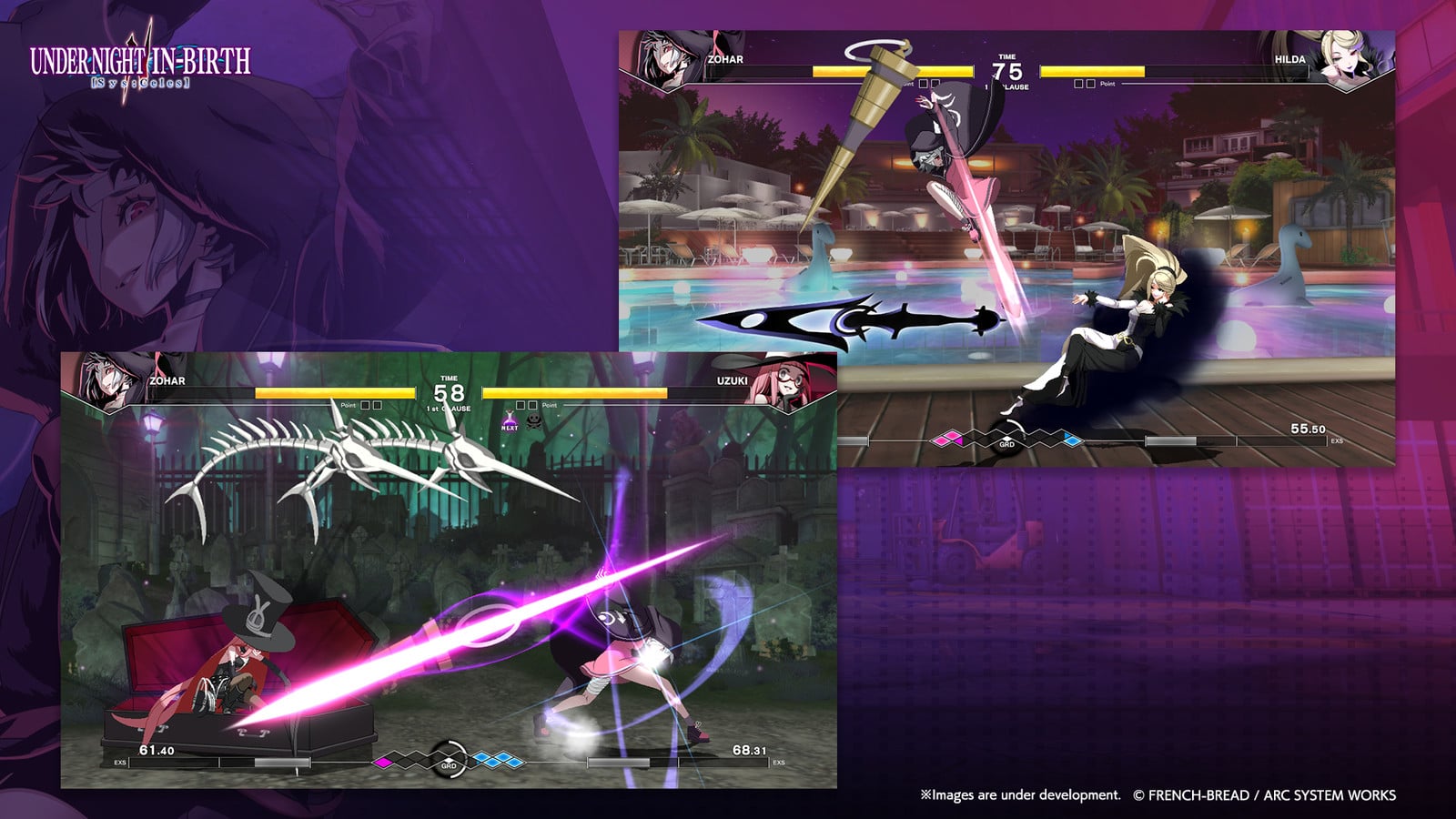
Image courtesy of Arc System Works America
Arc System Works also announced a major update is coming to the game that will include: game balance adjustments, revisions to system mechanics such as “Steer Ender” and “Throw Escape,” a dedicated rating system, rankings for high-ranked players, frame data display improvements, and a new feature in Mission Mode to allow players to review their previous play.

Arc System Works released the game on PlayStation 5, PlayStation 4, Nintendo Switch, and PC via Steam in January 2024. The game’s season pass includes Uzuki, which released in July 2024, as well as an early unlock code for Kuon. Ogre joined the game in February 2025 as part of the season pass. Izumi (voiced by Reina Kondo) joined the game on August 19.
ucio performs the theme song “Rinne no Owari e” (Toward the End of Reincarnation).
The game features the final chapter in the “Hollow Night” storyline that began with the original series. There were 21 returning characters as well as three new characters at launch. The new characters are Kaguya, Tsurugi, and Kuon.
French Bread (Melty Blood) developed the original Under Night In-Birth game, which launched in Japan as an arcade game in 2012. It was followed by an updated arcade game titled Under Night In-Birth Exe:Late in 2013. Arc System Works released a PS3 port of Under Night In-Birth Exe:Late in Japan in 2014. Aksys Games released the game for PS3 in North America in February 2015. The original Under Night In-Birth was never released outside of arcades.
The follow-up version is titled Under Night In-Birth Exe:Late[st]. The arcade version of the game launched in July 2015 in Japan, and Arc System Works released the game on the PS3 and PS4 in Japan in July 2017. Aksys Games released the game for the PS4 and PS Vita in North America in February 2018, and PQube Games released the game on the same platforms in Europe on the same date. Arc System Works released the game on PC via Steam in August 2018. The follow-up to that version was Under Night In-Birth EXE:Late[cl-r]. The game debuted on PS4 and Switch in Feburary 2020, and debuted on PC via Steam in March 2020.
The Under Night In-Birth game series is notable for its unique GRD mechanic. Aside from life and super move gauge, players fight over a secondary resource known as GRD, which can be gained or lost from the results of certain offensive and defensive exchanges. Every 16 seconds, the player with the most GRD is awarded a buff that increases their damage, and access to a cancel that also converts their existing GRD to an amount in the super gauge. In this way, players are just as often fighting for a lead on the GRD in addition to the life lead.
French Bread developed the Melty Blood: Type Lumina 2D fighting game, based on characters from Type-Moon‘s Tsukihime -A piece of blue glass moon- remake visual novel. The game launched for Nintendo Switch, PlayStation 4, Xbox One, and PC via Steam in September 2021. A new version of the game titled Melty Blood: Twi-Lumina will debut in early 2027 for the PlayStation 5, PlayStation 4, Nintendo Switch 2, Nintendo Switch, Xbox One, and PC via Steam.
Source: Press release
>
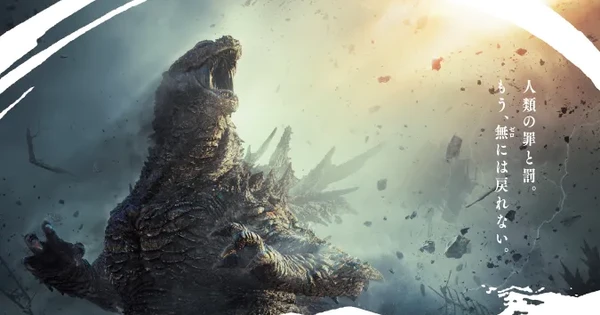
How do you bridge the gap between Godzilla as a force of terror and as a cool guy who fights other monsters? The American 2014 film tried to split the difference between metaphorical horror and “let them fight” fun before turning completely silly in its sequels. The last two JapaneseGodzilla films (Shin Godzilla and Godzilla Minus One) were stand-alone reboots that stripped the King of the Monsters down to his scary roots without another kaiju in sight. Then Minus One became an Oscar-winning global blockbuster, and writer/director/VFX genius Takashi Yamazaki pretty much had to make a sequel — and that means scaling up with another kaiju. How do you deliver the beatdowns fans want while still maintaining consistency with the dark historical drama of Minus One?
Godzilla Minus Zero‘s answer is to make its monster vs. monster fight the scariest you’ve ever seen. As everyone’s correctly guessed by now, King Ghidorah is the big new threat attacking Japan in 1949. Ghidorah’s a different beast in each Godzilla continuity, so I won’t say much about his portrayal here to avoid spoilers, but I’ll say this: we see a lot more of him this time around than we do Go dzilla, and he looks fantastic; Yamazaki’s special effects have leveled up beyond his already striking accomplishments in the first one. I’ll also note something from the press conference that followed the screening: when one critic offered his interpretation of what Ghidorah might be a metaphor for, Yamazaki said he welcomed all interpretations so long as he made the viewer feel a sense of powerlessness. Well, Yamazaki-san, you did your job.
The film’s surprising R rating is earned — though the violence is not excessively graphic, it refuses to sugarcoat the brutality inflicted on civilians in war. One of the new major characters, scientist Kanji Murakami (Min Tanaka), is a survivor of the Hiroshima bombing; we see flashbacks of him discovering his family’s burned bodies and even more PTSD-driven dark thoughts entering his head. Another flashback to the aftermath of Godzilla’s Ginza rampage in Minus One, answering the question of how Noriko (Minami Hamabe) managed to survive that attack in the first place, plays similarly to the Hiroshima scenes. You couldn’t edit this material down to a PG-13, and you wouldn’t want to. This very concern with the consequences of violence, however, might actually make it good for teenagers to see, a moral antidote to the wanton destruction of so many bloodless blockbusters.
If Godzilla Minus Zero has one big weakness in comparison to its predecessor, it’s that it’s so structurally tied into said predecessor that it won’t work nearly as well as its own story. The sequel has some good character development and powerful emotional moments, but it also doesn’t have an arc with the same easy hook as Koichi Shikishima (Ryūnosuke Kamiki) overcoming his kamikaze survivor’s guilt in Minus One. Beyond the spectacular kaiju attacks and the visceral war-horror elements, one’s attachment to the human characters here is more dependent on the attachments already established in the last movie, along with the general historical context that informs its depiction of post-war Japan.
While having fun with pulpier sci-fi plot elements and the inherent excitement that comes with Godzilla (that classic Godzilla theme still hypes one up), Minus Zero ends up being a darker movie than Minus One. Its mission is less one of heroic redemption and more entangled with complications. If Minus One was Star Wars, Minus Zero is The Empire Strikes Back. I don’t know if there will be a Return of the Jedi or if we’re left with a beautifully bleak duology. Of course I want to see more, but if Yamazaki wishes to end it here, he’s still left this series on a strong note. You can’t trust that the world will remain saved, but maybe you can still protect yourself and your family.
>
Anime
‘Destroy All Humans. They Can’t Be Regenerated. A Magic: The Gathering Manga’ Gets Miniseries in October – News

Original series based on card game ended in April 2025
The November issue of Kadokawa‘s Monthly Shōnen Ace magazine announced on Saturday Katsura Ise and Takuma Yokota will launch a new miniseries for their Destroy All Humans. They Can’t Be Regenerated. A Magic: The Gathering Manga (Subete no Jinrui o Hakai suru. Sorera wa Saisei Dekinai.) manga, based on the Magic: The Gathering trading card game, beginning in the December issue on October 26. The series will be titled Subete no Jinrui o Hakai suru. Sorera wa Saisei Dekinai. -Timeshift- (Destroy All Humans. They Can’t Be Regenerated. -Timeshift-).

© Wizards of the Coast LLC.
Ise confirmed on X (formerly Twitter) the new manga will be a short limited series that will run for four chapters irregularly in the magazine.
Viz Media releases the main manga in English and describes the story:
Travel back in time to the early days of Magic: The Gathering!
It’s the nineties at Tokiwagi Middle School. And for gamers like Hajime Kano, after the release of Magic: The Gathering, nothing will ever be the same again!
In everything he does, it seems like geeky Tokiwagi Middle School student Hajime Kano comes in second place behind popular honor student Emi Sawatari. But when Hajime takes a trip to a new game store he’s been hearing about, their rivalry takes an unexpected turn. Welcome to the early years of Magic: The Gathering, whena trading card game shaped a generation forever!
The manga first debuted as a one-shot in Monthly Shōnen Ace in August 2018. The manga started its serialization in the magazine in November 2018. Wizards of the Coast LLC. is credited with cooperation. The manga ended serialization in April 2025, and Kadokawa shipped the 18th and final volume in June 2025.
Sources: Monthly Shōnen Ace November issue, Katsura Ise‘s X/Twitter account
Disclosure: Kadokawa World Entertainment (KWE), a wholly owned subsidiary of Kadokawa Corporation, is the majority owner of Anime News Network, LLC. One or more of the companies mentioned in this article are part of the Kadokawa Group of Companies.
>

Side story debuted in January

© Akaza Samamiya, Kadokawa
Akaza Samamiya announced on X (formerly Twitter) on Saturday the Mr. Mallow Blue: After The Rain side story to the Mr. Mallow Blue manga will end in the next chapter.
The original series focuses on the meetings of various social outcasts, including a fragile girl, a shut-in, and a handsome man who wears a cold expression as a mask.
Samamiya launched the side story in the March issue of Kadokawa‘s Asuka magazine, which shipped in January.
Samamiya launched the main manga in Kadokawa‘s Asuka magazine in November 2019, and ended the series with the the sixth and final compiled book volume on December 24.
Samamiya launched the Ballad x Opera manga in Asuka in May 2017, and ended it in September 2019. Kadokawa published the manga’s fifth and final volume in November 2019.
Samamiya serialized the Bloody Mary manga series in Asuka from November 2013 until February 2017. Kadokawa published 10 volumes for the manga, and Viz Media published all 10 volumes in English.
Source: Akaza Samamiya‘s X/Twitter account
Disclosure: Kadokawa World Entertainment (KWE), a wholly owned subsidiary of Kadokawa Corporation, is the majority owner of Anime News Network, LLC. One or more of the companies mentioned in this article are part of the Kadokawa Group of Companies.
>
In the NFL, everything can change in 7 days. Just ask the Commanders
Tyler Loop's last-second field goal gives Ravens wild victory over Cowboys in Brazil
Blue Jays' last game becomes emotional tributes for Max Scherzer, George Springer
-

 movies4 months ago
Search For Canadian TV Actor Stewart McLean Now Homicide Investigation
-

 Fashion9 years ago
These ’90s fashion trends are making a comeback in 2017
-
Fashion9 years ago
According to Dior Couture, this taboo fashion accessory is back
-
Fashion9 years ago
Model Jocelyn Chew’s Instagram is the best vacation you’ve ever had
-
Fashion9 years ago
Emily Ratajkowski channels back-to-school style
-
Fashion9 years ago
9 Celebrities who have spoken out about being photoshopped
-

 Anime4 months ago
Rurouni Kenshin: Hokkaido Arc Manga Takes 1-Issue Break – News
-

 Anime3 months ago
HIDIVE to Stream English Dubs for The World Is Dancing, The Forsaken Saintess and Her Foodie Roadtrip in Another World, The Dangers in My Heart: The Movie Anime – News