
Entertainment
Did Disney Fix Star Wars: Galaxy’s Edge or Create More Chaos?

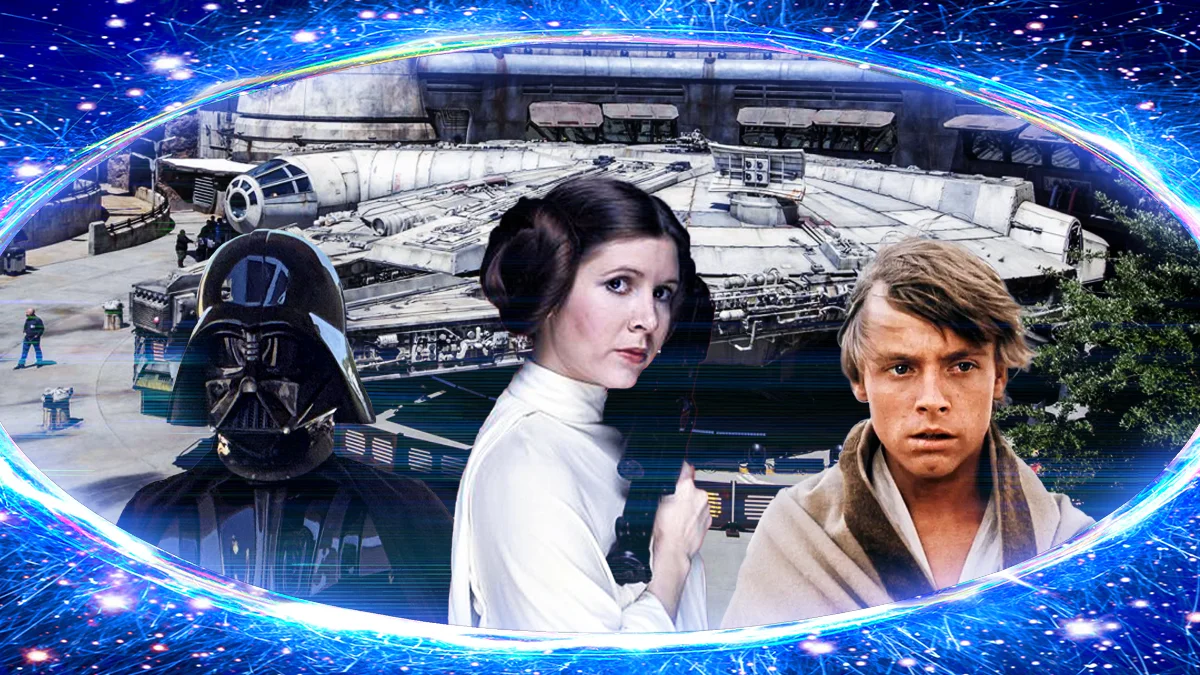
Last Wednesday, throngs of fans, theme park bloggers and YouTubers plus a few journalists flooded into the “Star Wars”-themed section of Disneyland.
They were there for the biggest change to the area since it opened nearly seven years earlier. The land, called Star Wars: Galaxy’s Edge, was reset to include the original characters from the 1977 film like Luke Skywalker and Han Solo, upending the original timeline and grand ambitions that were hand-crafted for Galaxy’s Edge.
It’s a not-so-subtle acknowledgement that, as Disney prepares to release the first new “Star Wars” movie in seven years, “The Mandalorian and Grogu,” its original ambitious plan of creating an intensely immersive world featuring more recent characters failed to take root with Disneyland guests. Now the company has found a way to just play the hits and ditch those immersion plans, largely removing the tie-ins to the sequel trilogy that relaunched “Star Wars” to a new generation to decidedly mixed results in the 2010s.
It’s a time of great change for the company as Josh D’Amaro takes over as CEO and Dave Filoni and Lynwen Brennan take over Lucasfilm — and Disneyland is no exception to the winds of change.
The shift at the park also comes after Lucasfilm has struggled to find a way forward for “Star Wars” after 2019’s critically shellacked “Rise of Skywalker,” developing and abandoning several new movies that would have continued that storyline and even failing to get a greenlight for a Kylo Ren movie from Steven Soderbergh and Adam Driver.

So what is Galaxy’s Edge now? A mishmash of timelines.
One section of the land, comprising the Millennium Falcon: Smuggler’s Run attraction, intergalactic watering hole Oga’s Catina and several shops and restaurants now exists in the timeline of the original trilogy, which began with 1977’s “Star Wars.” A section of the land housing the Star Wars: Rise of the Resistance attraction remains in the realm of the sequel trilogy. The marketplace section of the land is a space devoted to the New Republic, set just after the events of the original trilogy, where you might encounter the Mandalorian and his pal Grogu or Ashoka Tano.
Confused yet?

The changes come at a time when Disney badly needs to reignite enthusiasm for the franchise. But the question is whether this hasty course correction with additions like the introduction of fan favorites Darth Vader and Princess Leia will be enough to entice “Star Wars” fans again.
“One of the great things about the ‘Star Wars’ universe and the ‘Star Wars’ canon is that it is expansive and it continues to grow,” Asa Kalama, executive of Creative & Interactive Experiences at Walt Disney Imagineering and one of the original designers of the Galaxy’s Edge experience, said in January, hinting at the coming shakeups.
Last month, Disney gave more specifics, admitting that the new initiative “will roll back in time several decades, thoughtfully introducing beloved characters from across the ‘Star Wars’ timeline, new props and graphics in some areas, musical selections from ‘Star Wars’ film scores throughout the land and more. Each era will be brought to life with the same care and attention to detail that the land was originally designed with, masterfully weaving together stories from across time and space in one location.”
But does this new Galaxy’s Edge, epitomized on that sunny Wednesday, when Luke Skywalker, Darth Vader, Han Solo and Leia roamed around and took selfies with fans for the very first time, represent a meaningful evolution or an admission that the original plans for the land would be abandoned for good?
“The ambitions of Galaxy’s Edge, to be a place of guest interactivity where people could come and play, was never fully realized,” said Todd Martens, who writes about theme parks for the Los Angeles Times (and who just launched his own theme park newsletter). “I don’t think Galaxy’s Edge needed fixing, per se, I just think it was too ambitious, operationally, for modern Disney. So the company is doing what it does best and giving us recognizable characters rather than leaning into the land as a place of participation.”
Former Imagineer Jim Shull put it more bluntly, “Nobody wants to star in a story, they want to be entertained.”
***
When Star Wars: Galaxy’s Edge was first announced, in 2015 at the D23 Expo, it was just a few months before the debut of “The Force Awakens,” the first “Star Wars” film produced by the Walt Disney Company following its $4 billion acquisition of Lucasfilm in 2012. The excitement in the room was palpable. None other than Disney CEO Bob Iger made the announcement, promising that the 14-acre land would represent “largest single-themed land expansion ever” in the history of Disney theme parks.
There was more.
Iger described Galaxy’s Edge, set on the new planet of Batuu in an area called Black Spire Outpost, as a bustling, lawless place “occupied by many inhabitants; humanoids, aliens and droids … the attractions, the entertainment, everything we create will be part of our storytelling. Nothing will be out of character or stray from the mythology.”
In the cantina you might “run into all the droids and roaming beasts ‘Star Wars’ is known for.” Your “reputation” would follow you around the land, thanks to some unspecified technology. If you had wrecked the Millennium Falcon on the attraction, your bartender at the cantina might reference how badly you had messed up.
The land was to be overseen by Scott Trowbridge, a Walt Disney Imagineering hire from Universal Creative, a similar group that oversees the rival theme park’s rides, shows and attractions. While at Universal, Trowbridge led the charge on the Wizarding World of Harry Potter, which followed a model that he would apply to Galaxy’s Edge, with the story of the land occurring at a fixed point in the Potter timeline and a premium placed on in-universe food and merchandise, instead of branded theme park goodies, along with the interactivity of technologically advanced wands. Trowbridge would bring the same rigorous ethos (and emphasis on play) to this new “Star Wars” project.

But when the land finally opened, almost four years later, much of what was discussed was not present in the lands – there was one built at Disneyland and another, nearly identical version at Disney’s Hollywood Studios, part of the rambling Walt Disney World complex outside of Orlando, Fla. – the victim of budget cuts related to cost overruns and eleventh-hour second guessing.
Live entertainment, evidenced by the many catwalks and precipices in the land, was cut at the last minute, although a version of the finale show that would have been put on at the end of each day was staged exactly twice – once during the private opening night festivities at Disneyland and again in the fall of 2024 for a Make-a-Wish event, which was open to the public. A slow-moving attraction where guests would board giant, Bantha-like beasts for a tour of the land was also planned, but the attraction was ultimately canceled. (You can see concept material from the attraction and the creature itself in Amy Ratcliffe’s excellent “Art of Galaxy’s Edge” book.)
“The whole masthead was ‘Live your Star Wars story.’ Now it’s, ‘Remember their story?’ How can a guest have any hope of creating their own internal ‘Star Wars’ adventure if they walk 10 feet and jump 30 years?” – Nick Tierce, an immersive designer and Galaxy’s Edge super-fan
The walkaround creatures and droids trumpeted by Iger and an immersive dinner theater experience were similarly shelved, even after Disney had released elaborate concept art. If you’ve ever wondered why the cantina is so cramped and small, that’s because it was meant to be a lounge where you’d kill time before entering the dinner experience. The space where the dinner theater was meant to be located was earmarked for a new storage facility late last year.
Multiple experiences on the Millennium Falcon attraction were slashed to a single adventure, bafflingly based on an arcane story element from “Solo: A Star Wars Story,” a rare theatrical “Star Wars” misfire released in 2018.
Instead of John Williams’ musical score from the films, the land featured a complex soundscape of creatures grunting, spaceships taking off and landing, alien gibberish, pirate radio transmissions and other miscellanea from the farthest reaches of space. Williams wrote several new cues, including a twinkly transitional piece that would play in the tunnels between Galaxy’s Edge and the rest of Disneyland, that would go on to win him an Emmy.

There were a pair of additional experiences in Galaxy’s Edge – a droid-building exercise and one where you constructed your own lightsaber with the help of Yoda – but they both cost an extra fee. You’d have to shell out a whopping $250 just to get in the building for the lightsaber experience. Your “reputation,” a much ballyhooed element of the pitch for the land, was still a part of Galaxy’s Edge but you really had to know where to look – it was an in-universe system called the Datapad that was housed within the Play Disney Parks app, which you had to know to download on your phone. Readouts around the land would show your reputation and cast members were meant to comment on it but they rarely did.
One parkgoer I talked to said that his performance on the Millennium Falcon ride (where you can take on different roles like gunner or pilot) was addressed once, early in the land’s lifespan; he had visited dozens of times since and assumes that, after the first couple of years, employees working the land (cast members in Disney-speak) were no longer trained on what the symbols and readers meant. Another interactive element, Batuu Bounty Hunters, pinged off the MagicBand, a wearable that Disney announced earlier this week would be discontinued in Disneyland, seemingly signaling the end of the experience.
Even with the initial plans for the land severely scaled back (with some shuttled to the Galactic Starcruiser, an ambitious but ultimately short-lived hotel-type experience in Florida), Galaxy’s Edge was still a singularly immersive experience. By the time it opened, the in-universe mythology of Black Spire Outpost had been established in comic books and novels and much of the land itself felt lived-in and vital, from the animatronic proprietor of the shop, stuffed with exclusive merchandise you could only find in Galaxy’s Edge (and free of “Star Wars” branding) to the boisterous cantina, with its robot DJ (voiced by the late, great Paul Reubens and carrying over a character from previous Disney attraction Star Tours) to the vernacular of the cast members who would greet you as you explored (they’d say “bright suns,” for instance, instead of “good morning” “credits” instead of “money”).
According to one former Imagineer, the price tag for each Galaxy’s Edge land was more than $1 billion, putting the total investment at more than $2 billion (Disney contends that the cost was much lower). For that much money, there needed to be some razzle-dazzle.

Over the past few years there have been instances where it seemed like there would be more to explore in Galaxy’s Edge – that it wasn’t done transforming and that, one day, it might more closely resemble what was promised. Disneyland added a nighttime show, complete with a new droid character named Bard, that was genuinely impressive (given its placement in Disneyland it used the fireworks over Sleeping Beauty Castle but in a completely different context) and a fleet of small, chicken-like BDX droids would occasionally pop up and interact with fans, controlled by nearby cast members.
Even in its compromised form, Galaxy’s Edge felt like a place where the initial promise of living your own “Star Wars” story could be fulfilled, if not now than sometime in the future.
But there were drawbacks, of course, to the immersive approach, chief among them that in creating a space where you were the main character of an as-yet-uncharted “Star Wars” narrative, most of the characters and creatures that you love would not be present. Those expecting a traditional “Star Wars” experience from a heavily hyped “Star Wars” land, like getting a photo with Darth Vader or buying a T-shirt emblazoned with a familiar logo, were left disappointed.
Complaints were filed to guest relations on Main Street. Finally, Disney relented.
“At the end of the day, they wanted those characters in the land and they got them, even though it confuses the entire thing,” said Nick Tierce, an immersive designer and Galaxy’s Edge super-fan.
***
What else changed in Star Wars: Galaxy’s Edge, to make way for this new configuration, with multiple timelines housed inside a loose narrative framework?
In Dok-Ondar’s Den of Antiquities, certain props were swapped out for newer items; Disney released a social post detailing the changes, which includes some actual screen-used props from “Star Wars” projects like “Andor.” Also, the more in-universe merchandise has been switched out for more commercial items, like Funko Pops and branded clothing, like a sweatshirt emblazoned with “The Mandalorian and Grogu.”
At the eastern edge of Galaxy’s Edge, the First Order Cargo shop has been transformed into Black Spire Surplus.
“It’s really fun to look at the before and after photographs,” Kalama said in a StarWars.com post. “We’ve gone from the very orderly, clean sterility of the First Order to something that feels really weathered and lived-in. We had a lot of fun talking about tangled cable swags and how we can introduce chipped paint to the crates that adorn the shop.”

Instead of entering to the Williams suite created specifically for the land, you’ll instead get the full “Force Theme.” Signage has been swapped out here and there; some characters have been moved around in their family tree.
But sadly, as hard as they might have tried, these fixes don’t address all the issues that are already popping up with the timeline.
For instance, one video from Wednesday showed Luke Skywalker talking to guests. He told them that he has only had one encounter with Darth Vader so far, resulting in the loss of his hand. But the first issue of a five-issue comic book series, meant to explain why Vader, Luke and Leia are in Batuu, doesn’t mention why Han is there. And if Luke had just battled Darth Vader for the first time, it means that Han would have been frozen in carbonite, not strolling around taking photos with tourists.
“The tie-in media that is supposed to make it make sense, makes it make less sense,” said Tierce.
These continuity problems may seem trivial to casual park goers, but they’re a source of frustration for the hardcore Star Wars fans Disney has been try to court back after years of content oversaturation.
Additionally, the new version of Millennium Falcon: Smuggler’s Run, set to open next month and star the Mandalorian and Grogu, technically takes place in the New Republic era, after “Return of the Jedi,” it’s next to the Millennium Falcon where Luke, Han and Leia are hanging out, in some unspecified time during the original trilogy. It’s unclear how (or if) that will be reconciled.
“This is a company that’s not looking forward to ‘Star Wars,’ this is a company that is looking back,” said Shull. “You could write your own adventure with new characters. That never took off although they put a lot of time and money into it. Now there’s a situation where they’re surrendering.”

“The whole strategy behind this has been extremely confusing. It almost feels like they should have never said anything. You are now restricting individual timelines to small sections of the land. That’s a contraction, not an expansion,” said Tierce. “The whole masthead was live your Star Wars story. Now it’s, remember their story? How can a guest have any hope of creating their own internal ‘Star Wars’ adventure if they walk 10 feet and jump 30 years? There is no priority on a coherent story experience. There is no holistic narrative.”
But are guests actually happy with the new version of the land?
David Erickson, whose Fresh Baked channel gives near-daily updates on Disneyland, has championed the switch. He calls it a “game changer” and, in a video recorded on Wednesday, details more retail activity in certain spots and experiences.
Another former Imagineer put it simply, “I love it. Nobody gives a s–t about sequels and no music.”
Peter Sciretta, who runs the Ordinary Adventures YouTube channel with his partner Kitra Remick, has a more measured approach to the update.
“I’ve always loved Galaxy’s Edge. Did it achieve all of its ambitions? No. But if you ask me, it’s the most immersive theme park land ever created,” Sciretta said. “That said, I understand some fans didn’t feel it was representative of their ‘Star Wars,’ because they couldn’t meet some of their favorite characters. And while the ‘Star Wars’ fandom recently has been very divided, I feel like the franchise has been one of inclusion and bringing everyone together. It was really cool seeing these characters in Batuu and seeing fans so happy.”
He said he was worried about the music being added to the land but really liked it and enjoyed seeing Darth Vader hunt for Luke Skywalker inside a land where he had already spent so much time. (Ditto watching Han and Chewbacca work together on the Millennium Falcon.) The biggest downside to Sciretta is the fact that they’re selling general merchandise in the land.
“It doesn’t feel as special as it once was. I don’t think the merch has to be all in-universe, but it feels very tacky seeing generic ‘Star Wars’ merch you could find anywhere in the park just filling the shelves when it used to be all special Galaxy’s Edge exclusive stuff,” Sciretta said.
Tierce is so upset with the changes that he opted to not renew his Disneyland annual pass. And he went all the time. He had created his own canon; he would bring a journal with him and make notes about his experience every time he visited the land. He found hidden code within the Datapad for further missions that could be monetized.
He doesn’t think he’ll ever go back now.
“When it comes to the actual re-theming of the land, which was done on a cut-rate budget, at what level of inspection can this story hold up? And when Galaxy’s Edge opened they had spent the five preceding years in comic books, books, multimedia, detailing every blaster hole in the land,” Tierce said. “There was an infinitesimal level of narrative detail. If you were actually to roll the clock back 30 years, it would take tens of millions of dollars. They’re basically saying, This experience doesn’t exist on that resolution anymore.”

What’s left is a chaotic mix — but maybe that is the point of the re-theme.
“Where we’re going to end up is a big beef soup – a bouillabaisse that has everything you can possibly find and throw it in the pot. Nobody argues about it. Like a bouillabaisse if you don’t like something you can pick it out,” Shull explained. “Nobody is going to care that it’s General Leia. Disneyland is very satisfied with that, because they’re going to get one less guest complaints at City Hall.”
With the Ryan Gosling-led “Star Wars: Starfighter” opening next summer, Shull thinks that Galaxy’s Edge will continue to be a place where characters from whatever “Star Wars” show or movie can stop by, in the same way that Avenger’s Campus across the esplanade at Disney California Adventure has become a repository for every hero-of-the-moment.
“At this point Anaheim will do whatever they want,” Shull said.
As to whether or not the Galaxy’s Edge bouillabaisse will be served up in Florida, Shull thinks it’s unlikely. The Walt Disney World resort is going through some pretty big changes at the moment, with massive expansions and shifts happening in nearly every park. To throw a Galaxy’s Edge re-theme on top of it is a stretch, at least according to Shull.
“I don’t expect to see it in Florida anytime soon. Unless this really moves the needle,” Shull said. “What I’m hearing is that it’s not moving the needle. The reaction is, you’re five years too late.”
But with a timeline this convoluted, what is five years anyway?

>
The youth demographic has been key to fuelling this summer’s box office boom.
Backrooms director Kane Parsons and Academy boss Bill Kramer were among those taking part in a Deadline-moderated Zurich Summit panel this past weekend which addressed theatrical success in the age of YouTube, TikTok and other online platforms.
Kramer thanked YouTube native Parsons for his film Backroom, which helped energise young audiences, and also noted how the youth demographic flocks to Academy screenings of classic cinema.
“Your fandom traveled from YouTube to the theaters, and we saw the same thing with Curry [Obsession director Curry Barker]. Young people want to go back to movie theaters…YouTube can inform a theatrical fandom.”
He continued: “We see this in our Academy Museum. We have two theaters, which show classic films and rep programming, but more than half of our ticket buyers are under the age of 40, and we sell out every screen. People love seeing movies in movie theaters. We just needed to attract new fans, and you helped to do that this summer.”
The 20 year-old Parsons, whose record-breaking Backrooms took $400M off a $10M budget, said he thought it was “reductive” to think that people his age were only interested in short-form content.
“I feel like this sentiment is weaponized, like it is algorithmically incentivized, but it’s not really something I think most people enjoy about their own wiring. They don’t love that their attention spans are being sucked into the spiral of mostly consuming stuff that is short. They’re still [enjoying] going into a closed room [cinema] without outside interferences.”
Later in the discussion, Kramer talked about the Academy’s eye-catching deal to make YouTube the free-to-stream broadcasting home of the Oscars from 2029, ending ABC’s run showing the awards.
Deadline moderator Andreas Wiseman asked whether the pact felt like a risk.
“Not at all,” replied Kramer. “It almost feels risky to not do it because we’re looking at the future. With each month, a larger percentage of the TV-watching audience is on YouTube.”
He continued: “We have a great partnership with Disney right now. They’ve been amazing partners and will continue to be for the next two years. But we’re already deep in discussions with [YouTube CEO] Neal Mohan and his team, and I think you’ll see a very different-looking Oscars that allows you to engage with the show in more interactive and deep ways than we can right now. It’ll be free to everyone around the world in over 30 languages. Right now, in certain markets, they show a reduced version of the Oscars. This allows everyone around the world to see the exact same telecast at the same time. That’s important to us.”
He expanded: “As we become more global as an organization, the best way for us to reach a global audience of film lovers, film fans, young artists is YouTube. I think the timing [syncs] this year with Obsession and Backrooms, and with the direction moving from YouTube to theatrical. We’re an organization that celebrates theatrical movie making, but at the same time, the Oscars is a TV show, and we want to reach a large audience. YouTube allows us to directly engage with our audience, our viewers, film fans, in a way that we just can’t do right now. Right now, more people outside of the U.S. watch the Oscars than in the U.S. The deal allows us to capture that audience and a lot more. That’s great for the Academy and it’s great for the films of that year, and it’s also great for film lovers around the world.”
The reporting at the time – and Deadline’s understanding – is that the deal was comfortably into the nine figures. Kramer wouldn’t be drawn on stage as to how lucrative the pact is but smiled and called it “a very good deal”.
ABC had been back in for the rights. Netflix was also in the mix.
>
>
EXCLUSIVE: Diablo Cody has lined up familiar faces as partners for her next film project, Always, Roxanne: The film will be produced by Nathan Kahane via his True North banner, as well as Mason Novick, Deadline has learned.
Cody’s script follows Roxanne, an obsessive high school senior who goes to her ex-boyfriend’s college campus to win him back, only to wage war on his new girlfriend and accidentally find the first person who truly understands her.
The film, which does not yet have a director, extends a longstanding creative partnership between Cody and Novick, who have now worked together on over 10 projects: Novick was Oscar-nominated for producing Cody’s Best Picture nominee Juno and is currently working with her on a sequel to her cult classic Jennifer’s Body.
Kahane worked with Cody & Novick on the films Juno and Young Adult during his time at Mandate Pictures. He told us, “I couldn’t imagine a better time to reunite with my former collaborators Diabo Cody and Mason Novick than a moment when younger audiences are rediscovering the joy of the theatrical experience.”
Best known for breakout with Juno, the coming-of-age romance that brought her the Academy Award for Best Original Screenplay, Cody’s filmography also includes titles like Tully, Ricki and the Flash, Lisa Frankenstein and more, in addition to those previously mentioned. She is represented by WME and MXN Entertainment.
While at his previous companies Mandate and Good Universe, Kahane shepherded the Neighbors and Harold and Kumar comedy franchises, as well as films sfuch as This Is the End, Don’t Breathe, Good Boys and Stranger Than Fiction. Prior to launching True North, he was President of the Motion Picture Group at Lionsgate.
Other credits for Novick include (500) Days of Summer and the recent Forbidden Fruits.
>
Don’t expect a Tigers spending spree: Takeaways from Scott Harris’ end-of-season news conference

Rising star Henrich daring to dream of LA Olympics

Kane Parsons On Short-Form, Bill Kramer On Oscars YouTube Deal: Zurich
-

 movies4 months ago
Search For Canadian TV Actor Stewart McLean Now Homicide Investigation
-

 Fashion9 years ago
These ’90s fashion trends are making a comeback in 2017
-
Fashion9 years ago
According to Dior Couture, this taboo fashion accessory is back
-
Fashion9 years ago
Model Jocelyn Chew’s Instagram is the best vacation you’ve ever had
-
Fashion9 years ago
Emily Ratajkowski channels back-to-school style
-
Fashion9 years ago
9 Celebrities who have spoken out about being photoshopped
-

 Anime4 months ago
Rurouni Kenshin: Hokkaido Arc Manga Takes 1-Issue Break – News
-

 Anime3 months ago
HIDIVE to Stream English Dubs for The World Is Dancing, The Forsaken Saintess and Her Foodie Roadtrip in Another World, The Dangers in My Heart: The Movie Anime – News