
Politics
The House | How Austerity-Hit Councils Are Passing The Buck – At The Expense Of The Most Vulnerable


Illustration by Tracy Worrall
14 min read
From schools to social care, healthcare to housing, local councils have arguably been the biggest victims of all the funding cuts we’ve seen over the last two decades. Chaminda Jayanetti reports on how they have been left in a tug of war with other state bodies over who funds the state provision needs of the most vulnerable in society
With public sector budgets having never truly recovered from the austerity cuts of the early 2010s, a growing dynamic in English public services is different organisations trying to push costs onto one another so they don’t have to pay up themselves.
At the epicentre of this are councils, arguably the biggest victims of austerity when funding cuts are set against rising demand. Local authorities are engaged in constant battles with other state entities – and indeed sometimes internally, in a kind of budgetary civil war – over who has to fund which needs, some of which are statutory requirements.
And often, it’s members of the public with the highest needs who lose out.
“It’s the problem of targets and budgets, not cost, because of course the public purse is going to have to pay for these costs,” says Luke Clements, emeritus professor of law and social justice at Leeds University. “And it’s two bodies cost-shunting between them.”
Housing
Fiscal buck-passing is most closely tied to Whitehall when it comes to housing costs. While councils are required to pay housing benefit to tenants, government regulations mean that Whitehall departments only cover a fraction of these housing benefit costs. Local government is therefore forced to absorb so-called subsidy loss on temporary accommodation (TA) and supported housing.
The Local Government Association (LGA) recently highlighted the subsidy loss councils face via TA for homeless people. TA tenants receive the full housing benefit they are entitled to from the council, but councils don’t get all of those costs refunded by the Department for Work and Pensions (DWP).
Instead, the housing benefit the DWP refunds to councils is capped at 90 per cent of the Local Housing Allowance (LHA) rates that applied back in 2011 – even though LHA, which sets the maximum housing benefit payable to tenants in private housing, is currently based on rent levels from 2023.
Given how much private sector rents have risen since 2011, the subsidy loss faced by councils is large and growing all the time as demand for TA rises, amounting to £360m in 2024-25 and – according to LGA forecasts – set to rise to £595m in 2029-30.
Subsidy loss in supported housing is knottier. Supported housing caters to disabled people, those with mental health problems or escaping domestic abuse, and some homeless people, among others. Again, residents who are eligible for housing benefit claim it from the council.
Where the supported housing is run by a housing association, councils can claim the entire housing benefit cost from central government – but where it’s run by another organisation, such as a charity, they can’t.
Instead, a rent officer from the Valuation Office Agency, part of HMRC, decides the appropriate rent level of a supported housing unit – taking no account of the cost of any support provided.
If a resident of supported housing meets the DWP’s definition of “vulnerable”, the council can claim housing benefit costs equivalent to 60 per cent of the difference between this “appropriate rent” and the actual rent charged. Otherwise, what councils can reclaim is limited to the appropriate rent.
Supported housing subsidy loss costs Leeds city council around £7m a year – the figure is now plateauing, but has risen from less than £1m in 2016-17. A Leeds council report from October said it had worked with a supported housing provider to encourage residents to apply for disability benefit where applicable so the council could “insert the vulnerable indicator for those that do qualify to maximise HB [housing benefit] subsidy”.
On top of this, three local supported housing providers are working towards becoming housing associations, which would enable Leeds council to claim full housing benefit and save it around £1m a year. Other providers are linking with housing associations who take a short-term leasehold interest in the properties, with the housing associations receiving a recurring weekly fee per tenant. This process, known as onboarding, also allows the council to claim full housing benefit, saving Leeds around £400,000 in 2024-25.

A government spokesperson says: “We recognise the pressures local authorities face with the increasing cost of temporary accommodation, which is why we have invested £950m in temporary accommodation stock upfront in the latest round of the Local Authority Housing Fund.
“We’re also tackling rising rents and the housing shortage with our commitment to build 1.5m homes – the biggest boost to social and affordable housing in a generation – backed by a record £39bn investment in affordable and social housing and over £1bn for homelessness services.”
Adult care
Friction often breaks out between councils and local NHS services. NHS trusts are both constantly under financial strain despite large injections of funding, and keen to discharge patients whose hospital treatment is complete in order to free up beds.
So-called “delayed transfers” of patients have long been a major problem for hospitals, as funding cuts to adult care services and supported housing, and lack of investment in community healthcare mean there is nowhere for patients to be transferred to. The result is lengthy – and often deadly – ambulance delays as they are stuck in queues outside hospitals waiting for beds to become available for patients needing admissions.
But many councils now report that hospital discharges are putting strain on adult care services, as patients are being discharged with higher and more complex care needs, requiring expensive provision such as two-to-one care.
“There has… been an increase in demand for two-to-one care packages,” a Blackpool council financial monitoring report noted in October. “People who need the assistance of two carers rather than one will typically be the most complex or unwell and this increase in turn drives the increase in care hours. The gradual rise in this area of demand is also fuelled by people leaving hospital earlier in their recovery journey – due to no longer meeting criteria to reside in hospital [meaning they do not need the clinical services of a hospital].”
Or, as Leeds city council reports: “Our older adult services continue to struggle with high rates of service users being Clinically Ready for Discharge (CRfD), with limited specialist providers to discharge from hospital. There remains challenges to admit to care home provision, particularly for people who need provision for more specialist complex and challenging behaviour.”
North Yorkshire council warns: “Support to manage the increased demand for discharge is increasing pressures on reablement, discharge hubs and brokerage.”
And in Barking and Dagenham: “There is currently significant pressure on the NHS which is having an impact on adult social care, especially in the discharging of patients [many with complex needs/mental health] into the care system. High-cost transition cases and ongoing challenge of health funding for packages of care within this service area can have a significant impact [on] the budget.”
The reference to “health funding for packages of care” is an indication of the problems councils are facing with the NHS’ increasing reluctance to grant Continuing Healthcare (CHC) funding for patients. CHC provides free health and social care for people with long-term complex health needs, arranged and funded solely by the NHS – and not councils.
But local NHS bodies have become less and less willing to assess patients as eligible for CHC funding, which can lead to battles between councils and NHS Integrated Care Boards (ICBs) over who funds an individual’s care needs.
It’s the problem of targets and budgets, not cost, because of course the public purse is going to have to pay for these costs
Research by the Nuffield Trust found that, over time, the percentage of people assessed for ‘standard’ CHC who were found eligible fell from 31.2 per cent in April to June 2017 to 18.6 per cent in the last three months of 2024. NHS England data cited by Healthwatch puts the figure at 17 per cent in the first quarter of 2025-26.
The number of people assessed for “fast track” CHC – where almost everyone is found eligible – has risen in that time, but fast track CHC is reserved for those with rapidly deteriorating health nearing the end of their life, “potentially indicating that patients are being referred at a later stage in their condition” according to the Nuffield Trust report.
The upshot of all this is that more patients are being discharged into council care services with higher levels of need but with less funding from the NHS. A budget management report from Brighton and Hove council noted “increasing [adult care] demand due to changes in funding arrangements including clients no longer being eligible for Continuing Healthcare”, while a similar report from Worcestershire county council warned that “clients [with learning disabilities] receiving Continuing Health Care funding from our NHS partners have also decreased”. Lancashire county council has described the reduction in NHS-funded cases as a “key factor” in its forecast overspend on adult services this year.
A report from Stoke city council in November flagged “a decrease in the number of patients being assessed as eligible for funded nursing care following hospital discharge and an increase in negative continuing healthcare assessments”, which “have contributed to residential care capacity challenges, which in turn have increased [adult care] unit costs”.
Since 2022, NHS rules have stipulated that patients should not remain in hospital waiting for their long-term care needs to be assessed. Instead, they should be discharged either to a short-term care placement or to rehabilitation in their own home. Once they have recovered more, and their day-to-day abilities are clearer, their longer-term care and support are assessed – potentially including a CHC assessment.
“Directors of adult social services are increasingly concerned about what happens at this stage,” says Jess McGregor, president of the Association of Directors of Adult Social Services (Adass) and Camden council’s executive director of adults and health. “We are hearing that it is becoming harder for people to access assessments for Continuing Healthcare, and fewer people are being found eligible.”
Adass’ most recent survey found that nearly three-quarters of councils are seeing more cases where someone who might previously have qualified for CHC is now being judged ineligible.
“For families, this can mean a difficult and confusing experience at a time when they are already dealing with illness or recovery. People who are entitled to free NHS care should receive it. Decisions about funding should follow the person’s needs, rather than becoming a disagreement between different parts of the health and care system.”
Children’s Care and SEND
Similar problems are hitting children’s continuing care, which is effectively the CHC system for under-18s. Research by charity Contact found that more than half of families referred for support were turned down by their local ICB.
“The NHS has decided that it’s going to cut what it spends on,” says Clements. “They cut the number of people getting support. They’ve been doing that for the last six or seven years, and effectively saying, ‘this isn’t our responsibility, it’s social services’ responsibility’, and social services, I think unsurprisingly, are saying, ‘no, it’s not our responsibility, you’ve always funded this, this person’s condition hasn’t changed very quickly’.

“We’re seeing profoundly disabled children, children with really significant nursing needs, being told that the NHS doesn’t think that you’re their responsibility any more, and then suggesting that social services will do things like peg feeding, really quite complex tracheostomy care and things like that, or even a ventilator.
“And if you talk to [council] disabled children’s teams, senior social workers in those teams, they’ll say, ‘yes, we’ve got lots of cases like this’.”
A Department of Health and Social Care spokesperson says: “We know how important NHS Continuing Healthcare funding can be for individuals and families facing complex and often distressing care needs.
If you talk to practitioners, they’re just saying this makes no sense at all financially
“Decisions about eligibility are made by local Integrated Care Boards based on an individual’s assessed needs, and cost pressures should never affect whether someone qualifies for support.
“NHS England provides oversight of these decisions, including monitoring referral and eligibility rates across the country and investigating any variation.”
Issues between local authorities and NHS services have also frequently arisen in the special educational needs (SEND) system. While most coverage of SEND has focused on the rising number of children requiring statutory Education, Health and Care Plans (EHCPs) and special school placements – and the impact on council finances – a recurrent sticking point has been the absence of health and care provision in EHCPs.
An investigation by Schools Week last year found that EHCPs are often drawn up without any input or contribution from health and social care professionals. It quoted an Ofsted report into Hillingdon’s SEND provision which found that “too often health and social care professionals were not invited, did not attend, or did not submit updated advice for annual reviews [of EHCPs]”. In addition, cuts to school nursing services have meant that school staff often have to carry out medical procedures for SEND children.
While many areas remain unclear, the government’s proposed SEND reforms unveiled last month appear to shift legal and financial responsibilities for SEND provision away from councils, with schools taking on responsibility for meeting most SEND needs, and national government apparently taking on the large financial costs built up around EHCPs for children with the highest needs.
“As things stand, if a school is unable to deliver the provision that’s detailed within an EHCP, then the local authority is on the hook to remedy that failing. That would change through the [Schools] white paper, and it would in fact be the school that would be responsible,” says Matt Keer of the Special Needs Jungle website.
“A missing part of the piece as well, I think, would be the extent to which schools and academy trusts will be able to or expected to commission SEND provision from health services themselves, or whether the local authority would do that for you. If it’s the former, how would even big academy trusts marshal influence or commissioning power against much, much bigger integrated care boards, or whatever those end up morphing into? Would even the local authority have sufficient power?
“We already know through the system that exists right now, through local area inspections, that all too often that relationship between the local authority and the ICB is completely dysfunctional. And you can see from the NHS’ own strategic priorities that they’ve got multiple other fires within their own sector that they’re trying to tamp down, and special educational needs really does not sit within any of those priorities.”
Perhaps unsurprisingly, local government bodies have largely welcomed the plans. And in a move plausibly related to government taking on the SEND financial responsibilities that have driven councils to despair, the plans would see parents’ legal rights curtailed, including the right to ask tribunals to mandate often expensive special school placements for children with complex needs.
“Throughout the [Schools] white paper, there’s a very clear philosophy. Children with SEND – especially those with the most complex and unique needs – will need to fit a plan for a cohort.
The era when a child’s individual needs would determine what provision was appropriate for them, and what provision they were lawfully entitled to – if this legislation goes ahead, that era is now ending,” Keer says.
It’s questionable whether the public sector saves any money overall. Clements says that different teams in different public organisations defend their budget lines above all else, even if it means higher costs elsewhere.
“Each of the individuals within the NHS, the senior leads, their main job is to stay within their arbitrary budget. And you can see that over and over again. I think if you talk to practitioners, they’re just saying this makes no sense at all financially, but we’re doing it because we’ve got to stay within budget and we’ve got to hit that target.”
Ultimately all this has consequences – be it for organisational budget lines or families at the receiving end of bean-counting decisions. “It’s utterly traumatising mothers – often it is mothers having other children to care for – giving up sleep, giving up work, putting huge pressure on relationships and so on,” says Clements.
“The family are in an impossible situation because they know that what is required is required, but they don’t know all the niceties of which authority is to blame, and often it’s just a straightforward failure of the two bodies to work together, but in practice what’s happening is they are defending their budget as their number one, two and three priorities.”
>
Politics
The House | Who Is Labour’s New General Secretary – And What Does He Plan To Do With The Party Machine?
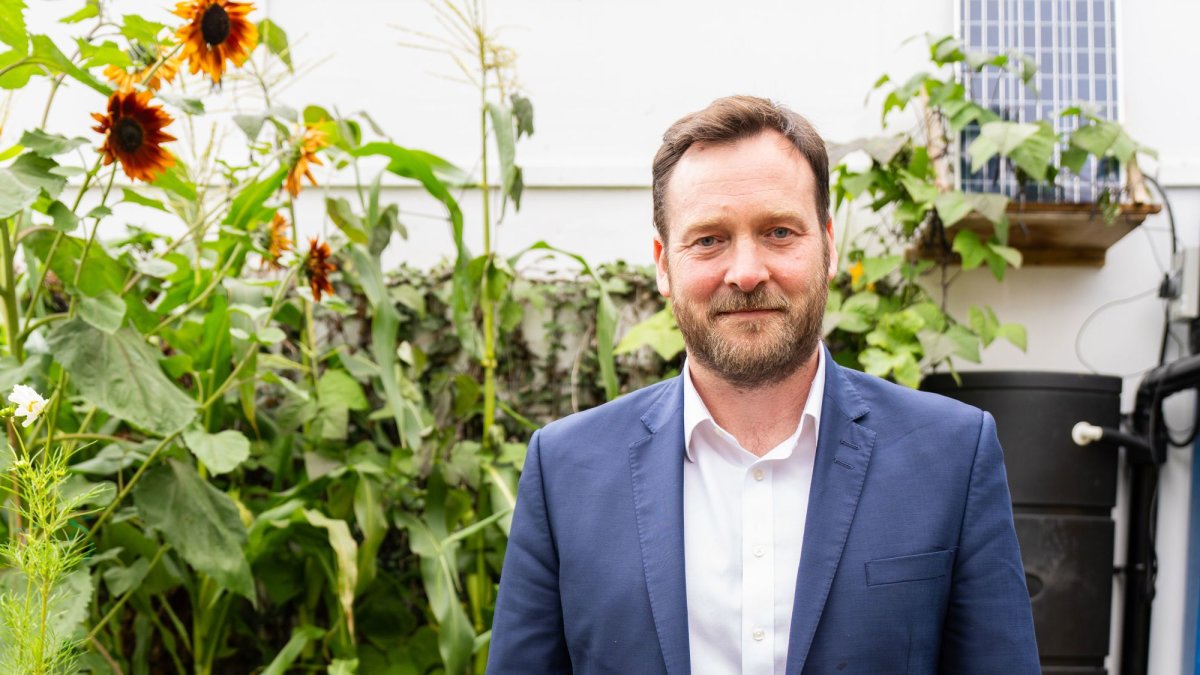

(Photography by Elio Zhang)

9 min read
Andy Burnham has got his pick of general secretary. Sienna Rodgers asks what Joe Fortune’s appointment tell us – and how he plans to prepare Labour HQ for the next election
If Andy Burnham does decide to call an early election, he has just chosen the man who will be responsible for ensuring the Labour machine is up to the job.
With this hire, the Co-operative Party’s coup is complete. Not satisfied with becoming the fourth-largest party in the Commons at the last general election, both No 10 and Labour HQ have now been acquired too: we have the first Co-op Prime Minister, who in turn has chosen Joe Fortune, the head of the Co-op Party, as Labour’s new general secretary. Quite the feat for such a mild-mannered outfit.
The relationship between Labour and its sister party is not widely understood. The pair have an almost century-old electoral agreement that allows them to put up joint candidates and prevents nominees from standing against each other. Many more Labour MPs are personally Co-op members (two-thirds of the Parliamentary Labour Party, in fact) than officially represent the party in Parliament. The Co-op also has representation beyond Westminster, with mayors and councillors too.
The party’s aim is to promote co-operative values. Instead of nationalisation, it favours mutualisation and community ownership, on the basis it produces better outcomes – and, crucially, more durable ones, less easily undone by right-wing successors to Labour administrations.
“If people in 1844 could form the co-operative movement in Rochdale to lower the price of food, then why can’t we act now, with similar courage, to make life better?” Burnham declared in his first big speech after winning Makerfield. The Labour manifesto commits the party to doubling the size of the co-operative sector, but it is too early to tell whether co-ops will dominate his government’s agenda beyond that. Still, the PM name-dropping the ‘Rochdale Pioneers’ has turned out to be a reliable indicator of his preferred personnel.
Hollie Ridley, Sir Keir Starmer’s second general secretary, often regarded as a protégé of Morgan McSweeney while also being a working-class woman who worked her way up to the top of Labour on merit, announced in July that she was stepping down. It was reported at the time that she was forced out via “toxic” briefings by Burnham allies, though this is strongly denied by No 10, where it is said the news of her departure came as a complete shock.
However it happened – and it is far from unusual for a new general secretary to follow soon after a new Labour leader – the vacancy has enabled Burnham to choose a successor of his liking. He decided against the two other initial frontrunners for the post: Claire Reynolds, the former No 10 political director who moved to Labour HQ last year, and is married to reinstated Business Secretary Jonathan Reynolds; and John Lehal, the consultant and ex-COO of the party who helped run Burnham’s 2015 leadership campaign.
The Fortune camp insists the rival candidates each came to the decision not to put in any application for the job independently, without pressure. Burnham had made his preference clear, however, and the feeling on Labour’s national executive committee (NEC) was that a new leader should have their pick. “You have to be really ballsy to want to be general secretary against the leader’s wishes,” as one NEC member put it to The House before Reynolds and Lehal confirmed they were not applying.
In the end, it was from a shortlist of just one that the ruling body interviewed and unanimously selected Fortune. Labour conference is now expected to formally ratify the appointment before a handover takes place the following week.
Fortune, 44, is a father of two who lives in south London with his wife and watches trashy reality TV to switch off from work. At 6ft5, he has been called a “literal giant of the labour movement”. He comes across as quiet but is highly social, with a friendship group in Labour/Co-op politics that includes Alex Norris, now Justice Secretary; Emma Foody, a 2024 intake MP and whip who is married to Norris; Jonny Reynolds; Miatta Fahnbulleh; Jim McMahon; and Caitlin Prowle, who will be Co-op’s interim general secretary when Fortune leaves his post.
“You have to be really ballsy to want to be general secretary against the leader’s wishes”
Burnham and Fortune have known each other for some years, and are considered longstanding allies, but they are not close friends.
There are striking similarities: both Liverpudlian men with Catholic backgrounds, who have worked for the Labour Party, put a strong sense of place at the core of their politics and assert a rejection of factionalism. Yet they have trodden different paths through the labour movement. Plus, aside from a 12-year age difference, there is another impediment: Fortune is a Liverpool fan; Burnham is an Evertonian.
So, why was he the favourite for general secretary? After all, Fortune’s detractors say the organisation he has run for the last nine years is incomparable in scale to the Labour Party.
Highly influential fixers Louise Haigh and Anneliese Midgley, both understood to be close to Fortune, had significant sway. That the unions were all supportive mattered too. And, despite being the PM’s pick, Fortune is said to have put the work in, making calls to every member of the NEC – further proof he understands the power of relational politics in Labour.
“He’s got his own very good networks. He is also somebody who just gets on and does the job – it’s not about him. I suspect he won’t want to be a big public figure. People who’ve worked with him talk about how he’s a very good leader, manager and strategist. And there’s not any drama around him,” explains a No 10 source.
“The importance the Prime Minister sees in driving through culture change in the party – Joe is seen as the person to do that.”
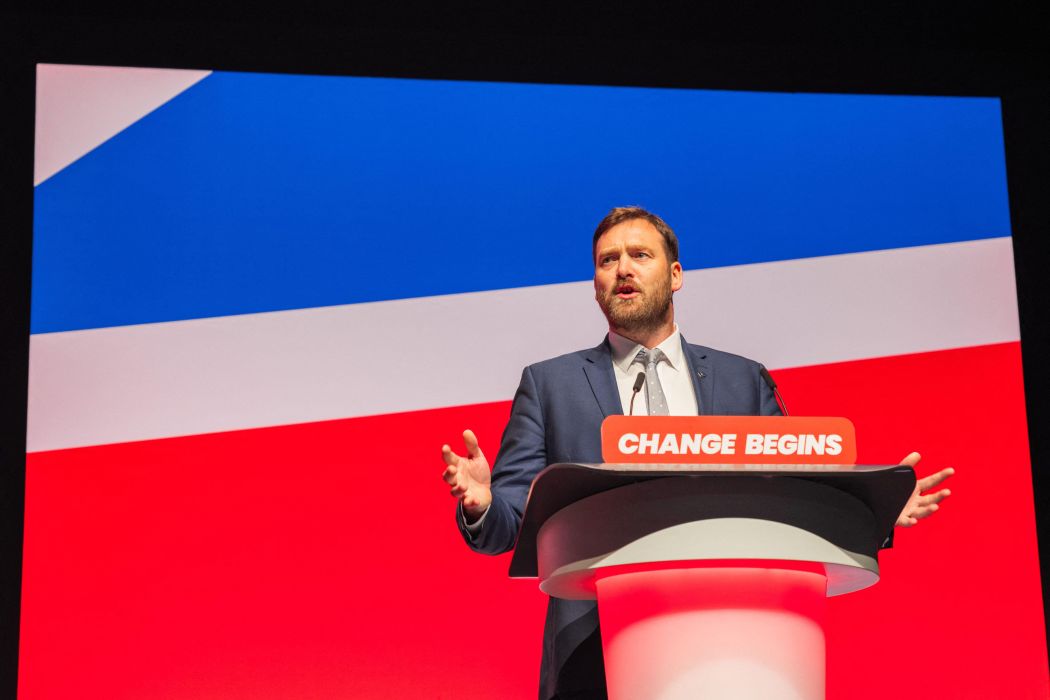
Both the Prime Minister and the incoming general secretary like to talk of there being “one Labour”. In seeking the job, Fortune also proposed that the party should work more with civil society groups and engage with people outside the membership to sustain Labour deep into the 21st century.
The men use similar rhetoric that leans heavily on the distribution of power. They share the idea that politics has become too centralised.
When Fortune enters HQ to take up the role, he is expected to apply that to party structures by strengthening Labour’s regions. To map out what needs to be done, he will get the regional directors together early on, in the belief that lessons in creativity and innovation come from them.
Elections will take place across the UK next year, including all local authorities in Scotland and Wales. Labour figures would be forgiven for dreading these somewhat, considering the mauling the party suffered in the devolved nations in May, when – most notably – it lost control of the Senedd for the first time. In 2028, a big set of mayoral elections will see large areas require massive field operations.
And then there is the possibility of a snap general election sooner rather than later. Sir John Curtice may not believe it is in Labour’s interests, as Reform could well secure the most seats, but nonetheless suspicion is rife throughout Burnham’s party that he will want to win his own mandate after setting out a 10-year plan for the country this winter.
“He’s got his own very good networks… And there’s not any drama around him”
For all the lofty talk of empowering communities and so on, the biggest challenge facing Fortune is more mundane: money. Labour has run a deficit for the last three years: £850,000 in 2023; £3.76m in 2024; £2.55m in 2025. (The Conservatives and Reform UK both recorded a surplus last year.) After entering government, Starmer’s party saw members and high-value donors fall away, as the frustrations of governing became acute. The party also lost its director of fundraising, Rachael McCaffrey, at the end of 2024 and has not been able to replace her.
There may have been a bump in membership since Burnham took over – we don’t yet know – but nobody is claiming a Corbyn-era-style boost. Since the start of the year, Unite has cut its affiliation fee by 40 per cent, reducing its funding from £1.45m to £870,000, and there was a perceived reluctance on Labour’s part to be asking members for money, resulting in fewer fundraising emails to them. The cost of numerous by-elections – at which Labour “threw the kitchen sink”, in the words of one insider – will have hit particularly hard.
Fortune’s focus at Co-op is said to have been increasing membership – leading to a 30 per cent rise – and upskilling himself in methods aimed at retention in particular. He is determined to improve the party’s relationship with its members.
Fortune also reckons the best anti-Reform work is currently being undertaken by trade union reps and wants the party to connect with those efforts. That suggests a renewed focus on Labour seeking face to face engagements in workplaces and communities.
Staffing will need to be another key focus for Fortune, after sources say more attention in HQ was paid to politics and management of late than who to bring in for the next short campaign.
The House understands that Fortune is interested in returning Labour to its more traditional structure, with deputy general secretaries rather than executive directors.
The accusation of a “boys’ club” has been revived by critics, who point to Burnham’s choices of Chancellor, Foreign Secretary and general secretary. These are naturally dismissed by No 10 as “nonsense”, and allies point to the influence of Haigh and Midgley. A source close to Fortune stresses that, for his part, he is “not someone who hoards power” but is instead a “trusting leader, especially of young women”, such as Foody and Prowle, who’ve both been assistant general secretaries at Co-op.
Fortune will be taking the job at a “difficult time in the cycle”, a No 10 source admits. Reform’s recent mega-donations have only made Labour’s situation look more challenging.
The Co-op may have taken over Labour with impressive speed, but Fortune’s next task is much harder: to restore the country’s governing party into a well-oiled machine, ready for the next election.
>
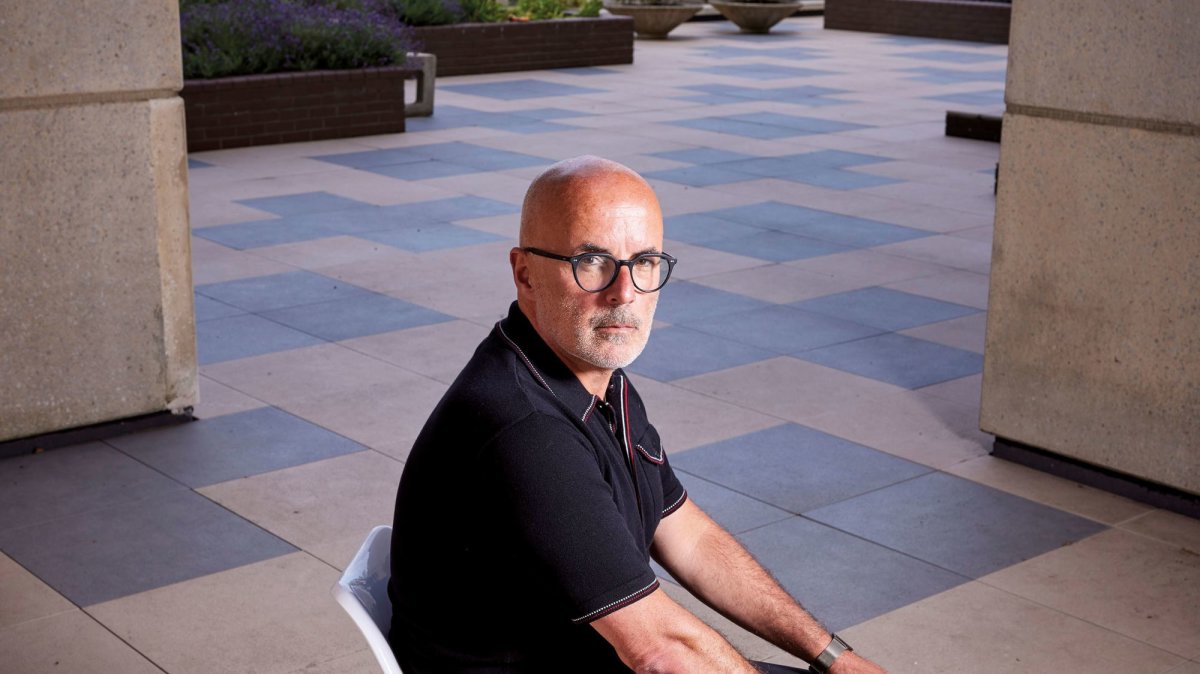

(© David Levene/Guardian/eyevine)
13 min read
Reformed Blairite, longtime director of pressure group Compass and co-founder of new Labour group Mainstream Neal Lawson talks to Sienna Rodgers about his role in Andy Burnham’s rise and the political journey that brought him to this point
Neal Lawson was working for Gordon Brown when he first met Andy Burnham, then a 20-something Blairite advising Tessa Jowell. It was the 90s and they were fellow members of Demon Eyes, the amateur football team set up by young Labour advisers and named after the famous Tory poster portraying a devilish Tony Blair.
The squad included future Cabinet ministers Ed Balls and David Miliband, as well as journalists and backroom staff well-known in political circles – Tim Allan, Dan Corry, Liam Halligan, Phil Collins, David Goodhart and James Purnell, today Burnham’s chief of staff.
Though Lawson and Burnham got on well, they were not especially close; it was from a distance that Lawson watched the subsequent adventures of his ex-teammate with interest, through his campaigning on Hillsborough to leaving Westminster for the Manchester mayoralty. The pair only recently reunited.
“At his last mayoral election, we started chatting about ideas for his manifesto,” Lawson recalls. “He called and we talked through some policy ideas, and it started dawning on me… ‘He’s the standout person. It’s inevitable that Starmer fails, and it’s probably inevitable that the Labour Party will turn to Andy Burnham.’ And I thought, ‘Let’s try and help him get there.’”
He helped Burnham, he says, “with platform, polling, policy, organisation”. In May 2025, the mayor spoke at a big Compass conference, alongside Miatta Fahnbulleh and Louise Haigh (both now Cabinet ministers).
The context is that Lawson had decided back in the run-up to the 2020 leadership election that Keir Starmer was not his man. Soft-left figures like the director of Compass were being collected as useful allies when he was called in by Steve Reed and Morgan McSweeney to meet their candidate. But Lawson was not impressed. “This man is completely uninterested in ideas,” he concluded. “He can’t be the leader.”
While Starmer had to do without Lawson’s vote (he spent two weeks on the Clive Lewis campaign and cast his ballot for nobody), he did, of course, nab Labour’s top job. It led to an era that deeply frustrated Lawson, who felt he had been duped by McSweeney.
“He sat in that chair an awful lot,” says Lawson, pointing to my seat in his London flat-turned-office. The party organiser who masterfully engineered Starmer’s rise had spent a couple of years courting Lawson, drawing out his political ideas over the dining table.
“It made sense to me that he said his project was Corbynism without Corbyn – let’s get rid of the antisemitism, let’s professionalise it, but the underlying facts of the 2008 crash, austerity, the composition of the electorate means that we’ve got to do something like Corbynism.
“Little did I know he was just an undercover, like the cops who join Greenpeace or CND. He was there to understand how the left thinks, in order to replicate it in a way that he could win an election.”
So, he does not believe there was any genuine intellectual curiosity there? “No, it was a complete and utter – ironically – entryist job. It was the ‘Morgan tendency’ – to infiltrate a group of people, understand how they operate and bend it to your will,” Lawson replies. “As soon as you’ve won it, you kick the ladder away, shut the door and start pouring boiling oil over the people who’ve just voted for you.”
Does he think Starmer was in on the plan, or merely a passenger? “I think he was just thinking about Keir and what was good for Keir, and this was good for Keir.”
Lawson today describes himself in no less scathing terms than a Corbynite on social media might use against him: “Neal Lawson, the most naive person in left-wing politics.”
With Burnham, a leader he did back, now in No 10, for some on his wing of the party the question arises: has the most naive person in left-wing politics been duped again?
Lawson, 63, comes from what he calls a “comfortable working-class” family: his mum worked in a shoe shop; his dad was a printer in Fleet Street; they owned their own home in south-east London, and he was the first child in his class to go on a foreign holiday.
His father was also father of the chapel, a powerful member of printing union Sogat. Lawson proudly notes that his dad negotiated a four-day week before anyone else had it, and remembers fondly his support for the miners, with Sogat sending money, resources and food.
“Our phones were definitely tapped,” Lawson says.
He struggled academically – “I’m pretty sure I’ve got dyslexia” – so was sent to a technical school despite his love of ideas and language. He left with “virtually no qualifications” and found himself working in a book-pulping factory, where he could pick out books destined for recycling from a conveyor belt.
At 18, he returned to education, starting with A-Levels at a college, followed by Trent Polytechnic. It had taken some convincing. “I was a class-warrior kid: ‘I’m not going to university – they all wear duffle coats, and they’re all Tories.’” His parents, who left school at 15, sent for a neighbour who’d been to university to talk to him about why he might like it.
There, Lawson encountered an outpost of Frankfurt School lecturers who introduced him to Herbert Marcuse, Max Horkheimer, Antonio Gramsci and Zygmunt Bauman (who became his “intellectual guru”). His Marxist education was compounded by his surroundings: “I was in Nottingham during the miners’ strike. If you wanted a lesson in hard-class politics and the brutality of the British state, that was it.” And when he was not on those picket lines, he was at home, on those in Wapping.
Fittingly, his first job was as a regional political organiser for a union – the Transport and General (T&G, today’s Unite) in Bristol. But Militant’s role in left politics meant, while finding Tony Benn himself “mesmerising”, Lawson ended up organising against the Bennites.
“If you were a young socialist, you were grabbed by Militant,” he explains. Recounting his very brief flirtation with the Trotskyist group, he recalls being invited to a Marxism weekend conference: “I’m thinking, fucking hell, this is the answer to everything!” Yet he quickly decided he was against Militant’s “lying cheating entryism – I don’t like that in any form”.
His job at T&G was to ensure “the right candidates” were selected for the 1992 election. One of the MPs sponsored by the union was Gordon Brown, whom Lawson was then invited to work for during the campaign and full-time once he became shadow chancellor.
“I love Gordon dearly, and we still talk,” Lawson says, but goes on: “There is a big cultural difference between the way Gordon does politics and the way I do politics. Gordon is brilliantly tactical, focused laser beam… I’m much more, ‘What’s the big picture here? What’s the big vision of where we’re trying to go?’”
By then, Lawson had a family and needed money. Looking to spread his wings, he settled on lobbying. “I didn’t even know what public affairs or lobbying was, but it seemed to be the thing that people did.” He came across the outfit of Tim Bell – best-known as Margaret Thatcher’s spin doctor, and later a Tory peer – and it was, bizarrely, here that Lawson went next.
“Andy has taken a particular path since Makerfield, with people who were anti-him not that long ago, who are now supposedly very pro-him”
“I’m in Mayfair, having coffee with someone, and there’s literally a butler who walks in with white gloves and pictures of Mrs Thatcher on the walls. I’m just thinking, again naively but in a curious way, ‘This is fantastic.’ I don’t mean ‘I aspire to this’. This is like, ‘I didn’t know this world existed’,” Lawson says.
“I’m a working-class boy from south London who is then being paid quite amazing amounts of money, and your feet leave the ground. All of a sudden, you’re dining in very plush restaurants, talking to all of these different people, and you’re wearing cufflinks.”
His chain-smoking boss would “preach a politics of Thatcherism and practise a politics of socialism”: “He took care of everyone. He was lovely to anyone. I did some terrible things to him.” Lawson refuses to say which things.
This path led him to ‘lobbygate’. Alongside Ben Lucas and Jonathan Mendelsohn, Lawson had left Bell to set up his own lobbying firm, LLM Communications, but quickly found himself embroiled in scandal when an undercover journalist caught them making inadvisable promises of government access to clients.
While he used his knowledge to advise clients, Lawson says, “I never used my connections, so I was a pretty awful – in that respect – lobbyist. I just thought it was too awkward and difficult.”
The journalist posing as a client was repeatedly asking for a meeting, he claims, and ultimately he remembers “getting so worn down, and going, ‘I can probably get you a fucking meeting’. And that’s the story. That’s my fault and I was naïve”. It was exposed by the Observer in an “embarrassing” and “awful” episode.
The company survived and eventually thrived, but Lawson describes lobbygate as an “eye-opener”: “That’s the moment I stopped wearing a tie and cufflinks.”
Lawson was an early enthusiast for New Labour – “I thought the Labour Party needed to be modernised and changed” – and even did a stint with Peter Mandelson, working on strategy in the 97 Millbank operation.
“Jesus, God, what a brilliant organiser!” he says of the ‘Prince of Darkness’ who recently became darker still. “I was never that particularly close to him, but I could see why people were impressed.” (Asked later whether he feels sorry for Mandelson, Lawson says yes, explaining: “I’m on the soft left – I’m quite soft emotionally as well as politically.”)
But soon after their seismic win, Lawson started questioning it all: “Is this taking us in the right direction? Is this a left project or is it a cover for not? I get disappointed really quickly.”
He and other critical friends came together to start Compass in 2003. “We started off as New Labour’s best friends but then they tried to do commercialisation of schools, the Iraq War, privatise the Post Office, all of that.”
Lawson had successfully stopped the privatisation of the Post Office while working under Bell, co-ordinating Alan Johnson and the CWU and undermining the proposal from within the Conservatives. “It’s the only time privatisation under the Tories was ever stopped.” When New Labour attempted to part-privatise the Royal Mail, “I worked with the CWU again and stopped it again. Instead of being New Labour’s critical friend, we were just critics.”
Ahead of the 2005 election, Lawson considered securing a parliamentary seat. He was on a train, on the way to a selection meeting, when he read an essay in Soundings by Marxist intellectual Stuart Hall – New Labour’s Double-shuffle. The party had taken to speaking with a “forked tongue”, Hall argued, and was “fundamentally neoliberal in character”.
“I just thought, fuck me, I don’t believe in this project. I got off the train, walked over the bridge, and got the next train back to London,” Lawson says.
Although he is clear about New Labour’s failures, the soft-left chief does characterise the era as one of vibrant discourse and undeniable talent. Finding himself in the middle of exciting debates between Jack Straw, Mo Mowlam and Philip Gould as well as Blair, Brown and Mandelson was invigorating.
Does he believe the level of talent we saw then is unmatched today? “Completely.” Why is that? “Because why would you go into politics now? You don’t get paid that much, you haven’t got that much influence, you’ve got complete exposure about who you are and what you’ve done. If you wanted to change the world, you’d start your tech company or your venture capital,” Lawson replies.
“The talent pool is really drying up, and that is a problem. Our analysis was the Blairites didn’t think a better world was desirable, and the Brownites didn’t think a better world was feasible. In the end, you ended up in the same place. But, my God, they were giants in terms of thinking, strategy and tactics.”
In 2011, Compass opened up its membership to other parties. The organisation’s Labour-only rule did not make sense, Lawson figured, when his political outlook was so similar to that of Caroline Lucas. “I believe everything she believes in and how you make politics happen,” he thought, and yet, “She can’t join Compass, but Peter Mandelson can. This is madness.”
The reaction was strong: “I hadn’t quite anticipated the tribal backlash of people in Labour. ‘You bastard! You’ve given up. You’re no longer one of us!’” But amid the rise of the internet and the multiplication of TV channels, he had long felt that the same fragmentation would come to politics too and Labour would not be able to remain “the only player”.
“I hate the coercive power of first past the post. I hate forcing people to do what they would not otherwise do. That’s a horrible politics,” says Lawson. “It can win big majorities on 34 per cent of the vote, but then it finds it can’t govern because you don’t have any real support in the country.”
Unless there is real change, he warns his comrades on the left, “The causes of Reform are going to keep growing, and they won’t be Reform. It will be Restore, or worse.”
Under the new Prime Minister, supporters of electoral reform are hopeful a major constitutional change is coming. But on other issues, there has been talk of the left of Burnham’s camp being jettisoned.
Asked for his thoughts, Lawson says: “Andy has taken a particular path since Makerfield, with people who were anti-him not that long ago, who are now supposedly very pro-him. We’ll see how that plays out…
“I think he’s gone for, I’d call it, a parliamentary Labourism route. We’re back to the same question of Labourism and the Labour Party, and is it the sole vehicle, and can you build a good society just through parliamentarism? Or do you need bigger ideas and bigger vision and bigger alliances and bigger movements? People will take shortcuts, and shortcuts never work.”
Lawson reasons: “There are never complete wins in politics.” But he is delighted that a prime minister has declared they want to roll back 40 years of neoliberalism.
“In many respects, job done. The bar has now been set at that level,” he says, noting that someone close to Corbyn once told him “they could never get him to say that” about neoliberalism. “We’ve got a prime minister who’s saying that. This is game on.”
So, he continues on “the long march”, believing that society “will go fascist right or it will go Neal Lawson/Compass”. “I’m joking,” he adds, although he isn’t really. “That will end up being the choice.”
>
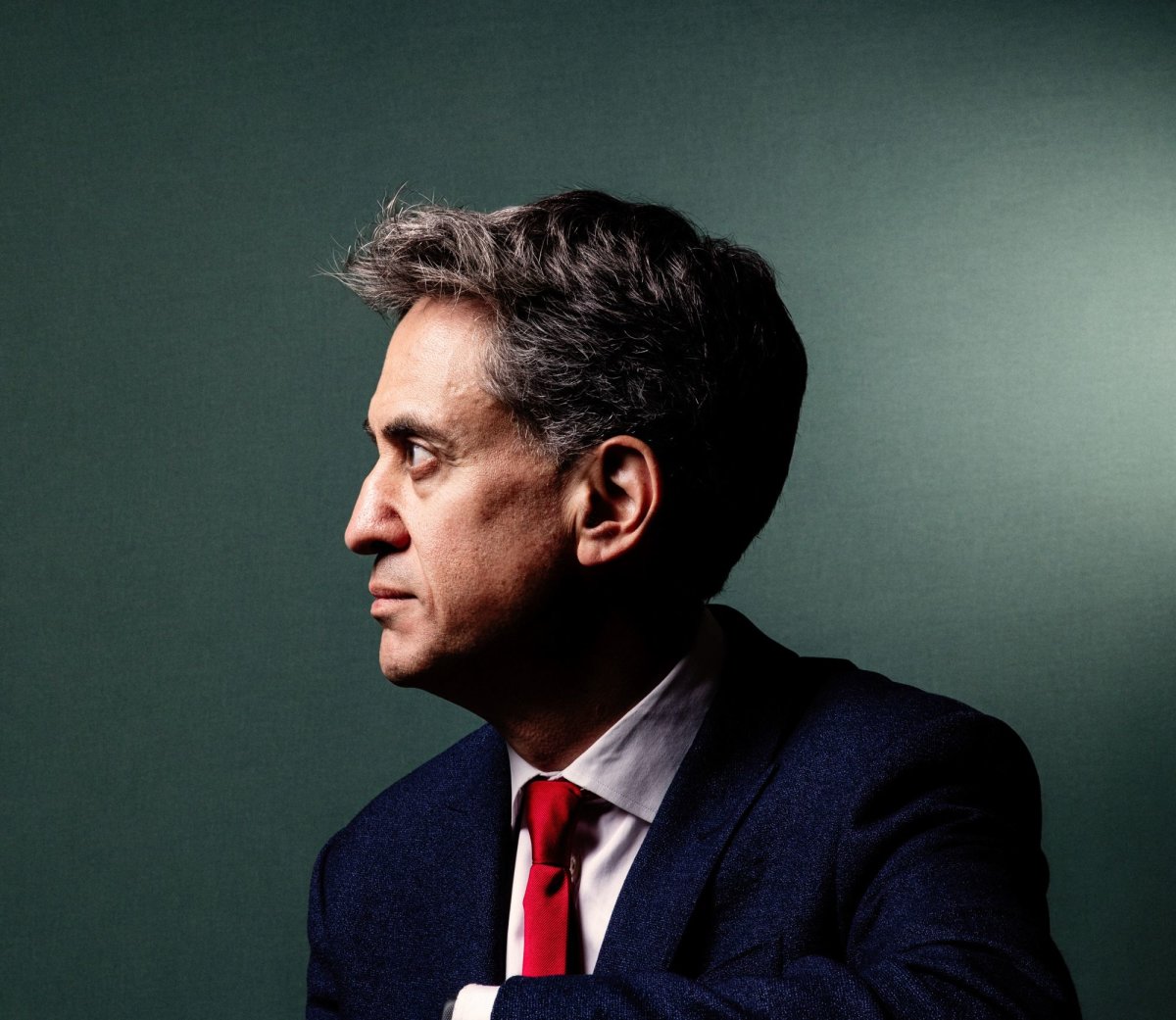
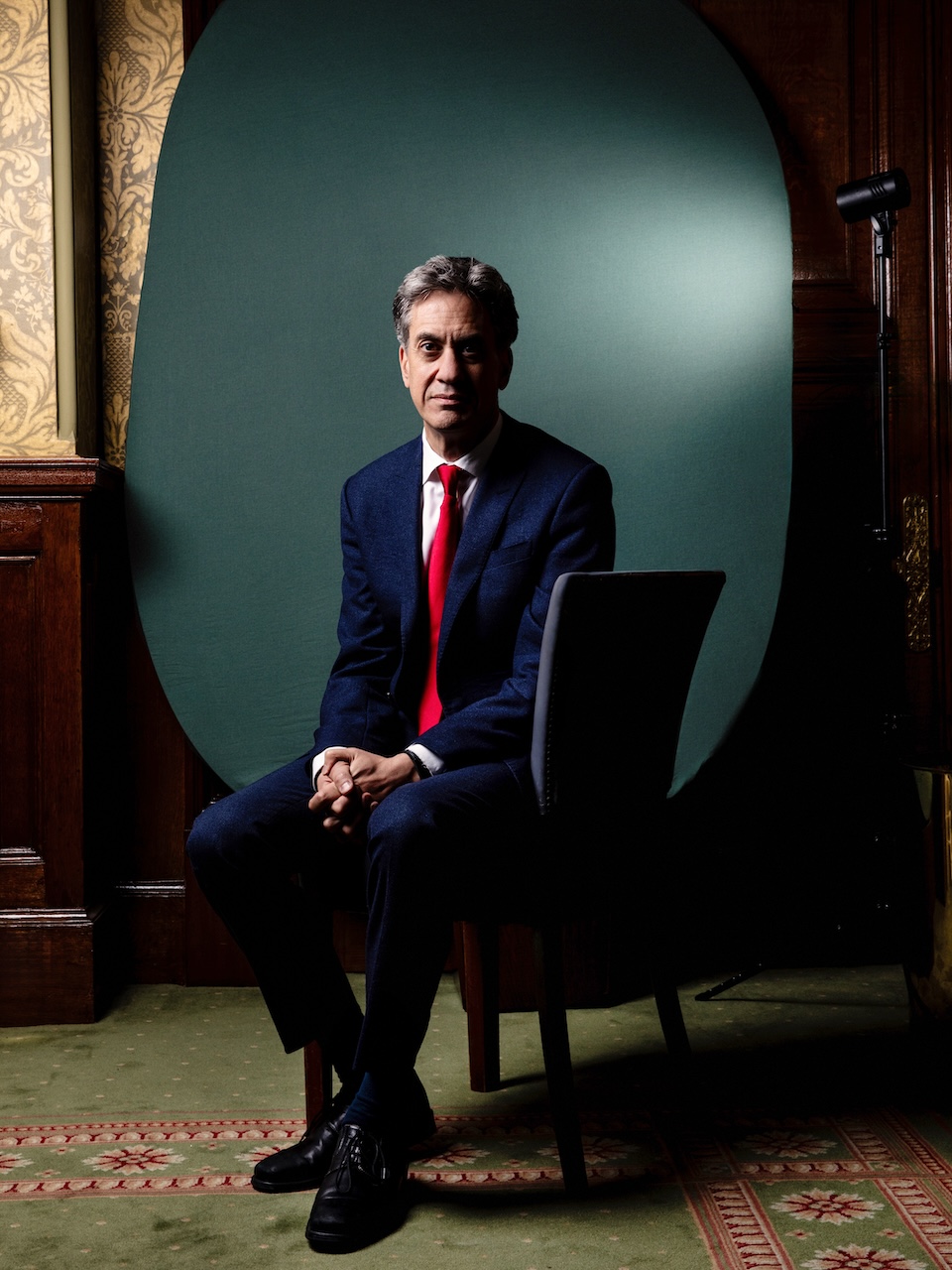
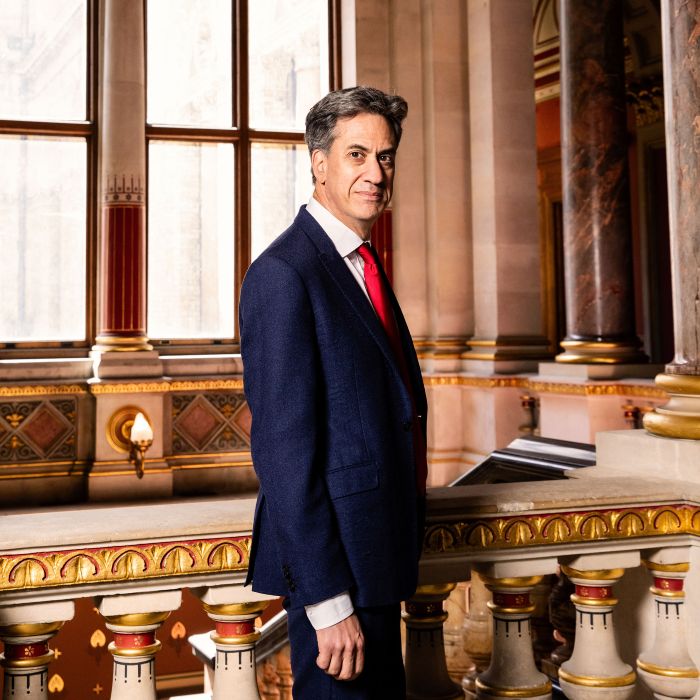
Ed Miliband (Photography by Louise Haywood-Schiefer)
14 min read
Ed Miliband has landed a Great Office of State – not as Chancellor but as the new Foreign Secretary. He talks to Sienna Rodgers about why Keir Starmer had to go, how Andy Burnham is resetting the culture in government and his approach of ‘resilient idealism’ to the new job
The Foreign Secretary wants you to know that he really loves his new job. Nobody expected Ed Miliband to land here: the chancellorship was what he wanted, and if he couldn’t secure No 11, it was rumoured he could be headed to the Department for Business. Before Andy Burnham’s ascent became inevitable, he was even thought to have half an eye on 10 Downing Street itself.
Alas for Miliband, Burnham chose the ‘safe’ option of John Healey – but the new Foreign Secretary seeks to radiate contentment. “I think you can probably tell, I really love this job,” he tells The House, dialling in from New York, where he is attending the United Nations General Assembly before Labour conference.
He says he is, in particular, delighted to be working once again with his old boss Gordon Brown, who has a government role in global finance and is helping to prepare for the UK’s presidency of the G20 next year. That, and he is seizing the opportunity to apply traditional Labour principles to foreign affairs at a time of huge global instability.
“Sometimes foreign policy can be thought of in a very technocratic way. This is about putting our Labour values, our progressive values, into practice internationally. That’s the way I see the job.”
When Labour suffered its disastrous result in the 2019 election, a group of politicians and others got together to review what had happened and put recommendations to the party. The commissioners – including Miliband, as well as Shabana Mahmood and Lucy Powell, both now in Cabinet – concluded that the party needed a ‘big change’ offer on the economy combined with a neutralising approach to social issues.
There was an assumption when Sir Keir Starmer became leader that these findings would be influential, considering the outfit organising the exercise – Labour Together, then called – had been headed by Morgan McSweeney, who choreographed his rise. But this was not to be.
Instead of that clear narrative of bold action came the ‘Ming vase’ approach; and while Labour did win a landslide in 2024, Miliband was among those who wanted a more obviously political agenda communicated.
For Starmer, there may be a bitter irony in the fact that it was Miliband, among those who encouraged him to leave a successful legal career for politics in 2015, who was then at the head of efforts to persuade him to leave a decade later.
The then energy secretary does not demure at the claim that he was the first Cabinet minister to advise Starmer that the jig was up.
“Look, I’m not going to get into my private advice to Keir,” Miliband says, before effectively confirming his role. “I was concerned about where the party was and what it meant for our ability to transform the country, and I felt that a change was necessary.
“I do feel that Andy, who I think is doing brilliantly, has given us the permission to be heard again, and I think we were losing the permission to be heard, frankly. I say this with deep regret because Keir is a friend of mine, an incredibly decent person. I think he handled his departure incredibly honourably. But I do think what’s happened since has shown why we were right to make the change.”
The new Prime Minister, Miliband enthuses, is determined “to be bold in his political project” and “has both an analysis of what is wrong with Britain and how to put it right”. Perhaps most importantly, “he’s shown an ability to articulate that narrative”.
“Now, this is not to say that Keir didn’t have a huge number of achievements to his name,” Miliband adds, polite but damning. “I think the party will always be grateful for the extraordinary job he did between 2019 and 2024 in rescuing the party, in winning the general election. What he did and what he oversaw in the first two years, including his advocacy on climate and my issues, is something I will always be grateful to him for. It’s really important not to diminish his achievements.”
The Foreign Secretary predicts that “history will look kindly” on Starmer. This would be handy, for the former PM has apparently told friends that he would like to reach the top of foreign affairs just as he did in the British legal and political arenas. If he achieves as much, could that be awkward for Miliband in his new role?
“Not at all,” he replies at once, going on to praise Starmer’s stance on Ukraine. “I would really welcome Keir playing a role in the future on the international stage. I think he has a brilliant ability to do that. I don’t think we’ve seen the last of Keir Starmer in public service.”
And yet evidently Miliband believes something had gone quite badly wrong in Starmer’s government – not only in terms of its inability to cut through to voters but also internally. Asked whether there has been a cultural reset under Burnham, he says “yes” without hesitation.
“It’s really hard to get the culture right. It’s something he and I talked about a lot in advance of him becoming Prime Minister, it’s something I talk to James a lot about,” he continues, referring to No 10 chief of staff James Purnell with whom he worked in government as a fellow minister last time.
“Honestly, one of the things that I’ve learnt in politics is how important culture is. Maybe it’s bloody obvious, but the way you work and operate – it’s what I’m trying to do in the FCDO.”
The Foreign Office has been through a difficult period of late, with the merger, a culling of jobs and the controversial sacking of Sir Olly Robbins as permanent secretary. Staff morale has been low, which the Foreign Secretary acknowledges – “That’s a fair point” – and expresses a determination to turn around.
Does he find Burnham to be a people pleaser? The PM is often accused of it. “What does that mean, being a people pleaser?” Miliband asks. That he finds it difficult to say no; that he agrees to things in the moment that he will later be forced to renege on because they were not wise. “Not really.”
What Miliband finds interesting about Burnham is this: “He’s somebody who’s learnt a lot about himself; about the way he succeeds as a politician. I think the thing he’s learnt above all is to follow his own political instincts.”
It sounds remarkably similar to his own journey, from embattled Labour leader to confident Cabinet minister who admirers and haters alike agree has been one of the most effective at bending the Whitehall machine to their will.
So, the pair have learnt the same lesson in recent years?
“Yeah, exactly,” he agrees. “One lesson Andy learnt is, don’t follow the advice of everyone else – follow your own instincts. It’s so true in politics. You’re much better off doing the thing you believe in, and then if you make a mistake, if it goes wrong – which, things will go wrong – you haven’t done something that someone else persuaded you to do.
“He’s very clear about what he believes. He’s very clear about his political project. This is the fundamental thing, which is what the British people want: somebody who says, ‘Look, this is where I’m taking the country, and this is what I believe.’ I think that is what Andy is doing, and that’s why people are responding.”
There has been confusion, however, on the question of whether this is a government of continuity (Healey’s message) or change (Burnham’s). One is aimed at the markets; the other at the country. Which is true?
“Obviously there’s elements of continuity, but I think of it as a turning of the page,” Miliband says. “It’s consistent with the manifesto because the manifesto was a manifesto for change. But I think it’s a change in approach.”
“I think there’s a rather homogeneous view of the Jewish community in the media, and the Jewish community does not speak with one voice”
Not for the first time, Ed Miliband now has a job that his brother David was tipped for. He ignores a question on whether David Lammy has put him in touch with JD Vance, preferring to talk about his “excellent” meetings with Marco Rubio, but happily reveals that he and his older brother – foreign secretary himself from 2007 to 2010 – have discussed his new role.
“We’ve obviously talked about the job. His advice is to follow your instincts and do what you think is right,” he says.
“I’ve been in politics a long time. I feel an incredible privilege to be doing this job. I genuinely do. I’m thinking about this for my conference speech: if you’d said to my parents, both refugees, that not one but both of their kids would be the Foreign Secretary of Britain, they’d have thought that was just ridiculous. I mean, just, no way!”
As Labour leader, Miliband accused the Daily Mail of overstepping the mark when it called his late father, a Marxist academic, “the man who hated Britain”. Today, he is keen to share how much his parents are shaping his approach to foreign policy.
“I think a lot about what they thought about Britain, which is they thought it was a sanctuary for them, but it was also about what Britain stood for – the rule of law, international solidarity, the foundation of the United Nations, all of those things,” he explains.
“I’m a believer in Britain’s positive influence in the world. It’s right for us. Some people say, ‘You can either pursue your values or pursue your interests.’ Us pursuing our values is in our interest because a stable world, a world where a rule of law is followed, is also a world that is a foundation for peace and prosperity.”
Miliband will want to see the UK’s 0.7 per cent target for official development assistance restored at the soonest possible date, but he toes the party line when asked. While it is “really important” – including for climate resilience, and he wants to make climate “a national security issue for the first time” – he concedes, “I’m not going to second-guess decisions that John makes”.
Healey is under intense pressure to make the numbers add up at the upcoming Budget, while giving himself enough headroom and honouring Burnham’s early promises – all within the existing fiscal rules. Burnham may be better at “articulating the narrative” than his predecessor but his government is no less in hock to the bond markets than the last.
Unfortunately for Burnham’s boosterism, this also comes at a time when an unpredictable US is forcing Britain to reassess its security. The fragmentation of western alliances comes as adversaries draw closer together and while threats are intensifying and the technological sophistication of modern warfare is advancing quickly.
Even as our control of the Falklands is called into question by Argentina’s Javier Milei, President Donald Trump hinted he would not come to the UK’s aid, while Benjamin Netanyahu’s son seized the opportunity to undermine Britain.
“This is non-negotiable,” Miliband says of the Falklands, repeating: “This is non-negotiable. The Falkland Islands have made absolutely clear that they want to remain British. We are going to uphold their right of self-determination. Our commitment to the Falklands of remaining British is absolutely unwavering, and my message could not be clearer.”
So, across most of the Labour Party, it is not seen as optional that the Chancellor both funds the Defence Investment Plan and increases defence spending to three per cent of GDP in the next parliament and to 3.5 by 2035.
Miliband may privately see the world in terms of petrostates and electrostates, with Trump resistant to net-zero on this basis, but such tensions must remain unspoken. Britain, too reliant on the US to do a Mark Carney, is strengthening its relationships with other middle powers – but quietly.
Reflecting on the biggest move he has made so far in his short time as Foreign Secretary, issuing sanctions on Israeli settlements, Miliband is particularly proud of his and Burnham’s ability to surprise people with the announcement that France and Canada among others were acting in parallel.
But since he unveiled the import ban on goods from illegal settlements in the occupied territories, some have expressed concern that it would affect sensitive areas such as the Jewish quarter in Old Jerusalem. Does he believe that part of the plan is sensible?
“I think our plan is the right plan. We’ve said that there is going to be a narrow group of religious exemptions, and that’s something we’ll have a dialogue with the Jewish community about,” he says, confirming that its application is not yet fully decided and will have to be worked out before implementation in six to nine months.
In the Commons, Miliband appeared embarrassed that the government hadn’t done more before now. Britain “should have acted earlier”, he told MPs. So, why was the government so inhibited? Was it down to Labour’s recent history with antisemitism?
“I don’t know, really,” Miliband says. He would like to talk instead about why he is proud of the action that has now been taken.
“I was very influenced by my mum. She passed away at the end of May. She had this very traumatic childhood as a Jewish refugee in hiding during the Second World War; lost her father. But before she got ill, in the 20 years after my dad died in 1994, she became a massive campaigner on these issues. I thought a lot about what she would have thought, and I think it is interesting – her background and her empathy with the suffering of the Palestinians.
“When she died, somebody wrote to me and said she was a ‘resilient idealist’, and I’ve rather got to like this phrase. I think resilient idealism is maybe partly what I’m trying to practice in this role, which is: the world is a complex place, but I still believe in changing it for the better.”
Following an interview on Radio 4’s Today programme, the BBC received complaints that Justin Webb had asked Miliband if he would be attending synagogue – the implication being that he wasn’t Jewish enough. Was he hurt by the line of questioning?
“I thought it was slightly unfortunate, really. But I think Justin Webb is a decent guy. I don’t think he intended it that way,” Miliband replies.
“But what do I really think about this? I think there’s a rather homogeneous view of the Jewish community in the media, and the Jewish community does not speak with one voice. The Jewish community has a whole range of views on these questions,” he adds.
“I bow to nobody in my determination to tackle antisemitism, to ensure that Jews feel safe in Britain, and it’s incredibly important. That’s why I went out of my way in my statement to recognise what many Jews in Britain feel.
“But there is no inconsistency between being the most vehement opponent of antisemitism in any form and being deeply, deeply supportive and empathetic to the plight of the Palestinian people.
“And in a way, I felt like it was important for my statement to be – if I can put it this way – a teachable moment about some of these issues, because we need to explain these questions.”
As much as Westminster was surprised by Miliband’s new brief, now that the shock has worn off, the former Labour leader seems genuinely excited by the opportunity to apply his own intensely political approach to it.
He has spent much of his career being told to stay in the confines of what is realistic, but Miliband says he – like Burnham – has learnt to tune out those advising him to override his instincts. Rejecting the technocratic style so familiar to us all over the last two years, he instead casts himself as the ‘resilient idealist’.
>

Killing Bites’ Shinya Murata Launches New Fantasy Ninja Manga – News
Ex-Arsenal coach Carlos Cuesta leaves role as Parma boss after 'mutual decision'
Mirror-image mayhem at Michigan, plus the rest of Week 4 college football
-

 movies4 months ago
Search For Canadian TV Actor Stewart McLean Now Homicide Investigation
-

 Fashion9 years ago
These ’90s fashion trends are making a comeback in 2017
-
Fashion9 years ago
According to Dior Couture, this taboo fashion accessory is back
-
Fashion9 years ago
Model Jocelyn Chew’s Instagram is the best vacation you’ve ever had
-
Fashion9 years ago
Emily Ratajkowski channels back-to-school style
-
Fashion9 years ago
9 Celebrities who have spoken out about being photoshopped
-

 Anime4 months ago
Rurouni Kenshin: Hokkaido Arc Manga Takes 1-Issue Break – News
-

 Anime3 months ago
HIDIVE to Stream English Dubs for The World Is Dancing, The Forsaken Saintess and Her Foodie Roadtrip in Another World, The Dangers in My Heart: The Movie Anime – News