
Afef Ben Mahmoud
© Yaluna x Ghassen Barkaoui


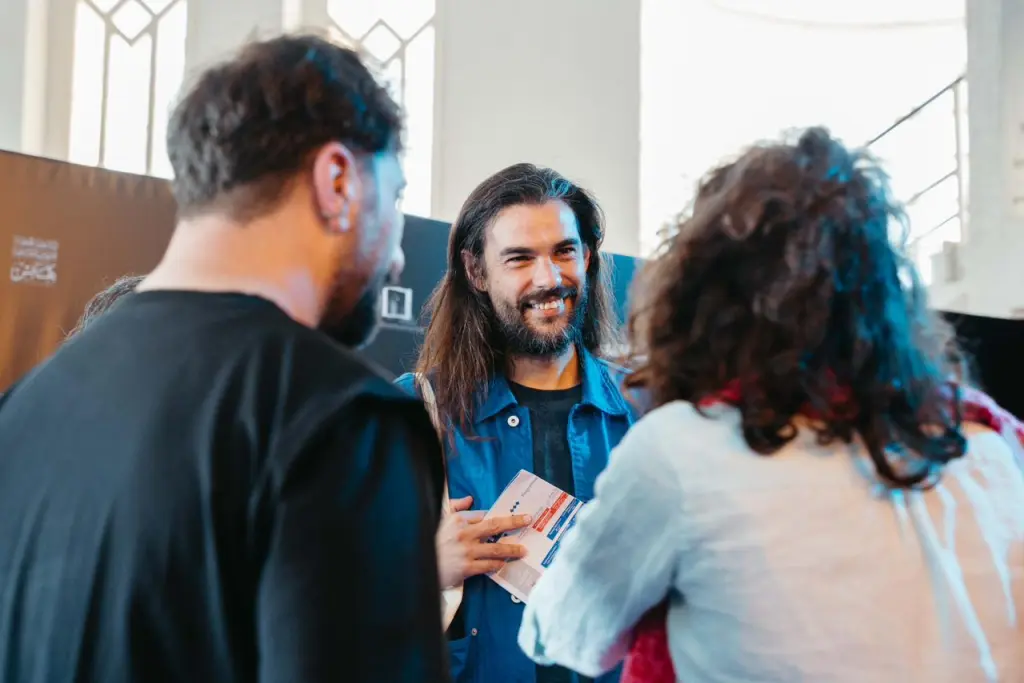
Oliver Laxe’s Moroccan desert rave-set drama Sirāt closed the eighth edition of the Gabès Cinema Festival (Gabès Cinéma Fen) over the weekend in the presence of the Spanish French director.
Afef Ben Mahmoud, who marked her inaugural year at the helm of the festival this year, tells Deadline that Sirāt was the first film that came into her mind when she was first proposed the role of festival director.
“There’s something in the landscape of Sirāt which echoes with that of Gabès, even if it was shot in Morocco,” she says.
Situated on an Mediterranean oasis a four-hour drive south of the Tunisian capital of Tunis, Gabès is a place of contrasts, mixing natural beauty with heavy industry.
“It’s a very particular. It’s the south. There’s the sea, the oasis, and at the same time, the industrial side,” says Mahmoud, noting the area has hosted several films shoots thanks to the landscape and light.
“It’s also an extremely engaged city by comparison with the rest of Tunisia… and this has fed into the festival which is known throughout the Arab world for its activism,” she continues. “We’re really in the realm of cutting-edge, politically engaged cinema, cinema that’s proactive, that wants to change, that wants to raise awareness.”
High winds forced a planned open-air screening of Sirāt at the local oasis beauty spot of Chenini to move inside to the main festival hub of the newly refurbished Gabès’ Mohamed Bardi cultural complex.
Ben Mahmoud suggests Laxe’s time at the festival – which showed all four of his features to date – was a success nonetheless.
“He did an amazing masterclass. He was very present and open getting about and about in the city, talking and interacting with people. There’s also a religious and spiritual side to Gabès which I think chimed with him,” she says.
Geopolitical tensions
This year’s festival came together against the backdrop of geopolitical tensions across the Middle East and North Africa sparked by the Iran-U.S.-Israel War as well as the ongoing Israel-Hezbollah conflict in Lebanon and Gaza humanitarian crisis.
Gabès lies some 5,000 kilometers from the Gulf and is not at threat of military attack, but the ripple effects of the Iran conflict are being felt across the region. Aside from general unease over where the military action will lead, economies across the region are being impacted by the disruption of fuel supplies, trade and travel.
Ben Mahmoud also experienced the early days of the Iran-U.S. War firsthand as a long-time resident of Qatar, where partner Khalil Benkirane is Head of Grants at the Doha Film Institute.
With travel in and out of the Gulf state restricted as Iran lashed out at its Gulf neighbors, Ben Mahmoud found herself preparing the festival remotely in March to the boom of missile and drone interceptions, with her children at home as they continued their schooling online.
Afef Ben Mahmoud
© Yaluna x Ghassen Barkaoui
“I’ve always regarded art as an act of resistance. All the time that it was doable, we were going to do it because even if we can’t change the world, if we can touch it and raise awareness, that’s already an achievement,” she explains.
Ben Mahmoud says it was the festival’s commitment to politically engaged programming as well as its embrace of the moving image across cinema, virtual reality and video art that drew her to the event.
She has continued the tradition of political engagement with a program tackling complex realities and urgent issues across the MENA region, and beyond.
Cynthia Zaven performing on opening night
Gabès Cinema Fen
The festival kicked off on April 26 with a cine-concert by Lebanese composer and pianist Cynthia Zaven and sound designer Rana Eid’s for their work Palestine: A New Narration, combining newsreels showing Palestine between 1914 and 1918 and their original soundscape.
The film lineup featured Vladlena Sandu’s Grozny-set Chechen War set drama Memory; Cyril Aris’ A Sad and Beautiful World, following a love story which unfolds against Beirut’s tumultuous recent history; Hasan Hadi’s Saddam Hussein-era tale The President’s Cake, Kamal Aljafari’s With Hasan In Gaza, and Iranian family secrets drama Oh, What Happy Days! by Homayoun Ghanizadeh, who travelled from Tehran to the festival.
Tunisian director Kaouther Ben Hania also attended for a masterclass and screening of her Oscar-nominated Gaza drama The Voice of Hind Rajab, in what was very much a homecoming event for the director after an intense festival and awards circuit tour.
“She was happy to be here, and we were happy to have her among us,” says Ben Mahmoud. “There was something very familial and intimate in her onstage conversation, even though it was in a packed 800-seat theatre.”
One of Ben Mahmoud’s main ambitions in her first year as festival director was to create stronger connections between the cinema, virtual reality and video art sections, with the latter curated by Nadia Kaabi-Linke and Timo Kaabi-Linke.
“I really wanted people to feel like they were all part of the same event, rather than as if they were moving from one festival to another, when they changed sections,” she says.
It is an approach that chimes with Ben Mahmoud’s own multi-faceted career which has spanned dance; theatre and cinema, with recent acting film credits including Nouri Bouzid’s drama The Scarecrows and Mehdi Hmili’s Streams, and 2023 directorial feature debut Backstage, a joint feature with Benkirane which premiered in Venice’s Giornate degli Autori.
She points to Iranian drama Oh, What Happy Days! as a film that bridges the divide on one level for its inclusion in the cast in a rare acting role of Shirin Neshat, who is better known as a video artist.
The desire for more fluidity between the sections also sparked the installation Vivre Encore (Live Again). The work is an extension of Swiss director Nicolas Wadimoff’s documentary Who Is Still Alive in which nine former Gaza residents, living as refugees, recount their lives in the Palestinian territory through simple chalk drawings.
“When I spoke with Nicolas, he said, ‘You know, Afef, I’ve always wanted to do an installation of this film. I have a lot of material’,” recounts Ben Mahmoud. “I said, ‘Well here’s your opportunity.’ The idea is that the viewer follows the installation and ends up in the cinema theatre to see the entire film.”
Other crossover events include the XR work Under the Sky, by French artist Jérémy Griffaud, whose work combines physical art with immersive technology, who also gave a masterclass.
Ben Mahmoud also highlights the exhibition “Costumes on Stage: Memories of Tunisian Cinema” devoted to the costumes of local classics such as Moufida Tlatli’s The Silences of the Palace, and Selma Baccar’s Khochkhach.
“We also had panel on the question of costumes in Arab cinema and the problems around their conservation, followed by the opening of the exhibition… it’s this sort of event that helps to connect the different sections,” says Ben Mahmoud.
Amel Smaoui, Hend Sabry, Afef Ben Mahmoud
Gabes Film Festival
While this year’s opening ceremony was headlined by Tunisian stars Hind Sabry and Dhafer L’Abidine and got plenty of play on the local networks, Ben Mahmoud says the festival will never go down a star-studded red carpet route.
“The important thing for me is to find the right people and projects which fit this festival,” she says. “It’s not really a question of making it bigger or smaller, but rather how to stay authentic and never forget or lose sight of its unique focus on the moving image in all its forms.”
>
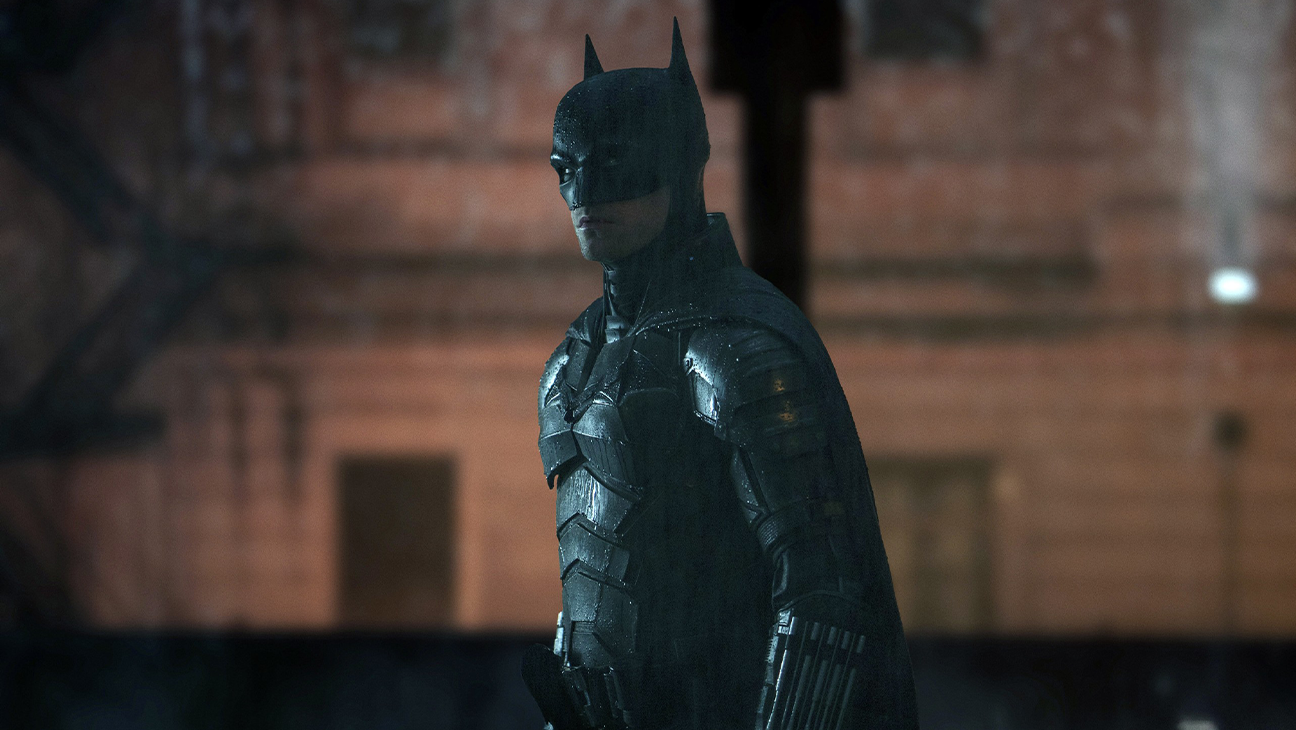
Robert Pattinson doesn’t see his version of Batman interacting with other DC superheroes within James Gunn‘s cinematic universe.
While Batman and Superman have one of the most famous friendships in DC Comics, the Primetime star recently explained to LADbible why it would be “tough” for director Matt Reeves’ version of Bruce Wayne to exist in Gunn’s DCU, such as with David Corenswet’s Superman.
“I think it would be kind of tough to have this version of Bruce outside of that world. It’s one of the only characters, I guess because of the length of the shoots but also it’s such a specific kind of [style], the tone of it gets inside you,” Pattinson said. “I remember that happened to me the last time I did it, it took a while. You’re just in the dark, the whole time. Both mood-wise and light-wise, I can’t see anything for like months. It does affect you; like you feel strange afterwards.”
Reeves’ The Batman, released in 2022, is a darker take on the iconic character, as it’s a grounded psychological crime noir rather than a typical superhero action pic. The film sees Pattinson’s Batman investigate Gotham’s hidden corruption after a sadistic serial killer begins murdering key political figures.
Pattinson reprised his character for Reeves’ The Batman Part II, which is currently in production and set to hit theaters on Feb. 18, 2028.
The Odyssey actor recently teased to Collider that the sequel is “a real left turn from the first” movie, adding that “it’s so ambitious.”
“The first one was a different take on a Batman movie, and this one is another… It’s a real left turn from the first one, but somehow it keeps elements of the kind of feel of it,” he explained. “But it just feels really ambitious, and I’m excited to see how it turns out.”
>
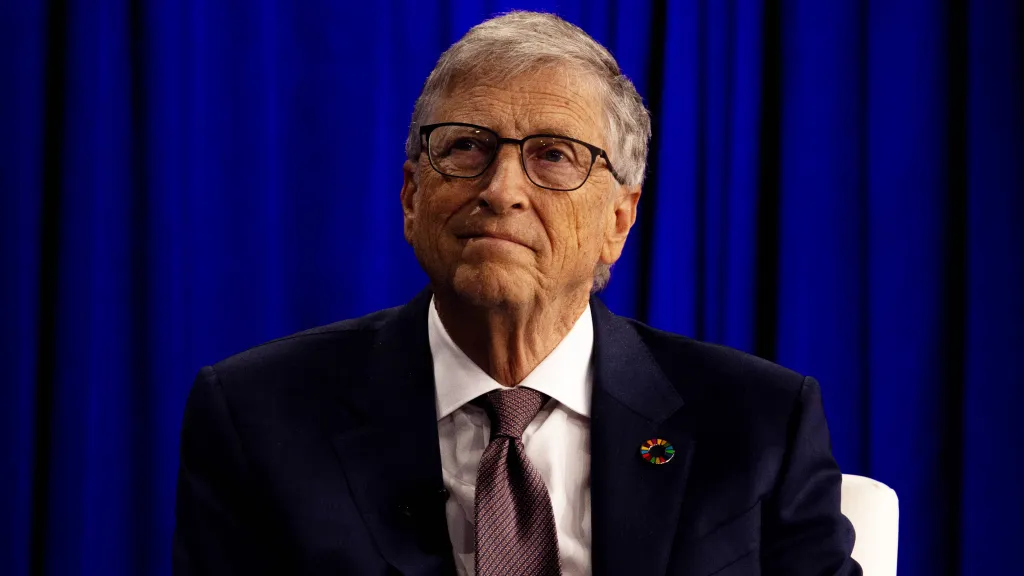
As Trump brushes off the need for additional guardrails around artificial intelligence, Bill Gates is sounding the alarm.
In a recent interview, the Microsoft co-founder urged the U.S. government to implement regulations around the development of AI, following a meeting with CEOs of several of biggest AI companies, who agreed it’s necessary to slow down the pace of the growing tech.
“No one thinks self-regulation is enough,” he said on NBC News’ Meet the Press. “You need law enforcement and the politicians to get into the discussion about what safeguards and monitoring look like. And that has to be a required thing. And it will be a little bit of overhead for the industry, but not a dramatic slowing of what they’re doing.”
Gates added, “AI is certainly powerful enough to drive events that, you know, cause a billion deaths. You know, so even though it’s pretty hard to get to 100%, there’s never been a weapon as powerful as the combination of people with ill intent using the latest AI tools.”
Following recent warnings from those working in AI, California Gov. Gavin Newsom signed an executive order this month to fast-track stringent oversight and control of AI. Convening “a group of world-leading experts” within the next 60 days, the order lays out a discussion of “safety plans” and “an emergency shutoff, or ‘kill switch,’ for frontier models.”
On a federal level, Trump has brushed off concerns about AI as “a hoax,” insisting the U.S. government “already have tremendous CRIMINAL and REGULATORY power” over AI companies.
>
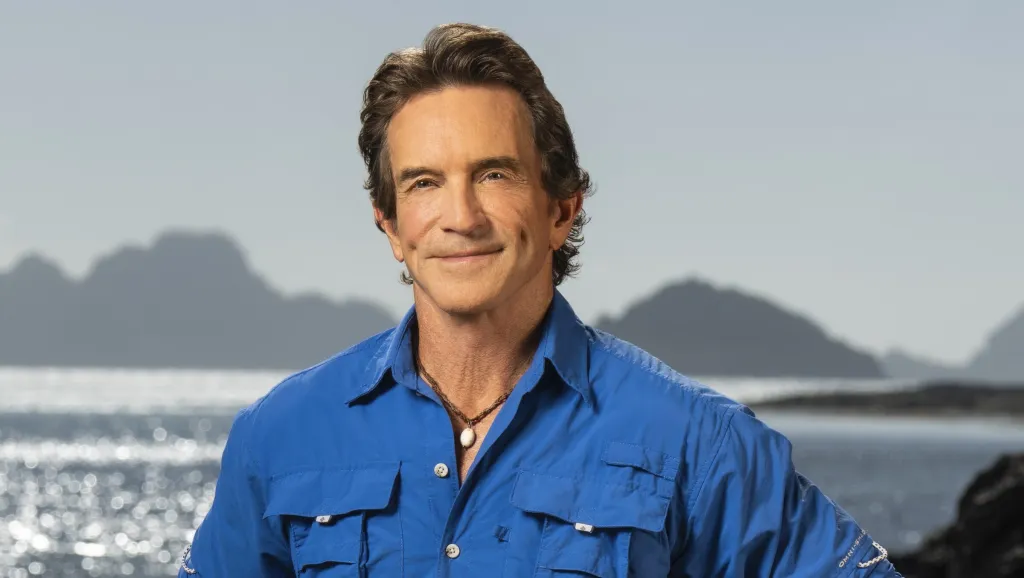
Although Paramount was one of several companies to roll back their DEI initiative when Trump was re-elected, Survivor continues to operate by it.
Host Jeff Probst recently noted that “nothing has changed” with how the reality competition series approaches diversity, equity and inclusion, noting that it was “one of the biggest positive changes ever” for the CBS show that launched in 2000.
“And if you watch our show, you know that we’re so diverse — and it’s not just skin color or ethnicity. It goes much deeper than that. It’s one of the biggest positive changes ever,” he told The New York Times. “Our stories are so much more interesting now because we have people from completely different walks of life.”
Probst continued, “I feel no pressure. No one ever says, can you count the numbers again? But Jesse Tannenbaum, who runs our casting team, knows: There’s no stopping, not because we’re told to do it. This is what we need. We need diversity. It’s for narrative. All those differences matter in the story when you throw people together and force them to rely on each other while conspiring against each other. The more diverse, the more interesting.”
In 2020, Paramount implemented a DEI initiative to make CBS and its other brands more inclusive, which the company rolled back last year amid the Trump administration’s attacks on such programs. Months later, Skydance pledged there would be no DEI policies under the Ellison’s reign as they sought the FCC’s approval of the merger.
Following its milestone 50th season, Probst returns to host Survivor for Season 51, airing Wednesdays at 8pm ET/PT on CBS and streaming live on Paramount+.
>


Search For Canadian TV Actor Stewart McLean Now Homicide Investigation


These ’90s fashion trends are making a comeback in 2017
According to Dior Couture, this taboo fashion accessory is back
Model Jocelyn Chew’s Instagram is the best vacation you’ve ever had
Emily Ratajkowski channels back-to-school style
9 Celebrities who have spoken out about being photoshopped


Rurouni Kenshin: Hokkaido Arc Manga Takes 1-Issue Break – News


HIDIVE to Stream English Dubs for The World Is Dancing, The Forsaken Saintess and Her Foodie Roadtrip in Another World, The Dangers in My Heart: The Movie Anime – News