
‘Catane’
Intra Movies



Catane, the narrative directorial debut of Romanian filmmaker Ioana Mischie, claimed the Grand Jury Prize for Best Feature Film at SEEfest, the South East European Film Festival in Los Angeles.
Mischie’s comedy takes place in a remote, mountainous village in Romania where every one of the inhabitants has applied for government benefits, claiming disabilities of various kinds. Suspicious government officials are sent to investigate, resulting in a sequence of humorous, often laugh-out-loud encounters.
“In a world overflowing with content, it’s rare to encounter a story that feels new,” the SEEfest jury wrote in its statement. “From the directing and cinematography, to the lighting and costume design. The winner of this competition invited us to experience cinema and storytelling in a way that felt vibrant, alive, relatable, and deeply human.”
‘Catane’
Intra Movies
The jury, comprised of Adriana Trautman, Moneer Yaqubi, and Christopher O’Conner, continued, “Catane reminds us why innovation and creativity in storytelling still matters. Catane is as fascinating as it is magical… It is refreshing and inspiring to see creativity win, especially when paired with what appeared to have been a talented team of filmmakers.”
‘Fantasy‘
Krug Film
SEEfest’s Best Ensemble award went to Fantasy, directed by Kukla. The jury wrote, “Kukla’s Fantasy is a luminous breakthrough in Slovenian cinema, expertly blending urban grit with magical realism to transcend the coming-of-age genre. This visionary work captures a yearning for liberation through a sensory-rich experience that is both local and universally poetic. The film’s success is rooted in its extraordinary ensemble cast. The raw intimacy of the core trio—Sina, Mihrije, and Jasna—is perfectly balanced by Alina Juhart’s magnetic performance as Fantasy, which serves as a transformative catalyst for the narrative.”
Fantasy also was awarded an Honorable Mention in the Best Feature Film category, and it earned a separate Honorable Mention for its cinematography, recognizing the work of DOP Lazar Bogdanovic.
Taking the festival’s prize for Best Cinematography in a Feature Film was Father, directed by Tereza Nvotová, with cinematography by Adam Suzin.
Milan Ondrík in ‘Father’
Moloko Film/Intra Movies
“Father was the most impressive in its scope of mastery of camera movement, lighting, and technical cinematography accomplishment,” wrote the cinematography jury, comprised of David Auner, David J. Frederick, and Michael Stampler. “The stitching of the different shots on a few occasions was really so impressive. The continuous 360 degree camera shot efforts which supported the story, emphasized the tension and provided exciting expository needs of the script – all provided within excellent lighting and the cast performance.”
Jurors added, “The cinematography in Father was top notch. Combining the elements of compelling camera composition and movement in continuous close ups as well as beautifully accomplished technocrane work fully exploring the film’s characters emotional journey through joy and crisis was powerful. The lighting was transparent and natural, the lens flares were appropriate and beautiful. A complete thumbs up.”
Earning honorable mentions in the Best Cinematography in a Feature Film category were Fantasy (as noted above) and Our Father, directed by Goran Stanković and shot by Dragan Vildovic.
Our Father won SEEfest’s Audience Award in the Feature Film category.
Father and Our Father were separately recognized by the publication Cinema Without Borders, which presents the Bridging the Borders Award. Jurors Ayat Najafi, Chale Nafus, Susan Morgan Cooper, Vladek Juszkiewicz, and Abbas Yari gave their top prize to Father, noting the film “depicts the tragedy of a father accidentally causing the death of his own child. The direction, the acting and the script authentically illustrate the father’s gut -wrenching grief and the public’s condemnation.”
The Cinema Without Borders jury awarded an Honorable Mention to Our Father, writing that it tells “the story of a priest’s extremely tough approach to rehabilitating drug addicts. The actors and the director force us through the unbearably hellish struggle of the addicts and those trying to save them.”
SEEfest, which is co-presented by ELMA (elma.org), foundation for European Languages and Movies in America, wrapped its 21st edition with the awards ceremony at the Laemmle Royal Theatre in Los Angeles. Following the awards presentation, the festival hosted the North American premiere of Jakub Kroner’s Černák, the sequel to Slovak all-time box office hit Miki, “chronicling the rise and fall of the local mafia boss who ruled the turf in post-socialist vacuum.”
1991 Productions
Among other SEEfest awards, Best Documentary Film went to 9-Month Contract, directed by Ketevan Vashagashvili. Jurors Shiloh Strong, Sunil Sadarangani, and Juli Juteau saluted the film as “a heartfelt in-depth dive into the needs, desires and passionate beliefs of a mother who will do anything, including renting out her womb as a surrogate, to take care of her teenage daughter. This skilled cinema-verité style documentary invites the viewer to deeply empathize with the hardship circumstances this small family endures, while ending on a note of hope and possibility for both mother and daughter.”
An Honorable Mention in the Best Documentary Film category was presented to Militantropos, a film set in Ukraine directed by Yelizaveta Smith, Alina Gorlova, and Simon Mozgovyi.
“Militantropos presents a wonderful way to look at the experience of life at war,” the jury wrote. “The film is a war documentary but in a new way that really stuck with us. There were some real moments that gave us a deeper understanding of the impact of constant war on a culture from new angles.”
The Beauty of the Donkey, directed by Dea Gjinovci, won the Audience Award in the Documentary Feature category. That film also won for Best Cinematography in a Documentary Film, recognizing the work of cinematographer Maxime Kathari.
Nonfiction cinematography jurors Claude Budin-Juteau and Shaley Brooks wrote of The Beauty of the Donkey, “This lyrical hybrid documentary traces a daughter’s journey to reconnect with her father’s lost homeland, as Asllan returns with his daughter Dea to Makermal, the Kosovar village he left sixty years earlier,” jurors said. “What stood out to us was the strength of the composition and lighting, which gave the film a striking visual impact throughout. The night footage is especially beautiful and memorable, and the careful handling of light shapes an aesthetic that lingers well beyond the final frame. Kathari’s cinematography doesn’t merely document a homecoming — it becomes the medium through which memory itself is recovered, mourned, and made luminous again.”
The jury awarded three honorable mentions in the nonfiction cinematography category: Militantropos, Electing Ms. Santa (director Raisa Razmerita; cinematographer Ion Gnatiuc), and My Dear Theo, directed by Alisa Kovalenko, with cinematography by Kovalenko.
These are additional awards presented by SEEfest Wednesday night:
SHORT FICTION
Jury: Gary Shapiro, Amanda Sweikow Smith, Katharina Nimmervoll
WINNER
PLACE UNDER THE SUN
Director: Vlad Bolgarin / Country: Moldova
Jury Statement: PLACE UNDER THE SUN is a quietly powerful portrait of dignity, pride, and the fragile bond between a father and son. Set in a bustling Moldovan marketplace, it finds profound humanity in small, everyday moments of struggle and grace. With spare dialogue and sensitive visual storytelling, the film reveals a father’s shame, a child’s unwavering love, and the unspoken understanding between them. A simple gesture, buying a peach to restore his father’s sense of worth, becomes a moving expression of empathy and hope. For its tender storytelling, lyrical imagery, and genuine emotional warmth, we are proud to award PLACE UNDER THE SUN Best Short Fiction Film.
HONORABLE MENTION
ERASERHEAD IN A KNITTED SHOPPING BAG
Director: Lili Koss / Country: Romania
Jury Statement: ERASERHEAD IN A KNITTED SHOPPING BAG captures the intensity of childhood obsession and the resilience it inspires. From its opening frames, it establishes a rich, atmospheric visual language rooted in Ro’s inner world, one shaped by hardship, sibling tensions, and quiet cruelty. Within this reality, her determination and imagination becomes an act of resistance, culminating in a haunting fusion of viewer and cinema that reveals how deeply art can transform a young life.
Both nostalgic and sharply observed, ERASERHEAD IN A KNITTED SHOPPING BAG evokes a specific cultural moment while speaking to a universal experience: the way a single image, story, or idea can become a lifeline. For its striking cinematography, distinctive voice, and its moving portrayal of how young people carve out meaning and hope on their own terms, we are proud to award it an Honorable Mention.
SHORT DOCUMENTARY
Jury: David Fisch, Bryan Honig, Sarah Priestnall
WINNER
AROUND THE CLOCK
Director: Marina Musulin / Country: Croatia
Jury Statement: With AROUND THE CLOCK, we were immediately hooked by the slice-of-life approach and how the filmmaker throws you into this woman’s life without explanation. Through observing moments of a humble life, it does an immensely effective job at highlighting the subject’s personality, passion, and willingness to get her hands dirty for those around her. It’s a credit to the filmmaker’s vision and the expertise of the editor that we come to learn, and care, so much about the subject without the use of title cards, interviews, or narration. The filmmaking approach complemented the subject and her day/life beautifully.
HONORABLE MENTION
PALACES OF MEMORY
Director: Matlab Mukhtarov / Country: Azerbaijan
Jury Statement: From the provocative initial image of a biscuit dissolving into tea to the stunningly-shot recreations of his first memory, PALACES OF MEMORY takes us on a journey through their own nostalgia and insecurity. The filmmaker’s choice to allow small details, like his mother spending a month’s salary for photos of her children (especially when the photos are somewhat mediocre), is a very effective way to highlight the lengths people go just to remember. After an in-depth exploration of self and memory, enhanced by emotion-led music choices, ending with the innocence of a young stranger Yusif, leaves the viewer with many questions about the importance of memory. Will this be Yusif’s first memory? Is it okay to not find the answers you are looking for within yourself? Is living in the moment more joyful?
SHORT ANIMATION
Jury: C. Craig Patterson, Ron Holsey
WINNER
SILENT CINEMA
Director: Krste Gospodinovski / Country: North Macedonia
Jury Statement: An ambitious, well-executed and beautiful cinematic achievement that uses clever stop-motion techniques executed with the utmost care. SILENT CINEMA manages to be evocative even using rough, homemade-feeling puppets with static faces. The lighting, art design and score are all excellent – and the single shot construction gives the film a dreamy, meditative quality. In addition to the technical competence of the film, the story was personally moving for members of the jury. The filmmaker crafted something that provides a narrative without answering everything for us.
HONORABLE MENTION
DISTURBIA
Director: Mira Yankova / Country: Bulgaria
Jury Statement: An inspired and meticulously crafted stream of consciousness with absurdist and surreal morphs that take us on a thought-provoking journey. DISTURBIA was emotionally affecting and felt personal to the filmmaker. A visually stunning piece that felt at times like a psychedelic Guernica.
HONORABLE MENTION
FAČUK
Director: Maida Srabovic / Country: Croatia, Slovenia
Jury Statement: FAČUK is an allegorical and simple story told exceptionally well through its art. With inspired design, stunning backgrounds and affecting score, the film manages to be whimsical while dealing with difficult subject matter. The filmmaker masterfully integrates the naive art style into the film’s design and animation techniques. While it doesn’t shy away from its outlook or darkness, FAČUK is like a tale told on stained-glass windows – through broad stroke tableaus and painstakingly beautiful art.
>
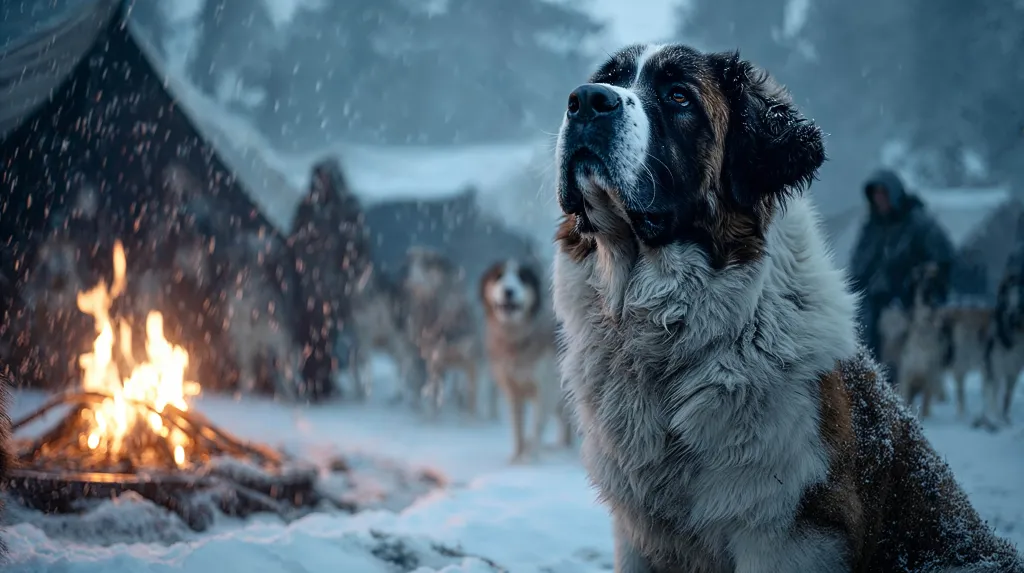
EXCLUSIVE: David Barron, the British film producer with credits on six Harry Potter films, is entering the generative artificial intelligence space.
Barron has agreed to produce an AI adaptation of Jack London’s 1903 novel The Call of the Wild, which is written and directed by Simon Rumley (Crushed, Red White & Blue).
The film will be generated at nmatic, with CGI and traditional VFX helping deliver more complex scenes. Filmmakers are billing it as the first faithful adaptation of London’s novel because it will be made from Buck’s subjective experience.
“London’s canvass is so epic, the Alaskan geography so gruelling, the dog and wolf fights so visceral that a faithful cinematic adaptation has hitherto been logistically and financially impossible,” said Barron. ”But technology has finally caught up with London’s vision, and we believe now is the time to do justice.”
The Call of the Wild tells the story of a pampered St. Bernard dog, who is torn from his life of privilege in California’s Santa Clara Valley and is sold into the brutal world of the 1890s Klondike Gold Rush, where he discovers the wild instinct that has always lurked within.
The film has been adapted for the screen several times, including a 2020 Michael Green film starring Harrison Ford.
David Barron, Mark Sandell (A Liar’s Autobiography) and Nick Price produce. Chris Catchpole, Carl Lyttle, and Toby White head up prompting and technical at nmatic.
>

EXCLUSIVE: Lightdox has acquired world sales rights to the documentary My Home of Wind and Sand ahead of its world premiere Tuesday at the Zurich Film Festival.
Filmmaker Patrick Wally spent over a decade on his film, a portrait of women’s rights, human rights and climate activist Najla Mohamed Lamin, who was born in a Sahrawi refugee camp in Algeria. Lamin has led a peaceful campaign supporting the right of Western Sahara to self-determination, a dream of Sahrawi refugees that has been frustrated for more than half a century.
Nobel Peace Prize nominee Greta Thunberg is expected to attend Tuesday’s world premiere and will participate in a conversation afterwards with Lamin. Thunberg visited the Sahrawi refugee camps last year, where she and Lamin conducted a workshop on climate change.
Director Patrick Wally
Courtesy of WyFilm
“Told through conversations with the filmmaker – who gradually becomes visible inside the story – the documentary refuses to reduce Najla to a symbol of a geopolitical conflict,” notes a synopsis. “Western Sahara is experienced through one person living its consequences in real time. Najla addresses international institutions, builds practical spaces for women and children, raises her family and continues to argue for peaceful resistance even as a generation born in exile grows older without a political resolution.”
The synopsis continues, “When armed conflict resumes after decades of ceasefire, the convictions that have shaped Najla’s public life are tested. The film follows her as she asks what pacifism, patience and agency can mean when history seems immovable – and whether one person can still create change inside circumstances that appear impossible.”
Najla Mohamed Lamin at the dunes near the Sahrawi refugee camp of Smara.
Courtesy of WyFIlm
Anna Berthollet, CEO of Lightdox, commented, “Najla has lived her entire life with an unresolved conflict. Yet Patrick’s film is not a geopolitical story; it is an intimate portrait of how she chooses to live, raise her children and build a future for her community. He spent eleven years following her journey and bringing her story and mission to the screen. At a time when Western Sahara is once again receiving international attention, we believe it is important that Najla’s perspective is part of that conversation. We feel very humbled to have been entrusted with bringing Patrick and Najla’s deeply personal story to audiences around the world.”
The border wall berm and Moroccan military base separating the Moroccan occupied territory from the
Polisario controlled territory of Western Sahara.
Courtesy of WyFilm
The unresolved status of Western Sahara has been largely ignored in the U.S. and much of the West, but it has kept the Sahrawi people in terrible limbo. Spain ruled the territory as its colonial possession for the better part of a hundred years, but after it ceded claims in the mid-1970s, hopes for the territory to determine its own future were dashed when Morocco took control of much of Western Sahara. The Polisario Front, representing the Indigenous Sahrawi people, seeks self-determination and is supported by Algeria (where the refugee camps are located). The United Nations officially designates Western Sahara as a “Non-Self-Governing Territory.”
In a director’s statement, Wally said, “When I met Najla ten years ago, I knew this film needed to be made. At the time I had never heard of the issue of Western Sahara. I thought of myself as reasonably informed about the struggles shaping the world, yet I knew nothing about more than 200,000 Sahrawis living for generations in refugee camps in the Algerian desert, established after the war and displacement of 1975. That absence in my own awareness shocked me.
“What struck me first, however, was not the conflict in the abstract but Najla herself. I was surprised by my own assumptions. Here was a woman raised in a refugee camp who was exceptionally articulate, politically precise and full of a vision for the future. She spoke about peaceful resistance, about a generation born in the camps, and about the endurance required to believe in a bright future when nobody outside seems able to see it.”
An aerial view of the Sahrawi refugee camp Smara, in the Algerian desert, near Tindouf.
Courtesy of WyFilm
Along with directing, Wally serves as the film’s cinematographer. The film is produced by Shirin Hooshmandi, Najla Mohamed Lamin, and Patrick Wally. Anna Kirst edited the film, with additional editing by Daniel Rutz. The music is by Ahmed Zain.
In addition to Tuesday’s world premiere at the Zurich Film Festival, My Home of Wind and Sand will hold public screenings on Wednesday, Thursday and Sunday.
>
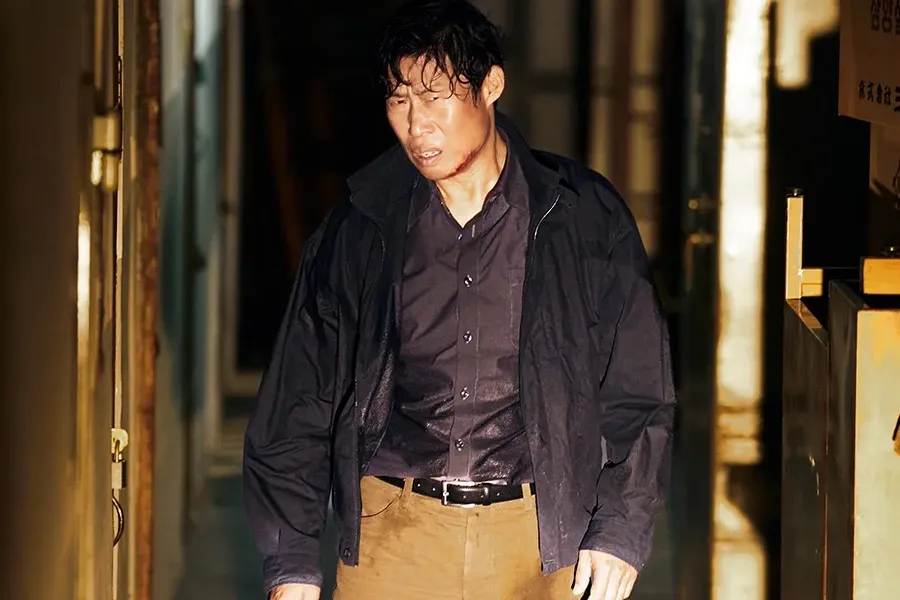
Hur Jin-ho’s historical thriller The Assassin(s) topped the Korean box office over the Chuseok holiday weekend pulling in more than 1.5 million admissions since its release on September 23.
Fresh from its world premiere at Toronto International Film Festival, the film has grossed $11.3M (KRW15.3BN) from 1,546,614 admissions over the first five days of release, according to data from the Korean Film Council (KOFIC). The Chuseok holiday officially ran for three days from Thursday, September 24 to Saturday, September 27.
Starring Lee Min-ho (Gangnam 1970), Park Hae-il (Decision To Leave), and Yoo Hai-jin (A Taxi Driver), The Assassin(s) revolves around the attempted assassination of South Korean President Park Chung-hee in 1974 that resulted in the death of the First Lady. A senior inspector (Yoo), veteran journalist (Park) and rookie reporter (Lee) set out to uncover exactly what happened and who was responsible, despite threats against their careers and their lives.
Coming in second over the holiday week (September 21-27) was Tazza: The Song of Beelzebub, a long-awaited sequel to a popular gambling franchise, which also opened on September 23 and took just over $6M from 813,842 admissions.
Christopher Nolan’s The Odyssey took third place in the weekly chart, adding another $5M to it record-breaking tally from 565,696 admissions. Released on August 5, the film has grossed just over $98M from 11.7 million admissions in the Korean market, making it the biggest import of the year so far.
Warner Bros Korea’s The Intern, a remake of the 2015 hit Hollywood comedy, came in fourth with an additional $2.6M for a cumulative total of $5.5M since its September 16 release. The film stars Choi Min-sik and Han So-hee in the roles originally played by Robert De Niro and Anne Hathaway in the original film.
Looking at figures for the entire week, The Intern was followed by US horror hit Obsession with $1.6M for a cume of $6.7M since its September 2 release. But looking solely at the weekend, Lee Chang-dong’s Venice winner Possible Love debuted in fifth position. Also opening on September 23, the Netflix-backed film, which is Korea’s official submission for Best International Feature at the Oscars, grossed around $1M in its first five days.
Historical drama The King’s Warden continues to hold Korea’s box office crown for the year to date, with box office of $120M from 16.9 million admissions; followed by The Odyssey, Spider-Man: Brand New Day ($69M from 9 million admissions), and two titles that debuted at this year’s Cannes film festival: Yeon Sang-ho’s Colony and Na Hong-jin’s Hope.
>


Search For Canadian TV Actor Stewart McLean Now Homicide Investigation


These ’90s fashion trends are making a comeback in 2017
According to Dior Couture, this taboo fashion accessory is back
Model Jocelyn Chew’s Instagram is the best vacation you’ve ever had
Emily Ratajkowski channels back-to-school style
9 Celebrities who have spoken out about being photoshopped


Rurouni Kenshin: Hokkaido Arc Manga Takes 1-Issue Break – News


HIDIVE to Stream English Dubs for The World Is Dancing, The Forsaken Saintess and Her Foodie Roadtrip in Another World, The Dangers in My Heart: The Movie Anime – News