
Tech
Five architects of the AI economy explain where the wheels are coming off


Earlier this week, five people who touch every layer of the AI supply chain sat down at the Milken Global Conference in Beverly Hills, where they talked with this editor about everything from chip shortages to orbital data centers to the possibility that the whole architecture that undergirds the tech is wrong.
On stage with TechCrunch: Christophe Fouquet, CEO of ASML, the Dutch company that holds a monopoly on the extreme ultraviolet lithography machines without which modern chips would not exist; Francis deSouza, COO of Google Cloud, who is overseeing one of the biggest infrastructure bets in corporate history; Qasar Younis, co-founder and CEO of Applied Intuition, a $15 billion physical AI company that started in simulation and has since moved into defense; Dimitry Shevelenko, the chief business officer of Perplexity, the AI-native search-to-agents company; and Eve Bodnia, a quantum physicist who left academia to challenge the foundational architecture most of the AI industry takes for granted at her startup, Logical Intelligence. (Meta’s former chief AI scientist, Yan LeCun, signed on as founding chair of its technical research board earlier this year.)
Here’s what the five had to say:
The bottlenecks are real
The AI boom is running into hard physical limits, and the constraints begin further down the stack than many may realize. Fouquet was the first to say it, describing a “huge acceleration of chips manufacturing,” while expressing his “strong belief” that despite all that effort, “for the next two, three, maybe five years, the market will be supply limited,” meaning the hyperscalers — Google, Microsoft, Amazon, Meta — aren’t going to get all the chips they’re paying for, full stop.
DeSouza highlighted how big — and how fast growing — an issue this is, reminding the audience that Google Cloud’s revenue crossed $20 billion last quarter, growing 63%, while its backlog — the committed but not yet delivered revenue — nearly doubled in a single quarter, from $250 billion to $460 billion. “The demand is real,” he said with impressive calm.
For Younis, the constraint comes primarily from elsewhere. Applied Intuition builds autonomy systems for cars, trucks, drones, mining equipment and defense vehicles, and his bottleneck isn’t silicon — it’s the data that one can only gather by sending machines into the real world and watching what happens. “You have to find it from the real world,” he said, and no amount of synthetic simulation fully closes that gap. “There will be a long time before you can fully train models that run on the physical world synthetically.”
Techcrunch event
San Francisco, CA
|
October 13-15, 2026
The energy problem is also real
If chips are the first bottleneck, energy is the one looming behind it. DeSouza confirmed that Google is exploring data centers in space as a serious response to energy constraints. “You get access to more abundant energy,” he noted. Of course, even in orbit, it isn’t simple. DeSouza observed space is a vacuum, so eliminates convection, leaving radiation as the only way to shed heat into the surrounding environment (a much slower and harder-to-engineer process than the air and liquid cooling systems that data centers rely on today). But the company is still treating it as a legitimate path.
The deeper argument de Souza made, somewhat unsurprisingly, was about efficiency through integration. Google’s strategy of co-engineering its full AI stack — from custom TPU chips through to models and agents — pays dividends in watts per flop that a company buying off-the-shelf components simply can’t replicate, he suggested. “Running Gemini on TPUs is much more energy efficient than any other configuration,” because chip designers know what’s coming in the model before it ships, he said. In a world where energy availability is becoming a massive constraint on how far this tech can go, that kind of vertical integration is a major competitive advantage.
Fouquet’s echoed the point later in the discussion. “Nothing can be priceless,” he said. The industry is in an strange moment right now, investing extraordinary amounts of capital, driven by strategic necessity. But more compute means more energy, and more energy has a price.
A different kind of intelligence
While the rest of the industry debates scale, architecture, and inference efficiency within the large language model paradigm, Bodnia is building something very different.
Her company, Logical Intelligence, is built on so-called energy-based models (EBMs), a class of AI that doesn’t predict the next token in a sequence but instead attempts to understand the rules underlying data, in a way she argues is closer to how the human brain actually works. “Language is a user interface between my brain and yours,” she said. “The reasoning itself is not attached to any language.”
Her largest model runs to 200 million parameters — compared to the hundreds of billions in leading LLMs — and she claims it runs thousands of times faster. More importantly, it’s designed to update its knowledge as data changes, rather than requiring retraining from scratch.
For chip design, robotics and other domains where a system needs to grasp physical rules rather than linguistic patterns, she argues EBMs are the more natural fit. “When you drive a car, you’re not searching for patterns in any language. You look around you, understand the rules about the world around you, and make a decision.” It’s an interesting argument and one that’s likely to attract more attention in the coming months, given the AI field is beginning to ask whether scale alone is sufficient.
Agents, guardrails, and trust
Shevelenko spent much of the conversation explaining how Perplexity has evolved from a search product into something it now calls a “digital worker.” Perplexity Computer, its newest offering, is designed not as a tool a knowledge worker uses, but as a staff that a knowledge worker directs. “Every day you wake up and you have a hundred staff on your team,” he said of the opportunity. “What are you going to do to make the most of it?”
It’s a compelling pitch; it also raises obvious questions about control, so I asked them. His answer was granularity. Enterprise administrators can specify not just which connectors and tools an agent can access, but whether those permissions are read-only or read-write — a distinction that matters enormously when agents are acting inside corporate systems. When Comet, Perplexity’s computer-use agent, takes actions on a user’s behalf, it presents a plan and asks for approval first. Some users find the friction annoying, Shevelenko said, but he said heconsiders it essential, particularly after joining the board of Lazard, where said he has found himself unexpectedly sympathetic to the conservative instincts of a CISO protecting a 180-year-old brand built entirely on client trust. “Granularity is the bedrock of good security hygiene,” he said.
Sovereignty, not just safety
Younis offered what may have been the panel’s most geopolitically charged observation, which is that physical AI and national sovereignty are entangled in ways that purely digital AI never was.
The internet initially spread as American technology and faced pushback only at the application layer — the Ubers and DoorDashes — when offline consequences became visible. Physical AI is different. Autonomous vehicles, defense drones, mining equipment, agricultural machines — these manifest in the real world in ways governments can’t ignore, raising questions about safety, data collection, and who ultimately controls systems that operate inside a nation’s borders. “Almost consistently, every country is saying: we don’t want this intelligence in a physical form in our borders, controlled by another country.” Fewer nations, he told the crowd, can currently field a robotaxi than possess nuclear weapons.
Fouquet framed it a little differently. China’s AI progress is real — DeepSeek’s release earlier this year sent something close to a panic through parts of the industry — but that progress is constrained below the model layer. Without access to EUV lithography, Chinese chipmakers cannot manufacture the most advanced semiconductors, and models built on older hardware operate at a compounding disadvantage no matter how good the software gets. “Today, in the United States, you have the data, you have the computing access, you have the chips, you have the talent. China does a very good job on the top of the stack, but is lacking some elements below,” Fouquet said.
The generation question
Near the end of our panel, someone in the audience asked the obvious uncomfortable question: is all of this going to impact the next generation’s capacity for critical thinking?
The answers were, perhaps unsurprisingly, optimistic, though not naively so. De Souza pointed to the scale of problems that more powerful tools might finally let humanity address. Think neurological diseases whose biological mechanisms we don’t yet understand, greenhouse gas removal, and grid infrastructure that has been deferred for decades. “This should unleash us to the next level of creativity,” he said.
Shevelenko made a more pragmatic point: the entry-level job may be disappearing, but the ability to launch something independently has never been more accessible. “[For] anybody who has Perplexity Computer . . . the constraint is your own curiosity and agency.”
Younis drew the sharpest distinction between knowledge work and physical labor. He pointed to the fact that the average American farmer is 58 years old and that labor shortages in mining, long-haul trucking, and agriculture are chronic and growing — not because wages are too low, but because people don’t want those jobs. In those domains, physical AI isn’t displacing willing workers. It’s filling a void that already exists and looks only to deepen from here.
When you purchase through links in our articles, we may earn a small commission. This doesn’t affect our editorial independence.
>

Anthropic CEO Dario Amodei seems to be everywhere this weekend: He was lampooned on the season premiere of Saturday Night Live, and tonight, he’s set to have dinner with President Donald Trump at the White House.
Axios first broke the news of Amodei’s dinner plans, which were subsequently confirmed by other publications.
This will be the first one-on-one meeting between the two men, who recently found themselves on opposite sides of the AI safety debate. Amodei released a plan to slow AI development (or at least proceed with more caution), while Trump has insisted, without evidence, that the AI backlash is a Democratic hoax; he also wants to rebrand the technology as “super intelligence.”
Even before the current back-and-forth, Amodei and Anthropic have to had a fraught relationship with Trump’s administration. Earlier this year, the Pentagon designated Anthropic a supply-chain risk in response to the company’s attempt to put guardrails around the use of its technology (Anthropic has been fighting the designation in court), although other administration officials have been friendlier.
>
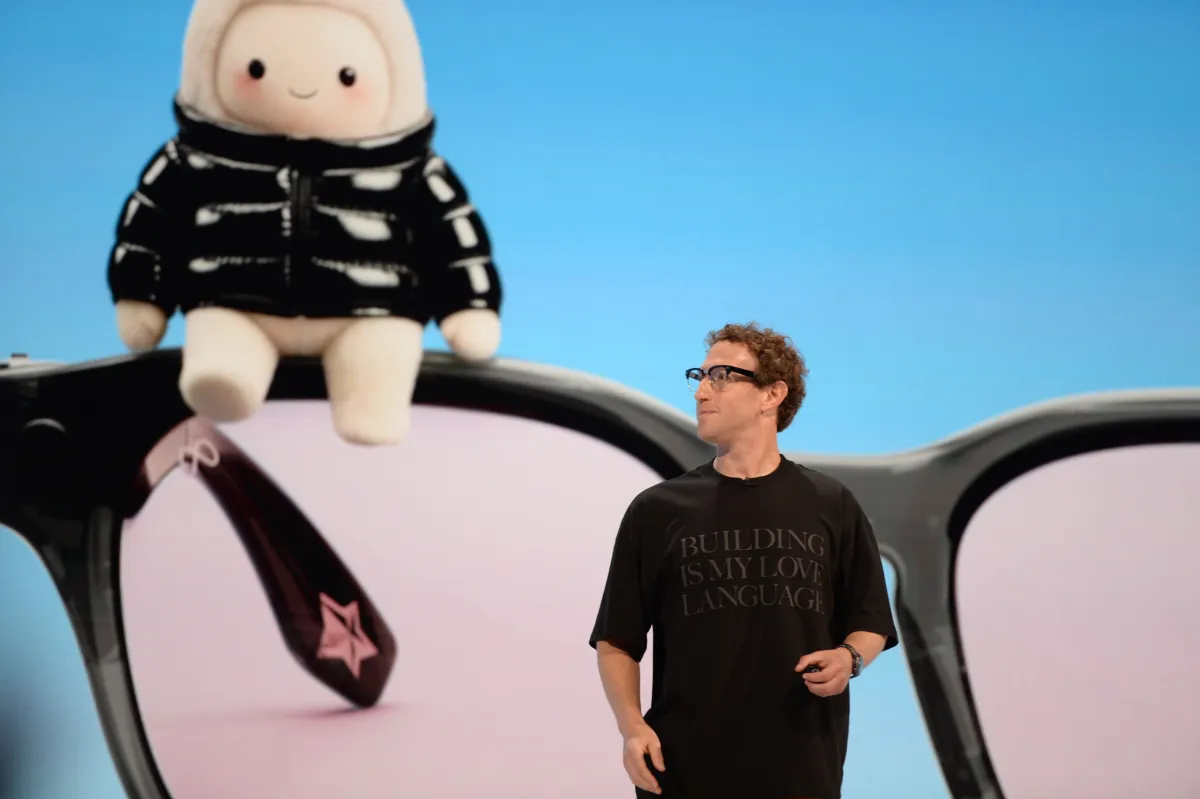
Meta’s new AI agent Muse took the spotlight at the company’s annual Connect event, where CEO Mark Zuckerberg made it clear that Facebook’s parent company plans to push AI features everywhere.
On the latest episode of TechCrunch’s Equity podcast, Kirsten Korosec, Sean O’Kane, and I discussed Meta’s AI announcements seemed to steal the spotlight during a week of new model launches from OpenAI and Anthropic.
With other big AI companies focused on coding and enterprise tools, it was a little surprising to see Meta move in the opposite direction, with a consumer focus and a cute, Tamagotchi-style AI device that Meta insists is for adults only. But as Kirsten noted, this could be playing to Meta’s strengths.
Sean tried Muse for himself, and while he was pleased that the agent actually found him some unclaimed money, he described the feature as more “a party-trick type thing,” rather than something that will drive ongoing usage. Plus, there’s the question of whether users can trust Meta’s AI with sensitive information.
“Meta’s business is to sell you ads,” Sean said. “And yes, they’ll make the argument that the more they know about you, the more accurate and interesting the ads will be — wake me up when we get to that fever dream.”
Keep reading for a preview of our full conversation, edited for length and clarity.
Kirsten Korosec: So how do you put Muse, which is this new personal AI agent that’s just been released by Meta and [is] clearly a bet on consumer — how does that fit into what you just described, at least with other frontier AI model companies seeing opportunity and business within enterprise? Because Meta Connect, which is their big annual event, just happened, and they are all-in on Muse, that is very clear.
Anthony Ha: That was definitely very head spinning for me, because it certainly feels like what we’ve been talking about has been this shift towards enterprise — not exclusively, but certainly that’s where the money, the attention is going.
Maybe some of that is because of the relative position of these different companies — OpenAI and Anthropic are in the lead in a lot of ways, but also, they’re planning to go public either this year, or next year in the case of OpenAI. And so there’s this feeling of, “I think we’ve got to actually make money now.” Not to say that they’re not making money [already], but because the costs are so high and the valuations are so high, they have to make money on this scale that’s essentially unprecedented. And I think they’re seeing enterprise as the way to do that.
And I wonder if Meta, for a variety of reasons, sees a different opportunity. There’s a part of me that’s like, “Wait, did they not get the memo?” But I think more charitably, you could say, “Well, if that’s where OpenAI and Anthropic are going, then maybe there is more of an opportunity for Meta to make the more consumer-friendly [version and] continue advancing AI on the consumer side.”
Kirsten: I mean, we can complain about or criticize or critique Meta all day long, but they’re very good and have [an] established track record of embedding themselves in everyday people’s lives. I mean, there’s a reason why Facebook has so many users — Instagram, WhatsApp. And I’ve never really thought of them as an enterprise product anyway. So I think it’s smart for them to continue to push on the consumer piece.
Sean, you’ve already tried Muse, which has already been out for a couple weeks. And I’m wondering if you see what your impression is, and if you see it being successful in the bid to become part of every part of your life.
Sean O’Kane: I mean, not really. I understand why some people think that is going to be the case. I’m sure a lot of people understand this, but this is roughly Meta’s kind ground-up version of an on-your iPhone, or on your Android, app of OpenClaw, which we talked about a couple months ago, which Meta went out and basically bought and integrated those folks’ work. It was the first big explosion of like, “Holy smokes, these agents can do all this stuff for me while I’m out and about, and I can just text with it and let it control my whole computer.” There’s a lot of the same elements of that at play. And having it in your hand, on an app that works like a relatively good chatbot as the interface, it does seem pretty powerful.
One of the first things that I did with it was — because it makes a bunch of suggestions for you, as to things that it can do, and one of them was, “I’ll scan to see if you have any unclaimed funds,” this thing that I think no one ever really thinks about and often is going to completely miss, because there’s just not a lot of unclaimed property funds out there in your name. Surprise, surprise, there were some for me.
It helped me make some money on my first day, and that was pretty cool. I wouldn’t have done that if I hadn’t been prompted by this thing to do it. And there’s a check on its way to me in the mail. Fantastic. [But] that ends pretty quickly, right? That was a one-time shot, but it’s not a thing that’s repeatable. That’s more like a party trick-type thing.
Kirsten: I mean, you just killed your own argument. I don’t see how that wouldn’t become wildly popular.
Sean: The more sustainable version of that, and the thing that Meta’s talked up a lot over the last couple of days, is taking that idea and applying it to your real, true everyday financials, like giving it your information for your credit card, your Gmail account, all this other stuff, do things that we’ve seen other companies do, like Rocket Money or whatever, where it’ll go cancel subscriptions that you’re not using or identify double charges, things that frankly the credit card company should be doing already.
And at that point you just run into that trust wall with Meta. I think one of the reasons that I was willing to explore this and was curious to stick with it a little bit — even through to today — is that somewhat shockingly, when I downloaded it, I just assumed that it would like really instantly prompt me and like plug me right into Threads, Instagram, Facebook, which I don’t really use ever, and pull up that context immediately.
But it didn’t. And it was working with me like I was a stranger at first, which made me more willing to use it, because I didn’t feel like Meta had everything on me already. But you can see, as you start to use it, it really tries to grab you and pull those things into the system, so that it can learn all this stuff about you.
I don’t know that I will ever trust Meta the same way. I think it’s an interesting timing for me, having just upgraded my iPhone and getting onto the new iOS with the new Siri that actually works and can do some controls on your phone in a way that is surprising and helpful, that it’s never been able to do. [I’ve been] thinking about how much I’ve been using that over the last week and how much more how much more willing I would be to have the Siri version of Muse take that information, because I just trust Apple more with that really sensitive information and not only trust it with the information from a cybersecurity perspective, but from the fact that its business is not to sell me a bunch of crappy ads.
Meta’s business is to sell you ads. And yes, they’ll make the argument that the more they know about you, the more accurate and interesting the ads will be — wake me up when we get to that fever dream.
And beyond the one-time money lever that I got, which was great, I don’t feel like I’ve found anything else that’s really all that useful — other than the fact that it is, to Anthony’s point, really tailored at keeping it sort of consumer-y in your interactions with it, with which I do think helps it and is why people are talking about it so much.
When you purchase through links in our articles, we may earn a small commission. This doesn’t affect our editorial independence.
>

Saturday Night Live took on the AI industry’s recent warnings of doom last night, as cast member Jane Wickline offered her impression of Anthropic CEO Dario Amodei.
Weekend Update host Michael Che — who sounded a little uncertain about how to pronounce Amodei’s last name — kicked the segment off by describing the CEO as having “stumbled through a press tour” where he seemingly agreed with a former employee’s claim that artificial intelligence might destroy humanity.
Wickline’s version of Amodei sported an impressive wig and delivered halting answers that occasionally devolved into full-on Gollum-style exchanges with their dark side, at one point confessing, “AI is the devil and I its maker.”
Wickline-as-Amodei assured the audiences that AI executives “are all on the same page here: We do not condone what we are doing.”
“AI is not a weapon, it’s a tool: A tool for building weapons,” she declared. “And I urge you to urge me to stop.”
As for the technology’s supposed benefits, like potentially curing cancer, the fictional Amodei said, “Put it this way: In 10 years, there’s about a 10% chance that cancer won’t be a problem for anyone.”
>
Connections: Sports Edition today: Hints and answers for Sept. 28, 2026, puzzle No. 735
Broncos come alive in second half to stun Rams. Is it time to worry about L.A.?

Web Manga ‘Houkago no Idol ni wa Himitsu ga Aru’ Gets TV Anime in Spring 2027
-

 movies4 months ago
Search For Canadian TV Actor Stewart McLean Now Homicide Investigation
-

 Fashion9 years ago
These ’90s fashion trends are making a comeback in 2017
-
Fashion9 years ago
According to Dior Couture, this taboo fashion accessory is back
-
Fashion9 years ago
Model Jocelyn Chew’s Instagram is the best vacation you’ve ever had
-
Fashion9 years ago
Emily Ratajkowski channels back-to-school style
-
Fashion9 years ago
9 Celebrities who have spoken out about being photoshopped
-

 Anime4 months ago
Rurouni Kenshin: Hokkaido Arc Manga Takes 1-Issue Break – News
-

 Anime3 months ago
HIDIVE to Stream English Dubs for The World Is Dancing, The Forsaken Saintess and Her Foodie Roadtrip in Another World, The Dangers in My Heart: The Movie Anime – News