
Director Patrick Wally
Courtesy of WyFilm


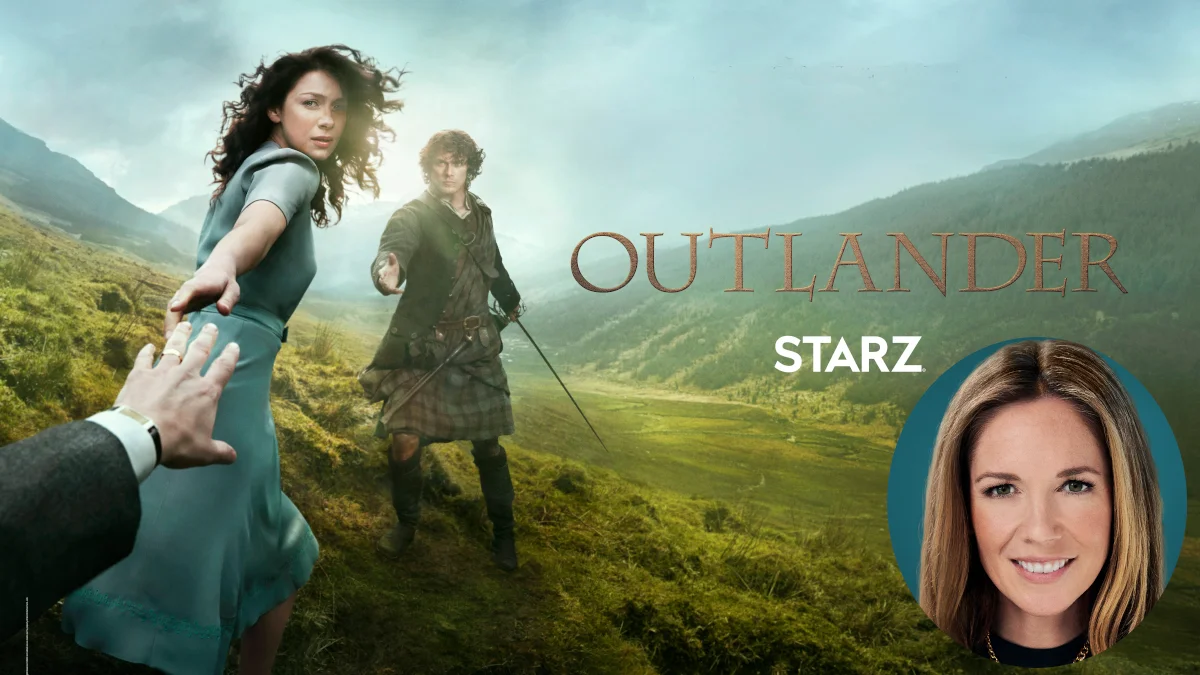
I launched “Outlander” as a marketer, standing guard over its earliest secrets. First, the casting of Sam Heughan. Then Caitríona Balfe. By the time we greenlit the series, the books already had tens of millions of devoted readers around the world, so every element — from the cast to the costumes to the campaign — was treated as sacred.
Landing the first season’s key art took months. We reviewed hundreds of comps before a concept was pitched that crystallized everything: transition, emotional conflict and longing. The idea felt timeless, archetypal even, as if the series somehow knew how long it would endure. For some, it evoked Persephone’s abduction. For others, it conjured Eurydice’s reach, grasping desperately and futilely for her lover.
We shot the hero image at “Rest and Be Thankful,” a breathtaking mountain pass in the Scottish Highlands. I remember the cold. Sam dressed in wool, but Caitríona wore only a thin blue dress and still hit every mark. The rest of us huddled at a monitor in heavy down puffers.

The producers, cast, and crew had obsessed over every detail, breaking in costumes and wearing them repeatedly so they felt lived in, relentlessly shooting on location so the world felt rugged and real. Expectations were high, so we went all in. The image was captured in camera, not cobbled in post. When Tobias Menzies offered to brave the frigid day so that the hand reaching into frame was truly Frank’s, we accepted. The smallest touches would matter if we were going to honor Diana Gabaldon’s books and the readers who loved them.
Our first-ever “Outlander” event was held at a theater in Los Angeles and pulsed as fans lined the block clutching dog-eared copies of her novels. Connected only by their shared love of a story, they greeted one another with the warmth and ease of old friends.

The response was immediate and overwhelming. Fans took to social media, sharing their reactions and affection. Over time, they formed friendships, traveled together, and supported one another’s lives and ambitions. They didn’t just watch the show; “Outlander” became entwined with who they were and who they were becoming. In the process, they radically reinvented what fandom looked like. Their commitment wasn’t merely about consumption; it played out off their screens, in their pilgrimages to Scotland, in causes they championed and in their very real connection to one another.
Critics were captivated, even as many struggled to succinctly categorize the series. One of our favorite reviews came from Ken Tucker who called it “a canny mixture of romance, fantasy, history, adventure, violence, sex, Druids, kilts, time travel, and unkempt hair.” “Outlander” was praised for its boldness and sensitivity, particularly in its exploration of female desire and male vulnerability. There was nothing else like it on television. And the audience kept growing.
As the seasons accumulated, what “Outlander” made possible for our network went far beyond its own success. On screen, Claire Fraser would be joined by Emma and Lyn Hernandez (“Vida”); Catherine de Medici (“The Serpent Queen”); Raq Thomas (“Power Book III: Raising Kanan”); Lina, Sloane, and Maggie (“Three Women”); Mercedes and Keyshawn (“P-Valley”), among many others.

Women drove the narrative and our slate expanded to reflect their full humanity. Alongside Caitríona, STARZ would be shaped by actresses including Riley Keough, Mishel Prada, Melissa Barrera, Ella Purnell, Rebecca Ferguson, Jodie Comer, Monica Raymund, Patina Miller, Betty Gilpin, Shailene Woodley, Naturi Naughton, Courteney Cox, Julianne Moore, Samantha Morton, Julia Roberts and Mary J. Blige in defining leading roles. “Outlander” sent a clear signal that audiences would follow stories rooted in women’s interior lives. We listened and doubled down.
Twelve years after that inaugural screening, I attended our final “Outlander” event, this time on a wintry evening in New York City, with temperatures reminiscent of that first photo shoot in Scotland. Once again, hundreds of fans gathered. They shared stories of love found, friendships forged, families built, businesses launched. All because of this singular series. They raised a glass not just to a story, but to over a decade of shared memory.
As the opening notes of “The Skye Boat Song” began to play, I was grateful. For the fans who carried us, the creators who trusted us, the colleagues who believed in the vision and the privilege of growing alongside something so meaningful. The audience taught us how devotion, deeply felt and shared, can propel a story through time.
And now, we stand guard over one last secret: the final episode of “Outlander.” The ending is everything I hoped. It is true to what these characters mean to one another and to us. I watched it with a lump in my throat. Ultimately, “Outlander’s” story belongs to everyone who carried it.
Alison Hoffman is President, STARZ Networks. Hoffman is responsible for driving success at STARZ with a broad oversight that spans content-related responsibilities as well as business revenue and operational focuses for the company. She oversees all content acquisitions and key network operations including distribution, marketing, publicity, product development, analytics and program planning.
The final season of “Outlander” airs Fridays only on STARZ, with the epic series finale premiering May 15.

>
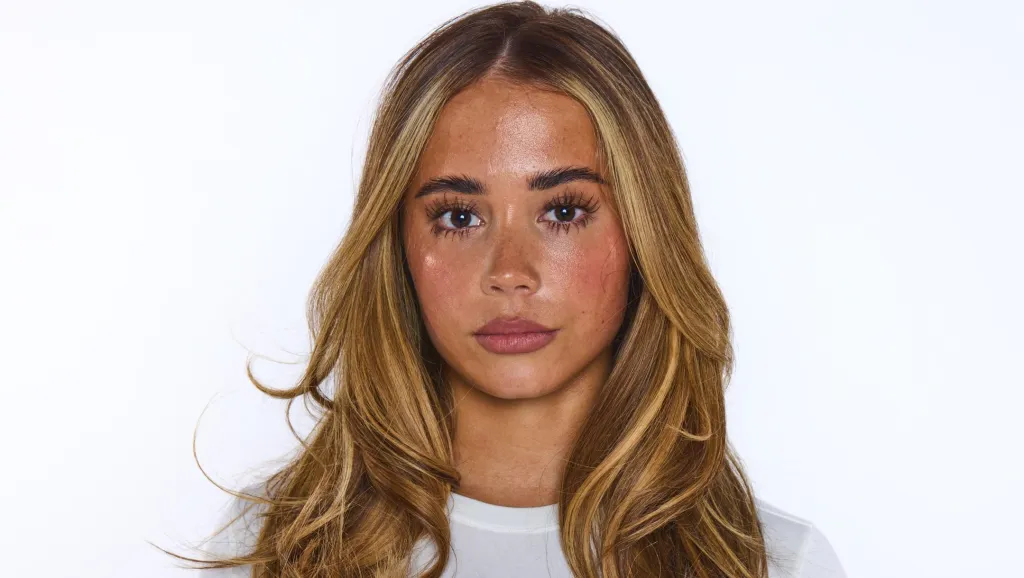
EXCLUSIVE: GK Barry agency HLD Talent has signed content creator and By Babes co-founder Heather Bowling.
The social media star, business owner and neurodiversity advocate is joining up with the likes of Barry, Mariam Musa and Shakira Khan at the London-based HLD, which is lead by creators agent Hannah Holland.
She is known as a the co-founder of By Babes, a UK-based and community-driven beauty and cosmetics brand, and creates much of her content around the company’s focus and products.
HLD called her “bold, ambitious and completely herself” and noted that she has a “built an incredibly loyal and highly engaged audience who have grown with her and who are invested in far more than just the content she creates.”
Bowling appeared on Season 5 of Footasylum’s YouTube series Locked In and made an appearance on Barry’s podcast Saving Grace.
“As she enter this next chapter, we’ll be working together to build on everything she’s already created, while opening up new opportunities across premium fashion and beauty, entrepreneurship, media, presenting and beyond,” said HLD in a statement.
Bowling was previously with Insanity.
>
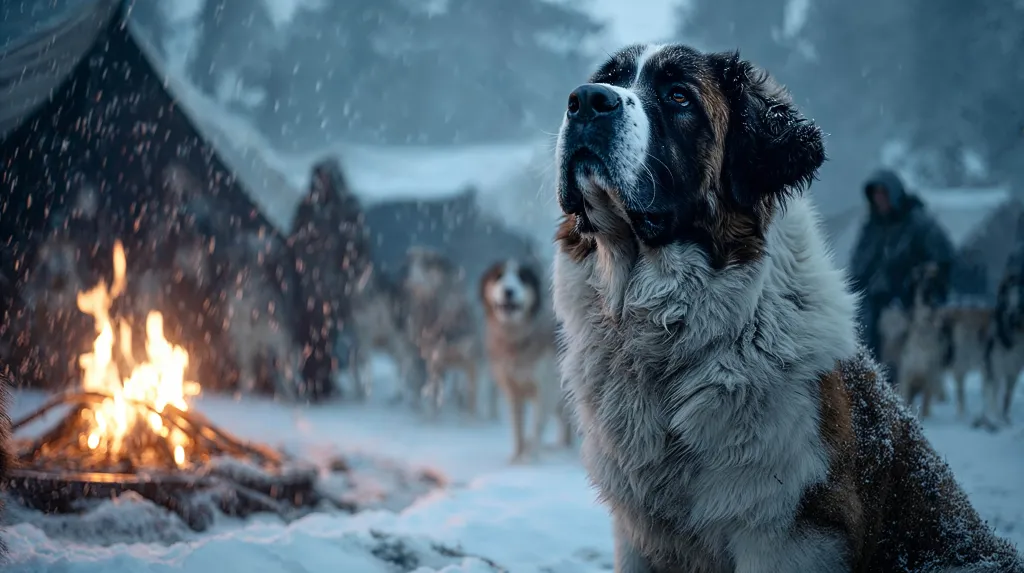
EXCLUSIVE: David Barron, the British film producer with credits on six Harry Potter films, is entering the generative artificial intelligence space.
Barron has agreed to produce an AI adaptation of Jack London’s 1903 novel The Call of the Wild, which is written and directed by Simon Rumley (Crushed, Red White & Blue).
The film will be generated at nmatic, with CGI and traditional VFX helping deliver more complex scenes. Filmmakers are billing it as the first faithful adaptation of London’s novel because it will be made from Buck’s subjective experience.
“London’s canvass is so epic, the Alaskan geography so gruelling, the dog and wolf fights so visceral that a faithful cinematic adaptation has hitherto been logistically and financially impossible,” said Barron. ”But technology has finally caught up with London’s vision, and we believe now is the time to do justice.”
The Call of the Wild tells the story of a pampered St. Bernard dog, who is torn from his life of privilege in California’s Santa Clara Valley and is sold into the brutal world of the 1890s Klondike Gold Rush, where he discovers the wild instinct that has always lurked within.
The film has been adapted for the screen several times, including a 2020 Michael Green film starring Harrison Ford.
David Barron, Mark Sandell (A Liar’s Autobiography) and Nick Price produce. Chris Catchpole, Carl Lyttle, and Toby White head up prompting and technical at nmatic.
>

EXCLUSIVE: Lightdox has acquired world sales rights to the documentary My Home of Wind and Sand ahead of its world premiere Tuesday at the Zurich Film Festival.
Filmmaker Patrick Wally spent over a decade on his film, a portrait of women’s rights, human rights and climate activist Najla Mohamed Lamin, who was born in a Sahrawi refugee camp in Algeria. Lamin has led a peaceful campaign supporting the right of Western Sahara to self-determination, a dream of Sahrawi refugees that has been frustrated for more than half a century.
Nobel Peace Prize nominee Greta Thunberg is expected to attend Tuesday’s world premiere and will participate in a conversation afterwards with Lamin. Thunberg visited the Sahrawi refugee camps last year, where she and Lamin conducted a workshop on climate change.
Director Patrick Wally
Courtesy of WyFilm
“Told through conversations with the filmmaker – who gradually becomes visible inside the story – the documentary refuses to reduce Najla to a symbol of a geopolitical conflict,” notes a synopsis. “Western Sahara is experienced through one person living its consequences in real time. Najla addresses international institutions, builds practical spaces for women and children, raises her family and continues to argue for peaceful resistance even as a generation born in exile grows older without a political resolution.”
The synopsis continues, “When armed conflict resumes after decades of ceasefire, the convictions that have shaped Najla’s public life are tested. The film follows her as she asks what pacifism, patience and agency can mean when history seems immovable – and whether one person can still create change inside circumstances that appear impossible.”
Najla Mohamed Lamin at the dunes near the Sahrawi refugee camp of Smara.
Courtesy of WyFIlm
Anna Berthollet, CEO of Lightdox, commented, “Najla has lived her entire life with an unresolved conflict. Yet Patrick’s film is not a geopolitical story; it is an intimate portrait of how she chooses to live, raise her children and build a future for her community. He spent eleven years following her journey and bringing her story and mission to the screen. At a time when Western Sahara is once again receiving international attention, we believe it is important that Najla’s perspective is part of that conversation. We feel very humbled to have been entrusted with bringing Patrick and Najla’s deeply personal story to audiences around the world.”
The border wall berm and Moroccan military base separating the Moroccan occupied territory from the
Polisario controlled territory of Western Sahara.
Courtesy of WyFilm
The unresolved status of Western Sahara has been largely ignored in the U.S. and much of the West, but it has kept the Sahrawi people in terrible limbo. Spain ruled the territory as its colonial possession for the better part of a hundred years, but after it ceded claims in the mid-1970s, hopes for the territory to determine its own future were dashed when Morocco took control of much of Western Sahara. The Polisario Front, representing the Indigenous Sahrawi people, seeks self-determination and is supported by Algeria (where the refugee camps are located). The United Nations officially designates Western Sahara as a “Non-Self-Governing Territory.”
In a director’s statement, Wally said, “When I met Najla ten years ago, I knew this film needed to be made. At the time I had never heard of the issue of Western Sahara. I thought of myself as reasonably informed about the struggles shaping the world, yet I knew nothing about more than 200,000 Sahrawis living for generations in refugee camps in the Algerian desert, established after the war and displacement of 1975. That absence in my own awareness shocked me.
“What struck me first, however, was not the conflict in the abstract but Najla herself. I was surprised by my own assumptions. Here was a woman raised in a refugee camp who was exceptionally articulate, politically precise and full of a vision for the future. She spoke about peaceful resistance, about a generation born in the camps, and about the endurance required to believe in a bright future when nobody outside seems able to see it.”
An aerial view of the Sahrawi refugee camp Smara, in the Algerian desert, near Tindouf.
Courtesy of WyFilm
Along with directing, Wally serves as the film’s cinematographer. The film is produced by Shirin Hooshmandi, Najla Mohamed Lamin, and Patrick Wally. Anna Kirst edited the film, with additional editing by Daniel Rutz. The music is by Ahmed Zain.
In addition to Tuesday’s world premiere at the Zurich Film Festival, My Home of Wind and Sand will hold public screenings on Wednesday, Thursday and Sunday.
>


Search For Canadian TV Actor Stewart McLean Now Homicide Investigation


These ’90s fashion trends are making a comeback in 2017
According to Dior Couture, this taboo fashion accessory is back
Model Jocelyn Chew’s Instagram is the best vacation you’ve ever had
Emily Ratajkowski channels back-to-school style
9 Celebrities who have spoken out about being photoshopped


Rurouni Kenshin: Hokkaido Arc Manga Takes 1-Issue Break – News


HIDIVE to Stream English Dubs for The World Is Dancing, The Forsaken Saintess and Her Foodie Roadtrip in Another World, The Dangers in My Heart: The Movie Anime – News