
Sandra Hüller in Rose.
The Match Factory/Courtesy Everett Collection


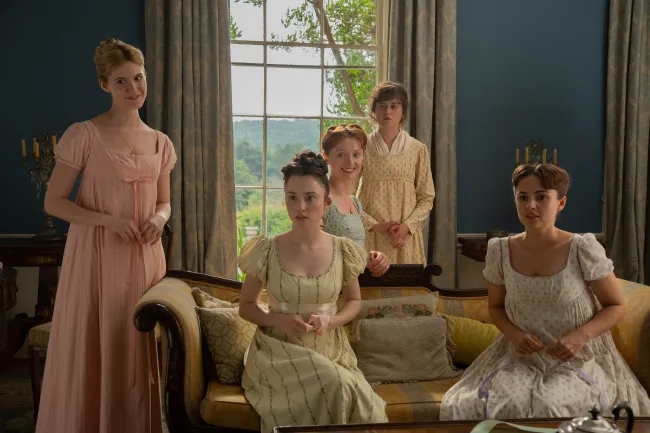
Don’t let the title fool you: charming limited series “The Other Bennet Sister” may be centered on the very satisfying coming-of-age of middle sister Mary Bennet (Ella Bruccoleri), but the show takes great pains to add new dimensions to a raft of other classic Jane Austen characters. We’re talking Bennet women and Charlotte Lucas, plus long-time baddie Caroline Bingley for good measure. All of them emerge from the series reoriented and refreshed, though still with much respect paid to Austen herself.
Based on Janice Hadlow’s novel of the same name, the 10-episode series — directed by Jennifer Sheridan and Asim Abbasi — follows young Mary as she strikes out on her own (read: away from her pushy, loving, messy, iconic family) and attempts to find her place in the world. Nine of those episodes were written by Sarah Quintrell (Maddie Dai scripted Episode 4, which will debut on BritBox next week, after an initial rollout of three episodes this week).


Her love affair with Austen and her iconic heroines took a little push (read: financial incentive) to get going, but Quintrell is now a hard-core Austen fan. And it’s that adoration for the source material (and Hadlow’s clever novel) that allowed her to push outside of its usual confines and find new angles to well-loved characters.
“I had this uncle who loved reading and he used to buy us 20 books for birthdays and Christmas that [were] curated to what our interests were,” the writer told IndieWire during a recent interview in New York City. “And he used to hide a five pound check in one book, so you had to read them to find the check and he’d know if you cashed it or not.”
That “really fostered a love of reading” for Quintrell, though she did note with a laugh that she was “after the fiver initially as a small child, and then you get into the habit of reading and reading.”
For one of those holidays, her uncle bought her a collection of Jane Austen books. “I’d sort of left it to one side,” she said. “I just thought, what is this woman going to have to say to me? And I thought it was all going to be a bit posh and a bit twee. But, later, I was making my way through the classics while I was really uninterested in my English A levels, and got to Austen. And I thought, ‘Come on, you have to do this.’ I picked up ‘Emma’ and just was blown away by this character.”
Quintrell found that she “could still recognize these women, even though these novels were 200 years old.” She read every Austen novel, and found that they felt a bit like “a guide to life.” When the opportunity to adapt Hadlow’s novel came to her from producer Jane Tranter,” Quintrell said, Jane simply said, “It’s Mary Bennet from ‘Pride and Prejudice,’ and I was like, ‘Where do I sign?’ It was the fact that it was the story of an outsider, that really spoke to me.”
She’s hardly the only Austen character who gets cast in a new light in “The Other Bennet Sister.” Ahead, Quintrell walks IndieWire through how the series tweaks, alters, and informs new perspective for everyone from Charlotte Lucas to Caroline Bingley and, of course, Mary Bennet herself.

Of course, Mary Bennet is the heart and soul of “The Other Bennet Sister,” but while the series shows her evolution and growth, it was essential to Quintrell that her true essence doesn’t change. She just learns more about it, about life, and about the kind of people who will love and respect her. Even when she’s being a bit of a know-it-all.
“She’s a pedant and she remains a pedant,” Quintrell said. “She remains full of facts. I was very keen to show she has not changed. At the beginning, she’s reading Fordyce’s ‘Sermons for Young Women,’ and it’s a male vicar giving his advice to women on how they should behave. In the middle of the story when she’s grown a bit, she revisits that story and she’s like, ‘Oh, it’s not quite what I remember.’ And by the end, she writes her own advice for young women, not to be published or anything necessarily, but just that it just shows that she’s reached a point in her life where she trusts herself. Those markers of that journey kind of came to me quite early on. It was really important to me that she didn’t change.”
Quintrell also wanted the audience to feel close to Mary through seemingly everyday tasks and undertakings, the kind of stuff we don’t normally see in Austen adaptations. “I have her eating a lot,” she said with a laugh. “Ella, I don’t know how much toast she consumed on set, but it’s a lot, but that felt really important. The perfect world of ‘Pride and Prejudice’ is off to our left, but we’re in the kitchen, we’re in the bedroom. The buttoned up quality of these stories means you can sometimes feel that they’re at a distance, and I want it to feel like Mary’s story would grab us by the heart and drag us in.”

Fans of “Pride and Prejudice” are well-acquainted with older sister Elizabeth Bennet’s own foibles. The pride! The prejudice! But what does that look like to Mary? While the series makes easy work of showing Mary’s outsider status amongst her own family — especially her sisters, who long ago paired off into the Jane and Lizzy unit and the Kitty and Lydia duo — it felt necessary to see that as it applies to one of Austen’s most beloved heroines.
For that, Quintrell turned directly to Austen’s own plotting. “The most brutal thing Lizzy does is at the Netherfield Ball where she has her sister publicly humiliated by their father [when she asks Mr. Bennet to stop Mary from her bad piano forte-playing], but that is Lizzy’s doing, and that was written by Austen herself, that isn’t me or Janice,” she said.
Quintrell’s big change? “It was really important that Lizzy apologized and that Lizzy understood Mary’s point of view. That was one of the things that I wanted to bring to it and add to it, that scene that Mary and Lizzy have in Episode 7 where Mary explains, ‘We’ve had very different experiences of life, you and I.’ And to be able to say that and to be able to get that out? Amazing,” she said. “Lizzy’s not horrible to Mary, but she’s a bit thoughtless in the way that you are when you’re young. It’s not that Lizzy’s deliberately nasty, she’s the most supportive of all of them. With [Mary’s] glasses, she says, ‘I think they look very well.’ But she’s got her own stuff going on, as we all do at that age.”

While Ruth Jones’ performance as Mrs. Bennet initially scans as a classic reading of the matriarch — a little brash, a little loud, and relentlessly dedicated to marrying off her daughters — through Mary’s eyes, it becomes far more complicated. Yes, she’s hard on Mary, but the series also takes pains to show the immense pressure she feels to secure suitable stations for her offspring.
“Our reading of Mrs. Bennet has always been, well, Mr. Bennet’s kind of dry and sarcastic and a bit cool, and we love Mr. Bennet and he’s great! Mrs. Bennet? She’s a bit silly and hysterical,” Quintrell said. But when you examine it, this is a mother who’s doing all the emotional labor, whose very existence is under threat once her husband goes. And the five daughters? She’s got to sort that out on her own. The stakes are pretty high. It’s about the survival of the family.”
For a favorite daughter like Lizzy? She can roll her eyes and huff it away. Mary is not granted such luxuries. “In ‘Pride and Prejudice,’ from Lizzy’s point of view, she’s just a bit hysterical and slightly embarrassing sometimes,” the writer said. “From Mary’s point of view, she’s brutal and bruising, but this is why. I think if I’d written this from Mrs. Bennet’s point of view, she might think she’s just a bit flippant with Mary. But when you go back to the original book — and Janice took out all the material that Jane Austen wrote about Mrs. Bennet and Mary’s relationship and used that to kind of build Mrs. Bennet in her novel — that’s where that brutality comes from. Once you remove all the jollity of how she is with some of the others, that’s what you’re left with.”
One of the most intriguing characters in “The Other Bennet Sister” is none other than Charlotte Lucas, Lizzy’s close friend and Bennet cousin Mr. Collins’ eventual bride. While we’re used to seeing a more meek and mild Charlotte (for this writer, Claudie Blakley’s heartbreaking version in Joe Wright’s 2005 “Pride & Prejudice” has long felt like the gold standard), Anna Fenton-Garvey’s duplicitous and scheming spin on the character is a revelation.
“She could have been the same and it could have been that she just so happened to end up with Mr. Collins,” she said. That’s not what happens here, as Charlotte schemes to a) push Mary to embarrass herself in front of everyone, including Mr. Collins and b) then win him for herself. “I found it quite delicious when I read the novel,” the writer said. “I was really interested in that form of Charlotte.”
It starts early on, when Charlotte attempts a little bit of bonding with Mary over their shared spinster status as the rest of the Bennet sisters delight in their new romantic possibilities. “You know when you’re growing up and you’re not sure of your footing and then your older sister’s friend goes, ‘Yeah, me and you, we’re rubbish, aren’t we? We’re ugly,’ and you’re like, ‘Oh, oh.’ I think we’ve all had experiences like that where someone older just kind of flippantly held us up to the standards that they held themselves up to, put us down in the way they put themselves down,” Quintrell said. “But it’s wounding and you carry it and it takes a lot of unpicking. All of these things that happened to Mary in that first hour, we spend the four hours after unpicking it.”
It’s also essential that Fenton-Garvey’s Charlotte expresses her worldview — and, in many ways, her reasoning for doing what she does to Mary — when she tells the younger Bennet that, for women like them, there are only two options in life. Marriage or misery. And Charlotte is done being miserable. Too bad then that her eventual marriage to Mr. Collins, uh, well, pretty handily combines both states of being.
“That thing about marriage or misery is really important because that’s so thematic, isn’t it, of Jane Austen’s work,” Quintrell said. “I think that Jane Austen herself would have well-recognized that some marriages were miserable. She herself didn’t marry. I like the idea of Charlotte kind of clocking onto that.”

If Charlotte Lucas is the series’ most unexpected villains, Caroline Bingley (Tanya Reynolds) is its most unexpected heroine. While the icy sister of Charles Bingley (Aled Owens) has traditionally skulked around the Bennets, royally ticked off because Lizzy has made off with Caroline’s long-time crush Mr. Darcy, “The Other Bennet Sister” finds her in a new light. Like Mary, she eventually makes her way to London, where she’s stunned to find that she’s — once again! — forced into seemingly endless social situations with one of those blasted Bennets.
Hadlow had “thought about this woman and what she was up against, having lost out on Darcy, how that affected her relationship going forward after ‘Pride and Prejudice’ with the Bennet family, and how she feels about the Bennet family after that,” Quintrell said. “She’s stuck with these people and they’ve taken away her whole future. In those days, it’s not that you just lose out on a man you fancy, you miss out on your future, your salvation from destitution and difficulty.”
There are, of course, other options available to Caroline. But, it seems, no matter where she goes, boom, there’s another Bennet sister, reminding her of what she lost. Mary might have nothing to do with all that, but Caroline does not see it that way, and the pair continue to butt heads until later in the season.
“She could live with her brother,” Quintrell said. “She’s not going to starve like the Bennets might. But still, it’s so much more than just a guy. It’s pride! It’s your pride and your place in society. I think she always felt like she was for Darcy. So having her kind of resent Mary because of that, I love that, and it feels very truthful.”
Yet, over the course of the series’ ten episodes, and as Caroline and Mary continue to interact in London and even outside the city, we see a different side of Caroline, one genuinely looking for a romantic match, and not afraid to get a bit silly in her pursuits. She’s a far cry from the ice queen we used to know.
“What Tanya brought to the role is the humor, like the eating of the primrose [during a visit to the Lake District],” she said. “When the lads are stretching in that scene, where they’re sort of competing and stretching, and you see her like [trying to stretch too], she’s so brilliantly funny. And I think that just brings a humanity to Caroline, doesn’t it?”
And, in the series’ final moments, even Mary comes to appreciate Caroline’s wacky advocacy for herself and her desires. No spoilers here, but if there is the possibility for another season or even a spinoff of “The Other Bennet Sister,” “The Other Bingley Sister” would do quite well indeed.
The first three episodes of “The Other Bennet Sister” are now streaming on BritBox, with new episodes releasing weekly.
>
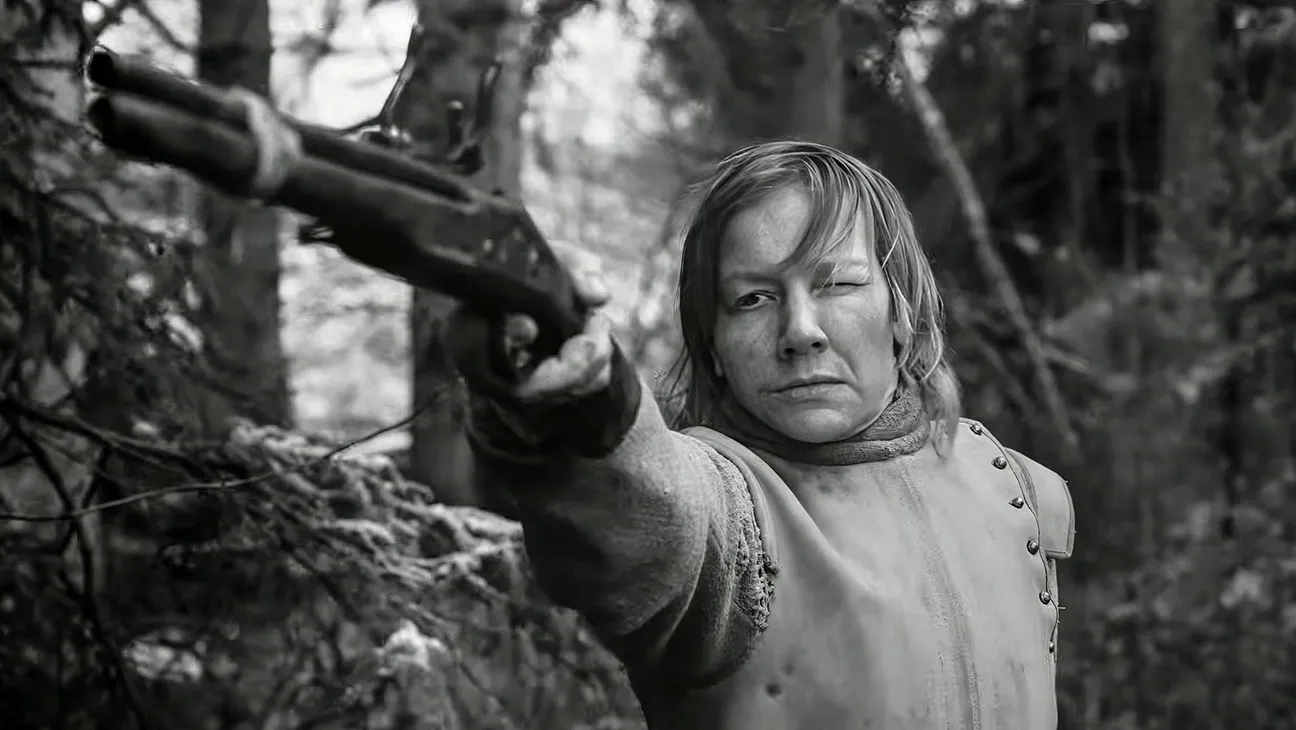
In their conversations leading up to the making of Rose, star Sandra Hüller and director Markus Schleinzer worked hard at fine-tuning their eponymous 17th-century hero. Hüller was to play a woman disguising herself as a male soldier in the aftermath of the Thirty Years’ War, ingratiating herself in a small Protestant village. She considered preparation routines like strength training, before setting them aside as anachronistic; she agonized over keeping things as believable as possible. “She was wondering, ‘What should I do with my voice — should I lower it?’” Schleinzer recalls. “Then we started to laugh because then we found out that my voice, as a man, is higher than her voice as a woman. It would be a weird thing for her, to lower her voice to pretend to be a man, for a male director who has a much higher voice than hers.”
The anecdote offers some amusing insight into the dynamic between Schleinzer and Hüller, which remained deeply playful and collaborative over the years it took to get Rose made. Yet it also speaks to the ultimate mastery of Hüller’s portrayal here, which never goes for the easy or obvious choice. In a career full of decorated performances, this ranks among Hüller’s very best, a moving, wondrously strange embodiment of a survivor in constant, subtle hiding. Below, you can watch the exclusive trailer for the film for a first look.
Rose premiered at the Berlin Film Festival in February, where Hüller won the Silver Bear for best lead performance. The star then went on to receive a Tribute Medallion in Telluride earlier this month, where the movie made its North American premiere; now, it’s making the rounds in New York. “Rose is another extraordinary showcase for her gifts and a master class in the art of acting with rigor, honesty, physicality and zero showiness,” wrote THR chief film critic David Rooney of Hüller in his review.
Schleinzer first had the idea for Rose on his birthday, when a friend told him that 250 years ago to the day, a woman had been executed for being caught living her life as a man. The Austrian filmmaker and former casting director, who came up under the legendary Michael Haneke, became obsessed with the story and researched hundreds of other examples, from decades before and after. He saw them speaking to the current climate of fear felt by various marginalized communities. “Every life, every day is a political act — so we cannot hide,” says Schleinzer, who is queer. “We have to change things if we want to have a better life as a community.”
Already at work on the script, Schleinzer then met Hüller on the set of the 2023 German black comedy Sisi & I — as her co-star. “I was really bad in this movie because I was so keen to watch Sandra firsthand — I already had started writing Rose and started stalking her, watching all the things she was ever in, even the tiny television spots she had at the beginning of her career.” He later sent her the script, which was written in prose, more akin to a novel; she jumped at the challenge.
Sandra Hüller in Rose.
The Match Factory/Courtesy Everett Collection
When asked what surprised him about Hüller’s approach to the role, Schleinzer points to a viral red-carpet clip of the star describing her process in straightforward terms — “I really have to disappoint you, it’s not so much: I learned the lines” — in noting that what results from that is anything but simple.
“I was a casting director for 17 years and I always had the feeling that my main job was to get people out of being afraid, of having fear or discomfort — there is this type of actor who loves to talk, because talking means that they do not have to act, they can just talk, talk, talk, talk,” the director says. “Sandra is the complete opposite. She is someone who gets easily bored, so no take is the same: ‘Now I’ll become a little more boyish,’ ‘Now I’m the soldier.’ I had the big problem of choosing how to build up a character for the audience, then — but this was surprising, to see such life come alive in front of your eyes on the set every day.”
Shot on location near the East German border with original sets, scouted by Schleinzer through hours of hiking, the film boasts a handmade quality in Gerald Kerkletz’s black-and-white cinematography, the exacting makeup and costume work and the dry humor that allows the absurdity of certain situations to breathe — even as Rose hurtles toward profound tragedy. “My intention was to make something more about these days we are in than just a museum piece with some nostalgic images,” Schleinzer says.
Rose premiered this past weekend to more raves at the New York Film Festival, and will be released in North American theaters by Mubi on Dec. 11. The project started shooting less than two weeks after the end of Hüller’s campaign for Anatomy of a Fall, which netted her a best-actress Oscar nomination — and shot in small increments over many months from there. This could be the project that brings her back to the Oscars, although her greatest competition may be herself: She’s also terrific as the lead of Cannes-winner Fatherland, also a Mubi release, and plays key supporting roles in Project Hail Mary and Digger.
But within the scope of Hüller’s filmography — really, any actor’s — Rose feels special. “Sandra said I should not threaten people, but I have watched her career for the last 20 years and I’ve seen so many prizes taken away from her,” Schleinzer says with a grin. “If she’s not going to be nominated for this one, I’m going berserk.”
Check out the official poster below.
Rose poster.
Mubi
>
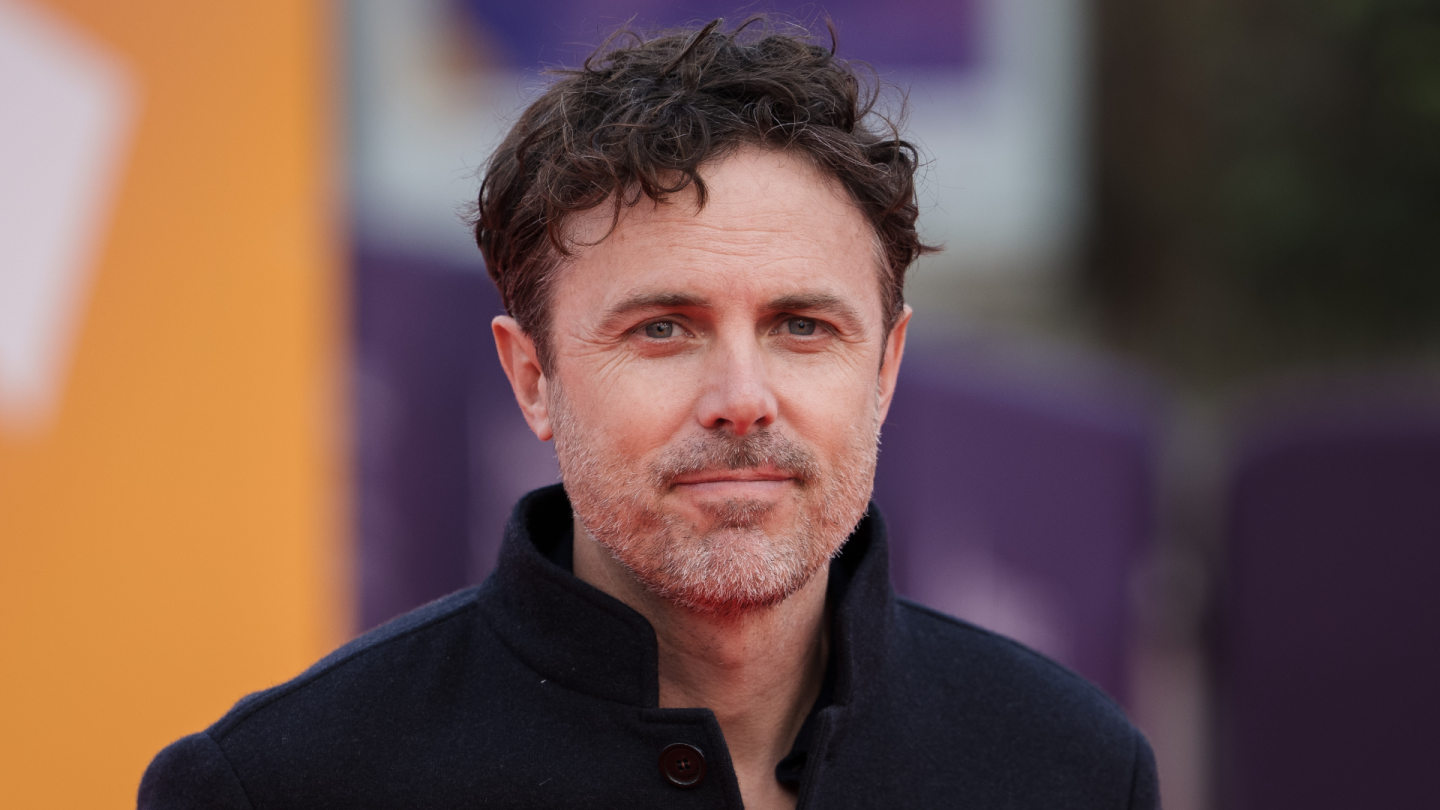
It was Casey Affleck‘s turn in the Zurich hot seat on Monday as the U.S. star spoke candidly at a masterclass before the Swiss film festival premiere of his third directorial feature, Company.
The conversation with the event’s CEO Christian Jungen was career-spanning and charted the Boston native’s rise to international fame, from his move to L.A. as an aspiring actor and early career decisions to his Oscar-winning turn in Manchester by the Sea (2016) and becoming a director.
Of course, you can’t host an Affleck and not discuss Matt Damon, the childhood best friend of Casey’s older brother, Ben. He humorously played down the rivalry between the men, but praised their shared experience in theater growing up on the East Coast. “We all had the same theater teacher, […] and lots of actors came through this one theater department. We were in a big public school, and we just had this great theater teacher, and he made kids fall in love with theater and acting,” he said, prompting laughter as he continued: “Matt was always a bit of a showoff. [He was] outgoing and would do talent shows and stuff. And there was no doubt where he was headed, but the rest of us were trying to figure it out.”
The Good Will Hunting and Ocean’s Eleven actor said he has seen Damon’s Oscar-buzzy outing in Christopher Nolan‘s box office behemoth The Odyssey, but takes solace in the fact that all three of them have pursued pretty varied paths. “We’re all very different in a weird and very obvious way,” began Affleck. “Matt is a super talented actor. He’s a funny case because he’s a very talented actor who has a kind of movie star persona, a matinee idol appeal, at the same time, which Ben and I don’t really have. Ben seems more like a movie star and has leaned into the leading man thing right from early on,” but Affleck’s favorite performances from the pair are when they’re in character-led roles. “When Matt did The Talented Mr. Ripley, I thought he was just incredible.”
Jungen referenced an old Variety profile in which Affleck was characterized as a Hollywood outsider. Initially, Affleck was “mad” about that. “I saw that and I thought, ‘Man, I’ll forever be thought of as an outsider, no matter what I do.’ You can win an Oscar, or you can do a big giant studio movie, and I think the public just thinks of people one way, and then it takes a lot to change that.” An ensuing epiphany was liberating, and allowed him to reclaim the label. “I was sitting with it for a second, and I thought, ‘Am I crazy? I love that.’ I don’t want to be an insider. I love being an outsider. I would much rather be an outsider in Hollywood than be an insider in Hollywood. I don’t think it’s a great culture. I don’t love the movies that are made by Hollywood. I don’t love the system of Hollywood, and I’m very happy being thought of as an outsider,” he said.
In response, Jungen pointed out to the star that he continues to live in L.A. and, like Damon, has featured in Nolan projects: specifically Interstellar (2014) and Oppenheimer (2023), so he’s no stranger to a commercial hit. Affleck had a particularly amusing — and maybe slightly awkward — anecdote to share when asked about seeking directorial advice from the British Oscar winner. “I did once call him,” said Affleck about Nolan. “I was driving home from school with my son, and we were talking about Tenet, and we were disagreeing about it. And I thought, ‘Let’s settle this.’ And we called Chris, which probably was a mistake. I [actually] called Emma [Thomas], his wife, and I said, ‘I just have a quick question,’ and we got him on the phone and asked him something that we probably could have just looked at [on] Reddit and figured out.”
Affleck wanted it from the source, he confessed, but once Nolan talked them through it, the actor was embarrassed that he even asked. “It sounded so obvious. Then we said, ‘Thank you.’ And that was it. And I haven’t called back, and he hasn’t called me,” he laughed.
The actor-turned-filmmaker lauded Nolan as a director, and though admitting he doesn’t look to anyone in particular as an inspiration, cited both Nolan and Gus Van Sant (who directed Affleck in 2002’s Gerry) as auteurs who “just make stuff that they’re really interested in.” He continued: “Nolan is probably a great example of that. Despite the fact that he makes these gigantic, hugely popular, successful movies, I don’t think that he’s doing things that he thinks will please other people.”
On Affleck’s Oscar win as a grieving janitor in Kenneth Lonergan’s Manchester by the Sea, he explained it’s all still rather a daze — and “mildly traumatic.” The actor said: “I had all these people in this category that were heroes of mine — Viggo Mortensen and Denzel [Washington], and then peers of mine who are great — Andrew Garfield and Ryan Gosling. It sounds like a cliche, but I was just very happy to be there. I didn’t really expect to win because I thought Denzel was going to win, and that was totally fine.” He admitted to have not planned a single word of his speech, and was mortified after leaving the stage and realizing he forgot to thank “all the people you’re supposed to thank,” including Lonergan and his kids.
Affleck recalled none other than Leo DiCaprio coming to the rescue: “I just mumbled my way through it and got off stage, so it was mildly traumatic. But I remember walking off stage and seeing, for some reason, Leonardo DiCaprio standing there in the wings, and I was stuck in the moment of terror and disorientation, and he was just laughing and gave me a big hug, and then I sort of felt better.”
Company, currently making its way through the festival circuit, is a mystery set on a winter night in 1975, with the filmmaker, Nick Nolte, Ben Mendelsohn, Emily Alyn Lind and Sydney Chandler all co-starring, alongside his two sons, Atticus and Indiana Affleck. His directorial debut, I’m Still Here (2010), “was very experimental, and people mostly just hated it.” His second, Light of My Life (2019) premiered during the pandemic so its reception was difficult for Affleck to get a read on. With the Venice-premiering Company, he was so keen for it to make the rounds at the fall festivals that he’s screened a not-quite-finished version and is using audience reaction as feedback.
“It’s scary as a director to bring a movie that I’m still working on,” he said. “We’re still tightening it and working on the music, and so to show it to an audience full of people and know myself that there are things I want to change is difficult, but once it’s finished, I’ll let it go. I promise.” The movie is dedicated to his parents, both of whom died earlier this year.
Affleck was part of a Zurich masterclass slate that also included John Turturro, Naomi Watts and Anna Kendrick. The 22nd edition runs Sept. 24-Oct. 4.
>
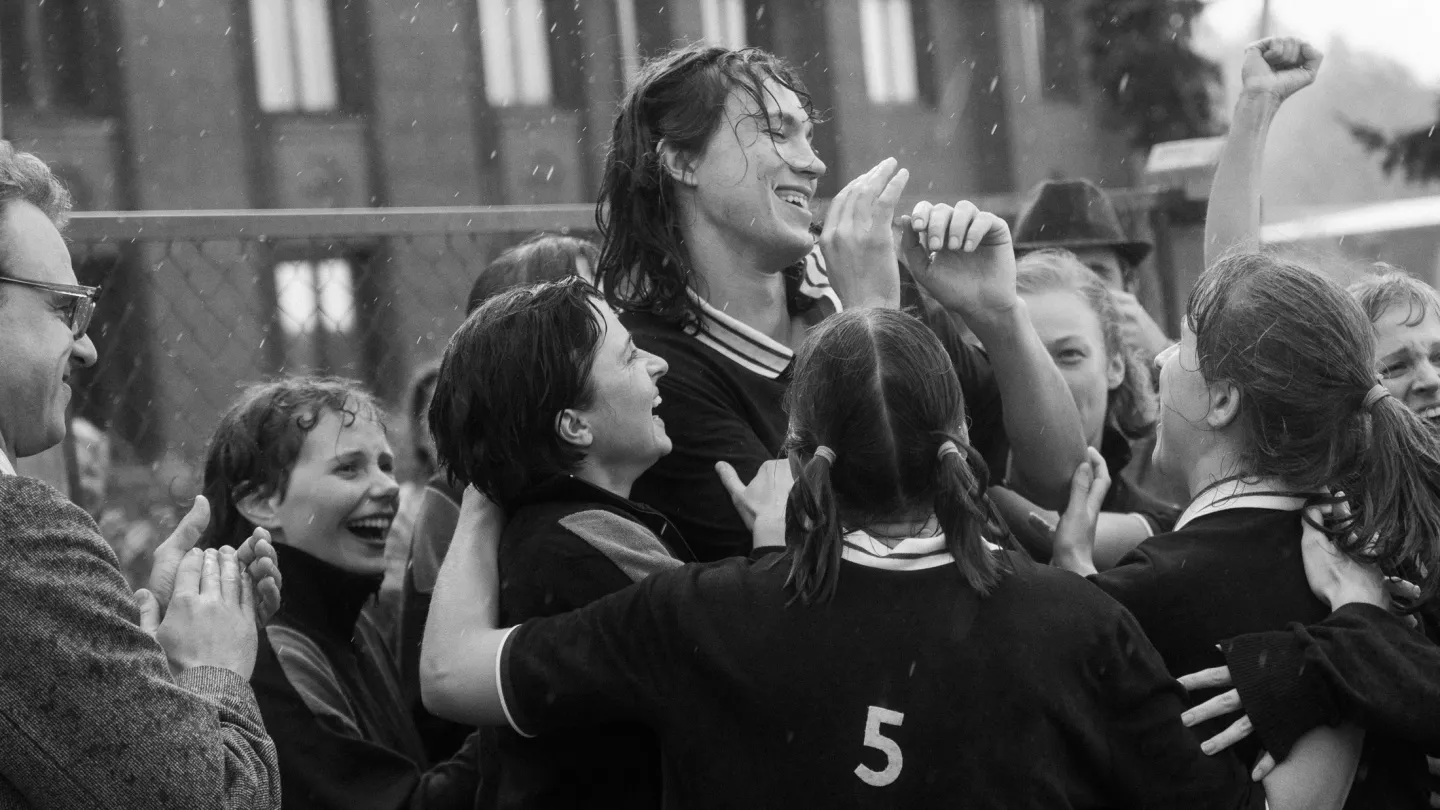
The Tallinn Black Nights Film Festival (PÖFF) will open its 30th edition on Nov. 6 with a screening of Viesturs Kairišs’ Ulya, a co-production between Latvia, Estonia, Poland and Lithuania that world-premiered in the Un Certain Regard program of the Cannes Film Festival earlier this year.
“The evening will also feature an anniversary performance and film music from across the Baltics,” organizers said.
Inspired by the life of legendary Latvian basketball player Uljana Semjonova, a two-time Olympic champion and three-time world champion, Ulya follows its protagonist from an isolated rural Old Believer community into the fiercely competitive world of professional basketball. There, she must navigate both the attention drawn by her extraordinary height and the demands of elite sport.
The film is directed by Kairišs (The Sign Painter, January) and came from an original idea by star and writer Kārlis Arnolds Avots, who plays the lead role. The movie was produced by Ego Media, Allfilm, Staron Film and Tremora. The film has also been selected as Latvia’s entry for the best international feature film Oscar category at the 99th Academy Awards in 2027.
“Ulya is a very good example of what the Baltic film industries can achieve by working together and with partners beyond our region,” said Triin Tramberg, artistic director of PÖFF. “Our countries may be small, but we have a wealth of stories and creative talent. Co-productions bring those strengths together, help ambitious films reach audiences around the world and give our filmmakers a stronger international presence.”
The opening ceremony will celebrate PÖFF’s three decades alongside this year’s Focus: Baltics, which places cinema from Estonia, Latvia and Lithuania at the heart of the festival. Created for the anniversary edition, a stage production entitled “Round and Round” will look back at PÖFF’s first 30 years. Three pianists, one from each Baltic country, will bring the ceremony’s musical program to life. Hans Matthias Kari from Estonia, Kārlis Gusts Zariņš from Latvia and Gabriele Agile Bajoraite from Lithuania will perform selections of film music from their countries.
PÖFF will also present its Lifetime Achievement Awards and the Bruno O’Ya Young Actor Scholarship during the opening ceremony, followed by the screening of Ulya.
The 30th Tallinn Black Nights Film Festival takes place Nov. 6–22.
>


Search For Canadian TV Actor Stewart McLean Now Homicide Investigation


These ’90s fashion trends are making a comeback in 2017
According to Dior Couture, this taboo fashion accessory is back
Model Jocelyn Chew’s Instagram is the best vacation you’ve ever had
Emily Ratajkowski channels back-to-school style
9 Celebrities who have spoken out about being photoshopped


Rurouni Kenshin: Hokkaido Arc Manga Takes 1-Issue Break – News


HIDIVE to Stream English Dubs for The World Is Dancing, The Forsaken Saintess and Her Foodie Roadtrip in Another World, The Dangers in My Heart: The Movie Anime – News