
Tech
Mac Studio, Mac mini Buyers Are Losing Options Amid AI Demand

Apple reportedly removed several high-memory Mac Studio and Mac mini options as AI demand and memory shortages strain desktop Mac supply.
The post Mac Studio, Mac mini Buyers Are Losing Options Amid AI Demand appeared first on TechRepublic.
>
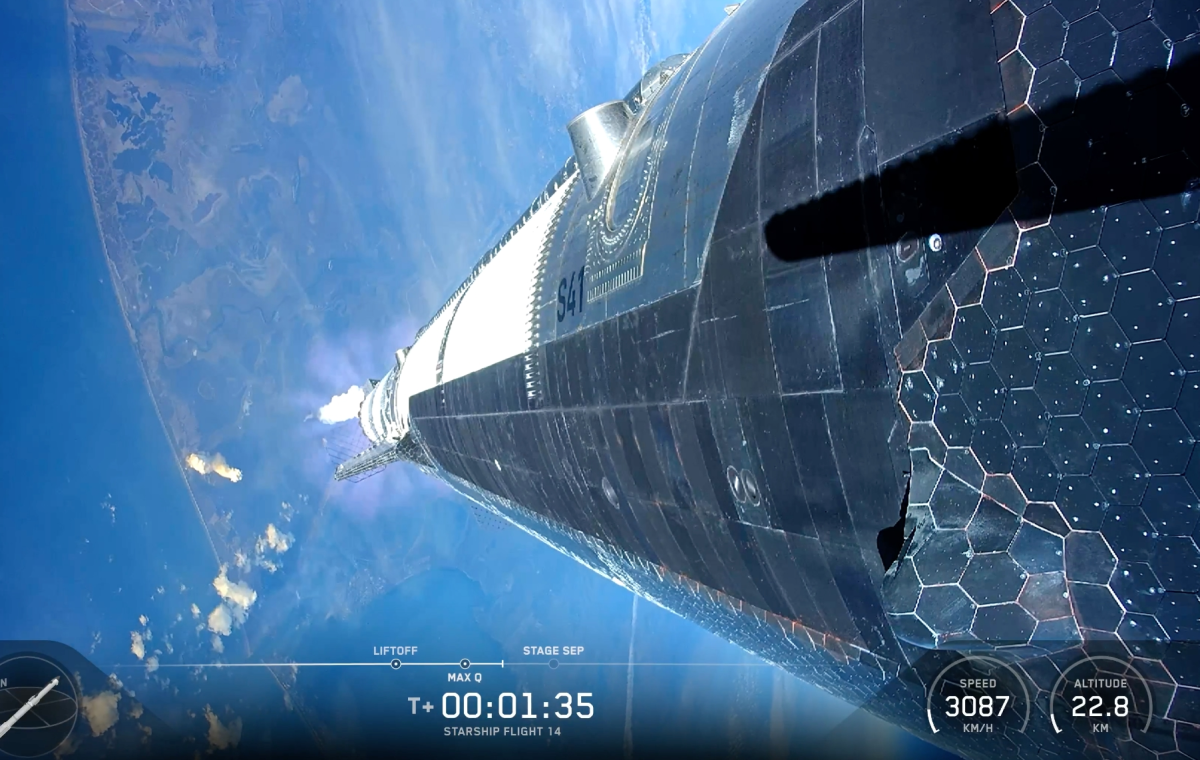
SpaceX’s Starship rocket reached Earth orbit for the first time, though not without some drama along the way.
The company’s mega-rocket launched into space from South Texas early Monday morning and ticked all the early checkboxes for a successful takeoff. But shortly after the upper stage of the Ship separated, it lost one of its six Raptor engines.
While Starship could still reach orbit if it loses an engine, the company initially called off the attempt, only to decide to keep pushing just a few minutes later.
Reaching orbit is a critical milestone that could let SpaceX start using Starship for regular commercial missions, and, importantly, inch closer to its goal of making the mega-rocket fully reusable. SpaceX CEO Elon Musk is orienting the entire company around Starship, which has become central to the company’s plans to perform moon missions for NASA, and far-out ideas like putting AI data center satellites in space.
SpaceX planned to have the Starship upper stage orbit the Earth six times over the next nine hours while deploying 26 third-generation Starlinks into its constellation of internet satellites. It’s not immediately clear if any of that plan changed with the delayed entry into Earth orbit.
The company was also able to make progress on returning the Super Heavy booster stage of the rocket back to the launchpad. After separating from the upper stage of Starship a few minutes into the flight, the booster returned to the Gulf coast and performed a simulated landing over the water. It was the cleanest simulated landing SpaceX has performed with the V3 version of Starship, which it started testing in May.
This story is developing…
When you purchase through links in our articles, we may earn a small commission. This doesn’t affect our editorial independence.
>
Arlington, Virginia-based startup Quartermaster in May closed a $43 million Series A around its idea of using weather-hardened sensors to capture data and generate insights about maritime activity. That idea has proven popular, because Quartermaster has already closed a much larger Series B, bringing in $140 million this time.
Founder and CEO Neil Sobin said the round was preempted by software-focused venture firm Insight Partners, and the interest in what Quartermaster is building was helped by the war in Iran and the shipping chaos it’s caused.
“I think we we’ve gained huge amounts of conviction in the core thesis,” Sobin said in an exclusive interview. “A big part of the story for us this year was, events in the world drive that clarity and drive that conviction and urgency, and when you see that, you gotta seize the opportunity.”
About $100 million of the Series B came from Insight and new investor, defense-focused firm Overmatch Ventures, as well as existing backers like First Round Capital. The remaining $40 million came in the form of a debt facility from investment bank Stifel.
“Quartermaster is building a distributed network for the ocean, where reliable, real-time data has been difficult to come by,” Nick Sinai, managing director at Insight Partners, said in a statement to TechCrunch. “The team’s execution and the strong demand for maritime data and awareness made this an investment we wanted to lead, and we’re proud to back Neil and the team as they scale to meet the opportunity with commercial fleets.”
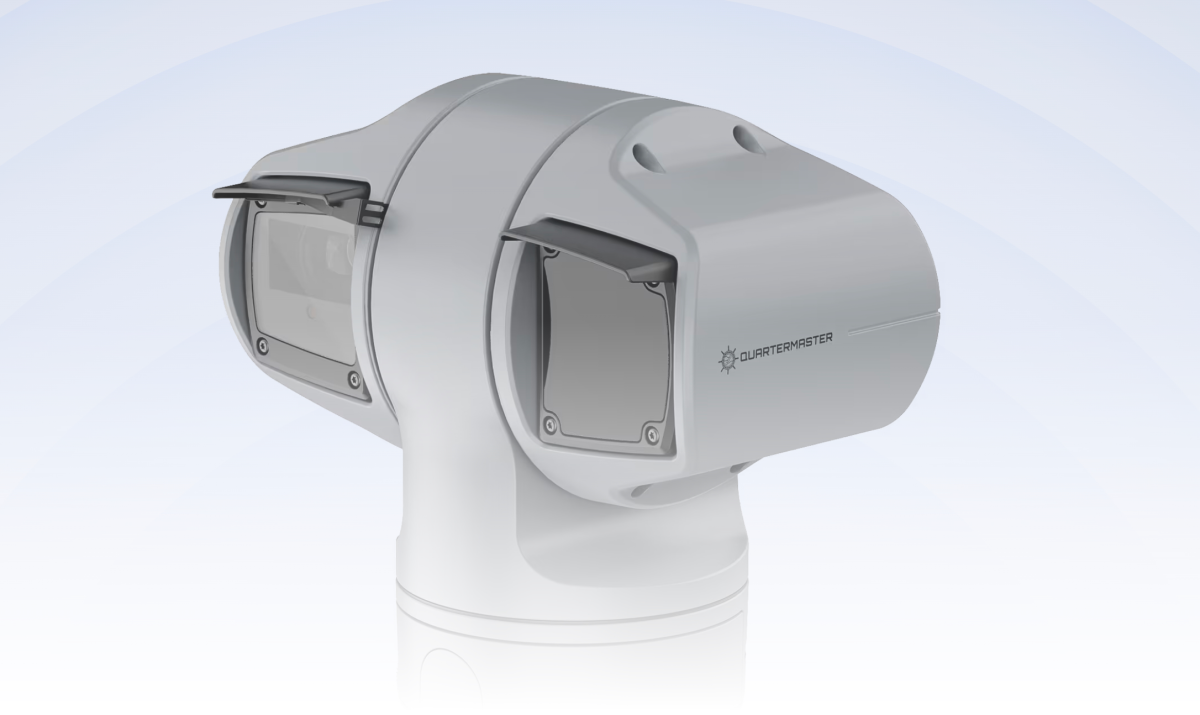
Quartermaster’s hardware, which it calls “SmartMast,” is a fairly straightforward setup. The startup integrates cameras and radios into a package that’s mounted on a ship’s mast, and can capture and relay real-time maritime data. This allows governments, shipping companies and insurance providers to know far more than the current standard of AIS, or the “automatic identification system,” which is more or less just a series of location pings.
This real-time awareness data creates all kinds of opportunities for what Quartermaster calls the “largest blind spot on Earth.” Everything from helping ships avoid collisions, to better understanding congestion in shipping lanes, to rescuing lost mariners is on the table. Sobin said each SmartMast records tens of gigabytes per day, and the startup and its customers are still finding new uses for the data being captured.
“There isn’t a lot of prior art in maritime AI, and so it’s been exciting to, one, have our own source of data,” he said. “But two, there’s just so much low hanging fruit that we’ve been knocking down this summer in what you can start to build and then deliver value for our customers on.”
Sobin said the startup spends a lot of time engaging with people across the maritime industry — and not just vessel owners and operators — in order to find out what they want out of this technology.
“This is an ignored field. Mariners around the world have been ignored by technology for a really long time, and so when they meet us, they’re so excited, because they’re like: ‘Oh, I have so many ideas, let’s work on them’,” he said.
More than 650 vessels are now equipped with SmartMast in 25 countries, Sobin said, and the startup has shipped over 800 to customers. That gap is largely driven by the fact that Quartermaster is about to start deploying the SmartMast system to entire fleets, a sign that early adopters are really buying into the idea.
Quartermaster has had to hustle to keep up with demand, Sobin said. The startup has doubled its manufacturing capacity and continues to tweak its design so its hardware can be manufactured at a quicker clip.
“We know we can do this, and we are seeing a lot of proof that tells us we’re really onto something massive and important in the world,” Sobin said. “So, what do you do when you have that position? You run faster and you move faster and you double down on that strategy.”
When you purchase through links in our articles, we may earn a small commission. This doesn’t affect our editorial independence.
>

After more than a decade building a caller ID business serving over 500 million users, Truecaller is now taking the scam intelligence it gathered along the way to the open web, with no app or sign-in required.
The Swedish company on Sunday launched Scam Checker, a new web and Android service that lets users paste in a suspicious phone number, link, or message to find out if it’s fraudulent. To work, the service surfaces related reports from Truecaller’s community, ScamFeed. However, more detailed information about a phone number, including the name associated with it, remains available only through Truecaller’s existing service, which requires a sign-in.
The free-to-access tool will initially be available in India and is set to expand to Latin America, the Middle East and Africa, and Southeast Asia, the company said.
In addition to serving as lead generation for its app, the community reports can give Truecaller a better view of the scams circulating at a given time. This could also help the company with its fraud and risk products sold to enterprises through Truecaller for Business, although Jhunjhunwala said Scam Checker itself is aimed at consumers.
To work, Truecaller’s Scam Checker checks the link the user submits, expanding shortened URLs and following redirects to the final destination. It then checks these against its proprietary risk database and other fraud signals. Users can also paste a suspicious message, allowing the service to pick out a phone number or link and surface related reports from the Truecaller community.

The launch comes as scams have grown well beyond phone calls to text messages, messaging apps, and web links. In a 2025 GSMA survey of Indian adults (PDF), 46% of those who reported being scammed said they were approached through messaging apps, while 37% via SMS and 32% through voice calls.
Truecaller estimates that people make about 14 million web searches a month to check suspicious links and phone numbers, based on its analysis of search volumes and traffic to existing verification services. That behavior helped shape Scam Checker, CEO Rishit Jhunjhunwala told TechCrunch.
“When you need it, you’re usually somewhere else. The link shows up on WhatsApp. Your mum gets a message about a traffic fine. A friend forwards you a screenshot and asks, ‘Is this real?’” Jhunjhunwala said. “What people do in that moment is search.”
Truecaller’s community is becoming a crucial piece of its scam-detection effort. The company told TechCrunch that about 20,000 scam reports are live on ScamFeed, its crowdsourced feed where users can post and discuss scams, in India, with around 1,300 new reports added each week. Between September 14 and 20, the company also said it evaluated 12.9 billion messages globally and flagged 20.3 million as fraudulent.
In the near future, Truecaller says it plans to broaden the types of scams Scam Checker can detect and add screenshot uploads for further analysis.
The company’s push beyond caller ID comes as its core business faces new pressures in India, its largest market with more than 350 million users. Telecom operators are rolling out the federal government-backed Calling Name Presentation service, while Apple and Google have added their own caller identification and spam-protection features. Last week, India’s telecom regulator also ordered caller-ID apps to share user-submitted spam reports with telecom operators, a move Truecaller criticized as a “one-way exchange.”
As a result, Truecaller’s focus is evolving beyond caller ID.
“Caller ID was the first problem we solved, and it’s still how most people find us,” he said. “But scams moved to a more multi-channel approach with links and messages, and increasingly to voice and video. Our protection has to follow the scammer.”
When you purchase through links in our articles, we may earn a small commission. This doesn’t affect our editorial independence.
>

Bringing Magic Knight Rayearth to a New Generation with Director Yui Miura

England defenders Ezri Konsa and Nico O’Reilly doubts to face Czech Republic

Musician Coda to Perform in New York City on November 8 – News
-

 movies4 months ago
Search For Canadian TV Actor Stewart McLean Now Homicide Investigation
-

 Fashion9 years ago
These ’90s fashion trends are making a comeback in 2017
-
Fashion9 years ago
According to Dior Couture, this taboo fashion accessory is back
-
Fashion9 years ago
Model Jocelyn Chew’s Instagram is the best vacation you’ve ever had
-
Fashion9 years ago
Emily Ratajkowski channels back-to-school style
-
Fashion9 years ago
9 Celebrities who have spoken out about being photoshopped
-

 Anime4 months ago
Rurouni Kenshin: Hokkaido Arc Manga Takes 1-Issue Break – News
-

 Anime3 months ago
HIDIVE to Stream English Dubs for The World Is Dancing, The Forsaken Saintess and Her Foodie Roadtrip in Another World, The Dangers in My Heart: The Movie Anime – News