
Raúl Torquemada, director of the Madrid Film Office
Courtesy of Madrid Film Office


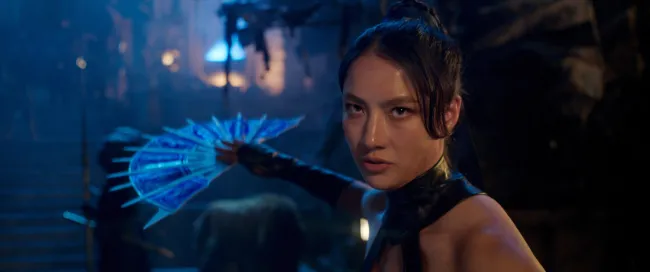
Looks like it’s going to be another brutal loss for the Earthrealm in its endless battle against the big screen. After five long years waiting for director Simon McQuoid to finally produce the actual martial arts tournament his mostly table-setting reboot teased audiences with back in 2021, “Mortal Kombat II” arrives with plenty of the one-on-one fighting scenes its predecessor so sorely lacked.
But even graduating past that odd structural choice, and swapping Warner Bros.’ pandemic-era hybrid release model for a 100 percent theatrical rollout, McQuoid stuffs his highly anticipated follow-up film with so many basic creative flaws that not even its strongest cinematic moves land. A noisy carousel of muddy altercations that blur together until even their extreme finishing gore seems routine, “Mortal Kombat II” somehow feels flat, overextended, and quietly taxing — at just under two hours.


That’s a particularly disappointing outcome for McQuoid considering his earlier “Mortal Kombat,” while undeniably messy, offered generally stronger execution and the promise of a debut director at least trying to build some sincere emotional momentum. And yet, this underwhelming sequel reads more like a slow-motion rendering of the exact moment such notoriously cumbersome IP came crashing down on its challenger. Most damningly, that catastrophe comes out as a fiery blaze that’s routinely overwhelming but seldom compelling, resulting in a tedious experience that might be better live-streamed on UFC.
Yes, it’s hard to make a skill-based fight to the death — one that literally decides the fate of humanity (!!) — boring. But “Mortal Kombat II” manages to make the back half of McQuoid’s epic strategizing into a remarkable slog, as five Earthrealm champions are forced to battle five Outworld aggressors in a string of fights that will determine which side keeps control of the closest thing their multiverse has to “our” reality. Confronted with dense lore and a medium that’s infamously hard to translate for film and TV, McQuoid would’ve done well to focus on his storytelling fundamentals rather than guess at the staying power of a borrowed world that’s already been thoroughly adapted.

Pushing along a stiff plot that always keeps the broader “Mortal Kombat” universe in mind, while miraculously failing to make much of that connective tissue matter, McQuoid’s latest has its moments… just not enough of them. The first combat scene that feels truly alive is, fittingly, the meeting between the film’s two most important newcomers. Pairing the killer Kitana (Adeline Rudolph), an imprisoned warrior princess armed with razor-edged fans, and the goofy Johnny Cage (Karl Urban), a washed-up Hollywood stuntman stumbling into cross-dimensional warfare, the match is fun. Sure, the fight itself is visually choppy and barely supported by the underdeveloped beats that get us there. But it contains the faintest essence of personality that the rest of McQuoid’s bland effort struggles desperately to maintain.
Rudolph, best known for her melodramatic comic-book work on Netflix’s “Chilling Adventures of Sabrina” and The CW’s “Riverdale,” emerges as the sequel’s not-so-secret weapon. A main attraction, even when she’s saddled with painfully awkward but not quite campy dialogue from screenwriter Jeremy Slater (and then literally chained to a pole?!), Kitana remains an enthralling force throughout. That begins with a reasonably effective prologue that depicts the fall of her childhood home, Edenia, and gives Kitana’s origin a more solid foundation than any of her cast mates.
Luminous yet lethal, Rudolph carries herself with enough conviction to make the reluctant royal daughter of the barbaric Shao Kahn (Martyn Ford) feel inherently consequential. Whether Kitana is confiding in her bodyguard and friend, Jade (Tati Gabrielle), or attempting to challenge the monstrous authority of her adopted father, she moves with enough dramatic purpose to consistently suggest the existence of a magnetic character study struggling to escape the situational resources limiting this one. Still, that’s faint praise for what should have been one of this year’s major breakout action roles.

For decades now, “Mortal Kombat” canon has been expanding beyond the 1992 Chicago arcade cabinet where the video game franchise started, and taking root in global pop culture as a kind of shorthand for violence that’s stylishly vicious. Between new games, animated projects, web series, comic books, TV shows, and other movies, the barebones mythology that once drew players into this realm’s menacing mystery has become a confusing soup. Organizing that chaos into a coherent blockbuster format is a key part of the assignment here. But in “Mortal Kombat II,” McQuoid fails to connect even the strengths of his own hard work from five years ago with the hit he should be releasing today.
Familiar faces, including video game favorites Sonya Blade (Jessica McNamee) and the bionic Jax (Mehcad Brooks)— plus, the 2021 film’s original protagonist Cole Young (Lewis Tan) — drift through “Mortal Kombat II” more like functional placeholders than real people. While the much-maligned Cole might fare slightly better here than his first appearance, that’s mostly because the sequel smartly sidelines his part. When the former “Mortal Kombat” lead dramatically bellows, “This is for Earth, you son of a bitch,” the line lands squarely between earnest melodrama and accidental self-parody.
That tonal uncertainty appears throughout and becomes impossible to ignore as soon as the finale is in sight. You’re never fully sure whether this early-career filmmaker is intentionally leaning into the ridiculousness of the position he’s put himself in by leaving his best work in his last movie, or simply losing control of impenetrable material that might be good if it didn’t try quite so hard. Earthrealm and Outworld cycle through matchup after matchup as the future of everything hangs in the balance, but the iterative tension rarely makes sense. Powers appear to shift based on narrative convenience, while the contest’s cosmic “rules” are negotiable at best. The result is strained effort without rhythm or reason.

If the original “Mortal Kombat” video games are notorious because they demanded such punishing levels of skill from their players, this latest film adaptation instead provides an arc that’s easy to follow — but more enjoyable to watch disappear over the horizon without a second thought. Made worse by frantic editing and counterintuitive shot framing, the visual effects fluctuate wildly between convincing digital flourishes and surprisingly cheap-looking practical attempts. The environments themselves often resemble generic fantasy soundstages, and at a point, every arena feels distinct yet meaningless.
Appropriately, the scene-stealing Kano (Josh Lawson, returning in a unique way) seems to understand this shortcoming better than anyone else in the cast. Once again charming viewers with his native Australian accent, the actor remains effortlessly entertaining while using his charisma to neutralize caustic dialogue that would flatten a less likable performer on impact. While Urban’s has-been Cage gets trapped repeating the same excruciating punchlines, several of which sound like they were ripped straight from a bargain-bin “Once Upon a Time in Hollywood,” Kano breezes through simple sentences like, “My peripheral vision is fucked, mate,” with enough confidence to briefly resuscitate entire scenes.

To Urban’s credit, the script occasionally gives Johnny Cage flashes of inspired stupidity, but “The Boys” star is sorely missing his New Zealand lilt here and no matter of screen time can save him. Even accepting that Johnny Cage whining, “I got a Saturn Award for Best Fight in a Feature Film!” is probably this movie’s single best written joke, “Mortal Kombat II” relies on its weakest link like a ringer for far longer than Urban can sustain. The performance itself grows increasingly grating as the runtime drags on, particularly when Johnny’s scene partners overpower him by connecting deeper and doing less.
Equally unsatisfying is just how common this sequel sounds. For a property with theme music, sound effects, and character iconography that’s been hugely influential across the hip-hop, rap, and pop music scenes, “Mortal Kombat II” defaults to some anonymous orchestral scoring that pointlessly drains the audio of its drive and identity. These video games have always pulsed with a heightened, aggressive energy, but the latest movie’s soundtrack could come from virtually any action title in modern history. That only underlines the notion that many cinephiles have no real understanding of what made “Mortal Kombat” culturally sticky in the first place, and for many, that will ultimately be the sharper frustration.

McQuoid clearly isn’t a fake fan. “Mortal Kombat II” is equipped with countless references, callbacks, and details pulled directly from the games. Heck, even co-creator Ed Boon pops up for a reasonably amusing cameo as a bartender. But somewhere between the reboot in 2021 and the letdown headed for theaters today, “Mortal Kombat II” became yet another example of Hollywood borrowing recognizable video game IP without being able to successfully reinterpret the core elements that made it popular.
As a franchise, “Mortal Kombat” has spent years crossing over with other fictional worlds, recruiting everyone from Jason Voorhees to RoboCop in fights facing its champions. McQuoid throws in a batch of contemporary references, too, nodding at “The Lord of the Rings,” Keanu Reeves, and, believe it or not, “Big Trouble in Little China.” But none of that intertextual awareness matters if the heart of the next movie chapter feels this artistically inert. With whispers of another film already looming at Warner Bros., McQuoid’s best defense might be tapping out — before he’s tasked with delivering an even more insufferable cinematic fatality.
From Warner Bros., “Mortal Kombat II” is in theaters on Friday, May 8.
Want to stay up to date on IndieWire’s film reviews and critical thoughts? Subscribe here to our newsletter, In Review by David Ehrlich, in which our Chief Film Critic and Head Reviews Editor rounds up the best new reviews and streaming picks along with some exclusive musings — all only available to subscribers.
>
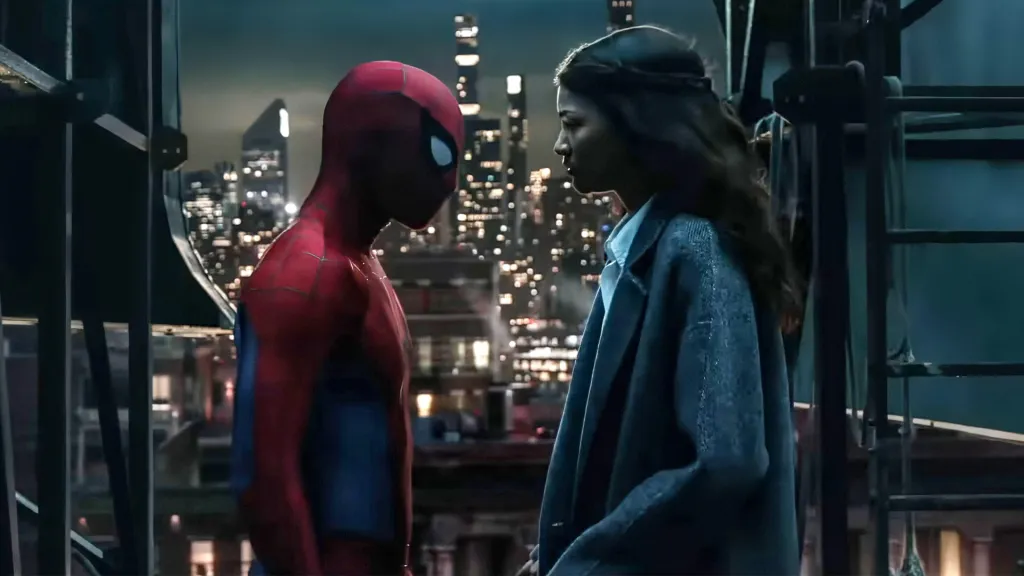
EXCLUSIVE: The highest grossing movie ever at the domestic box office, and the third highest grossing of all-time worldwide, Spider-Man: Brand New Day, is getting a re-release, we hear.
Sources are buzzing that the Destin Daniel Cretton directed, Tom Holland and Zendaya starring movie, will have extra footage that includes, but is not limited to, Rosario Dawson’s character Claire Temple.
Temple is a nurse who gives medical aid to vigilantes, and has appeared in the first and second season of Marvel TV’s Daredevil (2015-2016), Jessica Jones, Iron Fist, Luke Cage, and spinoff The Defenders. In interviews, Dawson has mentioned she shot a scene for Brand New Day, but it was cut. We also understand there will be more surprises as well in the extra footage.
This news comes in the wake of Disney posting some serious cash this past weekend with the re-release of the Russo Brothers’ Avengers: Endgame: Encore which minted $86M around the globe ($26M domestic) and moved its current lifetime cume to $2.885 billion, still the second highest grossing movie ever behind Avatar‘s $2.92B. And that reissue was a marketing stunt for Disney/Marvel Studio’s Avengers: Doomsday hitting theaters on Dec. 18.
Spider-Man: Brand New Day is still playing in theaters in every corner of the world with the pic’s current global tally at $2.495B as of yesterday ($950.7M of that coming from North America). Natch, Brand New Day is also Sony’s highest grossing movie ever, having unseated 2021’s Spider–Man: No Way Home some weeks ago ($1.92B).
No word yet as to when the re-release will happen. Logic dictates that Sony would have some sort of access to premium large format screens during a quiet time at the box office. In the past, the Culver City lot re-released No Way Home over Labor Day weekend 2022 (which made $9.3M in its domestic run). Going way back during Labor Day weekend 2002, Sony did a double-feature re-release of Sam Raimi’s original Spider-Man from that summer with Men in Black II.
It’s a never-ending war between Marvel vs. Marvel as Spider-Man: Brand New Day‘s chase of Avengers: Endgame isn’t over. The current gap worldwide for Brand New Day to overtake the latter is, wow, $389.7M.
This summer Holland and Zendaya also starred in Universal’s highest grossing movie ever, Christopher Nolan’s The Odyssey which currently counts $1.75B WW.
Right now, Spider-Man: Brand New Day weighs in with a running time of 2 hours and 25 minutes.
Avengers: Endgame‘s original cut was 3 hours and 1 minute, however, Encore included six minutes and 17 seconds of extra footage from Doomsday for those who purchased tickets in Disney’s certified PLF format, InfinityVision. Those who watched the pic on non-Imax/Infinity Vision screens only got a bonus of two minutes and six seconds.
Sony didn’t return request for comment.
>
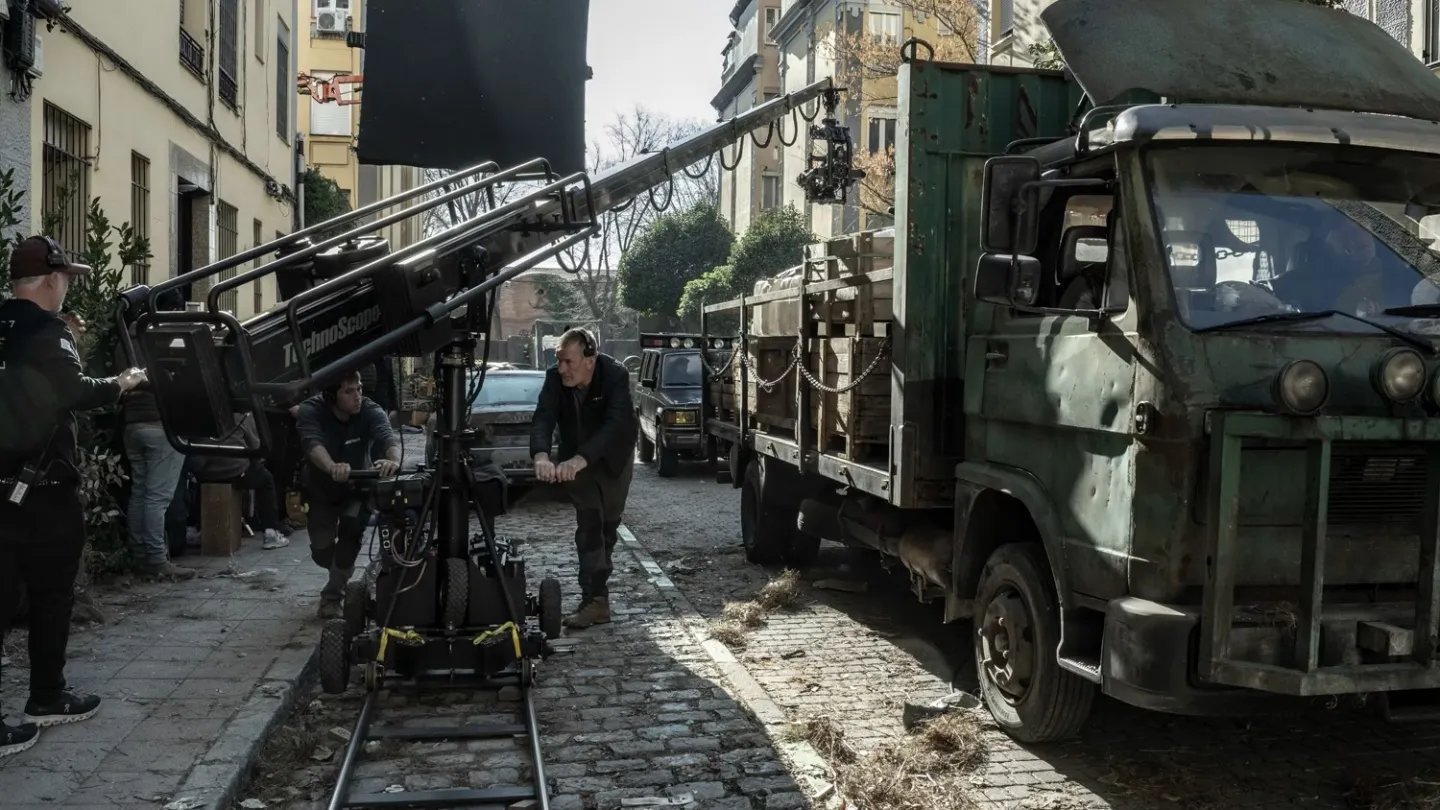
Raúl Torquemada is a busy man. He is the director of the Madrid Film Office, the audiovisual office of Madrid’s City Council, which is working with local and global film, series and advertising productions that are shooting in the Spanish capital and featuring it in prominent roles.
For 2025, the Madrid municipal office disclosed that feature film shoots set a new record of 71, handily exceeding the previous high of 47 set in 2022.
From next week, Woody Allen is scheduled to shoot his latest movie in Madrid. Still untitled, the filmmaker is understood to have agreed that “Madrid” will be part of the title. Also among the conditions for the city’s financial backing of the project is that it must showcase Madrid via a certain percentage of exterior scenes in the film.
Film and series buffs have in recent years spent screen time with the Spanish capital thanks to such series as AMC‘s The Walking Dead: Daryl Dixon and Netflix’s Money Heist and spinoff Berlin, with such recent productions as Netflix’s Safe Houses and HBO’s Carlota joining that illustrious company. Among the movies that the city has recently hosted have been 2026 festival circuit favorites, such as Florian Zeller’s Bunker, starring Penélope Cruz, Javier Bardem, Stephen Graham, Paul Dano and Patrick Schwarzenegger, La bola negra (The Black Ball), directed by Javier Calvo and Javier Ambrossi, and Pedro Almodóvar’s Bitter Christmas.
Torquemada will be among the busy attendees of this week’s sixth edition of Iberseries & Platino Industria, which brings Spanish- and Portuguese-language content creators and executives from Europe, Latin America and the U.S. to Madrid.
THR caught up with the Madrid film commissioner by email to find out what is new and how Madrid continues to go from strength to strength.
Has Madrid further enhanced its appeal as a production hub over the past year or two with financial incentives or qualitative support programs, or how do you explain the city’s continued success in attracting film and TV productions?
It is not just an impression. Madrid hosted the filming of 71 films and 52 series in 2025, reflecting the strength of an industry built over many years. Its appeal combines outstanding creative and technical talent, experienced production companies, diverse locations and excellent international connectivity. The City Council supports this through close collaboration with the industry and practical assistance from Madrid Film Office, part of the Madrid City Council’s Tourism Area, helping productions find locations, connect with local professionals and navigate filming in the city.
Alongside Spain’s national tax incentives, the City Council’s grants for film production, promotion and distribution had provided nearly €15 million ($17 million) between 2021 and March 2026. This year, we also launched support for the development of series and miniseries. Our commitment is long-term as we want productions to choose Madrid with confidence, generating skilled jobs and opportunities for local businesses while bringing the city’s identity and cultural richness to audiences worldwide.
Raúl Torquemada, director of the Madrid Film Office
Courtesy of Madrid Film Office
What do you think is the most overlooked reason for Madrid’s success in attracting film and TV shoots and companies? I feel everyone by now knows about the beauty of the city, its great food and its skilled crews…
Perhaps the most overlooked factor is the confidence Madrid gives producers. Beyond its locations and skilled crews, the city brings together the connections, accommodation, infrastructure and specialist services needed to organize a complex production. This makes Madrid a practical base for projects filming across Spain and gives companies strong foundations for establishing a lasting presence here. The Walking Dead: Daryl Dixon is a very good example of that model.
That confidence also comes from having an experienced industry, a solid ecosystem, including VFX, animation, post-production, and virtual production and a city council committed to supporting it. Through Madrid Film Office, we help producers connect with local expertise and navigate the city. For a producer, knowing where to turn when a challenge arises can be decisive. For Madrid, those relationships help turn individual shoots into sustained investment, skilled employment and opportunities for local talent
What are some of the big films and series that have shot in Madrid in the past year?
Those titles are actually very good examples of the internationalization we are seeing. Florian Zeller’s Bunker, starring Penélope Cruz and Javier Bardem alongside Stephen Graham and Paul Dano, filmed in Madrid and London and is a French-Spanish co-production involving Madrid-based MOD Producciones.
Safe Houses also filmed in Madrid in 2026: it is an Apple TV+ international espionage series, starring Ana de Armas and Jennifer Connelly, with a story that itself revolves around events in Madrid. And Carlota, the large-scale historical production from Sony Pictures Television for HBO Max, also filmed in Madrid and elsewhere in Spain, as well as Mexico and Colombia.
This year, Madrid is also receiving the filming of The Interrogator, a spy drama series for Fox, Love Affair, a Korean drama series for Netflix or the sci-fi show Murderbot for Apple TV+.
Those projects sit alongside the international productions we have been tracking over the last year or so, such as Day Drinker, directed by Marc Webb; The Beast, directed by Renny Harlin with Samuel L. Jackson; Ceniza en la boca, directed by Diego Luna; and further seasons of The Walking Dead: Daryl Dixon and Has Fallen.
And there is a very strong domestic slate too, including new works by Pedro Almodóvar, Los Javis and Rodrigo Sorogoyen, as well as series such as Berlín, Reina Roja and Anatomía de un instante.
What interests us is not simply the number of titles, but the range: Spanish projects, European and Ibero-American co-productions and increasingly ambitious U.S. and U.K. projects are all making use of the same Madrid ecosystem.
The word is out that Woody Allen’s new film will start shooting in Madrid next week and feature the city like a star. What can you share about how important a project that is for Madrid and its infrastructure and about the financial support the city and region provide for it? And is it true that Madrid will be in the film title under the contract with the city?
Woody Allen has a distinctive ability to make cities part of his cinematic legacy. New York, Paris or Rome have become integral to his stories, leaving images that stay with audiences long after the film ends. For Madrid, the opportunity lies in that lasting cultural presence, bringing the city’s character to international audiences while showcasing the talent and professional capacity of our audiovisual industry.
Filming is scheduled to begin on Oct. 5, with Madrid as its principal setting and much of the shoot taking place in locations in the city center. The project is a contemporary comedy produced by Wanda Visión, Gravier Productions Inc. and 3Six9 Studios, and the announced cast includes Alexi Wasser (Messy, Girls), Jemima Kirke (Girls, Sex Education), Peter Vives (El tiempo entre costuras, Velvet), Marton Csokas (El Señor de los Anillos, The Equalizer) and Jakob Oftebro (Kon-Tiki, Hamilton).
As already announced, the City Council is supporting the project through a €1.5 million ($1.7 million) institutional sponsorship aimed at promoting Madrid internationally and the announced plans include “Madrid” in the title. The regional government is also supporting the production; questions about its contribution are best addressed to them. Further creative and production details are for the filmmakers to share. Our focus is on the opportunity this represents for Madrid’s cultural profile and local creative economy.
Madrid filming for action-thriller film ‘All the Names of God’
Courtesy of Second Gen Pictures/TriPictures/Madrid Film Office
Are there any key numbers that Madrid has hit in terms of TV and film productions in recent years?
The clearest record is film production. In 2025 alone, the city hosted at least 71 feature films, 52 series and more than 410 medium and large-scale commercials, while the Madrid Film Office provided more than 4,115 specialized assistance services, almost 7 percent more than the previous year. The 71 features are particularly significant because they comfortably surpass the 47 filmed in 2022, which had previously been our highest figure since the Madrid Film Office was established.
But perhaps the numbers I find most revealing are the economic ones. Our recent study with the Universidad Autónoma of Madrid estimates that feature films and series filmed in Madrid generated €1.54 billion ($1.75 billion) in economic output in the city between 2021 and 2024, supporting more than 10,100 full-time-equivalent jobs, generating €883.6 million ($1.0 billion) in gross value added and €367.3 million ($418 million) in tax revenues.
That gives us a much clearer picture of why filming matters and that the industry has a substantial multiplier effect across hospitality, transport, construction, professional services and many other parts of the city’s economy. This enables us to gradually build an increasingly detailed and comprehensive picture of the audiovisual sector’s contribution to the city and the region, incorporating data from the various studies we carry out as part of our strategic focus on the generation and analysis of quantitative data.
How important is Iberseries & Platino Industria for showcasing Madrid as a production and creative hub?
It has been enormously valuable because it allows Madrid to demonstrate something we consider fundamental to our positioning: we are not only a location or a production center, but also a meeting point between Europe and Ibero-America. Iberseries & Platino Industria brings platforms, broadcasters, producers, creators, distributors, buyers, financiers and talent together in Madrid, creating opportunities for co-production, financing and internationalization.
The fifth edition attracted more than 2,700 accredited professionals from 50 countries, half of them international, as well as over 1,500 companies and more than 180 buyers and commissioners from 30 countries.
For the Madrid Film Office, our support has been sustained from the beginning because the event fits perfectly with our wider strategy. We want Madrid to be the place where an Ibero-American creator can meet a European producer, where a Spanish company can find an international partner and where a global platform can discover talent, projects and production capacity. That positioning also connects with our support for initiatives such as ECAM Forum, the Platino Awards or the Film Academy Residencies, among other programs. In that sense, Iberseries & Platino Industria does more than showcase Madrid: by bringing international business and talent here every year, it actually helps build the ecosystem we are promoting.
Is there anything else you would like to highlight?
Our ambition is to ensure that growth in filming creates lasting value for Madrid. That means attracting international productions and co-productions while strengthening local companies and talent. In line with the decentralization strategy of the Madrid City Council’s Tourism Area, which oversees Madrid Film Office, we also want to spread filming activity more widely across Madrid’s 21 districts. Areas such as Usera, Villaverde, Carabanchel and Tetuán offer distinctive settings and new storytelling possibilities, helping extend the economic and cultural benefits of filming to more neighborhoods.
This growth must work for residents too. Our Best Practices Guide for Filming encourages positive coexistence between productions, residents and local businesses. Alongside this, we are developing screen tourism, promoting Madrid’s audiovisual heritage and connecting emerging talent with the industry. Better data will help us assess the sector’s impact and guide our work. Ultimately, we want productions to choose Madrid and companies, professionals and creators to find lasting reasons to stay, return and grow here.
>
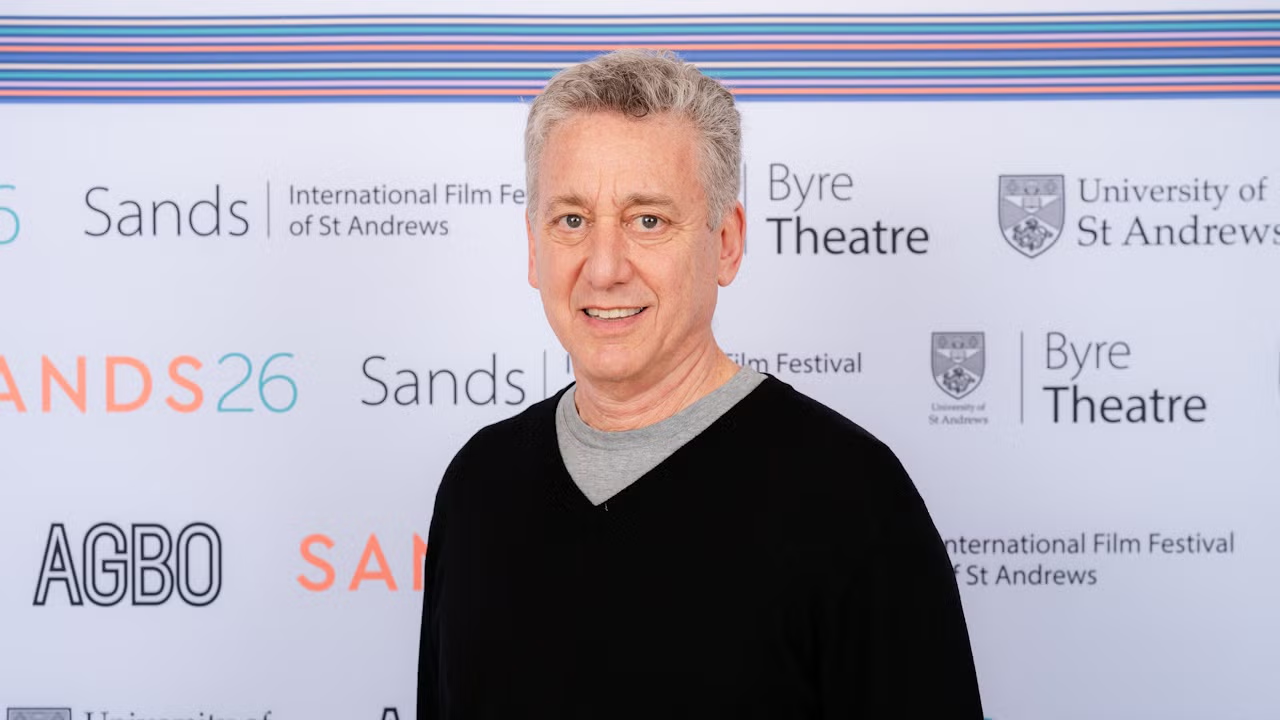
Cinetic Media founder and CEO John Sloss has launched Vertical Leap, an investment vehicle and producing pathway created exclusively for media-curious professional athletes, the company announced Monday.
Vertical Leap is built to give athletes more than the ability to back films for producer credits. Members gain a working seat inside Cinetic’s slate, with access to rough cuts, creative input and the same industry guidance the company provides the filmmakers behind its most successful projects. The goal is to prepare each member not just to back a film, but to eventually build a production career of their own.

“Vertical Leap offers a pathway for elite athletes to support commercial, impactful documentaries, while learning the ins and outs of film production from the most experienced storytellers working today,” Sloss said in a statement. “It is also a way for them to build something lasting beyond their playing days, expanding their brand, deepening their creative voice and putting real equity behind the stories they believe in.”
Sloss added: “For the documentary community, Vertical Leap brings the adrenaline jolt of a new class of collaborators, athletes with real creative instincts and the reach to bring documentary storytelling to audiences who might not otherwise find it.”
Cinetic is best known for structuring and executing landmark finance and sales transactions for independent films, including some of the most significant sales in Sundance and Cannes history. Cinetic has handled the financing and/or sale of more than 600 films and series, including “Hoop Dreams,” ESPN’s landmark series “30 for 30,” “Summer of Soul,” and this year’s Oscar contender “Once Upon a Time in Harlem,” as well as several of the most iconic independent films of the past 30 years such as “Napoleon Dynamite,” “Little Miss Sunshine,” and the Academy Award-winning Best Picture “Green Book.”

>


Search For Canadian TV Actor Stewart McLean Now Homicide Investigation


These ’90s fashion trends are making a comeback in 2017
According to Dior Couture, this taboo fashion accessory is back
Model Jocelyn Chew’s Instagram is the best vacation you’ve ever had
Emily Ratajkowski channels back-to-school style
9 Celebrities who have spoken out about being photoshopped


Rurouni Kenshin: Hokkaido Arc Manga Takes 1-Issue Break – News


HIDIVE to Stream English Dubs for The World Is Dancing, The Forsaken Saintess and Her Foodie Roadtrip in Another World, The Dangers in My Heart: The Movie Anime – News