
Director Patrick Wally
Courtesy of WyFilm


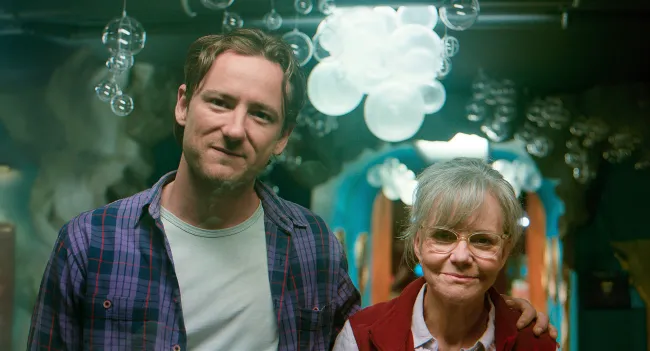
There is much to admire about Olivia Newman’s “Where the Crawdads Sing” follow-up “Remarkably Bright Creatures,” another film adaptation of a beloved (and bestselling) novel. There’s Sally Field, in an a role that has already earned her awards accolades, and a massive octopus voiced by Alfred Molina. There’s a crowd of chatty best pals that include Joan Chen, Kathy Baker, and Beth Grant. There are actual locations (a sea that is a sea! what an idea!). There’s Lewis Pullman, continuing to work his own dad’s charming everyman appeal.
And there’s something increasingly rare (yes, even more rare than Alfred Molina voicing a huge sea creature): a book-to-film adaptation that actually adapts the material, and does not just crib blindly from the original. Fans of Van Pelt’s novel might balk at what Newman and co-writer John Whittington have snipped from her story (huge apologies to Pullman’s character’s early backstory and his beloved aunt, similar regrets to Field’s character’s brother), but the trims that run throughout the film are smart and useful. They serve the story, yes, but also its new shape as a film.


And, as a film, this tearjerking story about giant sea creatures, broken people, and huge secrets works well enough. Much like Van Pelt’s novel, it’s a cozy little drama with twists and turns that feel both inevitable and delightful. It’s all bolstered by Field and Pullman’s performances, which crackle with chemistry and good choices, nothing big or showy here. If you’re looking for a pick for the entire family, this is a solid one, and that’s no small feat in the crammed streaming world, where it can too often feel as if there’s plenty of content but nothing that feels actually made for people.
Or octopuses! At the center of the story is Molina’s tentacled avatar, Marcellus, a giant Pacific octopus who has lived most of his life at the cozy and clean Sowell Bay Aquarium, located near Puget Sound. Many of the details of Marcellus’ life — like how he came to be “rescued” — will be revealed later, but his primary characteristic is on full display from the start. Marcellus is really, really smart, which Molina imparts via a wry and world-weary voiceover. In Van Pelt’s book, Marcellus gets his own chapters to share his story and observations, and transferring these bits into a consistent voiceover narration is yet another example of this smart scripting.
Marcellus is, in fact, smart enough that he’s figured out how to get out of his tank, explore (read: eat some of his fellow aquarium residents), and get back in without anyone noticing. But Marcellus is growing older, so his assignations are getting slower, and “The Consequences” for his ramblings are getting worse. Thankfully, he has at least one other creature he can trust: Field’s Tova, the aquarium’s dedicated overnight cleaner, who shares a dream of the sea that even Marcellus can deduce.
Or, as he tell us: they they “both dream of the bottom of the sea and what we lost there.” For Marcellus, it was his freedom. For Tova, it was her beloved only son, Erik.
That Marcellus knows that, that Tova has told him about it, is the crux of the story. If you can not only buy that, but delight in it, “Remarkably Bright Creatures” is very much for you. (It was very much for me.)
Tova’s existence is about to be upended by the arrival of another flighty young man. Cameron Cassmore (Pullman) lands in Sowell Bay, convinced his unknown father not only lives there, but is wildly rich and perhaps interested in meeting the kid he never knew he had. Finding him, however, is proving tricky, and the perpetually down-on-his-luck Cameron sure needs a job in the interim. Thank God that most people in Sowell Bay, like local grocery story owner Ethan (Colm Meaney) are so happy to welcome outsiders. Thank God also that Tova just sustained a minor injury (she slipped while helping Marcellus, but no one can know that) and her gig at the aquarium needs a temp fill-in. Thank God he’s about to meet Marcellus.

Oh, and he’s still about to meet Tova.
Despite this rambling semi-introduction, Newman’s film makes quick work of all of this, recognizing that getting to the Tova-and-Cameron show (with, of course, many guest appearances by Marcellus) is the entire point of the picture. As Cameron adjusts to life in Sowell Bay (more bonding with Ethan, who is a little hung up on Tova, plus his own potential romance with Avery, played by a peppy Sofia Black-D’Elia), Tova starts to inch her way out of it.
The pains and pleasures of family life are top of mind for her. Widowed, heartbroken, and left rattling around the house her own father built (the film has a real sense of place, both out in the town and inside the aquarium and Tova’s home), Tova is preparing to decamp for a luxe retirement home across the bay. Everyone — including smitten Ethan and her rowdy pack of pals — think this is a bad idea. What, however, will become most important is what Cameron thinks, and what part he comes to play in Tova’s life.
The film does occasionally lean on flashbacks of Tova and her long-gone son Erik to fill in some blanks — and lay out some real winking table-setting — but “Remarkably Bright Creatures” fares better when Tova or Cameron are telling their woes to Marcellus or even each other. Zippy, smart editing moves us through the story, drawing connections where necessary, bolstered by that ol’ octopus voiceover, and gently guiding us to some major plot points.
Never fear, book lovers, the film sticks firmly to its late act upheavals and revelations, and even manages to make them feel richer and more earned here. Maybe it’s something about seeing Sally Field bond with an octopus, or watching a true inter-generational friendship blossom on screen, or maybe it’s just something more obvious: taking the best parts of a sweet story, and paring it down to its best bits. Or, well, best arms? Tentacles? Whatever can reach out and touch you, just as this film will.
“Remarkably Bright Creatures” will start streaming on Netflix on Friday, May 8.
Want to stay up to date on IndieWire’s film reviews and critical thoughts? Subscribe here to our newsletter In Review by David Ehrlich, in which our Chief Film Critic and Head Reviews Editor rounds up the best new reviews and streaming picks along with some exclusive musings — all only available to subscribers.
>

EXCLUSIVE: GK Barry agency HLD Talent has signed content creator and By Babes co-founder Heather Bowling.
The social media star, business owner and neurodiversity advocate is joining up with the likes of Barry, Mariam Musa and Shakira Khan at the London-based HLD, which is lead by creators agent Hannah Holland.
She is known as a the co-founder of By Babes, a UK-based and community-driven beauty and cosmetics brand, and creates much of her content around the company’s focus and products.
HLD called her “bold, ambitious and completely herself” and noted that she has a “built an incredibly loyal and highly engaged audience who have grown with her and who are invested in far more than just the content she creates.”
Bowling appeared on Season 5 of Footasylum’s YouTube series Locked In and made an appearance on Barry’s podcast Saving Grace.
“As she enter this next chapter, we’ll be working together to build on everything she’s already created, while opening up new opportunities across premium fashion and beauty, entrepreneurship, media, presenting and beyond,” said HLD in a statement.
Bowling was previously with Insanity.
>
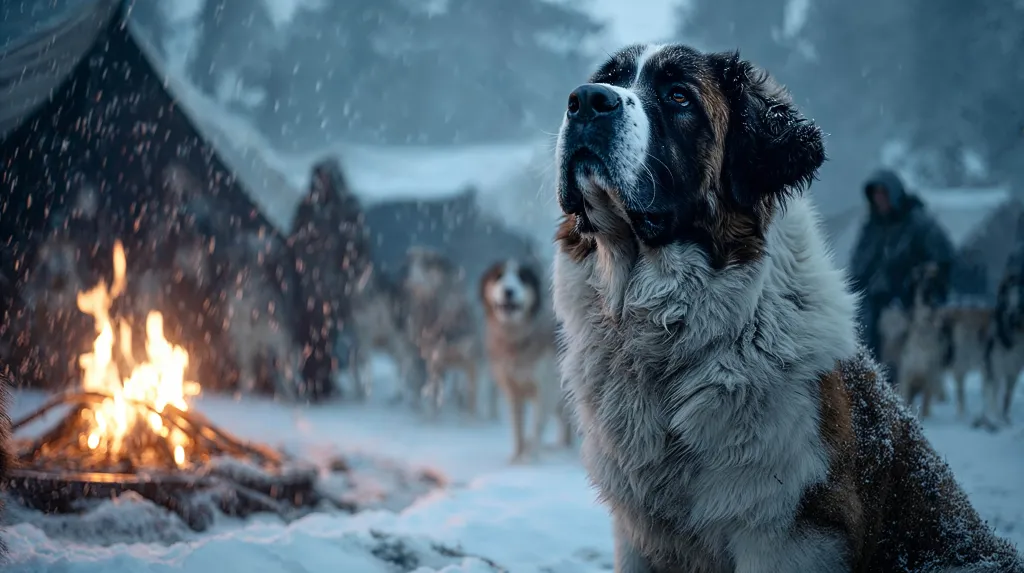
EXCLUSIVE: David Barron, the British film producer with credits on six Harry Potter films, is entering the generative artificial intelligence space.
Barron has agreed to produce an AI adaptation of Jack London’s 1903 novel The Call of the Wild, which is written and directed by Simon Rumley (Crushed, Red White & Blue).
The film will be generated at nmatic, with CGI and traditional VFX helping deliver more complex scenes. Filmmakers are billing it as the first faithful adaptation of London’s novel because it will be made from Buck’s subjective experience.
“London’s canvass is so epic, the Alaskan geography so gruelling, the dog and wolf fights so visceral that a faithful cinematic adaptation has hitherto been logistically and financially impossible,” said Barron. ”But technology has finally caught up with London’s vision, and we believe now is the time to do justice.”
The Call of the Wild tells the story of a pampered St. Bernard dog, who is torn from his life of privilege in California’s Santa Clara Valley and is sold into the brutal world of the 1890s Klondike Gold Rush, where he discovers the wild instinct that has always lurked within.
The film has been adapted for the screen several times, including a 2020 Michael Green film starring Harrison Ford.
David Barron, Mark Sandell (A Liar’s Autobiography) and Nick Price produce. Chris Catchpole, Carl Lyttle, and Toby White head up prompting and technical at nmatic.
>

EXCLUSIVE: Lightdox has acquired world sales rights to the documentary My Home of Wind and Sand ahead of its world premiere Tuesday at the Zurich Film Festival.
Filmmaker Patrick Wally spent over a decade on his film, a portrait of women’s rights, human rights and climate activist Najla Mohamed Lamin, who was born in a Sahrawi refugee camp in Algeria. Lamin has led a peaceful campaign supporting the right of Western Sahara to self-determination, a dream of Sahrawi refugees that has been frustrated for more than half a century.
Nobel Peace Prize nominee Greta Thunberg is expected to attend Tuesday’s world premiere and will participate in a conversation afterwards with Lamin. Thunberg visited the Sahrawi refugee camps last year, where she and Lamin conducted a workshop on climate change.
Director Patrick Wally
Courtesy of WyFilm
“Told through conversations with the filmmaker – who gradually becomes visible inside the story – the documentary refuses to reduce Najla to a symbol of a geopolitical conflict,” notes a synopsis. “Western Sahara is experienced through one person living its consequences in real time. Najla addresses international institutions, builds practical spaces for women and children, raises her family and continues to argue for peaceful resistance even as a generation born in exile grows older without a political resolution.”
The synopsis continues, “When armed conflict resumes after decades of ceasefire, the convictions that have shaped Najla’s public life are tested. The film follows her as she asks what pacifism, patience and agency can mean when history seems immovable – and whether one person can still create change inside circumstances that appear impossible.”
Najla Mohamed Lamin at the dunes near the Sahrawi refugee camp of Smara.
Courtesy of WyFIlm
Anna Berthollet, CEO of Lightdox, commented, “Najla has lived her entire life with an unresolved conflict. Yet Patrick’s film is not a geopolitical story; it is an intimate portrait of how she chooses to live, raise her children and build a future for her community. He spent eleven years following her journey and bringing her story and mission to the screen. At a time when Western Sahara is once again receiving international attention, we believe it is important that Najla’s perspective is part of that conversation. We feel very humbled to have been entrusted with bringing Patrick and Najla’s deeply personal story to audiences around the world.”
The border wall berm and Moroccan military base separating the Moroccan occupied territory from the
Polisario controlled territory of Western Sahara.
Courtesy of WyFilm
The unresolved status of Western Sahara has been largely ignored in the U.S. and much of the West, but it has kept the Sahrawi people in terrible limbo. Spain ruled the territory as its colonial possession for the better part of a hundred years, but after it ceded claims in the mid-1970s, hopes for the territory to determine its own future were dashed when Morocco took control of much of Western Sahara. The Polisario Front, representing the Indigenous Sahrawi people, seeks self-determination and is supported by Algeria (where the refugee camps are located). The United Nations officially designates Western Sahara as a “Non-Self-Governing Territory.”
In a director’s statement, Wally said, “When I met Najla ten years ago, I knew this film needed to be made. At the time I had never heard of the issue of Western Sahara. I thought of myself as reasonably informed about the struggles shaping the world, yet I knew nothing about more than 200,000 Sahrawis living for generations in refugee camps in the Algerian desert, established after the war and displacement of 1975. That absence in my own awareness shocked me.
“What struck me first, however, was not the conflict in the abstract but Najla herself. I was surprised by my own assumptions. Here was a woman raised in a refugee camp who was exceptionally articulate, politically precise and full of a vision for the future. She spoke about peaceful resistance, about a generation born in the camps, and about the endurance required to believe in a bright future when nobody outside seems able to see it.”
An aerial view of the Sahrawi refugee camp Smara, in the Algerian desert, near Tindouf.
Courtesy of WyFilm
Along with directing, Wally serves as the film’s cinematographer. The film is produced by Shirin Hooshmandi, Najla Mohamed Lamin, and Patrick Wally. Anna Kirst edited the film, with additional editing by Daniel Rutz. The music is by Ahmed Zain.
In addition to Tuesday’s world premiere at the Zurich Film Festival, My Home of Wind and Sand will hold public screenings on Wednesday, Thursday and Sunday.
>


Search For Canadian TV Actor Stewart McLean Now Homicide Investigation


These ’90s fashion trends are making a comeback in 2017
According to Dior Couture, this taboo fashion accessory is back
Model Jocelyn Chew’s Instagram is the best vacation you’ve ever had
Emily Ratajkowski channels back-to-school style
9 Celebrities who have spoken out about being photoshopped


Rurouni Kenshin: Hokkaido Arc Manga Takes 1-Issue Break – News


HIDIVE to Stream English Dubs for The World Is Dancing, The Forsaken Saintess and Her Foodie Roadtrip in Another World, The Dangers in My Heart: The Movie Anime – News