
Tech
TechCrunch Mobility: Lime’s IPO gamble


Welcome back to TechCrunch Mobility, your hub for the future of transportation and now, more than ever, how AI is playing a part. To get this in your inbox, sign up here for free — just click TechCrunch Mobility!
After years of hints and preparation, the Uber-backed electric bike and scooter rental startup Lime filed for an initial public offering. A micromobility company going public? In 2026? Surely it’s the wrong year.
Lime CEO Wayne Ting has been talking about an IPO for years. TechCrunch spoke to him about it in 2020, 2021, and 2023. It never materialized and I sort of forgot about it, until — boom — the S-1 doc, the registration statement filed with the U.S. Securities and Exchange Commission, posted early Friday morning.
There are some interesting risk factors in the S-1, although we still are waiting for Lime to share terms of the offering.
Revenue is climbing, it has positive free cash flow, and net losses narrowed after 2023, although there has been a slight uptick between 2024 and 2025. Uber, which invested in Lime several years ago, still plays an important role for the company. Lime said about 14.3% of its revenue came through its partnership with Uber, which allows customers to find and rent scooters and e-bikes through its app.
All of this suggests Lime is a growth company headed toward profitability. But there is one substantial headwind. Lime has about $1 billion in current liabilities, and about $675.8 million of that is due by the end of 2026. In all, about $846 million is due within 12 months. Lime does not have sufficient liquidity to pay that, according to its filing. Lime states it plainly in the S-1: If it can’t go public and raise the necessary capital, or change its debt agreements, it may not be able to continue operating as a business.
Senior reporter Sean O’Kane, who likes digging through an S-1 as much as I do, spotted some other tidbits in the risk factors. Investment by cities in their public road infrastructure is a risk factor, according to the company. Lime specifically lists potholes, which made me chuckle and then nod in agreement. Potholes are not kind to shared scooters.
Techcrunch event
San Francisco, CA
|
October 13-15, 2026
Lime also warned that a significant portion of rides are concentrated in a relatively small number of markets in which it operates. One such market, which accounted for 22.2% of its revenue in 2025, is the U.K.
A little bird

Last summer, Uber announced a plan to launch a premium robotaxi service using Lucid Gravity vehicles equipped with Nuro’s autonomous vehicle technology. This is more than a collaboration. Uber said it would invest $300 million in Lucid and would separately buy “at least” 20,000 of the EV maker’s new Gravity SUV over the next six years. Uber recently raised its investment in Lucid to $500 million and pushed the vehicle order to 35,000.
The details about Uber’s investment in Nuro, a privately held startup based in Silicon Valley, have been slim — until now. At the time, we only knew that Uber invested an undisclosed “multi-hundred-million-dollar” amount into Nuro. One little bird has shared more details.
Uber’s total financial commitment to Nuro, which includes its participation in the startup’s Series E round last year and future milestone-based investments, is nearly $500 million, per a source familiar with the deal.
My educated guess is that Nuro just unlocked one of those milestones. The company is testing the Lucid vehicles in autonomous mode with a human safety operator in the driver’s seat. And last month it expanded testing to allow Uber employees to request an autonomous ride in a Lucid robotaxi with a human safety operator still on board. But the company just received two critical permits — a driverless testing permit from the Department of Motor Vehicles and a permit from the California Public Utilities Commission.
Got a tip for us? Email Kirsten Korosec at kirsten.korosec@techcrunch.com or my Signal at kkorosec.07, or email Sean O’Kane at sean.okane@techcrunch.com.
Deals!

Kodiak AI’s first-quarter earnings offers a case study for how challenging it is to commercialize frontier tech. The company announced a number of deals that showed progress. It locked in a commercial contract with Roehl; launched a pilot program to test Kodiak-equipped autonomous trucks at West Fraser Timber Co.’s log-hauling operations in Alberta, Canada; and announced a collaboration with the military vehicle maker General Dynamics Land Systems to create autonomous ground vehicles for defense applications.
But investors were not happy with the terms of its $100 million capital raise. The company sold shares at $6.50 each — a steep discount from its closing share price of $9.10. The raise also included warrants — instruments that give investors the right to buy additional shares later at a set price, in this case as low as $6.
The financing came from existing backer Ares Management and several unnamed institutional investors.
Kodiak’s stock price fell 37% in after-hours trading moments after the financing and Q1 earnings were released. Shares have recovered a bit since, perhaps as shareholders digested the news and looked at it from a glass-half-full perspective.
Kodiak will likely need more capital as it continues to burn cash as it pushes toward its big goal: driverless trucking operations on public highways.
Other deals that got my attention this week …
Moment Energy, a startup that’s developed a novel approach to repurposing EV batteries, raised a $40 million Series B funding round led by Canadian VC firm Evok Innovations, with additional funding from grocery retailer fund W23, joining existing investors like Amazon’s Climate Pledge Fund and In-Q-Tel, the CIA-funded VC firm.
Rocsys, a startup that has developed hands-free depot solutions for autonomous electric vehicles, raised $13 million in an extended Series A round led by Capricorn Partners, with participation from Scania Invest, Forward.One, SEB Greentech Venture Capital, and Graduate Venture.
Notable reads and other tidbits

Aurora has started hauling loads in driverless trucks in Texas for distribution giant McLane. The commercial contract shows some progress by the self-driving trucks company. Disclaimer: These driverless trucks still have human observers in the cab, and the company tells us they cannot operate the vehicle.
Lucid’s first-quarter earnings revealed a company still feeling the effects of a supplier issue earlier this year that caused it to recall its Gravity SUV and pause deliveries. The company, which is also going through a leadership transition, changed its guidance and said it was no longer sure how many EVs it will build or sell this year.
In 2024, the National Highway Traffic Safety Administration updated the New Car Assessment Program and added four new pass-fail tests to assess the performance of advanced assistance systems, starting in 2026. And we’re finally seeing the results. The later-release 2026 Tesla Model Y is the first vehicle to meet the agency’s new benchmark.
Ouster is launching a new lineup of color lidar sensors that CEO Angus Pacala believes will replace cameras.
EV startup Slate has lost a notable board member. The head of Jeff Bezos’ family office left the board, according to numerous state filings reviewed by TechCrunch.
Volkswagen is now Rivian’s largest shareholder, pushing Amazon out of the top spot.
One more thing …
Well, maybe two more.
Senior reporter Rebecca Bellan interviewed Aurora founder and CEO Chris Urmson recently for the Equity podcast. Listen to the episode here.
And, finally, we had a poll last week! Here was what I posed to readers: “The California DMV issued new rules for AVs. Self-driving trucks can now test and deploy in the state. Reporting, data collection, and operations requirements have been expanded and law enforcement can issue traffic violations. These rules: go too far, hit the mark, or aren’t restrictive enough.”
About 41% picked “hit the mark,” while 27.6% said the rules go too far, and 31% said they aren’t restrictive enough.
To participate in our polls, sign up to get the Mobility newsletter in your inbox!
When you purchase through links in our articles, we may earn a small commission. This doesn’t affect our editorial independence.
>
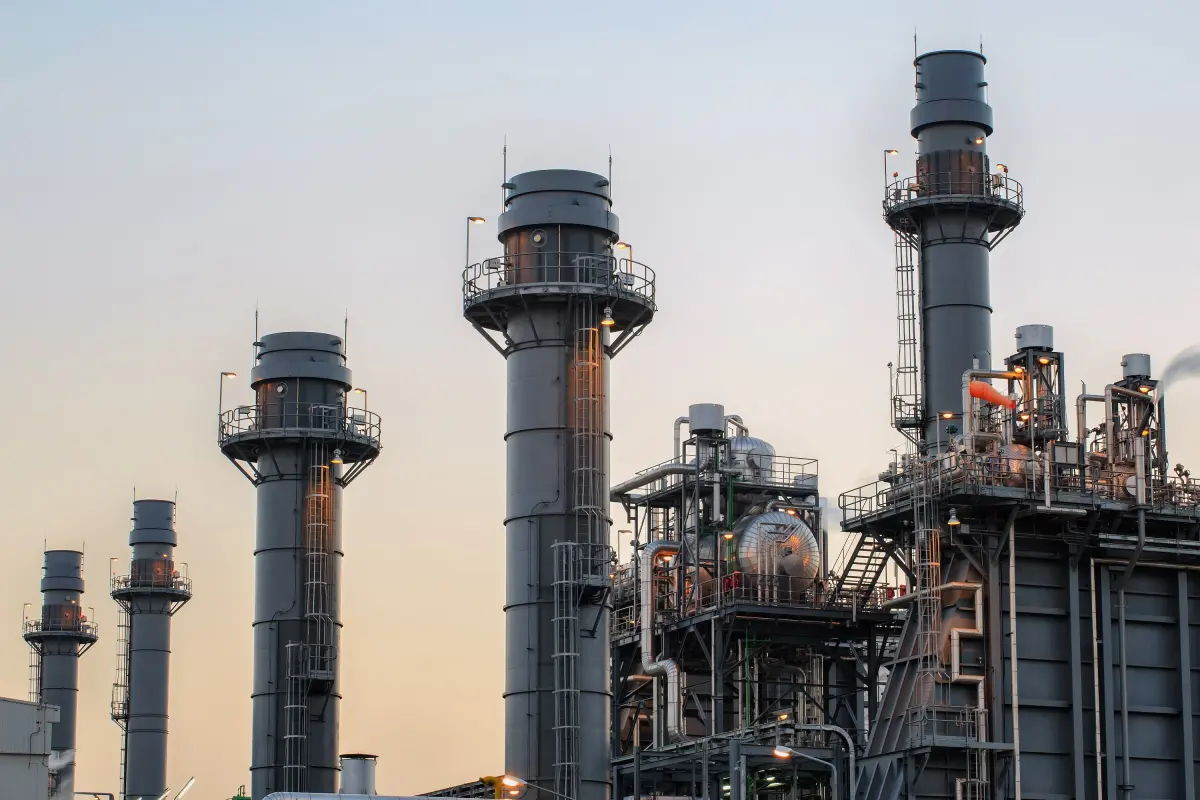
As part of a planned data center in Pecos County, Texas, Amazon is investing in an on-site power plant that could become the largest source of climate pollution in the United States, according to The New York Times.
The NYT says the plant would burn natural gas and is permitted to release 33 million tons of carbon dioxide per year — more than any other power plant in the U.S.
In a statement, an Amazon spokesperson confirmed that the data center will “be powered by new on-site generation that won’t raise electricity costs for Texas families.” (Data centers face growing political opposition for a number of reasons, including their effect on electricity costs.)
AI has already had a significant impact on Amazon’s carbon emissions, which it reported were up 16% last year — the wrong direction for a company that pledged to eliminate its carbon emissions by 2040. And that could get worse as Amazon and tech companies back the development of huge natural gas plants to support their power-hungry data centers.
The Amazon spokesperson said, “The world looks different now than when we co-founded the climate pledge,” while also claiming, “Our commitment hasn’t changed.”
>

NextSlide recently announced that it’s joining OpenAI, with the presentation startup’s team members now working on ChatGPT.
The NextSlide website currently displays a note from founder Ahmed Beshry describing the startup’s product as one “that could turn prompts, notes, documents, or research into a polished, editable presentation.”
The ultimate goal, Beshry said, was “to make visual communication more accessible and help more people express their ideas clearly.” So by joining OpenAI, the team will “continue pursuing that same mission: building AI products that help people create, communicate, and turn their ideas into meaningful work.”
The financial terms of the deal were not disclosed. In a note on LinkedIn, Beshry said the announcement is coming “a few months late,” as the acquisition took place “earlier this year.”
Beshry was previously a co-founder at Caper AI, a smart cart/cashier-less checkout startup acquired by Instacart in 2021.
>

X, the social media platform now owned by Elon Musk’s SpaceX, is shaking up how it pays influencers and creators.
In announcing the change, the company said it will be winding down its existing Revenue Sharing program and replacing it with something called Original Content Rewards. X will stop accepting new Revenue Sharing participants, while existing participants will continue earning money through September 7.
Then, starting on September 8, they’ll be able to apply for the new program. Participants will still need to subscribe to one of X’s Premium tiers, and there will be qualifying thresholds for follower count (500 verified followers) and impressions (500,000 Home Timeline impressions from verified users in 90 days), but it sounds like the big change is the emphasis on originality.
What counts as original content? X said it can include original reporting and analysis, photos and videos created by the poster, or memes and graphics they’ve designed themselves. Commentary also counts, but “if your content regularly incorporates material created by others, you’ll need to contribute meaningful original value for it to qualify under our original content guidelines.”
The company also included examples of posts that won’t count as original, such as those just copied over from another account, downloaded from one account and re-uploaded to your own, or reposting content “without meaningful transformation.”
This announcement follows repeated attempts by X to reform the Revenue Sharing program, for example reducing payments to aggregators and “clickbait” accounts in April. But these efforts have also prompted complaints from popular accounts profiting from the current system; Musk even reversed some of those changes (giving a creator’s local audience more weight when calculating payouts) after a backlash.
In a post about the new changes, X’s Allegra Jacchia wrote that the existing program “had reached a point where its incentives were misaligned.”
“Creators should be focused on bringing net new content to the platform instead of maximizing payouts,” she said. “We could have kept adding more rules and exceptions, but ultimately the better decision was to start fresh and build a program designed from day one to reward originality.”
Jacchia added that X be “continue refining the program, improving our models, and raising the bar over time.”
When you purchase through links in our articles, we may earn a small commission. This doesn’t affect our editorial independence.
>

Manchester United have had a quiet transfer window. Which might not be a bad thing

Connections: Sports Edition today: Hints and answers for Aug. 9, 2026, puzzle No. 685

Huddersfield Giants moving to Dewsbury: Super League side switching home from 2027 season onwards | Rugby League News
-

 movies3 months ago
Search For Canadian TV Actor Stewart McLean Now Homicide Investigation
-

 Fashion9 years ago
These ’90s fashion trends are making a comeback in 2017
-
Fashion9 years ago
According to Dior Couture, this taboo fashion accessory is back
-
Fashion9 years ago
Model Jocelyn Chew’s Instagram is the best vacation you’ve ever had
-
Fashion9 years ago
Your comprehensive guide to this fall’s biggest trends
-
Fashion9 years ago
9 Celebrities who have spoken out about being photoshopped
-
Fashion9 years ago
Emily Ratajkowski channels back-to-school style
-
Fashion9 years ago
A photo diary of the nightlife scene from LA To Ibiza