
Politics
Politics Home | Keir Starmer Tries To Position Labour As The Party Of A “Stronger And Fairer” Britain


Keir Starmer gave a speech to try to defend his position as prime minister on Monday morning (Alamy)

5 min read
Prime Minister Keir Starmer has attempted to shore up his leadership of the Labour Party and of the country by saying Labour needs to go beyond just “incremental change” and be the party of a “stronger and fairer” Britain.
The Prime Minister is attempting to see off potential leadership challenges following Thursday’s local election results, which saw Labour lose the Senedd in Wales for the first time, fail to make inroads against the SNP in Scotland, and lose around 1,500 seats on local councils in England.
In a speech in London on Monday morning, he admitted that “like every government, we’ve made mistakes”, but insisted “we got the big political choices right”. It was a speech that was passionate, but lacking in policy meat on the bone.
What is the Labour Party for?
Starmer attacked both Reform and the Green Party, arguing that only Labour can “face up to the big challenges” and “make the big arguments”.
“Delivery is, of course, essential, but it’s not sufficient on its own to address the frustration that voters feel, with battling Reform and the Greens, but at a deeper level, with battling the despair on which they prey, despair that they exploit and amplify,” he said.
“And so analysis matters, but argument matters more. Evidence matters, but so too does the emotion. Stories beat spreadsheets. People need hope.”
He went on to say that the Labour Party would not be able to win going forwards as a “weaker version of Reform or the Greens”.
“We can only win as a stronger version of Labour… I will never stop fighting for the decent, respectful, diverse country that I love.”
The status quo is not enough
He appeared to argue for railing against the status quo in government, but did not set out any major new policies.
“Incremental change won’t cut it on growth, defence, Europe, energy,” he said.
“We need a bigger response than we anticipated in 2024 because these are not ordinary times, and this is a political challenge, just as much as it’s a party challenge.”
By way of hard policy, however, there was very little: the one major announcement was that legislation would be brought forward this week to give the government powers to take “full ownership of British Steel”, subject to a public-interest test.
Starmer has come under criticism by his own MPs for not spearheading the change that was promised to voters in the 2024 general election.
Senior Labour MP Sarah Owen told The Times over the weekend: “Unless Keir Starmer delivers tangible change and truly connects with the public on a human level, he can’t lead us into another election (locally or nationally). People want politics and politicians who are upfront and true to their values.”
Closer ties with Europe at the heart of the “Labour choice”
Starmer also set out a closer relationship with Europe as being at the heart of the “Labour choice” going forward.
“This Labour government will be defined by rebuilding our relationship with Europe, by having Britain at the heart of Europe, standing shoulder to shoulder with the countries that most share our interests, our values and our enemies,” he said.
“That is the right choice for Britain. That is the Labour choice.”
However, asked whether the next Labour manifesto would include single market or customs union membership, Starmer simply said the UK will take a “big leap forward with the EU-UK summit this year and take us closer, both on trade and the economy, and defence and security.
“That will then be a platform on which we can build as we go forward,” he said.
The PM announced legislation will be brought forward on Wednesday to give the government powers to take full ownership of British Steel, which he described as an example of a policy which will “show the Labour values we will be guided from, and the lessons we will learn”.
He said the government would also go “much further on our investment” in apprenticeships in technical excellence colleges and special educational needs.
Change in leadership would be too “damaging”
Addressing Thursday’s elections, the PM said Labour’s losses “hurt”: “I get it, I feel it”.
But many Labour MPs are already concerned that the speech listed the government’s achievements again and did little to shift the dial on either Starmer’s own leadership or the public perception of the Labour government.
Backbench Labour MP and former minister Catherine West has said she could try to launch her own leadership bid if no cabinet minister steps forward to challenge Starmer.
Former deputy prime minister Angela Rayner has told Starmer that “what we are doing isn’t working”, calling for Greater Manchester Mayor Andy Burnham to return to Parliament. Indeed, perhaps the most significant moment of Starmer’s speech came when he said that Burnham’s return would be a matter for the party’s National Executive Committee, rather than closing the door on him entirely.
Starmer had already insisted he will not step down as PM, and in his speech on Monday, he said he did not want to “plunge the country into chaos”.
“I’m not going to shy away from the fact that I’ve got some doubters, including in my own part,” he said.
“And I’m not going to shy away from the fact that I have to prove them wrong, and I will.”
In what was likely an appeal to his own MPs, he said that the government constantly changing their leadership was “damaging”.
“We tested it, we tested its destruction, and it inflicted huge damage on this country,” he said, in a reference to the changing of leaders under previous Conservative governments.
“A Labour government will never be forgiven if we repeat that and inflict that on the country.”
Labour deputy leader Lucy Powell sat on the front row during Starmer’s speech, with one of the PM’s PPSs Jon Pearce sitting on the row behind.
Labour MP for Ossett and Denby Dale Jade Botterill introduced Starmer on the stage, saying that it was clear to her that the Labour Party “is one of the greatest vehicles for changing the lives of working people this country has ever known”
“But yet, on the doorstep, people no longer believed it.”
>
Politics
Politics Home | Andy Burnham Says He Will Scrap Triple Lock To Fund Social Care After General Election
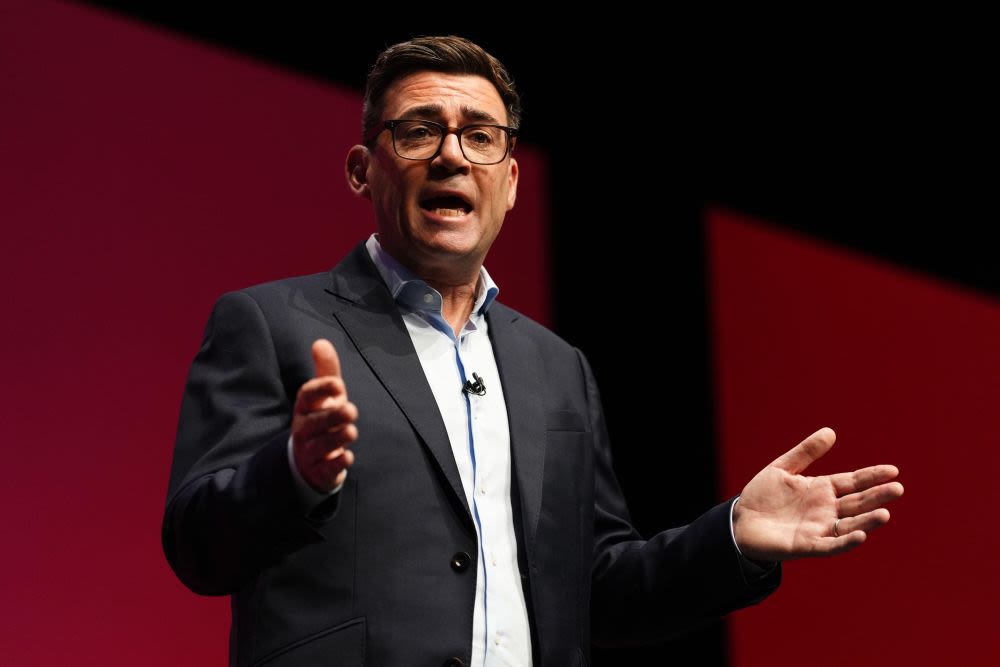

Andy Burnham spoke to conference in Liverpool on Tuesday (Alamy)
6 min read
Andy Burnham has pledged to reform the pension triple lock after the next general election to fund a new social care system.
It is one of several announcements the Prime Minister made in his Labour Party conference speech in Liverpool.
He also said he would launch a national commission on changing the voting system, and look at pursuing closer ties with the European Union.
Burnham said he would use his first conference speech as PM to “break the mould”, saying that “more of the same isn’t good enough” to get the country back on track.
He said he would “make a break with the direction of the past 40 years” and create a Britain “where people feel the country has got their back again. A Britain for everyone, no matter who we are or where we’re born, we would be unstoppable, and we will be.”
Burnham paid tribute to his predecessor Keir Starmer “for the historic victory he achieved for us” at the 2024 general election, before going on to pledge a series of changes that he claimed his generation of politicians had not been brave enough to tackle up to now.
Social care
One of Burnham’s biggest pledges was creating a new National Care Service, to be introduced in the next Parliament, which he claimed was “a landmark policy, as significant as the creation of the NHS itself, and utterly essential to securing its future.”
The PM said his generation of politicians was guilty of “cowardice” for not fixing the issues facing the social care system.
He said he was prepared to take a hit to his popularity to reform the system, saying “someone has to go through the pain barrier and rip the plaster off”.
Addressing social care workers from the stage, Burnham said: “You are not invisible to me. I see you. I thank you, and I am sorry that my profession has let down yours for so long. I promise you, I won’t leave this job without doing everything I can to change.”
Burnham set out a vision for “a person-centred, high-quality care service that starts in the home”. He said it would be “a system in the best traditions of this party, where everyone contributes, and everyone is covered, free at the point of use, and no care charges paid out of your basic state pension”.
Triple lock reform
To help fund his social care plans, Burnham said he would reform the pension triple lock after the next general election.
As things stand, pensions increase in line with whatever is largest out of inflation, wages and 2.5 per cent.
However, Burnham said he would alter the policy to remove wages from 2030.
There have been growing calls for the triple lock to be phased out from critics who argue it not sustainable in the long term.
However, it will be seen as a risky move for Burnham as he seeks re-election, given it will impact large swathes of the public.
Electoral reform
Burnham, a long-term supporter of replacing First Past The Post with a more proportional voting system, announced that he would launch a national commission to look at changing the electoral system in England.
He said that Labour’s next general election manifesto would contain a commitment “to change the electoral system so that everyone’s vote counts, and everyone’s voice is heard.”
“We can’t succeed in the eyes of the world if we continue with the levels of political turbulence we have seen in recent times,” he told conference.
Water reform
The PM said the state of the country’s water industry “is a symbol of what has gone wrong in Britain”.
Referring to the privatisation of infrastructure, Burnham said: “The British right talk about taking back control. Never let them forget. They are the ones that gave it away in the first place.”
He announced that Environment Secretary would present a “strengthened” water legislation to Parliament which would repeal former prime minister Margaret Thatcher’s ban on public ownership of water companies, a move he said “will start a 10-year journey to a very different water system.”
Eagle hinted that government action on Thames Water was coming earlier this week, telling the PoliticsHome podcast The Rundown that “the status quo is not an option”.
Under the changes, mayors will have new powers to hold water companies to account, with tougher consequences for those which repeatedly fail. The PM said that the government will also “close the loopholes used to pay excessive bonuses” to water bosses.
Housing
Burnham announced in his speech that he would pass legislation to make it easier for homes to be reclaimed from negligent landlords.
He said that negligent landlords would face losing those properties if they did not respond to warnings to improve: “If they refuse, we will make it much easier for councils to acquire those homes and we will legislate if necessary.”
“We don’t let people sell food which damages health, so why allow it with homes from now on? We won’t”, Burnham pledged.
Ahead of the conference in Liverpool, Burnham announced a new homes scheme for first-time buyers, saying: “Too many young people are struggling with housing, with many giving up hope on ever having a home to call their own.”
Energy reforms
Burnham also announced the creation of Great British Energy: Great British Grid.
The new grid, he said, will be a “publicly owned company that will challenge the private sector operators”, “increase competition, drive down costs, and speed up connections, so businesses can expand and grow more quickly.”
He also pledged to get down energy prices by “reforming a broken energy market” to better serve the public interest.
“I have asked Miatta Fahnbulleh [the Energy Secretary] to speed up the breaking of the link between what we pay for power at home and the international gas market to get bills down.”
There were also hints made about the potential for controversial North Sea drilling, with Burnham saying he would be “pragmatic” about the situation, “as we build a bridge to a clean energy future and face the climate crisis”.
Education and welfare reform
Burnham also pledged to reform the education and welfare systems to tackle youth unemployment.
On education reform, Burnham said the government would “rebuild a system of comprehensive education in this country. country. With parity between academic and technical, with [Education Secretary] Lucy Powell leading the way.”
Burnham said that the reforms would provide “good quality pathways for all from 14, and the right support for our young people when they need it-a 45-day work placement between 16 and 18, an apprenticeship at 18, and no long waits anymore for mental health support growing up.”
“We will need a fundamental rethink of the welfare system to find the money for these opportunities upfront,” Burnham said.
Future relationship with EU
In the final part of his speech, Burnham hinted at closer alignment with the European Union, a decade after the public voted to leave.
The Labour government has sought closer ties with the bloc since being elected in 2024.
However, speaking on Tuesday, Burnham said he would use a UK-EU summit later this year to produce a series of options for Britain’s long-term relationship with the bloc that he would present to the public.
“I will see if we can find consensus around one, which will give us clarity about our position and the future of the continent that we live in.”
>
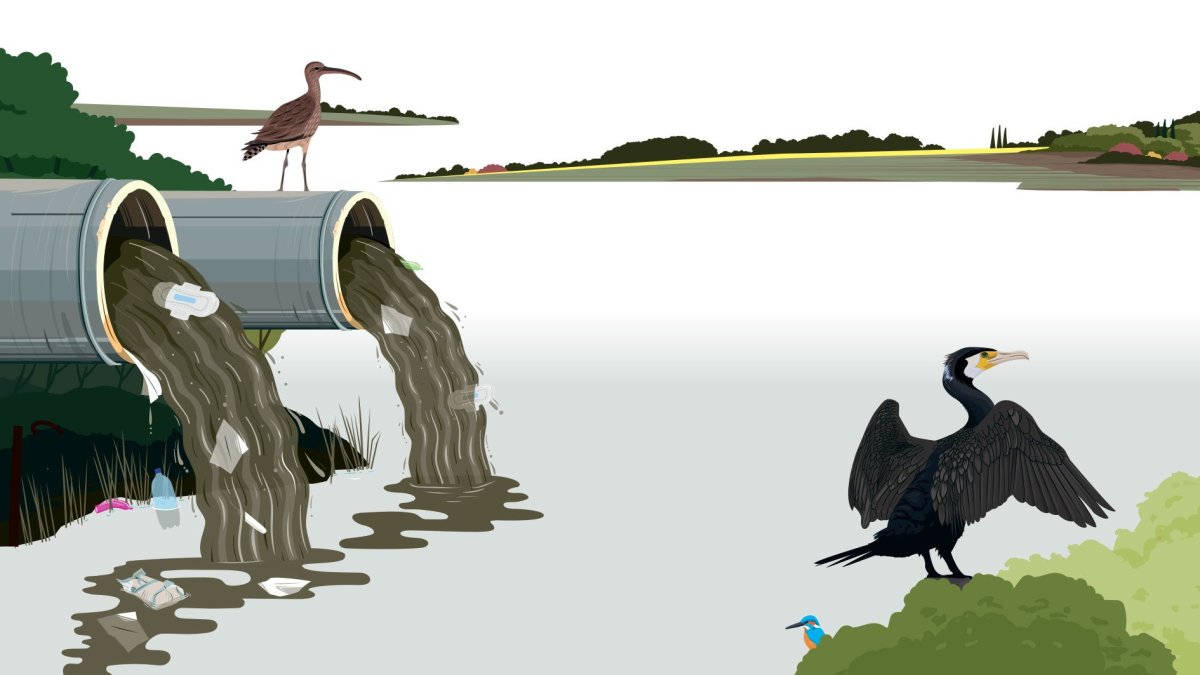

Illustration by Tracy Worrall
8 min read
Campaigning in Makerfield, Andy Burnham threatened Thames Water with public ownership – but has not so far followed through. Ben Gartside reports on a decision that will define his approach to privately owned suppliers of public goods.
What, exactly, does the word ‘control’ mean when applied to those entities that supply vital public goods?
Does it mean full nationalisation, with every decision in the hands of ministers and officials in Whitehall? Or does it rather mean that customers exercise a measure of control over their operation through ownership of a portion of equity? Or some other variant in which locally elected representatives take a golden share in the companies that serve their region?
These are not theoretical questions but are coming sharply into focus as Andy Burnham wrestles with what to do about Thames Water.
As of today, Thames Water supplies 16 million customers, owes more than £20bn and has been in breach of its licence for two years.
A large portion of the Labour Party would like to see the company – which critics say has become emblematic of the failures of utility privatisation – back in public ownership.
Its creditors, however, want to take over the company and keep it afloat by releasing tranches of cash to help the beleaguered firm.
The financiers are quietly optimistic. Industry sources suggest Burnham and the officials supporting him are pragmatic on the issue, and hope that the focus on control could reheat plans for the minister to hold a “golden share” in Thames Water, offering the government a veto while retaining private ownership of the suffering water company.
A concerted effort is being made by some in the City to understand Burnham’s policy brain. Some of Thames Water’s creditors have commissioned research into Burnham’s work on taking buses into public ownership in Greater Manchester, extrapolating out what it would mean for their financial interests.
They take heart from public comments by John Healey, the Chancellor, who insisted that ‘control’ need not mean full nationalisation.
“Some might claim that public control is public ownership,” the Chancellor told his audience, “but it’s broader than that.” What it meant instead was “local leaders and a stronger centre”, accountability for “fair bills, better services, investment that gets delivered”, and “an active state driving better regulation, quicker decisions”.
Within the Labour movement, two rival plans are circling ahead of the party’s conference.
On one side is Mainstream, the group co-founded by Compass and Open Labour. It did more than any other to get Burnham back to Westminster by criticising Keir Starmer’s economic policies from the left and encouraging bolder decision making from the government.
With an ally in No 10, the group is still singing the same tune. Mainstream supports public ownership of water generally, and believes that Thames Water should be put immediately into special administration.
Initially, Burnham struck a similar tone on water. In June, campaigning in Makerfield, Burnham told the Guardian that public ownership was “absolutely an option” and that “for Thames Water, that is what should be done”. By the end of August, the plan to put the company into special administration had gone quiet, with a Whitehall source telling the Times there was “no quick or clean solution without an enormous price tag attached”.
While Mainstream’s motion has been left open-ended for the interpretation of the new government, its motive is clear: a source close to the group says that the system now is itself an attempt at public control without public ownership, and it is not working.
Mainstream is careful to say this is not a confrontation, that it wants the government to succeed, and that the motion is deliberately open. It also does not expect to win. Under Starmer, it tried something similar on the two-child benefit cap last year, had its initial motion blocked but counted the overall shift in tone around the debate as a success.
“Copying the failed model of non-profits like Welsh Water doesn’t get around the questions of compensation, debt or legal risk”
The parliamentary case is led by Clive Lewis, whose own water bill had its first reading a week before the Cunliffe review was commissioned, and who secured an urgent question on the sector in June. He told the Commons then that this “was never a market failure” but “the market working as designed”. Allies of Lewis say that like-minded MPs are prepared to rebel if government proposals do not go far enough.
Lena Swedlow, the deputy director of Compass, tells The House that the left-wing pressure group is now campaigning with Labour MPs to push the government to more wide-ranging action.
“I think we got here because Ofwat and the Starmer-led government believed the creditors and the Thames Water leadership could get themselves out of this mess, which was short-sighted.
“It’s part of the larger theme of Starmer’s No 10 that they didn’t adequately prepare for power, and figures like Morgan McSweeney are now on record saying so. Fast-forward two years later, the hesitance to put Thames Water in special administration is as short-sighted and dangerous.”
Those supportive of implementing the special administration regime are “incensed” by the clear change in government language from public ownership to control.
However, the government is clear that the special administration threshold hasn’t been cleared, as of now. The law only allows it if a company is insolvent or in serious breach of its licence, and while creditors keep lending, Thames is not insolvent. “You either are, or you aren’t,” Environment Secretary Angela Eagle said this month. “And whatever people think of Thames at the moment, it isn’t technically insolvent.”
Another plan is that of the Co-operative Party, which Burnham recently became the first Prime Minister to represent.
A recent report by the Good Growth Foundation think tank, with a foreword by Labour MP Helena Dollimore, proposes a bill that would create a path to mutualisation by encouraging water companies to sell up to customers via a share exchange scheme. If they refused to comply, the bar for an enhanced special administration regime would be lowered.
As with nationalisation, the government is thought to have cooled on the co-operative idea, with industry sources expecting the plans to go nowhere.
Officials recognise that any attempt to mutualise would likely lead to the largest rise in customer bills, as investors would be unwilling to stomach any short-term losses without an equity stake. Investors agree, highlighting the mutualised Welsh Water as having the highest bills in Britain.

The left of the party is sceptical too, for the opposite reason.
Mainstream says mutuals work well in many settings but that water needs something stronger, and that it is not clear mutualisation changes who owns anything.
Swedlow says: “Of course devolved and regional leaders should have a say in the future of water. But copying the failed model of non-profits like Welsh Water doesn’t get around the questions of compensation, debt or legal risk.”
One policy wonk highlights that, currently, the Co-operative Party, the Liberal Democrats and Reform all have policies to mutualise water, all with little clarity about what would actually happen next.
What seems sure either way is a significant downgrade in the powers of Ofwat, with responsibility set to be transferred to ministers. The regulator has not had a permanent chief executive since August 2025, and cannot have a successor until the government’s clean water bill is introduced.
The research of the financiers into Burnham’s bus plan seems to be beneficial – earlier this month, The Telegraph reported that regional bodies would be set up to oversee water companies, with a responsibility to hold company bosses accountable for bills and sewage.
As Burnham battles for control, water waits. For the moment, the sector once in the eye of the storm waits to find out the government’s decision and MPs wait to hear the direction of travel.
Within a month of Labour’s conference in Liverpool, Andy Burnham’s government will have delivered its first Budget and Thames Water’s lenders will have decided whether to extend its emergency funding without a signed rescue deal. Labour’s new 10-year plan promising “stronger public control” of water is set to be delivered by the end of the year too. Here are the three leading plans circulating around Westminster.
Public ownership.
Mainstream, the Andy Burnham-affiliated campaign group co-founded by Compass and Open Labour, has drafted a conference motion calling on the Prime Minister to “urgently return water in England into public ownership”. Its paper, The Productive State, sets out the details: put Thames Water into special administration, restructure its debts and have it function as a national public water corporation, run at arm’s length from ministers and paying for investment by borrowing against customers’ bills.
A private solution.
London & Valley Water, a consortium of 100 investors holding £17bn of Thames’ £21bn debt, wants to take over the beleaguered firm. Its £10bn plan would write off billions of debt, add new capital and pay no dividends until 2035. In return, it wants leniency on penalties worth up to £1bn. In June, the then environment secretary Emma Reynolds said the deal did not go far enough – a month later, the creditors offered the government a “golden share”, offering a veto over important decisions and hostile takeovers.
Mutualisation.
A proposal by the Good Growth Foundation, backed by the Co-operative Party and three Labour metro mayors, suggests a law giving water companies a choice: sell up to customers through a share exchange, or face a lower bar for special administration and leave it as a customer-owned co-operative. While it would keep the debt off the government’s books, investors say that borrowing costs and bills would rise without shareholders to absorb any losses.
>
Politics
Politics Home | “Status Quo Not An Option”: Defra Secretary Hints At Action On Thames Water
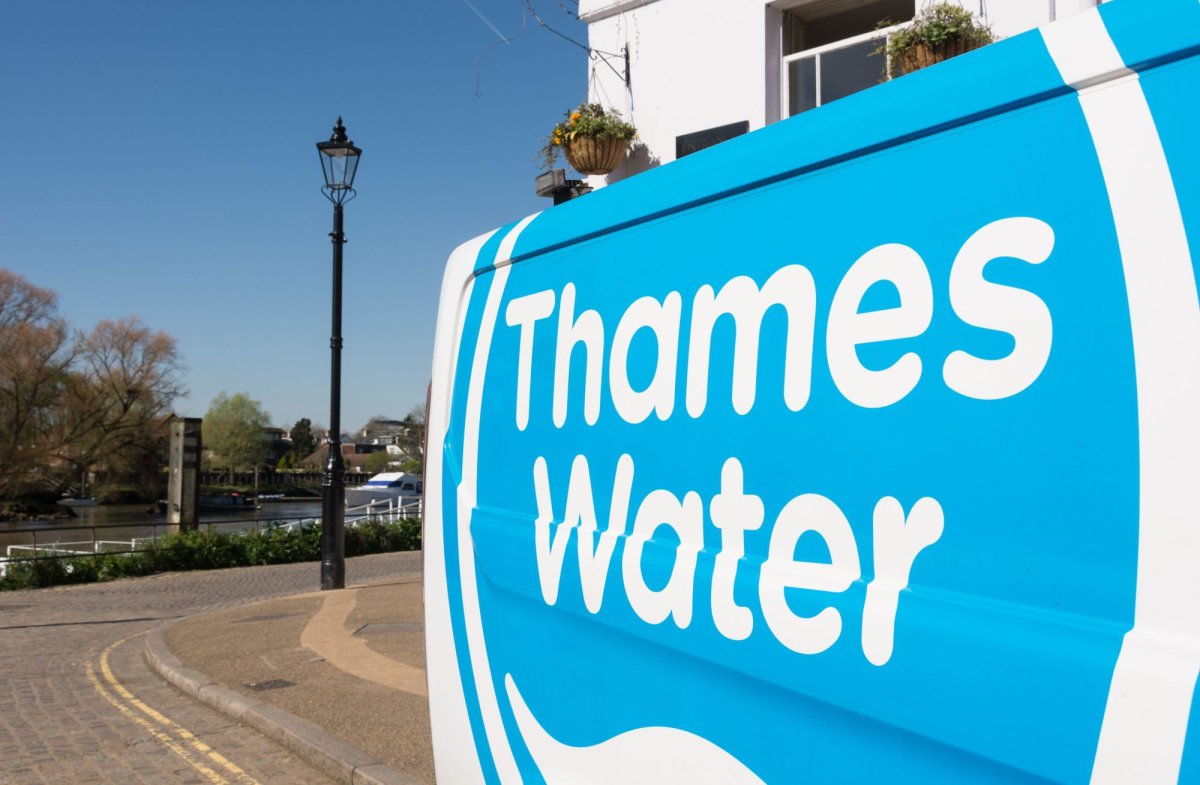
Andy Burnham is rumoured to make an announcement on Thames Water in his speech to Labour’s party conference (Alamy)

4 min read
Secretary of State for Environment, Food and Rural Affairs Angela Eagle has hinted that government action on Thames Water is coming, telling PoliticsHome that “the status quo is not an option”.
Speaking to PoliticsHome podcast The Rundown at Labour Party conference in Liverpool on Sunday, Eagle said the privatised system currently in place is not “working” and that she is “examining a whole range of potential options”.
Andy Burnham is facing calls to bring Thames Water into public ownership amid MP and public anger with the water company over its significant debts, rising customer bills and sewage leaks. The firm supplies 16m customers across southern England.
The Prime Minister is set to address the issue of private water companies in his first conference speech as PM on Tuesday afternoon, with a preview making the case for “more control of the basics so that we can make it more functional again”.
Eagle told the podcast that “legal certain obligations” meant there were limits on what she could say about Thames Water, but stressed that something has to change.
Asked whether the Thames Water situation would be allowed to stretch out into next year or beyond, Eagle said: “The Thames issue will be dealt with when it’s dealt with.
“We have to be absolutely certain that we do these things properly because there’s potential litigiousness if not done properly.”
The Environment Secretary held her first meeting with the leaders of the company earlier this month, insisting she was “polite”, but asked if she was angry about its conduct, she said: “My predecessor Emma Reynolds wrote to the regulator after Thames made its final offer on restructuring, saying that the offer as it was did not meet the environmental interests, or the interests of the customers.
“That’s where we are. There’s been a lot of stuff in the newspapers about how Thames are going to make a different offer that hasn’t materialised in fact yet.
“So I will wait and see what they come up with. But what’s absolutely certain is the status quo is not an option.”
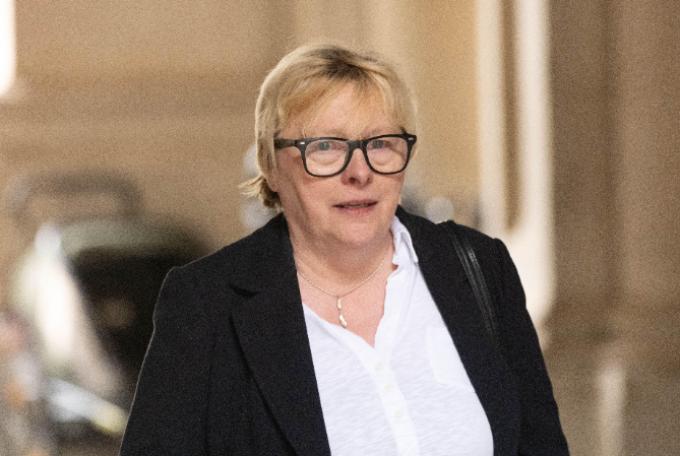
The Labour MP for Wallasey continued: “We have had 40 years of a privatised water system that has not delivered the benefits that those that privatised it said it would.
“It was privatised without debt, so debt-free. It’s now £85bn in debt, and we have collapsing infrastructure in many places, high levels of water bills and sewage in our rivers and sea.
“That is not a system that’s working. And the Prime Minister has asked me to look to see what we can do to improve that, and that is what I’m doing.”
Elsewhere in the interview, Eagle, who is one of the longest-serving MPs in the House of Commons, said it feels easier to get things done in the Burnham government than it did in the Keir Starmer administration, explaining that, in her view, the civil service had become “very encrusted in process” in recent years.
She said there’s a “more coherent direction” at the centre of government thanks to Burnham’s vision: “We know what his basic parameters are and what he wants to achieve.”
Eagle, who revealed this was her 46th Labour conference, said Whitehall was much less “process” focused when Labour was last in power than it is now.
Reflecting on her time as an environment minister in the Tony Blair government, she told the podcast: “It was very, very different the second time around than the first. The first time was much faster decisions, much less process to get through.”
The cabinet minister told PoliticsHome there are too many consultations in the civil service, “consultations just coming out of every pore for no obvious reason,” joking: “You have to have a government write-round about whether you can breathe in.”
Eagle said much of it is because departments are worried about leaving themselves open to judicial review, where their decisions are taken to court and potentially overturned.
But she added: “We just have to get the boat out of the harbour, turn it over, get all the barnacles off it, and see if we can actually get faster processes.”
The Rundown is presented by Alain Tolhurst, and is produced and edited by Lulu Goad and Ewan Cameron for Podot
- Click here to listen to the full conversation with Angela Eagle on the latest episode of The Rundown, or search for ‘PoliticsHome’ wherever you get your podcasts.
>

Tom Cruise, Alejandro G. Iñárritu Talk Digger at Academy Museum

The Premier League footballers studying to be sporting directors
NFL Week 4 fantasy football rankings, starts, projections: Braelon Allen, Darren Waller and more
-

 movies4 months ago
Search For Canadian TV Actor Stewart McLean Now Homicide Investigation
-

 Fashion9 years ago
These ’90s fashion trends are making a comeback in 2017
-
Fashion9 years ago
According to Dior Couture, this taboo fashion accessory is back
-
Fashion9 years ago
Model Jocelyn Chew’s Instagram is the best vacation you’ve ever had
-
Fashion9 years ago
Emily Ratajkowski channels back-to-school style
-
Fashion9 years ago
9 Celebrities who have spoken out about being photoshopped
-

 Anime4 months ago
Rurouni Kenshin: Hokkaido Arc Manga Takes 1-Issue Break – News
-

 Anime3 months ago
HIDIVE to Stream English Dubs for The World Is Dancing, The Forsaken Saintess and Her Foodie Roadtrip in Another World, The Dangers in My Heart: The Movie Anime – News