
Politics
The House Article | We’re Going To Need A Bigger Stick: Britain Seeks AI Sovereignty



(Collectiva/Alamy)
10 min read
Britain has now made clear that it wants AI sovereignty, of a kind. But there are numerous hurdles in the way, reports Matilda Martin. For a seat at the table with the US and China, say experts, we’re going to need a bigger stick
The battle for tech supremacy has taken many forms: nuclear weapons in the 1940s; the space race in the Cold War. Today, it is artificial intelligence – and the stakes are high.
As Keir Starmer limits British involvement in the Iran war, President Donald Trump’s frustration grows – and the UK’s so-called “special relationship” with the US looks increasingly fractured. What would it mean, many wonder, if an irritable US President decided to ‘pull the plug’ on our access to American tech infrastructure?
When Trump placed sanctions on the International Criminal Court last year, officials lost access to email accounts and found their bank accounts frozen, bringing the tribunal’s work to a halt. The event was a small glimpse of how quickly a tech superpower can exert pressure.
Few believe Britain becoming the victim of such a scenario is likely, for the economic repercussions for the US would be hugely damaging. But in an era of geopolitical volatility – and a US President famed for his unpredictability – the UK is currently vulnerable to pressure and manipulation in a way that leaves many uncomfortable.
“Under the last government, they were very happy to say to the sector, particularly the big American companies, ‘You know this stuff better than we do. We trust you’,” says Labour MP Emily Darlington, who criticises this approach as “naïve”.
“We might not yet know how easy it would be for the US to pull our access to AI, but we do know the threat is real,” warns senior research fellow Roa Powell at think tank IPPR.
“Technology giants have repeatedly threatened to pull their services from countries which regulate their technology, while at the same time AI is beginning to be treated as a national security asset that cannot be shared with everybody.”
If UK access to US companies providing cloud services as well as other AI products were cut off, the results would be catastrophic. Could US companies stand independently from their government on such a decision?
“It’s not clear,” Darlington says. “The US has this weird law that essentially all those companies report to the US.” While companies like Amazon Web Services and Palantir have made repeated assurances to the UK that “we’re separate from the Americans”, she adds, this would be a true test of that premise.
At the end of April, Tech Secretary Liz Kendall delivered a speech signalling a step change in the UK’s approach to AI.
“This government believes AI sovereignty is not about isolationism or attempting to pull up the drawbridge and go it alone… For Britain, AI sovereignty is about reducing over dependencies and increasing resilience,” she told an audience at defence and security think tank, Rusi.
The government is clearly concerned about the UK’s future if it allows other larger players like the US and China to dominate the market. Experts say this anxiety is well founded. Powell of IPPR warns that “this government has a narrow window before the concentration of power in AI markets becomes irreversible”.
In 1901, the soon-to-be US president Teddy Roosevelt repeated a famous proverb: “Speak softly and carry a big stick.” It is an anecdote Irish political scientist and author Henry Farrell refers to when he speaks to The House from the US. “If you don’t have a big stick,” he continues, “search around as quickly as you can to find at least a medium-sized cudgel that will allow you to push back.”
Farrell, who co-authored Underground Empire: How America Weaponised the World Economy, has two suggestions for smaller powers like the UK.
“First of all, where they can sort of build up some degree of redundancy, some degree of alternative sourcing, they absolutely should do.
“And secondly, everybody ought to be thinking about their forms of counter leverage in a world where you might see… substantial amounts of pressure being applied upon you to go into one direction rather than the other.”
Kendall’s clarification of what sovereignty means for the UK is welcomed by the Tony Blair Institute (TBI).
“It’s okay for the UK to have some dependencies – no-one can go it alone in the age of AI. And it needs to have leverage. The UK does have great talent, great universities, great startups, but these are not enough to guarantee the country’s competitiveness and security. Britain must also build critical technologies that others depend on. The future global economy, and geopolitical order, is going to be built on technology,” says TBI director of science and technology Keegan McBride.
“For better or worse, this is the way of the world and how power and influence will be exerted. What’s important is that the UK responds now, otherwise it risks losing its seat at the table and the prosperity that will come from the AI revolution.
“The country must focus on becoming strategically important to its allies and embedding itself in the AI and frontier technology economy of the future – not the digital economy of today.”
The most famous example of a small and vulnerable nation dominating an area of the market is Taiwan’s chip industry, which also ensures America has an interest in the nation’s independence from China. Another is the Holland-based photolithography company ASML.
“They’ve got the Hormuz strait on AI technology,” says Dan Howl, head of policy and public affairs at the chartered institute of AI, BCS, referring to the vital shipping line in the Middle East that has allowed Iran to maintain a chokehold on the world’s oil industry.
We might not yet know how easy it would be for the US to pull our access to AI, but we do know the threat is real
While some countries have interpreted AI sovereignty as independence – for example, France’s efforts to build its own sovereign AI stack – the UK government’s approach is seen by some as more pragmatic. Experts say pursuing “full sovereignty” would require a huge injection of cash, mean less secure and competitive products and reduce the ability to influence global standards. Instead, they favour an approach that would allow the UK a certain degree of leverage and control, just like the “big stick” that Roosevelt was describing more than a century ago.
As with many aspects of its infrastructure, the overwhelming feeling among experts is that the UK has rested on its laurels somewhat when it comes to innovation. “The political establishment has failed to invest in and secure the foundations of our country’s sovereignty.
And what we need to make sure is that in the decades ahead, which are going to be so much about digital AI and data, we don’t fail again,” says former minister Josh Simons.
The Labour MP, who in the past worked for Meta in its AI programme, underlines the importance of sovereignty as a whole: “Sovereignty is the ability to, over relatively long periods of time, shape your own collective destiny.”
He believes that the vulnerable situation in which the UK now finds itself is the culmination of centuries of inaction: “It’s more than just the Tories. I don’t think it even just ends with the Labour government before that.
“For a long time now, we’ve assumed that trade will always be basically frictionless, that international financial markets will have very little interest in borders, and that the energy market will be a sufficiently efficient market that, provided we have diversity of supply, we’re fine. All those assumptions are just wrong – or are certainly becoming wrong.”
The UK has “an acute dependency”, as Howl puts it, on cloud services such as Amazon Web Services – integral to the functioning of the NHS, the Ministry of Defence, HMRC, policing and the courts. He explains how the experts at BCS do not think that risk is assessed “as much as it needs to be”.

While everyone can agree that the UK has fallen behind in the AI arms race, there is a live debate over where the nation’s efforts should be focused as it looks to build its arsenal.
For IPPR’s Powell, the UK’s comparative advantage lies in the AI applications layer – specialist products built on top of frontier models, like ChatGPT. She also thinks the UK should not see this approach “as a ceiling”, however, and look to strengthening areas such as chip design too.
Here, Kendall’s announcement of a new ‘AI Hardware Plan’, the details of which will be announced in June, comes into play.
Other experts highlight the UK’s strengths in aerospace, quantum technologies, health and sciences. While Kendall’s recent intervention indicates that the UK may be more decisive on where it wants to go, how it gets there could be more complicated. The House understands that government insiders are aware of how the UK’s high energy prices could discourage and hinder start-up growth, and push homegrown talent to look elsewhere.
In a recent interview with CityAM, former deputy prime minister and one-time Silicon Valley convert Nick Clegg said the UK’s energy is “too expensive” and the UK’s AI sovereignty debate is “slightly dishonest” due to its “marginal relevance”.
Emma McGuigan, AI expert at BCS, points out that the cost of running data centres is a key hurdle. If the UK hopes to achieve its AI sovereignty goals, she says, this must be addressed. A sustained reduction in energy costs would allow “the opportunity to bring the investment to build those sovereign cloud data centres”, McGuigan argues.
Energy sovereignty is thus also called into question. “Digital sovereignty is inseparable from energy sovereignty and energy is a real, physical, material constraint and precondition for the digital world,” says Simons.
Another hurdle facing the UK is its inability to keep homegrown innovators here. The most famous example is the well-documented acquisition of London-based AI firm DeepMind by Google for $400m in 2014. As Kendall hopes to encourage the scale-up of UK businesses through the launch of the Sovereign AI fund, the challenge will be keeping those companies in Britain.
Unless we secure it, there’s no guarantee that we can have the freedom that we’ve enjoyed for several hundred years
“There’s a culture within technology about selling things,” Howl says. “The real question is, what happens when the start-ups start getting bids from New York and California. That’s the real problem.”
He explains: “The reality is that the British market just isn’t big enough to be able to scale these really good companies to a way in which that would be advantageous to the owners, and that is compounded by the culture. But the solution to that would probably be to work with Europe and to genuinely get access to a much bigger market.”
What is at stake? Simons has a “slightly apocalyptic view of where the world is heading”. But he also insists Britain “can’t be gripped by the throat by those who don’t share our commitment to freedom”.
“The future economy and the future of warfare and the future of security, technology, and in particular, AI, data, is going to be one of the foundations of power. So, unless we secure it, there’s no guarantee that we can have the freedom that we’ve enjoyed for several hundred years,” says the Labour MP.
Kendall has fired the starting gun on the UK’s drive for its version of AI sovereignty. But can this middle power successfully insert itself into the supply chain and find Roosevelt’s “big stick” – or is the UK joining the race with too big of a handicap?
>


7 min read
As a council leader, the late Labour MP Iain Coleman made his London borough the only place in England where care at home is free. Then he needed it. Ben Gartside speaks to his widow, Dame Sally Powell, about her campaign to secure reform
Even at the time the move was radical: free home care, including personal care, without means-testing for any eligible resident. “We just did it because we knew it was the right thing to do,” Dame Sally Powell says of the decision she and others, including her late husband Iain Coleman, took in Hammersmith and Fulham in 1991.
Years later, the home care service became free again after Labour retook control of the west London council in 2014 – and it remains radical and indeed unique in England. The free service covers care in the home: washing, dressing, meals, medication, getting in and out of bed, for anyone the council assesses as having eligible needs.
Today, in her husband’s memory, Dame Sally is starting a national campaign that asks for care at home, free at the point of need, to be available everywhere. Although she says the policy choice was made in 1991 because it was “the right thing to do”, there was a bitter irony – some 13 years after its introduction, Coleman became one of the borough’s residents to be eligible.
Throughout the 1990s, they were a formidable power couple – two-thirds of an effective triumvirate. “Iain was in charge of the unions, Andy Slaughter was in charge of the money, I was in charge of the land,” Dame Sally says.
Coleman was elected MP in 1997 but one evening in 2004 he collapsed while shopping in M&S.
“In those days we didn’t have the knowledge about what a stroke looked like,” Dame Sally says. By the time she got him to Charing Cross hospital he had had eight strokes in a day; he came out paralysed down his left side.
He was only 46. Shortly before the 2005 general election, Coleman was advised to stand down, as he would be eligible for his pension on medical grounds.
At that point, Coleman and Dame Sally found themselves in the position of service users rather than political leaders, and discovered the grim reality of the system around care in the UK.
Coleman initially spent some time in the extra care shelter, but it didn’t click.
“Iain hated it. He just wanted to watch the Arsenal… He was very unhappy there. He had mice, and we had to get a cat for him. It was called Dennis Bergkamp, funnily enough. And so then I bought him a shared equity flat underneath me.”
Speaking today, Dame Sally describes the system as like a “jigsaw”. “For three years, we did not get Disability Living Allowance, because I didn’t know,” she says. “No one told me. My doctor, the hospital. No one told me.”
Nor did anyone tell her about the council tax. A severe stroke can leave someone classed as severely mentally impaired for council tax purposes, which means they are disregarded altogether – a status a GP must certify, and one that carries no statutory time limit on backdating.
“I didn’t know until he died,” Dame Sally says. “Iain was entitled, because of his stroke, not to pay council tax. But he’d been paying council tax for 14 years, and I didn’t know that one, but I do now. So, I’m making a claim against the council for a refund.”
The family did not apply for continuing healthcare, which would have moved the cost from the council onto the NHS. Dame Sally acted as a carer while not knowing of the existence of either Attendance Allowance, for those who need supervision from carers, or Carer’s Allowance, for those who spend much of their time caring for someone with a disability.
What did work was a question asked in a committee room. Dame Sally was sitting on the council’s social services scrutiny committee, in a meeting about adult social care, and asked the director about her own household. Why did her husband not get any? “I said, ‘You know him. He’s had a stroke.’ And from that day onwards, he had free adult social care.”
In 2020, she was struggling. Coleman had just been discharged from hospital into the pandemic, and she had no idea what to do. Despairing, she gave an interview to LBC to vent at the nightmarish situation she found herself in.
“But what about the hundreds of people who can’t, who don’t have the access that I fortunately could access? That’s what worries me”
Luckily for her, Sir Sadiq Khan heard it. By her account the London mayor rang the council that afternoon and told them to sort out Coleman’s care.
“Sadiq Khan was brilliant,” she says. “Even though he’s a Liverpool fan.”
Today, Dame Sally reflects on the benefits she had by living in the borough and knowing how the system works – and fears for the millions who have neither advantage.
“Iain was an MP. I was a councillor. I can do that,” she says. “But what about the hundreds of people who can’t, who don’t have the access that I fortunately could access? That’s what worries me. How many people are out there?”
“There must be so many people out there who just need this,” Dame Sally says.
Last September, Coleman died of pneumonia at the age of 67. By his wife’s count, he had 20 strokes over the last two decades.
At Coleman’s memorial service in Hammersmith, veteran Labour MP John McDonnell suggested launching a campaign in Iain’s memory in support of free home care. “It just took off from there,” Dame Sally says, “because I want everyone to have the care that Iain had.”
 Sally Powell and Iain Cole.jpg)
Using Coleman’s pension, Dame Sally is launching the campaign at Labour conference, alongside Stephen Burke, who was Hammersmith and Fulham’s cabinet member for social services in the years the policy was built and went on to lead the council.
While the future of care across the country is up in the air with the Casey Review, Dame Sally is pushing for Prime Minister Andy Burnham to begin pilots immediately.
“Get some local authorities to set up pilots, because you can’t be prescriptive – every area is different,” she says. She accepts the politics of it: “I know that he has to wait until Casey. I understand that politically.”
Dame Sally has faith in both Burnham and Yvette Cooper, his Health and Social Care Secretary, to find a solution.
“I have a lot of faith in Yvette Cooper. I know there’s the big three, but I think she’s got the most important job. It’s the one with the most challenges. She was a health minister a long time ago…She steered through that bill about stem cell research years ago. She was brilliant. And obviously she knew Iain, and I think she’s exactly the right person to make huge progress on this.”
In Burnham, she sees another politician having to confront the reality of the system; the Prime Minister’s father was living in a care home with Alzheimer’s until his very recent death.
Ultimately, Dame Sally wants to make life as comfortable for others as she managed for Coleman.
Towards the end of his life, he had palliative care in his own flat, round the clock. “He was as happy as a sandboy,” Dame Sally says, “because he didn’t have to go to Parliament, and he could watch Only Fools and Horses and the Arsenal. What else do you want in life?
“It can happen to any of us. It happened to me in Marks & Spencer’s one day.”
>
Politics
Politics Home | Andy Burnham Says He Will Scrap Triple Lock To Fund Social Care After General Election
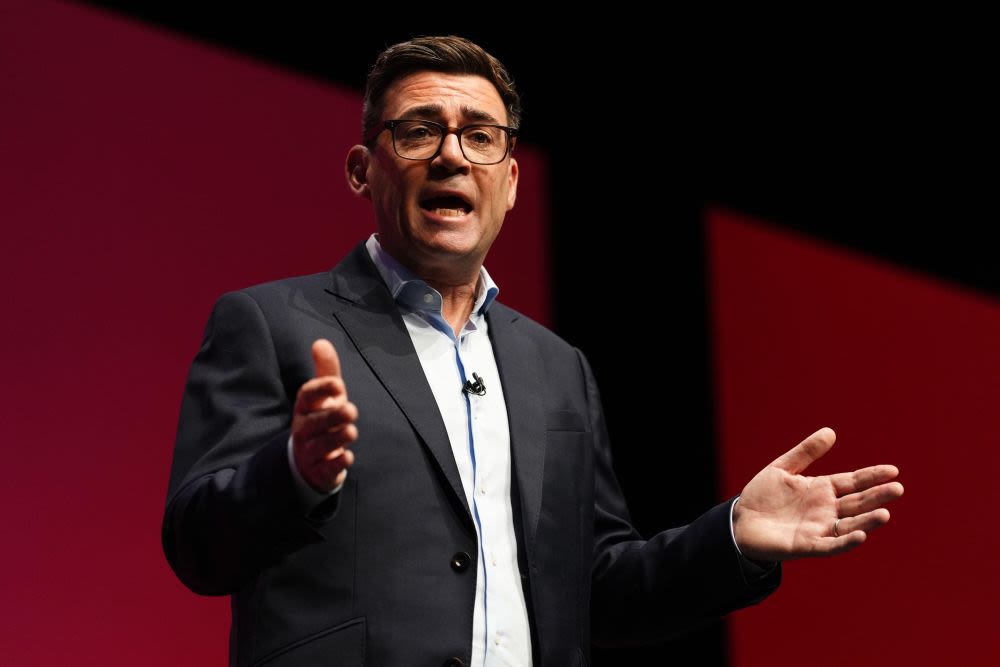

Andy Burnham spoke to conference in Liverpool on Tuesday (Alamy)
6 min read
Andy Burnham has pledged to reform the pension triple lock after the next general election to fund a new social care system.
It is one of several announcements the Prime Minister made in his Labour Party conference speech in Liverpool.
He also said he would launch a national commission on changing the voting system, and look at pursuing closer ties with the European Union.
Burnham said he would use his first conference speech as PM to “break the mould”, saying that “more of the same isn’t good enough” to get the country back on track.
He said he would “make a break with the direction of the past 40 years” and create a Britain “where people feel the country has got their back again. A Britain for everyone, no matter who we are or where we’re born, we would be unstoppable, and we will be.”
Burnham paid tribute to his predecessor Keir Starmer “for the historic victory he achieved for us” at the 2024 general election, before going on to pledge a series of changes that he claimed his generation of politicians had not been brave enough to tackle up to now.
Social care
One of Burnham’s biggest pledges was creating a new National Care Service, to be introduced in the next Parliament, which he claimed was “a landmark policy, as significant as the creation of the NHS itself, and utterly essential to securing its future.”
The PM said his generation of politicians was guilty of “cowardice” for not fixing the issues facing the social care system.
He said he was prepared to take a hit to his popularity to reform the system, saying “someone has to go through the pain barrier and rip the plaster off”.
Addressing social care workers from the stage, Burnham said: “You are not invisible to me. I see you. I thank you, and I am sorry that my profession has let down yours for so long. I promise you, I won’t leave this job without doing everything I can to change.”
Burnham set out a vision for “a person-centred, high-quality care service that starts in the home”. He said it would be “a system in the best traditions of this party, where everyone contributes, and everyone is covered, free at the point of use, and no care charges paid out of your basic state pension”.
Triple lock reform
To help fund his social care plans, Burnham said he would reform the pension triple lock after the next general election.
As things stand, pensions increase in line with whatever is largest out of inflation, wages and 2.5 per cent.
However, Burnham said he would alter the policy to remove wages from 2030.
There have been growing calls for the triple lock to be phased out from critics who argue it not sustainable in the long term.
However, it will be seen as a risky move for Burnham as he seeks re-election, given it will impact large swathes of the public.
Electoral reform
Burnham, a long-term supporter of replacing First Past The Post with a more proportional voting system, announced that he would launch a national commission to look at changing the electoral system in England.
He said that Labour’s next general election manifesto would contain a commitment “to change the electoral system so that everyone’s vote counts, and everyone’s voice is heard.”
“We can’t succeed in the eyes of the world if we continue with the levels of political turbulence we have seen in recent times,” he told conference.
Water reform
The PM said the state of the country’s water industry “is a symbol of what has gone wrong in Britain”.
Referring to the privatisation of infrastructure, Burnham said: “The British right talk about taking back control. Never let them forget. They are the ones that gave it away in the first place.”
He announced that Environment Secretary would present a “strengthened” water legislation to Parliament which would repeal former prime minister Margaret Thatcher’s ban on public ownership of water companies, a move he said “will start a 10-year journey to a very different water system.”
Eagle hinted that government action on Thames Water was coming earlier this week, telling the PoliticsHome podcast The Rundown that “the status quo is not an option”.
Under the changes, mayors will have new powers to hold water companies to account, with tougher consequences for those which repeatedly fail. The PM said that the government will also “close the loopholes used to pay excessive bonuses” to water bosses.
Housing
Burnham announced in his speech that he would pass legislation to make it easier for homes to be reclaimed from negligent landlords.
He said that negligent landlords would face losing those properties if they did not respond to warnings to improve: “If they refuse, we will make it much easier for councils to acquire those homes and we will legislate if necessary.”
“We don’t let people sell food which damages health, so why allow it with homes from now on? We won’t”, Burnham pledged.
Ahead of the conference in Liverpool, Burnham announced a new homes scheme for first-time buyers, saying: “Too many young people are struggling with housing, with many giving up hope on ever having a home to call their own.”
Energy reforms
Burnham also announced the creation of Great British Energy: Great British Grid.
The new grid, he said, will be a “publicly owned company that will challenge the private sector operators”, “increase competition, drive down costs, and speed up connections, so businesses can expand and grow more quickly.”
He also pledged to get down energy prices by “reforming a broken energy market” to better serve the public interest.
“I have asked Miatta Fahnbulleh [the Energy Secretary] to speed up the breaking of the link between what we pay for power at home and the international gas market to get bills down.”
There were also hints made about the potential for controversial North Sea drilling, with Burnham saying he would be “pragmatic” about the situation, “as we build a bridge to a clean energy future and face the climate crisis”.
Education and welfare reform
Burnham also pledged to reform the education and welfare systems to tackle youth unemployment.
On education reform, Burnham said the government would “rebuild a system of comprehensive education in this country. country. With parity between academic and technical, with [Education Secretary] Lucy Powell leading the way.”
Burnham said that the reforms would provide “good quality pathways for all from 14, and the right support for our young people when they need it-a 45-day work placement between 16 and 18, an apprenticeship at 18, and no long waits anymore for mental health support growing up.”
“We will need a fundamental rethink of the welfare system to find the money for these opportunities upfront,” Burnham said.
Future relationship with EU
In the final part of his speech, Burnham hinted at closer alignment with the European Union, a decade after the public voted to leave.
The Labour government has sought closer ties with the bloc since being elected in 2024.
However, speaking on Tuesday, Burnham said he would use a UK-EU summit later this year to produce a series of options for Britain’s long-term relationship with the bloc that he would present to the public.
“I will see if we can find consensus around one, which will give us clarity about our position and the future of the continent that we live in.”
>
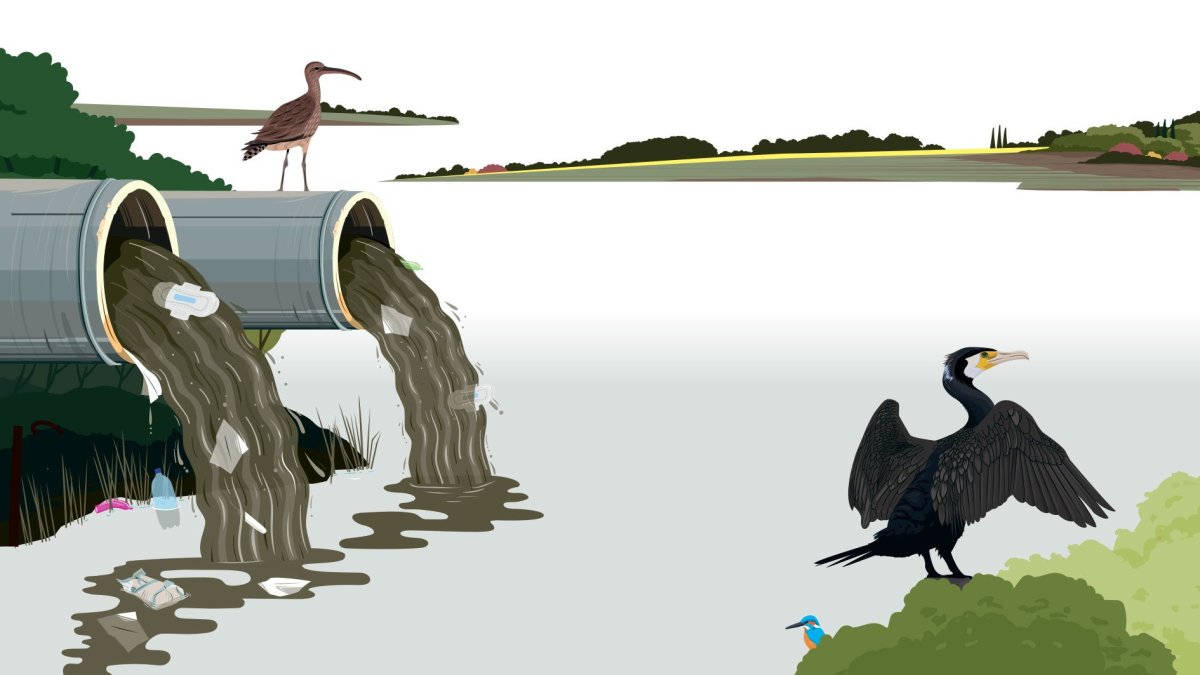

Illustration by Tracy Worrall
8 min read
Campaigning in Makerfield, Andy Burnham threatened Thames Water with public ownership – but has not so far followed through. Ben Gartside reports on a decision that will define his approach to privately owned suppliers of public goods.
What, exactly, does the word ‘control’ mean when applied to those entities that supply vital public goods?
Does it mean full nationalisation, with every decision in the hands of ministers and officials in Whitehall? Or does it rather mean that customers exercise a measure of control over their operation through ownership of a portion of equity? Or some other variant in which locally elected representatives take a golden share in the companies that serve their region?
These are not theoretical questions but are coming sharply into focus as Andy Burnham wrestles with what to do about Thames Water.
As of today, Thames Water supplies 16 million customers, owes more than £20bn and has been in breach of its licence for two years.
A large portion of the Labour Party would like to see the company – which critics say has become emblematic of the failures of utility privatisation – back in public ownership.
Its creditors, however, want to take over the company and keep it afloat by releasing tranches of cash to help the beleaguered firm.
The financiers are quietly optimistic. Industry sources suggest Burnham and the officials supporting him are pragmatic on the issue, and hope that the focus on control could reheat plans for the minister to hold a “golden share” in Thames Water, offering the government a veto while retaining private ownership of the suffering water company.
A concerted effort is being made by some in the City to understand Burnham’s policy brain. Some of Thames Water’s creditors have commissioned research into Burnham’s work on taking buses into public ownership in Greater Manchester, extrapolating out what it would mean for their financial interests.
They take heart from public comments by John Healey, the Chancellor, who insisted that ‘control’ need not mean full nationalisation.
“Some might claim that public control is public ownership,” the Chancellor told his audience, “but it’s broader than that.” What it meant instead was “local leaders and a stronger centre”, accountability for “fair bills, better services, investment that gets delivered”, and “an active state driving better regulation, quicker decisions”.
Within the Labour movement, two rival plans are circling ahead of the party’s conference.
On one side is Mainstream, the group co-founded by Compass and Open Labour. It did more than any other to get Burnham back to Westminster by criticising Keir Starmer’s economic policies from the left and encouraging bolder decision making from the government.
With an ally in No 10, the group is still singing the same tune. Mainstream supports public ownership of water generally, and believes that Thames Water should be put immediately into special administration.
Initially, Burnham struck a similar tone on water. In June, campaigning in Makerfield, Burnham told the Guardian that public ownership was “absolutely an option” and that “for Thames Water, that is what should be done”. By the end of August, the plan to put the company into special administration had gone quiet, with a Whitehall source telling the Times there was “no quick or clean solution without an enormous price tag attached”.
While Mainstream’s motion has been left open-ended for the interpretation of the new government, its motive is clear: a source close to the group says that the system now is itself an attempt at public control without public ownership, and it is not working.
Mainstream is careful to say this is not a confrontation, that it wants the government to succeed, and that the motion is deliberately open. It also does not expect to win. Under Starmer, it tried something similar on the two-child benefit cap last year, had its initial motion blocked but counted the overall shift in tone around the debate as a success.
“Copying the failed model of non-profits like Welsh Water doesn’t get around the questions of compensation, debt or legal risk”
The parliamentary case is led by Clive Lewis, whose own water bill had its first reading a week before the Cunliffe review was commissioned, and who secured an urgent question on the sector in June. He told the Commons then that this “was never a market failure” but “the market working as designed”. Allies of Lewis say that like-minded MPs are prepared to rebel if government proposals do not go far enough.
Lena Swedlow, the deputy director of Compass, tells The House that the left-wing pressure group is now campaigning with Labour MPs to push the government to more wide-ranging action.
“I think we got here because Ofwat and the Starmer-led government believed the creditors and the Thames Water leadership could get themselves out of this mess, which was short-sighted.
“It’s part of the larger theme of Starmer’s No 10 that they didn’t adequately prepare for power, and figures like Morgan McSweeney are now on record saying so. Fast-forward two years later, the hesitance to put Thames Water in special administration is as short-sighted and dangerous.”
Those supportive of implementing the special administration regime are “incensed” by the clear change in government language from public ownership to control.
However, the government is clear that the special administration threshold hasn’t been cleared, as of now. The law only allows it if a company is insolvent or in serious breach of its licence, and while creditors keep lending, Thames is not insolvent. “You either are, or you aren’t,” Environment Secretary Angela Eagle said this month. “And whatever people think of Thames at the moment, it isn’t technically insolvent.”
Another plan is that of the Co-operative Party, which Burnham recently became the first Prime Minister to represent.
A recent report by the Good Growth Foundation think tank, with a foreword by Labour MP Helena Dollimore, proposes a bill that would create a path to mutualisation by encouraging water companies to sell up to customers via a share exchange scheme. If they refused to comply, the bar for an enhanced special administration regime would be lowered.
As with nationalisation, the government is thought to have cooled on the co-operative idea, with industry sources expecting the plans to go nowhere.
Officials recognise that any attempt to mutualise would likely lead to the largest rise in customer bills, as investors would be unwilling to stomach any short-term losses without an equity stake. Investors agree, highlighting the mutualised Welsh Water as having the highest bills in Britain.

The left of the party is sceptical too, for the opposite reason.
Mainstream says mutuals work well in many settings but that water needs something stronger, and that it is not clear mutualisation changes who owns anything.
Swedlow says: “Of course devolved and regional leaders should have a say in the future of water. But copying the failed model of non-profits like Welsh Water doesn’t get around the questions of compensation, debt or legal risk.”
One policy wonk highlights that, currently, the Co-operative Party, the Liberal Democrats and Reform all have policies to mutualise water, all with little clarity about what would actually happen next.
What seems sure either way is a significant downgrade in the powers of Ofwat, with responsibility set to be transferred to ministers. The regulator has not had a permanent chief executive since August 2025, and cannot have a successor until the government’s clean water bill is introduced.
The research of the financiers into Burnham’s bus plan seems to be beneficial – earlier this month, The Telegraph reported that regional bodies would be set up to oversee water companies, with a responsibility to hold company bosses accountable for bills and sewage.
As Burnham battles for control, water waits. For the moment, the sector once in the eye of the storm waits to find out the government’s decision and MPs wait to hear the direction of travel.
Within a month of Labour’s conference in Liverpool, Andy Burnham’s government will have delivered its first Budget and Thames Water’s lenders will have decided whether to extend its emergency funding without a signed rescue deal. Labour’s new 10-year plan promising “stronger public control” of water is set to be delivered by the end of the year too. Here are the three leading plans circulating around Westminster.
Public ownership.
Mainstream, the Andy Burnham-affiliated campaign group co-founded by Compass and Open Labour, has drafted a conference motion calling on the Prime Minister to “urgently return water in England into public ownership”. Its paper, The Productive State, sets out the details: put Thames Water into special administration, restructure its debts and have it function as a national public water corporation, run at arm’s length from ministers and paying for investment by borrowing against customers’ bills.
A private solution.
London & Valley Water, a consortium of 100 investors holding £17bn of Thames’ £21bn debt, wants to take over the beleaguered firm. Its £10bn plan would write off billions of debt, add new capital and pay no dividends until 2035. In return, it wants leniency on penalties worth up to £1bn. In June, the then environment secretary Emma Reynolds said the deal did not go far enough – a month later, the creditors offered the government a “golden share”, offering a veto over important decisions and hostile takeovers.
Mutualisation.
A proposal by the Good Growth Foundation, backed by the Co-operative Party and three Labour metro mayors, suggests a law giving water companies a choice: sell up to customers through a share exchange, or face a lower bar for special administration and leave it as a customer-owned co-operative. While it would keep the debt off the government’s books, investors say that borrowing costs and bills would rise without shareholders to absorb any losses.
>

‘Mahou no Princess Minky Momo: Akogare no Yume e – Magokoro no Duo’ Theatrical Release Postponed
Jalen Duren could turn down $200 million from the Pistons. Here’s what happens next

Voice Actor Kenjirō Tsuda’s TikTok Lawsuit Dismissed After AI-Voiced Videos’ Removal – News
-

 movies4 months ago
Search For Canadian TV Actor Stewart McLean Now Homicide Investigation
-

 Fashion9 years ago
These ’90s fashion trends are making a comeback in 2017
-
Fashion9 years ago
According to Dior Couture, this taboo fashion accessory is back
-
Fashion9 years ago
Model Jocelyn Chew’s Instagram is the best vacation you’ve ever had
-
Fashion9 years ago
Emily Ratajkowski channels back-to-school style
-
Fashion9 years ago
9 Celebrities who have spoken out about being photoshopped
-

 Anime4 months ago
Rurouni Kenshin: Hokkaido Arc Manga Takes 1-Issue Break – News
-

 Anime3 months ago
HIDIVE to Stream English Dubs for The World Is Dancing, The Forsaken Saintess and Her Foodie Roadtrip in Another World, The Dangers in My Heart: The Movie Anime – News