
Sports
What are Hansi Flick’s Barcelona? Their second goal in El Clasico summed things up


There are two sides who have famously taken football to new heights with their historical commitment to playing a 4-3-3 formation: the Netherlands and Barcelona.
The links between them, through Rinus Michels, Johan Cruyff and a few others along the way, are well documented. But there are times when the composition of their respective squads calls for something different: the use of an effective front two, which flips the midfield triangle and creates something different, more 4-2-3-1.
On paper, it never looks right for these sides to be playing that way. On the pitch, though, it often works.
The Dutch national side found themselves in this situation at the 1992 European Championship, when they were able to call on Marco van Basten and Dennis Bergkamp, and couldn’t justify leaving either out of the team. Michels, in his final managerial post, deployed Bergkamp in a ‘shadow striker’ role, just off Van Basten. Some questioned whether they would get in the way of one another, but they dovetailed brilliantly.
One famous goal came in a memorable 3-1 group-stage win over Germany, when Van Basten darted to the near post to drag two defenders away, but simultaneously pointed over his shoulder to the onrushing Bergkamp. Winger Aron Winter pulled back the cross, and Bergkamp stooped to head home their third of the game. It was a relatively simple goal, but it was heralded as an example of how the two central attackers were on the same wavelength, because they always knew where the other was.
Barcelona’s second goal in their title-confirming 2-0 defeat of Real Madrid on Sunday felt similar, with the bonus that both central attackers actually touched the ball in this move.
Although sometimes turning to Barca’s traditional 4-3-3, Hansi Flick has generally favoured this type of system throughout his two La Liga-winning seasons in charge, with two deep midfielders and an attacking midfielder between the lines, off a centre-forward.
For much of the season, it’s been Robert Lewandowski (who has the Van Basten-esque tendency to direct his side’s attacks) up top with a varied cast in the supporting role. But in recent weeks, almost out of nowhere after a poor period of form, Ferran Torres has become the default option. More than a decade his junior, Torres clearly offers more running in behind than the 37-year-old Lewandowski, but he also boasts awareness, and can combine with his team-mates, too.
The key to Flick’s 4-2-3-1 (or 4-2-1-3, if you like) is that Barcelona take up shapes familiar from the 4-3-3. In the build-up to their second goal last night, this shape is 3-2-5, and could easily be achieved in a 4-3-3 by the full-backs pushing forward and the holding midfielder dropping into defence, for example. Instead, Barcelona do it with the left-back pushing into the front five.
When Alejandro Balde is their left-back, he overlaps and whoever is the left-winger moves inside. But here, with right-footed Joao Cancelo playing left-back, there are more examples of him being the one to go infield. On this occasion, Fermin Lopez stays wide on the left.

The way the move unfolds shows how Barcelona have blended the two approaches.
When Gerard Martin plays the ball out to Fermin on the left, Barcelona suddenly switch into something that feels more like a classic front two. Left-back Cancelo moves towards the ball, while Dani Olmo, the No 10 who takes up an inside-right position here, suddenly springs in behind. Fermin chips the ball into the Madrid penalty area and Olmo (briefly operating as the No 9) responds with a wonderful backheeled volley for Torres (briefly the No 10) to latch onto, and smash home.
It’s a truly outstanding goal.

Barcelona often construct moves like this.
Here’s a goal away at Atletico Madrid in the second leg of their recent Champions League quarter-final. This time, Cancelo is overlapping rather than underlapping, but it’s a familiar picture.

And this time it’s Olmo linking play between the lines, and playing another assist for Torres — who is fulfilling his more traditional duty of running in behind.

Sunday’s Clasico victory was achieved without Lamine Yamal, clearly the star of Barcelona’s season, as well as largely without their top two scorers from last season’s title success, Lewandowski and Raphinha, who both appeared from the bench in the second half, when the game was largely dead.
That shows how Barcelona have evolved, and while that 2024-25 side might live longer in the memory, this year’s iteration have already won more La Liga points (91) than they managed (88) with three games still to play. Their current run of form shouldn’t be underestimated, either. Eleven straight victories is the best run in Spain’s top flight for over a decade.
In a way, Flick’s team feel like a classic Barcelona side, but in another, like something slightly different.
If, in a few years’ time, you want a snapshot of what Barca 2025-26 were all about, their second goal at the Camp Nou against Madrid yesterday is a fine summary.
>
Philadelphia coach Nick Nurse said Embiid “looked great” on the first day of training camp.
>
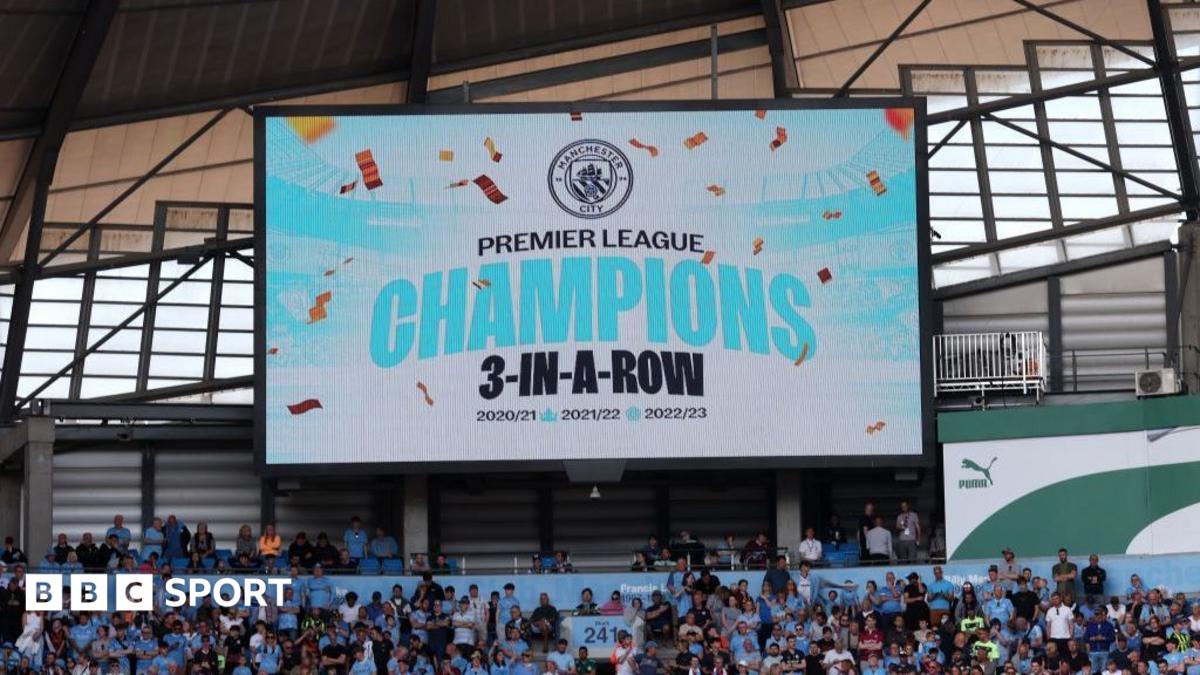
In early 2010, Manchester City took the first steps to get the additional funding into the club.
City would enter into sponsorship agreements which were record amounts and were significantly above fair market value.
It is referred to as the ‘disguised funding scheme’.
This is how it worked, according to the ruling.
The sponsorship deals were split into two parts: a base fee, and a tagged sum.
The sponsors would pay the base fee.
And the club’s owners would pay the tagged sum.
Ergo, the sponsors would not have to pay the full value of the contract. The club’s owners would pay the vast majority, which enabled them to invest in players.
This, the document states, “gave the misleading impression to third parties (including regulators and its auditors) in its financial statements and any required FFP returns that its commercial revenues from sponsorship agreements were far, far greater than was in fact the case”.
But the club also knew they had to be nimble.
From time to time the disguised funding scheme would be tweaked to “assist with continued concealment” and “reduce the likelihood of difficult questions being asked”.
What did this all mean in reality?
Commercial income from sponsors totalled £949.94m in the seasons from 2009-10 to 2017-18.
The ruling says only £119.25 million represented base fees.
A total of £830.69 million represented tagged sums – the amount paid by the club’s owners.
Man City have denied the claims and say the Premier League had misunderstood the sponsorship agreements.
However, the panel said it “rejected that explanation as untrue”.
It said it was “concocted well after the event in an attempt to obscure and conceal the realities of the disguised funding scheme”.
An example given of the disguised funding scheme in action: plugging an unexpected shortfall in May 2013.
Less than a week before the end of that 2012-13 financial year the club knew they were £9.9m short of complying with Uefa’s financial rules.
In a matter of days, without sponsors even being approached, a number of modified sponsor agreements were generated which increased recorded sponsorship fees to pay bonuses for events that had already taken place and to pay for a US tour.
The feared Uefa FFP shortfall was thus “plugged”.
>
Sports
Is George Russell back in the title fight? Plus: What Alonso’s new deal means for Aston Martin
Welcome to Prime Tire, The Athletic’s F1 newsletter.
>
Sixers to have 'conversations' about load management for Joel Embiid, LeBron James

Tesla secures $30B in new credit lines as it looks to scale Cybercab, Optimus

‘How I Built This’ Leaves NPR for Vox Media as Guy Raz Takes Ownership
-

 movies4 months ago
Search For Canadian TV Actor Stewart McLean Now Homicide Investigation
-

 Fashion9 years ago
These ’90s fashion trends are making a comeback in 2017
-
Fashion9 years ago
According to Dior Couture, this taboo fashion accessory is back
-
Fashion9 years ago
Model Jocelyn Chew’s Instagram is the best vacation you’ve ever had
-
Fashion9 years ago
Emily Ratajkowski channels back-to-school style
-
Fashion9 years ago
9 Celebrities who have spoken out about being photoshopped
-

 Anime4 months ago
Rurouni Kenshin: Hokkaido Arc Manga Takes 1-Issue Break – News
-

 Anime3 months ago
HIDIVE to Stream English Dubs for The World Is Dancing, The Forsaken Saintess and Her Foodie Roadtrip in Another World, The Dangers in My Heart: The Movie Anime – News