
Entertainment
An Unpublished Letter to Rex Reed from a Young Writer and Film Lover

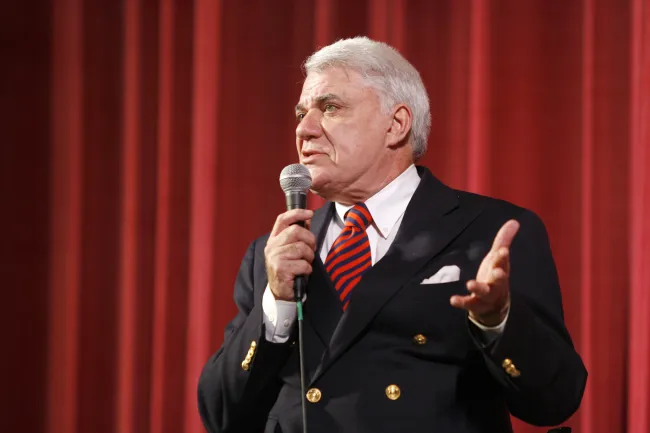
Given the news of the passing of legendary, curmudgeonly film critic Rex Reed on Tuesday morning, I recalled a letter I’d written to him over a decade ago when I was in my twenties and exploring my budding passion for classic movies. I found it in an old folder on my computer and it reminded me of a time where my younger, passionate self wanted to make a difference in the generational gap we were experiencing (and still are).
At the time, Reed was approaching eighty and seemed even more sour about his disdain for contemporary movies. What bothered me most was how he attacked young people for not caring about the past. I resented his sentiment and decided to write a letter arguing against his criticism.


My intention at the time was to publish it in a newspaper, but I never sent it to any editor as I was still insecure about my writing and hadn’t published anything yet. Reading it now after all of these years, it still resonates and I think it’s worth bringing up the conversation again now that Mr. Reed has left us.
The letter follows:
Dear Mr. Reed,
Whenever I read an article or watch a TV interview where you are interviewed, you bring up the same tired, cranky grievance that young people are unaware of and uninterested in classic films, and that my generation simply doesn’t care about Hollywood’s past. As a twentysomething and one of those millennials you loathe, I take umbrage with this unjustified notion.
This groaning complaint is becoming a regular recurrence from most older folks I encounter, who make it a habit of shaming the current generation for their lack of knowledge of old movies and its glittering stars, therefore exercising a larger theory that all young people are too dimwitted and self-consumed, lacking any respect for the artists who have come before them.
But I ask you this — how could a young person possibly understand the depth of Cary Grant’s charm, or Katherine Hepburn’s charisma, or Sidney Poitier’s strength, or Frank Sinatra’s voice, if someone a previous generation hasn’t properly explained to us their brilliance? Books, documentaries, and the internet can only go so far. Where are the encouragers?
As time passes and movie stars fade, they can’t possibly sit at the forefront of our media consumption. Therefore, exposure must be passed down like an heirloom. If films are vital to our culture, then they must be shared, not hoarded and locked away.
As a child, I was fortunate to have elders who cherished the tradition of cinema and shared their favorite films with me as though I was entering a rite of passage. As a result, I’ve turned that sacred bond into a lifelong passion. Whenever I attend a retrospective screening of a movie before my time, I make friends with the senior citizens sitting next to me in the theater. But there are also young people present too and they want to experience that magic you write so affectionately about in your writing.
Although I’m a traditionalist myself and prefer to see films in actual moviehouses, I’m also grateful to television and digital streaming services for offering vintage film titles in their libraries. In all candor, if it wasn’t for Ted Turner and his Turner Classic Movies, and Robert Osborne speaking to me through the screen, my life may have taken a different turn.
Okay, perhaps I’m in a minority group of young people interested in classic cinema. But consider this, Mr. Reed — you were a young person in the 1950s and ‘60s, and the majority of your generation was not interested in movies from the ’20s, ‘30s, and ‘40s. Their interest lay in the contemporary pop culture of their time, consisting largely of rock ‘n’ roll and beach movies starring Annette Fuicello and Frankie Avalon.

If it wasn’t for revival theaters, occasional black-and-white reruns on TV, and writers like yourself, how would young people have known about classic films otherwise? Did your friends know who Bette Davis was? Or Greer Garson? Or even Joseph Cotten? Were the older folks of your time disheartened by your generation’s lack of interest with their movies? It’s possible they were, but maybe you didn’t look back at your youth and take notice of the enormous gap that existed. Or maybe you too were also in a minority group of old movie lovers.
If you truly want young people to care about the legends of bygone eras then you must expose, not scorn. Otherwise, you are judging us with an unfair advantage. As time passes, it’s only natural that stars drift into obscurity. The names and faces that were once widely known and celebrated will shrink into a niche interest. However, as long as their art is exhibited in some type of arena, it will never disappear completely.
You must give my generation a chance to catch up. We are inundated with new media and technology to consume everyday, whether we like it or not, but that doesn’t mean we won’t eventually come to appreciate the past. We just need to be exposed. We need to connect with our recent history. Give us that chance.
Maybe we’ll bump into each other at a screening sometime and talk about the old days. But please, just don’t critique me.
Thank you for your time,
Raj Tawney
Raj Tawney writes about culture and identity from his multiracial perspective. He has contributed to The New York Times, Los Angeles Times, The Washington Post, and other publications around the country. He is the author of Colorful Palate: A Flavorful Journey Through a Mixed American Experience and All Mixed Up.
>
>
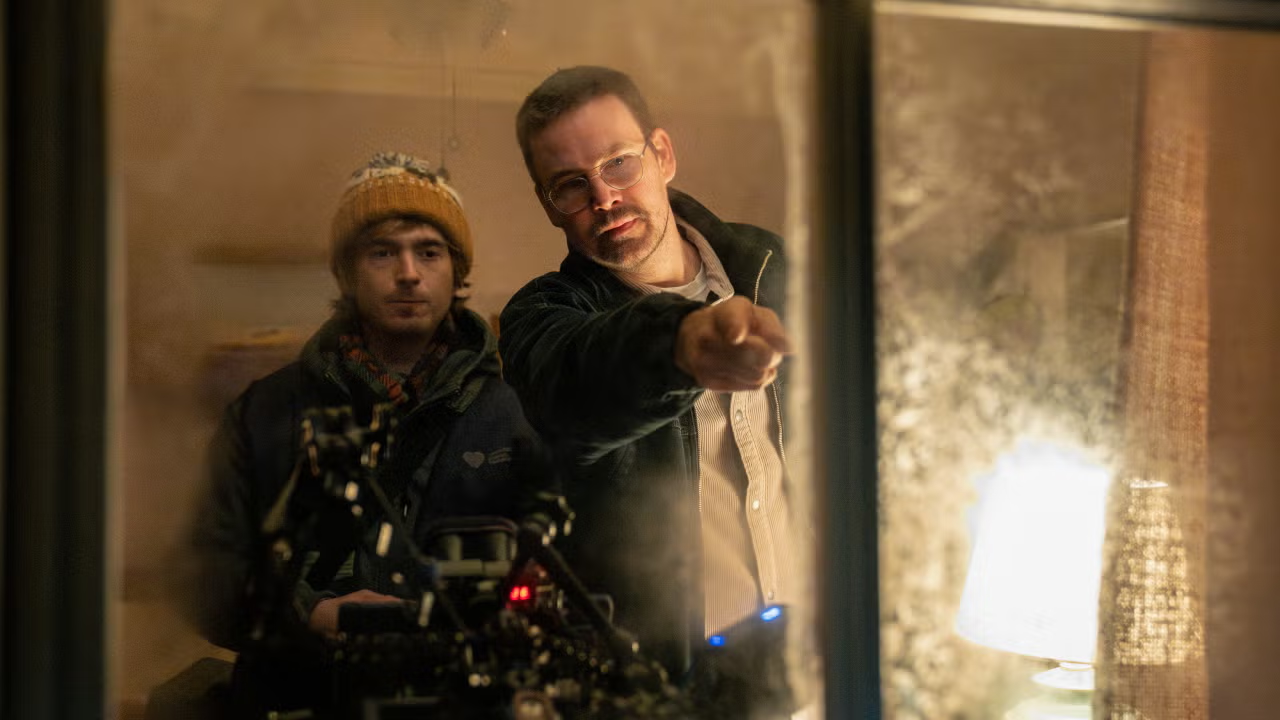
Zach Cregger’s “Resident Evil,” in a little more than two weeks, has already amassed nearly $200 million at the global box office.
Instead of a straight adaptation of the long-running video game series (or an extension of the already-existing film franchise), Cregger chose to tell a new story within the world of the games – a story that follows a hapless medical courier named Bryan (played by Austin Abrams), who is sent on a desperate mission to the heart of Raccoon City during a zombie outbreak. It is an all-gas, no-brakes rollercoaster ride that is carried along by Abrams’ performance – vulnerable, hilarious, inquisitive, the perfect audience surrogate. Even when things get weird, really weird, Abrams’ oddly emotional performance keeps us engaged.
Abrams said that Cregger first mentioned the project while the two were working on “Weapons,” which would go on to be a box office hit and an unlikely Oscar winner. But Cregger didn’t say anything specific about Abrams joining the project.
“It wasn’t until he was in post-production for ‘Weapons’ that he called and wanted me to read the script basically,” Abrams said. He hadn’t played the games (“Other than seeing it and being too afraid to play it”) but once he got the part it emboldened him to play horror/survival games that had a similar spirit.
Whereas “Weapons” was an ensemble piece, with Abrams portraying an unforgettable character (a junkie/thief who stumbles upon the mystery of a missing classroom of kids), with “Resident Evil” he would take center stage. The movie is him. And that left him a little nervous.
“You never know if you can do something until it’s done. It’s huge question marks. I feel personally like we’re going to be interested enough in watching this person,” Abrams said. “Not that everyone could feel that way. Or are they going to be like, I don’t really care about this guy that much. I don’t really want to watch this movie? It could happen. There’s a lot of feelings of the unknown came up.”
While shooting the movie, Abrams started to get the impression that it was going to be okay. “You catch the vibe of the people around you and they’re seeming to be into the character and that helps. You’re not getting like red lights. You keep going,” he added.
And while Abrams knew that he would be the audience stand-in, crafting a character through physicality rather than dialogue (“It feels good being in the body and using it as a tool,” he said) there were still some pretty radical changes to the final film, like when Cregger admitted that, after a test screening, he went through the movie and pulled out most of the jokes.

“There were some asides where I was like, ‘Are you going to keep that?’ Or ‘maybe check that out again.’ There was a bunch of stuff like that where we would take it to a place that was too far, really for our own enjoyment. And you never really know, until you get in the edit, how much you’re going want or not,” said Abrams. ”Especially for like this, where it’s a straight shot and there aren’t all these other characters that you’re interacting with. You want options. I don’t think it would be as enjoyable to watch if it was just straight through. If there wasn’t any laughs in it, I think it would be too unrelenting. Adding comedy, which is what I think Zach is so smart about too, really helps the enjoyment of it and relieves some of the pressure.”
One thing scarier than zombies or plague-infested monsters was the response of the die-hard Resident Evil fans to Cregger making a movie that eschewed the classic characters and established lore of the series. They were very upset about his approach.
Abrams was sympathetic. “I read a book that I love and then they’re going to do another one or make it into a different one. You don’t want someone to f–k it up. You have a personal connection with it. I get what that feeling is like. There’s that passion there,” Abrams said.
He said that he and Cregger “did the best job we could.” “We had a strong base of love and I think our best shot at making something that they would enjoy,” Abrams said. Cregger is a huge fan of the games and has played them all, including this year’s Resident Evil: Requiem. Their approach? “Make what you dig and then hope that other people dig it,” said Abrams.
Fan service was not something that they were interested in (Abrams said it doesn’t work in “a meaningful way”). “If you’re going to end up making something that feels fresh, I think that’s the best shot you have making something interesting,” he said. But still, he said, “I only send love to all those people.”
Before he started working with Cregger, Abrams was a fan of “Barbarian,” his debut feature. He remembers thinking, I love whoever’s made this movie, because they have guts and extreme talent and skill, and a comedic understanding that is really rare and that I relate to. Meeting him, Abrams found that they were perfectly in sync.
“We connect on many other levels, aspiring for the same thing and we have a similar level of what we deem to be the work that we want to make,” Abrams said. “I think that helps us to push each other. We both understand what it is we’re trying to make and have a similar sensibility.”
“He is a total dream to work with. I mean, truly a dream, and he is a beautiful, kind person. And he’s such a formidable actor. He’s so good at whatever he tries to do. I have yet to see him find his limit. That guy’s range is miraculous,” said Cregger. “When it was time to go and put this one together, it was like there wasn’t even a decision. There was not a moment of like, Well, who else could we? No, it’s Austin.”

There isn’t a role for Abrams in Cregger’s upcoming sci-fi freakout “The Flood” (which just cast Jennifer Lawrence in the lead role), but when we asked Abrams if he was the Kurt Russell to Cregger’s John Carpenter, he smiled wide and said, “Hey, you said it. I didn’t say it.”
When it came to – spoilers ahoy! – Abrams’ monstrous transformation towards the end of the film, he said that he actually found the motion-capture process enjoyable.
“I was shocked at like how minimal they needed to be able to capture everything,” said Abrams. “It’s all those other guys. You see them in a room, just imagining all this stuff.”
And given the open-endedness of the movie (and the fact that the video game series has been running for so long), we had to ask if Cregger had said anything to him about coming back for another installment. Another entry seems more and more likely, especially as its box office tally continues to grow.
“We’ve had the smallest of discussions. I also don’t want to go into it too much at all because I don’t know how things would play,” said Abrams.
Still, it’s very clear – if Cregger has an idea for how to bring Bryan back to snowy Raccoon City, Abrams would be there. In whatever shape – monstrous or otherwise – that would take.
“Resident Evil” is in theaters now.

>
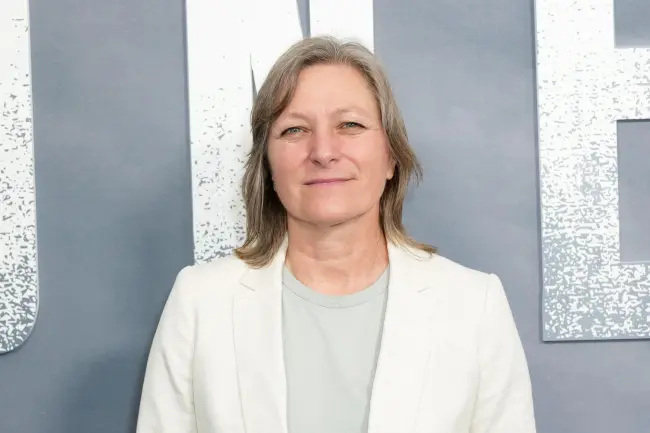
Cindy Holland, the chair of Paramount‘s direct-to-consumer division overseeing the company’s streaming plans, announced in a memo to staff that she’s exiting the company, according to reports in Variety and Deadline. The move most likely paves the way for Casey Bloys, who leads HBO and HBO Max at Warner Bros. Discovery, to lead streaming, something Holland hinted at in her exit memo. Today, September 29, is her last day at Paramount.
Holland’s exit provides some clarity for Paramount’s streaming vision. While Holland’s memo didn’t mention Bloys by name, it hints that “David is optimizing for HBO stability as we move into this next chapter, and I fully support that.” Bloys became president of HBO programming in 2016 and his role has only expanded since then to encompass HBO Max and other aspects of Warner Bros. Discovery.


Holland joined Paramount in January 2025 and described in her memo that she was tasked with reviving Pluto TV as well as integrating Paramount+ and advising on the WBD merger, and she helped grow Paramount+ to 79.6 million subscribers. She also was a pivotal force in the early days of Netflix’s expansion into original streaming programming with shows like “House of Cards” and “Stranger Things,” and she ultimately spent 18 years at Netflix.
While Bloys coming aboard isn’t official, nor has the merger itself closed just yet, it could be solidified in a matter of days. And what happens to HBO and HBO Max, how it’s integrated into Paramount+ or whether it stands alone, are big questions that remain. Bloys, though, has as good a track record as anyone in town. Consider HBO’s continued dominance at the Emmys and how the brand has sustained over the years even as Paramount’s own premium cable brand Showtime has dwindled, ultimately becoming integrated into Paramount+.
Unanswered still is what will be the fate of Warner Bros. Pictures executives Mike DeLuca and Pam Abdy and what their role would be in a combined WarnerMount. Paramount still needs to deliver on an aggressive slate of 30 movies per year across the two studios, so there’s plenty of opportunity to go around.
>
Jesús Luzardo gives the Phillies 5 gritty innings, but drawn-out clinch looms large
Braves went off script, but following their blueprint is key to a postseason run

AI Creators Want You to Know AI Filmmaking Is Still ‘F–king Hard’
-

 movies4 months ago
Search For Canadian TV Actor Stewart McLean Now Homicide Investigation
-

 Fashion9 years ago
These ’90s fashion trends are making a comeback in 2017
-
Fashion9 years ago
According to Dior Couture, this taboo fashion accessory is back
-
Fashion9 years ago
Model Jocelyn Chew’s Instagram is the best vacation you’ve ever had
-
Fashion9 years ago
Emily Ratajkowski channels back-to-school style
-
Fashion9 years ago
9 Celebrities who have spoken out about being photoshopped
-

 Anime4 months ago
Rurouni Kenshin: Hokkaido Arc Manga Takes 1-Issue Break – News
-

 Anime3 months ago
HIDIVE to Stream English Dubs for The World Is Dancing, The Forsaken Saintess and Her Foodie Roadtrip in Another World, The Dangers in My Heart: The Movie Anime – News