
Entertainment
‘Daredevil: Born Again’ Season 3: What We Know From the Comics

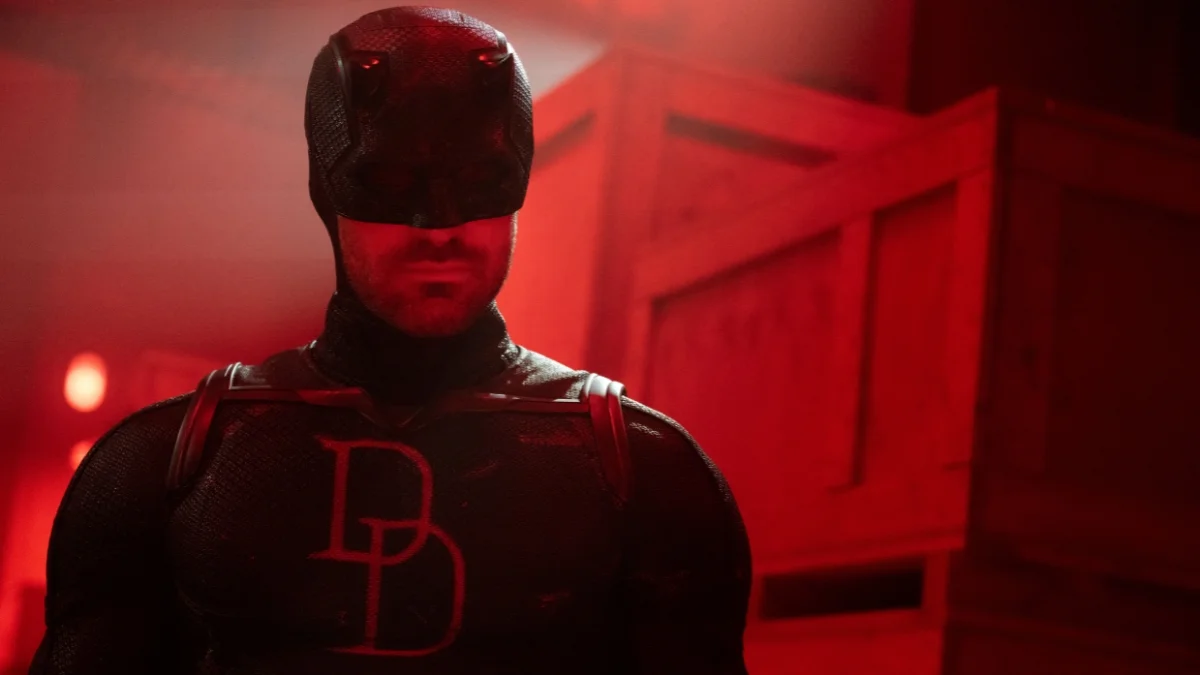
“Daredevil: Born Again” Season 2 has come to a shocking conclusion. But what does it mean for Season 3 of the Disney+ MCU series?
We already knew some key details about the upcoming third season of Disney+’s reboot of Neflix’s “Daredevil,” including the apparent return of The Defenders. Still, the major plot of the show’s third season remains up in the air.
Yet the finale of “Born Again” Season 2, titled “The Southern Cross” (directed by Iain B. MacDonald and written by showrunner Dario Scardapane and Jesse Wigutow) introduced a massive new wrinkle to Daredevil’s future. So how did the show end, and what do the comics tell us about what’s next for the Devil of Hell’s Kitchen? Read on to find out.

How does “Daredevil: Born Again” Season 2 end?
“Daredevil: Born Again” Season 2 goes out with a bang as Matt Murdock (Charlie Cox) reveals to the world that he is the vigilante known as Daredevil. Matt shares this news while defending Karen Page (Deborah Ann Woll) in court. Since Wilson Fisk (Vincent D’Onofrio) had already testified that Daredevil was onboard the Northern Star at the time of its sinking, Matt revealed his identity to testify that it was used as part of an illegal smuggling operation by Fisk to arm his Anti-Vigilante Task Force militia.
This revelation further escalates the rivalry between Kingpin and the vigilantes of New York, leading to a protest at the courthouse (one in which Kingpin brutally kills a number of protestors). Daredevil eventually convinces Kingpin to give himself up and accept a deal to leave New York and resign as mayor.
But Daredevil doesn’t get to celebrate his victory for long. Soon after Kingpin leaves the city, a number of police officers interrupt Matt’s date with Karen to arrest him for Daredevil’s vigilante crimes. “Born Again” Season 2 ends with Matt in prison, locked in the same facility as many of the AVTF enforcers he put away.
Cox outright told TheWrap that next season of “Born Again” will pay homage to a particular comic book storyline.
“There is an excellent ‘Daredevil’ run in the comics that this season, at least at the beginning, pays homage to, which is really, really fun,” he teased. “So when I knew about that, I was very excited, because it’s a very, very cool storyline.”
So, when has Daredevil gone to prison in the comics, and what run might he be referring to? Read on to find out.

When did Matt Murdock go to prison in the comics?
Technically, Matt Murdock only went to prison for one major arc in the comics: “The Devil in Cell Block D.” This storyline, with art by Michael Lark, comes at the start of Ed Brubaker’s time writing “Daredevil.” The main arc, released in 2006, takes place from “Daredevil (1998) #82” to “#87,” with Matt tying up loose ends outside of prison in subsequent issues.
The story follows Brian Michael Bendis’ iconic run on the character, which ended in “Daredevil (1998) #81” (art by Alex Maleev) with Matt Murdock and Wilson Fisk both being sent to prison. The imprisonment comes as the world learns that Matt Murdock is Daredevil. Though Matt doesn’t own up to this dual identity, he allows the FBI to send him to Ryker’s Island (the Marvel equivalent of Riker’s Island) to await trial. This occurs around the same time as Mark Millar and Steve McNiven’s famous “Civil War” storyline, placing a heightened legal scrutiny on vigilantes and superheroes.
In the first issue of this arc, Foggy Nelson visits Matt in prison to speak about his long-delayed trial. By the end of the issue, Matt has been locked in solitary confinement as Foggy is escorted out of the prison. A group of prisoners then attack Foggy, stabbing him and apparently killing him as Matt helplessly listens.

After this incident, Matt becomes a man on a mission, willing himself to survive so he can track down Foggy’s killer. Outside the prison walls, a mysterious new Daredevil (later revealed to be Iron Fist) runs around to keep up Matt’s work and create doubt as to his identity. Meanwhile, The Punisher, learning of Matt’s situation in prison, turns himself in so he can be sent to Ryker’s as well.
Eventually, a riot breaks out as multiple prisoners attempt to kill Matt and Fisk, who begin working side-by-side (along with a recently imprisoned Bullseye). When Fisk and Bullseye offer an escape with Matt, Matt tricks Bullseye into shooting Kingpin before leaving with Frank as a “hostage” of Punisher’s.
Daredevil soon travels to Paris to search for Foggy’s killer — not knowing that Foggy is actually alive and in witness protection. Eventually, he tracks down Vanessa Fisk (who, just like in “Born Again,” ordered the attack on Foggy).
Vanessa reveals that she’s enacted an elaborate plot against Matt as she dies from a mysterious disease (caused by her festering emotions from killing her own son). Vanessa clears Matt’s name and reveals to him that Foggy is alive as part of a plot to make him feel that he owes her. As a free man, Matt returns to New York, where he gets Kingpin released from prison (on the condition that he leaves the U.S.) to repay his debt to Vanessa.
This story was clearly on the “Born Again” showrunners’ minds when they brought the series to life. Foggy’s assassination, Vanessa’s death and Matt Murdock’s imprisonment all factor into the Disney+ series, pulling directly from “The Devil in Cell Block D.”

When did Daredevil go to prison in the comics?
Matt Murdock may have only gone to prison for one major Marvel Comics storyline, but Daredevil did his own stint.
The run on “Daredevil”, penned by Chip Zdarsky (which started in 2019 with art by Marco Checchetto), begins with Matt Murdock returning from a temporary stint away from the cowl after he was hit by a truck. When Matt jumps back into action as Daredevil, his reflexes are off, causing him to inadvertently kill a man due to head trauma.

Matt searches for someone (mainly Kingpin, who is the mayor at this time) to blame for the death before eventually realizing it was his fault. This causes him (at Spider-Man’s insistence) to put away the costume and stop being Daredevil for a time. It isn’t long until other citizens begin wearing their own Daredevil masks — an idea adapted for the “Born Again” Season 2 finale.
Matt eventually starts training alongside Elektra to regain control of his powers and aim for bigger targets than low-level street criminals. Meanwhile, Fisk attempts to go legit as mayor, leaving behind a power vacuum for Hell’s Kitchen’s Kingpin.
During this period, Daredevil is hunted by Cole North, a Javert-like cop new to Hell’s Kitchen who seeks to do things by the book and prosecute vigilantes. Realizing that the Kitchen is plagued by dirty cops, Cole and Daredevil eventually develop a working relationship. In “Born Again,” Cole North is played by Jeremy Isaiah Earl and depicted as the second-in-command of AVTF leader Connor Powell (Hamish Allan-Headley), though this character scarcely resembles his comic book counterpart.
Eventually, a gang war erupts in Hell’s Kitchen, with officers ordered by the uber-wealthy Stromwyn siblings to stay out of the way. Daredevil, Kingpin and Cole North fight side-by-side to save the city from villains like Bullseye and Stilt-Man, though Kingpin insists that Daredevil be taken in. Though Cole and others try to stop him, Matt quickly agrees.
Represented by District Attorney Ben Hochberg (who is played in “Born Again” by John Benjamin Hickey and prosecutes Karen Page), Daredevil pleads guilty to second-degree manslaughter. However, since the Supreme Court had already ruled that superheroes should be allowed to testify without revealing their secret identities, the court ruled that Daredevil would be the one sent to prison — keeping Matt Murdock’s secret safe.
While Daredevil served out his prison sentence, Elektra (who bought a large part of Hell’s Kitchen to appease Matt) took on a new Daredevil persona herself, attempting to prove to Matt that she had changed and could be a non-lethal vigilante like him. Meanwhile, Daredevil began working for the FBI in prison to find out why so many inmates had gone missing.
Daredevil eventually learns that the prison is using a transmittable gaseous drug called re-cid to infect inmates (and, in turn, their communities after they leave prison). Re-cid promotes (you guessed it) recidivism, making the prisoners violent and easily agitated. Matt is infected by re-cid himself before overcoming the effects to go help Elektra fight Bullseye (and a small army of Bullseye clones).

Though Daredevil escaped from prison to fight the Bullseyes, heroes like Mr. Fantastic and Iron Man argue that his heroism proves he doesn’t belong in prison, leading to his release shortly after. Kingpin, enraged by this release and the fact that Daredevil’s identity has been erased from his mind, soon uses his position as mayor to outlaw vigilantes in New York during the event “Devil’s Reign” (a plotline already adopted for “Born Again” Season 2).

Where is “Daredevil: Born Again” Season 3 headed?
“Born Again” Season 3 will likely not be a direct adaptation of either of these storylines. Rather, it will likely be like the rest of the show so far: drawing key elements from Brubaker and Zdarsky’s work while still forging its own path.
The Zdarsky prison arc largely hinges on Matt Murdock’s identity remaining secret, making it difficult to do a direct adaptation in “Born Again.” The Brubaker arc, however, sees Matt enraged and searching for Foggy’s killer — a storyline that’s already been resolved in “Born Again.”
With the return of Finn Jones as Iron Fist, it’s possible that “Born Again” will see Danny Rand step into the Daredevil suit like “The Devil in Cell Block D,” giving Hell’s Kitchen a new protector while Matt is away. Yet Danny is largely driven to become Daredevil in the comics to create reasonable doubt as to Matt’s double identity. This reasoning doesn’t quite work in the show, where Matt willingly confessed his vigilante activities to the public.
Unlike “The Devil in Cell Block D,” Matt does not find himself imprisoned alongside Kingpin, who simply left New York at the end of “Born Again” Season 2. As such, it’s unclear how his exile will affect Matt’s time in prison and Hell’s Kitchen as a whole.
Though Fisk’s exit does create a vacuum, with a shaken and broken New York City looking for new leadership. This could build into a key element of Zdarsky and Checchetto’s “Devil’s Reign” storyline: Luke Cage’s mayoral campaign.
Luke becomes mayor at the end of “Devil’s Reign,” opposing the lawlessness created by Kingpin’s anti-vigilante officers (in the comics, a new crew of villains-turned-Thunderbolts). With Mike Colter’s return as Luke at the end of “Born Again” Season 2 and his expected appearance in Season 3, the stage could be set for that character to take on a larger role in the MCU by replacing Fisk’s allies as New York’s mayor.
However “Born Again” progresses from here, Daredevil’s imprisonment is sure to shake up the superhero show next season.

>
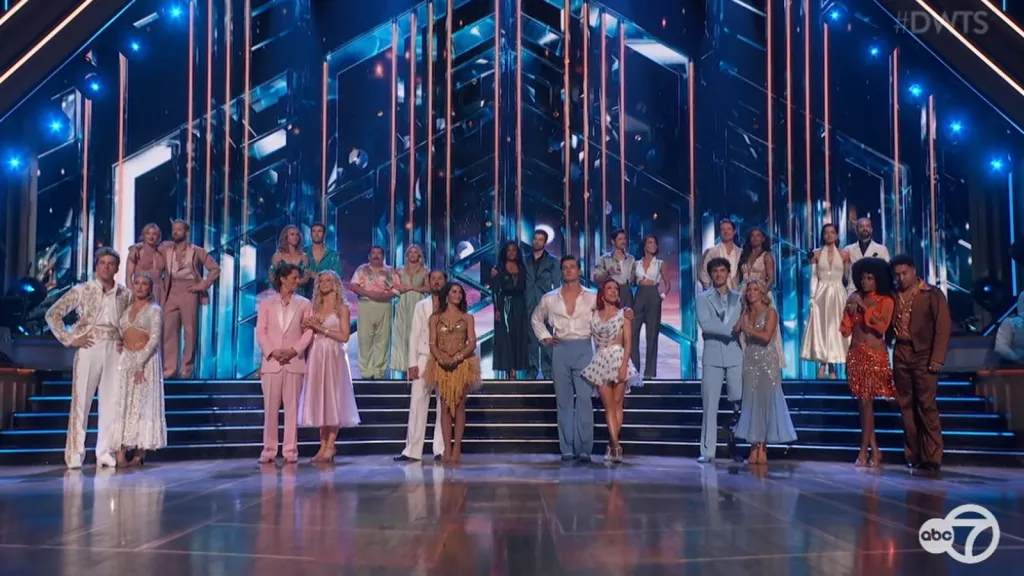
SPOILER ALERT! This post contains details from Tuesday night’s episode of Dancing with the Stars.
It’s another exciting night in the ballroom as 13 contestants are still eyeing the Len Goodman Mirrorball Trophy during Week 3 of Dancing with the Stars.
Last week, the judges reinforced just how tough they are going to be this season, once again declining to score anyone above a 7. Still, three couples — Jenna and Val, Ezra and Daniella, and Amber and Pasha — walked away tied for the top of the leaderboard with 21 points. We also said goodbye to Alan Bersten and chef Giada De Laurentiis.
Week 3 is Yacht Rock night, so the remaining couples are performing to hits from artists including Fleetwood Mac, The Doobie Brothers, and Luther Vandross.
Here is how the night went.
Olympian Amber Glenn with Pasha Pashkov danced a Foxtrot to “Hold the Line” by Toto. SCORE: 24
Actress Julia Stiles with Ezra Sosa danced a salsa to “I Can’t Go for That (No Can Do)” by Daryl Hall & John Oates. SCORE: 19
Late-night sidekick Guillermo Rodriguez with Whitney Carson danced a Foxtrot to “Escape (The Piña Colada Song)” by Rupert Holmes. SCORE: 15
Actress Tatyana Ali with Jan Ravnik performed a Quickstep to “Maneater” by Daryl Hall & John Oates. SCORE: 21
Actor Harry Shum Jr. with Jenna Johnson performed a jive to “You Make My Dreams Come True” by Daryl Hall & John Oates. SCORE: 24
Musician Taylor Hanson with Britt Stewart danced a Foxtrot to “What a Fool Believes” by The Doobie Brothers. SCORE: 18
Reality star Maura Higgins with Mark Ballas danced a Quickstep to “Turn Your Love Around” by George Benson. SCORE: 22
Reality star Ciara Miller with Brandon Armstrong performed a Cha Cha to “Never Too Much” by Luther Vandross. SCORE: 18
Savannah Bananas midfielder Jackson Olson with Emma Slater performed a paso doble to “Easy Lover” by Philip Bailey and Phil Collins. SCORE: 18
Comedian and podcaster Connor Wood with Rylee Arnold danced a Foxtrot to “Everywhere” by Fleetwood Mac. SCORE: 20
Actress Jenna Dewan with Val Chmerkovskiy danced a samba to “Africa” by Toto. SCORE: 21
Reality star Tyler Cameron with Sharna Burgess danced a jive to “Still the One” by Orleans. SCORE: 17
Paralympian Ezra Frech with Daniella Karagach danced a Foxtrot to “Just the Two of Us” by Grover Washington Jr. featuring Bill Withers. SCORE: 21
Who goes home?
The competition is now down to 12 as Taylor Hanson and Britt Stewart were sent home. Next week is all about Mariah Carey, so the couples will perform a variety of the pop superstar’s biggest hits.
>
>
Artificial intelligence is here and can’t be ignored, which one creator summed up neatly with a matter-of-fact comment.
“I do voice acting as well, and so I’m already preparing for my job to not exist,” said Vincent Marcus, a creator and comedian who does impersonations, about why he’s gone all-in on AI.
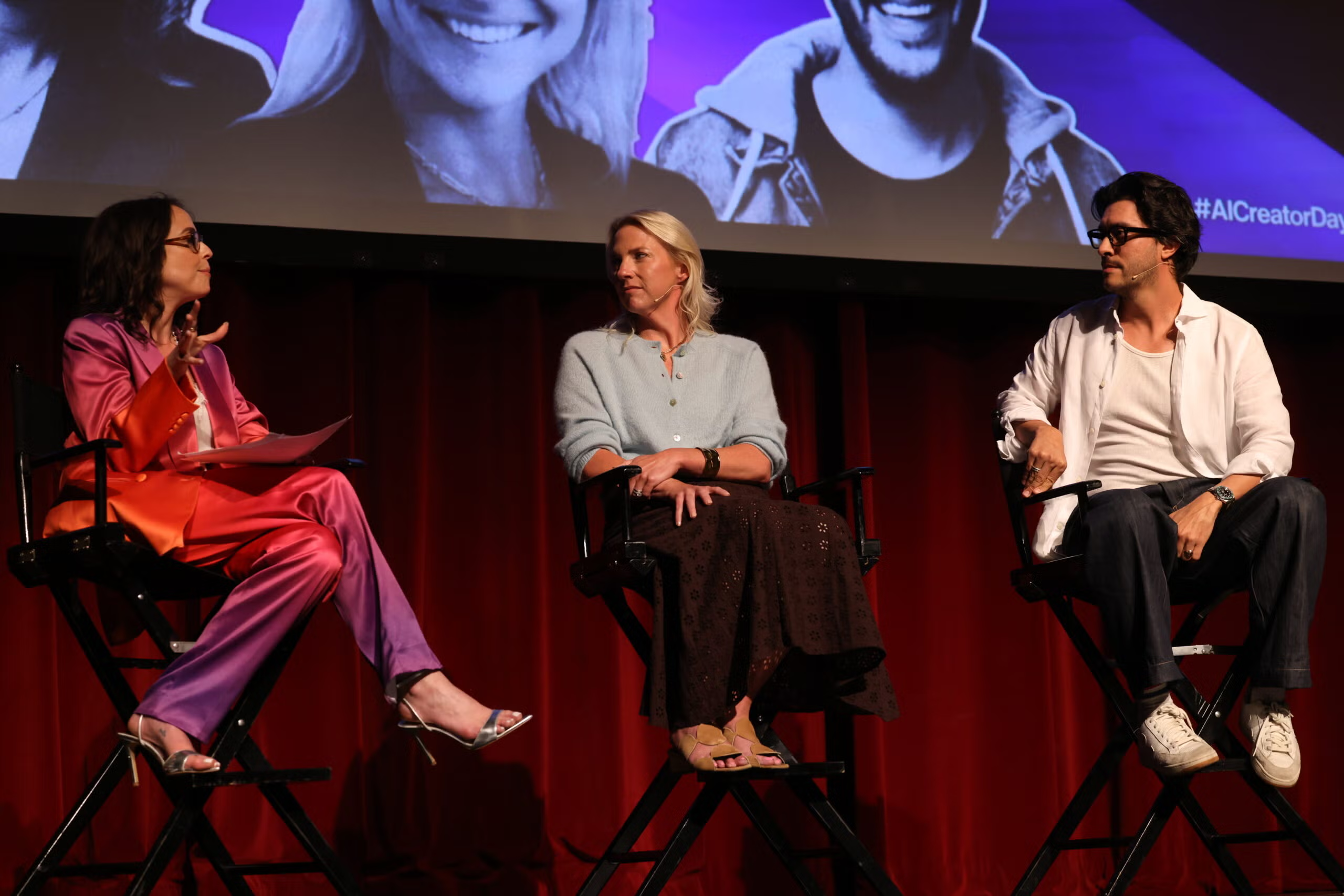
Marcus was speaking on Tuesday at TheWrap’s inaugural AI Creator Day, a part of our annual Grill business conference. The subject of the panel was about voicing AI-generated bot characters for AI social platform Cantina, which offers the potential for him to monetize his creativity.
Being able to better monetize creator ideas and imagination was a key theme to the all-day conference. But an undercurrent was the inevitability of AI, and the perils of ignoring the technology that’s disrupting every industry. For creators, it’s a fine line to walk, with even the hint of using AI eliciting fan backlash.
But for those at the panel, the upside of AI is too attractive to ignore.
“This is where the future is heading,” said Rebecca Zamolo, a YouTube and founder of MOLO Fertility. “I think it’s important that we acknowledge that. I think it’s about being transparent with your audience.”
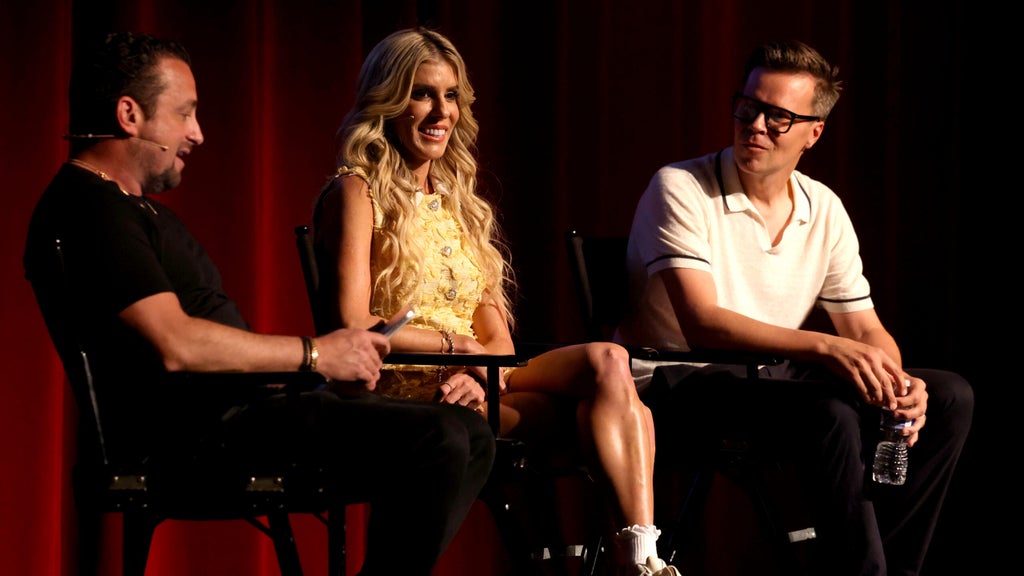
As AI has become more prevalent, more creators have been using the technology in their workflows. Some creators use this tech through third-party companies like Cantina; some use popular AI platforms like ChatGPT and Claude directly, and some use AI tools that have been directly added to the biggest social media platforms.
For example, YouTube’s AI tools let creators A/B test headlines and thumbnails, and Ask Studio — the platform’s AI-powered Q&A offering — acts as a specialized AI agent that’s fluent in a creator’s channel, a feature that’s helpful for data analytics. TikTok has its Symphony Creative Studio, a generative suite that lets creators use AI to create text-to-video, image-to-animation and digital avatars. As for Instagram, the Meta-owned platform has Muse, a personal AI agent designed to help Instagram creators manage workflows, analyze account activity and plan content
Zamolo and husband Matt Slays talked about how AI dubbing of its content has extended the reach of their YouTube channel. Slays noted that its channel went from having 65% of its audience being in the U.S. to 35% in short time (he didn’t specify), noting the wider international audience it now gets
“We were able to exponentially grow our markets without doing as much,” Slays said.

Don’t hate the game
Shira Lazar acknowledged the stigma of the “AI creator” and polled several participants about what they should do it about it.
“We don’t get to decide,” said Destorm Power, an entrepreneur and creator. “If they want to call me an AI creator, that’s fine.”
“The game is changing, we’re just in the game,” said Bernie Su, head of creative for Pickford and an Emmy-winning web series creator. “We’ll do our thing. Audiences will react to us, and we’ll see what happens.”
Zamolo acknowledged that they’re still testing the boundaries with what is and isn’t okay with AI.
“If it gets crazy, they usually will call us out in the comments,” she said. “But I think that’s just part of learning how to use it correctly anyway.”
But one of the key ideas several participants stressed was dispelling the notion that AI was killing creativity. Instead, that’s something that’s in greater need as the technology allows people to bring to life their wildest ideas.
“Everyone’s creative. Get those ideas out there. Write them down,” said Katherine Rundell, senior director of partnerships at Cantina. “Keep those ideas flowing. Creativity is more important than ever in the age of AI. Lean into that.”

Q: I guess do you get any pushback from my past provision from other creators? You know, even being here, I think that you saw some creators that are like instead coming here to talk about this, and others that are scared because they get a lot of pushback from the audience. Are you ever worried about it, guys.
A (Rebecca Zomolo speaking):
>

Leaked video: Man City CEO Soriano sends message to staff and players

'Has he lost his mind?!' Rock throws bull-one-bull for 101 and Mardle loses it!

'We agreed to everything asked!' | Fury & manager speak ahead of AJ press conference
-

 movies4 months ago
Search For Canadian TV Actor Stewart McLean Now Homicide Investigation
-

 Fashion9 years ago
These ’90s fashion trends are making a comeback in 2017
-
Fashion9 years ago
According to Dior Couture, this taboo fashion accessory is back
-
Fashion9 years ago
Model Jocelyn Chew’s Instagram is the best vacation you’ve ever had
-
Fashion9 years ago
Emily Ratajkowski channels back-to-school style
-
Fashion9 years ago
9 Celebrities who have spoken out about being photoshopped
-

 Anime4 months ago
Rurouni Kenshin: Hokkaido Arc Manga Takes 1-Issue Break – News
-

 Anime3 months ago
HIDIVE to Stream English Dubs for The World Is Dancing, The Forsaken Saintess and Her Foodie Roadtrip in Another World, The Dangers in My Heart: The Movie Anime – News