
Sports
Jack Draper: Andy Murray joins coaching team after Jamie Delgado exit


British number two Jack Draper has brought Andy Murray into his coaching team for the grass-court season after parting company with Jamie Delgado.
Three-time Grand Slam champion Murray has not been involved on the tour since a six-month stint coaching Novak Djokovic ended last year.
Former world number one Murray, 38, will be part of Draper’s team for the grass-court season, including Wimbledon, which begins on 29 June.
“I am very grateful for everything Jamie Delgado has done for me over these past six months. He is a world-class coach and a great man,” said Draper.
>
Sports
The NFL returns to the UK more committed than ever to international growth after Rio and Melbourne games – but is a European team possible? | NFL News
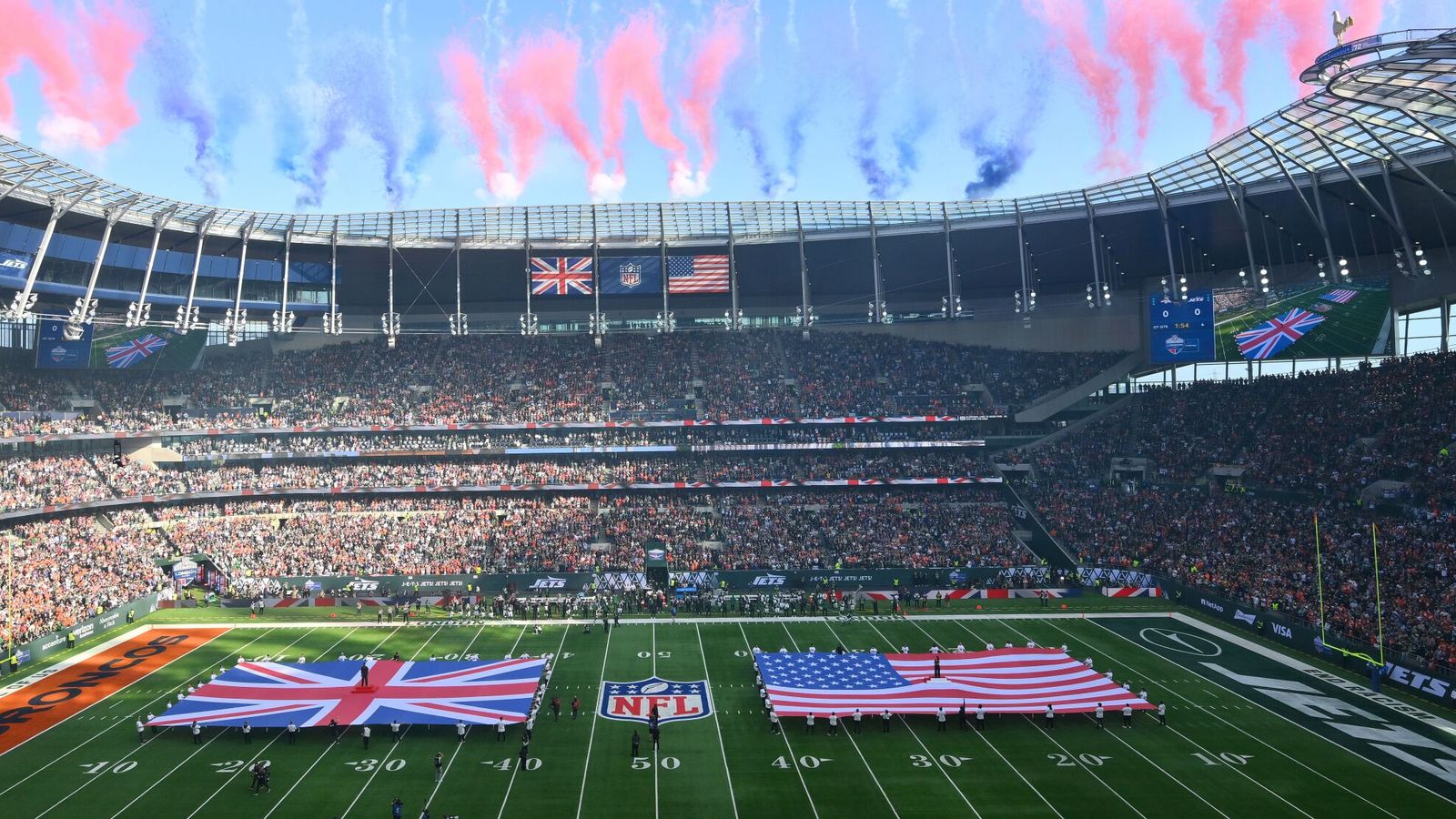
The NFL returns to the United Kingdom this weekend with the first of three London games to be played in the month of October.
We’ll see the Indianapolis Colts take on the Washington Commanders at Tottenham Hotspur Stadium on Sunday and the following week we will welcome back the Jacksonville Jaguars as they clash with the Philadelphia Eagles at the same venue.
The trio of games will end at Wembley Stadium on October 18 with the Jags taking on their division rivals in the AFC South in the Houston Texans.
The NFL continues its commitment to the UK but it’s clear they are looking more globally than ever before. By the end of this 2026 season we will have seen nine regular season games played internationally and the NFL is growing braver.
I think London played a big part in that as well by proving time and time again how you can get teams in, get them practising efficiently, get them playing the game and then get them out.
That blueprint has now been taken quite literally to the other side of the world. So this season we’ll see firsts with games already played in Australia and in Rio de Janeiro in Brazil. We’ll also see a first this year with a game in Paris, France towards the end of October.
So this NFL train is not slowing down. In fact it’s only going to gather pace. I think we’ll see 10 games played next season and I don’t think we’re very far away from seeing 16 being played internationally every year.
That of course will come once the league negotiates any new deal with the Players Association that takes the regular season up to 18 games from its current 17 right now. So at first glance the league is intent on continuing with its Formula 1 approach. Different teams playing in different markets, growing the fanbase around the entire world and I understand why.
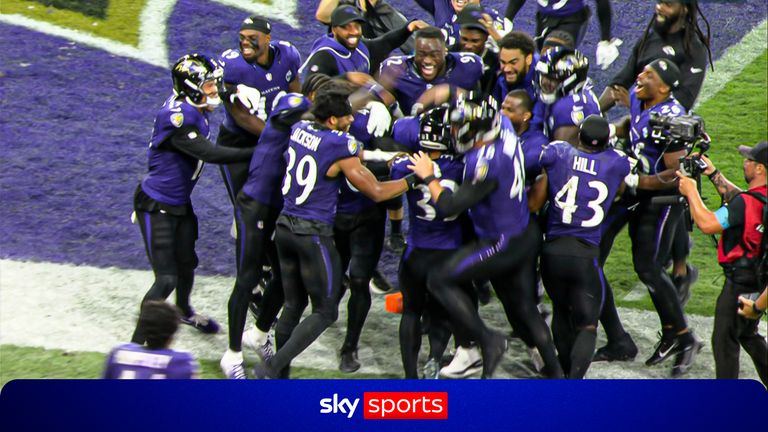
The Baltimore Ravens had just seven seconds to work with at the start of their drive – which proved to be just long enough to win the game in Brazil against the Dallas Cowboys
I’ve spoken to NFL commissioner Roger Goodell about this in the past and he’s told me that if we play in just one or two markets you only grow the fanbase in one or two markets. If you can play in 10, 11, 12 markets around the world then you’re growing significantly in a number of different countries, so it certainly looks like that’s the plan, but we still hear this talk of international franchises, potentially even a European division and the commissioner himself alluded to that this summer when in Germany.
I think the reason for that is that the NFL just doesn’t want to lose momentum. So they are keeping an open mind. Yes at the moment it’s the Formula 1 approach but if it works well enough in enough countries then does it become something else? Does it become something more substantial in London? Do we have a European division with a team in London, one in Germany, one in Spain, one in France?
When you look at it you can see the groundwork being laid for that.
I think if I were a betting man I wouldn’t necessarily know which way to go. I’ve seen very early on a lot of talk about a franchise, especially in London, then that went away to a degree and we looked at this Formula 1 approach of different teams in different countries.
Highlights of the Baltimore Ravens at the Dallas Cowboys from Week 3 of the NFL season
But now the commissioner has put the franchise discussion back on the table which to me suggests the league is just focusing at the moment on continuing to grow fan numbers, continuing to grow interest, finding new fans and players through flag football and seeing where it goes in the future.
I don’t think they’re committed to one path or the other and it won’t hurt that we’re using the Formula 1 approach now and then pivot to something else later.
I tell you one thing, the commitment has never been greater among NFL owners and commissioner Roger Goodell to grow the game internationally.
It is one of the biggest things the NFL will be working on now and for many years to come and for us as fans of the game internationally that can only be good news for us.
Watch the 2026 NFL season live on Sky Sports, including every minute of the playoffs and Super Bowl LXI on Sunday February 14, 2027. Get latest Sky Sports deals or stream with no contract on NOW.
>
Sports
Joss Buttler says Brendon McCullum’s removal as England Test coach may have boosted Cricket World Cup chances | Cricket News
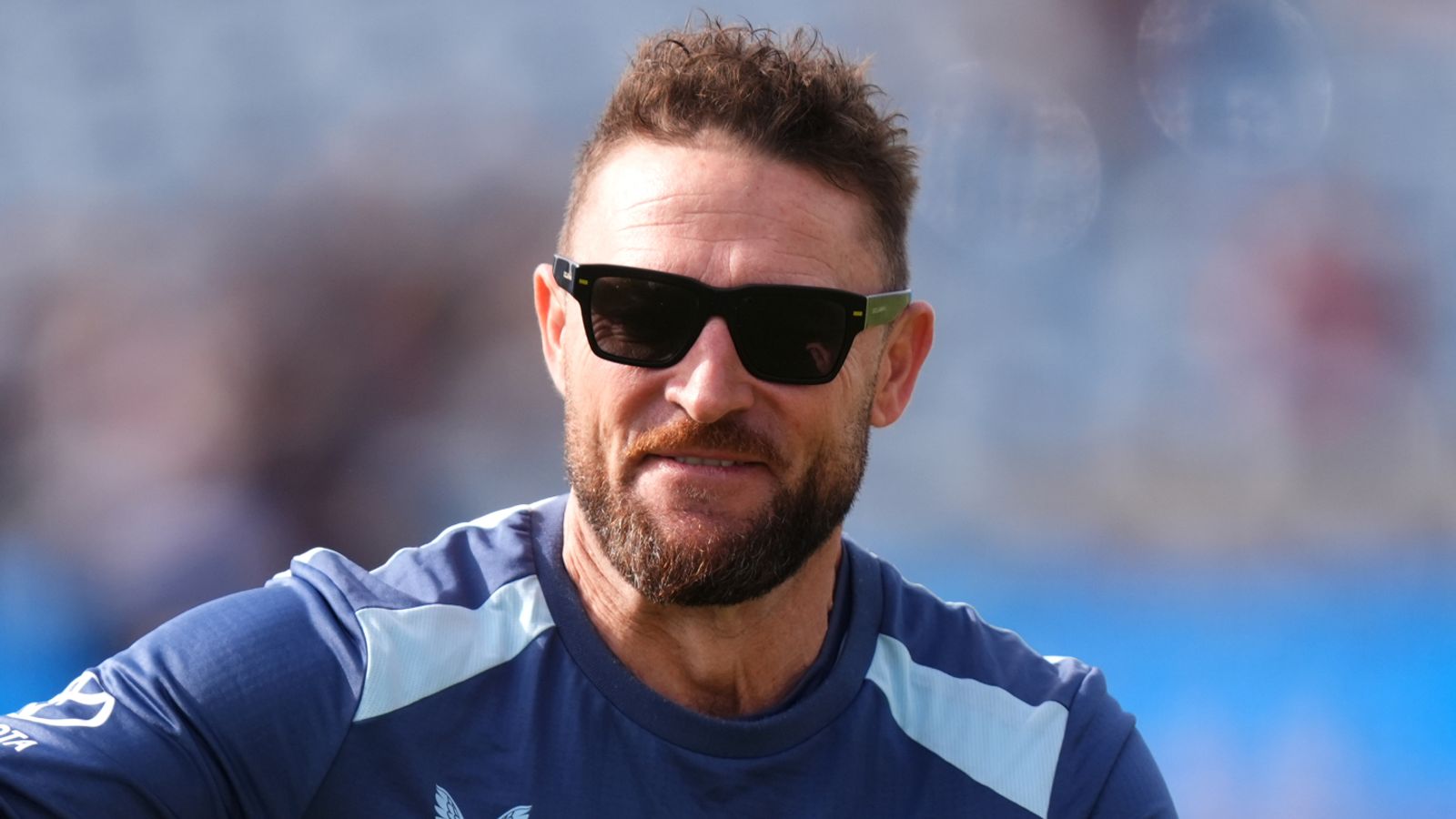
Jos Buttler believes Brendon McCullum’s removal as Test coach may have boosted England’s World Cup chances, with the New Zealander now “all in” on lifting the trophy next winter.
McCullum was relieved of his red-ball duties in July, with Stephen Fleming eventually named as his successor, but remained in charge of a limited-overs set-up that ended the summer with a record of 11 wins and two defeats.
That included ODI series wins over India and Sri Lanka, raising England’s stock in a format that has seen them decline since they became world champions in 2019.
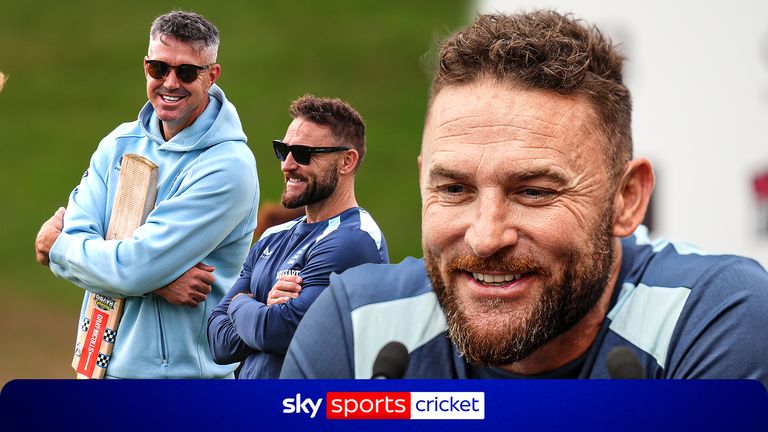
McCullum has remained in charge of England’s white-ball teams, alongside specialist mentor Kevin Pietersen
Buttler, who captained the team in their ill-fated 2023 title defence, thinks the split coaching model has allowed McCullum to throw all his energy towards next year’s tournament in southern Africa.
“He’s only got one focus now and that is the white ball,” Buttler said on his For the Love of Cricket podcast.
“It’s not that he couldn’t do everything, because he could, but your time is more spread and you’ve got more to think about with the Test team as well.
“Now he can focus solely on white-ball cricket – T20, yes, but mainly ODI cricket with that World Cup on the horizon. It seems like Baz is naturally all in on, ‘how do I win this World Cup with this team?’
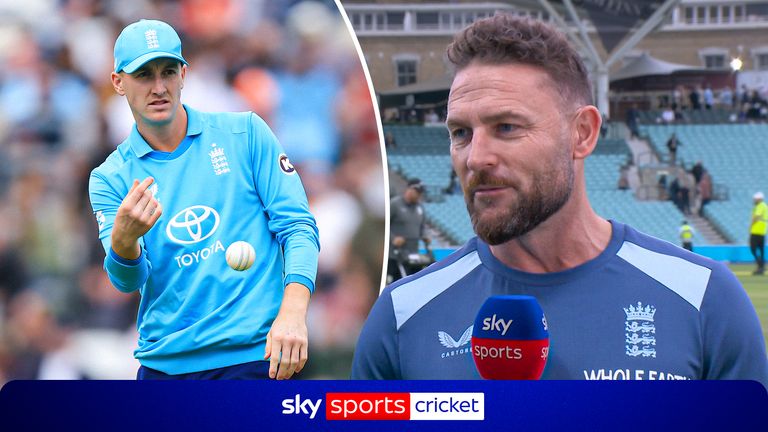
Buttler said McCullum now has more time to focus on the white-ball format
“I think he can sort of see that World Cup is not that far away. It’s a real target, now his remit has changed from four months ago being in charge of everything to, ‘right, I can really nail down on this’. He’s just got more time and more focus on that.
“ODI cricket for England has not been consistently great for a couple of years, so there’s some nice growth to go on that and this summer’s been a really good start.”
Buttler delivers update on hamstring injury
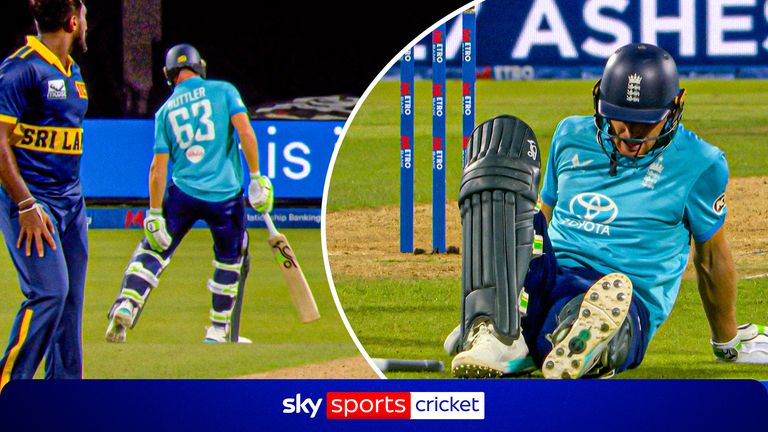
Buttler was forced to retire after suffering a hamstring injury during England’s second ODI against Sri Lanka
Buttler is currently sidelined with a hamstring injury and has already been ruled out for the forthcoming tri-series tour of Pakistan.
He is also a doubt for the November trip to Australia, meaning the team’s most experienced one-day player could miss as many as eight ODIs and a significant chunk of the pre-World Cup preparations.
“I’ve had a scan and I’m waiting to see the specialist. Then we’ll know what the next steps are,” he said.
“The unknown is often the tough part. Any cricketer just wants a physio or a doctor to tell you, ‘on this date you’ll be back playing cricket’. Unfortunately, they can’t do that just yet.”
England vs Sri Lanka white-ball series’ results
>
Sports
Man City Premier League charges: Appeal process, punishment hearing and what happens now after guilty verdict | Football News
Manchester City have been found guilty of all charges related to serious breaches of Premier League financial rules by an independent commission. Sky Sports analyses what could happen next in the inquiry…
What is the appeals process?
Manchester City have confirmed they will appeal the ruling. They have until Friday October 2 to do so.
The appeal – which is permitted under section W of the Premier League rules.- would be heard by a new three-person commission.
Can sanctions be imposed while an appeal is under way?
There will be a separate hearing with the independent commission to determine sanctions. It is unclear when this hearing will take place but, reading between the lines, the Premier League wants this concluded this season.
The Premier League will put forward what they think the punishment should be and City will argue their case. The commission will then go away and decide what the punishment should be.
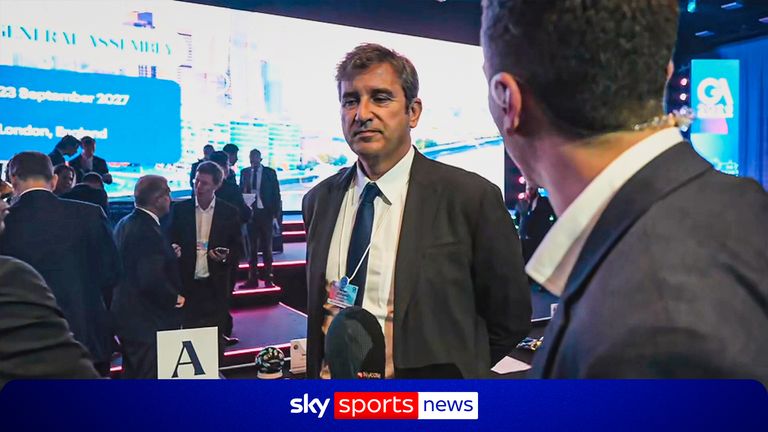
Manchester City CEO Ferran Soriano refuses to answer questions after the club was found guilty of serious breaches of the Premier League’s financial rules
Would the appeal be the end of the matter?
The appeal would be the end of this part of the process.
City cannot appeal to the Court of Arbitration for Sport (CAS). But they could go to the High Court and argue that the process has not been fair and impartial.
There could also be more legal cases, with clubs potentially taking action against City over missing out on trophies and Champions League qualification.
What are the potential punishments?
There are a range of sanctions available to the independent commission which include fines, points deductions and other sporting sanctions – which could be applied this season.
The Premier League do not have set sanctions for financial rule breaches. Clubs decided not to have them because there were fears clubs would break the rules and just take the punishment if they knew what the punishment was going to be.
In February 2025, Richard Masters, the Premier League chief executive, said the league was looking at having a sanctions grid – setting out agreed sanctions for different rules breaches.
Everton were deducted six points on appeal during the 2023/24 season and then two points for profit and sustainability rules (PSR) breaches. Nottingham Forest were deducted four points in the same season.
In the 2008/09 season, Luton were deducted 30 points (10 points for illegal payments to agents and 20 points for exiting administration without a Company Voluntary Arrangement).
In 2021/22 season, Derby were deducted 21 points (12 points for entering administration and nine points for financial irregularities).
How could City be relegated?
Manchester City can only end up in the Championship if they are given a significant enough points penalty which means they go on to be relegated from the PL.
What happens if City are expelled from the Premier League?
Expulsion means they are no longer a Premier League (PL) club. It does NOT mean that they have been relegated.
City will then have to go to The Football Association and apply to rejoin the football pyramid further down.
Then the problem of re-integration lies with The FA and English Football League.
The FA will have a huge part to play in deciding where City play their football next, in this scenario. Where that might be is unknown, and very complicated and political.
Will the Premier League decide to negate all City’s results for this season because it has happened mid-season? It’s something they will have to decide upon.
How would they enter the EFL?
Written into the EFL laws: any new member who joins EFL, has to join at League Two.
The EFL, like the Premier League, is a collective of its member clubs, and so any decision to re-enter Man City at a certain level (any level from the Championship or below) would have to be ratified by a vote of the member clubs.
If it went to a vote, it would be passed or rejected on a simple majority, a vote that involves all 72 EFL clubs.
That was the system for when the Championship play-offs were expanded from 4-6 teams last season – it required a majority of the 72 AND a specific majority of the Championship clubs.
Will clubs in any division be keen for a club of Man City’s power to join their league?
What would happen to the Premier League’s missing place?
It certainly causes problems in terms of numbers in each competition – leaving only 19 clubs in the Premier League. This will almost certainly mean that only two clubs are relegated from the top division that season.
What have Man City said?
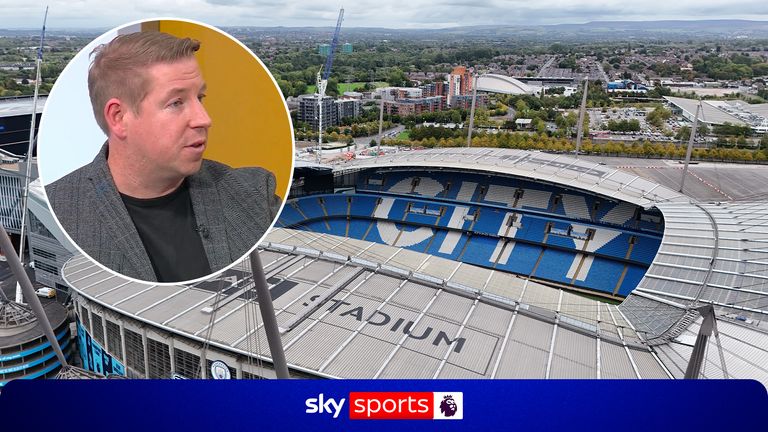
Ben Ransom talks through the statement Manchester City have made in response to the Premier League after it found the club guilty of all charges related to serious breaches of its financial rules
City released a statement stating they are “disappointed and surprised” after the club were found guilty of all charges related to serious breaches of Premier League financial rules.
“Manchester City is both disappointed and surprised by the opinion of the Premier League commission that has been published today.
“The club is innocent of the accusations made by the Premier League and a comprehensive body of irrefutable evidence exists in support of all of its positions, relating to this case.
“The club will therefore be relentless, and where necessary proactive, in any and all appropriate regulatory and legal forums.”
Manchester City’s statement refers to a Premier League commission. For clarity, this was an independent commission.
>

Chad Lowe and Kim Painter’s Daughter Fiona Dies at 13

Tom Cruise Dusts Off Risky Business Moves for Jennifer Hudson Show Spirit Tunnel

The NFL returns to the UK more committed than ever to international growth after Rio and Melbourne games – but is a European team possible? | NFL News
-

 movies4 months ago
Search For Canadian TV Actor Stewart McLean Now Homicide Investigation
-

 Fashion9 years ago
These ’90s fashion trends are making a comeback in 2017
-
Fashion9 years ago
According to Dior Couture, this taboo fashion accessory is back
-
Fashion9 years ago
Model Jocelyn Chew’s Instagram is the best vacation you’ve ever had
-
Fashion9 years ago
Emily Ratajkowski channels back-to-school style
-
Fashion9 years ago
9 Celebrities who have spoken out about being photoshopped
-

 Anime4 months ago
Rurouni Kenshin: Hokkaido Arc Manga Takes 1-Issue Break – News
-

 Anime3 months ago
HIDIVE to Stream English Dubs for The World Is Dancing, The Forsaken Saintess and Her Foodie Roadtrip in Another World, The Dangers in My Heart: The Movie Anime – News