
Andrew Zaeh for Deadline


In Cristian Mungiu’s Fjord, Sebastian Stan returns to his Romanian roots with a story that forces us to examine our prejudices, our assumptions, and the treatment of immigrants. Starring opposite Renate Reinsve, Stan once again plunges into a risky, thorny role with a look that belies his MCU star status. As he prepares for both fatherhood and playing a supervillain in The Batman: Part II, he’s focused on being one of the good guys.
Sebastian Stan has been thinking about men. He’s been reading a lot on the subject; studying it, if you will. What makes a good man? How can we support children and young people? What should we do about social media? All this prep is for a role of sorts, but not an acting one. Soon, he and his partner, actor Annabelle Wallis, will welcome their first child.
“I want to be a good dad,” he says simply.
Andrew Zaeh for Deadline
We’re discussing his latest film Fjord, which will premiere in Competition at Cannes. Stan plays a man forced to contemplate his own value as a father and as a man — an experience that must now seem serendipitous, given the timing of his personal life.
Written and directed by Cristian Mungiu, whose 2007 film 4 Months, 3 Weeks and 2 Days won the Palme d’Or, Fjord stars Stan and Renate Reinsve as Mihai and Lisbet Gheorghiu — immigrant parents of five children who move from Romania to Lisbet’s small Norwegian hometown.
Inspired by the real-life story of Marius and Ruth Bodnariu, the deeply religious family have ways of raising their children that bump up hard against local government policy, landing Mihai and Lisbet in court.
This is Stan’s first role in his native Romanian; he grew up under Nicolae Ceaușescu’s communist rule until his mother brought him to Vienna, Austria when he was 8 years old. Then, when Stan was 12, he moved to New York with his mother and American stepfather.
In Fjord, once again, as with The Apprentice and A Different Man, Stan conceals his movie star looks. This time he not only wears wonky fake teeth, but he shaved his head — and not a hot buzzcut, we’re talking shiny bald pate above a ring of fuzz. The wardrobe is lumpy and practical. The look is giving middle-aged uncool dad.
As the film proves, he doesn’t need to be handsome to keep you glued to the screen. I can’t thank him enough for this, and I believe I should thank his girlfriend as well.
Cristian Mungiu, writer-director of Fjord
Mungiu decided that Stan was “too good-looking, somehow. Sebastian was very generous and he followed my idea about how he should be looking for Fjord. As the film proves, he doesn’t need to be handsome to keep you glued to the screen. I can’t thank him enough for this, and I believe I should thank his girlfriend as well.”
For the teeth, Stan went to special makeup effects designer Jason Collins, with whom he’d worked on his Tommy Lee look for the television series Pam & Tommy (for which Stan was Emmy-nominated). “I showed him some pictures of my old teeth before I got Invisalign, and then he remade those,” says Stan.
Sebastian Stan, Renate Reinsve and their on-screen family in ‘Fjord’
Neon
The great head shave was “an experiment. I was all about it once we nailed it. She kept cutting it and cutting it and I was like, ‘Let’s keep going.’”
Right now, the hair has grown out into a crew cut, but how did he feel living day-to-day with the transformation on set?
“I didn’t think twice about it,” he says. “I think it’s all about serving the story and these people, however they are. And at that point, you’ve got to just put yourself in the backseat.”
But surely, for some men, Stan’s new ‘do is the stuff of nightmares, which brings us back to men in general — not just fatherhood, but the male loneliness and misogyny epidemic, and in particular, emerging toxic ideas on what it means to be a “real man.” I mention his Golden Globes acceptance speech last year for A Different Man, in which he spoke of his stepfather “who took on a single mom and a grown-up kid,” and thanked him “for being a real man.” I tell him that, to me, being a good man means integrity, consistency and quiet strength, among other things.
You really see how young men right now are suffering from a lack of true male role models. We’re having a lot of examples at the moment of very narcissistic, very aggressive, very entitled examples of being a man… It’s incredibly upsetting. It’s painful to see.
Sebastian Stan
“I think the question of masculinity is really under a magnifying glass at the moment,” he says. “There are way smarter people than me that have been talking about this. Jonathan Haidt, for instance, who wrote that great book The Anxious Generation, has been talking not just about boys, but little girls also, and the lack of influences outside of the phone and the technology and what that’s doing. There’s also this other great book, I think it’s called Of Boys and Men [by Richard V. Reeves]. And you really see how young men right now are suffering from a lack of true male role models. We’re having a lot of examples at the moment of very narcissistic, very aggressive, very entitled examples of being a man… It’s incredibly upsetting. It’s painful to see.”
Sebastian Stan accepting his Golden Globe award for ‘A Different Man’ in 2025
Rich Polk/Penske Media/Getty Images
He also mentions the book Notes on Being a Man by Scott Galloway. “I’m feeling the responsibility of being a good father,” he says. “And not to mention a good man. I’m 43 and I feel, in a lot of ways, I’m just starting to learn now. It’s just crazy to me. So, I love when I see I’m discovering different people’s point of view. I try to read as much as I can, no matter what the point of view is, just to understand it.”
So, what does being a man feel like to him now?
He pauses. “It’s funny, in the last couple years, I’ve started to identify sometimes being a man with just holding a plank for a very long, long time.”
I laugh. Does he mean the physical exercise?
“Yes. Because I think it is about tolerance. And I think that’s something that we’re not teaching young men. We’re not teaching them how to tolerate discomfort, how to understand their own emotions, their own anger, their own frustrations. Nobody’s educating them on how to embrace depression, or being sad, feeling things, being weak, crying. I reconnected with my own [biological] father much later in life, but I was able to draw this inspiration of, ‘It’s OK for you to feel whatever you’re feeling.’”
As a young man, Stan’s father risked his life to help dissidents escape Ceaușescu’s regime, smuggling them out on cargo ships, before being forced to flee the country himself. Father and son largely lost touch but were reunited when Stan was 18. Then, in 2021, his father died.
When he thinks of the stepfather he called “a real man” in that Globes speech, he says the example he set for Stan was “This quiet integrity that you spoke about, this quiet strength, this way of providing, this way of being there. Listening and understanding and protection as well. You’ve got to provide and protect. That’s kind of what I thought about in terms of what it means to be a man. And sometimes that means putting your own ego aside and looking at how you can support your family, or your loved ones, and be an example.”
Andrew Zaeh for Deadline
He’s back to thinking about the welfare of children and young people. “Let me just state it for the record, how much I celebrated that verdict against the social media companies,” he says, referring to the recent landmark case in California against Meta and Google, citing them for negligent design and their effect on young people’s mental health. “Actually, finally holding them accountable for years and years, and stacks upon stacks of data [showing] that they have known of the neurological and emotional and mental impact that they’re having on these young people. That’s one of the reasons why you’ve got boys right now who are being totally subdued and seduced by these phones, and to some extent, I think brainwashed.”
***
Stan had wanted to work with Mungiu for years. “Growing up, I knew very well that he was an incredible filmmaker,” he says. They first met at a Lincoln Center screening of Mungiu’s 2016 film Graduation and then, Stan says, began figuring out how to work together. “We came close on his last film [R.M.N.], but it just wasn’t really a good fit.”
Working with Sebastian again was a joy. He’s an incredibly generous actor and human being — deeply committed to his work, endlessly curious, and brave in his choices.
Renate Reinsve
Mungiu zeroed in on Stan after seeing his performance in I, Tonya as Jeff Gillooly, the deeply unlikable ex-husband to Margot Robbie’s Tonya Harding. “I programmed that film in this American Independent Film Festival that I founded in Bucharest. Sebastian came over and then we had the time to talk more about acting, cinema, life, his films. What is maybe funny is that the last performance that I’d watched by Sebastian was him in Captain America. When my younger son learned that I might work together with Sebastian, he insisted that I should see that film as well. I took his advice.”
Like Mungiu’s son, many know Stan for his Marvel Cinematic Universe trajectory, starring as Bucky Barnes, aka The Winter Soldier, in several films, the most recent being Thunderbolts*. It’s fair to say that Stan could easily have rested on his superhero movie laurels and polished an action hero career. Instead, he faced the wrath of President Trump by playing him in The Apprentice — a role that many advised Stan not to touch but which earned him a Best Actor Oscar nomination. That same year he played Edward, a facially disfigured struggling actor, in A Different Man and won at the Golden Globes, where, in addition to thanking his mother and stepfather, he called for more inclusive stories.
Sebastian Stan in ‘Captain America: The Winter Soldier’
Zade Rosenthal/©Walt Disney Studios Motion Pictures/courtesy Everett Collection
Being paired with Reinsve in Fjord was a no-brainer for Stan — he’d already worked closely with her on A Different Man. “It was an easy decision,” he says. “Renate is such a gifted actor and she’s so generous, not only as a person, but as an artist, and in terms of how she works, it’s very collaborative and she gives everything to every moment. Obviously, we’d had A Different Man and that was great. This was going to be a very different relationship and a different way of working from that. But I’m such a fan of hers, obviously from [her film] The Worst Person in the World. I remember Cristian asking me what I thought about working with her, and I just said, ‘You’ve got to hurry up and get her. It’s going to be great.’ So that also just felt very natural the way everything was coming together.”
Reinsve says of being reunited with Stan, “Working with Sebastian again was a joy. He’s an incredibly generous actor and human being — deeply committed to his work, endlessly curious, and brave in his choices. This project was very different from our previous collaboration, and the dynamic between us required a reset. But we also had a shared foundation of trust, which allowed us to move quickly and take risks together, grounded in friendship and mutual respect.”
As Reinsve says, Stan is indeed brave in his choices. As with The Apprentice, his Fjord character is far from a safe or easy option. Mihai may have integrity and solidity, he may love his family and believe he is doing the best for them, but many will find some of his values deeply problematic. And that, surely, is the point: What do we do when we don’t agree with people’s principles? Where is the line for intervention or control? In the film, the actions of the government against Mihai and Lisbet are extreme and partly in response to their religious beliefs.
Mungiu’s journalistic roots initially led him to the real-life Bodnariu case behind the story, but Fjord is a fictional amalgam of various people’s experiences. Says the director, “I talked to as many people as possible involved in such cases, not only in Norway, but also in the other Nordic countries. Not just with the families but all the parts: judges, lawyers, child protection, press, social activists. At the end I came up with a story that is fictional and doesn’t follow just one real story but a kind of pattern.”
Stan read everything he could for background, learning about the Barnevernet, Norway’s child welfare service. “I found that there were actually quite a few other cases that were ambiguous in terms of the practices surrounding those cases, and some cases where they were really impactful in a positive way. And in other cases where they had come under question — are they helping truly protect children or are they tearing families apart?”
Sebastian Stan and Renate Reinsve in ‘A Different Man’
A24 / Courtesy Everett Collection
For Stan there’s a stark correlation between the themes in the film and the treatment of immigrants in the U.S. “I’m certainly hoping that people will be able to look at this movie and make the clear parallel to what’s happening in the U.S., when families are being torn apart by institutions that are government-funded with taxpaying dollars. Because, in my point of view, it’s really no different. This is just one experience in this particular case, where you really see a very different way of being and living, whether it’s in Norway or Romania, and the clashing of that difference.”
Says Mungiu, “Today, our societies have become polarized in the extreme, inciting a kind of radicalization that splits people into opposite rival groups that disregard, despise and often detest one another. We are certain that we are right while the others are always manipulated, radicalized, simple-minded, brainwashed. We have very few to no doubts. And this is what leads to this wave of extremisms of all sorts… It would be a great flaw for me if Fjord just confirms to you the ideas that you already had before watching it.”
Reinsve agrees with this view of a broader problem. “This story could take place anywhere,” she says. “We are living in a time of increasing polarization across the world, and it often leads only to conflict. What would it look like for progressive and traditional perspectives to coexist without fear or judgment? How do we remain flexible in our beliefs without losing our values? And how do we stay open to the possibility that we might be wrong — without letting that idea destabilize us completely?”
There’s obviously a lot of judgment towards immigrants from that point of view, because it’s like, ‘Well, you’re coming here. You should either be like us or go back home.’ All of that is being explored in the movie, but I had a way into it and understanding it.
Sebastian Stan
In the film, when Mihai is questioned by authorities about his parenting, he is willing to admit he was wrong, and Stan muses on this. “Flexibility is the key word,” he says. “It’s unfortunate because what we’re seeing right now is this example of this real rigidness and this loud barking by these political figures that are just… The bark is so loud. It reminds me of somebody, when they drive their car, they’re blasting the motor down the street and you go, ‘Sorry, but how small is your penis? You’re saying that you have to alert the entire street?’ Whereas, if you ask me, it’s the guy in the corner that seems quiet and seems unbothered that I look to save the day, not the loud guy advertising every emotional upheaval and self-absorbed victimhood that he’s projecting on us. I don’t have to name any names anymore. I mean, if it isn’t obvious enough, for god’s sake.”
Fjord was an opportunity for Stan to rediscover his Romanian roots. Ordinarily, he speaks Romanian to his mother, and “every chance I can get. We just went to this Romanian restaurant in Queens called Romanian Garden for Easter on Sunday. It was really funny, I was switching back and forth between English and Romanian.”
His Fjord character, like Stan himself, is also an immigrant — did Stan feel a personal duty to both tell an immigrant story here and to portray Trump in The Apprentice?
“There’s always this fine line as an actor of, what is my responsibility and is there a duty to uphold this mirror to the world as we see it? And I do believe there is. We’re not on the front lines like many others. We’re not in the hospitals, and we’re not like the journalists that are out there with the incoming fire. All we can do is through storytelling, do our part to represent in any way we can, as truthfully as we can, the complexities that we are all dealing with.”
His own experience arriving in New York, speaking no English, was clearly no picnic.
“It was very similar to the Gheorghius in the movie,” he says. “They find themselves out of place and it’s awkward. I think there’s a real self-consciousness, in a way, that can be very debilitating. When you’re an adult, it’s different. You’re more formed and you can own things, but as a kid, you really, really don’t want to be different. You want to fit in.
“On the one hand, I think it really helped me, because that fear and that self-consciousness of being different propelled me to really obsessively learn English quickly, and I did, and I managed to adapt. But on the other hand, it generated years of shame and embarrassment, and this part of myself that I didn’t quite really know would be helpful to my life.”
But when Stan got a bit older, he realized that differences and complexities can be a superpower. “It wasn’t until I was 17 or something where I could start to go, ‘Oh, wait, actually this is good. This is important. This is probably going to help me.’ It’s like you’re living in a house and never opening the door to the basement or to a room upstairs. You just never know what you have there if you don’t go. At least, that was my experience as a kid.”
Writer-director Cristian Mungiu on the set of ‘Fjord’ in Norway
Neon
With Fjord, he says, “Obviously I understood what it felt like to go into a different country with different customs, different values, belief systems, and not know necessarily how my own way of life, or what I have learned growing up would translate to a different culture. There’s obviously a lot of judgment towards immigrants from that point of view, because it’s like, ‘Well, you’re coming here. You should either be like us or go back home.’ All of that is being explored in the movie, but I had a way into it and understanding it.”
When he arrived on the set in Norway, Stan found himself embraced by the Romanian crew. “It was very touching. I’d left when I left, and it’s not necessarily like I had a choice, it was the choice that my mom had made — I benefited from it and there’s nothing there to cry about — I just mean there was never a reunion that I experienced. And this film very much felt like that, when these crew members came around me and said, ‘Hey, you’re one of us. We’re so happy you’re doing this movie. It means the world to us. Thank you for acknowledging the country you’re from.’ It only motivated me to want to do more justice to this family and these characters.”
His acting in Romanian was impeccable, consistent, believable, precise, nuanced. So, Hollywood, take care, the Romanian industry might steal him from you.
Cristian Mungiu
Reinsve remembers a lovely atmosphere amid stunning scenery. “We lived and filmed surrounded by mountains. The beauty and the drama of hearing stones fall or roads being blocked because of stone avalanches and having to get to set on a small boat together early in the morning… We were people from many different countries building this together in an incredible environment, and there was a lot of dancing, barbecues, karaoke under the Northern Lights. I love Romanian culture.”
Mungiu recalls Stan being a little worried that his Romanian language wasn’t perfect anymore. “But his acting in Romanian was impeccable, consistent, believable, precise, nuanced,” the director says. “So, Hollywood, take care, the Romanian industry might steal him from you.”
Mungiu likes to shoot oner-style, with no coverage, and the trickiest scene, rather unsurprisingly, involved both children and animals. “Sebastian had to play with the three children but also with a flock of sheep. You’ve seen R.M.N. — even the scenes with animals are in just one shot for us, even if they require choreography. There’s no improvisation, everybody needs to do and say things precisely right and still make it look as if it’s spontaneous and fresh. It was challenging to get it, but when you’re watching the film, please note the way the sheep looks at Sebastian at the end of the chosen take. He couldn’t possibly get a more honest compliment.”
Stan hasn’t seen Fjord yet, because Mungiu has asked that he and Reinsve wait until they can have the full big-screen experience at the Cannes premiere May 18.
“I have to trust him there,” says Stan. “Last time I was there with The Apprentice, Cate Blanchett was two rows ahead of me, and it was so bizarre and overwhelming to have her stand up and be clapping and looking at you. And so, it’s a very special moment.”
L-R: Sebastian Stan as Donald Trump and Jeremy Strong as Roy Cohn in ‘The Apprentice’
Pief Weyman/ Briarcliff Entertainment/ Courtesy Everett Collection
I remind him of the time two years ago when I ran into him at The Apprentice premiere afterparty in Cannes. No one else had arrived yet, and it was just Stan, standing alone in a beach restaurant. He wasn’t even looking at his phone, he was just standing there, looking shellshocked.
“I was in a dream,” he explains now. He likens his experience of climbing the red-carpeted steps of Cannes’ Grand Théâtre Lumière to the scene in Titanic when Kate Winslet’s character dreams she’s back on the ship’s staircase, surrounded by a cheering crowd. “It’s so wild, and you go, ‘It can’t be. It just can’t be that these people are all here for this.’”
So, will he take his mother with him to Cannes, to celebrate the first time he’s playing a Romanian role?
Unexpectedly, he laughs. “Listen, let me tell you something, OK? My mom came to the Oscars, and it was amazing. I kept asking her, ‘What are you going to wear?’ And finally, she decided on this feather dress. And then I spent the entire night picking feathers off of Jeremy Strong or Monica Barbaro, who was sitting next to me, and her father. These feathers were everywhere. I was counting them all day long. And every time she stood up and sat back down, more feathers were flying. I was like, ‘No more feathers.’ So, I’m like, ‘What are you going to wear, mom?’ But of course, I’ll always include her in everything.”
Sebastian Stan with his mother Georgeta Orlovschi at the 2025 Academy Awards
Mike Coppola/Getty Images
Soon, Stan will begin work on The Batman: Part II in the role of supervillain Harvey Dent, aka Two-Face. The film will shoot in London, the city where Stan trod the boards in 2003 with a year’s study at Shakespeare’s Globe Theater. “Mark Rylance was the artistic director,” he remembers. “And my teacher was Mike Alfreds.”
As a Brit myself, and knowing his partner Wallis is too, I ask if he’s ready to enjoy more British humor, especially the television. “Oh my god!” he says. “What is the show that my girlfriend I watch all the time where you’re watching other people watch TV? Gogglebox! It’s hilarious. And it has a very weird, pleasing, soothing quality to it.”
He’s also been loving the new UK version of Saturday Night Live, but the British clincher for him is a surprising choice: Hugh Grant in Nine Months. “I’m telling you, that movie is so underrated and is so funny. I met him when we were on The Graham Norton Show. It was like a life achievement to get on that show, because I’d watched it so many times and I was so excited. The whole time I couldn’t convince him that I really loved Nine Months. He kept thinking I was pulling his leg.”
The Batman: Part II, will be, he says, “a challenge, like everything else. I feel like it’s a really ambitious movie and I think if we do it all right — and obviously I’m so excited about Matt Reeves [directing] because he’s been one of my favorites for a long, long time — I really think it’s going to blow people away. It’s going to surprise a lot of people, I think, too.”
A few years ago, Stan commented in an interview that the real world has more in common with superhero movies than we realize. Having made several MCU films and now with DC Comics’ Batman coming up, how does he feel about the relevance of these films now?
“Obviously there’s a reason why Batman’s been re-occurring for so many years, and why so many kids love Spider-Man,” he says. “When you’re thinking of, honestly, just anything positive for young men. If you’re a teenager and you’re growing up and you’re watching that, it’s about a kid being odd and figuring his way into things. And it works in very subtle ways.”
Has he thought about writing and directing? What about telling the story of a real-life hero: his father, who saved all those people in Romania?
Read the digital edition of Deadline’s Disruptors/Cannes magazine here.
“I think about it all the time,” he says. “Over the years, I’ve gotten into writing a lot. And some of it is just for my own sanity — some of it maybe will see the light of day in some capacity or not. There are so many great talented directors and people out there that it’s like, why go on the trip if you can get someone better to do it? But in terms of my dad, of course, when he was alive, I did say to him at one point, ‘I think we just need to sit for a while, then I’m going to just ask you some questions and record it so I can understand truly what you’ve gone through.’
“I think what fascinates me, again, to parlay it back to this idea of manhood, and it’s so complicated, is that he was in his 20s when he was helping people escape the country, and he was, in his own way, still providing for me and my mom, which was not in a conventional way, but he was in his 20s. And I just think about that, because there was a degree of awareness and a degree of a drive, and a belief that I feel had nothing to do with approval. It had nothing to do with, ‘I’m going to do this so that I get more attention online, or, I’m going to fight for this cause or whatever so that someone will give me a pat on the back.’ It was totally selfless in that regard.”
At this, he is quiet for a minute. Maybe he’s worrying again about getting parenthood right, or just thinking about all the things our conversation has circled: integrity, protection, flexibility, and now selflessness.
He’ll be a great dad.
Sebastian Stan shot on location in New York at Go Studios.
East Deck Creative Crew: photographer/creative director, Andrew Zaeh; videographer/editor, Jack Mallett; digital tech, Rob Grima; production designer, Vianny Guevara. Deadline design director: Fah Sakharet. Deadline video director: Ben Bloom. Sebastian’s stylist: Jason Bolden.
>
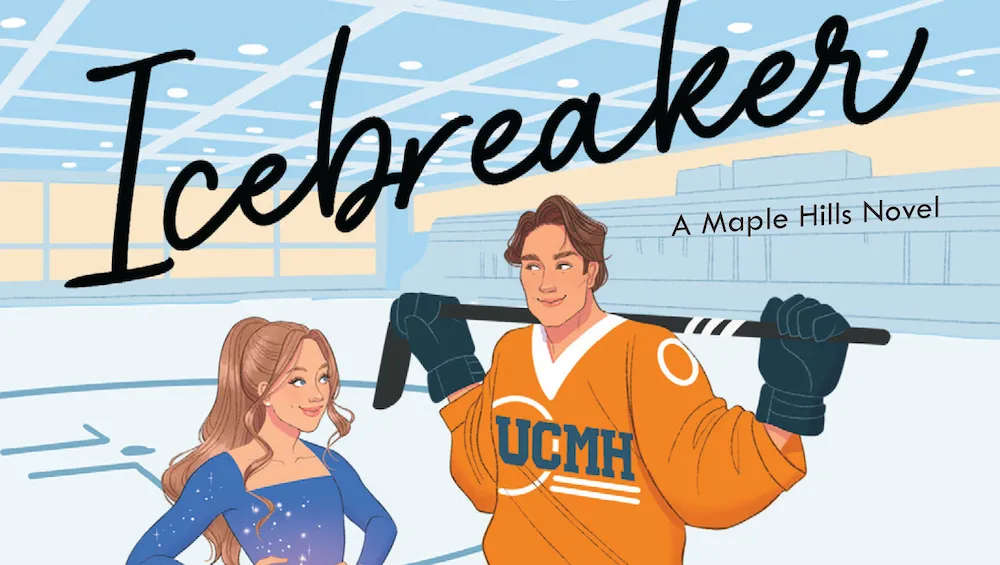
Another hockey book adaptation has entered the chat.
Netflix is currently building out its cast for the series adaptation of Hannah Grace’s Icebreaker book that kicks off the Maple Hill series. This in addition to their show The Sticks that is also currently in the works.
For everything we know about Netflix’s Icebreaker book adaptation so far, read on.
When will Netflix’s Icebreaker series adaptation come out?
A release date has not yet been set. The show has begun to assemble its cast.
Who will lead the Icebreaker show at Netflix?
Daisy Jelley (Poser, How To Have Sex) will portray Anastasia “Stassie” Allen, and Connor Simos (Subversion) will portray Nate Hawkins in the college hockey drama series.
Who else is in the cast of Netflix’s Icebreaker adaptation?
Gabriel Tierney (Rivals, Enola Holmes 2), Auliʻi Cravalho (Moana), newcomer and professional athlete Peter Berry, Chaneil Kular (Best of the Best, Sex Education), Devin Craig (Sex Lives of College Girls, Maize) and Aidan Shaw (We Were Liars, Heated Rivalry, Finding Her Edge) have joined the ensemble cast.
Tierney will play Aaron; Cravalho will portray Lola; Berry is Robbie; Kular will play JJ; Craig will portray Henry and Shaw is Russ.
What is Hannah Grace’s Icebreaker book about?
Stassie is a transfer athlete gunning for Olympic gold. Nate is the campus star chasing the NHL. When an accident forces their teams to share one rink, Anastasia Allen and Nate Hawkins collide—and discipline gives way to obsession, because the only thing more dangerous than wanting to win is wanting each other.
Who else is behind Netflix’s Icebreaker series?
Jade Halley Bartlett (Road House, Doctor Strange in the Multiverse of Madness, Miller’s Girl) created and executive produced the series. Amanda Lasher (Gossip Girl, The Bold Type, Togetherness) serves as showrunner, writer and excutive producer. Grace also executive produces along with Alex Cooper, Matt Kaplan and Mina Lefevre for Cooper’s Unwell Productions.
>
One of the biggest executive questions about Paramount following its pending acquisition of Warner Bros. Discovery — who will lead streaming — may have been answered.
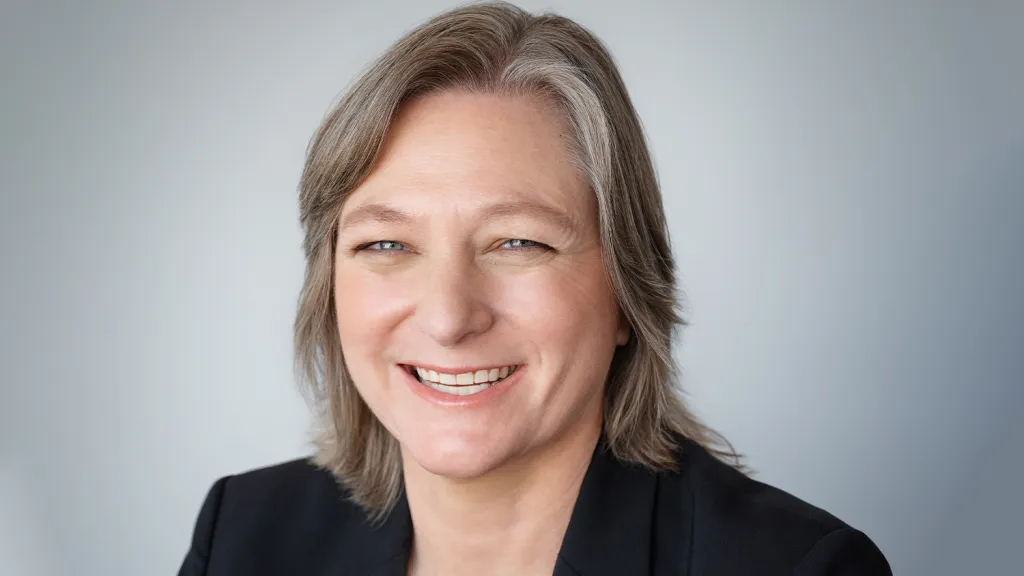
Cindy Holland is leaving Paramount where she was Chairman of Direct-To-Consumer since the Skydance-Paramount merger having served as an advisor to Skydance CEO David Ellison prior to that. She announced her departure in a company memo, which you can read below.
The move leaves HBO’s Casey Bloys as the likely streaming head of the combined Paramount-WBD.
“Cindy is one of the most exceptional executives in our industry — a force of nature whose impact on Paramount over the past year has been significant,” Paramount CEO David Ellison said. “Under her leadership, P+ reached new heights, Pluto TV underwent its most significant transformation in a decade, and we strengthened our content and sports portfolio – all while the business exceeded the ambitious goals we set. Just as importantly, she built an exceptional team and a strong foundation for the future. Cindy has been a trusted partner to me and so many others, and I couldn’t be more grateful for her leadership, her relentless drive and everything she’s done for our company.”
Here is Holland’s memo:
When I joined David’s team in January 2025, we proceeded to set three goals: i) advise on the Warner Bros. Discovery acquisition, ii) integrate and transform Paramount+ & revive Pluto TV, and iii) build an unparalleled team in this industry. In just over 12 months, I’m proud to say we accomplished all three and it’s been a joy to work closely with all of you.
Together with the Product team, we drove significant strategic and organizational change across DTC — building a new foundation for growth on both services, while investing in greater depth and breadth of programming and delivering strong revenue, profit, and subscriber growth for the division.
As David readies for the next phase of his vision, we’ve discussed my role and the future of the combined businesses. David is optimizing for HBO stability as we move into this next chapter, and I fully support that. I know this team has the leadership and expertise to manage through the transition and the next phase of the company, and to this end today will mark my last day here.
As I reflect on my time here and all that we’ve built together in this short time, what stands out most to me is this team. I have never been more proud of a group of people. What we’ve accomplished together is remarkable — landing quarter after quarter while navigating extraordinary uncertainty and change with resilience, focus and ambition. We grew Paramount+ to an all-time subscriber high, delivered the best retention in the service’s history, and drove double-digit growth in both engagement and revenue. We built an extraordinary content pipeline, greenlighting more than 40 new and returning series and setting all-time records with Landman, the most-watched series in Paramount+ history, and Dutton Ranch, the service’s biggest original series debut ever. We transformed live sports into a powerful streaming growth engine, securing landmark agreements with UFC and Zuffa Boxing and expanding our WNBA and UEFA Champions League rights – with UFC Freedom 250 becoming the largest-ever audience for an exclusive live event on Paramount+ and UFC 329 setting a new platform record for peak concurrent streams for an exclusive live event. And we undertook Pluto TV’s biggest product transformation in a decade, dramatically increasing registered viewing and VOD consumption while delivering strong financial performance across the business. These are extraordinary accomplishments – but what makes me proudest is how we achieved them: together, with an unwavering commitment to our audiences, our creative partners and one another.
I joined Paramount because I believe in these businesses, and because I believe wholeheartedly that the combination of Paramount and Warner Bros. Discovery serves the best interests of artists and audiences worldwide. I’m looking forward to seeing what you all accomplish together in this next, momentous chapter.
Cindy
>
While President Trump was holding a press conference at the White House this morning and extolling the AI-related work of Meta’s Mark Zuckerberg, Nvidia CEO Jensen Huang, Anthropic’s Dario Amodei and SpaceX’s Elon Musk, a promo for tomorrow night’s South Park episode dropped. It was less salutary.
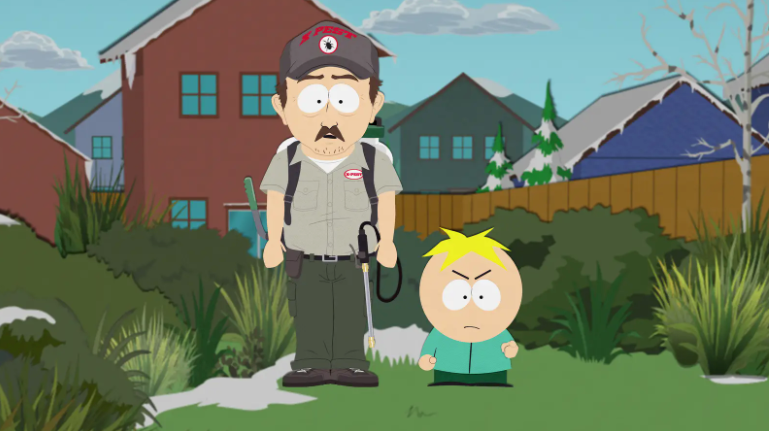
Here’s the logline for Episode 6 of Season 29: “Butters is unhappy with the data centers that the billionaires are building in our backyards.”
The clip opens with an X-Pest exterminator guy ringing the doorbell at Butters’ home.
“I understand you’ve got some billionaires in your back yard,” he says.
“Yeah, there’s more of these stupid billionaires every day!” replies Butters.
The first image from the episode (see it above) shows Butters in what appears to be his back yard with the X-Pest exterminator guy, who has strapped on his tank of poison and has his sprayer wand at the ready.
The topic of data centers is a hot one across the country and especially in Hollywood, where unions and workers worry about job displacement and writers and directors express concern over what it might do to their art.
Among the biggest players in the data center land rush is, of course, Oracle CEO and Paramount-WBD deal financier Larry Ellison. South Park airs on Comedy Central, which is owned by Paramount. As in the past, the show’s creators are seemingly not afraid to bite the hand that feeds them.
Mark Ruffalo and others have decried the introduction of “really profoundly scary technology” into Hollywood and how AI might impact media outlets soon to be owned by Ellison and his son David.
“Larry is a classic Oligarch,” wrote Ruffalo. “They are crushing workers and consolidating the wealth of the world for their own power and concentrated dominance.”
Paramount, for its part, responded by accusing Ruffalo of using “antisemitic tropes” in his argument, especially when linking the Ellisons’ studio acquisition to Oracle’s work with the Israeli military.
>


Search For Canadian TV Actor Stewart McLean Now Homicide Investigation


These ’90s fashion trends are making a comeback in 2017
According to Dior Couture, this taboo fashion accessory is back
Model Jocelyn Chew’s Instagram is the best vacation you’ve ever had
Emily Ratajkowski channels back-to-school style
9 Celebrities who have spoken out about being photoshopped


Rurouni Kenshin: Hokkaido Arc Manga Takes 1-Issue Break – News


HIDIVE to Stream English Dubs for The World Is Dancing, The Forsaken Saintess and Her Foodie Roadtrip in Another World, The Dangers in My Heart: The Movie Anime – News