
Entertainment
‘A Woman’s Life’ Review: Léa Drucker Is on the Edge, Again

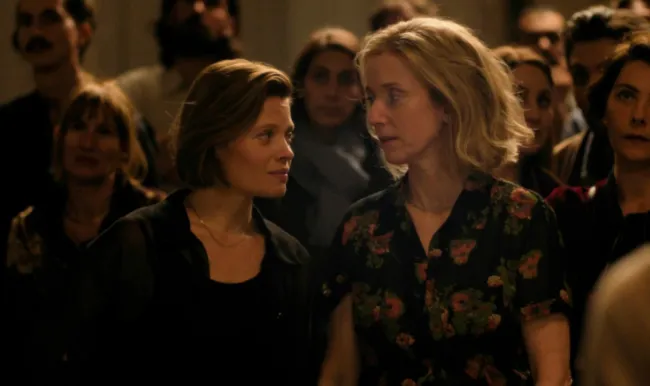
Don’t let the forgettable title fool you: Charline Bourgeois-Tacquet’s “A Woman’s Life” is far more memorable than all that. It’s also far more contained than the word “life” would have you believe. Instead, the “Anaïs in Love” filmmaker uses her sophomore feature to zoom in on an often-overlooked period in a woman’s existence: later middle age, when concerns about work and love and sex and friendship become tangled with the crush and worry of aging, on all fronts.
We meet Gabrielle (the always-captivating Léa Drucker) in the throes of passion, by way of a lushly shot sex scene, all sweat and limbs and flesh. Titillating, sure, though cinematographer Noé Bach’s sensitive lensing makes it all feel more evocative than just erotic. What’s most important about this early introduction is clear: Gabrielle is a woman who throws herself fully into everything. Love-making over? She’s out the door, ready to do anything from getting her aging mother the care she needs to running her own unit at the ailing French public hospital where she specializes in no less than rebuilding injured people’s faces.


That gusto is good and necessary, because everyone, it seems, depends on Gabrielle, a feeling that will likely strike chords with many of its female audience members. Her husband Henri (Charles Berling) needs her. His (to be clear: his, not hers) kids need her. Her patients need her. Her staff needs her. The very hospital itself, trapped in the middle of a massive remodeling, seems to need her. Her mother (Marie-Christine Barrault) needs her. And her sister and her nephew, and God, you get it.
Gabrielle is at the center of all things, but what about her center? Well, it’s not going to hold.
And there’s no one better to portray that than Drucker, who has become one of our foremost portrayers of women on the edge. Her recent Cesar-winning turns in both “Case 137” and “Custody,” plus her stunning work in “Last Summer” (which Bourgeois-Tacquet specifically references in the film‘s official press notes) exemplify her skill in the space. She’s not prone to big temper tantrums, outsized emotions, wild passions, but something far more intimate, more deeply-held. She’s on the edge, yes, but she’s not unraveling. She can’t.
The film flips through nearly a dozen chapters — with titles as compelling as “Alter Ego” and “Pity” and as plain as “The End of a Relationship” and “I Want It All” — over the course of a few key years in Gabrielle’s life. At first, it’s unclear if we’re simply watching vignettes of changes both large and small (will a fight with Henri end their relationship? will the departure of her closest ally at the hospital ruin her unit’s work? will her mother be OK?), as Bourgeois-Tacquet keeps them moving along at a steady clip.

Eventually, however, a focus reveals itself. Early on, Gabrielle welcomes a curious author (Mélanie Thierry) into her operating theater. Frida is writing a book about a female surgeon, and is eager to do some hands-on research. Gabrielle’s work in facial reconstruction is fascinating stuff, both to Frida and the audience (here is a doctor whose work goes beyond healing, she often fully changes her patients, not always for good), so the pairing makes sense. But then Frida… never quite goes away.
She drifts in and out of most of the film’s chapters. First, she’s just a bystander, then she pops up at a work event. Soon, she’s sending Gabrielle flowers and taking her to dance performances. News about the book is slim, almost worryingly so. Is there really a book? Is Frida writing something else entirely? While a sticky sense of tension moves in each time Frida appears on the screen, “A Woman’s Life” eventually reveals both why she’s there and what she’s actually going to do to upend Gabrielle’s life. Like life itself, it feels a bit disappointing.
Despite the full-bodied nature of the film in its first half — a great big breathing thing that feels vérité in its scope and ambition — as Gabrielle’s obsession with Frida grows, things narrow. The character narrows. Her life narrows. And while the vast majority of people understand what it feels like to be so consumed with a paramour that everything else slips away, it’s a tough pill to swallow with someone like Gabrielle, whose incredibly full (for better and worse) life is the very subject of this film. It also doesn’t help that Frida’s flightiness — here is a woman not at all bound by the sort of concerns that batter Gabrielle’s everyday existence — isn’t very appealing.
Not that Frida is not — Thierry’s combination of stunning face and comfy-in-her-skin way of carrying herself is very appealing — but it doesn’t compute that Gabrielle’s entire life would be upended by anyone, least of all someone who doesn’t seem to care much about anything. But even that feeling will pass, as everything else does in life, the transient emotions and aims of Bourgeois-Tacquet’s ultimately proving to be the most lasting of the endeavor. This “life” is a feeling, and it is one that sticks.
Grade: B-
“A Woman’s Life” premiered at the 2026 Cannes Film Festival. It is currently seeking U.S. distribution.
Want to stay up to date on IndieWire’s film reviews and critical thoughts? Subscribe here to our newsletter In Review by David Ehrlich, in which our Chief Film Critic and Head Reviews Editor rounds up the best new reviews and streaming picks along with some exclusive musings — all only available to subscribers.
>
>
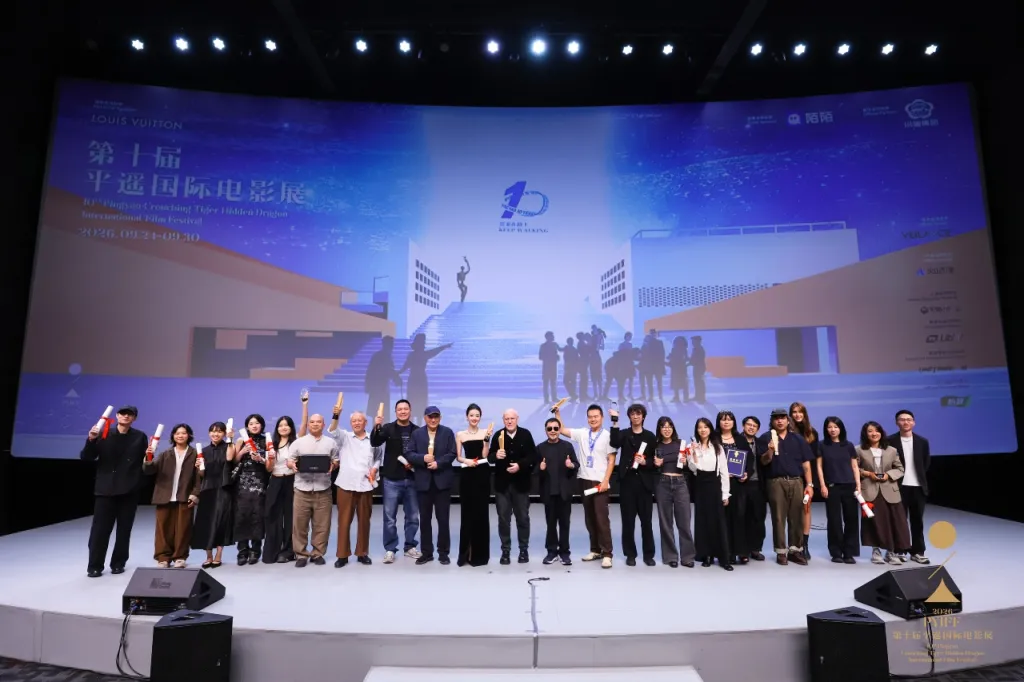
Chinese director Niu Niu’s Final Payment scooped the Best Film Award in the Fei Mu Awards of this year’s Pingyao International Film Festival (PYIFF), while Rafiki Fariala’s Congo Boy won Best Film in the festival’s Roberto Rossellini Awards.
Final Payment, which also won Best Actor for Niu Jianrong’s performance, revolves around a homeowner clashing with a contractor over the final payment following a set of renovations on his home. PYIFF’s competition jury stated: “Tearing through a very small rip, the film leads us into a reality and emotional landscape so expansive, where we sigh, lament, and reflect. The director’s approach is concise, unpretentious, and masterful, earning the wholehearted recognition of the entire jury.”
The Best Film award came with a cash prize of $150,000 (RMB1m) with half given to the director for the development of their next film, and half given to the distributor in China. Niu Niu previously directed Mr Junjun, which was awarded with the Jury Award and Youth Jury Award at PYIFF in 2023.
Also in the Fei Mu Awards, Xu Zao won Best Director for Light Pillar, while Best Actress went to Sun Yi for Wang Xiaozhen’s A Joke. The Jury Award was presented to Dong Jie’s Zoom In, Zoom Out, which had its world premiere in Venice Critics Week, while a special mention went to Cai Chengjie’s Suzhou Quartet.
The Fei Mu awards are focused on the festival’s Hidden Dragons section, which selects first, second and third films from emerging directors making Chinese-language films, while the Roberto Rossellini Awards focus on the Crouching Tigers section for emerging international directors.
Congo Boy, which took Best Film in the Roberto Rossellini Awards, also won Best Actor when it premiered in Un Certain Regard at this year’s Cannes film festival. The PYIFF award came with a cash prize of $20,000, with half given to the director for the development of their next film, and half given to the distributor in China.
The PYIFF jury stated: “The Jury unanimously has been moved by this autobiographical story, told in a simple style that echoes the great tradition of neorealism. For a film focusing on a character that confronts his world with optimism despite dark times and takes on his shoulders the destiny of his entire family.”
Also in this section, the Philippines’ Rafael Manuel won Best Director for Filipiñana, while the Jury Award went to Ben’imana, directed by Marie-Clémentine Dusabejambo, which won the Camera d’Or at this year’s Cannes. The jury also awarded Rakan Mayasi’s Yesterday The Eye Didn’t Sleep a Special Mention.
Hong Kong filmmaker Ann Hui received the Crouching Tiger Hidden Dragon East-West Award, shortly before she receives the Camellia Award at Busan International Film Festival next week.
Pingyao’s International Contribution To Chinese Cinema Award went to Marco Müller, who founded the festival with Chinese auteur Jia Zhangke and currently serves as Artistic Director of the Film Art Research Centre at Shanghai University, and veteran producer, director and former chairman of China Film Group Han Sanping. Hello Group chairman Tang Yan was presented with a 10th Anniversary Award.
This year’s PYIFF opened on September 24 with a screening of the 4K restoration of Fei Mu’s Spring In A Small Town; closed with Good Trip, co-directed by Hong Kong filmmakers Norris Wong and Hoi Wong, and also screened Jia’s short film Torino Shadow, which premiered at this year’s Cannes.
PINGYAO INTERNATIONAL FILM FESTIVAL 2026 AWARDS:
FEI MU AWARDS:
Best Film: Final Payment, dir: Niu Niu
Best Director: Xu Zao, Light Pillar
Best Actress: Sun Yi, A Joke, dir: Wang Xiaozhen
Best Actor: Niu Jianrong, Final Payment, dir: Niu Niu
Jury Award: Zoom In, Zoom Out, dir: Dong Jie
Special Mention: Suzhou Quartet, dir: Cai Chengjie
ROBERTO ROSSELLINI AWARDS:
Best Film: Congo Boy, dir: Rafiki Fariala
Best Director: Filipiñana, dir: Rafael Manuel
Jury Award: Ben’imana, dir: Marie-Clémentine Dusabejambo
Special Mention: Yesterday The Eye Didn’t Sleep, dir: Rakan Mayasi
>
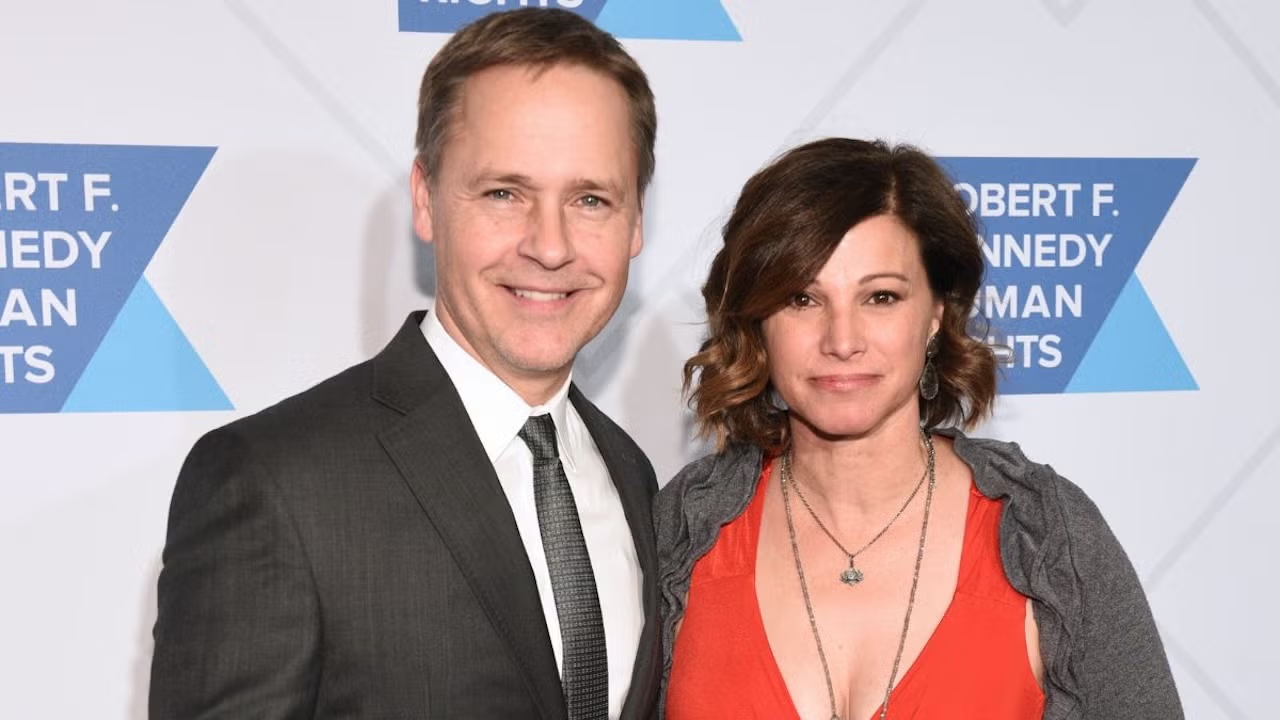
Actor Chad Lowe and producer Kim Painter’s 13-year-old daughter, Fiona, has died, according to a statement from the teen’s family.
“We are deeply heartbroken by the loss of our beloved Fiona,” the Lowe family said in a statement to media Tuesday evening. As the family went on, they remembered Fiona as “a loving young girl who was smart, creative, and loved to dance.”
“She was adored by her sisters and she was deeply loved by her parents,” the family’s statement added. “In fact, she was the light of our lives.”
While a cause of death was not immediately shared, the Lowes alluded to Fiona’s mental health struggles, writing, “Her passing is devastating for our entire family and we ask for prayers and privacy at this time. If you or someone you know is struggling with mental health, please reach out to the 988 Suicide & Crisis Lifeline by calling or texting 988.”
More to come…
>
Man City's 'sham contracts', spending breaches and 'disguised funding': Breaking down the findings

Whitley Bay: The part-timers who won a record three Wembley finals in a row

Flex your football brain with our daily quizzes
-

 movies4 months ago
Search For Canadian TV Actor Stewart McLean Now Homicide Investigation
-

 Fashion9 years ago
These ’90s fashion trends are making a comeback in 2017
-
Fashion9 years ago
According to Dior Couture, this taboo fashion accessory is back
-
Fashion9 years ago
Model Jocelyn Chew’s Instagram is the best vacation you’ve ever had
-
Fashion9 years ago
Emily Ratajkowski channels back-to-school style
-
Fashion9 years ago
9 Celebrities who have spoken out about being photoshopped
-

 Anime4 months ago
Rurouni Kenshin: Hokkaido Arc Manga Takes 1-Issue Break – News
-

 Anime3 months ago
HIDIVE to Stream English Dubs for The World Is Dancing, The Forsaken Saintess and Her Foodie Roadtrip in Another World, The Dangers in My Heart: The Movie Anime – News