
Entertainment
‘Obsession’ Review: Curry Barker Made One of 2026’s Best Horror Films

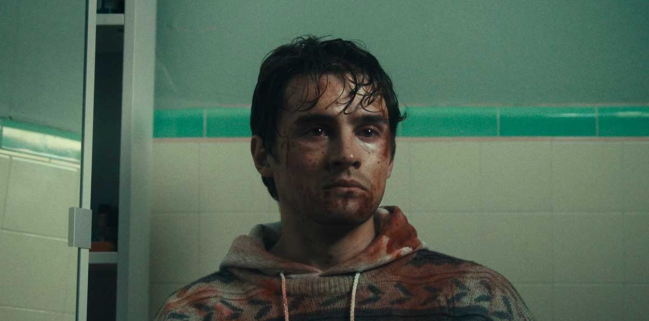

Editor’s note: This review was originally published during the 2025 Toronto International Festival. Focus Features will release the film in theaters beginning Friday, May 15.
We’re rapidly approaching the point where the most reliable route to becoming a horror director is to launch a short-form comedy career. Jordan Peele shocked the world with “Get Out,” Zach Cregger made it a pattern with “Barbarian” and “Weapons,” Danny and Michael Philippou jumped on the train with “Talk to Me” and “Bring Her Back.” Now, YouTube prankster Curry Barker has released one of the best horror films of 2025.
“Obsession” begins with the simplest of horror premises: Bear (Michael Johnston) is a shy and sensitive music store employee who can’t find the courage to ask his co-worker and childhood friend Nikki (Inde Navarrette) on a date. Rather than be honest with her and tell her how he actually feels, he wanders into a woo-woo crystal store and buys a One Wish Willow, a kitschy antique toy from the 1960s that promises to grant its owner one wish when they snap a branch in half. The cashier warns him that most of the customers who buy them have complained about the results, but it wouldn’t be much of a horror movie if he listened.


After dropping Nikki off at home after a night of bar trivia with their other co-workers (and weirding her out with his attempt to flirt while insisting they’re just friends), he snaps the willow and makes a simple wish: that Nikki would love him more than anything in the world. It isn’t long before she emerges from her house and asks to go home with him, and Bear thinks he just purchased a one-way ticket out of the friend zone.
Suddenly, Nikki is always horny for Bear, is eager to show public affection, and spends so much time with him that she basically moves in. For Bear, the new arrangement is great about 99 percent of the time… the only drawback is that Nikki occasionally snaps back into her old self and screams in utter terror for a few seconds, before resuming the love-bombing.
Even before the movie spirals out of control, Bear and Nikki’s mutual friends start pointing out how weird this all is. The other girls at work heard Nikki talking about how she saw Bear as a little brother mere hours before she turned into a lovestruck teenager, and it becomes clear that she’s going through something. Rumors start to fly — guesses range from drug addiction to a full mental breakdown, but somehow nobody guesses “novelty ’60s wish-granting toy with deadly consequences” — but the one thing they can all agree on is that Bear is taking advantage of a girl in a vulnerable state.
Social connections begin to dry up, party invitations get lost in the mail, and Bear soon finds himself with nobody to turn to when the new Nikki starts stabbing herself with broken glass, cooking his dead cat, and sealing his doors with duct tape to prevent him from leaving the house. All that he can do is call the customer service line on the back of the package — but when he hears that they have the soul of the real Nikki screaming for help, the hopeless romantic realizes that he bit off far more than he could chew.
“Obsession” is proof that the Cregger-ification of 2020s horror is in full effect, as its combination of sadistic violence, ironic needle drops, and comedy mined from people responding to tragedy in pathetically self-serving ways will merit plenty of comparisons to “Barbarian” and “Weapons.” It also wisely continues the recent trend of allowing forces of unexplained evil to simply exist in its world, finding its social commentary in the way humans react to things they don’t understand. Instead of turning the actual evils into metaphors.
The film’s most compellingly unpredictable thrust lies in Barker’s choice to tell a story of something objectively horrible — in this case, a guy taking a woman’s entire soul away and turning her into a psychotic replica of herself so that he can have sex with her body and pretend they’re actually dating — exclusively from the perspective of the perpetrator. Navarrette delivers a brilliantly twisted performance as what’s left of Nikki, but given that her real self is stuck shrieking in call-center purgatory and only gets to emerge for seconds at a time, Bear is the human whose eyes we see everything through.
A sizable majority of the horror genre is built around men doing heinous things to women, with results ranging from deeply misogynistic to cathartically feminist. But “Obsession” is built around a much more contemporary male fear: being the problematic guy whose entire social circle knows he took advantage of a girl and wants nothing to do with him.
When we meet Bear, he isn’t some monster just waiting to snap. He’s a sensitive guy, frustrated by his lack of romantic success, and his heartbreak pushes him to put his own desires over his friend’s autonomy just long enough to ruin both of their lives. He doesn’t physically assault her, but he wades into a morally gray area for purely self-serving purposes, clearly haunted by the guilt of the irreversible cycle he set in motion. He also hates the fact that his friends are correct in their criticisms of him. (The fact that a movie like “Obsession” can even exist is evidence of the tiniest bit of social progress, as it would only work in a society where men feel like there are real social consequences to sexual misconduct.) Barker shows him no mercy for his actions, but leaves the door open to darker introspection. For most viewers, the terrifying question shouldn’t be “Could I end up like Nikki?” — rather, it’s, “Could I or someone I know be tempted to do what Bear did?”
That’s not to say that what happens to him is worse than what happens to her (at least at first), but Barker almost seems to be daring his audience to ask themselves how many “good guys” in the theater could be capable of a similar lapse in judgment under certain circumstances. Men and women will experience two very different types of fears when they consider the answer, but “Obsession” should keep everyone awake long after they get home from seeing it.
Grade: B+
“Obsession” premiered at the 2025 Toronto International Film Festival.
Want to stay up to date on IndieWire’s film reviews and critical thoughts? Subscribe here to our newsletter In Review by David Ehrlich, in which our Chief Film Critic and Head Reviews Editor rounds up the best new reviews and streaming picks along with some exclusive musings — all only available to subscribers.
>
>
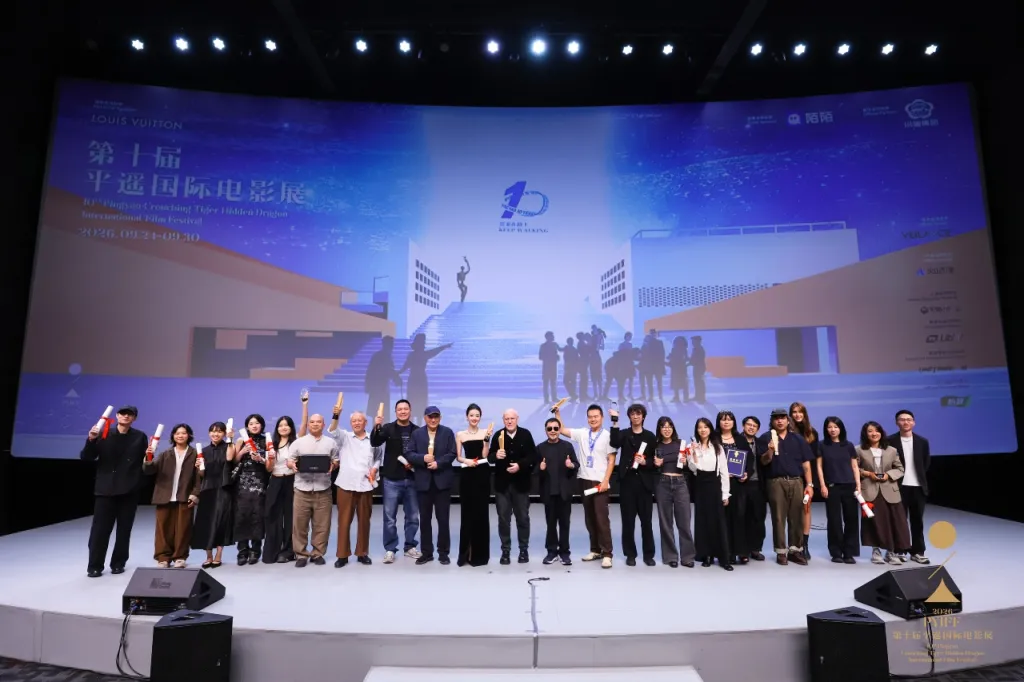
Chinese director Niu Niu’s Final Payment scooped the Best Film Award in the Fei Mu Awards of this year’s Pingyao International Film Festival (PYIFF), while Rafiki Fariala’s Congo Boy won Best Film in the festival’s Roberto Rossellini Awards.
Final Payment, which also won Best Actor for Niu Jianrong’s performance, revolves around a homeowner clashing with a contractor over the final payment following a set of renovations on his home. PYIFF’s competition jury stated: “Tearing through a very small rip, the film leads us into a reality and emotional landscape so expansive, where we sigh, lament, and reflect. The director’s approach is concise, unpretentious, and masterful, earning the wholehearted recognition of the entire jury.”
The Best Film award came with a cash prize of $150,000 (RMB1m) with half given to the director for the development of their next film, and half given to the distributor in China. Niu Niu previously directed Mr Junjun, which was awarded with the Jury Award and Youth Jury Award at PYIFF in 2023.
Also in the Fei Mu Awards, Xu Zao won Best Director for Light Pillar, while Best Actress went to Sun Yi for Wang Xiaozhen’s A Joke. The Jury Award was presented to Dong Jie’s Zoom In, Zoom Out, which had its world premiere in Venice Critics Week, while a special mention went to Cai Chengjie’s Suzhou Quartet.
The Fei Mu awards are focused on the festival’s Hidden Dragons section, which selects first, second and third films from emerging directors making Chinese-language films, while the Roberto Rossellini Awards focus on the Crouching Tigers section for emerging international directors.
Congo Boy, which took Best Film in the Roberto Rossellini Awards, also won Best Actor when it premiered in Un Certain Regard at this year’s Cannes film festival. The PYIFF award came with a cash prize of $20,000, with half given to the director for the development of their next film, and half given to the distributor in China.
The PYIFF jury stated: “The Jury unanimously has been moved by this autobiographical story, told in a simple style that echoes the great tradition of neorealism. For a film focusing on a character that confronts his world with optimism despite dark times and takes on his shoulders the destiny of his entire family.”
Also in this section, the Philippines’ Rafael Manuel won Best Director for Filipiñana, while the Jury Award went to Ben’imana, directed by Marie-Clémentine Dusabejambo, which won the Camera d’Or at this year’s Cannes. The jury also awarded Rakan Mayasi’s Yesterday The Eye Didn’t Sleep a Special Mention.
Hong Kong filmmaker Ann Hui received the Crouching Tiger Hidden Dragon East-West Award, shortly before she receives the Camellia Award at Busan International Film Festival next week.
Pingyao’s International Contribution To Chinese Cinema Award went to Marco Müller, who founded the festival with Chinese auteur Jia Zhangke and currently serves as Artistic Director of the Film Art Research Centre at Shanghai University, and veteran producer, director and former chairman of China Film Group Han Sanping. Hello Group chairman Tang Yan was presented with a 10th Anniversary Award.
This year’s PYIFF opened on September 24 with a screening of the 4K restoration of Fei Mu’s Spring In A Small Town; closed with Good Trip, co-directed by Hong Kong filmmakers Norris Wong and Hoi Wong, and also screened Jia’s short film Torino Shadow, which premiered at this year’s Cannes.
PINGYAO INTERNATIONAL FILM FESTIVAL 2026 AWARDS:
FEI MU AWARDS:
Best Film: Final Payment, dir: Niu Niu
Best Director: Xu Zao, Light Pillar
Best Actress: Sun Yi, A Joke, dir: Wang Xiaozhen
Best Actor: Niu Jianrong, Final Payment, dir: Niu Niu
Jury Award: Zoom In, Zoom Out, dir: Dong Jie
Special Mention: Suzhou Quartet, dir: Cai Chengjie
ROBERTO ROSSELLINI AWARDS:
Best Film: Congo Boy, dir: Rafiki Fariala
Best Director: Filipiñana, dir: Rafael Manuel
Jury Award: Ben’imana, dir: Marie-Clémentine Dusabejambo
Special Mention: Yesterday The Eye Didn’t Sleep, dir: Rakan Mayasi
>
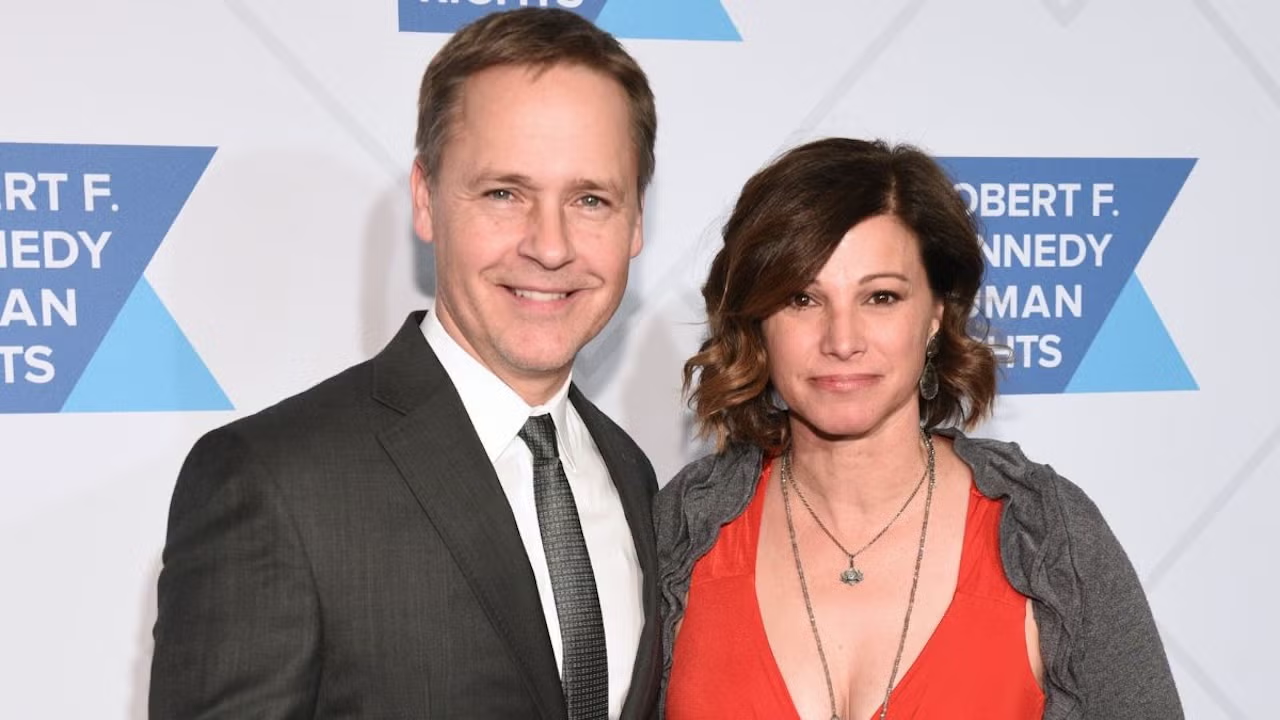
Actor Chad Lowe and producer Kim Painter’s 13-year-old daughter, Fiona, has died, according to a statement from the teen’s family.
“We are deeply heartbroken by the loss of our beloved Fiona,” the Lowe family said in a statement to media Tuesday evening. As the family went on, they remembered Fiona as “a loving young girl who was smart, creative, and loved to dance.”
“She was adored by her sisters and she was deeply loved by her parents,” the family’s statement added. “In fact, she was the light of our lives.”
While a cause of death was not immediately shared, the Lowes alluded to Fiona’s mental health struggles, writing, “Her passing is devastating for our entire family and we ask for prayers and privacy at this time. If you or someone you know is struggling with mental health, please reach out to the 988 Suicide & Crisis Lifeline by calling or texting 988.”
More to come…
>
Man City's 'sham contracts', spending breaches and 'disguised funding': Breaking down the findings

Whitley Bay: The part-timers who won a record three Wembley finals in a row

Flex your football brain with our daily quizzes
-

 movies4 months ago
Search For Canadian TV Actor Stewart McLean Now Homicide Investigation
-

 Fashion9 years ago
These ’90s fashion trends are making a comeback in 2017
-
Fashion9 years ago
According to Dior Couture, this taboo fashion accessory is back
-
Fashion9 years ago
Model Jocelyn Chew’s Instagram is the best vacation you’ve ever had
-
Fashion9 years ago
Emily Ratajkowski channels back-to-school style
-
Fashion9 years ago
9 Celebrities who have spoken out about being photoshopped
-

 Anime4 months ago
Rurouni Kenshin: Hokkaido Arc Manga Takes 1-Issue Break – News
-

 Anime3 months ago
HIDIVE to Stream English Dubs for The World Is Dancing, The Forsaken Saintess and Her Foodie Roadtrip in Another World, The Dangers in My Heart: The Movie Anime – News