
Entertainment
Fatherland Review: Sandra Hüller Is Dazzling in Cannes Drama


Any movie fan reasonably conversant with international cinema would know exactly where they were within a few minutes of being dropped into a screening of “Fatherland,” which premiered in the main competition at the Cannes film Festival on Thursday. They’d see the luminous black-and-white cinematography, the boxy frame and the European setting and know they’re in Pawel Pawlikowski-land.
Though the style has distinct echoes of the poetic austerity of Robert Bresson and Carl Theodor Dreyer, Pawlikowski has made it his own in recent years, most notably with the Oscar-winning “Ida” in 2013 and then with “Cold War” in 2018. Both films were elegant black-and-white stories shot in a nearly square aspect ratio and set in Western and Central Europe that was still haunted by the wreckage of World War II, an event that figured heavily in the Polish director’s own family. Both were lyrical and quietly gripping, two of the most distinctive films to come out of the region in the last decade and a half.
You could say that “Fatherland” is more of the same, using black-and-white photography and the Academy aspect ratio to follow German writer Thomas Mann and his daughter Erika as they travel across a fractured Germany in 1949, when the defeated country had been partitioned into East and West and become a central battleground in the Cold War.
Running a welcome 82 minutes, a nice change at a festival whose competition includes five films of more than two-and-a-half hours, “Fatherland” isn’t as revelatory or as wrenching as “Ida” and it feels smaller than “Cold War”; it’s more of a chamber piece, a snapshot of a few days in which a two people grapple with personal loss, artistic and political divides and a looming question for Germans in the aftermath of World War II: “Where is my home now?”

It’s also a showcase for the gifted German actress Sandra Hüller, who has been something of a Cannes MVP over the last decade. She was dazzling in “Toni Erdmann” in 2016 and then in the one-two punch of “Anatomy of a Fall” and “The Zone of Interest” in 2023 – and now, on the heels of her supporting role in the certified hit “Project Hail Mary,” “Fatherland” is driven by the conflicts that play out beneath and sometimes break through her Germanic stoicism.
The story was initially developed by “All Quiet on the Western Front” and “Conclave” director Edward Berger, who sent it to Pawlikowski after deciding that it’d be more interesting in the hands of a non-German director. It is based on a trip that German writer and Nobel laureate Thomas Mann (“Death in Venice,” “Doctor Faustus”) made to a divided Germany only four years after the end of the war. He accepted an award in honor of the 18th century writer Johann Wolfgang von Goethe in Frankfurt, in West Germany, and in Weimar, in the Soviet-dominated East Germany, with both sides eager to claim him as one of their own.
Erika Mann doesn’t want to accompany her father on a trip back to the homeland she now shuns, and neither does her brother Klaus, whose book “Mephisto” was banned in the 1930s for its anti-Nazi stance. On the eve of the trip, Klaus kills himself with an overdose of sleeping pills, but Thomas (Hanns Zischler, “Kings of the Road,” “Munich”) insists they go, and Erika agrees to bury her grief and her hatred for post-war Germany. (She buries it most of the time, with a couple of significant exceptions.)
The Germany that Mann considered home until he fled the Nazis in 1933 is long gone, replaced by two different attempts to claim the German heritage. In Frankfurt, crowds cheer wildly and the entertainment at a reception in Mann’s honor is a big band fronted by longtime Pawlikowski actress and muse Joanna Kulig, who sings one song, whistles another and shakes maracas on a third; in Weimar, it’s nothing but children’s choirs and military choruses singing with exhausting precision.
Both sides, though, want to consider Mann one of their own. The West Germans (and the American CIA agent who’s tagging along) are hoping he’ll embrace capitalism, while the East Germans want to persuade him that his idol Goethe would have agreed with Karl Marx. “They need him as an ornament,” snaps Erika in disgust.
Asked where he feels his home is at a press conference in Frankfurt, Mann can only shrug. “I am an American citizen, but I am a German writer,” he says. “My home is in California, but where I belong is a much more difficult question.”
As usual for Pawlikowski and his regular cinematographer, Łukasz Żal, the artful style of the film comes in its framing. A typical Pawlikowski/Żal image positions the characters in the bottom half of the nearly square frame; the opposite of panoramic shots, they are dominated by the space that hangs over the characters’ heads, physically and psychically.
In some settings, the framing can look grand; in others, particularly when the film moves to the gray environs of Weimar, the dirty walls sporting photos of prominent Soviets are simply oppressive.
But there’s a haunted, ravaged beauty to the film, particularly in the homestretch when Thomas is given an official tour of the room in which Goethe died while Erika wanders through an overgrown and forgotten sculpture garden with a blank expression.
By the time Thomas and Erika end up in a crumbling church where a lone organist sits in the choir loft playing Bach (the only music Klaus could listen to near the end of his life), the movie whips up a mixture beauty and decay, love and death, genius under the specter of madness and a sense of peace despite the uneasy weight of history. It’s a perfect Pawlikowski cocktail.
>

EXCLUSIVE: It’s a Sin star Callum Scott Howells and Gabrielle Creevy (Black Doves) are leading an adaptation of Vanessa Savage’s romantic thriller The Night They Vanished for BBC Studios and Channel 4.
Cameras have rolled in Wales on the six-part series that tells the story of Anna (Creevy), whose world is blown apart when she discovers her childhood house listed on a true-crime website as the scene of her family’s future deaths. Intriguing blind date Cai (Scott Howells) runs the true-crime site but swears he didn’t post it. The police say it’s a hoax, but Anna’s family have vanished.
Angharad Elen (The Light In The Hall) and Hannah Daniel (Mudtown) are adapting Savage’s novel, her third thriller. BBC Studios’ new label CliffEdge Entertainment, which has just been unveiled to Deadline by scripted boss Jamie Hall, is producing and selling worldwide. Channel 4 has pre-bought the drama while we understand a deal with a U.S. buyer is close.
Additional cast includes Tamzin Outhwaite (The Wives, Ridley Road, The Tower) as Anna’s stepmum Jo and Steffan Rhodri (Gavin & Stacey) as Idris, Anna’s father, along with Matthew Gravelle (Mudtown), Lisa Victoria (Pobol y Cwm), Jack Quick (Pobol y Cwm), Andrew Lennon (Death Valley), Callum Hymers (The Pact), and Bella Shewan.
Scott Howells is best known for Russell T. Davies’ It’s a Sin and is starring in Deadpoint, another BBC Studios thriller for Channel 4. Creevy plays Eleanor in Netflix hit Black Doves, which will soon launch Season 2.
Creevy said: “Anna is a firecracker – sharp, loyal and carrying more hurt than she lets on. The moment her past comes roaring back, she’s forced into a nightmare she thought she’d escaped. It’s a gift of a role and I can’t wait for audiences to unravel the truth with her.”
Scott Howells added: “Cai is charming, complicated and never quite what he seems. He could be the love of Anna’s life… or the centre of a terrifying conspiracy. Playing someone who keeps you guessing is exactly the kind of challenge I love.”
The Night They Vanished has been pre-bought by Polly Scates, Channel 4 Head of Acquisitions and Felix Jones, Acquisitions Manager. EPs are Sarah Creasey, Sathe, Elen, and Branwen Williams for BBC Studios. Series producer is Sian Elen John and the Director is Geraint Todd.
>

EXCLUSIVE: BBC Studios’ scripted chief has laid out his strategy for future indie and talent investments that will shy away from “going out and spending £20M ($26.5M) on a production company.”
Speaking exclusively with Deadline for his first interview since taking on the Scripted MD role, Jamie Hall said his plan for the Doctor Who, Baby Reindeer and Sherwood maker is instead to strike smaller but more regular deals with top talent and “build creative hubs.” In this vein, Hall said BBC Studios scripted will “move slightly closer” to the strategy of soon-to-be-independent rival ITV Studios.
Hall came to our interview clutching receipts in the shape of two new labels led by the producers behind Strike and The Detection Club, along with early-stage plans for a label that will focus on digital spin-offs of existing brands.
BBC Studios runs hefty in-house drama and comedy teams along with majority-owning big beasts of the UK production world like Baby Reindeer maker Clerkenwell Films, Sherwood producer House Productions, Lookout Point and Steve Coogan’s Baby Cow.
Hall joined earlier this year, three decades on from his first stint at the BBC (he met his wife working on Our Friends in the North) from Vice Studios/Pulse Films, where he oversaw the likes of Gangs Of London. At BBC Studios, his remit is to give a shot in the arm to the drama and comedy offering and unearth the next generation of IP at a time when the public service BBC is desperate for funding. His desire echoes that of his boss, BBC Studios Productions chief Zai Bennett, which is to invest in around two to three of these new-look talent labels per year. Other examples include tie-ups with Barbie star Jamie Demetriou, The Ballad of Wallis Island writer Tom Basden, Ted Lasso alum Nick Mohammed and Cunk on Earth creator Diane Morgan.
“I inherited a group of great production companies that had been acquired in the way production companies were acquired at the time,” Hall told Deadline from BBC Studios’ Soho outpost. “But I don’t think the market can support that anymore – or, at least, it can only do so very rarely. We’re not going to spend £20 million buying a production company. Instead, we’re building an amazing service at the center of the studio, then creating creative hubs that can tap into our brilliant lawyers, HR, finance and other support functions.”
He recalled a recent conversation with Joel Wilson, the just-departed co-founder of Sex Education producer Eleven, who told him: “Towards the end of running the company I came to dread the pressure of running a business.”
“All [Eleven] wanted to do was build great shows,” added Hall.
Hall didn’t completely rule out stumping up big bucks to buy an indie outright in the future, but added: “The reality is that I can set up creative pods or labels at a much lower price point, and that feels right.” He said the scripted supremo role at BBC Studios had attracted him because, “I wasn’t simply coming in to mind the wheel. There was a creative renewal that needed to happen – some wiring and plumbing that needed fixing.”
Backing up his strategy, Hall unveiled Bristol-based Landed Productions led by Strike and Possession producer Jenny Van Der Lande, who is leaving her role as Big Talk’s creative director of drama to helm BBC Studios’ first scripted label outside London.
Landed Productions will make “premium genre pieces” and Van Der Lande has multiple writers in mind with whom she wants to develop shows. “Jenny said in our conversations that she doesn’t want to run a production company,” explained Hall. “She wants to work with amazing writers she already has relationships with, then partner up when she gets a greenlight.”
Hall’s new-look team, which consists of the likes of CFO Jennifer Dickson, legal chief Anna Beese and production director Alison Loose, has also been busy working on the digital spin-offs label that follows big digital successes for franchises like Dancing with the Stars and EastEnders. This one, which doesn’t yet have a name, will be led by BBC Studios Drama digital chief Katy Karger. “Scripted is probably the hardest area to crack [in digital], so we’re setting up a central digital capability,” said Hall. “When someone pitches a conventional piece of television, we can also pitch to buyers a digital component.”
Hall also unveiled CliffEdge Entertainment, led by “real grafter” Deborah Sathe, who is moving across from her role as Senior Creative Director at the in-house BBC Studios Drama Productions. CliffEdge will take some shows off Drama Productions’ hands such as The Detection Club, Silent Witness, Father Brown and Shakespeare and Hathaway, while the Kate Oates-run Drama Productions will continue making soaps and continuing drama. Some staff will move over to CliffEdge.
“When I came in, I spent a lot of time getting to know all the creatives in the business and Deb Sathe was one of the people who really impressed me with her energy and what she was building,” added Hall. “She’s a real grafter, but is also incredibly disciplined about making shows at a certain price point. It felt natural for her to have her own entity to run.”
CliffEdge comes replete with a greenlight: an adaptation of Vanessa Savage’s gripping thriller The Night They Vanished starring It’s a Sin’s Callum Scott Howells and Gabrielle Creevy (Black Doves). That one has been pre-bought by Channel 4 and follows Anna (Creevy), whose world is blown apart when she discovers her childhood house listed on a true crime website as the scene of her family’s future deaths. Intriguing blind date Cai (Scott Howells) runs the true-crime site, but he swears he didn’t post it.
“I’ve done the rounds of most of the agencies”
The Night They Vanished speaks to what Hall believes BBC Studios can do with big IP.
He says he has “done the rounds of most of the agencies to remind them that we’re open” – the day after he chats with Deadline he has a meeting in the diary with Curtis Brown – and is in talks over “a number of pieces of IP that are coming through which are quite interesting.”
Driven by the success of Sky and AMC’s Gangs of London, for which he says Pulse was “a bit ahead of the curve,” Hall is chatting to rightsholders about the possibility of revamping in-vogue gaming IP for the small screen. This follows big successes for the likes of HBO’s The Last of Us.
Although none of these examples are necessarily franchise-able in the vein of a Gangs of London or Doctor Who, Hall reels off a list of upcoming BBC Studios shows he is buzzing for, including the BBC’s Killing Eve origin story Honey, Netflix surfing drama Breakers and a second season of Disney+ rom-com Alice and Steve.
Another hit dominating ratings at the moment is Diane Morgan’s comedy Ann Droid, which poignantly taps into societal paranoia about AI but in an oh-so-gentle way. Having yesterday become the BBC’s biggest new scripted comedy since Ludwig Season 1, Hall reveals there is “real interest” in Ann Droid from American buyers, who are familiar with Morgan from her work as comedy creation Philomena Cunk and could either buy finished tape or commission their own unique version.
Hall has plenty experience working for American behemoths and will soon sit down with BBC Studios’ new L.A. chief Ryan O’Dowd to figure out “how we can be better joined up, because inevitably our producers [in the UK] want access to the U.S. market.”
This comes at a time when Hall says the co-pro market is “picking up a bit” from the lows of 2025, although he acknowledges it is “nowhere near what it was in the past and there is still quite a big oversupply in the market of producers and projects.” “If we’re designing a show and the budget is at a [higher] level then we need to start thinking about [co-pros] much earlier in the process,” he added. “What has happened in the past is you develop a show for [BBC drama boss] Lindsay [Salt] and she says she wants it and then you go, ‘Oh crap we can’t finance it with just Lindsay and the tax credit, we need co-pro’. But by then the show has been developed in such a distinct way.”
He hopes his experience in the belly of the beast at Vice can help but is so far loving being part of a public service machine, which Hall labels the fourth biggest brand in the world. “Our ultimate owner is the epitome of patient money,” he said. “Whereas when I was at Vice it was owned by three American banks and if we didn’t hit our numbers each quarter we were in trouble.”
This unique BBC model helps in the current landscape, Hall reckons, coming as the Banijay-All3Media mega-merger marches on.
“I imagine that if you’ve got a super-indie with 130 production companies, the amount of facetime you’re going to have with the boss is quite minimal,” he added. “What I really lean into is the way we’re structured. Zai [Bennett] and I sit opposite each other, across a bank of desks. We don’t have to wait for L.A. to wake up before we make a decision; we can just get on with things.”
“Just getting on with things” is a crucial mantra for a BBC Studios scripted operation that is feeling more and more pressure to return funds to the cash-strapped 100-year-old national broadcaster.
Is Hall feeling the pressure?
“There’s no denying that any headwinds the BBC faces will come and hit us,” he added. “All I can do is manage that and focus on where we can grow our business outside of that [traditional BBC funding] route to help compensate. The BBC gets beat up so much. What we can do inside the studio is really help it and support it.”
>
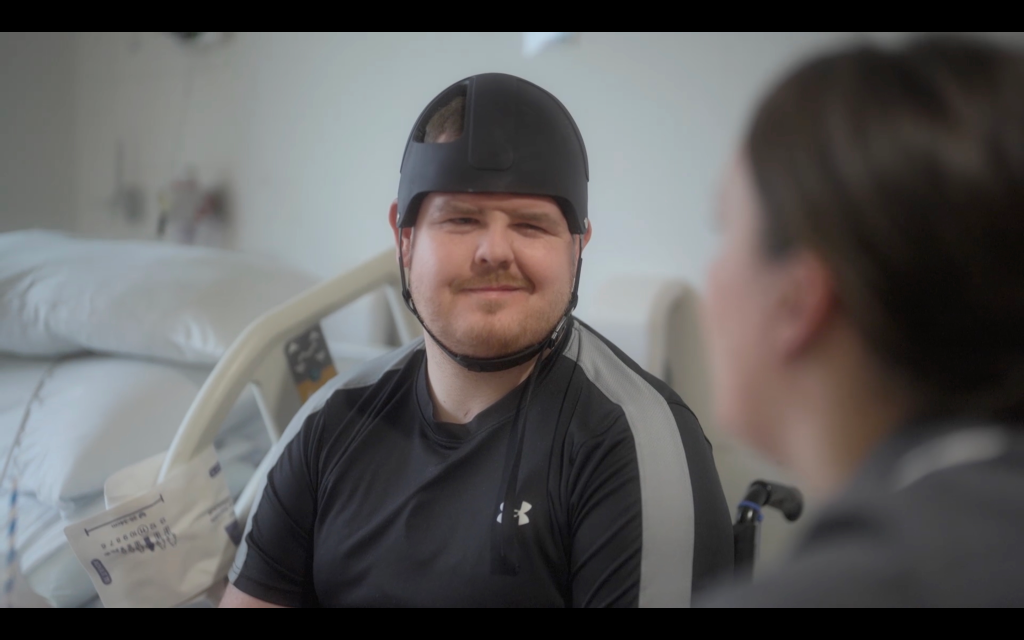
EXCLUSIVE: Channel 4 is teaming with the Stroke Association on a documentary sereis looking at young people living with the aftermath of a stroke.
Trauma: My Broken Brain follows three young survivors through the most frightening days of their lives and the grueling journey back to independence.
Every five minutes someone in the UK suffers a stroke – there are 1.4 million stroke survivors living in the UK today – but the aim of the doc is to show that this is only the beginning of recovery. Filmed over seven months with access to these young adults at the most terrifying and testing moments of their lives, the series meets Dan (28), a dancer left confined to a wheelchair, barely able to speak following emergency brain surgery; Saskia (22), a self-described social butterfly left bedbound after a brain bleed so severe her family feared she would not survive; and Dec (20), who collapsed just four months into a new relationship and spent weeks in a coma, his family and girlfriend unsure if he would survive.
Channel 4 has taken the rare step of teaming with a charity on the doc. It is being produced by Stream Media Group, which was also behind the same network’s Anna Richardson: Love, Loss and Dementia, made with the Alzheimer’s Society.
Channel 4 commissoning exec Simon Lee said: “This is an ambitious and important series that challenges perceptions and gives a voice to young people whose lives have been transformed by stroke, as they embark on the long road that begins after survival.”
Stream’s Victoria Noble added: “What struck us throughout filming was how little people understand about stroke. Survival is often seen as the end of the story, when in reality, it is only the beginning. By sharing their journeys with such honesty and courage, Dec, Dan and Saskia revealed the reality of rebuilding a life after stroke, and the truth behind the long and unforgiving journey to reclaim the right to live an independent life. Alongside the extraordinary support of their families, their stories offer a powerful insight into resilience, determination and hope. It’s been a privilege to tell their stories.”
Noble is EP with Ben Padfield and producer is Laura Hooper. Series director is Storm Theunissen and production executive is Fiona Ridgers. The show was filmed with access to The Walton Centre NHS Foundation Trust and Clatterbridge Rehabilitation Centre, and Wirral University Teaching Hospital NHS Foundation Trust.
>
Your son wants to play college football. A recruiting website will evaluate him for $500

Sam Underhill: Bath and England flanker to miss Nations Championship with bicep injury

‘The Night They Vanished’: Callum Scott Howells Leading C4 Adaptation
-

 movies4 months ago
Search For Canadian TV Actor Stewart McLean Now Homicide Investigation
-

 Fashion9 years ago
These ’90s fashion trends are making a comeback in 2017
-
Fashion9 years ago
According to Dior Couture, this taboo fashion accessory is back
-
Fashion9 years ago
Model Jocelyn Chew’s Instagram is the best vacation you’ve ever had
-
Fashion9 years ago
Emily Ratajkowski channels back-to-school style
-
Fashion9 years ago
9 Celebrities who have spoken out about being photoshopped
-

 Anime4 months ago
Rurouni Kenshin: Hokkaido Arc Manga Takes 1-Issue Break – News
-

 Anime3 months ago
HIDIVE to Stream English Dubs for The World Is Dancing, The Forsaken Saintess and Her Foodie Roadtrip in Another World, The Dangers in My Heart: The Movie Anime – News