
Entertainment
At Cannes 2026, the Center of Gravity Is Shifting


Hello from an early-morning train after a week at the Cannes Film Festival. I’m taking away memories of the blood geysers in Jane Schoenbrun’s “Teenage Sex and Death at Camp Miasma,” my Future of Filmmaking chat with Tim Heidecker at our American Pavilion, and reminding “Club Kid” auteur Jordan Firstman that the last time I saw him, he hosted IndieWire’s Sundance chili party while wearing a tie that said SEMEN. (“I was in an experimental period,” he said.)
However, what surprised me the most were two questions that kept resurfacing in conversations: “Is Cannes the same as it’s been?” and “Are you going to Cannes Lions?”


At first I thought these were variations on classic Cannes small talk (“How long are you here?”), but finally realized that they were different expressions of the same idea. One question is about decline and the other is about emergence, but both are really asking the same thing: Where is the center of gravity in storytelling moving?
Is Cannes Still Cannes?
“Is Cannes the same as it’s been?” is the natural question for a Hollywood in existential crisis and one that largely sat out this edition of the festival altogether. It asks whether the familiar machinery of cinema still functions. Do premieres still create momentum? Do acquisitions still shape the future? Do festivals still operate as the central meeting ground between art, commerce, and cultural authority?
Cannes itself remains deeply invested in continuity. It doesn’t even change the opening trailer that precedes each film: a red-carpeted stairway floating into the heavens, set to Camille Saint-Saëns’ 1886 composition “Aquarium.” This year especially, that permanence seemed reassuring.
At the same time, the festival couldn’t convince a major Hollywood studio to participate in the old tradition of the gala premiere. Prestige alone no longer offsets the risks attached to expensive launches and instant global scrutiny. The acquisition market remained muted too, reinforcing something the industry has spent years resisting: The classic independent film pipeline no longer reliably supports the business built around it.
That helps explain the growing curiosity around Cannes Lions.
Why Cannes Lions
Cannes and Cannes Lions once occupied distinct worlds. One revolved around cinema, auteurs, and prestige. The other centered on advertising, brands, marketing, and commercial storytelling.
Crossing between them wasn’t an issue because it wasn’t a thing. Today, it’s harder to argue that storytelling only operates inside a single economic system.
Cannes Lions, of course, is all about selling — of ads and of brands, in a carnival atmosphere that stretches from the beaches to the villas. (Lions veterans will tell you how quiet the festival seems in comparison.) However, the people asking about Lions want to understand where financing, distribution, audience development, and monetization are actually happening now.
They are looking at creators building direct relationships with audiences, brands financing entertainment, platforms behaving like studios, and technology companies inserting themselves into the creative process. Whether they like those changes or not, they recognize that power is increasingly tied to who owns the audience relationship.
Traditional film logic assumed prestige led to audience attention. Newer storytelling businesses begin with audience attention and build outward from there.
Not everyone is comfortable with that shift. Early in the festival, I had lunch with an industry veteran who grew visibly agitated when I asked about brand participation in filmmaking.
“I want to make films with people,” they said. “I don’t want to talk to a fucking brand.”
I’ve spoken with creators who express the inverse frustration. They are baffled by filmmakers who do not think more aggressively about sustainability, ownership, and business models around their work. As one creator told me, “Indie film really seems more like a culture than a business.”
Cannes takes pride in preserving cinematic tradition, not being an agent of change. Yet the shifts happening around the festival became difficult to ignore.
Meta, now a major festival sponsor, demonstrated its Ray-Ban glasses inside the Majestic Hotel. YouTube partnered with French distributor MK2 for a Friday-night beach party attended by creators including Markiplier and Creator Camp founder Max Reisinger. At a panel, Markiplier announced that “Iron Lung,” his self-distributed theatrical release, would move into digital distribution exclusively through YouTube after bypassing the festival system entirely.
Maybe the Creator Economy Was Right
The Marché du Film hosted its Innovation Pavilion, where filmmaker Darren Aronofsky discussed AI filmmaking. The market’s first-ever Creator Economy Summit featured Scalable principals Kaya Yurieff and Jasmine Enberg, who hosted their own sold-out summit earlier this month in Los Angeles. It drew strong interest from executives trying to understand how creator-driven businesses are reshaping entertainment economics. At Lions, of course, the creator economy dominates the narrative altogether.
Others are experimenting with financing models built around audience participation itself. Republic Film founder Mark Iserlis described growing interest in what he calls “audience equity,” where creators raise development funding directly from fans who then become stakeholders and evangelists for projects. Director Robert Rodriguez recently raised $2 million for a new action slate from roughly 2,500 fans through the platform.
“The more you can independently finance a film, hopefully you’re enabling ultimate creative independence,” Iserlis told IndieWire. “You have this built-in audience of investors where you can do heavy marketing for you as evangelists and stakeholders.”
His broader argument reflects a growing belief across entertainment: Maybe the creator economy understood something traditional film economics missed. Where packaging and pre-sales once functioned as infrastructure, audience itself is increasingly becoming the infrastructure.
Now, Indonesia Matters
That logic extends beyond creators themselves. Increasingly, financiers are looking for markets where audience behavior already demonstrates sustainable demand.
This can mean reverse-engineering opportunities around audience behavior. Phil McKenzie, co-founder of UK-based financier Goldfinch, sees major potential in Indonesia’s robust theatrical culture — a market where audiences turn out both for halal cinema (aka family-friendly romances and dramas geared toward Muslim viewers) and for unapologetically commercial horror.
Indonesian filmmaker Joko Anwar has become one of the country’s breakout international exports: “Satan’s Slaves” found a substantial audience on Shudder, which also acquired “Impetigore” following its international premiere at the 2020 Sundance Film Festival.
Extracting this opportunity will require real spade work. At Cannes, Goldfinch signed a deal with Jakarta to explore talent and film infrastructure development, along with policy studies regarding film-industry incentives. Along with studio lots, the ecosystem, policies, and legislations will need to be built.
It could take years for the first soundstages to come online, but McKenzie believes Indonesia is positioned to be the film industry’s next South Korea. His excitement is contagious, but it is also rooted in the reality that older assumptions are no longer producing the same results.
“We’re still struggling to break out from that US-centric approach,” he said. “You’ve got to find these pockets of opportunity, whatever they look like and whatever they may be.”
Some people are trying to preserve a system they still believe in. Others are trying to build new pathways around it. Most are attempting to understand where audiences, capital, technology, and cultural influence are converging next.
Cannes remains one of the few places where all of those worlds still collide face-to-face. Increasingly, that collision may be the story itself.
Weekly Recommendations curated by IndieWire Managing Editor Christian Zilko
5. Is Micro-Budget Filmmaking Exploitative? by Kathi Carey
Conversations about money (or lack thereof) in independent filmmaking often center around two well-meaning ideas: the pro-art point of view that talented filmmakers should have more chances to make their ideas, and the pro-labor notion that everyone working in film needs to be paid more. The unfortunate truth is that the two arguments are often in opposition, but this essay offers a nuanced discussion of how to deal with people ethically when budgets are limited.
4. There Are Many Ways to Shoot a Personal Story by Max Cea
This interview with two cinematographers behind recent hits “Blue Heron” and “Bunnylovr” finds the sweet spot between technical specifics and broader storytelling principles. It’s a good reminder of how expansive the cinematographer’s role can be in the creative process, and the many ways that we can approach stories that seem hyper-specific on the page.
3. Cannes 2026 Opens With Prestige Under Pressure and Buyers Searching for Audiences by FilmTake
An in-depth, industry-facing summary of the existential questions facing the Cannes Film Festival and the people who do business there. While the Croisette might still be the #1 destination for accruing film prestige, the model for converting that into revenue is shakier than ever.
2. We Need to Talk About Indie Theater Rental Fees by Aaron Strand
Current distribution advice for independent filmmakers often centers around booking your own screenings instead of relying on festivals and buyers. It’s great on paper, but this essay makes the case that theater fees are making the idea cost prohibitive. I’m hesitant to shift too much of the blame for one struggling industry onto another, but there’s a real argument that a more collaborative approach between independent theaters and filmmakers would benefit everyone.
1. Existential Scrolling by Jake Weisman
Everyone knows that it’s easier than ever before to make something yet harder than ever to find an audience. But this piece, a first-person account of scrolling through the endless sea of entertainment options, adds texture to the conversation from a consumer perspective. I love Weisman’s takeaway that while we tend to reserve the term “slop” for AI projects, human artists are equally capable of making forgettable and formulaic films that do little more than clog up algorithms. It’s on all of us to be more original.
>

Matthew McConaughey shows off his vocal skills (and some hidden banjo talents) with his latest role in The Rivals of Amziah King.
On Friday, Lakeshore Records released the single and music video for “Quill” from the original motion picture soundtrack, performed by the Oscar-winning and co-star Ben Hardesty, also featuring Miranda Zickler, Angelina LookingGlass and Andrea Pister.
Set in the backwoods of Oklahoma, The Rivals of Amziah King follows the musically gifted Amaziah King (McConaughey) and his bluegrass-playing band of misfits while overseeing the premier honey-making operation in town. When Amaziah’s estranged foster daughter unexpectedly returns, he leaps at the chance to reconnect and create a family business. But the honey game is ruthless, and Amaziah’s rivals threaten to destroy everything he has built.

Premiering Aug. 14 in theaters, the Andrew Patterson-written-and-directed drama also stars Angelina LookingGlass, Cole Sprouse, Jake Horowitz, Tony Revolori and Kurt Russell.
Producers are David Heyman, Teddy Schwarzman, Jeffrey Clifford, Michael Heimler, James Montague and Will Greenfield.
>
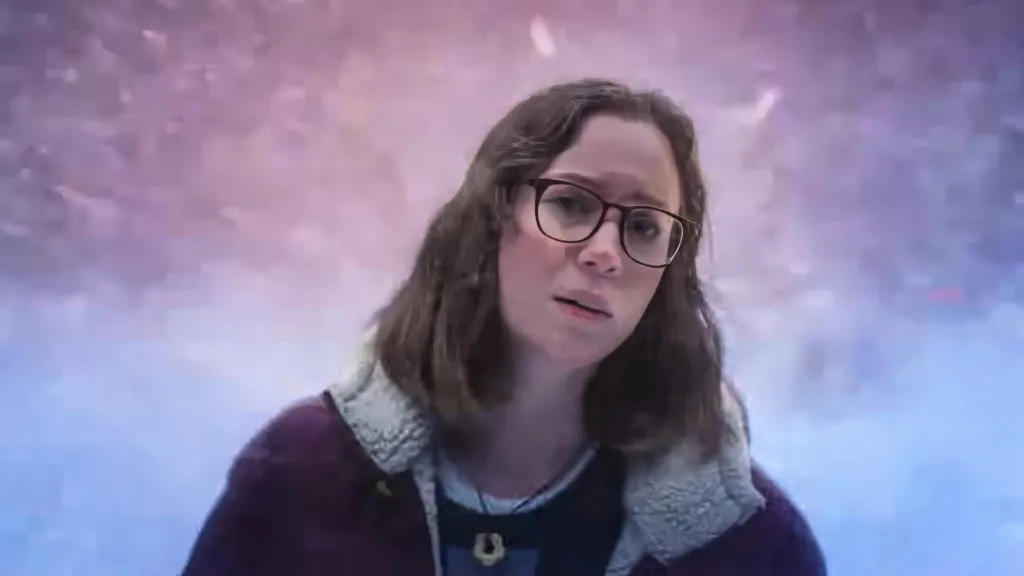
With their latest directorial outing, Jane Schoenbrun used subtle pieces of nostalgia to deconstruct the slasher genre.
The Teenage Sex and Death at Camp Miasma writer/director explained to Deadline that they wanted to create “a mindset where you can really enjoy something scary,” noting the frequent symbolism of candy and junk food as providing an atmosphere “that’s actually safe” while diving into a horror movie or exploring sexuality after trauma.
“There is this idea that if it gets too real, you can turn it off, that you’re exploring something dangerous, doing it in a way that’s actually safe,” said Schoenbrun, who is non-binary. “Which in my experience of coming into my sexual identity post-transition, kind of required some gummy candy on hand. What I mean by that is, even if we’re going to be exploring scary and vulnerable and potentially embarrassing, triggering parts of ourselves, we trust each other well enough to know that at any moment, we can be like, ‘Let’s stop, we gotta just eat some fucking gummies.’”
In Schoenbrun’s latest film, Hannah Einbinder stars as queer director Kris, who is tapped to helm a new installment of the long-running Camp Miasma horror franchise. While courting Billy Presley (Gillian Anderson), the actress who played the “final girl” in the original film, to reprise her role, the pair spirals into a psychosexual frenzy as the slasher’s killer, Little Death (Jack Haven), comes to life.
Acknowledging the problematic trans representation of horror films like Psycho (1960), Sleepaway Camp (1983), The Silence of the Lambs (1991) and Texas Chainsaw Massacre: The Next Generation (1995), Schoenbrun admitted the genre has been “catnip to me since I was 10 years old,” and they jumped at the chance to direct their own.

“So many slashers do have this sense of humor, and even if they’re not overtly meta like the Scream movies are, they’re so aware of their own tropes and the sort of rituals … And I just loved that from a young age and loved all of the little rituals within it, and so, getting to make my own is just like play and joy,” they explained.
“But it also felt like the perfect way to talk about sex and to talk about my experience as a trans person post-transition, learning how to come into a sexual identity that I could feel comfortable within, because so many of these movies are obviously deeply engaged in gender and sexual roles, and these movies have so much to say for better or for worse about deviants,” said Schoenbrun. “It is there in the DNA of the slasher genre that these movies are talking about fear and desire, gender and sexuality, normativity and deviance. And that’s all swimming in the toxic soup of the genre, so I wanted to remake it in my own language.”
Read on about Jane Schoenbrun’s love letter to the slasher genre with Teenage Sex and Death at Camp Miasma, now playing in theaters.
DEADLINE: It was really fun to see the slasher genre through your eyes. Tell me about finding inspiration in that genre and “final girls.”
JANE SCHOENBRUN: I mean, it was the easiest thing in the world because it’s just one of those genres that has been catnip to me since I was 10 years old. I just raided the horror section of the video store as a kid from an age when I really shouldn’t have been doing that, like in 5th grade, I watched in the span of about one week, every Nightmare on Elm Street movie. I think that I was always drawn to movies and really anything entertainment where it felt forbidden in some way, like the thing on the tape, how is that even allowed? And that’s the thing that I love about a lot of my favorite slashers. Don’t get me wrong, I love like brutal ones, like I love Texas Chainsaw, that’s a nasty movie at its core, and that’s what’s so special about it. But so many slashers do have this sense of humor, and even if they’re not overtly meta like the Scream movies are, they’re so aware of their own tropes and the sort of rituals of, OK, what’s the most outrageous way that like these like dumb kids can get killed? But watching it, it’s not about fear a lot of the time, it’s about joy and celebration. And I just loved that from a young age and loved all of the little rituals within it, and so, getting to make my own is just like play and joy. But it also felt like the perfect way to talk about sex and to talk about my experience as a trans person post-transition, learning how to come into a sexual identity that I could feel comfortable within, because so many of these movies are obviously deeply engaged in gender and sexual roles, and these movies have so much to say for better or for worse about deviants, whether that be Norman Bates or Buffalo Bill or Sleepway Camp or Jason, Michael Myers, Leatherface in drag. It is there in the DNA of the slasher genre that these movies are talking about fear and desire, gender and sexuality, normativity and deviance. And that’s all swimming in the toxic soup of the genre, so I wanted to remake it in my own language.

DEADLINE: I’m curious about the symbolism of all the processed junk food and the chandelier of wrappers.
SCHOENBRUN: The junk food in the movie, I forget when it found its way in there. It’s like so much of the movie is about, like I said, ritual, about being in a mindset where you can really enjoy something scary, whether that be Kris [Hannah Einbinder] in bed, with, you know, with Raisinets and the popcorn, watching a schlocky horror movie, or the two characters learning how to be present and enjoy sex after a lot of trauma. There is this idea that if it gets too real, you can turn it off, that you’re exploring something dangerous, doing it in a way that’s actually safe. Which in my experience of coming into my sexual identity post-transition, kind of required some gummy candy on hand. What I mean by that is, even if we’re going to be exploring scary and vulnerable and potentially embarrassing, triggering parts of ourselves, we trust each other well enough to know that at any moment, we can be like, “Let’s stop, we gotta just eat some fucking gummies.”
DEADLINE: And one thing I really love—I just feel like it’s a theme in your work—is how it depicts the way media and entertainment influence us. Why does that inspire you?
SCHOENBRUN: I think it comes from a fascination and sensitivity to the complex relationship between what we think of as fiction and what we think of as reality, which we tend to, as a society, think of as pointing in one direction. Like, reality dictates fiction, not vice-versa, but when you actually look at the way the world works, it’s like one echoes off the other. And I think a complicated, sometimes terrifying and sometimes beautiful way, where the fiction, the cultural norms, the things we grow up looking at on our screens, the roles that we’re told people play, they kind of inspire us to create reality. There’s something liberating when you start thinking in that way. I think it’s a way of thinking that we as a culture, could do a lot more of. To think about the idea of fiction inspiring reality just as much as reality is inspiring fiction, is a potential path to liberating us from this hellscape that they’re telling us is the only way the world can be.

DEADLINE: And I know you have the Secretary reading. Tell me what it’s been like prepping for that and why you all chose that movie.
SCHOENBRUN: I mean, that was such a huge influence on on Miasma. There just aren’t that many fun and funny movies about deviant sex. And just the way that movie is like feather light while talking about really raw and taboo things, it is just really inspiring to me. And the dynamic between those two main characters is definitely one that had a lot of influence on on Kris and Billy’s [Gillian Anderson] relationship in Miasma. And it’s already to me a very queer movie in its way, but having Gillian reading the James Spader part and Hannah reading the Maggie Gyllenhaal part, I think it’s just gonna be like a very unique joy. Honestly, we’ve been prepping a little bit, but I think it’s just gonna be about getting up there and feeling the chemistry of it all, and just letting these folks who we have all gotten to know each other really, really well, but we haven’t actually done anything wacky and creative like that in a while, like as a reunion, it’s gonna be a real blast, I think.
>
With their latest directorial outing, Jane Schoenbrun used subtle pieces of nostalgia to deconstruct the slasher genre.
The Teenage Sex and Death at Camp Miasma writer/director explained to Deadline that they wanted to create “a mindset where you can really enjoy something scary,” noting the frequent symbolism of candy and junk food as providing an atmosphere “that’s actually safe” while diving into a horror movie or exploring sexuality after trauma.
“There is this idea that if it gets too real, you can turn it off, that you’re exploring something dangerous, doing it in a way that’s actually safe,” said Schoenbrun, who is non-binary. “Which in my experience of coming into my sexual identity post-transition, kind of required some gummy candy on hand. What I mean by that is, even if we’re going to be exploring scary and vulnerable and potentially embarrassing, triggering parts of ourselves, we trust each other well enough to know that at any moment, we can be like, ‘Let’s stop, we gotta just eat some fucking gummies.’”
In Schoenbrun’s latest film, Hannah Einbinder stars as queer director Kris, who is tapped to helm a new installment of the long-running Camp Miasma horror franchise. While courting Billy Presley (Gillian Anderson), the actress who played the “final girl” in the original film, to reprise her role, the pair spirals into a psychosexual frenzy as the slasher’s killer, Little Death (Jack Haven), comes to life.
Acknowledging the problematic trans representation of horror films like Psycho (1960), Sleepaway Camp (1983), The Silence of the Lambs (1991) and Texas Chainsaw Massacre: The Next Generation (1995), Schoenbrun admitted the genre has been “catnip to me since I was 10 years old,” and they jumped at the chance to direct their own.
“So many slashers do have this sense of humor, and even if they’re not overtly meta like the Scream movies are, they’re so aware of their own tropes and the sort of rituals … And I just loved that from a young age and loved all of the little rituals within it, and so, getting to make my own is just like play and joy,” they explained.
“But it also felt like the perfect way to talk about sex and to talk about my experience as a trans person post-transition, learning how to come into a sexual identity that I could feel comfortable within, because so many of these movies are obviously deeply engaged in gender and sexual roles, and these movies have so much to say for better or for worse about deviants,” said Schoenbrun. “It is there in the DNA of the slasher genre that these movies are talking about fear and desire, gender and sexuality, normativity and deviance. And that’s all swimming in the toxic soup of the genre, so I wanted to remake it in my own language.”
Read on about Jane Schoenbrun’s love letter to the slasher genre with Teenage Sex and Death at Camp Miasma, now playing in theaters.
DEADLINE: It was really fun to see the slasher genre through your eyes. Tell me about finding inspiration in that genre and “final girls.”
JANE SCHOENBRUN: I mean, it was the easiest thing in the world because it’s just one of those genres that has been catnip to me since I was 10 years old. I just raided the horror section of the video store as a kid from an age when I really shouldn’t have been doing that, like in 5th grade, I watched in the span of about one week, every Nightmare on Elm Street movie. I think that I was always drawn to movies and really anything entertainment where it felt forbidden in some way, like the thing on the tape, how is that even allowed? And that’s the thing that I love about a lot of my favorite slashers. Don’t get me wrong, I love like brutal ones, like I love Texas Chainsaw, that’s a nasty movie at its core, and that’s what’s so special about it. But so many slashers do have this sense of humor, and even if they’re not overtly meta like the Scream movies are, they’re so aware of their own tropes and the sort of rituals of, OK, what’s the most outrageous way that like these like dumb kids can get killed? But watching it, it’s not about fear a lot of the time, it’s about joy and celebration. And I just loved that from a young age and loved all of the little rituals within it, and so, getting to make my own is just like play and joy. But it also felt like the perfect way to talk about sex and to talk about my experience as a trans person post-transition, learning how to come into a sexual identity that I could feel comfortable within, because so many of these movies are obviously deeply engaged in gender and sexual roles, and these movies have so much to say for better or for worse about deviants, whether that be Norman Bates or Buffalo Bill or Sleepway Camp or Jason, Michael Myers, Leatherface in drag. It is there in the DNA of the slasher genre that these movies are talking about fear and desire, gender and sexuality, normativity and deviance. And that’s all swimming in the toxic soup of the genre, so I wanted to remake it in my own language.
DEADLINE: I’m curious about the symbolism of all the processed junk food and the chandelier of wrappers.
SCHOENBRUN: The junk food in the movie, I forget when it found its way in there. It’s like so much of the movie is about, like I said, ritual, about being in a mindset where you can really enjoy something scary, whether that be Kris [Hannah Einbinder] in bed, with, you know, with Raisinets and the popcorn, watching a schlocky horror movie, or the two characters learning how to be present and enjoy sex after a lot of trauma. There is this idea that if it gets too real, you can turn it off, that you’re exploring something dangerous, doing it in a way that’s actually safe. Which in my experience of coming into my sexual identity post-transition, kind of required some gummy candy on hand. What I mean by that is, even if we’re going to be exploring scary and vulnerable and potentially embarrassing, triggering parts of ourselves, we trust each other well enough to know that at any moment, we can be like, “Let’s stop, we gotta just eat some fucking gummies.”
DEADLINE: And one thing I really love—I just feel like it’s a theme in your work—is how it depicts the way media and entertainment influence us. Why does that inspire you?
SCHOENBRUN: I think it comes from a fascination and sensitivity to the complex relationship between what we think of as fiction and what we think of as reality, which we tend to, as a society, think of as pointing in one direction. Like, reality dictates fiction, not vice-versa, but when you actually look at the way the world works, it’s like one echoes off the other. And I think a complicated, sometimes terrifying and sometimes beautiful way, where the fiction, the cultural norms, the things we grow up looking at on our screens, the roles that we’re told people play, they kind of inspire us to create reality. There’s something liberating when you start thinking in that way. I think it’s a way of thinking that we as a culture, could do a lot more of. To think about the idea of fiction inspiring reality just as much as reality is inspiring fiction, is a potential path to liberating us from this hellscape that they’re telling us is the only way the world can be.
DEADLINE: And I know you have the Secretary reading. Tell me what it’s been like prepping for that and why you all chose that movie.
SCHOENBRUN: I mean, that was such a huge influence on on Miasma. There just aren’t that many fun and funny movies about deviant sex. And just the way that movie is like feather light while talking about really raw and taboo things, it is just really inspiring to me. And the dynamic between those two main characters is definitely one that had a lot of influence on on Kris and Billy’s [Gillian Anderson] relationship in Miasma. And it’s already to me a very queer movie in its way, but having Gillian reading the James Spader part and Hannah reading the Maggie Gyllenhaal part, I think it’s just gonna be like a very unique joy. Honestly, we’ve been prepping a little bit, but I think it’s just gonna be about getting up there and feeling the chemistry of it all, and just letting these folks who we have all gotten to know each other really, really well, but we haven’t actually done anything wacky and creative like that in a while, like as a reunion, it’s gonna be a real blast, I think.
>

Aryna Sabalenka falls to Ekaterina Alexandrova in biggest upset of Canadian Open

Matthew McConaughey Performs “Quill” From ‘Rivals of Amziah King’ — Watch

Happy International Cat Day 2026 From Around the Anime World, Part II – Interest
-

 movies3 months ago
Search For Canadian TV Actor Stewart McLean Now Homicide Investigation
-

 Fashion9 years ago
These ’90s fashion trends are making a comeback in 2017
-
Fashion9 years ago
According to Dior Couture, this taboo fashion accessory is back
-
Fashion9 years ago
Model Jocelyn Chew’s Instagram is the best vacation you’ve ever had
-
Fashion9 years ago
Your comprehensive guide to this fall’s biggest trends
-
Fashion9 years ago
9 Celebrities who have spoken out about being photoshopped
-
Fashion9 years ago
Emily Ratajkowski channels back-to-school style
-
Fashion9 years ago
A photo diary of the nightlife scene from LA To Ibiza