
Entertainment
‘A Girl’s Story’ Review: Judith Godrèche’s Portrait of Annie Ernaux


At the age of 85, Nobel Laureate-winning French author and activist Annie Ernaux is enjoying a cinematic revival. Her readers have grown up to be filmmakers eager to adapt her feminist and often autobiographical books. No wonder. The lucidity of her prose is unparalleled, and her frank observations on gendered social dynamics and all that baked-in violence are, sadly, still vital.
In 2021, Audrey Diwan won the highest Venice prize — the Golden Lion — for her “Happening,” a tautly produced tale of a young woman (Ernaux at 23) seeking an illegal abortion in ’60s-era France. Danielle Arbid directed a lighter, sexier offering in 2020’s “Simple Passion” (adapted from Ernaux’s 1991 novel) in which Laetitia Dosch goes mad with desire during a steamy affair with a Russian diplomat.


Ernaux’s memoir, “A Girl’s Story,” published a decade ago, is told from the perspective of the author as she recollects being a camp counselor during the summer of 1958. It holds both the romantic ideation of the girl who put a predatory man on a pedestal and the clear-eyed feminism of the woman who holds no illusions about the man she worshipped or the rest of his flock.
Ernaux does not use legal terms like “sexual abuse”; instead, her prose immerses us in who she was and what it felt like to project a fantasy as she white-knuckled her way through that time. Narrative bookends from the present describe in personal embodied terms the meaning of these transgressions upon her. She describes the day before the flock began to take advantage of her like this: “It will be the last day that I own my body.”
To the framing device of memory, Godrèche adds a simply expressed third layer. “Pour Annie” are the first words to flash up when the screen fades to black. In 2024, actress-turned-director Godrèche revolutionized the #MeToo movement in France when she alleged that directors Benoit Jacquot and Jacques Doillon raped her as a girl. She has made this film as an offering to her trailblazing forebear to show the enduring value of seeing formative experiences through her eyes.
There is a striking overlap between “A Girl’s Story” and another Cannes-premiering film that depicts a wide-eyed, bookish girl who becomes a counselor at a sleepaway camp, only to “lose her virginity” to an opportunistic jock who doesn’t care if it hurts. Although formally and tonally a world away from Jane Schoenbrun’s “Teenage Sex and Death at Camp Miasma,” Godrèche’s film shares not just this in-world storytelling but also the meta aspect of an older woman helping a younger woman to reckon with her truth.
In most other respects, Godrèche mounts a traditional period film, powered by crisp images and a heavily leaned-upon performance by Tess Barthélémy (the director’s daughter/ Margaret Qualley’s French doppelgänger). Barthélémy is beautiful, luminous, committed, and vulnerable — and therefore just about succeeds in holding up Mount Olympus as the only character with interiority across the two-hour running time.
Annie (Barthélémy) is the daughter of two grocers from smalltown Normandy and every inch the earnest, doe-eyed ingenue. She is excited, at the age of 17 and a half, to leave home for the summer to serve as a camp counselor for a group of kids in the French Riviera. The parting advice from her mother (an excellent, sparingly used Ariane Labed) is to wear her glasses, read everyday, and to not pig out. “Look up, not down!,” she shouts, as an after-thought. This emphasis on wholesome working-class respectability is heedless of the ’60s rushing toward them, a decade that, by 1958, the other counselors have prematurely embraced. Annie is as out of place amongst them as a Labrador puppy amongst a pack of deadpan, Gaulouise-smoking wolves.
There are several stand-out visual set pieces, shot by cinematographer Joachim Philippe (“Mr Nobody,” “Slow West”) First amongst these is the depiction of the milieu awaiting in the large house that serves as camp headquarters. Topless boys ogle the new arrival, precocious girls look at her askance, clad in more daring sartorial choices than Annie in her long skirt and owl specs. Later, during a fleeting bonding exercise, her roommate helps Annie to belong by applying her eye makeup. They clatter down the stone steps together heading for the smoky room where a co-ed dance party is taking place.
Herve/ H./ Archangel/Amour (Victor Bonnel) are various names that Annie will use in reference to the twenty-something (and engaged) head counselor who steals her away that night. They have barely exchanged words before he kisses her under cover of darkness and then marches her through the grounds back up to her shared dorm room. The choice to show the full duration of their silent march gives us ample time to appreciate the magnitude of the moments before the moments, when whatever fleshy designs this man may have are yet to be realized and excitement and confusion flash through Annie’s inexperienced eyes.
As time passes, camp life emerges as a social trial for our heroine. With the exception of one friend whose facial birthmark disqualifies her from belonging to the clique and a pleasant camp nurse (a frittered Guslagie Malanda from “Saint Omer”), Annie is an island by day and an object for male use at night. H takes his distance after realizing that she won’t be a simple conquest, leaving the rest of the boys to try their luck. Annie takes up smoking and deadpan. “I love you, Annie,” says one boy, from up close. She pauses, takes a drag of her cigarette and responds, “No, that’s desire.”
While the slightly shapeless depiction of daily life lacks the propulsive tension of “Happening,” Godrèche creates intrigue by creating a dual perspective. Annie at 17.5 and Annie at 75 (Valérie Dréville) exist on top of each other. Godrèche uses lines from Ernaux’s memoir sparingly and effectively, keeping the teenager that we see company with the woman that we hear. The latter is wise beyond the former’s years with knowledge about French colonialism and the war in Algeria. Throwaway details like a camp kid’s sorrow over his brother in Algeria are put into a graver context by the older writer.
Meanwhile, Annie as played by Tess Barthélémy copes in two ways with being surrounded by caricaturish oppressors. Her twin passions are: one, making sure that the boys that idly use her body never succeed in penetrating her and two, she doggedly holds a candle for Herve. It will be decades later before she can see another angle on their story.
Flashes of the writer she will become glint when her roommate rages after their mirror is graffitied with “Whores” spelled out in red toothpaste. “Does the plural bother you?,” she parries back, refusing to be shamed. As the meandering narrative progresses post-camp, back home, and onto a new school in Rouen, it becomes clear that Annie’s body is not just surviving what it’s been through but wearing the cultural shifts of progress and that this physical process preceded the emergence of her singular voice.
The final moving lines, read by Valérie Dréville, break the fourth wall and invite us to own our pasts as the multi-faceted, inchoate experiences they were. She talks about the absence of meaning during the eye of experience, and the choices made by setting them down into a story. “I don’t know what this text is” she says about “A Girl’s Story,” and it is to Godrèche’s credit that we can say this about her film too.
Grade: B+
“A Girl’s Story” premiered at the 2026 Cannes Film Festival. It is currently seeking U.S. distribution.
Want to stay up to date on IndieWire’s film reviews and critical thoughts? Subscribe here to our newsletter In Review by David Ehrlich, in which our Chief Film Critic and Head Reviews Editor rounds up the best new reviews and streaming picks along with some exclusive musings — all only available to subscribers.
>

- Starz reported a net loss of $189.4 million, or $11.27 per share, on revenue of $307.9 million.
- Excluding a $147 million restructuring charge tied to its exit from a Universal Pay-2 film deal, its net loss narrowed slightly year over year to $42.2 million, or $2.27 per share.
- The company remains on track to convert 70% of its adjusted operating income into free cash flow and raised its forecast for both metrics. It also continues to expect positive year over year streaming revenue growth for the year.
Starz posted a second-quarter net loss that widened to $189.4 million thanks largely to a pricey termination fee from dropping its Pay-2 film deal with Universal.
Excluding the $147 million charge, it would’ve lost $42.2 million, or $2.27 a share, narrower than its loss of $42.5 million from a year ago. Total revenue, meanwhile, fell 3.6% to $307.9 million. Analysts, on average, forecasted revenue of $306.76 million and a loss of $1.63 a share, according to Yahoo Finance.
In addition to the restructuring charge, Starz’s quarterly results were weighed down by its linear TV business, which suffered a 12% drop in revenue to $87 million as pay TV audiences continue to erode.
But streaming continued to show progress, with revenue climbing 0.1% to $221.3 million. It marked a return to year-over-year revenue growth for the first time since the fourth quarter of 2024.
The gains in streaming were driven by the finale of “Outlander,” the premiere of “Raising Kanan” Season 5 and “The Housemaid,” which generated the second-highest audience engagement quarter of all time and the fourth consecutive quarter of engagement growth since its separation from Lionsgate.
As of the end of 2025, Starz’s Canada business transitioned from a distribution partnership with Bell Media to a content licensing model. When excluding a negative impact of $3 million related to its Canada operations in the prior-year-period, streaming revenue would’ve increased 1.4%.
During the quarter, Starz launched a partnership with Peacock to be made available as an add-on on the platform, expanding its reach to the Comcast-owned streamer’s 48 million subscribers. It also launched a new bundle with Crunchyroll through Prime Video.
Starz no longer reports subscriber figures on a quarterly basis, following in the footsteps of major players Netflix, Disney and Warner Bros. Discovery, but last disclosed in February a total of 12.7 million over-the-top subscribers and 5 million linear TV subscribers.
Elsewhere, Starz ended the quarter with $59.6 million in cash and cash equivalents and total debt of $625.1 million. Cash content spend was $182 million during the quarter. After exiting its Universal deal, Starz expects to report cash content spend below $600 million for the year.

Looking ahead, Starz President and CEO Jeff Hirsch told analysts that improved visibility into the second half of the year and the early performance of “Fightland” increase the company’s confidence that 2026 is shaping up to be a “more significant inflection year” than previously anticipated.
In addition to “Fightland,” other upcoming content coming to Starz includes the return of “P-Valley,” “Outlander: Blood of my Blood” Season 2 and the “Michael” biopic. The “Untitled Black Rodeo Show” is also starting production this month and several other Starz-owned projects are in development.
Starz reaffirmed its outlook for positive year over year streaming revenue growth and expects continued improvement in average revenue per user growth in the second half of the year as promotional subscribers convert to retail rates following its April price increase. It also maintained its forecast of an adjusted operating leverage ratio of approximately 2.7 times exiting 2026 and a 20% adjusted operating margin for the second half of 2027.
Additionally, Starz raised its adjusted operating income outlook from low-single-digit to mid-single-digit growth and its free cash flow outlook from between $80 million and $120 million to the mid-to-upper end of the range.
While Starz remains focused on executing against its operating plan, Hirsch said that management remains open to pursuing M&A opportunities that accelerate the company’s strategy and creates value beyond what it can achieve organically.
Starz Chief Financial Officer Scott MacDonald added that 2029 is shaping up to be a significant year for free cash flow growth due to the timing of final cash payments to Universal in 2028.
“The financial story for Starz is getting stronger and simpler every quarter: growing OTT revenue, expanding margins, growing free cash flow, and reducing leverage,” MacDonald said in prepared remarks to analysts. “We’re confident in our trajectory, and we look forward to continuing to demonstrate our progress.”
More to come…

>

German director Felix Randau hits the Locarno Film Festival’s Piazza Grande this evening with post-World War Two drama I Is Another starring Claes Bang as Heinrich Himmler’s real-life controversial massage therapist Felix Kersten.
In his memoirs, Kersten recounted how he used his influence over the SS founder and Holocaust architect, to halt a planned mass deportation of Dutch citizens as well as save some 60,000 Jewish people being held in concentration camps.
These self-professed humanitarian acts won Kersten accolades in the 1950s – such as the Netherlands’ Grand Cross of the Order of Orange-Nassau – and saw him nominated for the Nobel Peace Prize eight times over that decade but evidence has since come to light casting doubt on his claims.
I Is Another delves into the case through an imagined encounter between Kersten and an investigative journalist on a train to Oslo as the therapist travels to the city with his wife in the expectation that he will finally receive a Nobel Prize.
The journalist, who has her own complex backstory, has uncovered evidence suggesting there are flaws in Kersten’s version of events and wants to confront him on the facts. A psychological game of cat and mouse ensues intercut with flashbacks to Kersten’s interactions and relationship with Himmler across World War Two.

Randau, who was last in Locarno in 2017 with Iceman, set his heart on Danish actor Bang for the role of Kersten from the start as he began developing the project some five years ago.
“Kersten is a shady character, a guy who is in between, who is neither evil or good and that’s the kind of character he likes to play,” Randau tells Deadline. “I also knew – which is a little-known fact – that he speaks near perfect German… he is just perfect for this part because if Claes tells you a lie, you want to believe him.”
Valerie Pachner, whose credits include Terrence Malick’s A Hidden Life and Berlinale 2026 Panorama title Four Minus Three, plays investigative journalist Hedda.
“I’ve been a fan of hers since A Hidden Life… I just sent her the script, and she liked it, and that was that. The only part that was really hard to cast was Heinrich Himmler,” he says, revealing actors were disturbed by the humanizing of the Nazi leader in the script.
“I sent the script to many actors in Germany, famous actors, but they all turned it down, with some even accusing me of providing a stage for Himmler, which is completely ridiculous… If you cancel evil, it grows in the dark, but they had a problem with that.”
“In Germany, these Nazi guys are always portrayed as grotesque kind of characters who could have jumped out of a comic book…. But it’s completely ridiculous because the audience simply pushes these kinds of grotesque characters away… But all these guys, they were all human beings, like you and me, even if it’s hard to accept that. They were full of contradictions… Himmler, he was very, very shy and weak self-confidence stuff like that, and then he was this monster on the other side.”
He credits Casting Suse Marquardt with scouting stage actor Martin Müller for the role.
Randau’s initial curiosity in Kersten was piqued by a meeting some five years ago with French producers over a potential collaboration on a TV series devoted to the exploits of the massage-therapist. Kersten remains a respected figure in France, where his story became the stuff of World War Two legend thanks to the 1960 book ‘The Man with the Miraculous Hands’ by David Kessel.
“I went to Paris and met these guys, and it was nice and then I went back to Berlin and started my own research. In their concept, there was one line that really made me suspicious somehow, and it was something like, ‘If Steven Spielberg had known about Felix Kersten, he would have shot a film about him and not about Oskar Schindler’,” recounts Randau.
“That sounded to me a little bit ridiculous because we all know that Steven Spielberg struggled for about 10 years and hesitated to shoot Schindler’s List… he had an army of assistants and must have known about Felix Kersten,” he continues.
Randau embarked on his own research, consulting archives in Germany, and history experts, to eventually uncover the physiotherapist’s SS membership card and other damning evidence.
“I found out that he wasn’t a hero… He was some kind of impostor or something in between, a shady kind of guy,” says the director, recounting that when he approached the French producers with his findings, they dropped the idea of working with him.
“They said, “Okay, but we are not interested anymore. We want to shoot this hero story, and that’s it.’ I was, as you can imagine, a little bit depressed because I did all this digging and stuff, and then I got the idea, “Okay, then let’s make a movie out of this whole research material, but in a completely different way.”
Randau does not deny that Kersten may have pulled some strings to save some lives, but questions the scale of therapist’s acts as well as his motives, suggesting he was a narcissist and an opportunist who saw the writing was on the wall for Germany after it lost the Battle of Stalingrad and it troops were forced to surrender to Soviet forces in early 1943.
“That’s the point where he started to manipulate Himmler and made him release not 1000s, but some guys from the concentration camps, as well as this mutual whitewashing with the other guys involved in all this stuff, faking a lot of documents for the time after the war. Felix Kersten he did some really good things, but for the wrong reasons. He didn’t do it because he was a nice guy or something, or because of because he believed in humanity or stuff like that. I think he just did it to save his own life,” says the director.
He started writing the screenplay, sending an early draft to Bang, who expressed strong interest in the project, at the same time as getting Marcel Lenz and Claritta Kratochwil at Ostlicht Filmproduktion on board as lead producers in co-production with Wega Film and the support of broadcasters MDR, arte and BR.
“That was the beginning, but to be honest, getting to the bottom of who Kersten really was, nobody can tell. I don’t pretend to tell the truth. My story is based on all the facts that I have. But there may be another truth. I don’t know. He’s like a shimmering marsh flower, a strange kind of guy.”
>
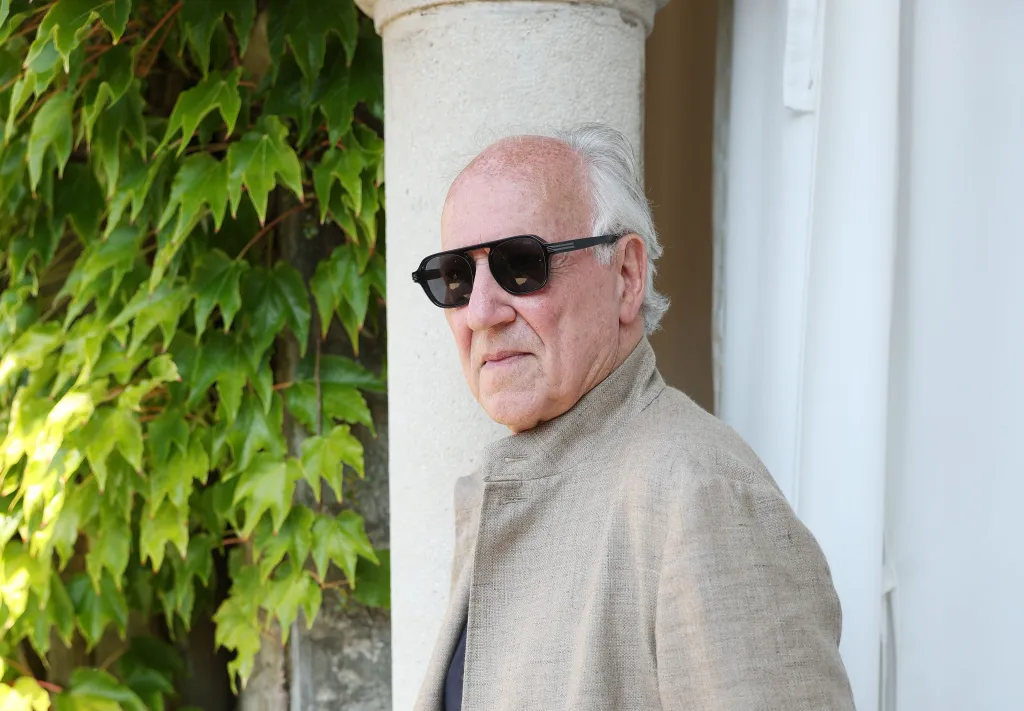
Veteran director, writer, producer and actor Werner Herzog will receive a Donostia Award in recognition of his career during the opening gala of the San Sebastián Festival (18 to 26 September).
The festival’s highest honorary distinction for the German filmmaker will be accompanied by a screening of his new feature, Bucking Fastard, which will launch at the upcoming Venice Film Festival.
The Donostia Award Screening will take place at the Victoria Eugenia Theatre prior to the award ceremony at the Kursaal. The new movie stars Rooney Mara, Kate Mara, Orlando Bloom and Domhnall Gleeson in the story of twin sisters “whose close bond leads them to speak in unison, love the same man and share the same dreams”.
Over a career spanning six decades, Herzog has become one of the most influential figures in international cinema, working on around 80 films often alighting on the subjects of obsession, extreme situations and the contradictions of human nature. Guided by his concept of “ecstatic truth”, Herzog has advocated a cinema that transcends the mere observation of facts to reveal a deeper, more poetic dimension of reality.
Born in Munich in 1942, he grew up as a child in a remote valley in the Bavarian mountains. Until age 11, he did not even know of the existence of cinema. He started to develop film projects from age 15 on, and since no one was willing to finance them, he worked the night shift as a welder in a steel factory during the last years of high school. He also started to travel on foot.
He made his first phone call at age 17 and his first film at 19. He dropped out of college where he studied history and literature.
Since then he has written, produced and directed some 80 films. They include the classics Aguirre, the Wrath of God (1972); Fitzcarraldo (1982), for which he moved a steamship over a mountain in the jungle; Grizzly Man (2005) and Cave of Forgotten Dreams (2010). He has published poetry and books of prose and acted in films, among them Jack Reacher, The Mandalorian and guest roles in The Simpsons.
>

Assistant referee Sian Massey‑Ellis retires to take FA role
Thanks for voting in the latest Bounce poll!

Even with new-look roster post-trade deadline, the Guardians are still reeling
-

 movies3 months ago
Search For Canadian TV Actor Stewart McLean Now Homicide Investigation
-

 Fashion9 years ago
These ’90s fashion trends are making a comeback in 2017
-
Fashion9 years ago
According to Dior Couture, this taboo fashion accessory is back
-
Fashion9 years ago
Model Jocelyn Chew’s Instagram is the best vacation you’ve ever had
-
Fashion9 years ago
Your comprehensive guide to this fall’s biggest trends
-
Fashion9 years ago
9 Celebrities who have spoken out about being photoshopped
-
Fashion9 years ago
Emily Ratajkowski channels back-to-school style
-
Fashion9 years ago
A photo diary of the nightlife scene from LA To Ibiza