
Attendees at last month’s Mosswood Meltdown.
Julian Le Ballister, for The Hollywood Reporter


German director Felix Randau hits the Locarno Film Festival’s Piazza Grande this evening with post-World War Two drama I Is Another starring Claes Bang as Heinrich Himmler’s real-life controversial massage therapist Felix Kersten.
In his memoirs, Kersten recounted how he used his influence over the SS founder and Holocaust architect, to halt a planned mass deportation of Dutch citizens as well as save some 60,000 Jewish people being held in concentration camps.
These self-professed humanitarian acts won Kersten accolades in the 1950s – such as the Netherlands’ Grand Cross of the Order of Orange-Nassau – and saw him nominated for the Nobel Peace Prize eight times over that decade but evidence has since come to light casting doubt on his claims.
I Is Another delves into the case through an imagined encounter between Kersten and an investigative journalist on a train to Oslo as the therapist travels to the city with his wife in the expectation that he will finally receive a Nobel Prize.
The journalist, who has her own complex backstory, has uncovered evidence suggesting there are flaws in Kersten’s version of events and wants to confront him on the facts. A psychological game of cat and mouse ensues intercut with flashbacks to Kersten’s interactions and relationship with Himmler across World War Two.

Randau, who was last in Locarno in 2017 with Iceman, set his heart on Danish actor Bang for the role of Kersten from the start as he began developing the project some five years ago.
“Kersten is a shady character, a guy who is in between, who is neither evil or good and that’s the kind of character he likes to play,” Randau tells Deadline. “I also knew – which is a little-known fact – that he speaks near perfect German… he is just perfect for this part because if Claes tells you a lie, you want to believe him.”
Valerie Pachner, whose credits include Terrence Malick’s A Hidden Life and Berlinale 2026 Panorama title Four Minus Three, plays investigative journalist Hedda.
“I’ve been a fan of hers since A Hidden Life… I just sent her the script, and she liked it, and that was that. The only part that was really hard to cast was Heinrich Himmler,” he says, revealing actors were disturbed by the humanizing of the Nazi leader in the script.
“I sent the script to many actors in Germany, famous actors, but they all turned it down, with some even accusing me of providing a stage for Himmler, which is completely ridiculous… If you cancel evil, it grows in the dark, but they had a problem with that.”
“In Germany, these Nazi guys are always portrayed as grotesque kind of characters who could have jumped out of a comic book…. But it’s completely ridiculous because the audience simply pushes these kinds of grotesque characters away… But all these guys, they were all human beings, like you and me, even if it’s hard to accept that. They were full of contradictions… Himmler, he was very, very shy and weak self-confidence stuff like that, and then he was this monster on the other side.”
He credits Casting Suse Marquardt with scouting stage actor Martin Müller for the role.
Randau’s initial curiosity in Kersten was piqued by a meeting some five years ago with French producers over a potential collaboration on a TV series devoted to the exploits of the massage-therapist. Kersten remains a respected figure in France, where his story became the stuff of World War Two legend thanks to the 1960 book ‘The Man with the Miraculous Hands’ by David Kessel.
“I went to Paris and met these guys, and it was nice and then I went back to Berlin and started my own research. In their concept, there was one line that really made me suspicious somehow, and it was something like, ‘If Steven Spielberg had known about Felix Kersten, he would have shot a film about him and not about Oskar Schindler’,” recounts Randau.
“That sounded to me a little bit ridiculous because we all know that Steven Spielberg struggled for about 10 years and hesitated to shoot Schindler’s List… he had an army of assistants and must have known about Felix Kersten,” he continues.
Randau embarked on his own research, consulting archives in Germany, and history experts, to eventually uncover the physiotherapist’s SS membership card and other damning evidence.
“I found out that he wasn’t a hero… He was some kind of impostor or something in between, a shady kind of guy,” says the director, recounting that when he approached the French producers with his findings, they dropped the idea of working with him.
“They said, “Okay, but we are not interested anymore. We want to shoot this hero story, and that’s it.’ I was, as you can imagine, a little bit depressed because I did all this digging and stuff, and then I got the idea, “Okay, then let’s make a movie out of this whole research material, but in a completely different way.”
Randau does not deny that Kersten may have pulled some strings to save some lives, but questions the scale of therapist’s acts as well as his motives, suggesting he was a narcissist and an opportunist who saw the writing was on the wall for Germany after it lost the Battle of Stalingrad and it troops were forced to surrender to Soviet forces in early 1943.
“That’s the point where he started to manipulate Himmler and made him release not 1000s, but some guys from the concentration camps, as well as this mutual whitewashing with the other guys involved in all this stuff, faking a lot of documents for the time after the war. Felix Kersten he did some really good things, but for the wrong reasons. He didn’t do it because he was a nice guy or something, or because of because he believed in humanity or stuff like that. I think he just did it to save his own life,” says the director.
He started writing the screenplay, sending an early draft to Bang, who expressed strong interest in the project, at the same time as getting Marcel Lenz and Claritta Kratochwil at Ostlicht Filmproduktion on board as lead producers in co-production with Wega Film and the support of broadcasters MDR, arte and BR.
“That was the beginning, but to be honest, getting to the bottom of who Kersten really was, nobody can tell. I don’t pretend to tell the truth. My story is based on all the facts that I have. But there may be another truth. I don’t know. He’s like a shimmering marsh flower, a strange kind of guy.”
>

EXCLUSIVE: Wscripted has unveiled the finalists for the sixth edition of its Cannes Screenplay List focused on screenplays by women and non-binary writers.
The selection of 12 projects has been curated by an international jury comprising Handsmaid’s Tale Emmy and Golden Globes-winning actress and executive producer Elisabeth Moss; Greek-American filmmaker Daphne Schmon (The Eye) and Vietnamese filmmaker Ash Mayfair (Skin of Youth).
Elisabeth Moss has cut a swathe for female representation on and off the big screen with her award-winning performances in The Handmaid’s Tale and Mad Men, and Love & Squalor Pictures production company, which has produced Imperfect Women, The Testaments, The Veil, Shining Girls, and the upcoming drama Conviction.
“I’m always looking for new voices to work with, and there are so many incredible writers out there who haven’t had the chance to be discovered yet. I’m so grateful for the Cannes Screenplay List for helping to make that happen — finding new voices and giving them a path to production,” said Moss.
As well as directing, Schmon is also executive director of Breaking Through The Lens (BTTL), a flagship initiative that supports women and queer led projects at the financing stage, with activations at Cannes, Berlin, Venice, Toronto, and Sundance. Her directorial debut, The Eye, won Best International Film at the London Independent Film Awards.
Mayfair’s first feature, The Third Wife, garnered nineteen awards, screened at over seventy international film festivals, and was distributed in thirty countries. Mayfair’s sophomore film Skin of Youth is the first film following the real-life transition of a transgender sex worker seeking to realise her dream of living in woman’s body. The film won Best Feature at the International Film Festival of India and was also shortlisted by Breaking Through The Lens (BTTL) in Cannes 2024.
“At BTTL, we have always stood firm in our belief that talent is not the problem for underrepresented filmmakers, it is the money. Wscripted has spent years surfacing the best scripts by women and non-binary writers, and we spend ours getting those projects financed and out into the world. Bringing our work together means we can support a filmmaker from the initial draft right through to the screen, and that is where real change happens,” said Schmon,
Wscripted has been announcing the Cannes Screenplay List since 2021 and has since championed a total of 104 feature screenplays written by women and non-binary writers through the initiative, with Mubi a partner of the list since 2022.
The 2026 finalists:
>
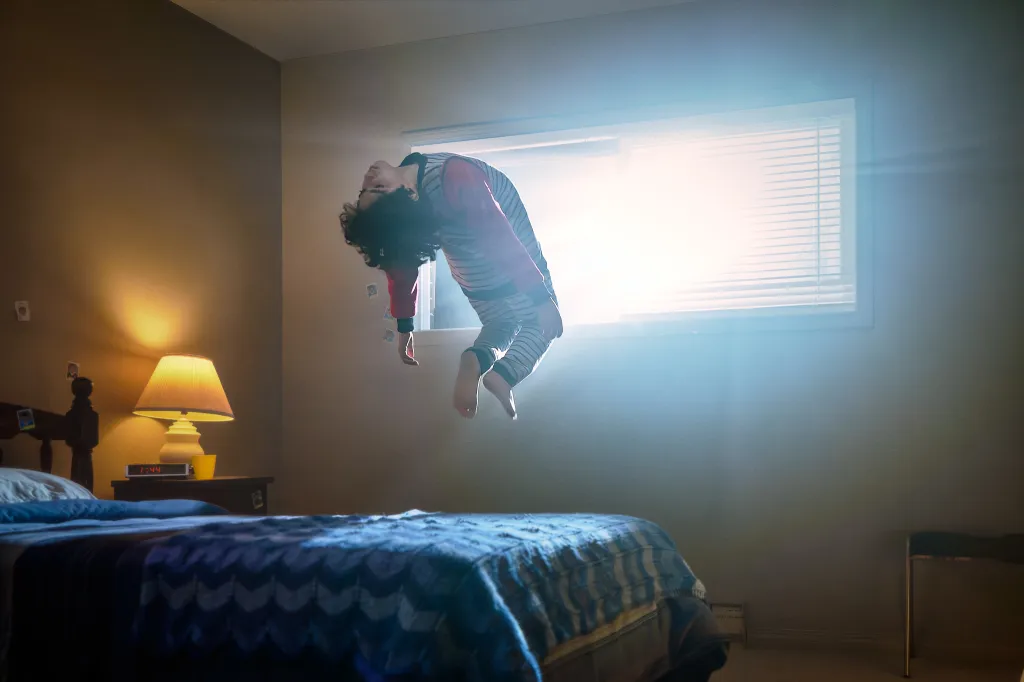
EXCLUSIVE: Sci-fi coming-of-age film Alien Boy has wrapped filming in Canada with cast led by Waleed Zuaiter (The Girlfriend), Sarah Gadon (Alias Grace) and Teym Joseph (House of David).
Fawaz Al-Matrouk, an alumnus of the Sundance Institute’s Feature Film Program and USC’s School of Cinematic Arts, makes his feature debut and recently wrapped production in Saskatchewan following a July shoot.
The film follows Farouk (Zuaiter), “a refugee struggling to settle into his new home, as his nine-year-old son Hadi (Joseph) becomes convinced he is being targeted by UFOs. As Hadi’s isolation deepens, a compassionate teacher, Ellen Connolly (Gadon), grows increasingly concerned and helps him navigate the pain and displacement he cannot yet articulate.”
Cast also includes makeup artist and influencer Bibi Alabdulmohsen and newcomer Iylah Brown. The film is based on Al-Matrouk’s short story of the same name. Above is a first look image.
Anand Ramayya and Kelly Balon are producing. Jaclyne Bohn is line producer. Executive producers for the film include Kyle Castellanet, Mary Jane Skalski, Christina Piovesan, David Cormican, Waleed Zuaiter and Joana Zuaiter, and Andrew Frank and Jonathan Wyman on behalf of Mongrel Media, which will distribute in Canada.
The film is being produced by KarmaFilm, in association with Echo Lake Entertainment, FlipNarrative, House Copper Studios and Screen Wizards Pictures, with the financial participation of Telefilm Canada and Creative Saskatchewan. The film’s script development was supported by Cinephilia and the Whistler Film Festival Screenwriters Lab.
Arriving around the 36th anniversary of the First Gulf War, the project is said to carry a personal resonance for Kuwaiti native Al-Matrouk whose family moved to Canada following the conflict.
“Alien Boy is a personal story told through science fiction. I love science fiction as a way to connect people across time and space. Before I knew a word of English, I knew a little alien called ET. Alien Boy is about war, displacement, and childhood trauma, but ultimately for me, it’s about human connection,” said Al-Matrouk.
“Since founding FlipNarrative, Joana, Shaun, and I have read countless stories, but ALIEN BOY immediately stood apart. Through the lens of science fiction, Fawaz has created a story that finds wonder, hope, and imagination amid the trauma of displacement. It’s something that resonated deeply with us as refugees ourselves, with roots in both Palestine and Kuwait. From the moment we read the script and met Fawaz, we knew this was a story we had to help bring to life,” said Zuaiter.
“Alien Boy is the kind of bold, emotional genre filmmaking that feels both intimate and expansive. Fawaz has made a film about family, loss, and the terror of the unknown, anchored by extraordinary performances from Waleed, Sarah, and Teym,” said producer Anand Ramayya.
Al-Matrouk’s shorts have screened at Cannes, Dubai and Clermont-Ferrand.
>

John Waters turns 80 this year. Mosswood Meltdown, the gloriously disreputable Oakland punk festival he has hosted since its inception, turned 12.
Somehow, neither shows much interest in acting its age.
Every July, a few thousand devotees descend on Mosswood Park for a weekend that feels equal parts punk festival, comedy show and a John Waters cabaret extravaganza. Waters emcees every act on both stages (this year’s lineup included Iggy Pop, Bikini Kill, Pavement and Fred Armisen and Carrie Brownstein’s Ramones tribute band, The Return of Jackie and Judy), introducing them with the sort of filthy one-liners that have become as much a part of the weekend as the music itself. This year, for example, he anointed Pavement “the cock and balls of indie rock.”
Waters has become the festival’s unofficial patron saint. Standing behind increasingly absurd podiums — a fake game-show lectern one minute, an elegant dinner table with a dead rat as the centerpiece the next — he writes every introduction himself, testing material that often finds its way into his touring stage shows months later.
Between introductions, The Hollywood Reporter caught up with the Pope of Trash backstage to talk about turning 80, writing jokes every morning and why he’d still rather spend an evening in a dive bar than at the Folsom Street Fair.
Attendees at last month’s Mosswood Meltdown.
Julian Le Ballister, for The Hollywood Reporter
What’s the intersection between your shock factor and punk?
I think we were always punk, all my work from the very beginning. Even when hippies were peace and love, I made Multiple Maniacs, a film that glorified insane violence. I always made fun of whatever the liberal values were, because I’m a liberal, my audience is liberal, so we made fun of that. Those films were punk always, before there was such a thing. In Pink Flamingos, when they had that dyed blue and red hair, we had to bleach their hair out to white and then dye it with magic marker and India ink. Today your mother buys that color dye at the Rite Aid. And the only person who is the correct heir to the throne is Johnny Knoxville. The Jackass movies are the closest to Pink Flamingos, and the new one is worse. He’s now the filthiest person.
How do you continually evolve while keeping that signature shock?
That’s my job. Every day I think it up. I write every day in the morning, and I have to think up things, that’s my job. I have pads, I have notes, little joke files, like Bob Hope did. But I don’t have any writers; they all had twenty writers. I’ve never made a movie I didn’t write. I never would. So every day I just have to think of something. To do that, you have to read a lot. You want to be a director, go see every movie. You want to be a writer, read every newspaper, read.
You’re turning 80 this year. What accomplishment are you most proud of?
That I’ve been able to have this career, doing what I want, for sixty years. Hollywood’s been fair to me. I was always understood, I always had an audience. The critics who hated me, we used that, they helped me. Censors helped me. Everybody who tried to stop me was better than a press agent. Now the Academy gave me a museum show, that’s amazing to me. The National Registry picked Pink Flamingos. I always say, what was that screening, what did they say? They said, “the singing asshole.” Well, this would be perfect, we should give this the registry award. I don’t feel any kind of revenge, I’m just honored by it. I’m eighty years old, I’m still older than Iggy. And when William Burroughs died, that was the last person who used to always be older than me in the room.
John Waters hosting for his 12th year.
Julian Le Ballister, for The Hollywood Reporter
What do you think about the young generation of creators and risk-taking?
Well, they’re taking more risk. The new sexual revolution makes mine look tame. I keep telling them, we don’t know how to masturbate to them; you have to teach us. That’s a real thing we need to learn. Everything else is new that people have to accept. So I learn new things all the time. I talk punk dirty in my show today; later I give a whole spiel about new punk rock sex you should have. We’ll see if any of it catches on.
Does it encourage you when you see microbudget filmmakers suddenly breaking through?
I think it’s absolutely great. Before that I always said, what movie ever got a start on the internet? None, until a month ago, where two of them did and became the biggest hits, grossing $180 million. Now every Hollywood studio says, “Why can’t you make a movie for $30,000?” I’m mad at those directors, but I give them great credit. Be careful though, because the studio will hire them away and give them a hundred-million-dollar budget to make a comic book movie. It’ll fail, and their career will be over. It happens constantly.
How do you know when a joke works?
That’s my job, to make people laugh. If they don’t, it’s a terrible feeling. I haven’t had that happen in a long time. A lot of the stuff I say here will end up in my next show. I rewrite it once a year, part of this will become the Christmas show. So every joke I said here today, I’ve never said before. It’s a test.
Are you working on any film or series projects?
I had Liarmouth, my novel, it was optioned. I wrote the script, they loved it, Aubrey Plaza was going to star, but the budget was too expensive, so it didn’t happen. I have another movie, a children’s Christmas animation called Fruitcake, who knows, that’s fallen through a couple of times too. I have lots of books coming. I have more jobs than I’ve ever had in my life, so I’m not looking for a new one.
The Return of Jackie and Judy — a Ramones tribute band — before their set. From left: Toko Yasuda, Corin Tucker, Fred Armisen and Carrie Brownstein.
Julian Le Ballister, for The Hollywood Reporter
Are we living in a more John Waters world than we used to?
Reality TV is the one thing I never watch, I have no interest, because they’re all hairhoppers, people I don’t want to ever know, much less care what their lives are like. I pitched one here, we could have one, “Housewives of Squatters,” or “Pickpockets at Burning Man.” That, I would watch. I don’t care how those people live, so I don’t watch it. Gore Vidal said the best thing about TV, he said, “I hate watching it, but I love being on it.” I don’t even know how to turn on my TV, I have three assistants, it’s so hard, I start crying. I miss tinfoil and rabbit ears. So to me, I like to read at night. You can’t watch much television and also read a good book. You can’t do both. I much prefer writing, I can memorize lines that I wrote way better than lines other people wrote.
Gay bar or punk bar?
Oh, punk bar. I’m much more at home there than at the Folsom Street Fair. I don’t have the outfits for the Folsom Street Fair, and leather looks stupid on young people, I think. The gay people I like would be here, they think gay culture is a little square, which it is. They have terrible music.
So I like gay people who can’t get along with other gay people. I like punks who can’t even get along with other punks. I love each minority that can’t fit in with their own minority, and then they hang out with all the other people who can’t fit in their minority, and those are my people. Those are the people who have given me this career for sixty years, and I thank them for it. They get younger and younger, I do recruit. It’s true, what they say.
Crowdsurfing at the Mosswood Meltdown
Julian Le Ballister, for The Hollywood Reporter
>


Search For Canadian TV Actor Stewart McLean Now Homicide Investigation


These ’90s fashion trends are making a comeback in 2017
According to Dior Couture, this taboo fashion accessory is back
Model Jocelyn Chew’s Instagram is the best vacation you’ve ever had
Your comprehensive guide to this fall’s biggest trends
9 Celebrities who have spoken out about being photoshopped
Emily Ratajkowski channels back-to-school style
A photo diary of the nightlife scene from LA To Ibiza