
Anime
Studio MAPPA On How Dorohedoro Season Two Came To Be


© 2026 Q-HAYASHIDA・Shogakukan/Dorohedoro Season2 Project
To say the wait between Dorohedoro‘s first and second seasons was rough on fans would be an understatement. For years, fans worried that MAPPA‘s gloriously gory adaptation of Q Hayashida‘s manga had quietly been buried under the studio’s avalanche of other hit shows. But that long, uneasy silence was broken in the best way when Dorohedoro finally made its grand return. And season two didn’t just come back looking better than ever— it immediately positioned itself as an early contender for anime of the year.
At Anime Central 2026, Anime News Network sat down with animation director Yuichiro Hayashi, creative producer Yusuke Tannawa, and animation producer Koya Okamura to discuss the making of Dorohedoro season two. During our chat, they revealed their favorite moments from the season, their hopes for future adaptations, how they strove to maintain a healthy production schedule, and their stance on AI in animation.
Contrary to fans’ fears that Dorohedoro had been quietly shelved during the six-year gap between its first and second seasons, Hayashi says he always intended to begin work on season two soon after the first wrapped. But MAPPA had already committed to another major anime project that also relied heavily on 3DCG, which pushed its timetable back. That show is Attack on Titan: The Final Season, which the studio accepted after being approached to produce it. In a twist of fate, MAPPA would also inherit Vinland Saga‘s second season from Wit Studio—the same studio that animated the first three seasons of Attack on Titan.
Rather than leave Dorohedoro languishing in the queue, MAPPA chose to begin early development on its character designs and other visual elements for season two in parallel with its work on Attack on Titan‘s final arc— a process Tannawa says unfolded over two years. That overlap also created a convenient behind-the-scenes crossover, allowing animators who had contributed to Attack on Titan to step in to support the core Dorohedoro team, which Okamura notes remained largely unchanged from season one. According to Hayashi, the biggest workflow shift for season two was delegating the bulk of the background scenery—previously handled largely by him—to Studio Easter and MOA Studio.
Although background art plays a major role in Dorohedoro‘s visual glow-up, the change viewers most remarked on over on social media between seasons one and two is the leap in 3DCG quality, as well as the show’s far more prominent use of 2D animation.
“For season one, too, we did a hybrid of that, but it probably doesn’t stand out as much,” Tannawa said. “Usually, the main characters are all done in 3D, but a lot of times, budget-wise and also time schedule-wise, it’s really hard to do everything 3D because it takes a lot more time, effort, and money.”
To get around this limitation, Tannawa explains that season one’s animators hand‑drew the background characters while leaving most of the 3DCG work to the main cast. After wrapping season one, Hayashi says the team regrouped to refine their approach so that season two could improve its animation even further. And while many fans online often assume MAPPA shifted its hybrid balance to favor more 2D this time, Tannawa notes that the actual 2D-to-3D ratio didn’t change meaningfully. What changed was that MAPPA had its limiters removed and more creative freedom to reshape the look and feel of the series by turning up the dial on its violence to levels it could only allude to in season one.
“One of the things about season one was, because it was on TV, there was only so much that we were allowed to show as far as gory details because we were very limited with the guidelines that we had to go by,” Hayashi said. “But with season two, that’s not the case. We knew that we were able to put more deals in that we wanted to have in season one, but had to omit them.”
Not only did the loosened streaming guidelines finally let Dorohedoro look the way the team had hoped back in season one, but now they also pushed the series closer to the “MAPPA style” the studio is known for. And MAPPA wasn’t the only one who felt the impact of this shift. Hayashi recalls Hayashida giving MAPPA feedback, saying those unrestrained details weren’t just embellishments—they’re part of what makes Dorohedoro Dorohedoro.
“Being able to add that to season two, we were able to answer that for [Hayashida],” Hayashi said. “It was kind of like this really beautiful full-circle moment.”
Of course, gory is only one slice of the meat pie that makes Dorohedoro what it is. The series also thrives in the liminal space between dark fantasy and absurdist comedy. That blend created a new quandary for MAPPA in season two: deciding which moments to animate in 2D versus 3D for optimum comedic and horror effect. Hayashida didn’t weigh in on the matter—she had complete confidence that MAPPA would do what MAPPA does best. Still, Tannawa recalls countless meetings with Hayashi during the storyboarding phase where they racked their brains over those choices.
“Even though we got together to have meetings with the storyboard and design team to figure out which scenes would look good in 3D and which would look good in 2D, it kept changing,” Hayashi said. “It was constantly evolving almost until the very end.”
Despite all the back-and-forth, Hayashi says both MAPPA and Hayashida were thrilled with how Dorohedoro season two turned out.
If Tannawa had to single out one sequence that epitomized the sensation that they’d exceeded his expectations with Dorohedoro, it would be the visceral brutality of Ebisu’s “split-scene,” made possible by their greater creative freedom to make the imagery even more gruesome than last season. Hayashi, meanwhile, is especially fond of episodes three and six, particularly the sequence that dives into the chaos inside Caiman. Those episodes stand out to him because they lean hard into his horror-movie inclinations. And as a life-long horror fan, he relished the chance to pay homage to the genre. “I’m so glad that I watched all those horror movies growing up,” Hayashi said, adding that he watches everything. “Anything that comes out in the horror genre, I’m there.”
When asked which horror touchstone influenced him most while directing Dorohedoro season two, Hayashi shouted out Konami‘s iconic psychological‑horror game Silent Hill, a series he loves for both its world and its weapons.
Alongside its blend of horror and humor, another defining trait of Dorohedoro is its psychedelic, post‑industrial‑meets‑pop score and its eclectic opening and ending themes, which is why fans (present company included) were over the moon to learn (K)NoW_NAME would return for season two. After shaping the series’ sonic identity in the first season, their music had become the connective tissue that held its chaotic tones together.
Just as the decision to produce Dorohedoro season two was essentially a given after season one, (K)NoW_NAME’s return was locked in early in development as well. The call ultimately came from TOHO‘s music department, which loved how seamlessly the group’s sound meshed with the anime. Even so, it’s rare for a single musical team to handle both the opening and ending themes and the full original soundtrack. To keep the MAPPA x (K)NoW_NAME synergy just as strong for season two, Hayashi says the studio regularly shared storyboards and visuals with the group throughout production. In turn, Hayashi recalls a similar back‑and‑forth between MAPPA and (K)NoW_NAME, with the band fine‑tuning the emotion and direction of various pieces of Dorohedoro‘s score. The collaboration ultimately produced roughly 50 to 60 tracks over the course of four months.
“When you have an artist you work with, a lot of times, their identity comes off very strong,” Tannawa added. “But with (K)NoW_NAME, because they’re so flexible with all kinds of genres, we felt—when we listened to it—it was really Doroherodo-ish and not (K)NoW_NAME-ish. It was much more of the Dorohedoro world that they came up with. So, look forward to the soundtrack!”
When asked what made Dorohedoro such an appealing project for MAPPA to return to adapt its second season, Hayashi says the answer was simple: it was unmistakably Hayashida.
“With manga, a lot of times, it’s the creator—the manga artist, illustrator, or the author, but then there’s also an assistant. So at the end of the day, it’s not purely one creator making it. However, with Hayashida, it’s completely Hayashida’s point of view,” Hayashi said. “It’s a very pure thing, and very artistic. That is the appealing thing.”
Conversely, the very thing that made Dorohedoro so appealing to MAPPA as an undiluted Hayashida work also made it the most challenging aspect of the adaptation. Because the manga’s world is so distinct from the visuals of its brutal action, whimsical characters, and dense world, translating those elements so intricately linked to Hayashida’s singular sensibilities proved to be one of Hayashi’s toughest tasks.
“In that way, it was a little bit daunting,” Hayashi said. “Definitely a big challenge. But because of that, I find that there’s nothing like Dorohedoro because it’s such a pure project done by Q-san. There’s no one else involved in it. Some of the panel work and everything like that, you will not see anywhere else. It’s very specific to Dorohedoro.”
As the studio that brought Dorohedoro to life for two seasons, it felt only fair to ask whether there was any interest in adapting Hayashida’s other space-faring work, Dai Dark. While all three men love Dai Dark, the team admitted they simply don’t have the energy right now to add it to their slate.
“We don’t have the bandwidth right now,” Hayashi said.
“But, if [Hayshida] does decide she wants something else done, please come to us first. We would be very sad if she didn’t,” Tannawa said, laughing. “We would be very lonely. But as for now, we don’t have any plans. We’re very involved with the Dorohedoro world, so we haven’t even really thought about that.”
On the topic of anime studio bandwidth, Western anime fans have grown increasingly aware of the risks that come with studios juggling multiple high-quality products and the very human cost of unhealthy work environments and animators crunching to meet impossible deadlines so fans can watch their favorite shows. Hayashi ensured that production on Dorohedoro season two came with a clear mandate that workers’ time would be respected and that the show’s quality would never come at the cost of overworking its staff. That priority, he notes, was just as important as the animation itself. One key way to uphold that standard was to expand MAPPA‘s staff.
“Unlike a long time ago, we’ve really become much better about adding staff in. Now that we have a lot more members and a lot more people who are involved and who can help out. If we have a lot of projects, we still feel that we’re able to answer the needs with the staffing,” Tannawa said.
If MAPPA ever feels a project requires extra hands beyond its core animators, Tannawa says the studio would bring in additional staff to support specific parts of the production.
“We are very conscious about making sure that everyone gets rest and everyone feels balanced in their lives,” Tannawa said.
To illustrate how this approach works in practice, Okamura explains that when MAPPA is producing two major titles at once—say, Attack on Titan and Dorohedoro—the studio would assign each animator to a single project. That way, the separation keeps the production pipeline orderly rather than chaotic, with staff scattered across multiple shows.
In tandem with fan concerns about worker crunch, AI has become another ever-present issue threatening to yuck the yum of enjoying anime. Those anxieties have only intensified with the creeping rise of AI-generated imagery in anime. Whenever “AI slop” is spotted by an anime fan, it’s virtually tarred and feathered online. And rightly so. The overall sentiment from fans is that AI only cheapens the artistry of anime, reducing it from something wondrously handcrafted into hollow “content.” Put simply, why should anyone care about content that nobody bothered to make?
When it comes to MAPPA‘s place in the hot-button topic of AI in anime, fans recently got a clear glimpse of the studio’s stance in the end-credits disclaimer for Chainsaw Man – The Movie: Reze Arc: “No part of this work may be used or reproduced for the purpose of training any artificial intelligence technologies or systems.”
While its message was unambiguous, Tannawa expanded on MAPPA‘s outlook on AI in anime production.
“As far as AI, our approach to it is absolutely never with visuals,” Tannawa said. “Anything related to the anime project itself will never be AI—the image, the visuals. However—and we’re not doing this yet because [AI] is still a very new thing for anime studios as well— but as of now, we haven’t used this, but we might be in the future at some point incorporating AI to ease the production line. It wouldn’t in any way affect the art, but it might just help the human side by helping their work.”
Tannawa emphasized that MAPPA hasn’t introduced AI into its workflow, but he acknowledged that the technology may eventually be something the studio looks into as a limited tool for research, not creation.
“It would never have anything to do with visuals and the artwork,” Tannawa said.
>

The official website for Puella Magi Madoka Magica The Movie: Walpurgisnacht: Rising (Gekijōban Mahō Shōjo Madoka Magica: Walpurgis no Kaiten), the official sequel to the Puella Magi Madoka Magica The Movie Part 3: Rebellion film, announced on Friday that the film will get IMAX screenings in Japan on August 28, the same day it opens in theaters. The website unveiled a visual for the newly announced screenings:

© Magica Quartet / Aniplex・Madoka Movie Project

© Magica Quartet / Aniplex・Madoka Movie Project
Yukihiro Miyamoto (Puella Magi Madoka Magica, Magia Record: Puella Magi Madoka Magica Side Story, Arakawa Under the Bridge) is directing the film.
The returning cast includes:
Shion Wakayama voices the new magical girl Shichōka (left in image above), and Tomoyo Kurosawa voices Selma Therese.
The anime film will feature a returning staff from the original anime series and films, including original creators Magica Quartet, chief director Akiyuki Simbo, scriptwriter Gen Urobuchi of Nitroplus, original character designer Ume Aoki, animation character designer Junichirō Taniguchi, composer Yuki Kajiura, alternate space designer Gekidan Inu Curry, and animation studio SHAFT.
The new and returning staff members are:
Yuki Kajiura‘s solo project FictionJunction perform the theme song “Kanata.”
SHAFT first hinted at a new work in the franchise through a concept movie in 2015, but the film was only announced in April 2021.
The film has suffered numerous previous delays, the most recent of which happened in January due to production circumstances, delaying the movie from a planned opening in February. Prior to this most recent delay, the film was previously slated to open in Japan in winter 2024, but was delayed in August 2024 to winter 2025, before the delay to February 2026.
The television edition of the Puella Magi Madoka Magica the Movie Part 1: Beginnings and Puella Magi Madoka Magica the Movie Part 2: Eternal compilation films began airing in October 2025.
The original 12-episode Puella Magi Madoka Magica television anime premiered in January 2011, and Crunchyroll later streamed the series. The Puella Magi Madoka Magica the Movie Part 1: Beginnings and Puella Magi Madoka Magica the Movie Part 2: Eternal compilation films opened in Japan in October 2012, and then the Puella Magi Madoka Magica The Movie Part 3: Rebellion sequel film opened in October 2013. Aniplex of America released the television series, two compilation films, and the sequel film in North America. Funimation also streamed the series.
A television anime adaptation of the Magia Record: Puella Magi Madoka Magica Side Story smartphone game premiered in January 2020. The anime’s second season premiered in July 2021. The third and final season debuted in April 2022.
The smartphone game launched for iOS and Android devices in Japan in August 2017, and was free to play with optional in-game purchases. The English version launched in the United States and Canada in June 2019. The English version of the game ended service in September 2020, and the Japanese version ended service in July 2024.
The Puella Magi Madoka Magica: Magia Exedra smartphone game launched in March 2025, following a delay from 2024 for the staff to “ensure even higher quality in the final game.” The game got a version for PC via Steam in July 2025.
Sources: Puella Magi Madoka Magica anime’s website, Comic Natalie
>

© Gemdrops, Inc, Square Enix
Players might be overwhelmed at the amount of choice on display; there are a lot of in-game party members you won’t recruit on your first playthrough, for one. In fact, you even have a choice of which character to star in your game at the outset. The good news is that the character stuff doesn’t matter—not too much, anyway. This is the same story whether Claude C. Kenny or Rena Lanford is the star of the game: the story of a young man part of a galaxy-spanning federation getting trapped on a backwater planet, and a mysterious girl who has a strange power nobody else can explain. Brought together by fate, these two youths venture out to solve the mystery of an object known as the Sorcery Globe, a mysterious meteor that is bringing ruin to the land. Along the way, Claude learns what it means to grow up, and establishes himself outside of the legacy of his famous war-hero father. Rena, meanwhile, seeks her roots and the mystery of her birth.

© Gemdrops, Inc, Square Enix
The ensuing story is interesting, but the real mastery on display is the myriad systems. Partway into the game, you discover the Item Creation specialties—and it’s here that the game gives you endless tools to simply blow the walls off this game. Characters can learn skills and abilities using points earned from battles or guild missions. These run the gamut from allowing your characters to steal items from non-player characters to cooking to customizing your weapons, and so on. While some of these skills can also offer a modicum of buffs to your raw stats, the real appeal is the potential of these abilities. In our experience, we pumped a few levels of the Art skill into one of our characters. Using the resulting Sculpting ability, we could create items that could spawn a random assortment of items. From there, we’d pop Goodie Boxes like a gacha until we rolled mid-game equipment. These items allowed us to effectively steamroll enemies in the early parts of the game. And that was just for raw combat; with enough points in Writing (plus a good amount of Fountain Pens), you can make a whole slew of skill books to teach the rest of your party other IC/Specialty skills, up to level 7. Invest points into Training; your characters can earn boosted amounts of Experience Points in battle at the cost of a modicum of your stats—don’t worry, your Sword of Marvels will make up the difference. There is such a wealth of options for making your characters stronger that don’t revolve around grinding for EXP and limitless options for the kinds of shenanigans you can get up to that it doesn’t even feel like you’re breaking the game. It’s a degree of freedom I’ve seldom experienced in an RPG, and it made me want to keep playing just to see how these customization skills would pan out later in the game. And don’t worry: there are no mistakes in IC/Speciality allocation, and your SP are practically infinite in the long run, so you can’t trap yourself into a “suboptimal” build.

© Gemdrops, Inc, Square Enix
You might worry that combat is an afterthought, in light of IC/Speciality chicanery. But there is a lot to chew on in combat, too. You’ve got Formations, which can affect performance in battle. You’ve got a nifty Counter system performed by dodging enemy attacks at just the right time. There are plenty of Combat skills for modifying performance in battle, from randomly teleporting behind enemies to shortening the time it takes to cast spells. And you can even chain enemy encounters for increased EXP and currency acquisition. There’s also a new system for calling in cameos from older Star Ocean characters. Combat might not be the most important thing in Star Ocean 2, but it is still a system available to you in addition to its many other systems.

© Gemdrops, Inc, Square Enix
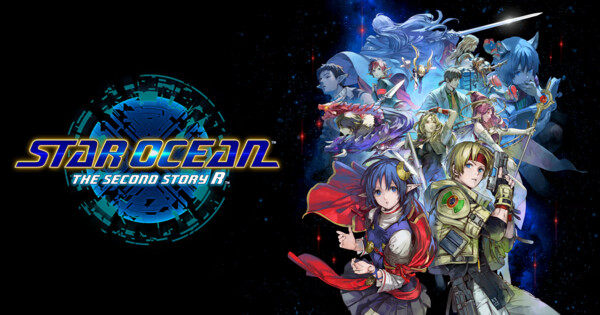
Star Ocean: The Second Story R doesn’t quite bill itself as the definitive Star Ocean 2 experience, but it may well be. Its graphical improvements, along the lines of Square Enix‘s HD-2D stylings, are superb—albeit, you can see the strings. Sometimes sprites will end up at certain angles that only serve to remind you they are flat 2D sprites. What really impresses me are the rest of the display options. For starters: you have both the original in-game soundtrack, plus a new “arranged” soundtrack. Both are spectacular, featuring ethereal backing tracks for your villages and forests and wild progressive rock anthems with wild electric organ performances for other dungeons. I couldn’t blame anyone for choosing one over the other. You have your choice between the game’s original Japanese performances or the English dub from the old PSP release. The English dub is notably a bit dated, with some awkward deliveries, but is otherwise serviceable. You even have the option of choosing which profile art to display in each character’s profile screen, be it the original 1990s art, the updated 2000s artwork from the PSP release, or the modern designs made for this edition of the game. So if you’re an old-time fan with deeply-set preferences, fret not: you’ve got options.

© Gemdrops, Inc, Square Enix
Are there issues? Sure. While I can commend Star Ocean 2 for its characters (the plight of poor Ashton and his dragons, Creepy ‘n Weepy, could easily have been its own game), I cannot pretend that protagonist Claude and Rena are the most compelling. Their relationship is established as the intended core of the plot, and it never quite convinced me. Rena’s somewhere between a maiden of fate and a tomboyish country girl, and neither of these aspects of her personality really gel. Similarly, Claude’s a bit too much of a bull in the china shop for my tastes. While there are tons of systems at work in Star Ocean 2, it might feel like a game that you play with a guide rather than a game whose systems you can intuit.

© Gemdrops, Inc, Square Enix
This isn’t the newest iteration of Star Ocean 2, just one that appeared rather late (courtesy of this being a Switch 2 port). And who knows, Square Enix might make another one of these Star Ocean 2 ports in another decade or so; the PSP release still feels like it was just the other day. But this does feel like the best way to play Star Ocean 2. Its myriad systems are laid bare to you, you’ve got a wealth of options regarding its history of character designs and music, and its very nature of being a Switch 2 game means you can enjoy it all over your home instead of stuck on a console. I cannot blame people for being twice-shy about Star Ocean, because I was for a long time. Keyword: was. If future Star Ocean titles feature The Second Story R‘s level of quality and fidelity, we might have a real winner of a franchise again.
>

Welcome back, folks! We’re doing something a little different this week! Instead of recounting the bigger news regarding Japanese games this past week, we’ll be discussing a particular theme: Japanese erotic games, better known as eroge! We’ve touched on them before in the column, and this week we’d like to focus on adult games some. Understandably, this column will be a mite NSFW (we’ll have to employ the Censorship Mahoro™ whenever necessary). But kick back as we delve in! Many thanks to ViviON for sponsoring this week’s column.
This is…

So What’s Up With Eroge in America?
The history of Japanese erotic games (eroge) in America goes back about as far as the history of hentai in America. For as long as people have enjoyed anime, people have been attracted to anime characters. A whole generation was raised on Nova Forrester (Yuki Mori for Japanese fans) from Starblazers (Space Battleship Yamato), just like a whole generation found themselves contending with feelings for Jessie from Pokémon. But while a great many eroge exist in Japan, comparatively fewer have been released in America. Learning how to change your PC’s AppLocale to Japanese in order to get Lunar Legend Tsukihime or Sengoku Rance to run was practically a rite of passage, and even now folks will go through a lot of hoops to play some of the most recent releases from Japan. (I see you, Milkfactory fans!)

© JAST, G-Collections
Getting hold of titles like Tokimeki Check-In or Little My Maid was a challenge, in the cases where they got released in the United States. It didn’t help that a handful of these games got slapped with the dreaded AO rating; few mainstream retailers will ever carry AO titles, so good luck getting Bible Black or X-Change to hungry buyers without your own mail-in catalog. We did have folks localizing these games in America, mind—JAST USA was carrying the albatross for a lot of eroge for much of the 2000s, even after their Japanese parent company collapsed. They maintained their own storefront and everything, and many of their older releases like Do You Like Horny Bunnies? or Yume Miru Kusuri: A Drug That Makes You Dream are still up and available. That Amorous Professor Cherry, a game I only know about from trawling image boards and old ads from OtakUSA, is still available on JAST’s store and still compatible with modern operating systems is the kind of preservation that the rest of the gaming industry ought to pay attention to and emulate. And never let it be said that JAST didn’t have their ear to the ground, them being the folks who got the School Days visual novel released in the US when people were still throwing Nice Boat memes at each other.
The good news is, it’s easier to get eroge now. We have more companies than ever localizing these games into English, like MangaGamer, Shiravune, and Fakku. We have the benefit of the Japanese website DLSite putting effort into making its storefront available to the United States. We even have a good number of eroge being made available on Steam and GOG. Happy ending, right?
Well… no. Unfortunately, this is where complications pop up.

© Cocktail Soft, Fakku
Let’s start with the publishers. Now, there isn’t anything inherently wrong with any of them—I love them! They’ve put good work into their stuff. Fakku‘s announcement that they’ll be porting tons of older PC-88 titles to Steam, like the Welcome to Pia Carrot!! games is a big deal. The problem is their issues with payment processors; for whatever reason, many payment processors (Visa, MasterCard, PayPal) have taken stances on the kinds of things you can buy through their services, effectively threatening the entire industry with being unbanked. Eroge, as well as adult manga and anime, have fallen afoul of payment processors due to some of their content… but as many have pointed out, many of the ‘darker’ themes in erotica are stuff that are openly flaunted in other mainstream media (Game of Thrones is a particular standout). This has also led to complications with sites like DLSite, since you can’t just buy stuff off of their site anymore with American credit cards (not without jumping through a few hoops first). Even Fakku is still reeling from a recent battle with their payment processors.
And this isn’t an America-only issue, either. As a matter of fact, the issues with payment processors have compounded issues for creators in Japan. Japanese studio Nupuryu, creator of the adult game Ruins Seeker (which is available on Steam), reported that their earnings from international sales of the titles are blocked from being transferred to their account in Japan via Rakuten Bank. They later went on to explain on their DLSite blog (link NSFW) that even though they don’t have access to these monies, it still counts as taxable income, leading to complications regarding their tax payments. At last reporting, they’re currently trying to find a different payment processor.
You might be asking yourself, “Why not just go onto Steam then? They handle all the payments for you!” Well,
that’s where we hit the second snag, and it’s a major one. Steam has adopted a largely open-door approach to approving titles hosted on their storefront for a good few years now. I remember it being a huge deal when Recettear was released on Steam in 2010. It was a big deal when anything was on Steam, let alone a fairly obscure cult-classic Japanese game. That four-minute mile has long since been surpassed, but in its place is a new issue: arbitrary refusals. Several Japanese games are just flat-out refused for sale on Steam. And we can’t even point to a concrete reason. If it’s the erotic content specifically, well, there have been plenty of erotic Japanese games released on Steam for a while, like Kindred Spirits. If it’s the school uniforms (which likely won’t help), that’s also not a guaranteed problem because plenty of other games feature school uniforms with no problem. The Persona games come to mind. And we can’t even point to any particular fetish as the offender, since plenty of American games feature similar fetishes with seemingly no problem. There are multiple “Sex with Hitler” games on Steam, after all.

© Aquaplus, Shiravune
It doesn’t help that many of the games that wind up in Steam‘s naughty list are games that aren’t even eroge in the first place. Chaos;Head Noah was originally refused for sale on Steam, but eventually allowed on after major outcry. Dungeon Travelers 2 and its sequel, Dungeon Travelers 2-2, were both refused outright, however—even though Atlus released Dungeon Travelers 2 on the PS Vita in America in 2015. That old edition of the game is still available on Amazon, even. (And thankfully, also available for purchase on Johren.) The best many games can do on Steam is to release as worksafe versions of the game, with the erotic content made available offsite. It used to be possible to simply hide the adult content behind DLC on the game’s Steam page—that is no longer allowed, for some reason. Is there any consistency behind the decision-making? None that we can see; it seems that it’s a case-by-case and reviewer-by-reviewer basis. Meltys Quest is A-OK; horror boys’ love title *This Game is Not Real wasn’t, even though it features far less monster-buggery. You can collect trading cards in The Witcher based on Geralt’s hook-ups; safe-for-work title The Distant Circular World was refused, and it doesn’t even include erotic content.
So, what options do players have? Well, not much. The issues with payment processors go far beyond just eroge; they also affect whole platforms like Itch.io. And this isn’t only aimed at eroge or even pornography, as there are wider attempts at simply labeling anything remotely of queer themes as pornographic. The first and biggest solution would be the establishment of a new payment processing system… but that requires a lot of capital that isn’t really accessible for the layperson to acquire. Demanding accountability from the payment processors that do exist is a much more workable solution.

© Active, Kitty Media
Stemming from that, it’s also important to support what little gets released in the United States. Aforementioned publishers like Fakku, Shiravune, JAST, and MangaGamer regularly release titles in the United States. And while they clearly can’t release everything, they do their best to balance between newer titles coming out in Japan and older classics. Squeaky wheels get the grease; this is the best way to show that there is a demand for these games in the United States. If there’s one thing I’ve learned over the years, it’s that even now the powers that be underestimate how much people are starved for more stuff from Japan. But people actually have to put their money where their mouth is and show up.
And most importantly, fans have to come together. I know the verbiage on that is weird, given the subject matter, but social networks have given the world a tremendous opportunity with regards to being able to communicate with people worldwide. It’s easier than ever to find Japanese artists on Twitter and comment on their works. As much as people try to divvy the Internet up into fiefdoms, it’s still possible in the here-and-now to connect with people. And that’s only going to grow more and more important. Support your favorite artists monetarily, sure, but reach out to them, comment on their works, and show them your appreciation. Solidarity always has been and always will be a tremendous balm for a weary world. Even if it’s just an artist who likes drawing big boobs, let them know that you care.
Bible Black Celebrates its 26th Anniversary
I gave this one away a bit by posting a screenshot earlier, but guess which super-important hentai series celebrated its 26th anniversary! Bible Black was very much a rite of passage for anime fans of a certain age: the super-forbidden hentai that was so totally weird, man. Never mind being just a hentai series—which, for a certain generation, was already something dripping in mystique (as well as other fluids). It had all those weird fetishes! Also, the dub was hilarious.
The original Bible Black visual novel was released in 2000. The game centered around a cult of students vying for control of a magic spellbook. While protagonist Minase mostly uses it to fool around with some of his classmates, it turns out to be central to the machinations of a cult based out of his school. Magical shenanigans ensue as Minase finds himself having to deal with—and engage in—a lot of blue magic (that’s “blue” in the ribald sense) to banish these demons and bring life back to some kind of semblance of normality, while also saving his childhood friend.

© Active, Kitty Media
Bible Black became a quick success, getting an animated adaptation the very next year after its release. This was back when eroge were the basis for many OVAs, if not regular anime. Media Blasters wasted no time picking the series up for an American release through their Kitty Media line, where it went on to be one of their long-time best-sellers. I can only imagine how integral Bible Black must’ve been to Media Blasters‘ long-term lifespan, especially given how they deemed it necessary to point out when new episodes were in production and already licensed at a convention panel in 2002. As a reminder, Media Blasters even went so far as to license the original Bible Black visual novel for release in America.
Bible Black, as an OVA series, developed quite the following—more so than its original VN, even. It received three sequel series in the form of Bible Black: New Testament, the prequel series Bible Black Origins, and the spin-off Bible Black Only. But the visual novel itself only ever got the one sequel, Bible Black -The Infection-. It, too, was released in the United States, at least.
So, what is the legacy for Bible Black? On a fandom level, it’s still beloved to this day. Sure, it’s definitely a thing for the older fans out there—but every now and then I’ll see artists taking commissions and drawing characters in the iconic Bible Black uniforms. You know those are from people who “know ball,” as it were. Fan art aside, it’s never stopped being particularly infamous. And not for no good reason; while a lot of anime fans joke about tentacles in hentai, Bible Black went a bit farther with certain darker fetishes like enemas. The visual novel itself is largely considered an afterthought; most people who know the series know it via the OVAs. And for what it’s worth: the OVAs still look really good, given their age. Sure, it’s hentai, but the OVAs hail from a time when serious money was pumped into OVA production; Bible Black looks and animates better than even some modern-day ero-OVAs. That it has such an involved story told over the course of five half-hour episodes also helps; many H-OVAs today only seem to get five episodes if they have a 15-minute runtime. Of course, there just isn’t that kind of money in H-OVA production anymore, making older hentai like Bible Black rather sad in hindsight. A lot of passion was put into these works; the early 2000s were the days of Satoshi Urushihara bankrupting a studio through the production of a single OVA or eroge like Wordsworth getting extensive multi-episode adaptations that still kept a ton of the narrative intact. Who knows if we can ever get ero-OVAs like that again…

© Empress, MangaGamer
The good news is that Bible Black went on to be the bedrock of an extensive career for artist and scenario writer Sei Shoujo. After Bible Black, he made Discipline -The Record of a Crusade-, which is much less dramatic than the title implies (a guy taking down an elite sex-monopoly at a preppy academy). It and other of his games would also go on to get OVA adaptations, like Cleavage. While Sei Shoujo eventually left Bible Black‘s studio, he continued to make eroge with his own particular tastes, specifically the Starless games. And even though Starless doesn’t have any hard connection to Bible Black, the title still implies one—mostly because “Starless and Bible Black” are the lyrics from a King Crimson song. Sleepless, another recent title from Sei Shojo, is also available from MangaGamer (link NSFW). Sei Shoujo is still active in game production to this day, with his newest game Yuukan Madam Club releasing in March of this year; no word yet has been said whether it’ll be released in English, but here’s hoping.
In the meantime, the Bible Black OVAs are out-of-print. Who knows, maybe Media Blasters can someday renew the license. Noted voice actor and director Yara Naika, who’s worked with Media Blasters on several projects, has commented for years that giving Bible Black a proper (and better) English dub is on their bucket list; here’s hoping!
Five Adult Games to Try Out
If you’ve only dabbled in the idea of eroge, the whole scene might seem to be a bit overwhelming. Japan’s eroge scene goes back literal decades, and while recent efforts have begun to make these games available in the US, a lot of the biggest titles aren’t. A lot were on consoles or platforms that simply never came to America (so that’s a no-go for anything on the PC-98), and the few from PC that were brought over might be restricted by operating system compatibility—or licensing issues. (So good luck trying to get your old English copy of Bible Black running without some legwork.) But there are still efforts on bringing eroge to America, and we’ve compiled a list of suggestions for our readers. We’ve tried to cast as wide a net as possible—but that’s a particularly big ask, since eroge is pretty extensive. Even moreso if you consider boys’ love games like Dramatical Murder, which got an anime adaptation, or No, Thank You!!!, which features body hair toggles (note: both links NSFW). And it’s not just visual novels: there are adult fighting games (Variable Geo), RPGs, and so on.
1. Fashioning Little Miss Lonesome

© kalmia8, MangaGamer
I wanted to start with an otome game, given the dearth of otoge that get licensed and released in America—adult or otherwise. MangaGamers did pretty well with bringing Fashioning Little Miss Lonesome to the US, given its wacky premise and lovable cast. Miki and Saito are both in need of a muse for modeling clothes. They find the perfect candidate in the form of Emi, a gloomy loner with resting-bitch-face. The problem is, Emi isn’t very cooperative and is perfectly fine being a wallflower. Also, Miki is a helpless masochist, and Saito is a huge sadist. What follows is a comedy of errors as these two goofs try to tame the shrew that is Emi while also possibly falling in love with her. While there are intimate scenes between them, Fashioning Little Miss Lonesome never loses sight of its comedic edge—there are a great number of gag endings, fitting for a cast of goofballs like our three heroes.
The dynamic between the central trio allows us to see Emi in a variety of situations; while Miki is something of a puppy yearning for her attention, Saito is the one who gets Emi riled up, leading to a lot of internal struggle on Emi’s behalf regarding her attraction to him. Plus, of course, the ongoing shenanigans in getting someone so unsociable to open up to her peers.

© kamia8, MangaGamer
Fashioning Little Miss Lonesome is available both on MangaGamer’s website and Steam; while the MangaGamer version is just straight-up the normal game, the Steam version is safe-for-work by default—though it does have free DLC to unlock the non-worksafe content. Fashioning Little Miss Lonesome studio kalmia8 also has another adult otoge on Steam, Fxxx Me Royally!!!. It’s another comedic romp, this one starring a princess from a sexually-liberated world who comes to Earth in search of a partner. Its reception is a bit more mixed than Miss Lonesome, but don’t let that bother you if you know what you’re about.
2. Taimanin Asagi

© Lilith, Shiravune
There used to be a time when a lot of anime would be based on eroge; I mentioned Variable Geo earlier (an adult fighting game series featuring character designs from the late Takehiro Kimura), but a much bigger example would be the works of Type-Moon. Early versions of Fate/Stay Night and Lunar Legend Tsukihime did feature sexual encounters as part of the plot. While later versions of the game would omit the sex, they’re still technically canon; Mages, after all, still need to supply mana to their Servants. They just have other ways of doing it that may or may not involve CGI dragons. Along those lines is the Taimanin series; originally a series of adult visual novels, studio Lilith has transitioned somewhat to making some worksafe spin-off mobile games in the form of Action Taimanin (an action game) and Taimanin Squad (a turn-based RPG). They’re not great! In fact, they’re pretty predatory in their monetization! Thank goodness the original VNs are mostly available in the United States.
The Taimanin games tell the story of various anti-demon ninja corps stationed around the world, with the most important ones being based in Japan. The most legendary of the anti-demon specialists is Asagi Igawa. Nicknamed “The Almighty” by her peers, she’s the fastest and deadliest ninja around. When her fiancé goes missing, Asagi and her sister Sakura go to investigate and find themselves embroiled in a plot by a criminal gang with ties to demons—and the powerful vampire, Edwin Black. What’s worse, Edwin has an assistant: the treacherous former anti-demon ninja, Oboro, whom Asagi herself dispatched. What follows is… well, it’s not fun for Asagi, Sakura, or any of the other anti-demon ninja that get involved. Lots of depravity and humiliation follow, with demons and gangs doing everything they can in an attempt at breaking Asagi and her peers. Canonically, Asagi and company overcome the trials and defeat the demons while coping with the truth that their lives will never know peace. There are still plenty of infamous Bad Ends (and, for some reason, a lot of people being turned into cubes).

© Lilith, Shiravune
There are quite a few of the Taimanin games, with Asagi herself having a whole trilogy to her name, along with fellow lightning-wielding ninja Taimanin Yukikaze getting two games to herself; Asagi’s protege Taimanin Murasaki getting her own entry; and even noted villainess Ingrid (right-hand woman to Edwin Black himself) getting her own game in Hell Knight Ingrid. And that’s before we get into the numerous spin-offs like Witch of Steel Annerose. That said, Shiravune is still working through all of the games, so only two Taimanin visual novels are available in English: the original Taimanin Asagi title, and the first Taimanin Yukikaze. Taimanin Asagi 2 was announced for release in America, but doesn’t have a release date yet. Being from Shiravune, the games available on Steam are ostensibly SFW, with all of the erotic content excised; the full experience required you to install patches for the games available off-site. While MangaGamer did something similar with the aforementioned Fashioning Little Miss Lonesome, Shiravune’s situation is a bit more precarious, necessitating more of a safety net to avoid running afoul of Steam‘s inconsistent content standards.
There used to be at least one more adult Taimanin game available in the United States: Taimanin RPG eXtasy. Its official English server shut down in August of 2024, after the game launched in the US and promptly fell on its face by glitching the amount of gems offered to players and correcting the matter by taking the gems back from players and putting them in gem debt.
3. Rance series

© AliceSoft, MangaGamer
The Ys games are a storied, venerable series of RPGs in Japan, telling the continued tale of Adol and his many misadventures across various lands. His games have changed plenty over the years with how they’ve handled RPG mechanics, going from bump-combat games to proper modern action-RPGs, but Adol’s adventures are still mainstays and worth playing. Now, imagine instead of being a brave, courteous, and heroic man with a generous ear to lend to any blue-haired maiden in distress, Adol was a cocky, hormone-addled horndog who’s mostly in it to get laid and drags a slave around. Also, instead of wearing red clothes, he wears green. That’s Rance.
According to Wikipedia, the Rance series is the longest-running eroge series in history, dating back to the original’s release on the PC-88 in 1989 (this series is as old as I am!). Rance’s adventures (and mistreatment of his poor slave, Sill) have taken him all over his continent and beyond as he fights demons, bangs chicks, and thumbs his nose at good sense and decency. Much like the aforementioned Adol for action RPGs, Rance himself is practically an archetypal protagonist for eroge (provided, of the “jerkass” type). And his series served as the bedrock for AliceSoft, best known for their genre-blending adult games like Beat Angel Escalayer and its ilk. Sure enough, the Rance series is actually quite competent as RPGs, with mechanical depth and everything. Later games in the series like Sengoku Rance even up the ante by exploring other genres, like strategy. Later remakes of the earlier games in the series combine adventure-game mechanics (exploring towns, collecting items, finding clues for story beats) with card-based dungeoneering where you gamble chips for attacks.

© AliceSoft, MangaGamer
Rance might be a jackass, but he’s a jackass you love to hate, and the cast around him tends to be colorful and memorable. It helps that the writing can be genuinely great, in addition to the RPG mechanics being genuinely fun. In the grand scheme of eroge with meaningful mechanics, Rance is pretty much king of the mountain. While a good chunk of the series is available on MangaGamer’s website, efforts have been made to bring the Rance games to Steam. Rance 01 + 02 are remakes of the first two games compiled together. The aforementioned Sengoku Rance is also a fan-favorite and considered a great jumping-on point. No release date has been confirmed for any of these games; Shiravune will keep us posted.
4. Kara no Shōjo/Cartagra

© Innocent Grey, Blueberry Soft, MangaGamer, Shiravune
I’m bending the rules a bit by putting these two games together on one list, but that’s because they’re connected; while both games are effectively standalone stories, they’re thematically linked (as well as taking place in the same setting). They’re dark and oppressive, but also some of the most compellingly written adult games you’ll find. Both games are particularly gruesome in their nature; there’s sex in them, sure, but these are more along the lines of a horrific thriller with sex than an eroge with sex in them.
Both games take place in 1950s Japan, with Cartagra as the prequel. Similarly, both games star detectives who are tasked with getting to the bottom of very gruesome murders. Cartagra has our protagonist Shugo Takashiro being tasked with investigating the murder of an old flame—with the help of her twin sister. Similarly, Kara no Shōjo has grieving detective Tokisaka Reiji investigating a gruesome serial killing case.

© Innocent Grey, Blueberry Soft, MangaGamer, Shiravune
It’s important to again underline that these two games do not handle sex as a means to titillate—at least, not exclusively. The sex in these games explores a lot of the depths of these characters: insecurities, failings, sins, ailings, depravities. These games are intense character studies, and sex reveals more facets of their personalities the same way exposition does. It’s also a vector for horror, given the nature of the murders the protagonists investigate. These are intense games and their themes make them a bit much; while the writing on display is particularly stellar and will stick with you, the subject matter is a bit harder to stomach. I myself struggle with taking the plunge on Kara no Shōjo. But for people with stronger constitutions and who find solace in exploring the darker side of the human condition, these games are indispensable. This is another case of games I’d recommend to people who know what they’re about. Both Cartagra and Kara no Shojo are on Steam (miraculously).
5. Honey Select 2: Libido

© Illusion
Illusion was a studio that mostly stuck to doing one thing, but they did it really well. And that was 3D hentai games. The likes of Sexy Beach, Artificial Academy, and so on were beloved not just because of their lewd potential, but also because of the wealth of customization options available in them. Honestly, these games were more along the lines of The Sims in terms of how you could engage with them, given how much you could fuss around with your little paper-doll characters (especially once player mods were factored into things). Sure, the games were a bit shallow outside of the boning, and there are ultimately only so many animations and positions they could really do. But it was a (sexy) paper dollhouse the likes of which you’d normally have to mod a Sims game into being. At the end of the day, there just wasn’t anyone making 3D eroge on the level as Illusion was.
Illusion eventually went out of business a few years back (and then apparently reformed as ILLGAMES shortly after?). But they managed to release a handful of games on Steam. And that’s where Honey Select 2 Libido comes in. There’s a story here (you play a passer-by who happens upon a club that promises to make your dreams come true), but really, that’s all just pretense. The idea here is the same as all of your other experiences with Illusion’s games: make your ideal babe, and go to town.

© Illusion
Now, I have to set some expectations, because I don’t want to oversell things: there are limits here. As mentioned, there are only so many scenarios you can put your creations into. And from there, you only have so many poses to play around with. In that light, Honey Select is a bit limiting and a bit expensive for what it is. But Honey Select 2 also has some of the deepest, most open-ended character creation engines this side of a Koei Tecmo game, from facial structure to body type to voice options and so on. And if that’s not enough, there’s a healthy modding community that exists around the game. So whether you’re trying to re-create your hyperfixation-fueled crush of the week or you’re attempting to make your ideal partner, Weird Science-style, you will have the tools to realize your vision. And if you somehow don’t: there is a mod for that. We might be a ways out from Sexy Beach 3 or Artificial Academy‘s heyday, but you’ll find someone who’s got what you’re looking for, so long as you’re willing to do a little legwork first.
That’ll do it for this week! We hope you enjoyed our dalliance with eroge. If you told me years ago that I’d be writing for Anime News Network, I’d have thought you to be overly optimistic. And if you’d told me I’d be writing about hentai at Anime News Network, I’d have thought you were making fun of me. But here we are. As someone who’s imported maybe too much doujin from Comiket, I respect and admire the artists who put the work in to make these games. It takes all kinds to make your porn, and it takes those kinds a lot of passion and hard work to see it through. Remember to support your official releases, and to (respectfully!) show these creators your appreciation. Maybe someday we’ll get the Kao no nai Tsuki remake released in the US… but more than that, I’ll always remember meeting Toshio Maeda at a convention in Puerto Rico and realizing that he’s just a cool dude who drew a ton of tentacles. And folks don’t deserve to be treated badly for that. Be good to each other, I’ll see you in seven.
This Week In Games! is written from idyllic Portland by Jean-Karlo Lemus. When not collaborating with Anime News Network, Jean-Karlo can be found playing Japanese RPGs, eating popcorn, watching VTuber content, and watching tokusatsu. You can keep up with him at @ventcard.bsky.social.
The views and opinions expressed in this article are solely those of the author(s) and do not necessarily represent the views of Anime News Network, its employees, owners, or sponsors.
>

How to watch Guardians vs. White Sox: TV channel and streaming options for August 7

China Tightens Drone Exports and Sanctions U.S. Firms

James Harden has misdemeanor gun charge dropped
-

 movies3 months ago
Search For Canadian TV Actor Stewart McLean Now Homicide Investigation
-

 Fashion9 years ago
These ’90s fashion trends are making a comeback in 2017
-
Fashion9 years ago
According to Dior Couture, this taboo fashion accessory is back
-
Fashion9 years ago
Model Jocelyn Chew’s Instagram is the best vacation you’ve ever had
-
Fashion9 years ago
Your comprehensive guide to this fall’s biggest trends
-
Fashion9 years ago
9 Celebrities who have spoken out about being photoshopped
-
Fashion9 years ago
Emily Ratajkowski channels back-to-school style
-
Fashion9 years ago
A photo diary of the nightlife scene from LA To Ibiza