Connect with us

Sports

WAFCON quarterfinals preview: World Cup spots on the line, players to watch and more key stories

Published

on

The 2026 Women’s Africa Cup of Nations quarterfinal matches are set.

Ivory Coast, who were admitted to the continental tournament last November after the Confederation of African Football (CAF) decided to expand the tournament from 12 teams to 16 when qualification was already over, will face Algeria on Saturday, Aug. 8, to open the knockout phase. Hosts Morocco will then take on South Africa later in the day in a repeat of the 2022 WAFCON final.

On Sunday, Cameroon — who, like Ivory Coast, were an expansion invite — take on 10-time champions and current titleholders Nigeria. The quarterfinals will then conclude with debutants Malawi playing Ghana.

With this edition of WAFCON also serving as Africa’s 2027 World Cup qualifiers, the four teams who reach the semifinals of this tournament will automatically earn places in Brazil for next June and July.

The sides that lose their quarterfinals still have an opportunity to qualify — they will face each other on Thursday, Aug. 13, a day after the WAFCON semifinals, in a World Cup qualification playoff bracket. The winners of those two fixtures go on to compete against eight more teams from other confederations across the globe in a play-off tournament that takes place in November, December and February to decide the final three World Cup contestants.

Nigeria have qualified for every Women’s World Cup since the first edition in 1991. Morocco are searching for their first WAFCON trophy, after reaching the final in the past two tournaments. Ghana placed third at the previous WAFCON a year ago, but haven’t competed in a World Cup since 2007.

Each of the eight surviving squads have a story, their own blend of youth and veteran experience, homegrown talent and players developed abroad. Those that reach the semifinals, and thus the World Cup, should offer a vivid look at the current state of women’s football in Africa.

Here’s what you need to know about the WAFCON knockout stage.


South African striker Thembi Kgatlana scored two critical goals to help her team reach the WAFCON quarterfinals. (CAF)

The revival of Thembi Kgatlana 

In the 2022 tournament, South Africa striker Thembi Kgatlana suffered an anterior cruciate ligament (ACL) knee injury during the final group-stage match, so missed the rest of the tournament. Despite this, South Africa ultimately lifted their first and only WAFCON trophy.

Kgatlana, who plays for Tigres in Mexico, chose not to participate in WAFCON 2025 for personal reasons and the defending champions fell to Nigeria, 2-1, in the semifinals and then lost to Ghana on penalties, following a 1-1 draw, in the third-place match.

This year, Kgatlana, 30, has shown what she can offer South Africa, scoring two critical goals to see her side through to the knockout stage.

After being upset 2-1 by Tanzania in their opening group match, South Africa fell behind Ivory Coast 2-0 in the second game, putting them at risk of what would have been a shockingly early exit. But Kgatlana found the net in the 71st minute to halve the gap, and in the ninth minute of stoppage time, fellow 30-something Hildah Magaia scored to earn a crucial point.

Against Burkina Faso in their group finale, with South Africa needing three points to advance, Kgatlana rose to the challenge again, getting the only goal of the match in the 21st minute.

South Africa have been considered a powerhouse of African women’s football for years.

In addition to that WAFCON title in 2022, the country also boasts a strong domestic league. Of the 26 players on the roster at this tournament, 22 are with clubs in South Africa. Half of those play for Mamelodi Sundowns, who have won the CAF Women’s Champions League twice in the past five years.

However, there are concerns over a lack of significant development at the national-team level, demonstrated by South Africa’s older roster this year compared to other countries.


Barcelona forward Kautar Azraf, 18, has been a force in Morocco’s attack. (Jonathan Moscrop / FIFA via Getty Images)

Are Morocco the team to beat?

Of all the teams competing in this WAFCON, Morocco arguably carry the biggest chip on their shoulder.

Over the past decade, the Royal Moroccan Football Federation has invested heavily in the infrastructure of the sport, for club and for country, and for both male and female players.

Morocco is hosting this tournament for a third consecutive time, and the last two ended in heartbreak in the final. They lost to South Africa 2-1 in 2022, thanks to a brace by Magaia. Last year’s edition stung even more, as the North Africans built a 2-0 lead in the first half, only to concede three times in the second, handing Nigeria their 10th WAFCON trophy.

All of which lays the groundwork for what is essentially a “now or never” scenario for Morocco.

Between that WAFCON 12 months ago and this one, the roster hasn’t changed much, but the quality of their performances has matured. The time spent playing together — and perhaps bonding through past losses — is evident in their chemistry on the pitch, and they finished their group games against Kenya, Algeria and Senegal as the only team in the tournament to have not conceded a goal.

A new addition, 18-year-old Barcelona forward Kautar Azraf, has added more energy to Morocco’s attacking game and has granted them the luxury of playing reigning African Women’s Footballer of the Year Ghizlane Chebbak, 35, sparingly through the group stage.

Of course, none of these things will matter much if they don’t lead to Morocco lifting their first WAFCON trophy on Sunday Aug. 16, in Rabat.

Their meeting with South Africa in the quarterfinals, a rematch of the first of their back-to-back WAFCON finals, is a fitting and poetic challenge that will also provide perspective on just how much each team has changed since 2022.


Forward Inès Konan, 24, has helped lead Ivory Coast into the knockout phase at WAFCON. (CAF)

Two expansion teams are through to the quarterfinals 

CAF announced an expansion of the WAFCON format from 12 to 16 teams on Nov. 5.

Qualification for the tournament had ended by then, so the federation invited the four highest-ranked teams from the final qualifying round who hadn’t already got in to join the party: Cameroon (who were ranked 66th in the world at the time by FIFA), Ivory Coast (71st), Mali (79th) and Egypt (95th).

Two of the four, Cameroon and Ivory Coast, have now gone undefeated in their group fixtures, topping their respective sections to advance to the quarterfinals. It’s an extraordinary feat for teams that did not take a traditional path to WAFCON but can now compete for a continental title and are 90 minutes from qualifying for the World Cup.

Nearly half of Ivory Coast’s roster is composed of locally based players; 12 of them play in their homeland, while the others are spread elsewhere across Africa and abroad in Europe, Central Asia and North America.

Some of their most impressive players in the group stage have been their youngest: Grace Sery and N’Sira Ouedraogo, both 18, and 24-year-old Inès Konan scored all but one of Ivory Coast’s eight goals in those opening three matches.

They’re a side who have looked tough to beat once they settle into a flow, something they’ve managed to do more consistently under manager Reynald Pedros, whose last assignments were with Lyon Women at club level and Morocco Women.

Ivory Coast’s quarterfinal with Algeria has the makings of a classic battle between attacking and defensive sides, as the latter conceded just one goal in the group stage.

Cameroon have a more cosmopolitan roster than Ivory Coast, with players stationed at clubs in Japan, Turkey, Russia, Mexico and France, in addition to back home. They were less prolific goalscorers in the group, totaling four across the three matches, but their ability to see out a game after scoring first (as they did in beating Ghana 1-0 and drawing 1-1 against Cape Verde) could bode well in knockout play.

Cameroon forward Marie Ngah’s next test is a solid Nigeria defense. (CAF)

The Indomitable Lionesses’ top scorer, Marie Ngah (whose three goals at the tournament have all been penalties), has a tough task ahead of her.

Nigeria have traditionally possessed one of the best back lines on the continent, though their performances in their opening three WAFCON matches have fallen short of expectation. The 10-time champions conceded three times to debutants Malawi, but salvaged a clean sheet against Zambia in their 1-0 victory, despite being down to 10 players the entire second half. They then recorded a 6-2 win against Egypt on Wednesday, edging out Zambia on goal differential to claim the second and last ticket to the quarterfinals from Group C.


How to watch

WAFCON 2026 is available to watch on beIN Sports Xtra, a Qatari state-owned sports network, on platforms such as Fubo, Sling, Roku TV and Tubi in the United States.

  • Ivory Coast vs. Algeria — Saturday, Aug. 8 at 1 p.m. ET / 10 a.m. PT
  • Morocco vs. South Africa — Saturday, Aug. 8 at 4 p.m. ET / 1 p.m. PT
  • Cameroon vs. Nigeria — Sunday, Aug. 9 at 1 p.m. ET / 10 a.m. PT
  • Malawi vs. Ghana — Sunday, Aug. 9 at 4 p.m. ET / 1 p.m. PT

>

Continue Reading

Sports

Tour de France Femmes stage seven: Kasia Niewiadoma-Phinney shakes up GC in thrilling solo ride

Published

on

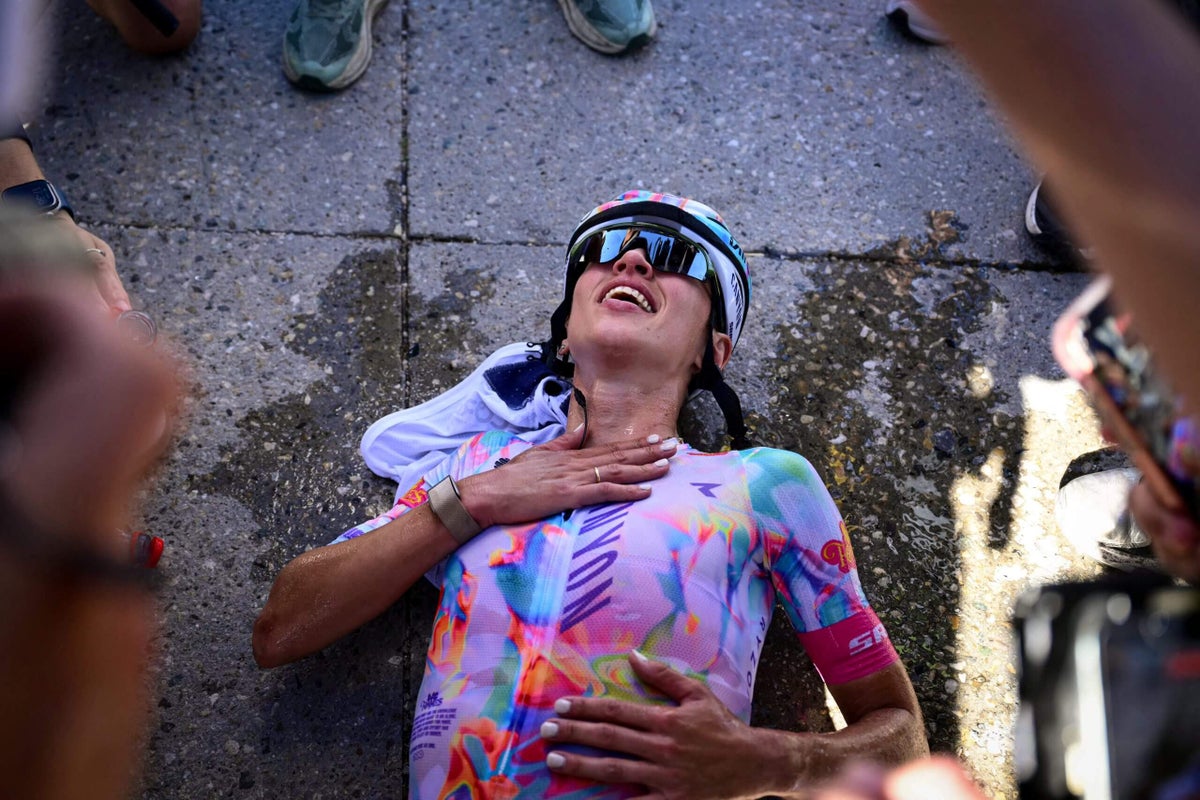
Kasia Niewiadoma-Phinney moved into the Tour de France Femmes yellow jersey with a solo win on Mont Ventoux.

The Polish rider attacked from a reduced group with Demi Vollering and Thursday’s race leader Marlen Reusser 9.7 kilometers from the finish. The pair, who had been first and second in the general classification (GC), did not respond and the gap grew to 1:45, as Niewiadoma-Phinney claimed her first stage victory at the Tour de France Femmes.

After surging multiple times on the way up, Vollering eventually managed to distance herself from Reusser in the final kilometer to reduce the GC gap to 15 seconds between her and Niewiadoma-Phinney. The Swiss dropped to fourth on the day with a 1:42 deficit, 39 seconds down from the leader overall.

In a hotly contested stage on the slopes of Ventoux, the ‘Giant of Provence’, Elisa Longo Borghini, led a chase group with team-mate Paula Blasi to rise to fourth in the overall standings, and third on the day. Chasing the podium, she is 2:59 behind the leader and 2:20 behind Reusser overall.

Friday was the Tour’s first mountain stage, with slopes of up to 10 per cent gradient and an average 8.8 per cent for 15.7km on the legendary climb.

SD Worx-Protime’s Anna van der Breggen did not start the stage after struggling with illness.

The Athletic breaks down the day’s action.


Niewiadoma-Phinney divides and conquers

Vollering and Reusser let Niewiadoma-Phinney go because they were looking at each other — a flaw Canyon-SRAM had predicted.

The stage winner entered Friday further down on Vollering than the Dutchwoman had been on Reusser, so naturally she might have paid more attention to the yellow-jersey incumbent. But Niewiadoma-Phinney has finished on the podium in every edition of this race and won it in 2024. Hesitation ultimately did for Vollering and Reusser.

Marlen Reusser and Demi Vollering on Mont Ventoux (Alex Broadway/Getty Images)

The writing had been on the wall since stage five, when Canyon-SRAM had noticed bickering between their rivals. Niewiadoma-Phinney tried to exploit it then, launching her sprint early. She was eventually caught by Vollering — but the idea was there.

Movistar and FDJ have to learn their lesson from this stage. But make no mistake: Niewiadoma-Phinney’s ride was incredibly strong in its own right, and it should not be overlooked how she built a lead of nearly two minutes on the race leader and favourite at the time.

With Antonia Niedermaier riding well alongside her too, the 31-year-old will have gained a lot of confidence for the final two days of the Tour.


GC blown apart — so who is in the best position?

There are only two days left in the biggest grand tour of the season, and who wins overall is still up in the air.

Niewiadoma-Phinney has done the fans a favour by bringing the top three within 39 seconds of each other, which could be chipped away at on the four ascents of the Col d’Eze (which is 7.7km at 5.9 per cent) on the final day.

Vollering is only 15 seconds off the Polish rider too, keeping her well in contention. Something will have to change, however, to avoid the same mistakes of this ascent, particularly as Niewiadoma-Phinney can afford to turn defensive, at least for Saturday’s ride.

The new yellow-jersey wearer was the last of the top three to still have her domestique with her on Friday’s stage, with Niedermaier outlasting Celia Gery and the Movistar team, though the former was pulling in the group early in the day.

Reusser and Vollering will have to be proactive and race smartly, then, to try and usurp Niewiadoma-Phinney — who has that and the time cushion to her benefit.

While the final stage has climbs to attack on and the organisers categorise it as a mountain stage, it has descents in between to rest on.

The punchier profile, only 99km in length, could suit Vollering the best, as she can draw on her hilly stage-five win, where she finished with more in the tank than her competitors.


Team tactics helped make this a thrilling watch

While there are a number of strong domestiques in the peloton, most of them fell off early into the climb. Only Blasi was able to stay with her leader until the final kilometers.

The steep slopes of Ventoux have a part to play in that, but it is also indicative of a wider trend in women’s cycling. It is rare to see a team able to completely control the peloton in numbers, as could be seen on Thursday, and many teams thin to only one, if any, domestique in the final stages.

The effect of this is an arguably more exciting race for individuals, where more emphasis is placed on what each rider can do on the day.

On the other side of the coin, team tactics can be an important facet of cycling and equally fun to watch over the whole stage. Longo Borghini introduced another exciting layer of jeopardy to the race by overtaking Reusser in the final kilometer.

Would she have been able to do that without Blasi there to ride with? Less certain. UAE Team L’Imad have been vindicated in their commitment to their tactics, despite some earlier this week criticising the decision not to make Blasi a team leader so she could ride for herself.

Money is a limitation, with the sport growing but teams still having small budgets for transfers. Judging by the excitement all the way up Ventoux — with a wide range of fans lining the road with flags and signs — the appetite for the sport is only growing, so those finances should not be an issue for long.

There was plenty of excitement on the ascent of Mont Ventoux (Nicolas Tucat/ AFP via Getty Images)


What is up next Saturday?

The penultimate stage of the race will take the peloton 175km from Sisteron to Nice, making it the longest day of riding.

Vollering, Reusser and Longo Borghini will want to gain some time on this route as they chase the final podium spots. Canyon-SRAM directeur sportive Rolf Aldag suggested Niewiadoma-Phinney will “make sure no one goes anywhere”.

With the profile less challenging, she can afford to ride in a more defensive way, and it will be up to the other rivals to decide how to play it.


Stage 7 Top 5

  1. Kasia Niewiadoma-Phinney, Canyon-SRAM, 4 hours, 22 minutes and 53 seconds
  2. Demi Vollering, FDJ United Suez, +1 minute and 16 seconds
  3. Elisa Longo Borghini, UAE Team-L’imad, +1 minute and 42 seconds
  4. Marlen Reusser, Movistar, +1 minute and 46 seconds
  5. Paula Blasi, UAE Team-L’imad, +1 minute and 48 seconds

Overall standings

  1. Kasia Niewiadoma-Phinney, Canyon-SRAM, 24 hours, 7 minutes, 34 seconds
  2. Demi Vollering, FDJ United Suez, +15 seconds
  3. Marlen Reusser, Movistar, +39 seconds
  4. Elisa Longo Borghini, UAE Team-L’imad, +2 minutes and 59 seconds
  5. Antonia Niedermaier, Canyon-SRAM, +3 minutes and 21 seconds

>

Continue Reading

Sports

Dodgers prospect Kendall George has knee surgery 2 months after bat dog mishap

Published

on

Kendall George of the Tulsa Drillers takes a lead off first base during a game against the Arkansas Travelers at ONEOK Field on April 19, 2026 in Tulsa, Oklahoma.

Kendall George originally injured his left knee in late May after scoring a run when trying to avoid the Tulsa Drillers’ bat dog at home plate. Brandon Sloter / Getty Images

Los Angeles Dodgers outfield prospect Kendall George, one of the fastest players in the minor leagues, posted on his Instagram on Friday that he was undergoing left knee surgery months after suffering a meniscus injury while avoiding a bat dog in a Double-A game.

George initially suffered the injury in late May when he leapt to avoid a bat dog collecting a bat at home plate after scoring a run. The mishap led the Double-A Tulsa Drillers to suspend their bat dog program.

George returned to game action a month later, stealing 10 bases over his next 17 games.

Last Saturday, speculation swirled when George was a late scratch from the Tulsa lineup. At the time, trade rumors were heating up over the Dodgers’ pursuit of Tarik Skubal. Fellow top prospect Zyhir Hope was scratched from Tulsa’s lineup at the same time. Hope, but not George, was traded to the Detroit Tigers as part of the package to land Skubal.

A team source at the time not authorized to speak publicly about the health of players said George was out of the lineup due to soreness. George was then placed on the minor league IL.

George was the Dodgers’ first-round pick in the 2023 MLB Draft, making waves for his speed and base-stealing prowess. Just last year, George swiped 100 bases while playing for High-A Great Lakes. He showed some improvement at the plate this season, turning more of his fly balls into line drives and hitting .332 in 55 games for Tulsa with 36 stolen bases. He entered this season as the Dodgers’ No. 13 prospect, according to The Athletic’s Keith Law.

Connections: Sports Edition Logo

Connections: Sports Edition Logo

Connections: Sports Edition

Spot the pattern. Connect the terms

Find the hidden link between sports terms

>

Continue Reading

Sports

Scottish Premiership: Euro navel gazing & early troubles for title hopefuls

Published

on

Sunday navel gazing after a bruising midweek in Europe is becoming all too familiar for Scottish football, but this time Motherwell and Hibernian can look forward to second legs with some real hopes of progress, albeit in the third-tier Conference League qualifiers.

The Lanarkshire side will hope to finish off the job after a 1-1 draw away to HJK Helskini as they continue to earn plaudits for the style of play adopted last season by Jens Berthel Askou and adapted by new manager Alfred Johansson.

However, they will have to improve first on their record against Falkirk, who have won on their latest three visits to Fir Park and have not lost to Well in six meetings.

Since a 1-0 win over Well at Falkirk Stadium in May, though, John McGlynn’s side have lost four in a row in the Premiership.

Hibs’ 2-1 win over North Macedonians Shkendija was a bit of struggle, but at least it was better than their opening defeat at home to Well.

Now they travel to Glasgow looking to become the first-ever side to win in consecutive league games at Ibrox after winning 2-1 there in May.

Indeed, Hibs have won on two of their last three league visits and another would heap more pressure on new Rangers manager Derek McInnes after Thursday’s defeat in Poland.

That will be especially so should Celtic, who could be without O’Neill despite the manager being released from hospital, secure a ninth win in a row over Kilmarnock and a ninth league win in a row overall to create a healthy early lead over their title rivals.

The odds of that must be good considering the Ayrshire side, who lost their opener to St Johnstone, have failed to win their first two top-flight games in 12 of the previous 15 seasons.

Similarly, Hearts cannot afford a third consecutive league defeat – having lost last season’s decider against Celtic then their opener with Aberdeen – if they are to mount a similar challenge to the one under McInnes last term.

They have not won on Dundee United’s last three visits to Tynecastle and further questions will be asked of new head coach Wouter Vrancken if they suffer a fifth straight defeat.

The Belgian’s side have lost 14 goals in those four games and will not be helped by centre-half Stuart Findlay’s suspension, but United have themselves not kept a clean sheet in 17 away games in the Premiership and have kept the fewest away clean sheets of any side since the start of last season.

It could be a goal fest at Tynecastle.

>

Continue Reading

Trending

Copyright © 2017 Zox News Theme. Theme by MVP Themes, powered by WordPress.